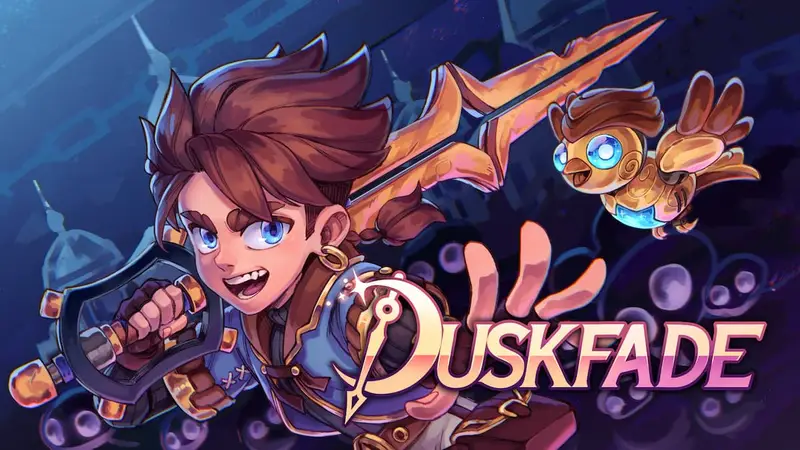
During my formative gaming years, the genre I immediately fell in love with was 3D platformers. It started with mascot platformers like Banjo-Kazooie and Spyro the Dragon on the Nintendo 64 and PlayStation 1, respectively, and led me to action platformers like Ratchet & Clank, Jak & Daxter, and Kingdom Hearts on the PlayStation 2. Getting to grips with movesets and unlocking new abilities, meeting kooky casts of characters, exploring every nook and cranny of each level/region, and hunting down countless collectibles; platformers really are my happy place. So when Duskfade was revealed last year, a 3D action platformer inspired by the very games I grew up playing, it shot straight to the top of my list of most anticipated games of 2026.
I’ll admit, I was worried about the prospect of an indie game trying to recapture the essence of those iconic late ’90s and early ’00s platformers, especially while wearing its influences so openly. When I was left with high hopes and a great first impression from the game’s demo, and even after interviewing Weird Beluga, the Spain-based indie developer behind Duskfade, I still had some reservations. Thankfully, those concerns were quickly put to rest. Duskfade is not only a phenomenal 3D action platformer, but also one of my favourite action platformers I’ve ever played.
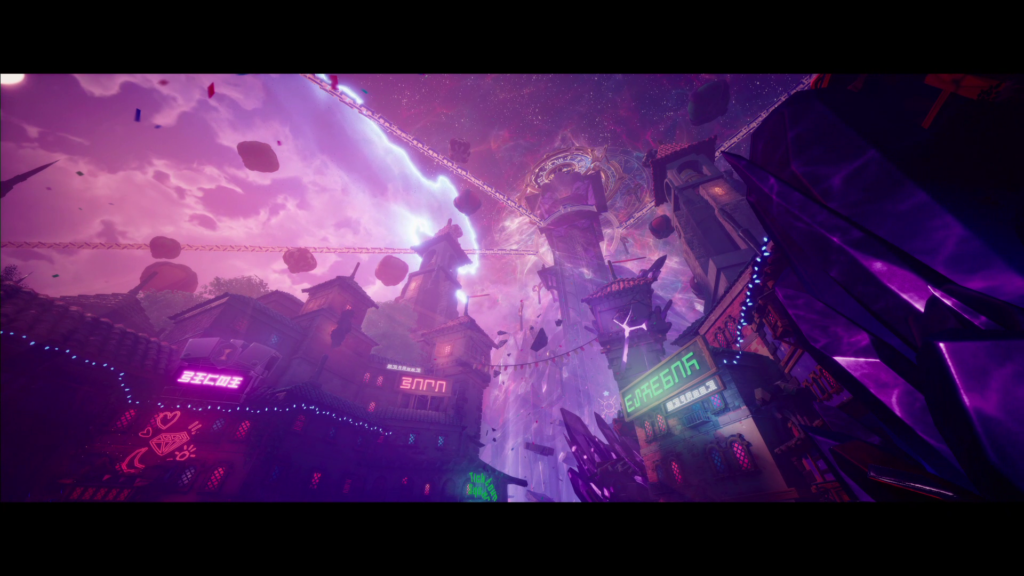
Duskfade is set in Tearfeld, a beautiful, stylised, and fantastical world where magic and machinery exist and work in harmony. You play as Zirian, a young, happy-go-lucky teenage boy who comes home to his sister Allira still in her room, refusing to come out, as she has done since their grandfather passed away. After pleading with her, a sudden and violent explosion blasts Zirian back and into a strange environment, like Tearfeld is now shattered and floats fragmented in endless space.
Grabbing his grandfather’s clockhand-shaped sword, Minutero, Zirian sets off to find Allira while fighting hordes of dark creatures called Inkies. Instead of his sister, Zirian saves one of her creations, a sassy clockwork bird called Cuckoo. Together they return to Zirian’s home of Tick Town, only to discover a giant clocktower has appeared looming over it and that the flow of time has been interrupted. Smashing the anchor of a huge chain coming from the clocktower causes the sky to shift, with both a day and night visible at the same time, a distinct line separating them.
Believing that Allira is trapped inside the clocktower, the duo decides to travel across Tearfeld and destroy the other four chains barring their entry, and get time ticking again. Along the way, they will encounter the sinister, aptly named Despair, who knows more about the clocktower, Allira, and Cuckoo than they are letting on.
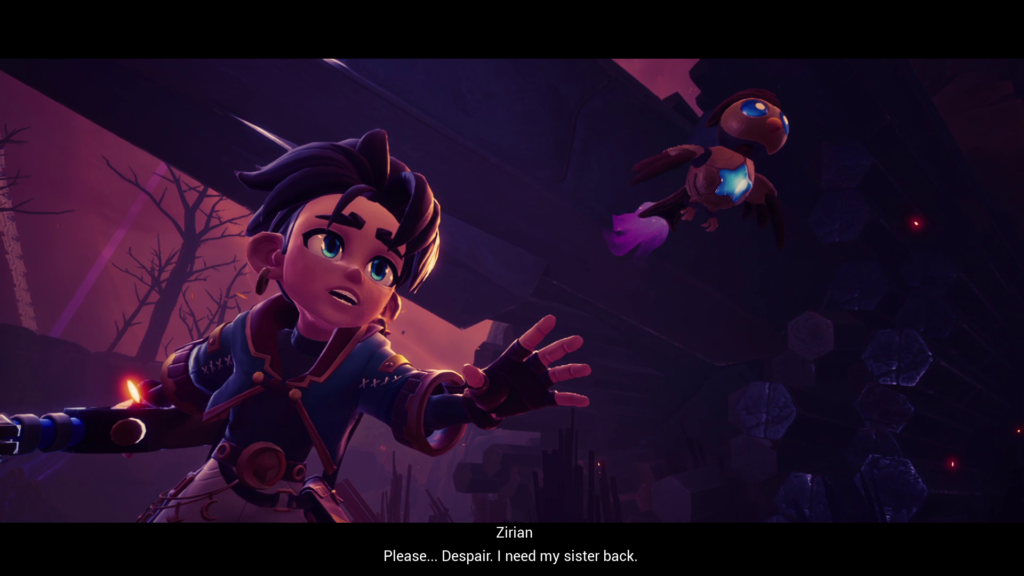
Playing through the opening tutorial area and watching the first couple of in-game and cinematic cutscenes, I was struck by just how good Duskfade’s pacing and presentation are, and continue to be right up to the end of the game. You’re playing the game within the first couple of minutes, and the various cutscenes are spaced out perfectly, giving long sections of gameplay with a short reprieve before the next one. The cinematic cutscenes, which are fully voice-acted, are used sparingly, bookending chunks of the game at appropriate narrative and gameplay moments simultaneously. The regular dialogue between Zirian and Cuckoo, as well as conversations with NPCs, is text-based, and where we get incremental story beats and see the relationship between Zirian and Cuckoo evolve. I think it’s fantastic, as it means the game flows at a good pace and makes the cinematics feel all the more important because of their placement and infrequency.
Having a single playable character accompanied by a smaller sidekick is basically a time-honoured tradition in platformers at this point, and one of the most important elements of the game to get right. Not only is it important that they feel good to play as, but that the player likes them, regardless of their personalities. To that point, I really liked both Zirian and Cuckoo as characters and their dynamic. Zirian’s dopey yet friendly disposition works well with Cuckoo’s more tightly wound and direct attitude, and the voice actors did an excellent job getting these traits across. The writers should be proud of their work too, because not only are Zirian and Cuckoo a great duo, but I found the origins and deepening of their friendship well paced and believable.
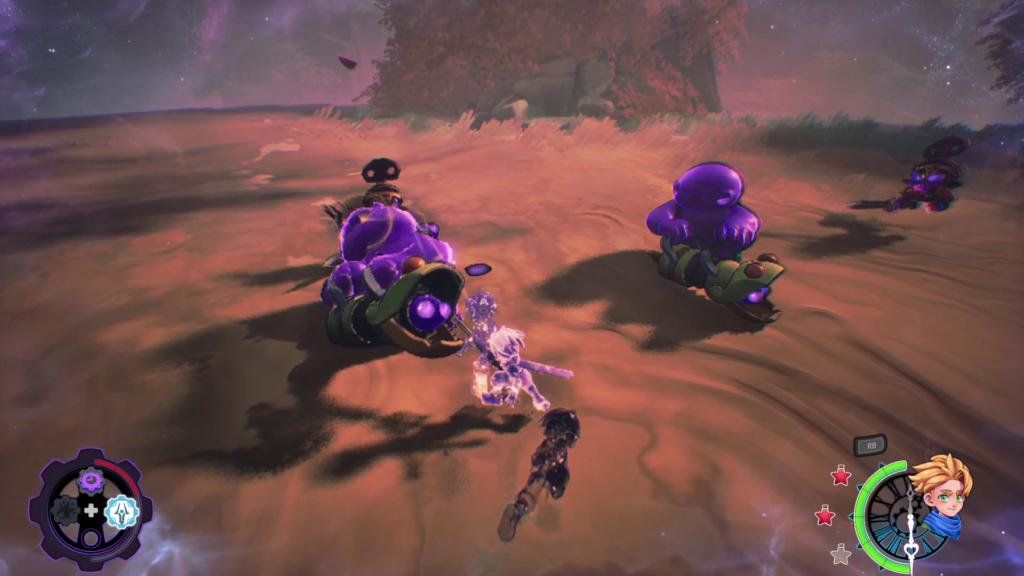
Duskfade’s gameplay is a mix of fast-paced hack’n’slash combat, platforming and traversal, challenging boss fights, and finding collectibles and upgrades. With Tick Town as your hub, you venture across 20 named regions in Tearfeld, split up into four paths leading to the clocktower’s chains. The structure of each path is very similar, with Zirian unlocking new abilities, meeting important NPCs, and fighting bosses around the same points in each, but the regions are vastly different.
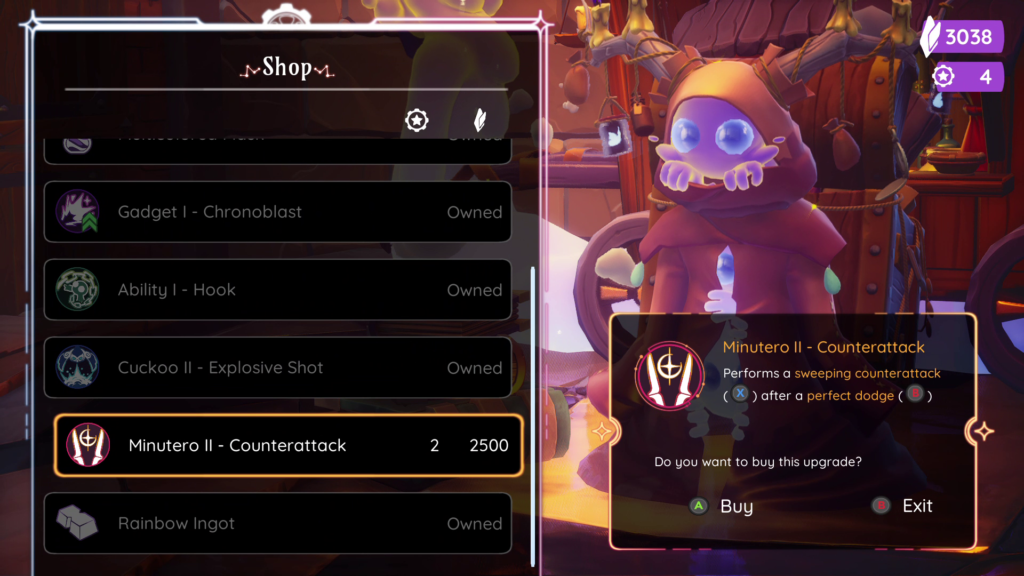
Combat is tried and true, with flashy combos mixing light and heavy attacks together, both on the ground and in the air. A lot of work has gone into the combat animations, and it was fun to notice little details; like how Minutero will split into its different parts on a final swing of a combo, or how it transforms into the giant Pendulum tool for your heavy attacks. Cuckoo is also there to assist with projectiles, and you can even bat some enemy projectiles back at them, which was always satisfying. Zirian unlocks four special abilities over the course of the game, including a powerful blast from Minutero, the ability to stop time momentarily, and firing a barrage of enemy-homing stars. You can upgrade Zirian’s moveset and abilities with one of the game’s collectibles, Upgrade Gears, lengthening combos, improving Cuckoo’s support attacks, and even unlocking alternative uses for certain items you gain along your quest.
It’s not reinventing the wheel, but combat feels fantastic, with smooth animations transitioning from one to the next, a dodge roll you can cancel out of attacks with, and potions you use to heal yourself. Most fights take place in arena-like areas, but where the challenge really comes from is the menagerie of Inkies you have to contend with. Duskfade has a deep pool of enemy types to pull from, all with unique designs and behaviours, and the combination of enemy types can prove tricky at times. A personal favourite is the fire mage enemy, who frantically waves its arms as it calls fireballs down from the sky.
Of course, the most crucial thing to get right is the platforming, and Weird Beluga absolutely nailed it. Zirian is very responsive both when platforming and in combat, and even his base moveset gives you a lot of control and options for traversal. His dodge roll can be used in the air to extend your jump, and even your base attacks keep Zirian in the air, momentum carrying him forward for that extra distance. Along with classics like ledge and wall grabbing, you unlock new traversal tools as you progress, like a hookshot to pull yourself to certain points and a giant sundial you grind on rails with. These are neatly incorporated into each region’s design, making for a healthy mix of fun and challenging platforming, tying all of your tools together for a perfect flow.
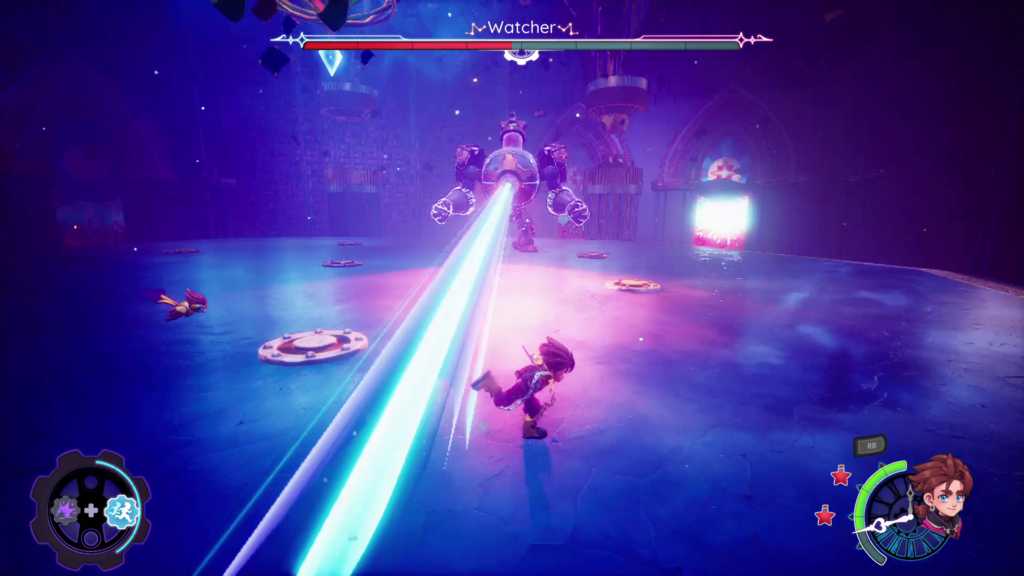
Another standout part of Duskfade for me was the boss fights, epic clashes with giant monsters or sinister figures. Many of these encounters use your most recently obtained traversal skill, with the bosses powering up a devastating attack at set points on their health bar, and you need to stop them before it goes off using your toolset. It’s a great way to make sure players are making full use of their arsenal, as well as putting them to the test. The nuts and bolts of these fights come down to learning their attack patterns and looking for openings, as well as using your Temporal abilities for big damage. None of these were pushovers, especially the final boss, and with little recourse to getting stronger before the fight, they challenge players to lock in, or otherwise be punished.
With each path to one of the clocktower’s chains made of several regions and generally themed, there is huge variety in both their appearance and design, from the vast shimmering Starstone Mines with its vast caverns and colossal crystal deposits lining the rocky walls, or the sand-covered crevasses and mesas of Stonetusk Canyon, to the majestic heights of the Auric Palace. A personal favourite of mine is Lantern Port, which starts as a colourful seaside town with wide, paved streets and a welcoming atmosphere, before descending beneath the waves.
Another more subtle inspiration for Weird Beluga is their home country of Spain, which you see glimpses of throughout Tearfeld, from rolling fields swaying in the breeze to provincial-style locales you find along your journey. A great use of colour, scale, and details gives each region a distinct feel and personality, and I was excited to see what awaited me every time I reached a new one. The music for each region does a solid job of matching the aesthetics and is of a great quality, but doesn’t quite match the energy of Duskfade’s other elements. It is all lovely to listen to, but I don’t think there are any themes or motifs that I’ll be humming to myself months from now.
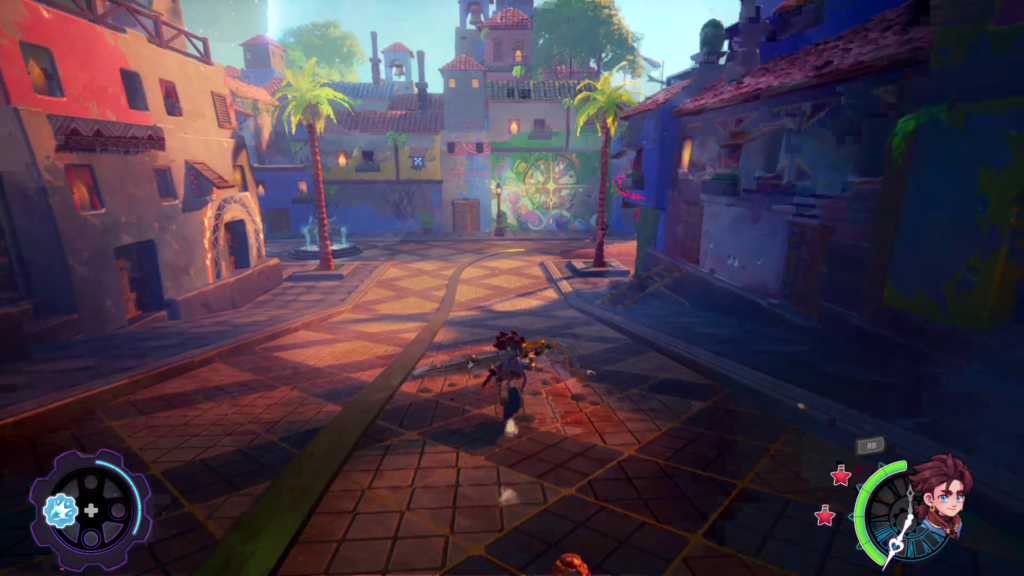
Each region is filled with side areas and secrets, and I always felt rewarded for my efforts when exploring. Duskfade has several types of collectibles, almost all of which are tied to improving Zirian or unlocking cosmetics for our hero and Minutero. Some, like the Heart Core Pieces and Star Core Fragments, which are used to increase Zirian’s health and Temporal Energy, respectively, are found in chests, while others, like Flasks of Ink to unlock new looks for Zirian, float out in the open, albeit still hidden away. Some can’t be reached the first time you go through a region, but the tools that you collect along the way make return visits worthwhile; no region is too big to go back and explore again, but it will take the really observant to find everything in Duskfade. There is no better feeling than scouring an early region for secrets, only to find a grindable rail you previously couldn’t do anything with before, and getting that burst of endorphins on every discovery.
I do have a gripe with how Duskfade tracks collectibles. Your main progress menu is a bit sparse, showing how many of each item you are currently carrying, as well as where you are in the story, while your collectibles progress is actually tracked at the fast travel points. It would have been great to have access to all that information at any time from my menu, instead of splitting it up.
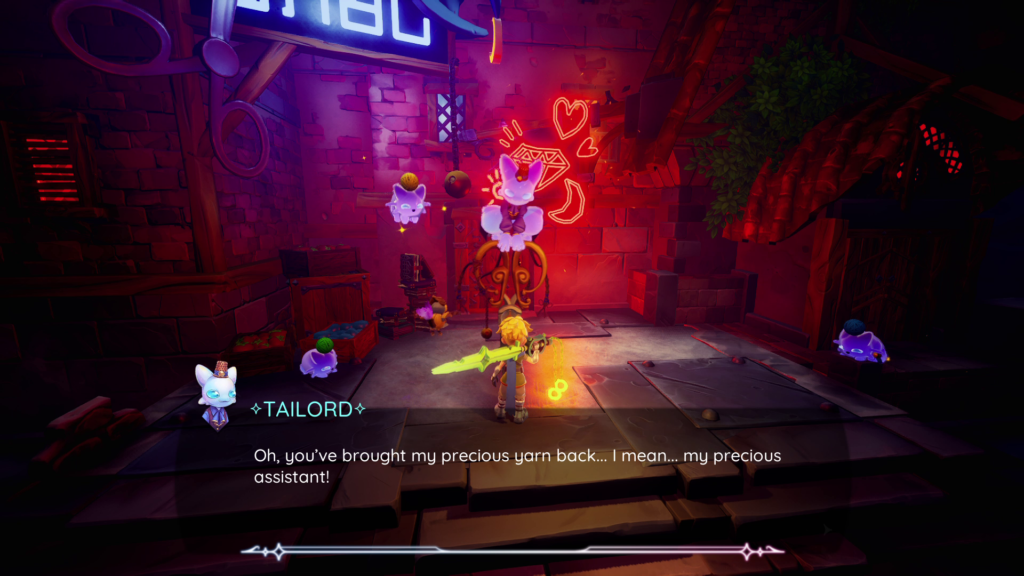
Tearfeld is far from an empty world. While the world beyond the walls of Tick Town may be stalked by Inkies to fight, your hub is full of Cloudies, Tearfeld’s fluffy inhabitants, who are just a delightful bunch! Talking to regular Cloudies often leads to fun conversations or fragments of lore, but there are a select few NPCs that help our duo on their quest, like the aforementioned upgrading and cosmetic unlocking. It makes Tick Town a home that is always worth returning to, especially if you gathered a bunch of Starstone Shards and collectibles since your last visit.
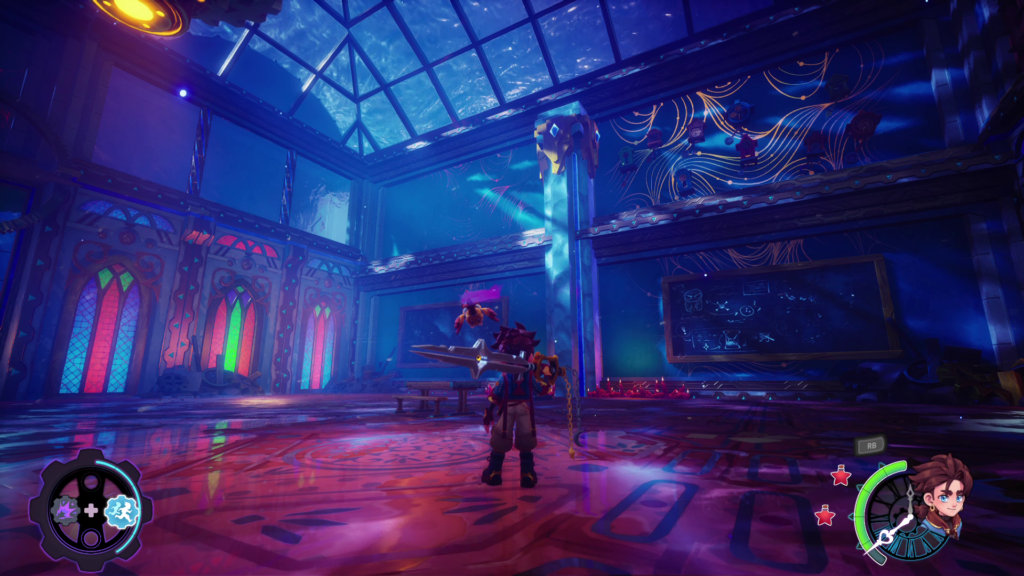
A great deal of work has gone into making the world of Tearfeld feel whole. There is a lot of lore to uncover that slowly reveals some of the past, giving details about the mysterious Clockmakers and a calamitous event their actions set in motion. This is clear from each region’s design, and something I noticed more and more as I revisited them. Evidence of the Clockmakers’ machinations covers the land, from the way they harness the volcano, Mount Cinder, using its heat as power, to the staggeringly beautiful Clockwork Academy, made almost entirely of glass and submerged in the ocean. The themes of time and of the past play heavily across Duskfade, and the world embodies that completely, making Tearfeld feel like a place with a history and that feels cohesive.
Duskfade’s art direction is a crucial player in that cohesion, from the character and level designs, mixing various gaming and cultural inspirations with Tearfeld’s own themes of time and clockwork mechanisms, to the skyboxes, which shift the line between the day and night skies with every chain you break, showing your progress in a very literal fashion through some of the best narrative worldbuilding I have seen in a long time. The game looks fantastic, but there are times when the abundance of environmental effects, sparkling crystals, motes of light in the air, and crackling lightning can get a bit much and make the already detailed environments tricky to assess.
I won’t go on about the various homages to be found in Duskfade, fans of the games that inspired the dev team can come across those themselves, but I do think it’s important to highlight how rarely these inspirations feel like simple references. Familiar ideas have been pulled from across the era and woven into Duskfade’s own systems and visual language, so spotting a callback feels less like recognising a quotation and more like discovering another ingredient in the game’s DNA.
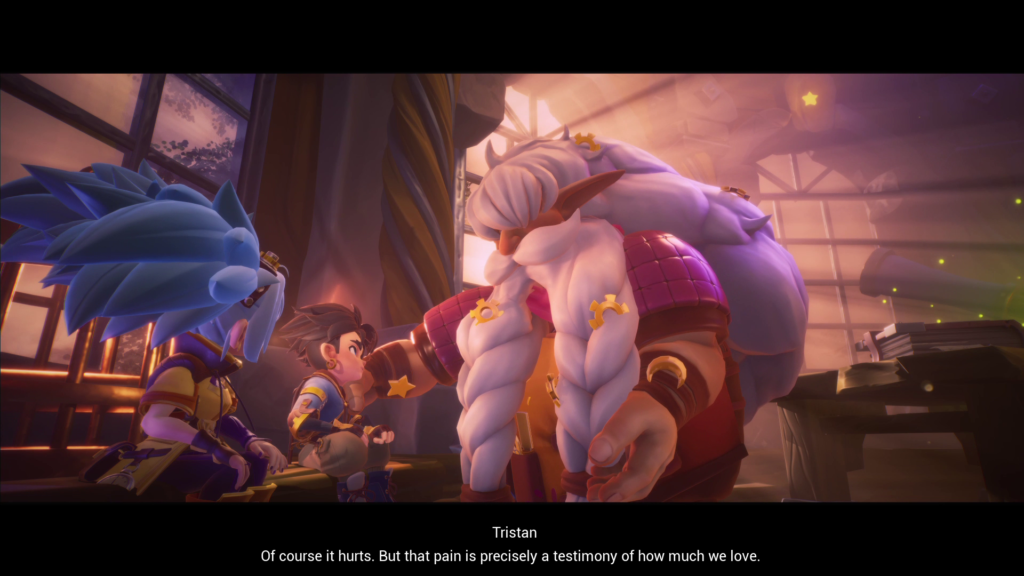
But time isn’t just a visual motif in Duskfade, either. Our heroes’ journey, very upfront with its themes of loss and grief, gives the game’s fixation on the past a more personal dimension, asking what happens when the desire to hold on to what we’ve lost stops us from moving forward. Those themes, both personal and overarching, from the lore and the world design, fit together so perfectly, like the parts of a clock. That is what I find most impressive about Duskfade.
Final Thoughts
Duskfade isn’t simply a love letter to the action platformers of the ’90s and early ’00s; it’s an ode to them, bringing their influences together so effortlessly that the result feels like something you’ve played before and something new and exciting at the same time. Weird Beluga has clearly spent years studying what made those games so special, but Duskfade never feels trapped by its influences. Instead, it takes those ideas and gives them new life, building a world and adventure that feels familiar without sacrificing its own identity.
It feels particularly appropriate for a game so concerned with time and the past. Beneath its colourful characters, bombastic combat and beautifully constructed world is a story about loss, grief, and the temptation to hold on to what we’ve already lost rather than embrace what comes next. In that respect, Duskfade’s greatest achievement isn’t simply recreating the feeling of playing a PS2-era action platformer. It’s reminding us why those games mattered to begin with, while showing that looking back doesn’t mean you have to stay there.
Duskfade is available now on PC, PlayStation 5, XBOX Series X/S, and Nintendo Switch.
Duskfade was reviewed on PC with a controller.
We would like to thank Weird Beluga for the review key.
Will you be picking up Duskfade? What are some of your favourite 3D platformers? Let us know in the comments below, and join the Gamer Social Club Discord to chat about your favourite games, play in community game nights, take part in giveaways, and more!
Duskfade Guides
- A Clock Heat Piece A Day Trophy Guide
- Advanced Clockmaking Trophy Guide
- The Most Beautiful Sword in the Land Trophy Guide
- Master of Melody Trophy Guide
- Come Here Right Meow Trophy Guide
- The Mask of Pain Trophy Guide
- No Peeking! Trophy Guide
- Heartless Trophy Guide
- You Seem Familiar Trophy Guide
- You Seriously Didn’t See That One Coming? Trophy Guide
- A Grandma’s Love Trophy Guide