
You ever watch those movies or TV shows where there’s that bartender trope where people, just for some reason, are drawn to the bartender and patrons just can’t help themselves but reveal all their deepest and darkest secrets? And then, as if that bartender has some psych degree, manages to listen well AND get them through whatever’s been troubling them? That’s inKONBINI. But in convenience.
There’s a quiet and soothing atmosphere where introspective and interesting moments are revealed to you at night. When the wrinkles of our troubles get ironed out, washed away, and the morning light greets us with new beginnings, not just for our customers, but also for ourselves. I’m spoiling my review for inKONBINI here a bit, but this cozy convenience store/therapists simulator gave me a sense of clarity and comfort that not many games have ever accomplished.
What is inKONBINI?
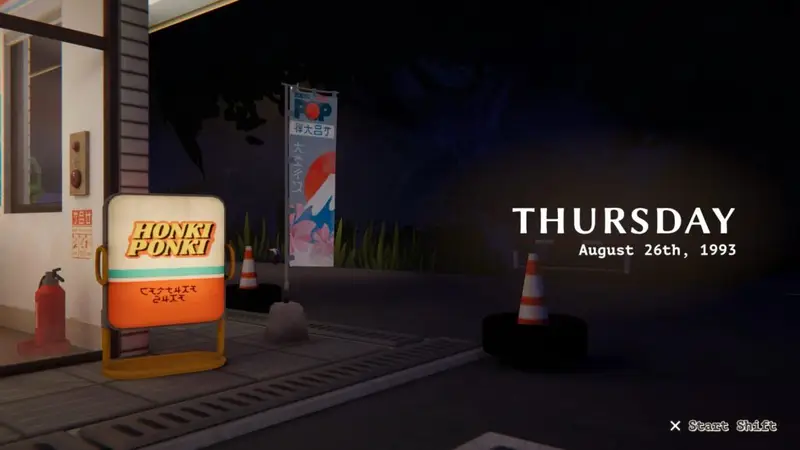
The developers, Nagai Industries, tagline for inKONBINI is “One Store. Many Stories.” This is the most accurate of a summation for this game. Makoto is spending a bit of her summer helping out Aunt Hina run the night shift of HONKI PONKI while she’s away. For one week (6 nights), she will be by herself, alone with her thoughts, managing the ins and outs of the convenience store as she helps out the customers that come through the late night hours. Time doesn’t truly exist in the game. It waits for you when you’re ready. Even when customers are there in the store, standing in front of the register waiting for you to check out, there’s no urgency. It only moves forward when you interact with customers when they enter the store and when they leave.
Your task is to ensure that the store is well stocked and tidy. This means fulfilling requests from outside vendors. Helping the morning crew in ensuring that the store is ready for the morning rush. Tidying up the store from the craziness of said morning. Ordering products and placing the products on the shelves. The control we have over the back-end of the store is minimal, but once the products are in our hands, we have full control.
Having worked in customer service for most of my life: managing a video store (Blockbuster Video), clothing stores, home goods stores, etc, shopkeeping stores has been sort of a guilty pleasure for me. inKONBINI lets me grab each individual product, place it wherever I want on the shelf (as long as it fits), and make sure they are all facing the correct way. If I wanted to, I can put all the baked products in the refrigerated displays, replace them with pet food, and put feminine hygiene products right beside them. Aunt Hina probably won’t be very happy with me, but I can do that.
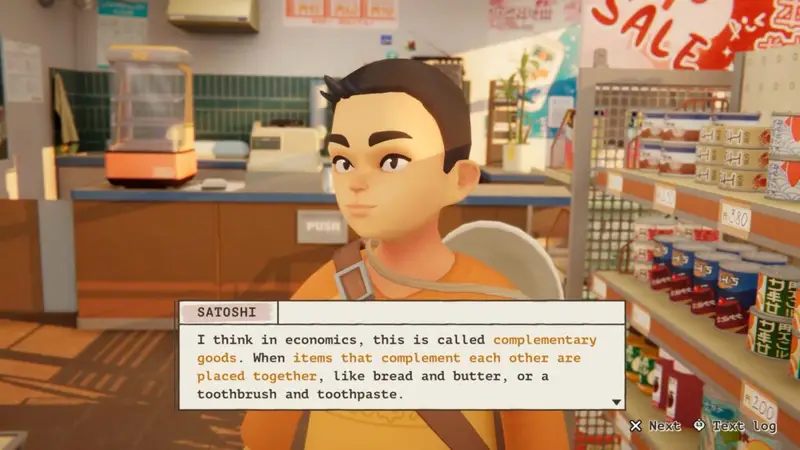
While I can’t rearrange the store, change the layout of the products, I can at least move them around. There’s something satisfying about carrying a crate around under my arm as I completely empty out a shelf so I can rearrange it the exact way that I want and it controls wonderfully.
inKONBINI is not a long game. Maybe 4-5 hours in one playthrough.
One Store
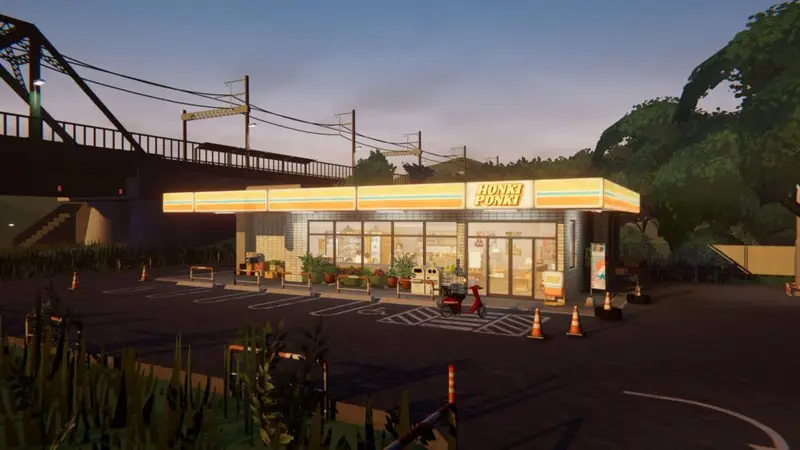
One Store. It’s 1993 and it feels like nothing else exists outside of HONKI PONKI. The only connection we have is a phone that we can use to create quick transactional connections. Some sticky notes and a chalkboard that gives us one-way communication of what needs to be done around the store. Newspapers that lets us know of what transpires in the outside world. Other employee’s notepads that remind us that there are others that work here and that there are moments when the store is alive in the morning. And a notepad where we can gather our thoughts and remind ourselves of the task at hand.
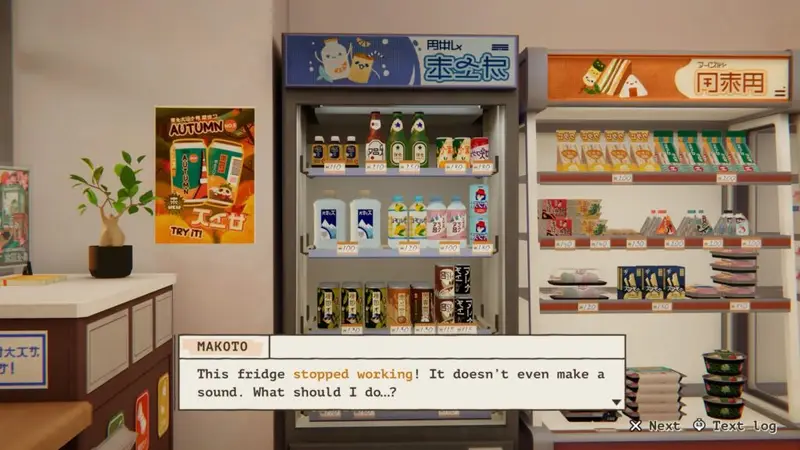
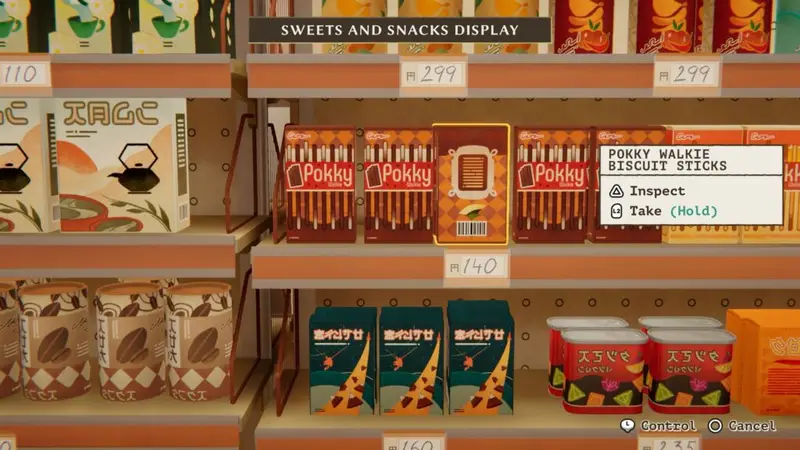
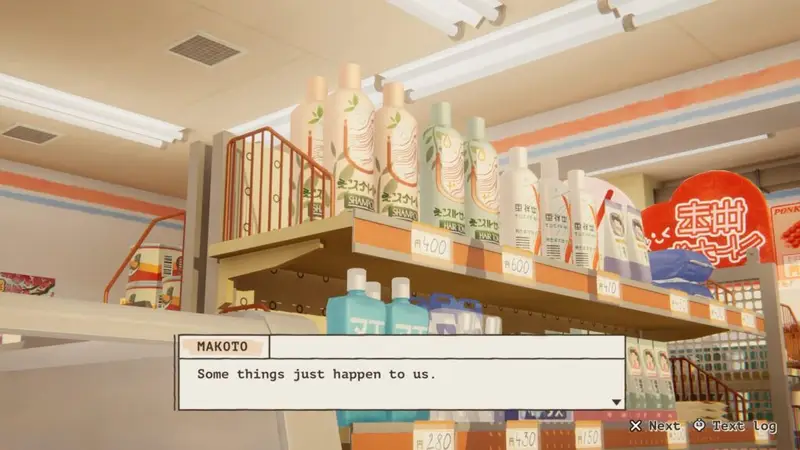
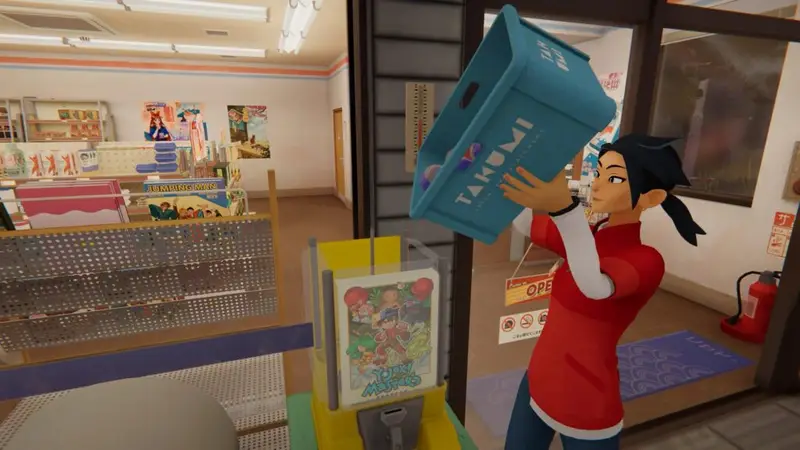
It’s an odd sensation. Especially because it’s quiet with no real time restraints. You can keep your store closed for as long as you want as you pour all your attention getting the store ready. Time seems to stop. The customers will wait. It gave me a feeling like THIS is where they want to be. THIS is the only place that will satiate their needs and NOTHING else matters.
Many Stories
Makoto is a part-time convenience store clerk turned therapist. During her short stay, she meets interesting characters of all ages. A young entrepreneur, a distraught elderly man, a business lady pulling all-nighters, and an odd man who refuses to talk. You’ll also be in close contact with your Aunt Hina, as well as passively learn about the morning crew. While you are in control of Makoto, these individuals seems to be the main characters.
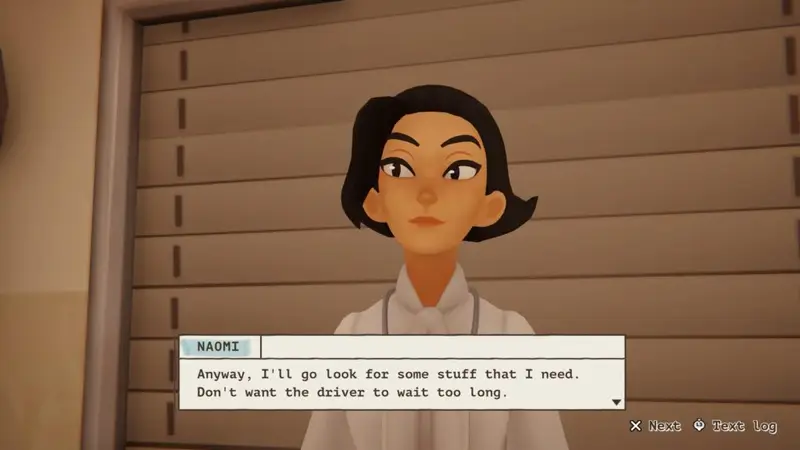
You listen to them, help them with what they need, and in doing so, forever affect their story; their life. There aren’t any real wrong actions. There are things that the game won’t let you do, however, there aren’t any consequences, only results. Apart from the convenience store aspect that focuses on product placement (not sales), inKONBINI is very much a narrative driven game.

There are many conversations to be had between all of them and many words to read. Unfortunately, there isn’t any voiced dialogue besides the opening scene. In my opinion, the game would’ve been delivered better with voiced dialogue, even in Japanese with subtitles. There’s much emphasis on the Japanese convenience store culture in the game and having Japanese dialogue would’ve greatly helped in delivering that. Hearing Aunt Hina through the phone, Chief’s many stories and sayings, and Satoshi’s goals for the future; would’ve immersed me in their stories further.
inKONBINI has some choices that will affect the future of the characters. The game only has one save per playthrough and will need at least two playthroughs if you want to see the other outcomes. I do recommend playing through the game at least twice, in order to make different choices and see the outcomes, though it isn’t necessary.
Convenience Reverie
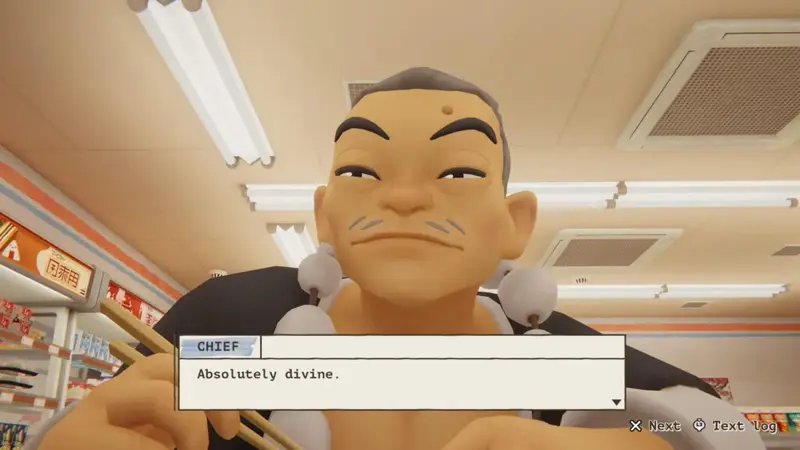
While making sure that every item is in its correct location, balanced perfectly, and faced in the correct way; a tedious yet relaxing task, zoned out as if in a meditative state, and lost in your own thoughts, time stops. While you’re absorbing all the stories and requests your customers have, arriving one at a time, indulging in their lives, your outlet to the outside world, nothing else matters. inKONBINI is a reverie, a narrative driven game that needs some engagement, but only asking from you what you want to give it. It nails the very atmosphere of a quiet, slow, nighttime 1993 experience. While its stories could be better delivered through voiced dialogue, it’s an experience I would highly recommend if you are looking for a reverie.

inKONBINI was reviewed on PS5. Gamer Social Club would like to thank the devs and publisher for the code.
inKONBINI: One Store. Many Stories is scheduled to release on the 30th April 2026 for PC (Steam and Epic Games Store), PlayStation 5, Xbox Series X/S, Xbox One, and Nintendo Switch, including a day-one launch on Xbox Game Pass
Are you struggling with a particular trophy/achievement in inKONBINI? Let us know in the comments below, and join the Gamer Social Club Discord to chat about your favourite games, play in community game nights, take part in giveaways, and more!
inKONBINI Guides
- 100% Trophy Guide
- Hardcore Maintenance Trophy Guide
- Cap Lover Trophy Guide
- Avid Reader Trophy Guide
- Lost Ring Trophy Guide
- Naomi’s Story Trophies Guide
- Mysterious Stranger’s Story Trophies Guide
- Satoshi’s Story Trophies Guide
- Delivery Girl Trophy Guide
- Chief Matsuda’s Story Trophies Guide
- Preparing Something Special Trophy Guide
- Gotta Catch ‘Em All Trophy Guide