
Few video game series have an identity as instantly recognisable as Final Fantasy. From its recurring themes and narrative tropes to iconic elements like Summons, Crystals, and chocobos, not to mention its unforgettable music, the series has spent decades establishing a vocabulary all its own. Final Fantasy Resonance brings these familiar elements together in a game that feels like a distillation of the franchise, drawing on its history to deliver an adventure that celebrates everything that makes Final Fantasy special, even if that means playing it safe.
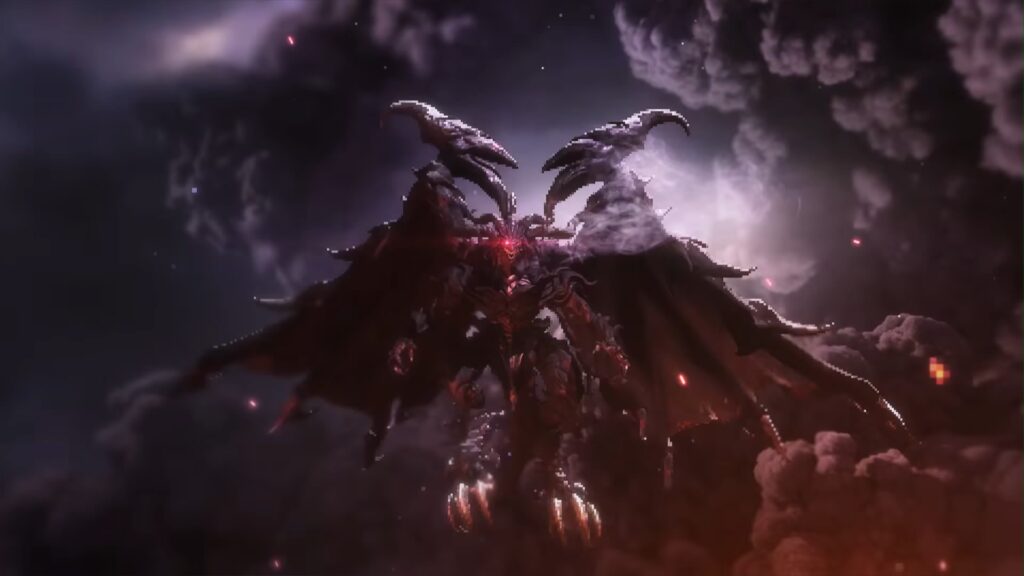
Resonance follows Rain and his adoptive brother Lasswell, two knights of the Kingdom of Grandshelt whose investigation of the Earth Shrine sets them on a journey to save the world of Lapis. After a mysterious armoured figure named Umbra destroys the Earth Crystal, the pair are confronted with the Sworn Six, a group of powerful warriors intent on destroying all eight Crystals in the name of “seven centuries of sin”. Miraculously rescued and then joined by the mysterious amnesiac Fina, Rain and Lasswell set out to thwart their plans, embarking on a quest that feels quintessentially Final Fantasy from the outset.
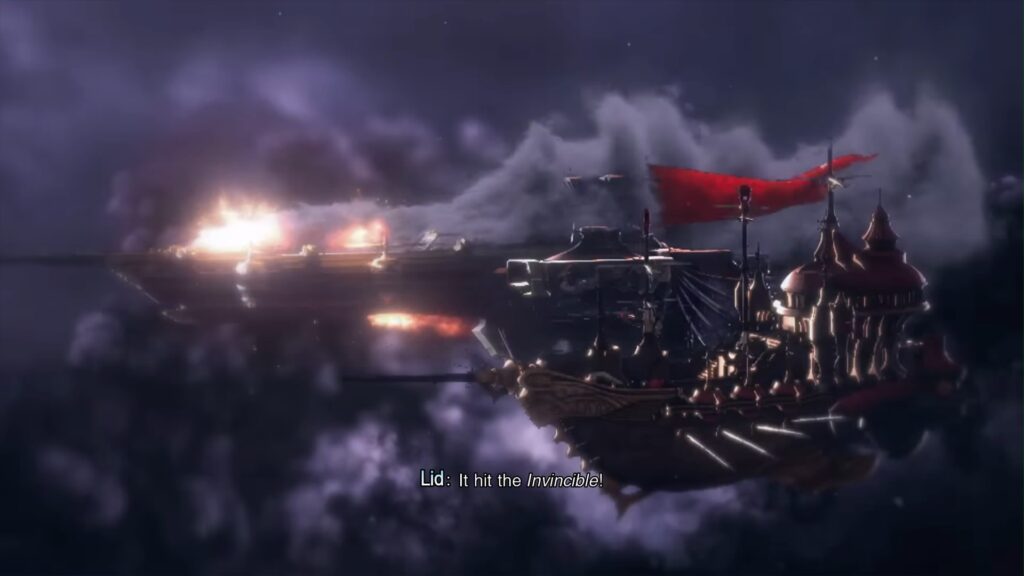
From its globe-trotting adventure and world-ending stakes to its various nations, mysterious antagonists, and Crystals at the heart of the conflict, Resonance wears its influences proudly. Lapis is a world where magic and technology coexist, populated by an assortment of races, monsters, and familiar fantasy trappings that make it immediately recognisable as a Final Fantasy setting. There’s something quintessentially Final Fantasy about watching a herd of grazing chocobos scatter beneath the shadow of an elaborate airship gliding through the sky. There’s little here that feels particularly groundbreaking, but Resonance draws on the series’ established storytelling traditions to create an adventure that feels familiar without becoming weighed down by its own nostalgia.
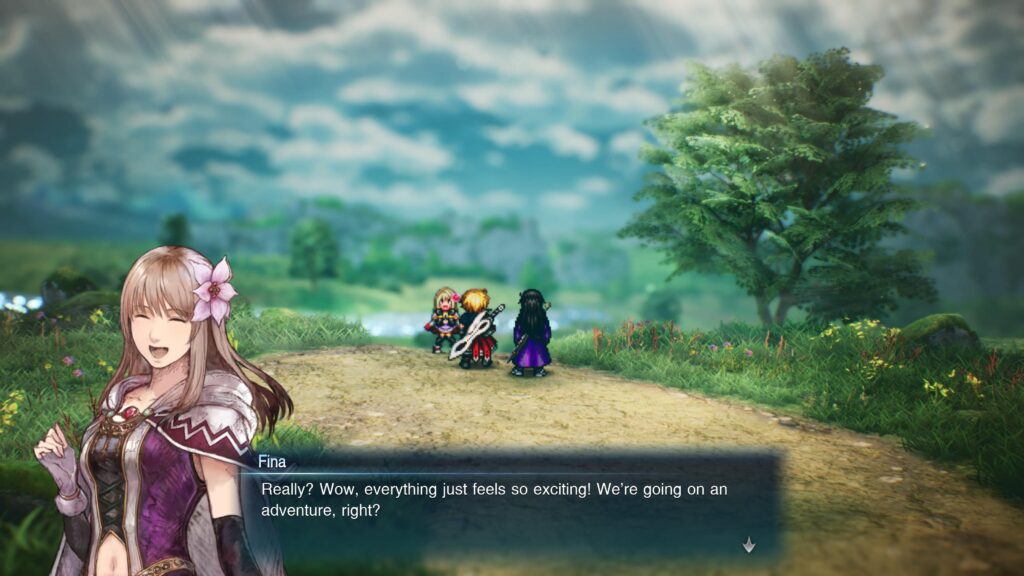
That’s not to say the story of Resonance doesn’t feel like its own, and there were a few twists in the back half that genuinely surprised me. What really impressed me, though, was the clever reuse of certain narrative elements from previous FF games, which demonstrates how creative and economical Square Enix’s writers can be. The story moves at a brisk pace over its eight chapters, and while there were one or two emotional beats that I felt deserved more time, I was impressed by how much it packs in without becoming convoluted or bloated. From subduing a rampant god to breaking out of jail to help lead a rebel uprising, your party gets caught up in all sorts of capers, but their goal of stopping the Sworn Six is never forgotten, only growing in severity as the game plays out.
The other factor that keeps Resonance’s story from feeling rote or thin is its characters. I quickly became enamoured with each new member of my party, from the feisty and brilliant mechanic Lid to the softly-spoken and stoic tactician Nichol. They all feel archetypal but fleshed out, with their own dreams, traumas, and secrets that you learn about over the course of the game. I also enjoyed watching certain dynamics develop between party members, like the love-hate relationship between Lid and Jake, adding another layer of worldbuilding that helps bring this crew together in a way that feels natural. I would be remiss if I didn’t mention the voice acting, which features pitch-perfect performances from the whole cast. Each actor fully embodies their character, delivering every line with a conviction that kept me captivated.
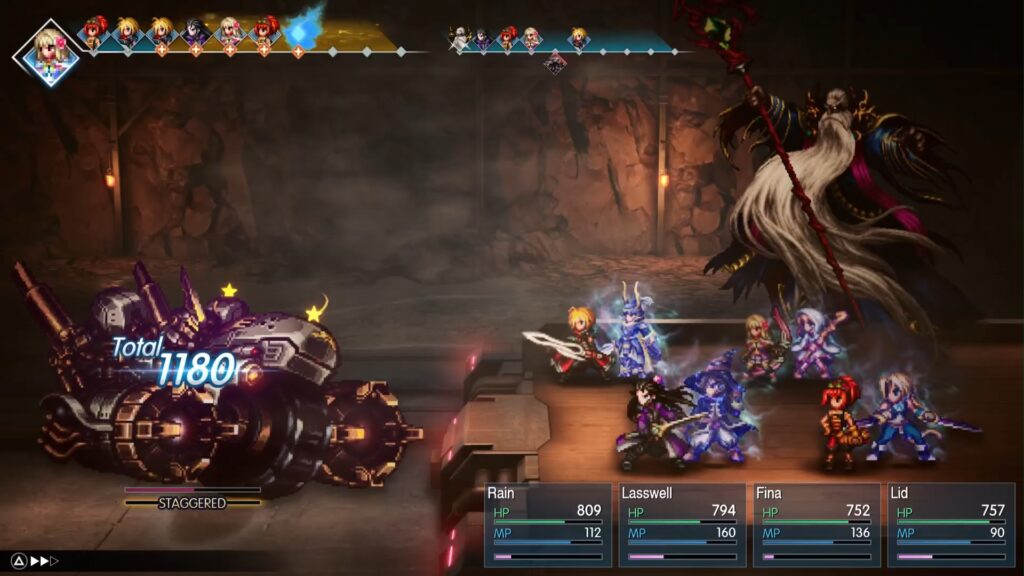
Resonance’s combat follows a classic turn-based system, with players selecting actions from a menu and the turn order for the current and upcoming turns displayed at the top of the screen. While exploiting elemental weaknesses is important, combat is as much about managing enemy stagger meters as it is about depleting health bars. Staggering an enemy leaves them vulnerable to additional damage, prevents them from attacking that turn, and grants the party member responsible a bonus action. With different moves prioritising health or stagger damage, choosing the right attacks becomes an important part of each encounter. Add elemental affinities, support skills, Espers to summon, items to use, and powerful Limit Break attacks to unleash, and there’s plenty to consider beyond simply attacking until an enemy falls. I was always eager to try out a new spell or ability, and the variety of options kept me engaged as I worked out how best to approach each fight.
This brings me to the Visions: ethereal representations of warriors from across Final Fantasy’s history, including the protagonists of every mainline entry. Equipping one to a party member grants access to new abilities and passive buffs, making Visions central to both character progression and combat. As they gain Mastery Points from battles, they unlock permanent stat increases, skills, passive buffs, and additional Ability Points, which you can spend equipping the skills and buffs you’ve learned. The system also feeds directly into combat: stagger all enemies simultaneously to trigger a Sweeping Stagger, giving every party member a bonus attack before allowing you to choose one of their equipped Visions to unleash a powerful Resonance ability. These moves are just as impactful as Limit Breaks, sometimes more so, giving you another reason to plan your actions carefully and coordinate your attacks. The underlying ability-learning system will feel familiar to anyone who has played FFIX and earlier entries, but Resonance adds its own twists to create a satisfying system that makes Final Fantasy’s history part of the gameplay itself.
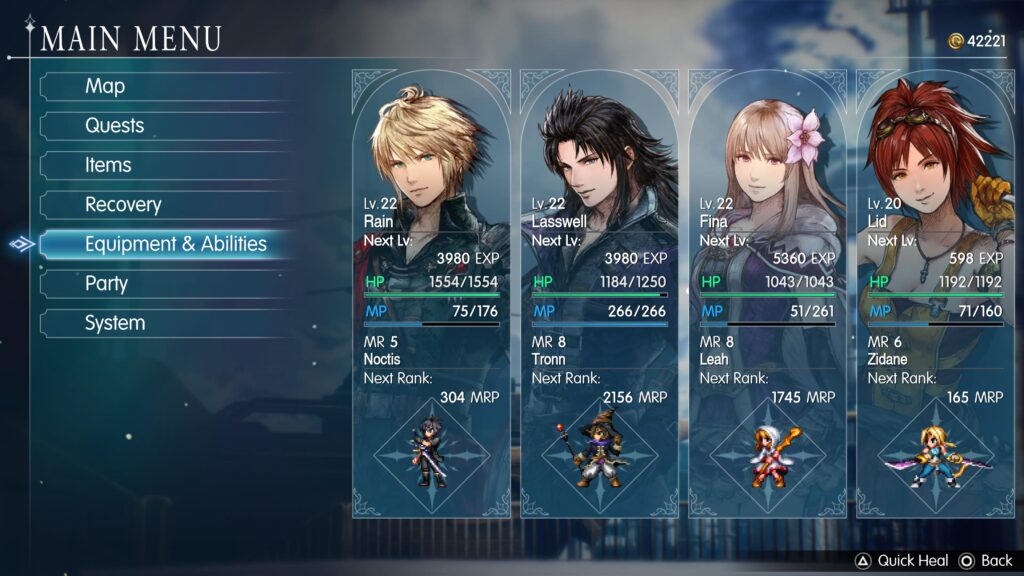
Individual party members also have distinct roles and mechanics. Rain, for example, is a Sentinel designed to draw enemy attention and soak up damage, while Lasswell fulfils his role as a Breaker by staggering foes. Others have their own quirks, such as Jake using Luck to power up and unlock new attacks. These differences mean that changing even a single character can significantly alter your approach to combat. Combined with the skills unlocked through Visions, these distinct roles give you plenty of room to experiment with your party composition and adapt to different encounters. I got a real kick out of watching my characters grow stronger, and soon found myself planning which skills to unlock next, sometimes switching Visions before I’d even mastered them. As enemies grew increasingly tougher, using stronger attacks, hitting the whole party, or applying debuffs and ailments more often, I found it necessary to use everything at my disposal, with Resonance attacks and Limit Breaks coming in clutch many times.
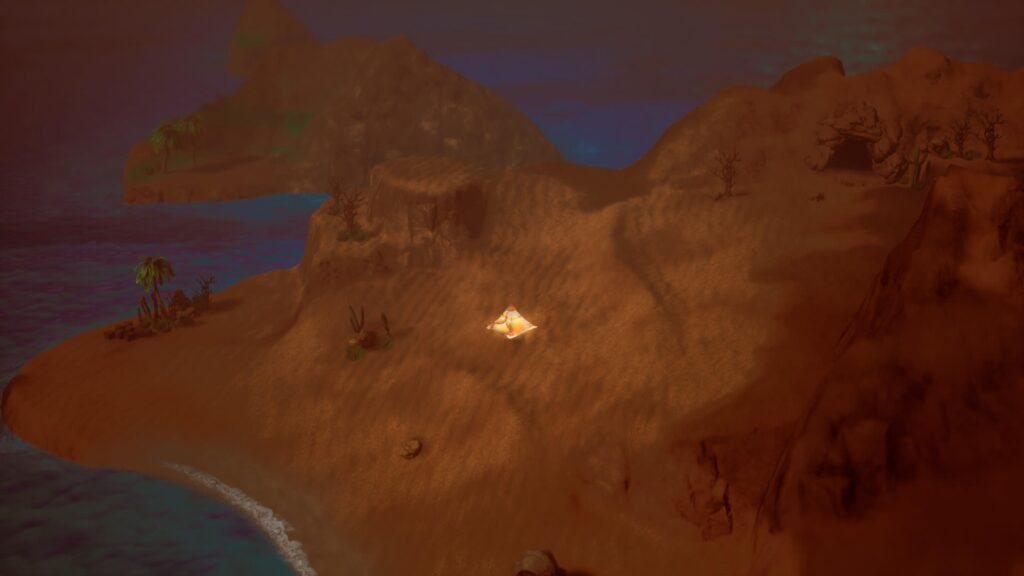
Your pursuit of the Sworn Six will take you to all four corners of Lapis, and there are dozens of settlements and dungeons to visit and explore. With a smattering of secret areas and hidden paths to be discovered, none of these feel too big to explore, especially the dungeons, which are made up of no more than 4 or 5 rooms. Some feature unique but simple puzzle or traversal mechanics, like raising and lowering water levels to sail between sections, or rotating walkways to create new paths, adding some flair and texture. I appreciate the trade-off; shorter dungeons that feel distinct fit better with the game’s pacing, and mean you’re never hanging around in one place for too long, avoiding any potential boredom or frustration. I was deeply impressed by the variety of the locations you visit, especially the capital cities, which work as wonderful visual representations of each faction. Zoldaad, with its rows of red brick buildings and plentiful chimneys, represents the nation’s once industrious, now heavily militarised nature, while the Aquapolis in Olderion sits near the centre of the map, a meeting point of oceans, surrounded by lush forests and waterfalls, a place of healing and trade. Lapis is brimming with personality, from its places to its people, and never feels lacklustre even if it is familiar.
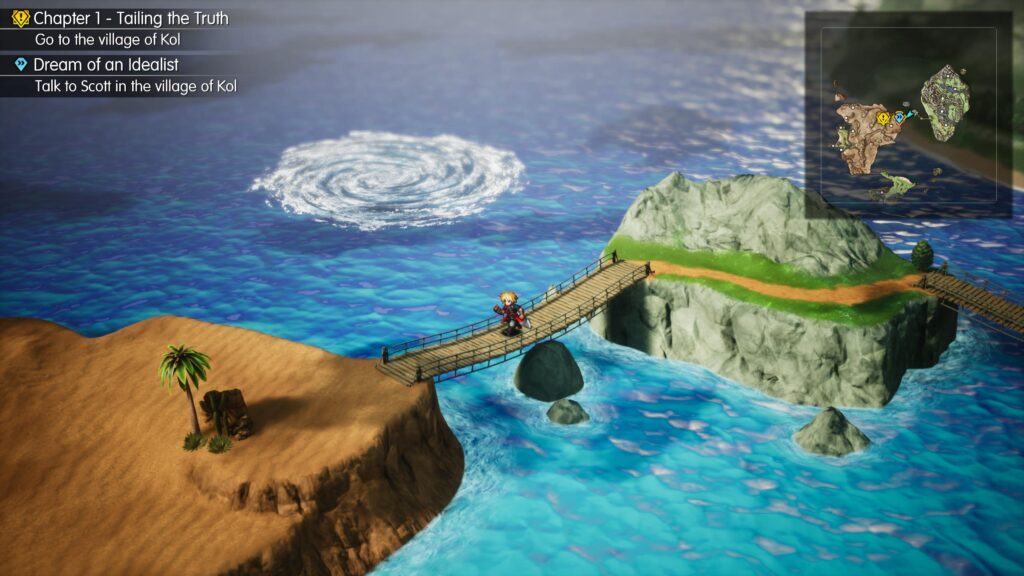
You gain access to the world map pretty much out of the gate, and it goes a long way to building that sense of scale and adventure, especially when you acquire more transportation options. With the story guiding you through the world, you’ll find lots of side content to enjoy. Alongside side quests that pop up on your world map to show you where to pick them up, you’ll also learn about where Espers live from reading noticeboards or talking to NPCs, find mini bosses in caves, uncover legendary gear, collect Visions, and more. Even now, after over 70 hours with the game, and the ending long behind me, I still have secret bosses and battles in the Colosseum to overcome, and intend to. A personal favourite is the addition of the infamous skipping rope mini-game from Final Fantasy IX, and I genuinely gasped when I saw it. Resonance makes all of this content feel satisfying and worthwhile by keeping the length and complexity of it limited while still rewarding the player with worthwhile gear and items.
Resonance incorporates several modern quality-of-life features that make its adventure more approachable without taking away from the challenge. A lot of these are pretty innocuous, like the ability to fast travel to any location you have visited before any time you are outside of a dungeon, while others, like save points at the beginning and end of dungeons, are a noticeable and greatly appreciated addition. Another one of these I particularly liked was the combat radar, which indicates when a battle is likely to happen, letting players heal up or make party changes before getting caught out by a surprise encounter.
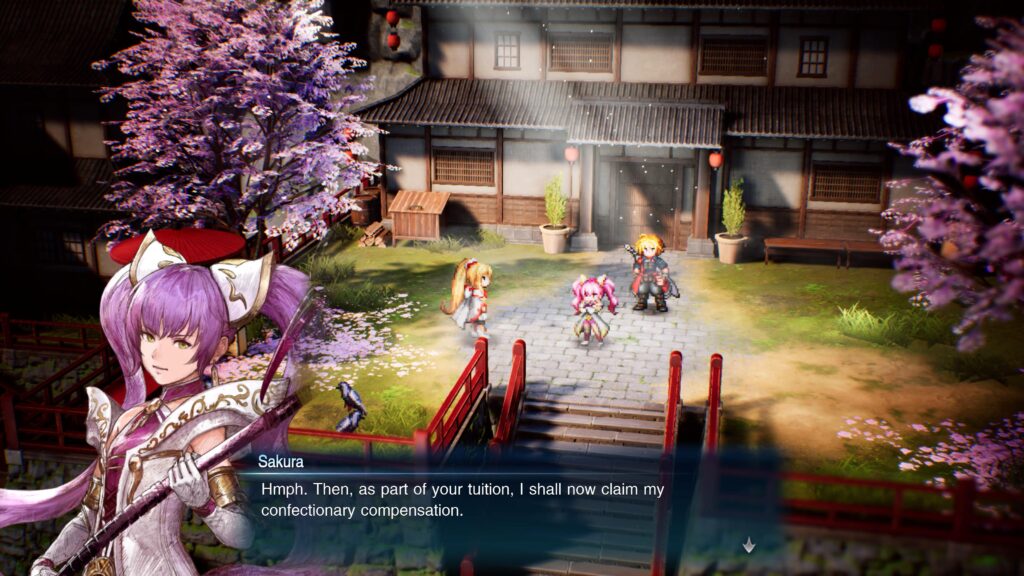
The world of Lapis is beautifully realised in the HD-2D style that Square Enix has been working with for some years, despite Resonance being the first Final Fantasy game to get the treatment. Characters, monsters, Espers, and Visions are all done in fantastically detailed pixel art, and the main cast of heroes and villains are very expressive, heightening the drama of every cutscene. The 3D environments bring depth to the settlements, dungeons, and battle arenas, complementing the detailed pixel art and making the world feel more cohesive. Much of the cast, even side characters you meet along the way, have stunning character illustrations to accompany their dialogue and alter their expressions to match the tone. It’s all incredibly polished, with the blend of 2D and 3D working in harmony, and I was blown away whenever I got to see one of the game’s pixelated cinematics.
In many ways, Resonance’s soundtrack mirrors the game itself; a collection of the series’ greatest hits with some new tracks mixed in to keep it fresh, and it all sounds fantastic! There were countless times when I would stop and listen to a track right to the end, both in and out of combat, and I even made sure to keep a certain iconic warrior around so that I could listen to the most bombastic rendition of ‘Battle on the Big Bridge’ to date! It also can’t be overstated how impactful it is to wander into one of the Sanctums of Light to unlock a new Vision and hear a track you recognise from another FF game. The game’s music doesn’t pull its nostalgic punches, and it is all the better for it.
While Resonance’s conservative design and reliance on familiar elements aren’t inherently faults, the game does have one particularly disappointing shortcoming. When gaining Vision, you visit crystal sanctums dotted around the world map and go through a sequence learning about that FF game’s protagonist. While this is absolutely delightful in premise that plays heavily on fans’ nostalgia, there were several where plot points or revelations were mentioned, ruining key moments in those games. It’s disappointing, as Resonance strikes me as a great game to suggest to someone looking to get into the Final Fantasy series, but I would hate for those people to have those games spoiled for them because of how the Visions are handled.
Final Fantasy Resonance might not push the series forward in any radical way, but it is true to its name, highlighting the elements of Final Fantasy that have echoed throughout the series and resonated with fans over the decades. The Visions system sits at the core of the game, giving the series’ history a tangible place in both combat and character progression, and exemplifying Square Enix’s masterful reworking of familiar themes and mechanics. Despite some unfortunate spoilers and safe narrative design, Resonance’s stunning blend of 2D and 3D visuals, majestic soundtrack, engaging combat, and hours of rewarding content helps bring these elements together in an adventure that feels quintessentially Final Fantasy.

Final Fantasy Resonance is out on October 22nd across PC, PlayStation 5, XBOX Series X/S, Nintendo Switch, and Switch 2.
The game was reviewed on PlayStation 5 with a controller.
We would like to thank Square Enix for the review code.
Will you be picking up Final Fantasy Resonance? What is your favourite mainline FF game? Let us know in the comments below, and join the Gamer Social Club Discord to chat about your favourite games, play in community game nights, take part in giveaways, and more!


