Fortune Favors The Bold: A Gamble
If there’s one category I’ve written about more than any other in my time in the gaming space, it’s the soulslike category. It never mattered if my goal was something as simple as trying to snuff out The Age of Fire or as complex as putting an end to Geppetto’s grand plan for the City of Krat, no quest was ever too small for me to accept the journey ahead. Just like every one of you beautiful people reading this review, I found myself drawn to the endless challenges these games presented and the dark tones their stories were so keen to tell. Yet as with everything in the modern age, some ideas are bound to evolve until there’s nothing left to consume but that which made them so special.
Soulslikes for me are a fever dream that keeps pushing the goalpost forward. Every time I think there’s nothing left to create, some seasoned developer goes out and revolutionizes the formula in a way that respects what makes the genre great, while introducing new ideas. Whether that’s a new type of story setting or something as goofy as the main character being a Spinosaurus with a Buster Sword, sometimes a little creativity is all you need to keep the rocket moving towards its destination. But that isn’t always for the best. Without naming anyone, sometimes a little ambition can derail your idea before it even reaches its first stop. But what happens when you take that leap and land among the stars when all you were trying to do was break through the atmosphere? Let’s find out. Welcome to my review of Valor Mortis.
The War To End All Wars: The Napoleonic Wars Reimagined
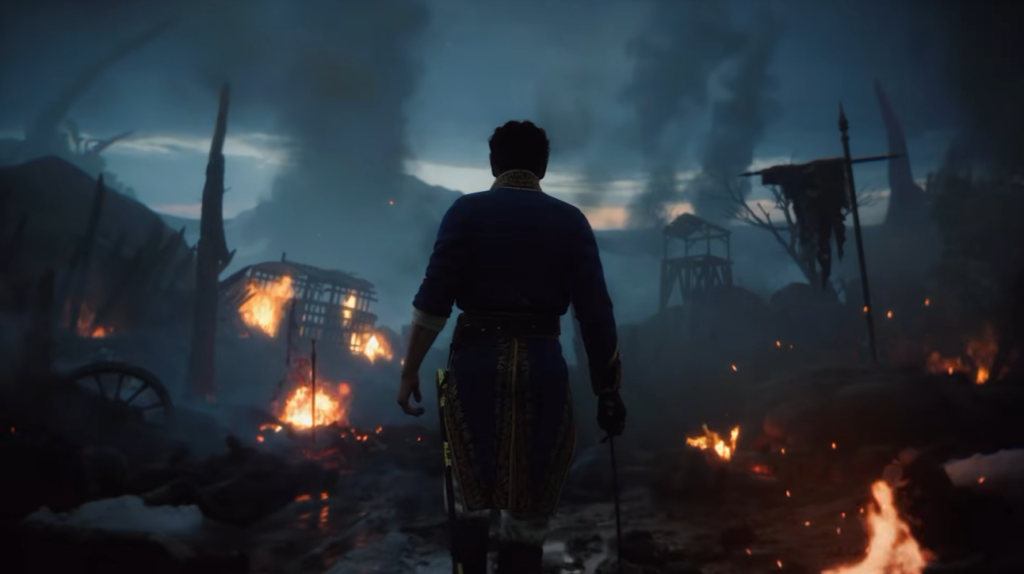
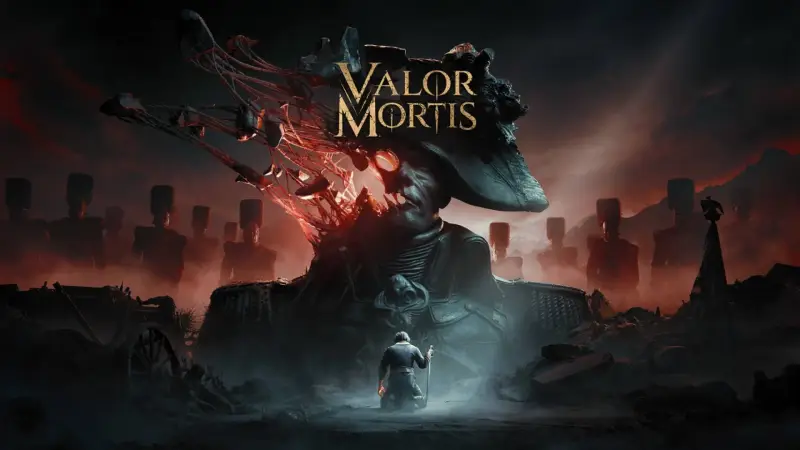
Valor Mortis is a game that is almost too ambitious for its own good in a sense, but the aspect that stands out the most is how well the game functions on a base level. Not only does it ditch the stereotypical third-person camera veterans like me have ingrained into our brains for this type of game, but the complete experience presents itself as one of the most beautifully wrapped packages put to the genre in years. The premise of Valor Mortis’ story is; you play as William, a soldier from Napoleon’s Grande Armée who is resurrected and thrown into a war-torn version of 19th century Europe. In this alternate timeline, Napoleon’s endless war with the continent has bled over into the supernatural world and unleashed a plague that has ravaged and infected civilian and military populations alike.
The game constantly presents William with not only the horrors of war in the form of the blood-soaked fields and forests that were the centerpiece of the Napoleonic Wars, but also a shocking number of cities filled with civilians who were simply caught in the crossfire. In Valor Mortis, the battlefield may feel like home to William, but that doesn’t take away from the fact that he is witnessing the face of war at every one of the venues the game throws you into. At the center of William’s mission is the question of why he was resurrected when so many others have fallen, and most importantly, what Napoleon’s plan for him is in the days after you awake in a mound of corpses. At its core is a tale deeply rooted in betrayal and death that leans into the uncomfortable truths about war that many games brush to the side for the sake of entertainment.
Besides a story that is constantly pushing William to his edge, you have a tale that starts off relatively tame and eventually spirals into some of the most creative and well-done writing in a soulslike that I have seen since Lies of P. Bringing life to this story through the power of their voices is a star-studded cast of standouts leading the charge, such as Vincent Cassel as Emperor Napoleon and community favorite Jennifer English as the mysterious Shrike. It would be disingenuous of me to ignore James Alexander, the voice of our main character William, as his performance is legitimately the best one of the entire game. Through his voice acting, you can genuinely tell that William is a man torn between the decisions he has to make in his search for answers. There are moments of sadness and defeat, relief and even sometimes happiness, and James does an amazing job at not only selling William as a conflicted hero just trying to survive, but also someone who’s trying to save the world from horrors beyond his own imagination.
Besides William and his quest to discover the truth behind Napoleon’s madness, you have a great variety of side quests and minor NPCs that further reiterate the point I mentioned above about the horrors of war. A good majority of the side quests, mind you there are over a dozen total, build off this idea and run with it in the best way possible. You won’t be hunting enormous monstrosities or killing dozens of enemies in typical soulslike fashion, but rather exploring the weight of war on mankind in a way that almost feels too intimate to experience in a game that is mostly centered around killing people who have been reduced to mindless drones.
It doesn’t matter if you’re simply helping orphans experience some glimmer of their old lives before the war ripped away their world, or finding a note scribbled by a soldier just like William reminiscing on the horrors he’s committed in Napoleon’s stead, each one feels like the perfect seesaw for painting a story meant to make you think past the hordes of enemies in front of you. Am I analyzing it on a level that is way past what it’s supposed to present? I’d say so, but that’s what makes it so damn good to experience. It’s very rare that side quests consistently provide a ton of substance besides “go here and slay this boss to get something new and shiny” in a soulslike, but One More Level has created an experience from a story perspective that feels nearly perfect for its dark tone. The Napoleonic Wars may be a time period neglected by the gaming world as a whole, but Valor Mortis presents it in a way that is refreshing and horrifyingly terrifying in the same breath.
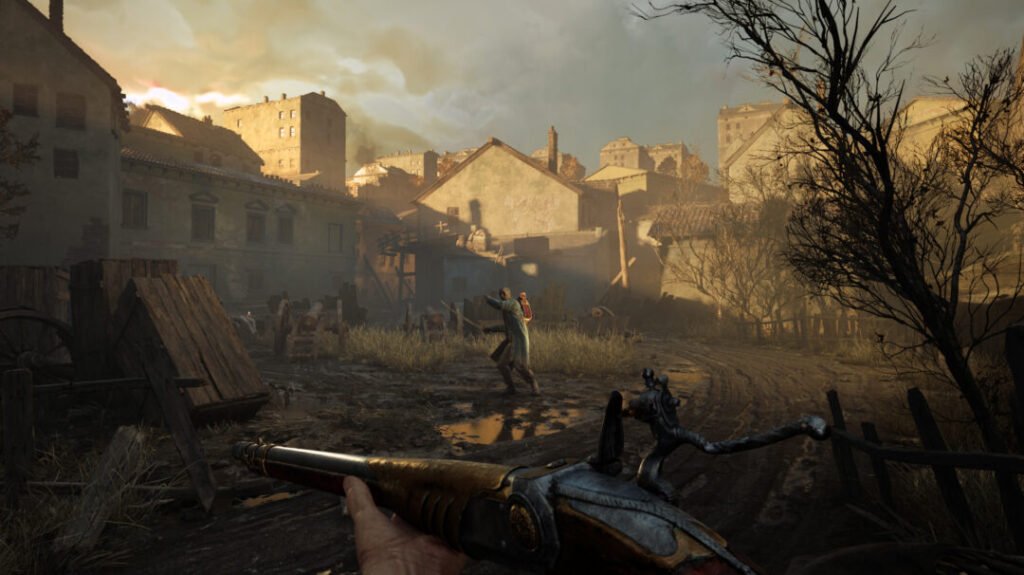
On the world presentation side of the equation, Valor Mortis leans into the brutality of war and the destruction caused by this plague, called Nephtoglobin, upon the world that your playthrough takes place in. You get a varied number of levels spanning across ten different chapters, with each one presenting its own type of scenery that is as unique and compelling to explore as the one before it. It doesn’t matter if you’re craving a derelict city infected by its former inhabitants or a university filled with monstrous experiments lurking around in the dark, Valor Mortis has a setting for every flavor. Each one is a marvel to look at, and if they succeeded in one aspect it’s making the world feel like a Metroidvania-style maze with a light emphasis on some horror elements that has all sorts of mysteries and goodies for you to discover around every corner. To further build off the hefty number of side quests that the game offers is the constant feeling that there is no path that isn’t worth your time in Valor Mortis.
More often than not, a path might lead you to whole new areas filled with chests and other items that are meant to assist you on your journey. There were more than a few times where I legitimately felt lost in both my playthroughs, only to come to the realization no path is a dead end or wasted opportunity. Every path, no matter how big or small, eventually loops back around in each of the ten areas, and you’ll rarely find yourself staring at a wall with no inkling of where the safety of a lantern is. Honestly, I enjoyed the overall world layout and the way it feels so interconnected as much as any game I’ve played in recent memory, and it does just enough to push you into the abyss without holding your hand too much. The actual world navigation itself in particular is one of the most fun aspects of the entire experience, and once you get your hands warmed up to it you’ll be swinging and wall-running your way through the world as if you were born to do it. The Ghostrunner DNA is immediately recognizable, and it somehow melds perfectly into an otherwise standard semi-open world experience, as it gives you the freedom to explore the areas in a way that feels refreshing as opposed to tedious.
Throughout the different zones are also scattered memories that you are able to activate, which give you a bit more backstory on what’s going on in the shadows, and it really does just feel like an extremely cohesive world whose story and overall setting are perfect for the game One More Level has given us. Some are as simple as reliving a soldier’s last moments in the remnants of a battlefield, while others lean into the horrors of war and how it affects those who are stuck in the crossfire. They don’t offer anything more than a bit of peace in between the violence and a chance to understand the world around you, but I think that’s right where they belong.
The Fluidity of Death: Brutal, Bloody, and Challenging
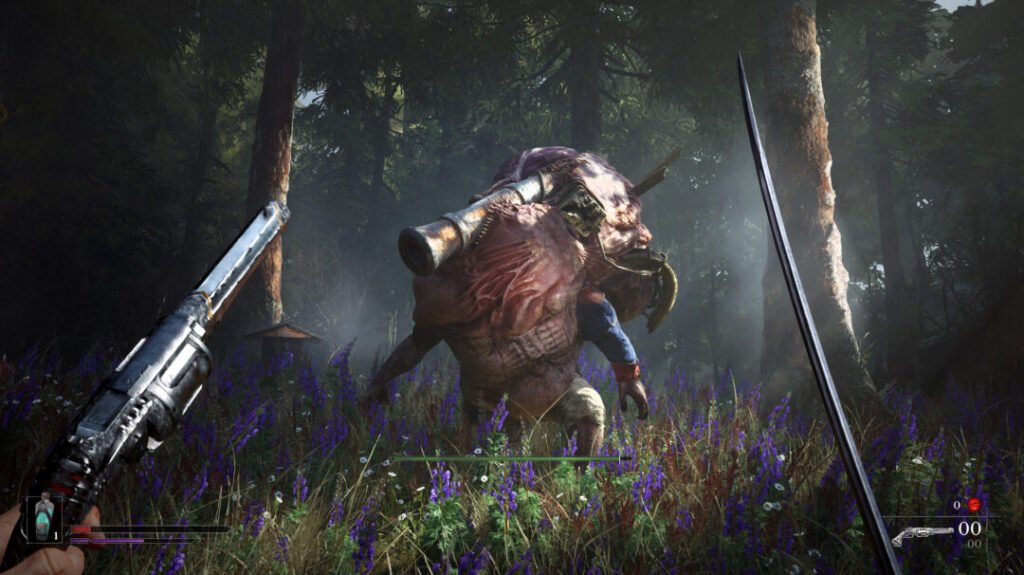
Alright, now that I’ve told you how much I loved the story, the world, and even the side quests, I believe it’s time we dive into the aspect that most people are here for, the gameplay. Now I should start off the section by saying I can already see a world where reviewers who got their butts kicked immediately discounted Valor Mortis as “too unforgiving” or “too hard,” and truthfully they’re wrong. I’ll go out and say it right now for all those like me who love this type of game, the difficulty loop and the overall gameplay systems are nearly perfect for the type of experience it is. Now, if you’ve read my reviews before, you might be thinking “Well, you have reviewed dozens of soulslike games, you just don’t get it.” Am I a bit biased? Maybe, but I think you should keep reading to find out the why. Let’s dissect it a bit.
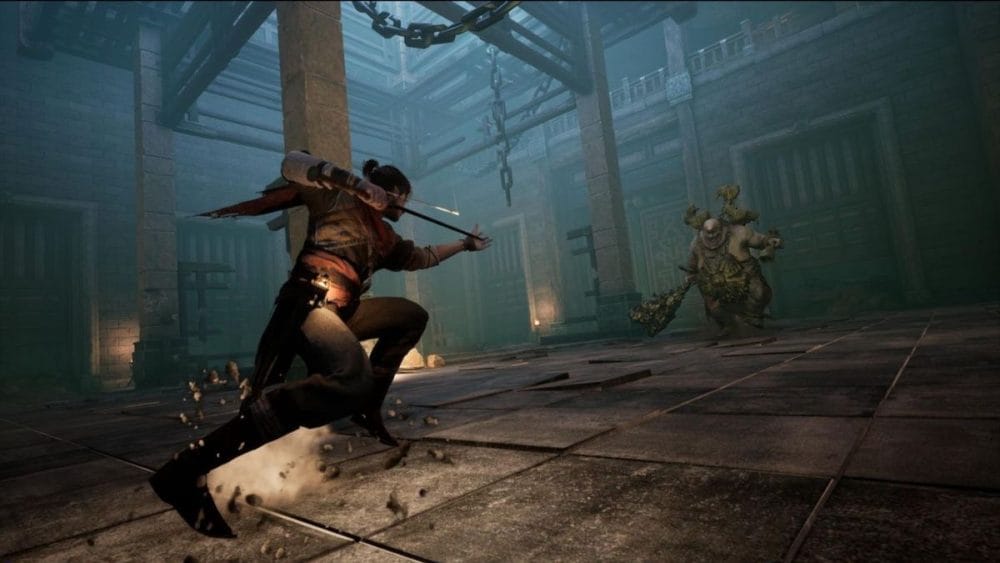
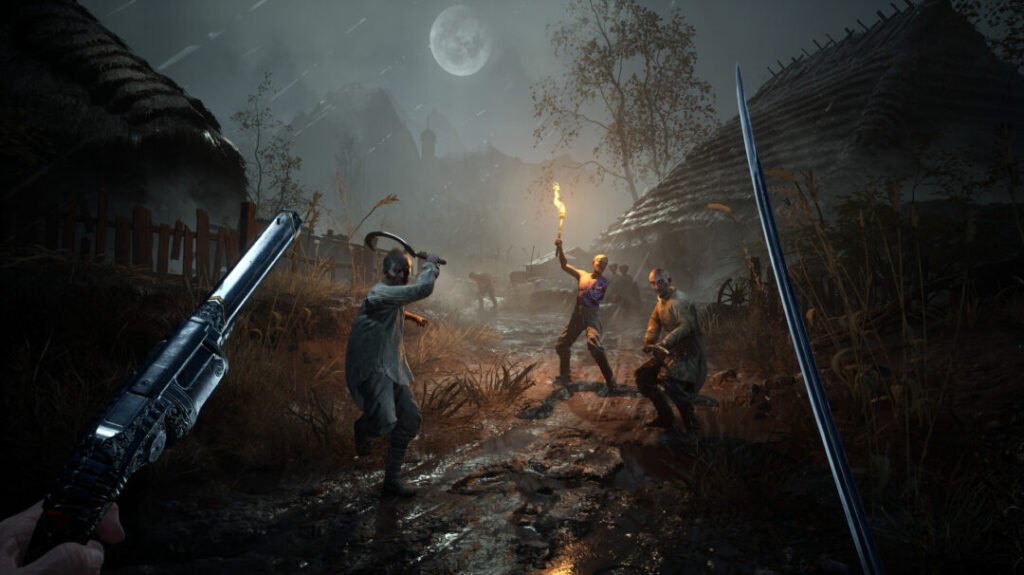
One More Level has accomplished something with Valor Mortis that feels like it belongs amongst the greats of the soulslike genre. The way its gameplay loop merges the movement of Ghostrunner with the combat of games like Bioshock and even Dishonored is a feat in its own, but when you throw in genre staples pulled straight from games like Dark Souls, you really do end up with a recipe that feels impossible to execute. Well, I’m here to tell you they did it, and they did it convincingly. The game somehow seamlessly gives you a variety of ways to approach every situation while giving you a combat system that is fluid and really does allow for a level of skill expression that I firmly believe most people will love. The game is firmly based around a parry system that feels as satisfying to use as Sekiro and other games like it, but what makes it flow so nicely is the seamless movement system William is able to employ while you’re in combat.
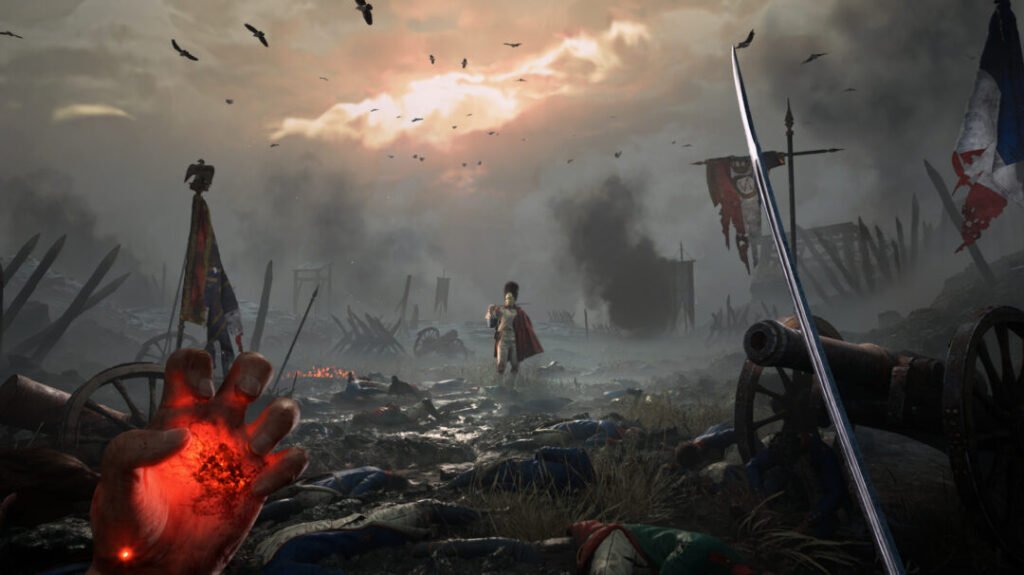
With the push of a button, you are able to quickly dodge to the left or right without any lapse in your inputs, and the game encourages you to weave your way in and out of combat, parrying enemies’ moves as you plan your next attack. Each enemy has its own strengths and weaknesses, and you’ll quickly figure out what works best against them as you make your way through the story. Some can simply be parried once before their posture bar is filled, allowing you to pull off a brutal finisher, while others employ a varied range of attacks that are meant to catch you off guard if you aren’t paying attention. There were more than enough times where I died simply because I underestimated how many combos some of the basic enemy types can employ and how slow my own reactions were. Stabs, slashes, and everything in between are not only in your own arsenal, but the enemies’ as well. The balancing act of mastering your own combat preferences while learning how each enemy functions is a really fun game of cat and mouse that constantly flips as new enemy types are introduced.
You do have a varied number of weapons at your disposal to combat Napoleon’s seemingly endless armies, but I do see a world where some might say the amount could feel a bit limited. You have access to 3 melee weapons, 3 ranged weapons, and 3 supernatural abilities, called transmutations, that each feel like their own beast that you can use as you see fit. I’ll be honest, I found the most enjoyment in the first two weapons you unlock, the cutlass and the pistol, and rarely ventured outside them, as they honestly just complimented how I ended up playing the best. The others do certainly have their own weight and situations that they thrive in, but they didn’t feel as much of a fit for the fast-paced gameplay loop as the weapons that are heavily balanced as a “jack of all trades” as opposed to a tool for a very specific situation.
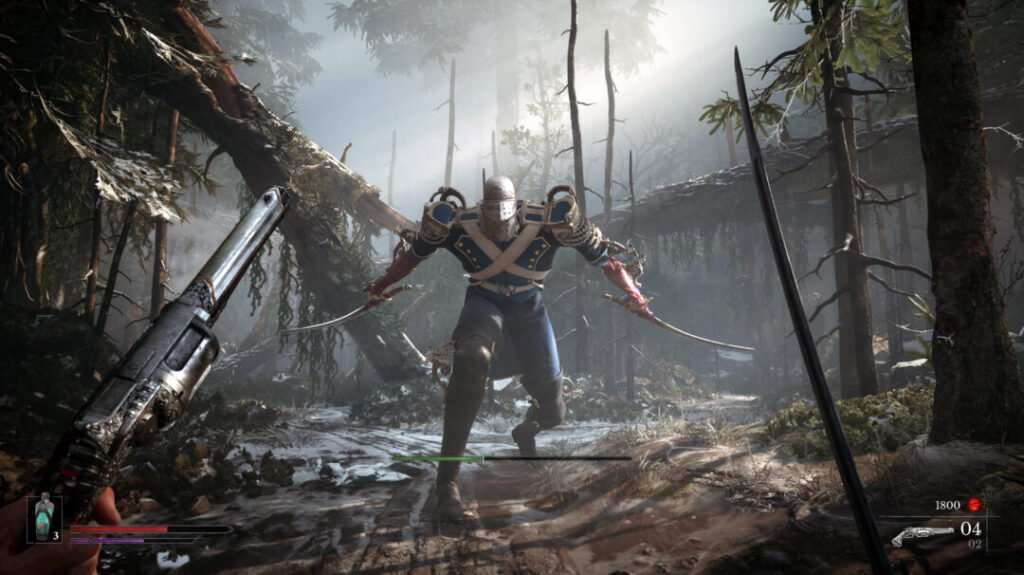
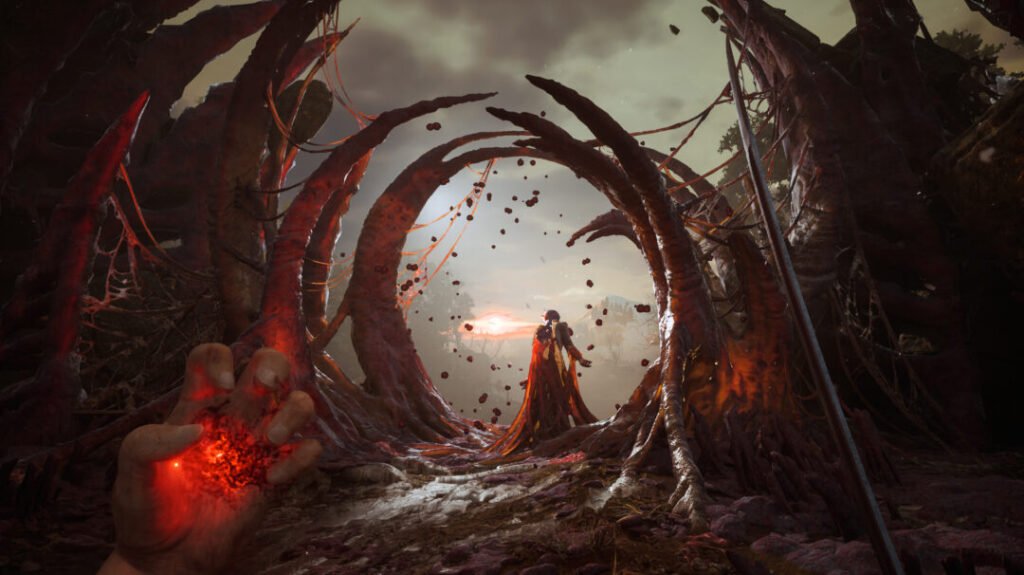
The transmutations do add a nice twist to a solid experience, but once again I found myself mostly leaning on the first one you unlock. Simply put, the other two are extremely unique in what kind of power fantasy they let you experience, but they felt more gimmicky than practical in 90% of situations. Now let me reverse for a second and clarify that I didn’t mind the limited number of weapons you have access to. Just because I’m a basic man with pedestrian tastes doesn’t mean that you can’t fall in love with the weapons and experiment with them to your heart’s content. If anything, the inclusion of a small number of weapons and spells is a testament to the idea that skill expression and freedom of choice in this game is what’s going to make or break the game for a good chunk of people. You are more than given enough tools and baseline transmutations to succeed in every situation, so I firmly believe that they accomplished what they set out to do without adding a bunch of filler to the experience.
The game also employs a standard upgrade system that feels right at home in the soulslike genre. There are crafting supplies scattered around the world for both your weapons and the transmutations, with each one having its own tree with interchangeable passive bonuses that range from more stamina gained from parrying an attack, to your pistol having a chance to give you a bullet back if you hit an enemy. If you’ve played a soulslike before, this emphasis on crafting materials and how you spend them should feel standard by all accounts, and the sheer amount of them you find scattered around the world makes it so you can have multiple weapons maxed out if that is your preferred playstyle.
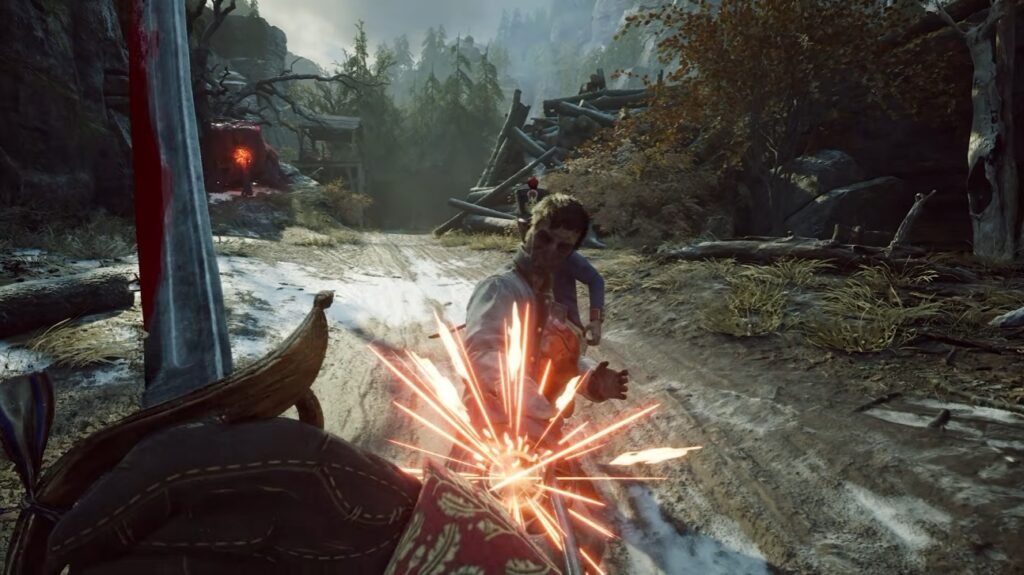
The last aspect I want to talk about is the boss fights themselves. There are ten major bosses located at the end of each chapter and a ton of optional minibosses scattered around the world, and each one offers their own challenge and strategies on how you should approach them. Some are hulking masses of flesh and bone that look like they were pulled straight from John Carpenter’s The Thing, while others appear to be human just like William is, with the same skillsets and moves you employ against the more human-like enemies. The meat and bones of most of the boss fights can be boiled down to how good you are at pattern recognition, and more importantly, how good you are at parrying their sometimes wildly curated movesets.
The game employs a heavy emphasis on mastering the parry with basic enemies, and this same train of thought is present in most of the boss fights. Some might be dreadfully awful to time and successfully parry their moveset, while others are more forgiving, and the game does a good job at making each one feel the right amount of challenge while feeling unique in the same breath. No two bosses really felt the same, and there are some genuinely great moments when you get to go toe to toe with them. If anything, you never get the feeling that any of the bosses were simply recycled into different models, and each one feels like a mirrored reflection of the zone they reside in.
On the technical side, I have genuinely nothing to complain about. Valor Mortis ran at a flawless 100+ fps for the entirety of both of my playthroughs without a single crash, stutter, or frame drop to speak of on High. For a game this visually dense and mechanically fast paced, that kind of consistency isn’t something to take for granted, and One More Level deserves real credit for shipping something this polished on a technical level.
Closing Thoughts: An Experience You’ll Soon Not Forget
Valor Mortis is the kind of ambitious swing that soulslike fans have dreamed of for years. Witnessing the horrors of war through William’s eyes is one of the best stories brought to the genre in recent memory, and its dark setting of an alternate 19th century Europe carries as much weight as the narrative itself. The gameplay seamlessly grafts the brutality of the soulslike genre with the fast-paced fluid movement of the Ghostrunner series. Valor Mortis is a genuine triumph, and one every soulslike fan needs to experience.

Valor Mortis was reviewed on PC. Gamer Social Club would like to thank the devs and publisher for the code.