Yes! It is I, Sean, back for a second year of coverage of Play.NYC! This annual production to showcase indie and small studio game developers, now in their 11th year, is piloted by the folks over at Playcrafting. Along with the Play.NYC expo, Playcrafting plays host to frequent game jams, showcases, and developer engagement events to create linkages in the indie gaming scene.
Now, I know that last year, I divvied up my coverage into three unique coverage points. Namely, a top 5, a specific highlight on Latinx in Gaming, and coverage of the developers present utilizing the Turbo Engine. This year, we’re going to do something a little different. I’ll be providing a highlighted game from each day of Play.NYC 2026. While in no particular order, these are going to be my Top 4 from the weekend!
Thursday’s Highlight – The Inklands
Imagine, if you will, a game in which I am not relying on a 5090 to tell me the story (seriously, anyone wanna help a guy out?). Instead, I am relying on the power of my own brain and the strength of written word. This is where The Inklands can step in.
Inklands is pitched as a “collaborative” story-writing game, where two players (the storyteller and the player) will engage in creating a story through writing. But here is the catch – there cannot be a story without a protagonist. So, we need to create one!
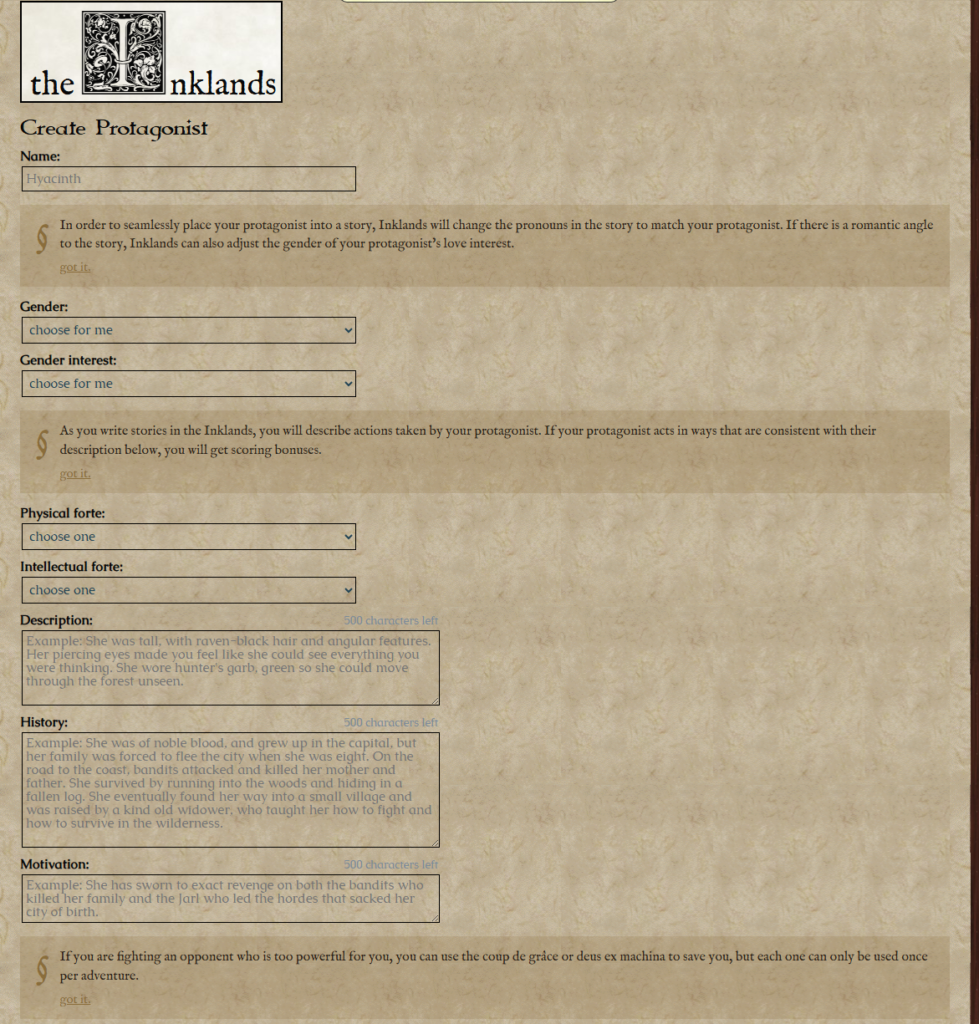
To create a protagonist in Inklands, you’ll need to craft the traits like a name, gender, gender interest, physical and intellectual fortes, along with deeper traits. Where did they come from? What drives them to adventure? If their back is against the wall, what would their coup de grâce look like? If the gods must step in, what does this story’s deus ex machina look like?
Once you have done that, it’s time to find a story! Due to Inklands be in the very early stages of development, there is only one story – from the lead developer!
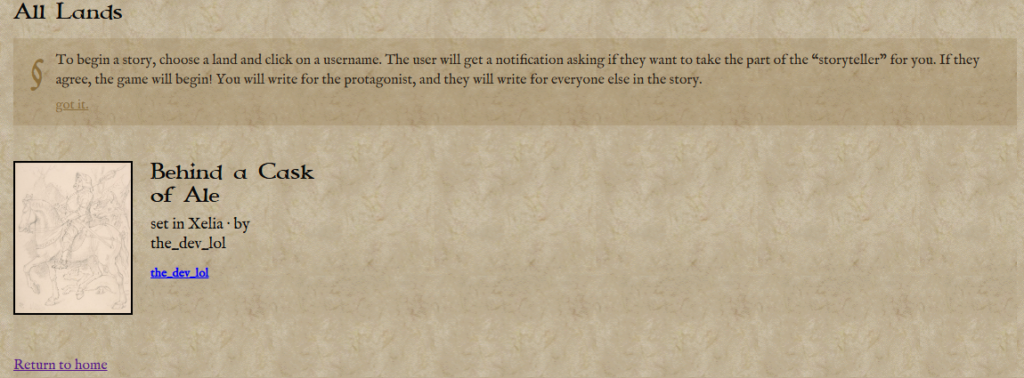
To embark, you’ll click on the Storyteller’s name. If they agree, then the story will commence. The player will write for the protagonist that they have created, and the Storyteller will write for everyone else. Thus commences our story!
As both you and the storyteller progress through the story, you will move through a small map located in the upper left-hand corner of the screen – much like a floorplan of where the protagonist is. But you might be asking “How is this a game?” Well, that’s where the writing really comes in.
How Inklands is “Played”
At points in Inklands, there will be a challenge where both yourself and the storyteller will need to provide dialogue of what is going to happen. But think of this as more of a debate with another person. Whoever wins the debate will have the story steered along the lines that they provided. How do we know who wins? The Heroism Scoring System!
“Inklands wouldn’t be a game if winning didn’t require some element of skill, would it? Inklands uses a heroism scoring system to resolve challenges and battles. When a paragraph that you write is scored, it is given a score from zero to one hundred. This is not a general measure of how “good” your writing is. To measure something that complex and subjective would be impossible to do. Instead, the score reflects only how heroic the prose you write is.”
What does that mean? Use those old time words like King Arthur would and be sure to touch on those themes of classic fantasy, as the game will be comparing your writing to a litany of 18th, 19th, and early 20th century fantasy works to writing. The more heroic your prose, the higher your score!
I’ll be curious to see how Inklands pans out, given the growing accessibility to fantasy writing and, let’s be honest, a desire to escape the current future world which we reside!
Be sure to check out tomorrow’s coverage here, where we’ll dive into what I found for Friday at Play.NYC