
Living in the future is terrifying. It’s not uncommon, especially in online spaces, to feel that the idea of the human soul itself is being senselessly chipped away at by algorithms that encourage hate for profit and corporations that are eagerly hand-waving the fruits of humanity’s creative labour into destructive, unthinking programs. Imagining that simply parsing our collective lived experiences as data is enough to manufacture something even moderately comparable.
Understandably, there have been a lot of artistic works in recent years that attempt to reckon with this. While every perspective has value, I’ve often felt like there’s still a major elephant in the room. The uncomfortable discussion of what happens next if we don’t change course. If that inevitability truly is real. We don’t have to acknowledge it, but what if we did for a moment? What then? Who will we be if they get their way?
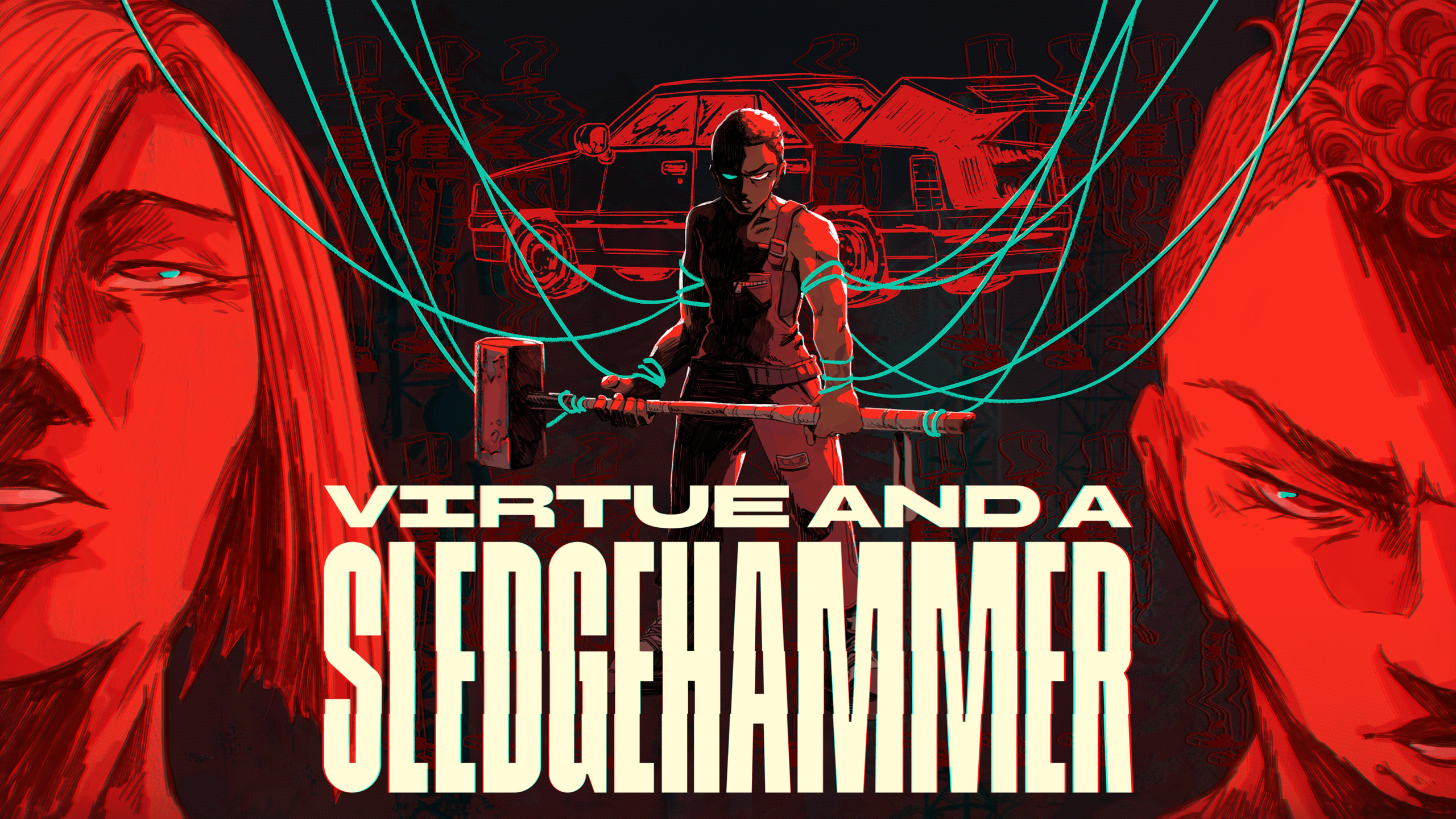
Deconstructeam and Selkie Harbour’s Virtue and a Sledgehammer is a game dedicated entirely to confronting raw emotion. It’s the type of energy needed for exploring these uncomfortable questions, and it refuses to allow itself to be bogged down by them. It is a game about anger and love, and no matter how complex its musings the preservation of humanity’s soul in the age of empty technical evolution become, it remains loyal to its one true mechanic – taking a sledgehammer to the place you once called home. It’s untangling that catharsis that makes it one of the most powerful experiences I’ve had with a game all year.
A Violent Homecoming
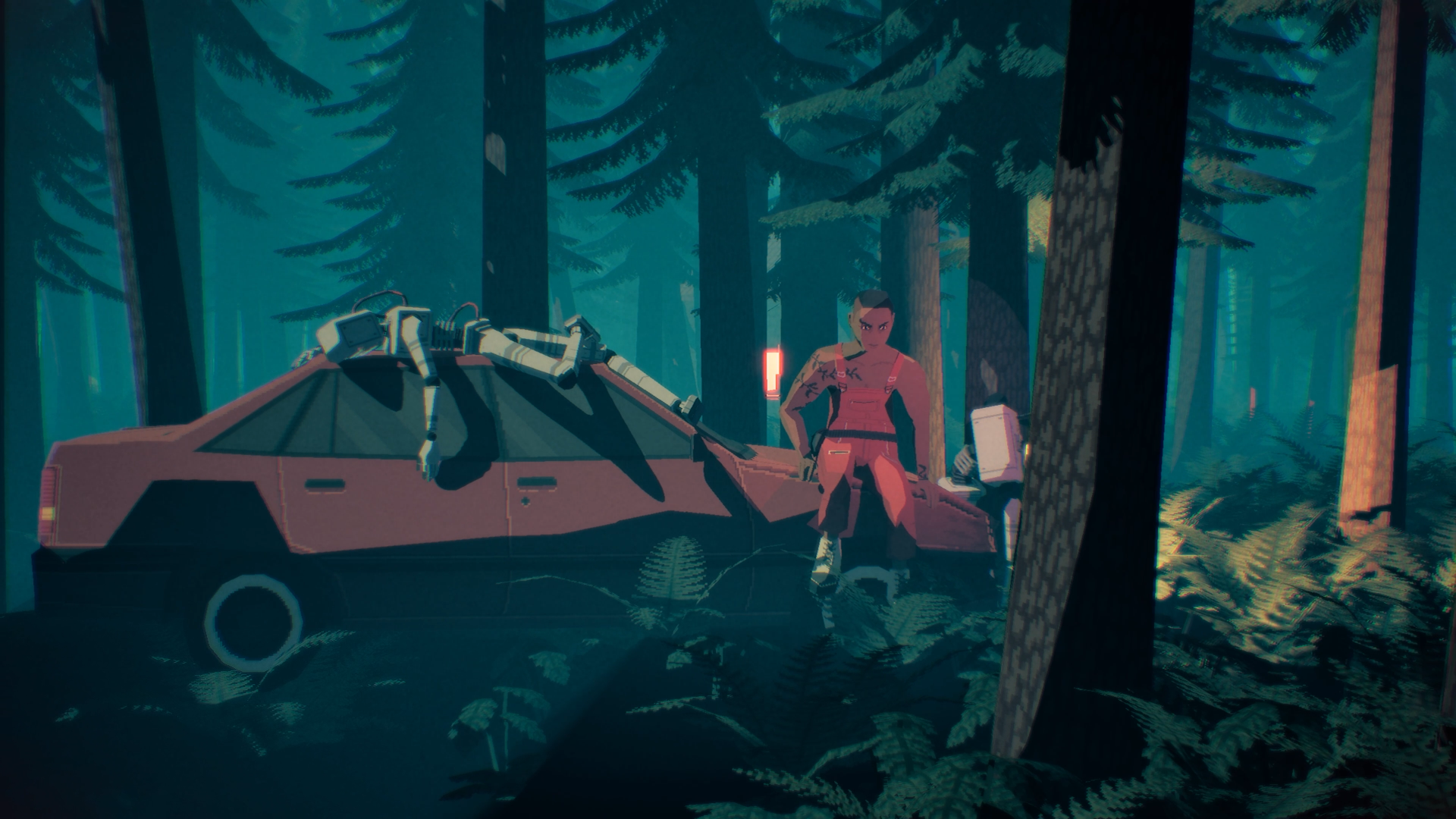
Virtue and a Sledgehammer opens on the scene of a car crash. Protagonist Pratelle is seen to have haphazardly crashed into a tree, smashing two humanoid robots in the process. It appears deliberate. She untethers herself from atop the vehicle, opens the trunk, ignores the corpse of her deceased mother inexplicably packed inside, and lifts out a sledgehammer. The game then instructs the player to “HOLD RT TO DEAL WITH YOUR PENT UP RAGE” as she stands before a stack of computers and server towers scattered loosely across the outskirts of her hometown.
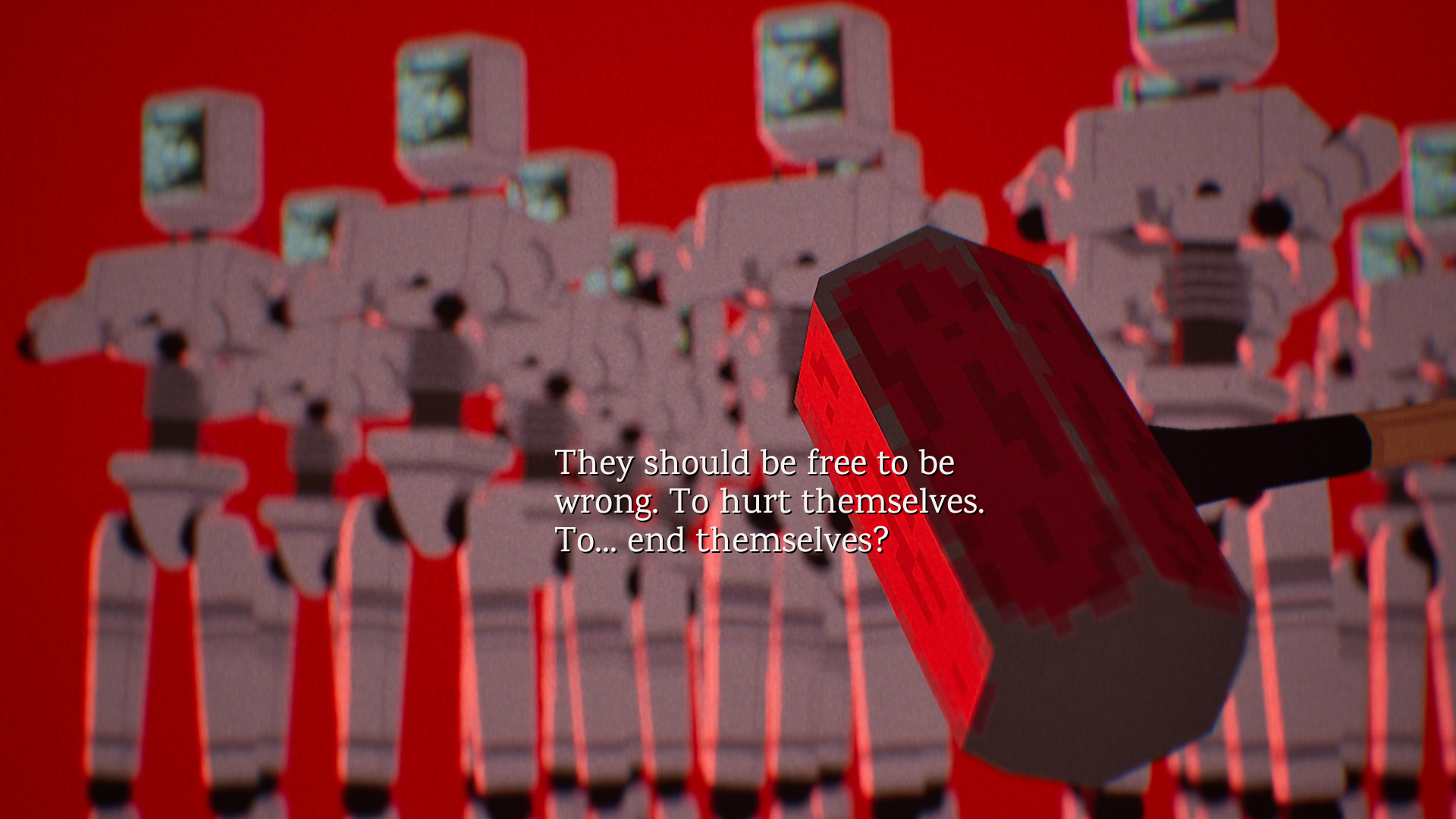
From here, Pratelle’s solemn journey begins, as the player collaboratively carves her destructive path through the small town of Virtud, a place once home to a messy but comfortable familiarity, now inhabited by faceless machinery instilled with the memories of those who once lived there. Despite their artificial nature, they cling to life, begging for mercy and fighting back as the player and Pratelle obliterate everything in their path.
Between the destruction we see scenes from Pratelle’s childhood that give way to a gripping family drama at the core of her journey, exploring the ways that hate can manifest as a form of love. This extends to not just people, but places too, as Pratelle is ridiculed and mocked by the lingering algorithmically influenced personalities of Virtud’s citizens as she razes her once familiar hometown – but no matter how harsh their words might be now, they all break the same way.
While the catharsis of this chaos would likely be enough to pull Virtue and a Sledgehammer across its roughly four-hour finish line with a passing grade given the strength of its atmosphere and writing, it’s in the latter half where everything starts to coalesce, right on the doorstep of repetition, that makes the lasting impact so strong. Ultimately this is a story about how people explore grief, and if there’s truly a way forward for humanity without an endless cycle of destruction. It’s maturely written and one of the few stories I’ve experienced that’s willing to confront the future awaiting us with the bluntness of a sledgehammer.
Destruction As An Act Of Love
Those looking for mallet parries or aircombos will be out of luck here as Virtue and a Sledgehammer is committed to one central action – holding the right trigger to lift Pratelle’s hammer, and releasing it to strike down whatever dares cross her path.
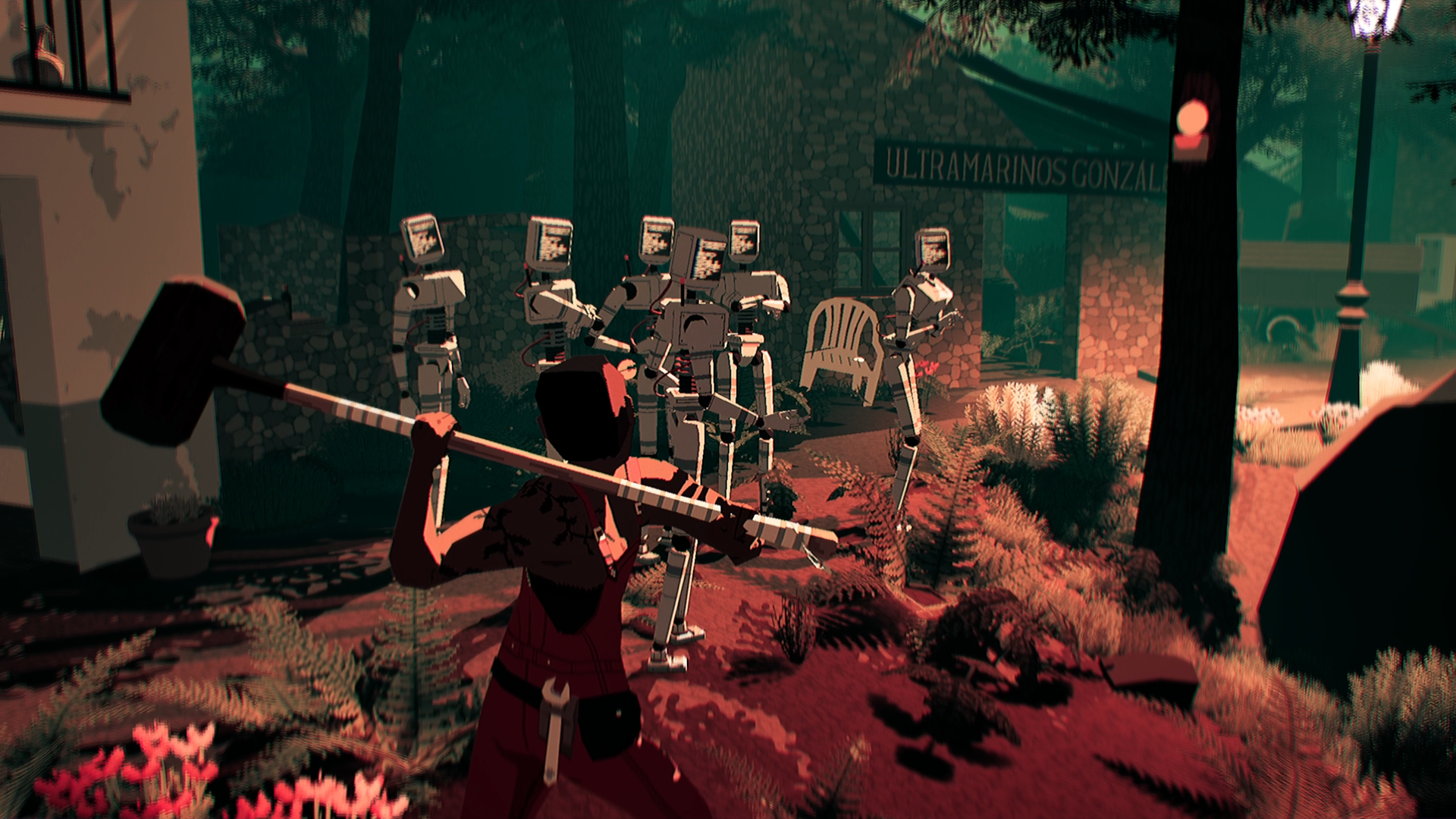
Through centering its entire design around one act, each strike of Pratelle’s hammer invokes a blissful ludonarrative reflection of intent. The weight of wind-up feels longer each time you hold the trigger, especially to its most powerful state as Pratelle strenuously lifts the imposing object above her head. As she marches farther into her hometown and deeper into her memories, each laborious swing takes on a new meaning.
Every creative element reinforces these emotions. The angular low-poly visuals. The often dark and harshly contrasting color palette. The technically marvelous and satisfying real-time destruction rendering. The equally imposing and serene score from level and sound designer Paula “Fingerspit” Ruiz, which is truly remarkable. When Virtue and a Sledgehammer soars, it’s when each of these are singularly excellent elements crescendo into exactly the right harmony.
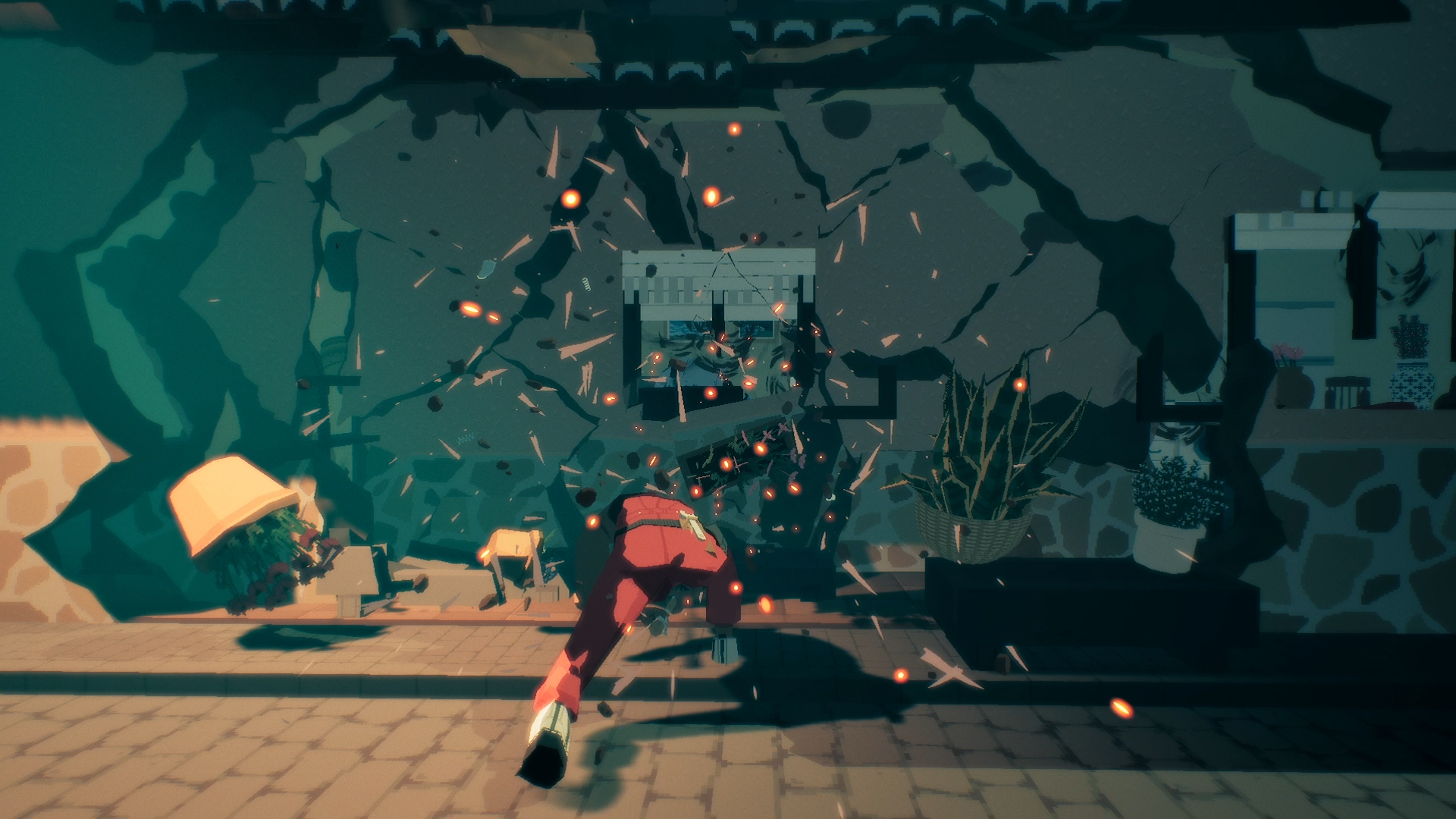
During my time with the game, the only regret I was left with was the feeling that I was perhaps cheated out of a few more of these moments. While the game is structured very linearly, some major flashback sequences are unlocked through destroying a number of defined floating red objects scattered around each area, or level. In some cases, the game offers branching paths for progression that funnel the player to the same forced progression points, meaning that I finished the game without experiencing some of these scenes.
While this is consistent with the game’s storytelling given that we are locked to Pratelle’s perspective on each playthrough, and I admire that it incentivizes replays, the slow progression didn’t leave me ecstatic to re-decimate Virtud immediately upon rolling the credits. Regardless, it’s impossible to argue that I was left emotionally unfulfilled by the end of the game, but I still would have appreciated the option to experience these scenes more conveniently.
Verdict
Virtue and a Sledgehammer is an in equal parts angsty and somber exploration of the complex relationship between love and hate. Selkie Harbour and Deconstructeam have eloquently married a simple gameplay premise with tight pacing and a timely emotional core, asking big questions about the enduring nature of humanity without shying away from confronting our destructive nature, making for one of the most essential narrative experiences of the year.

Virtue and a Sledgehammer is available today for PC. The game is Steam Deck Verified. Gamer Social Club would like to thank the developer and publisher for the code provided for this review.


