

When I previewed Stupid Never Dies last month, I came out of the demo intrigued by its approach to character action combat in a rogue-like structure. In a roughly three hour container, these ideas were introduced with plenty of space for further mechanical exploration alongside the game’s quirky, oddball love story.
Having finished the full game, I’m disappointed to say that the intrigue I felt about Stupid Never Dies’ systems and combat flow did not endure past its opening. My following 20+ hour experience with the game was that of mindless repetition, bolstered by a barrage of poor design decisions stapled onto a rogue-like structure that fails to meaningfully grow, and a dull narrative that fails to string any of its ideas together.
Do You Believe That Love Can Bloom In a Dungeon?

Set against the backdrop of a war between humans and supernatural monsters who once lived in harmony, Stupid Never Dies follows Davy, a zombie who becomes trapped in a shopping mall freezer during the war alongside a frozen human girl named Julia. Upon seeing her, Davy falls head over heels in love with her and vows to bring her back to life.
He’s eventually freed from captivity by a mad scientist and a Were-Chihuaha, who enlist him to travel through a dungeon (accessed through the mall’s toilet) to defeat the King of Monsters after he gains the ability to absorb the energy of other monsters.
From its opening moments, there’s plenty of style and eccentricity to be seen in both Stupid Never Dies’ visuals and storytelling, so it should come as no surprise that there are alumni from Capcom and Grasshopper Manufacture involved. While I was initially captivated by the creativity in its characters’ designs and concepts, both the storytelling and writing quickly began to wear thin.
The major issue with Stupid Never Dies’ narrative is that it establishes its main objective, defeating KOM, in its opening moments and spends the next 20 hours of its runtime moving that goalpost away from the player. This not only feeds into the repetitive structure of its gameplay, but the majority of the story also wastes time spinning its wheels without providing the player with a sense of accomplishment for their hard work or meaningful incentive to continue progressing.

Contemporaries in the rogue-like genre understand that storytelling itself can be a meaningful reward, even for failure, but Stupid Never Dies is content with its cast being one-note and ultimately unmemorable. Painfully little room is even given for the central romance, with each character barely fleshed out beyond their introduction. Even in cutscenes following major milestones or boss fights, the time spent with its cast is often not to get to know them, but to witness them ramble off about pointless exposition to further justify wasting the player’s time.
Stupid To A Fault
And really, that sense of having my time wasted permeated throughout my experience with Stupid Never Dies despite the game’s apparent attempts to negate it. Davy’s dungeon dives mainly consist of battling through waves of enemies while progressing further and further downward. Davy can absorb the souls of certain enemies to take their form, each with their own distinct set of abilities and controls. These vary from short-ranged melee focused monsters such as Werewolves, flight based creatures like Harpies, and even unique monsters like Reapers, which have the ability to command enemies to attack alongside the player.
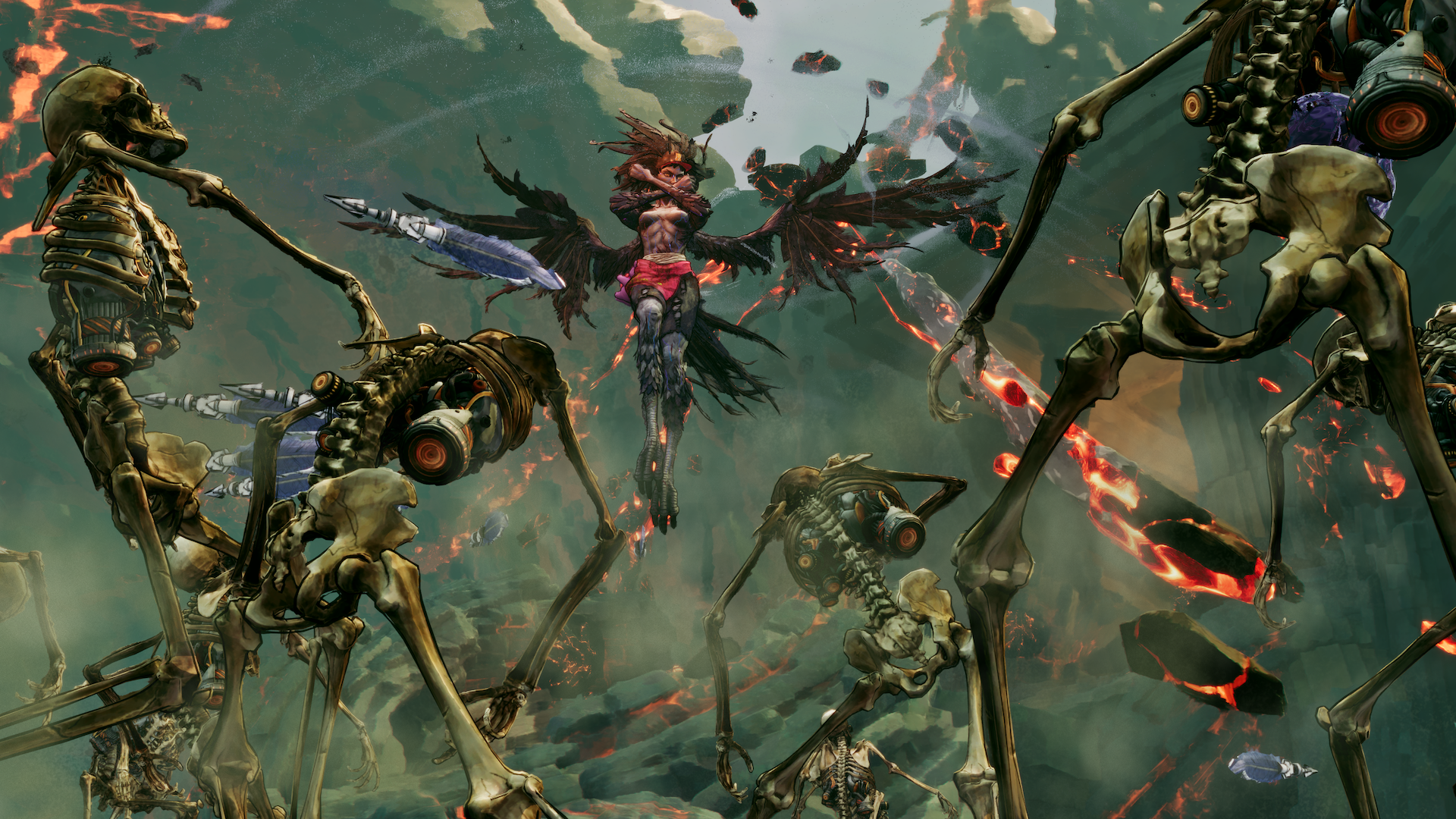
While discovering new transformations remains rewarding throughout, and the choice to make each transformation last for only three floors forces experimentation, the design of the combat itself undermines this significantly. Combat is centered around fighting swathes of monsters à la Dynasty Warriors rather than battling foes one-on-one. Even still, more often than not enemies feel like spongy tanks that adhere to the same rigid attack patterns, and the majority of transformations feel ill-equipped to account for this. This is made even worse by the lack of a lock-on feature and the camera frequently interrupting combat, making it hard to focus attacks when you’re down to the last few monsters on a given floor.
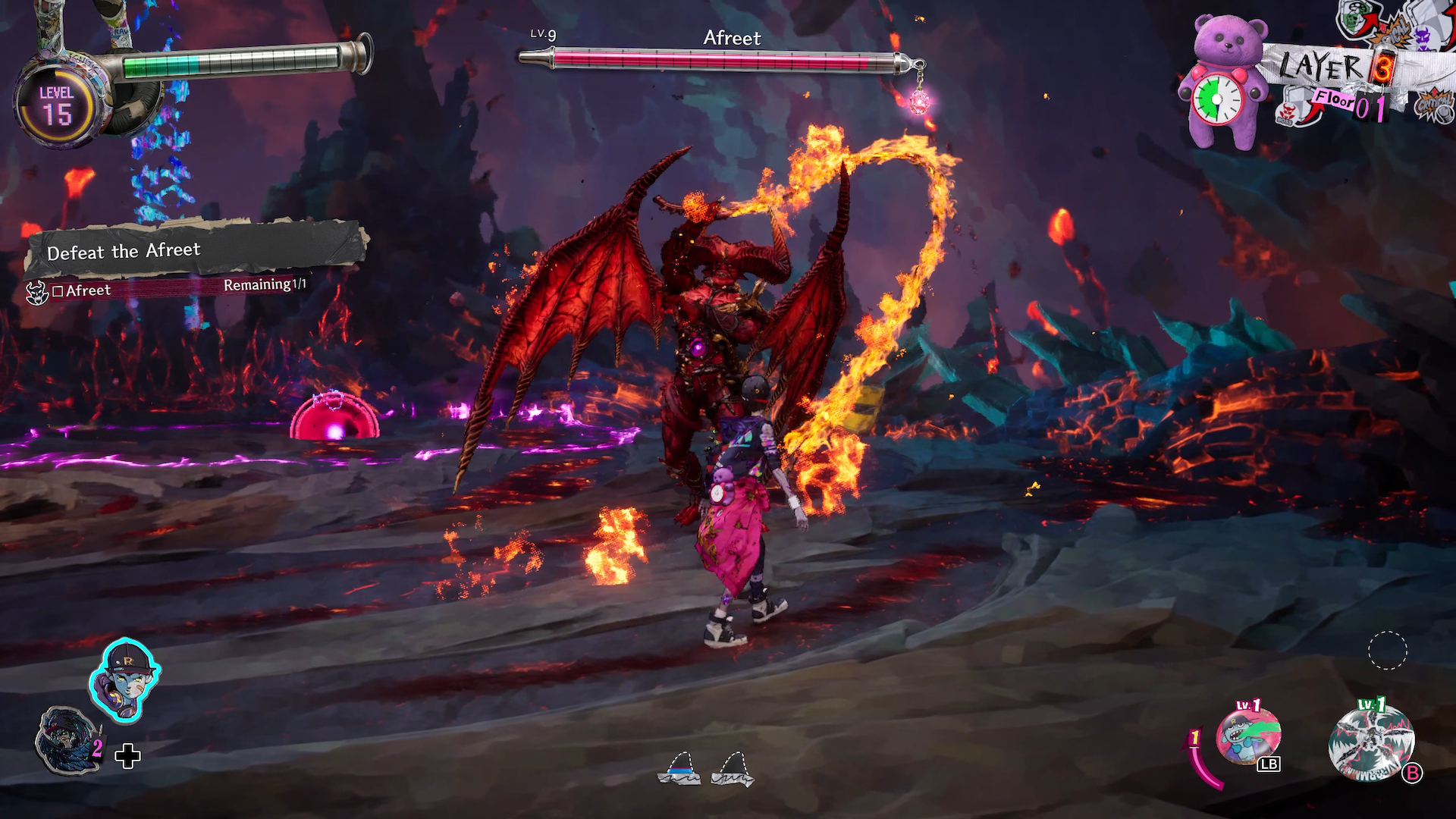
As you can likely imagine, this can lead to some disastrous one-on-one boss battles, where an entire combat system designed around fighting hordes of monsters is consolidated into fights against very powerful single enemies. It’s here where the player is forced to make best use of the ‘Stupid Parry’, a counter that, when timed correctly, can unleash a massive attack in exchange for some restorative damage. Unfortunately, even the most skilled use of this ability is not enough to save these from at times being total disasters, especially when specific bosses can zip around arenas making them impossible to attack while you’re likely down to your last few seconds on the clock.
According to its developers, Stupid Never Dies was designed around the question “What if you could play a 30+ hour ARPG but reach max level in 30 minutes?” As a result, after each dungeon run or death, Davy’s EXP multiplier will increase dramatically, making leveling up far quicker on each subsequent run. Soon after the intro, players also unlock the ability to skip layers of the dungeon to accelerate Davy’s descent, all in order to maximize efficiency to make it to the goal before the timer runs out, as each run is also strictly timed.
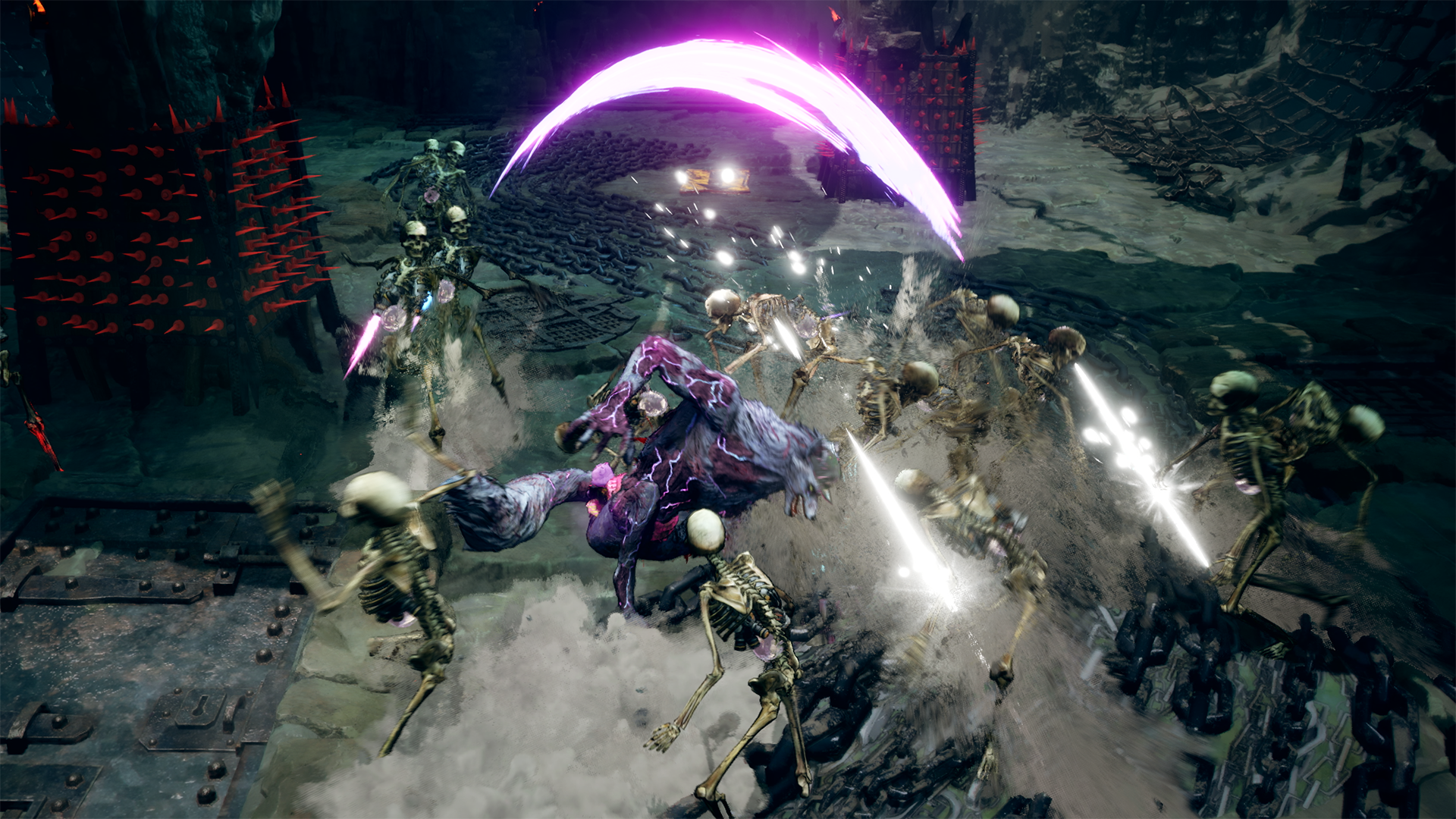
While all of this sounds promising on paper and makes for some unique runs early on, it quickly becomes apparent that there is not enough variety in Stupid Never Dies’ systems to capitalize on these concepts. I almost immediately found myself running into the same build patterns with my runs, as the lack of meaningful variety in its upgrades or transformations meant there was no room for me to experiment in a way that felt somewhat embarrassing for a rogue structured game.
The game relies heavily on loot systems that see the player returning from the dungeon each time with plenty of currency and gear but, like with the upgrades, none of these do enough to substantially change the flow of combat. Davy can be equipped with multiple body hacks and permanent upgrades to enhance his base stats, but every time you dive back into the dungeon it’s still going to be a slog of spongy enemy encounters, ineffective rewards, and tediously light progression.
The dungeon itself is also painfully dull to navigate, adhering to a strict set of arenas that quickly grow tiring. Even when it tries to shake things up by adding more verticality or gimmicks to existing biomes, these changes materialize too far into the monotony to leave any sort of impact.
Despite its core conceit of quickly empowering the player in ways that most rogue-likes save for the endgame, Stupid Never Dies found new ways to waste my time at every turn. The worst of its uninspired dungeon crawls came towards the end, as the game devised new arbitrary ways for me to waste 30-50 minute runs with no meaningful incentive or rewards. While there was a lot of potential in its combat and transformation mechanics, almost all of it is squandered by poor encounters and contradictory design decisions.
Both these narrative and game design shortcomings coalesce in a conclusion that feels utterly devoid of any originality. Both the story and boss design lean heavily on tropes for this predictable finale that robs the game of any satisfying lasting impression after over 20 hours of repeatedly completing the same objective with little meaningful variation.
Verdict
While aesthetically sound, Stupid Never Dies shows its entire hand far too early, unveiling the depths of its mechanics in its opening and subsequently failing at every turn to justify the 20-30 hours that follow, oftentimes instead going out of its way to spin the player in circles. Its failure to commit to its rogue-like foundation in any meaningful way makes for a bloated, repetitive action game that’s made even worse by a generic story mired by tropes.

Stupid Never Dies releases on October 21 for PC and PlayStation 5. This review was played o. PlayStation 5. Gamer Social Club would like to thank the developer and publisher for the code provided for this review.