It’s difficult being a fan of Lovecraftian themes in 2026. There’s a veritable cornucopia of games all boasting horrors beyond human comprehension, and Eldritch gods threatening to destroy humanity. Given the subject matter it’s not surprising that most of these games are horror titles (it’s not called Lovecraftian Horror for nothing), but what if you’re a big baby like myself? How do I get my Lovecraft fix without just re-reading At The Mountains of Madness? Lucky for me, there’s more than a few titles that lean much more into the mystery and intrigue of the genre, and I do love a puzzle.
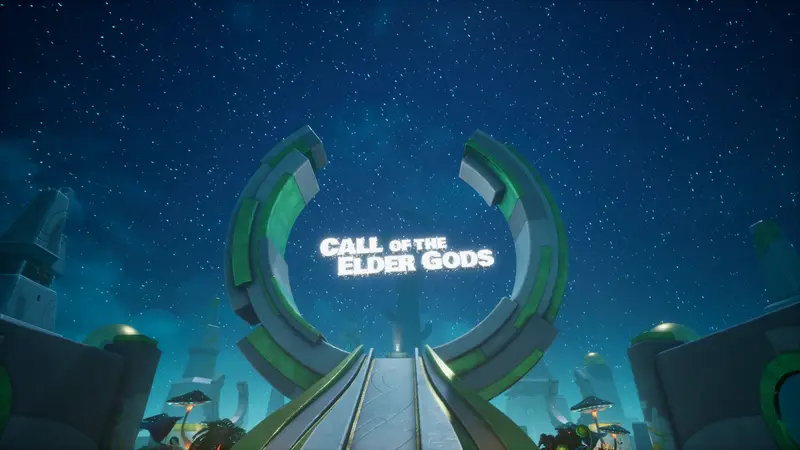
Call of the Elder Gods is the sequel to 2020’s Call of the Sea. Set 30 years after the first game, this time we’re following Harry Everhart (husband of the first game’s protagonist, Norah) and plucky young engineer Evie Drayton, as they try and uncover a mystery involving mysterious black ooze; a secret society chock full of Nazi scientists and, an ancient city in the stars.
Memory
If you haven’t played the first game you might be a little lost with the story and framing of Call of the Elder Gods. The first game has you playing as Norah Everhart, exploring a tropical island looking for a cure to her strange illness. As part of this you’ll need to solve a host of puzzles aided by notes Norah takes in her journal. This is exactly how things go in the sequel, and I do mean exactly. It’ll try and keep this review relatively spoiler free, but I will point out that whatever happened to Norah at the end of the first game doesn’t really affect the framing of the sequel. That framing being – Norah narrating the entire thing and continuing to take notes in her journal for you to reference when solving puzzles.
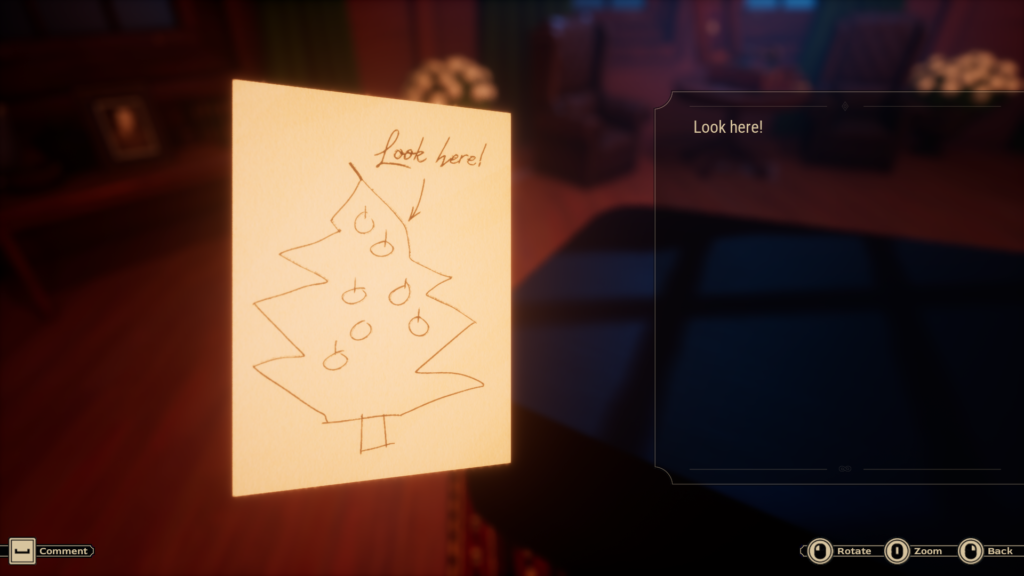
It’s an odd choice, and while it does somewhat make sense in the wider narrative, it feels like a bit of an over explanation of the journal mechanic; one that serves to separate the player from the dual protagonists of this story. Norah doesn’t just make notes for puzzles, she narrates the thoughts of the characters, occasionally commenting on why they do or don’t do certain things which at times highlighted decisions that felt a little nonsensical, but I may not have really noticed if they hadn’t been pointed out.
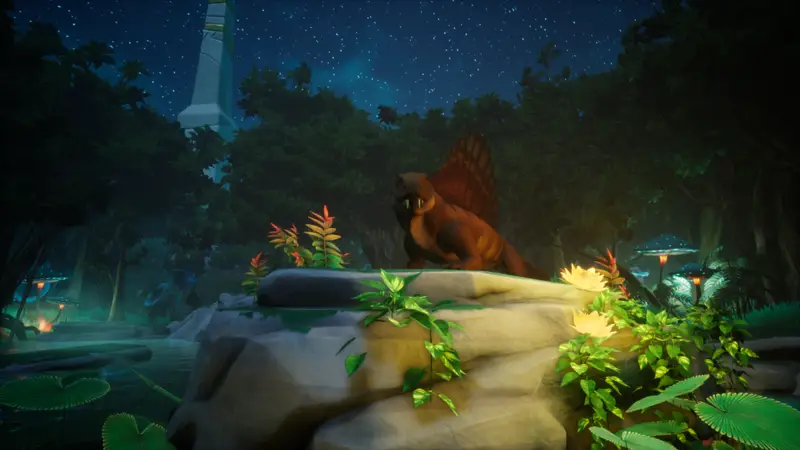
Some of this may be exacerbated by the break neck pacing of the story. Unlike the first game where you’re exploring one island, Call of the Elder Gods is a globetrotting adventure. Harry and Evie will be searching for clues in Boston, Svalbard, Alien cities and even Australia. The new locations are beautiful, everything is, but you don’t really spend enough time in any of them to fully appreciate the global scale of the threat or adventure presented. Ultimately some of the big twists revealed as parts of the mystery fell a bit flat due to this, and if you’re looking for the slower burn intrigue of the first game you may be a little disappointed.
The Colour Out of Space
As I said before each of the areas you explore in Call of the Elder Gods are beautiful, with each location having it’s own visual flair. You start in a fleeting dream of an alien city in the stars, surrounded by exotic flowers and prehistoric creatures, with large non-euclidean towers grasping upwards towards the heavens. Shortly after, you’re trudging around the grounds of a old neglected mansion flashlight in hand, being battered by heavy rain.
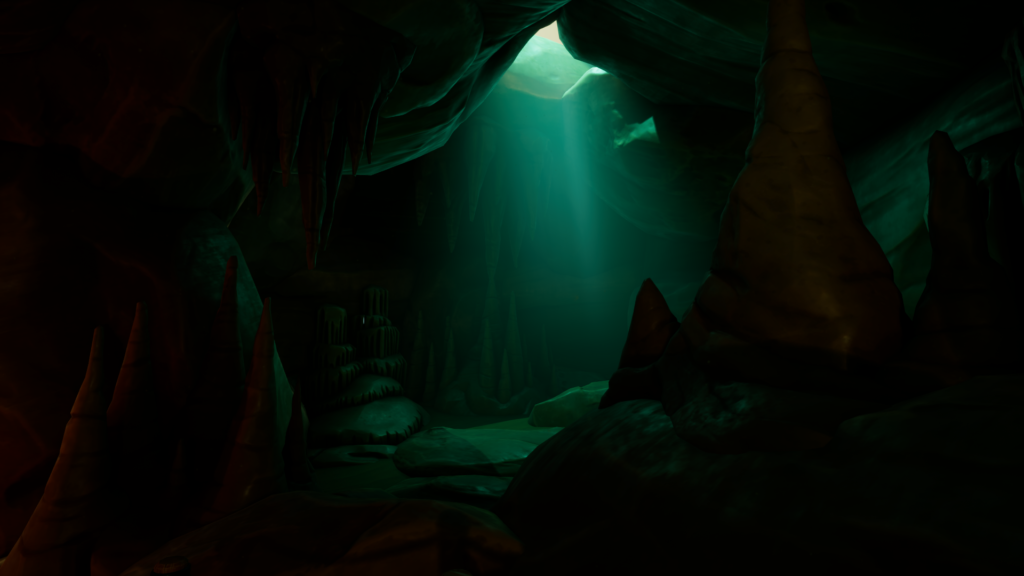
A lot of care has been put into the world, with some returning motifs from the first game, and new supernatural elements sneaking in. One chapter takes you to the headquarters of a secret society, and it’s exactly what you’d expect from a Cold War illuminati-esque base of operations. Lots of ancient Egyptian iconography, polished black marble and an egregious amount of red velvet curtains. The Svalbard mission has you leaving deep tracks in the snow as you trawl through an abandoned Nazi base, and the set dressing makes it look like the devs had a lot of fun watching Indiana Jones when they were developing the game.


Despite all these fun details the locations themselves can feel a little empty. Not that I’m looking for a forced stealth section in my puzzle game, but it is a little weird that there’s no one in the secret society HQ. Not even an alarm. But that’s a bit of a nitpick and pretty standard for the genre.
The Picture in the House
Each chapter has it’s own location, and it’s own distinct set of puzzles that go alongside it. We’re not starting small and moving through a set of related mechanics, Call of the Elder Gods is a puzzle adventure game that’s going to ask you to spark those neurons across a wide variety of logical conundrums.
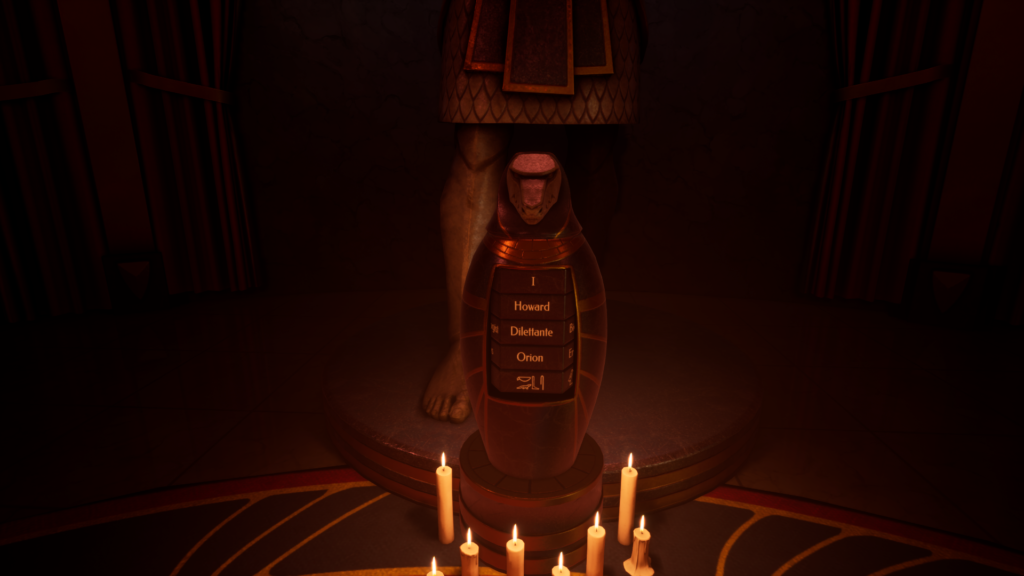
As it’s the meat of the gameplay, I’m happy to say that the puzzles are great fun to solve. I didn’t find any of them overly difficult, but overly challenging isn’t what makes a satisfying puzzle. You’ll be deciphering alien languages, decoding old Nazi messages with an enigma machine and, my personal favourite, moving liquid around containers ala Die Hard with a Vengeance. Some players might find things like the Zebra puzzle a little more challenging – but luckily there’s a very detailed and forgiving hint system in the menu so if you’re stuck you don’t need to worry about missing out on achievements or smacking your head against a wall until you stumble onto the answer.
There’s also a few puzzles that integrate the dual protagonists, meaning you’ll need to switch between them to figure things out or gather other clues. These were particularly fun, and made the whole “Norah’s Journal” make sense for a story perspective, however they’re a little sparse and I’d have liked to see the team over at Out of the Blue Games lean into working together as the two different characters to make for more diverse puzzles.
The Shadow out of Time
I enjoyed my 5 hour playthrough of Call of the Elder Gods. The puzzles, environments, and voice acting were all fantastic and that’s all you really need for a fun weekend chomp of a title. However, the move from one island to jet setting across the globe in those five hours didn’t do the pacing of the story any favours. There’s a lot going on, and the game rattles through some of it’s reveals at a fair clip, losing a lot of the intrigue that made the first game so compelling. When it comes to facing the Cosmic Entities at the end of the world; I think I’d have preferred a little less movie conspiracy, and a little more actual mystery.

Call of the Elder Gods was reviewed on Xbox Series X. Gamer Social Club would like to thank the Devs and publisher for the code.