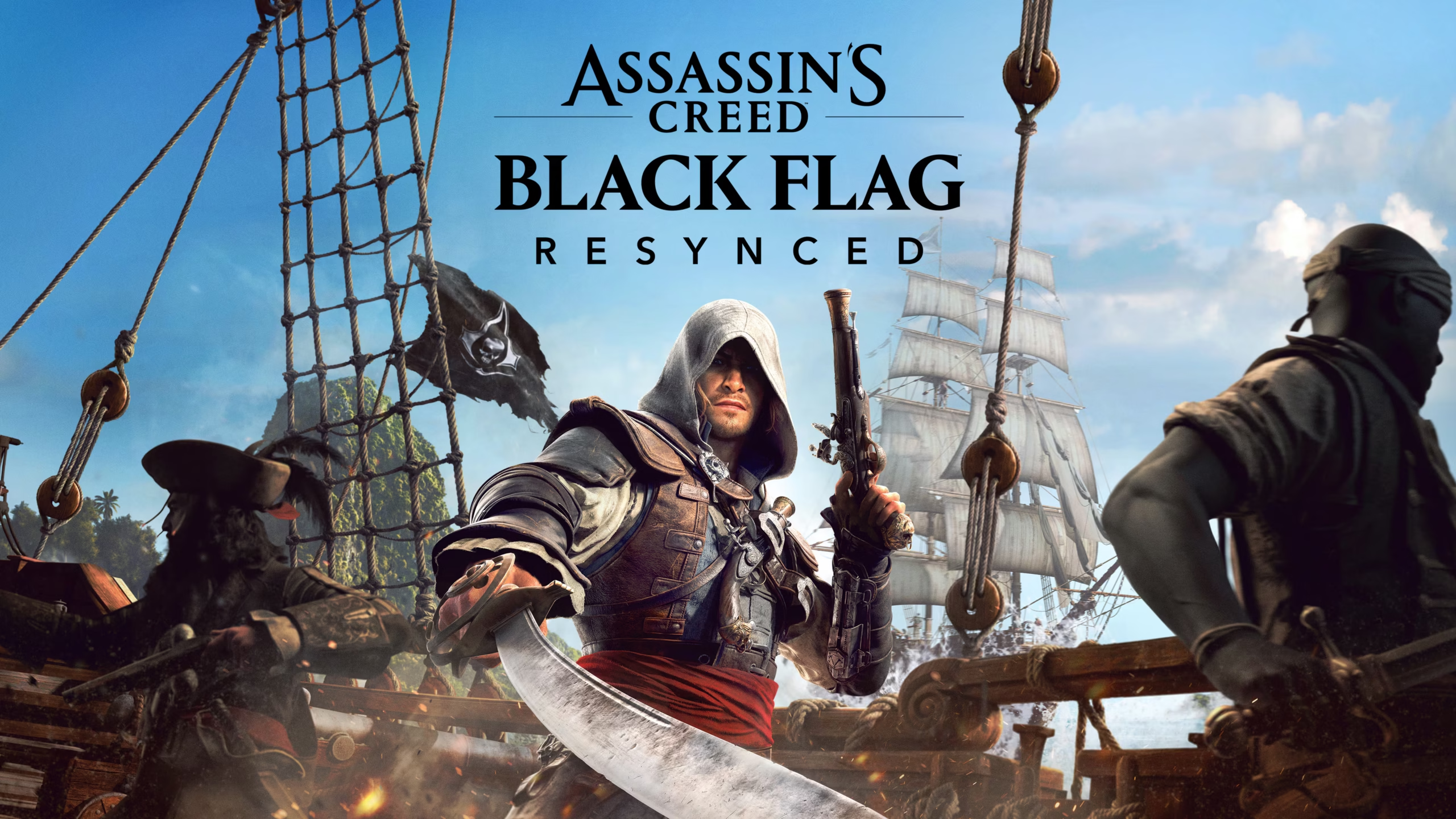
The gaming landscape has become host to dozens of remakes and remasters over the past decade. Everything from Resident Evil to Final Fantasy has gotten some form of a soft reboot, and dare I say these titles have done wonders as far as revitalizing interest in their series. As with everything in the world of gaming, however, things are never so simple. When a remake builds off the original without cannibalizing its soul, it serves as a homage. When it’s an HD filter slapped over a game made decades before and sold as a brand-new experience, it’s a cash grab – and that strategy has proven ill-advised time and time again. As with everything in life, there is a sweet spot.
Assassin’s Creed has long been a franchise synonymous with moving the bar forward. The original Assassin’s Creed, released in 2007, was considered one of the flagship titles of its age, and its success still echoes throughout the gaming space almost two decades later. Ubisoft had seemingly found their golden egg, and they used its success to launch themselves into the annual-release machine that would define them for the next decade. For a while there, it seemed like they were untouchable – releasing sequel after sequel, each one building on the success of its predecessor.
But lately, Ubisoft has had a bit of an identity crisis. The original ideas and gameplay systems they built their games on were gutted in favor of an entirely different formula that catered to the most popular subgenre at the time – RPGs. I’ll be the first to admit I never hated Odyssey and the newer titles that relied on these systems, but they never felt like a true Assassin’s Creed experience. They may have had the Assassin’s Creed name, but something about beating away at the same enemy dozens of times butchered that distinct satisfaction of an instant kill born from raw skill expression. We are Assassins, after all – not demigods.
Originally released in 2025, Shadows felt like a step in the right direction. It had everything the community wanted, but it was still held down by a weaker story and the same muddled RPG elements. For many of us, the future seemed unsure. Ubisoft had doubled down and seemed intent on keeping the RPG systems established in Origins, and there was no hint of what would transpire next. All seemed lost – until a familiar vessel appeared over the horizon flashing a new coat of paint and a pair of sea shanties to save the day: Assassin’s Creed Black Flag Resynced. Let’s dive into it.
The Golden Age of Piracy: A Tale of Damnation
The story of Black Flag has always presented itself as one of the more refreshing iterations in the series, as it always seemed intent on leaning into its pirate-themed setting as opposed to letting it feel like an added backdrop to the standard Assassin’s Creed story. So let’s get something out of the way before we get into the specifics – not only is Black Flag a great entry in one of the most iconic gaming franchises of the modern age, but it also presents itself as one of the best pirate games ever made.
The story of Edward Kenway starts off on a rather appropriate note as you are pressed into the role of captain after your ship is damaged in a hectic sea battle. In these first few moments you realize that this swashbuckling adventure is going to lean into the brutality of the Golden Age of Piracy in the best way possible. Cannon fire and the sound of wooden planks splintering are some of the first things you experience as Edward, and it really does sell this moment as to the kind of violence and destruction you’re going to experience on your path.
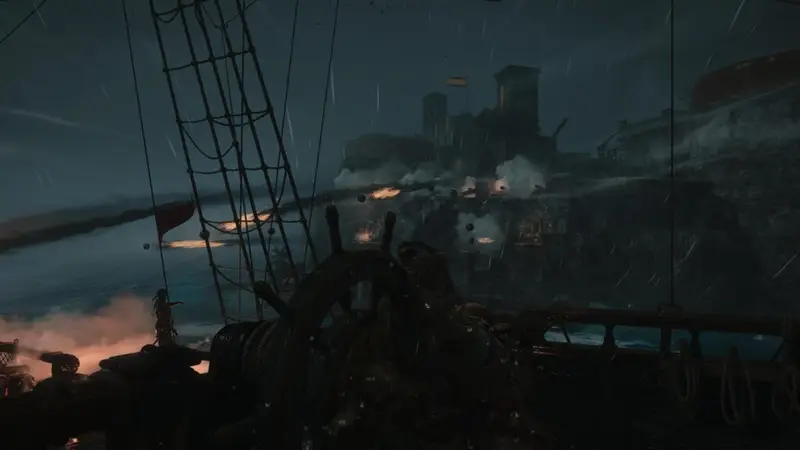
It is during this same sea battle that you meet a familiar face in the form of an Assassin, and after crossing blades with him you end up stranded on a seemingly deserted island with him as your prey. Edward naturally does what any pirate would do in this situation in a desperate bid for survival, and we get the start of his journey as a de facto member of the Assassin’s guild. After donning the garb and hidden blades, Edward meets and befriends a merchant stranded on the island, and you are thrown into one of Ubisoft’s best tales to date.
At its core, the story of Black Flag is one deeply rooted in the Golden Age of Piracy and all the caveats that came from that time. The tones of greed, betrayal, and the frenzied need to chase your own destiny are hard-pressed in this entry, and it employs this feeling flawlessly throughout its run. Edward is a man set on making a name for himself in an age where freedom is the ultimate prize, and the story leans into these themes throughout its dozens of hours of playtime through both his actions and the motivations that drive his character forward into the sunset. He is a deeply flawed character whose own ambitions are often the cause of untold amounts of death and destruction, but this isn’t to say he doesn’t belong in the catalog of Assassins we have grown to know and love over the years. He isn’t necessarily an anti-hero or the villain of the story, but there is a hidden layer to his tale that feels far deeper than it appears on the surface.
The Temptation of Freedom: A Pirate’s Tale
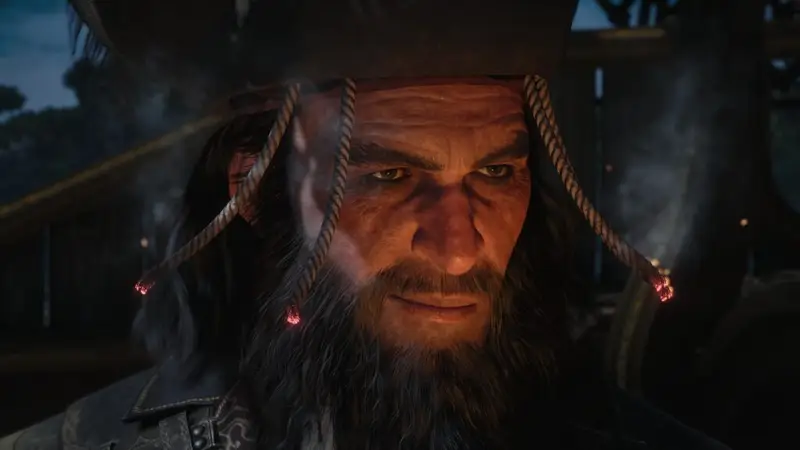
Since Edward’s story is so deeply ingrained in the Golden Age of Piracy, it is closely intertwined with some of the most famous names of that period, including pirate staples like Edward Thatch – better known as Blackbeard – and Anne Bonny, and each one feels like they are brought to life through their in-game counterparts. Each is driven by their own wants and needs, and it really does feel like you are experiencing one of the most romanticized time periods in modern history through the eyes of someone who was friends with all of them before it came crashing down decades later.
Black Flag is more than anything a cautionary tale of how far men are willing to go to save themselves in the face of insurmountable odds, and what happens to those who betray everything they knew and loved for a chance at salvation. The story hits all the same notes as the original, and by the end it’s a depressingly beautiful tale of what it feels like to be the last survivor of a way of life that was never meant to end. The notes of betrayal and greed hit hard, and by the time the curtain falls on the Golden Age of Piracy, Edward is a changed man. Whether that’s for better or worse is up to you to decide, if I’m being honest. All good things must come to an end, right? Maybe, or maybe not. I’ll leave that thought to you.
Besides an exceptionally told tale of the final years of the age of piracy, you do have an Assassin’s Creed story here that is intertwined in a way that feels damn near perfect. Most of your time with Edward is spent donning the Assassin’s mantle without being a part of their secret society, so when your paths do eventually cross, it throws an interesting wrench into the story that holds until the very end. The ongoing war between the Templars and the Assassins is a driving force in the narrative throughout the second half of the game, and you’ll get more than enough moments with these characters that feel like they were pulled from the usual Assassin’s Creed train of thought.
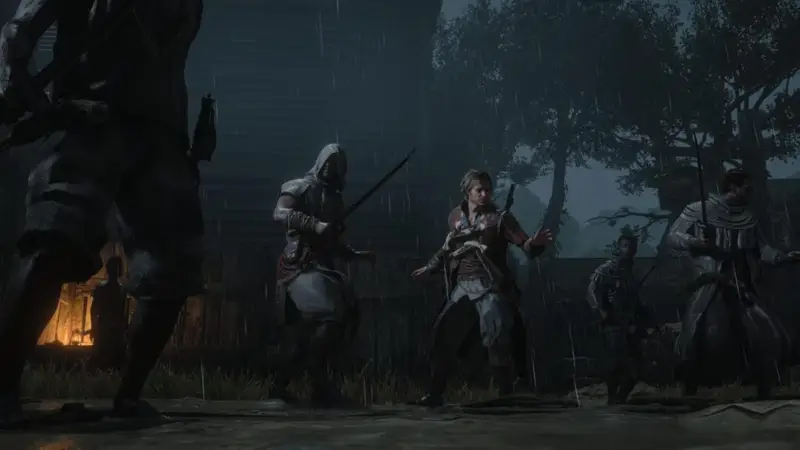
I’ll be honest – I was always more interested in the pirate portions of the story than the sections focused on the Assassins and Templars, but that isn’t to say they aren’t entertaining. It gives you a connection to the previous entries in the series and brings it all together in a way that I think most fans will undoubtedly enjoy. They have also added a whole new section to the experience called Rifts, scattered around the world, that allow you to play out certain moments in Edward’s life from a different perspective than the one he experienced.
Think of it as Disney’s ‘What If’ series in video game form. It adds an extra layer to Resynced’s experience, and when you tie it in with the addition of a medley of new quest lines, both main and side, you really do have a twenty-to-thirty-hour campaign at the very least. Whether you jump into them is up to you, of course, but I see no reason not to take this game in for everything it’s worth. Once we get past Edward’s tale, I want to dedicate an entire section to perhaps the best part of the whole experience – the world and the beauty of it.
The Caribbean: The Beauty of Blood and Sea
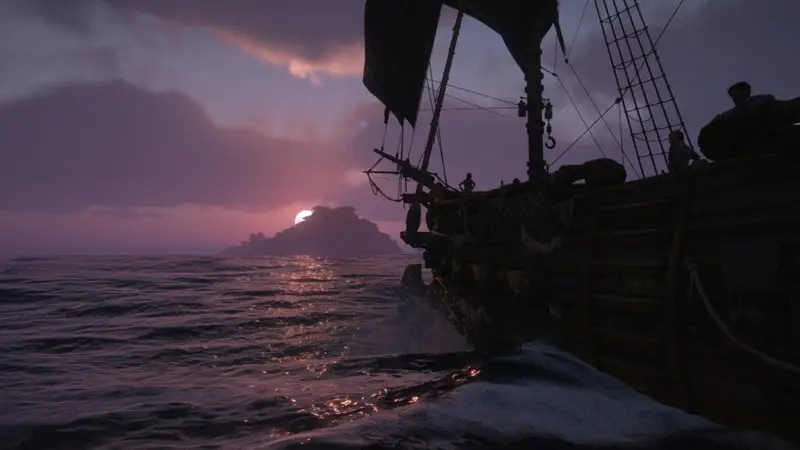
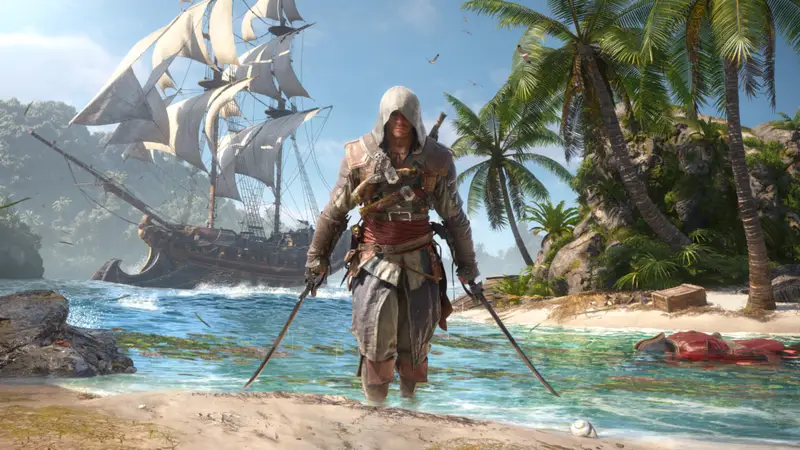
There is a strangely weird feeling that comes with seeing something in a video game that somehow looks better than it does in real life, but Ubisoft has gone out and done it with their version of the Caribbean. From the moment the game starts, you are treated to deep blue oceans that stretch as far as the eye can see, vibrant green rainforests echoing with the calls of birds and other animals, and bustling cities that feel like they were built in the image of what life looked like during the 17th century. Every swath of nature or lonely island you discover on your adventure is almost always host to some kind of unique feature or secret just waiting to be found. Ubisoft has created an experience that is nothing short of a visual spectacle, and it brought me back to that same sense of childish wonder every time I sailed across the sea.
The most startling thing of all, though, isn’t the fact that everything looks amazing above the surface, but rather how gorgeous everything appears once you dive beneath the waves. As someone who grew up on the ocean, there was a certain sense of awe that came every time I dove beneath the surface in search of treasure. Through the diving bell obtained later in the story, you are able to freedive down into vast expanses of the seafloor in search of lost treasures, and each one feels like it is meant to show you an alien world hidden from most of us in our everyday lives.
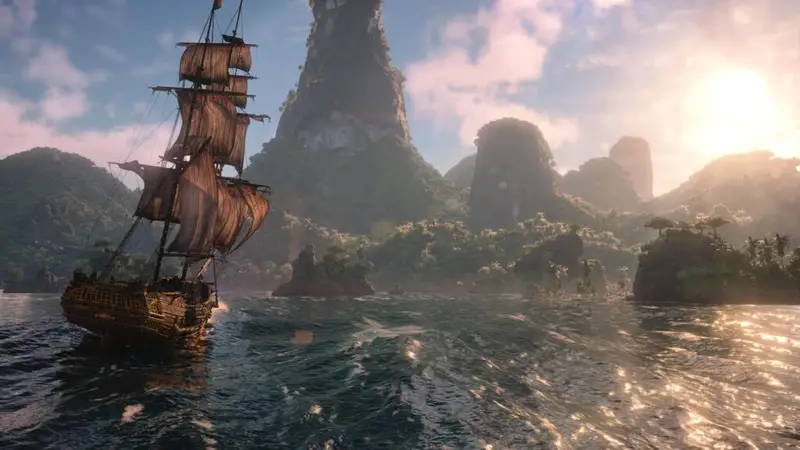
Not only do these underwater sections present you with a bit of danger in the form of sharks and other hazards, but they present the bottom of the sea in ways that are a beauty to see and experience. Again, it comes off as a visual masterpiece, and it really is the most beautiful rendition of the Caribbean I have ever seen – and I’ve been there numerous times throughout my life.
The sheer variety of things you’ll see while you travel will have you appreciating every moment as you sail from island to island, and nothing was more relaxing than loading up a few sea shanties and setting the controller down to watch the beauty of it in motion. Even when raging thunderstorms and rogue waves interrupt your peace, there’s nothing quite like listening to the sound of the wind beating against the hull of your ship. There is no experience like it, and I doubt we’ll get a better rendition of the magic of the open sea in our lifetimes. Add in a photo mode, and the possibilities are nearly endless. Don’t believe me? Every screenshot but one in this review was captured by me during my forty or so hours in the game. There is a hint of beauty in every moment no matter where your adventure takes you.
A Dance of Steel: The Age of Cutlasses and Gunpowder
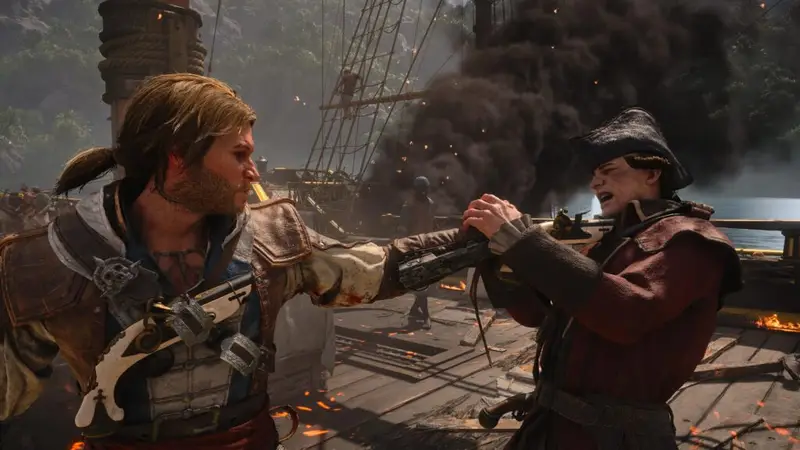
Now that we’re past the usual song and dance about the world and story, we can finally focus on the part we’re all here for – playing as a pirate-themed Assassin. In short, the best part of the entire experience is the fact that you are a ruthless pirate set on pillaging your way through the Caribbean, and the game gives you all the tools to do it. From a baseline standpoint, the game very much retains the playstyle of the original games and completely forgoes the “RPG” mechanics that the newest entries have been indulging in over the past decade. This isn’t to say this gameplay style is perfect – many of the same issues that existed back when the original Black Flag released are still here – but I would be lying to you as a reviewer if I didn’t admit it was a welcome change of pace to have it back. Now, what do I mean by the original gameplay loop?
Well, in simple terms, the priority has switched from a level-based, RPG-styled system to a more simplified, flashy showing that puts a priority on parrying and comboing using the tools at your disposal, such as your hidden blades and the usual Assassin toys. The system is fundamentally the same as it was back when the original released, aside from some well-placed quality-of-life features like the ability to toggle your crouch, and dare I say it still feels as good as it did thirteen years ago.
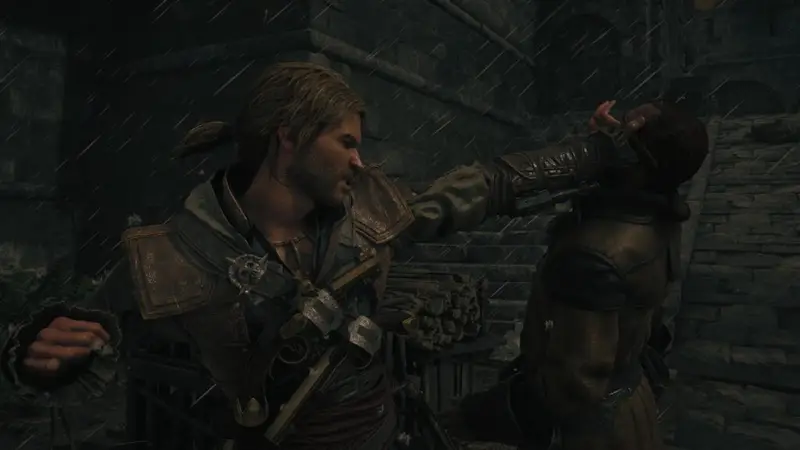
Executing your moves during fights as Edward has been fine-tuned and refined in a way that feels both new and familiar in the same breath. The sheer level of violence you can inflict on your enemies is impressive, and the new systems in place – such as the ability to chain together takedowns after hitting a perfect parry – make every fight a chance to show off your skill set rather than how hard you grinded in the previous areas.
This system makes it so no zone is off-limits to you from a gameplay perspective. You can travel to any of the islands at any point in the game and start a fight with whoever you please on land, and honestly, you’ll probably come out on top if you’ve played an Assassin’s Creed game before. Resynced sells the idea of freedom in combat so well that I have no real complaints – besides it feeling too easy at times when you’re fighting on land. By the endgame you’ll be weaving in brutal takedowns while taking on hordes of soldiers, and it made me realize how much I truly missed the combat systems of the older games. It’s brutal, it’s fun, and it is absolutely meant to show off your dedication to mastering the systems put in front of you.
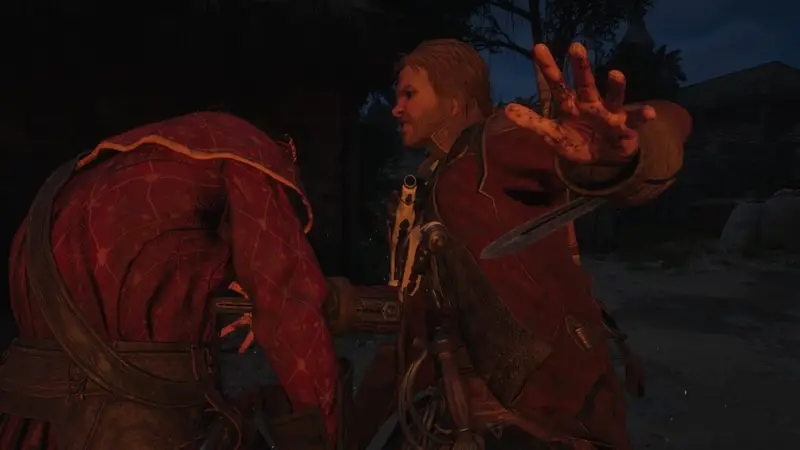
To balance this sense of freedom in the combat, Ubisoft has added a few new enemies to compensate for the standard soldiers you’ll be carving your way through. These new enemies, aptly named the Blunderbuss and Grenade elites, are hulking masses of death whose attacks can one-shot you if you aren’t paying attention during the flow of combat. They do add a layer that makes the combat more hectic, but with the ability to chain together takedowns, they end up feeling like little more than cannon fodder whose presence comes off as a nuisance rather than a challenge. Does this mean the game is too easy when you’re fighting on land with a sword and your other tools?
Well, in short, yes – but let me explain why.
The most defining moment of the standard melee combat for me came when my wife was watching me play and commented on how single-minded the AI seemed to be. Even when you have your back against the wall and you’re vastly outnumbered, they’ll constantly attack you one at a time, only to get parried and instantly brutalized by Edward before the next one steps forward to get his piece of the pie. The only enemies that seem intent on challenging you are the elites we talked about above, and even they can be duped with a pistol shot that opens them up for an immediate takedown. Does this mean I hated the combat loop? Absolutely not. But I can see a world where some people will feel thrown off by the difficulty and hate it for what it is. If you do end up feeling that way, just move the difficulty scale up like I did. It makes each fight feel like a battle with stakes as opposed to just another slaughter.
We Give No Quarter: The Beauty of Naval Warfare
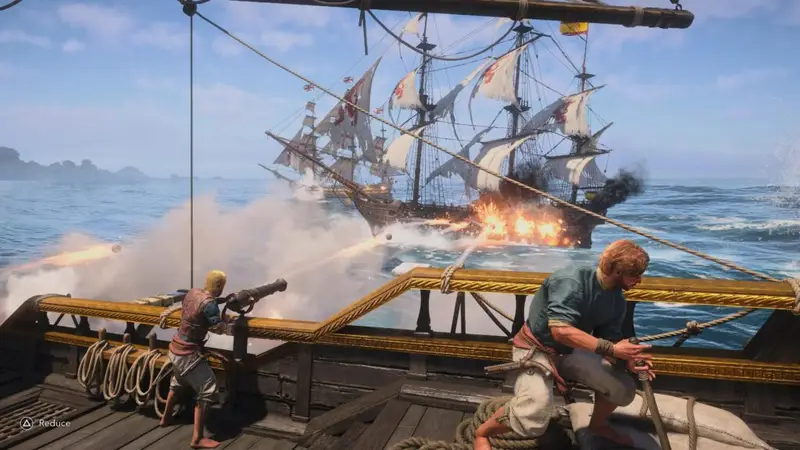
Now the ship combat, on the other hand? Don’t even bother touching that difficulty option in the menu. In fact, acting like it doesn’t exist at all is probably the best option here. You know why? Because ship combat is where the bulk of the game’s real challenge awaits, and I’ll admit it was some of the most fun I’ve had in years. Stay with me, lads. This is the best part of the whole experience – the ship combat.
In the first few hours of the campaign, Edward comes into possession of a brig that allows him to move between the dozens of islands scattered around the Caribbean. Moving from place to place is often a dangerous matter with the Spanish and Brits patrolling the seas, and Edward takes this transgression as a personal attack and does what any sane pirate would do – arms his brig to the teeth and heads straight into any ship that dares challenge him. Or that’s how I played it, of course.
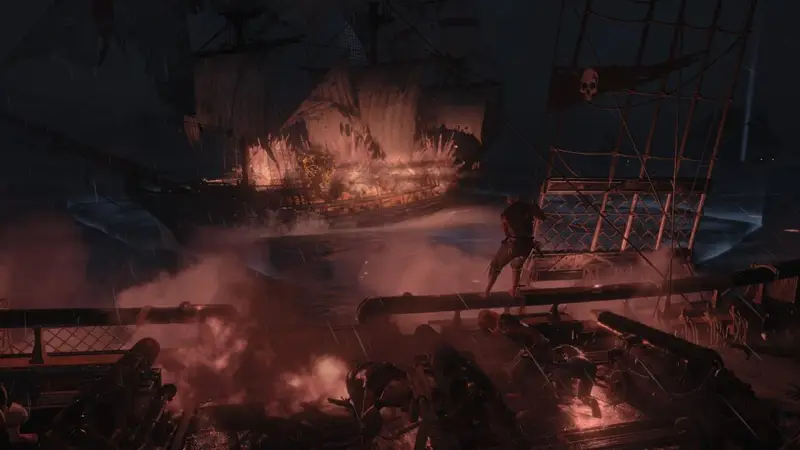
Jokes aside, ship combat was the aspect I remembered most from the original game as the standout of the experience, and Ubisoft has somehow improved on a system I thought was flawless to begin with. You are still able to outfit the Jackdaw with a host of upgrades, from better cannons to increased armor, but Ubisoft has gone and spoiled me with the implementation of secondary firing modes for each of the weapons aboard your ship.
These range from shrapnel barrels to heated shots, and each one is as satisfying to use as any aspect of vehicle combat I have ever gotten my hands on. The sheer freedom in how you can approach each naval battle is honestly enough to overcome any of the shortcomings of the melee combat, and I found myself wasting hours at a time hunting the dozens of vessels between me and my next mission. The naval combat was nearly perfect in the original, and they have somehow improved on the systems in place to give us an even better experience. In Resynced, it doesn’t matter if you’re fighting the most harmless schooner or the most terrifying Man o’ War – each one presents its own level of challenge, and the game is at its best once the cannons start firing. It’s an experience like no other, and one I’ll remember for the sheer amount of fun it was.
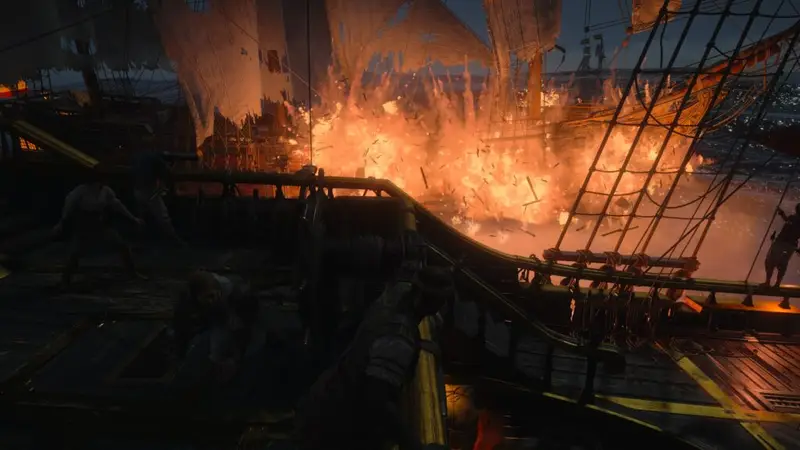
Past the improvements to the weapons at your disposal, they have also added three new naval officers who each provide a medley of advantages meant to help you in the naval aspects of the game. These characters have their own questlines and motives for joining Edward’s crew, and it was a nice change of pace to get some backstory on what drives them forward beyond hearing what they think about the weather. The addition of these naval officers, more than anything, feels like an aspect that should’ve been there all along. Their presence and the way they fit into the naval equation is simply implemented perfectly. They add an extra layer to the ship that makes it feel like a home as opposed to a floating fortress with expendable crewmates, and going through their questlines was well worth the added hours and effort required to complete them.
Beauty in Everything: The Performance
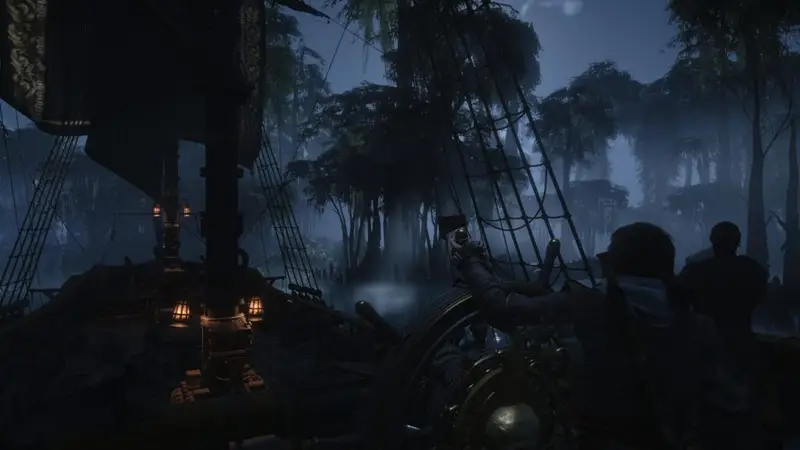
The last thing I want to touch on is the glue holding all of this together – the performance. On the technical side, Black Flag Resynced is one of the prettiest and most impressive-looking titles released in the past few years. Every island, every tree swaying in the wind, even the way the ocean seems to sway back and forth with the current – all of it looks as if it has been crafted with the utmost care. I played Performance mode on my base PS5 because I’m an FPS snob, but you have a range of options to choose from as long as your TV or monitor can handle it.
These include Fidelity, which is the prettiest but is locked at 30 FPS; Balanced, which aims for 40 FPS with more emphasis on frame rate and less visual quality than Fidelity; and Performance, which locks you in at 60 FPS with the least amount of fancy graphical additions. I tested all three during the first mission and didn’t really see that big of a difference on my 4K TV, which is almost as impressive as them including all these options to begin with. The game was a treat for the eyes every time I paused and just looked at what was around me, and it never suffered any kind of frame drops or stuttering, even during some of the more hectic naval battles you find yourself in later in the campaign.
The Verdict: A Pirate’s Life For Me
The Golden Age of Piracy may be over, but Black Flag Resynced seems intent on reminding us why it’s one of the most romanticized time periods of the modern age. The sheer beauty of an age long since past has been recreated in a way that makes you feel like you’re sailing through the Caribbean all those centuries ago, and every voyage feels like its own homage to the beauty of nature. From its brutal melee executions to the echoing boom of cannon fire during its naval battles, Edward Kenway’s tale of greed and betrayal still stands out as one of the strongest entries in the Assassin’s Creed lineage.

Assassin’s Creed Black Flag Resynced was reviewed on PlayStation 5 and is available on July 9, 2026 for PlayStation 5, Xbox Series X/S, and PC.
Gamer Social Club would like to thank Ubisoft for the code.