Despite my many years as a bartender I still find myself coming to games that allow for me to mix drinks to get to know my customers. Perhaps it’s a reminder of my youth, or a reminder of simpler times when the biggest problem was one I heard about but didn’t belong to me. Maybe it’s even just the thought that a drink could solve problems even temporarily. Either way, I keep finding myself drawn to these seemingly simple drink mixing games. Coffee Talk Tokyo is no exception.
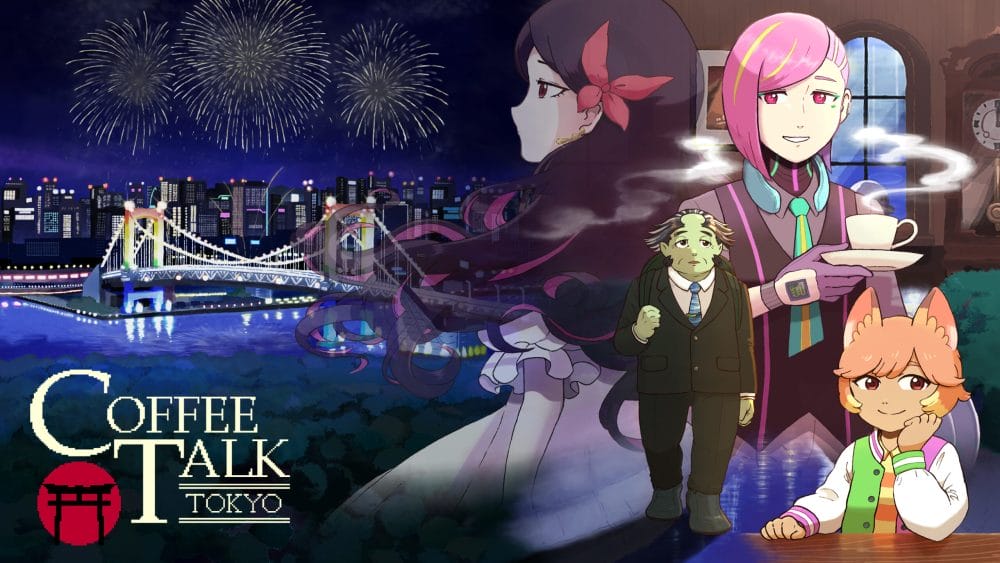
For those who have not ventured into the series, Coffee Talk is a visual novel developed by Toge Productions. The first entry into the series was based in Seattle but with an urban fantasy twist. The Tokyo entry into the series follows a similar pattern but instead of elves and orcs, we meet creatures symbolic to Japan and it’s spiritual culture. We meet Kappa and Dragon spirits, we speak to ghosts, and some of our drinks are inspired by landmarks of Japan. While spiritualism is not at the forefront of this game, it respectfully includes nods to these elements of Japanese society woven into the story of these characters.
After a short delay, Coffee Talk Tokyo is ready to be served. Let’s explore what makes this visual novel a delight to the senses.
The Narrative Themes
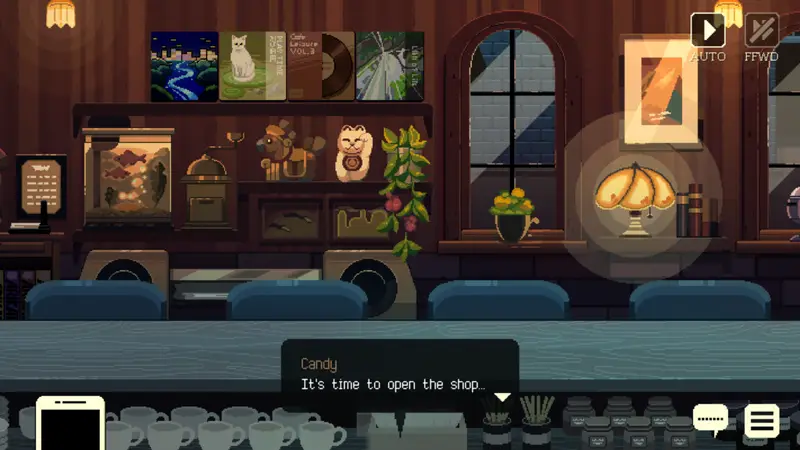
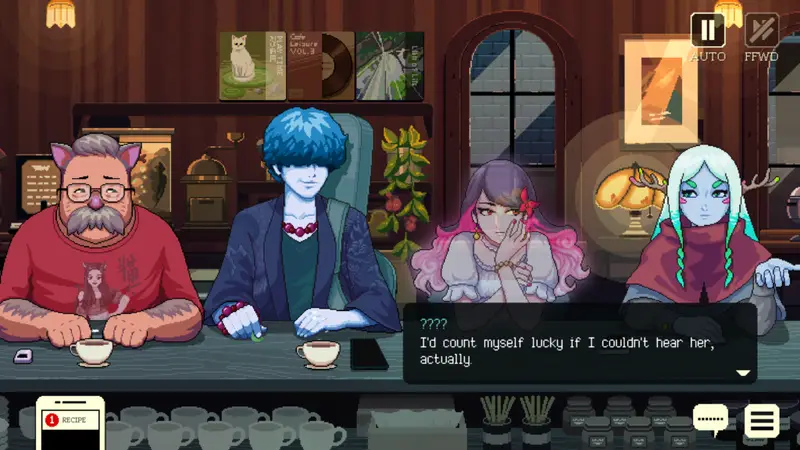
As with the previous Coffee Talk games, Coffee Talk Tokyo takes place in one location, a coffee shop open in the late hours of the night. In this universe, humans, yokai, spirits and other creatures exist in harmony and a collection of them find themselves frequenting your coffee shop. Some of these are regulars at your establishment while others are visiting for the first time. Your cafe at the back of a skyscraper warms their hearts, provided you serve them the correct drinks of course.
Coffee Talk Tokyo takes place over 15 days with a main cast of characters. Throughout these 15 days each of these characters come to you to unload their burdens and find some peace. However the path to peace is often difficult for our clientele. How could it not be when it seems one of the main narratives is grief. It’s worth noting that it isn’t just the grief of losing a loved one. For some it goes beyond that, the grief that comes with a big life change such as retirement, the grief of feeling as though your life has lost meaning, the grief of a friendship falling apart. Each of these characters is dealing with some bit of sadness, but in the cafe, they can work towards a resolution.
There’s also the theme of a sense of belonging and acceptance. While this theme plays out heavily with a certain family, this overlaps with all of the characters in one way or another. Will those around them accept them if they are of two worlds? Can they accept certain difficult truths to their life? When you are dealing with characters of two worlds, the world of folk lore and our real world, belonging and acceptance can be harder to find.
We won’t get deep into story as this is a narrative driven experience. However we will say there is romance, there is joy, there is pain, and there is the familiar face of a record shop owner waiting for you day one.
Characters & Setting
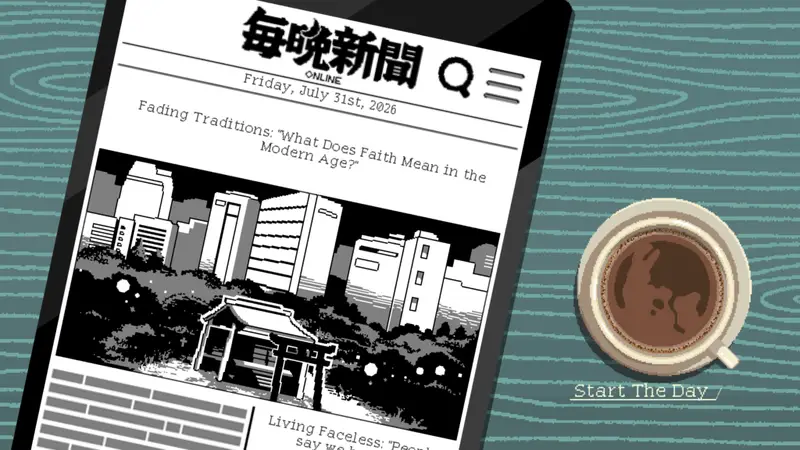
The game begins in the not too distant future of July 30, 2026. It’s a very hot and humid summer in Tokyo. Before you even can begin, there is someone knocking at your door, ready for their beverage. It’s that type of hot and humid where customers are looking for their next drink to settle down. The cafe itself features four seats, but that doesn’t mean each evening will have four customers each evening. In fact, not everyone is just a customer.
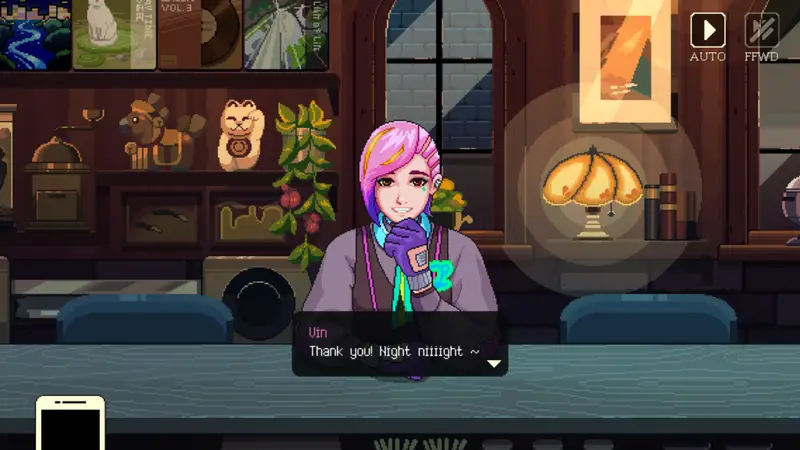
You’ll meet Vin your assistant who also stays with you in an empty room. She’s often bright and charming, but as with everyone else, has her own grief she is handling, although not the loss of a loved one. We’ll also meet Jun a musician with a large following who is dealing with the pressures of the music industry. Has he lost his touch or his creative mojo? That isn’t all that he has lost. On the very first day you’ll also meet Ayame, a ghost who is grieving a life she doesn’t recall and Fuku her guardian to help her cross. Thankfully you don’t have to wait until the characters come into your cafe to meet them.
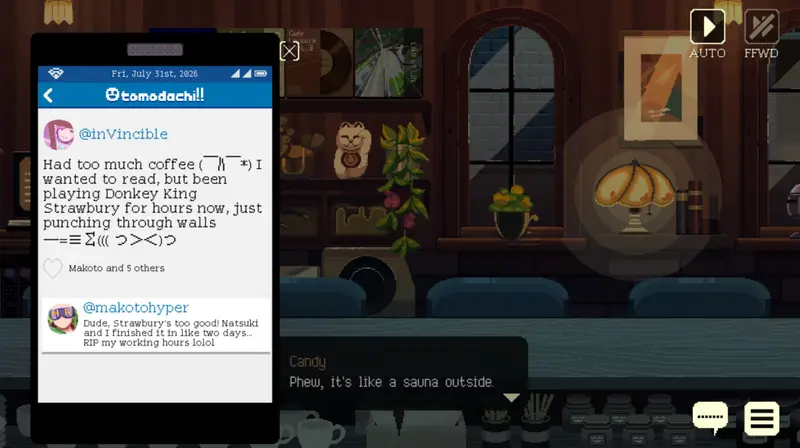
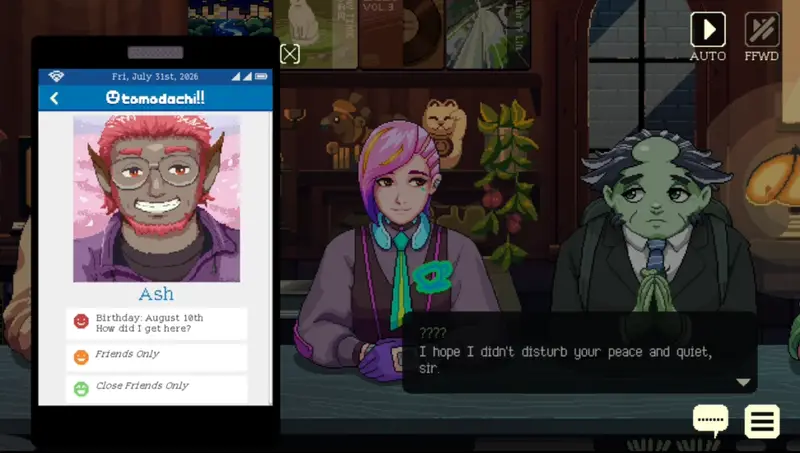
You’ll also have the opportunity to get to know your regular customers through Tomodachill the social media platform on your phone. Through their posts, you’ll also get a sense for what they are going through in between their visits to the cafe. The wonderful bit about these posts is that they help bring the characters to life. It’s easy to imagine friends, family, acquaintances posting like this on your preferred social media app. Coffee Talk Tokyo also references popular memes and games within the posts which again adds to it feeling that much more real.
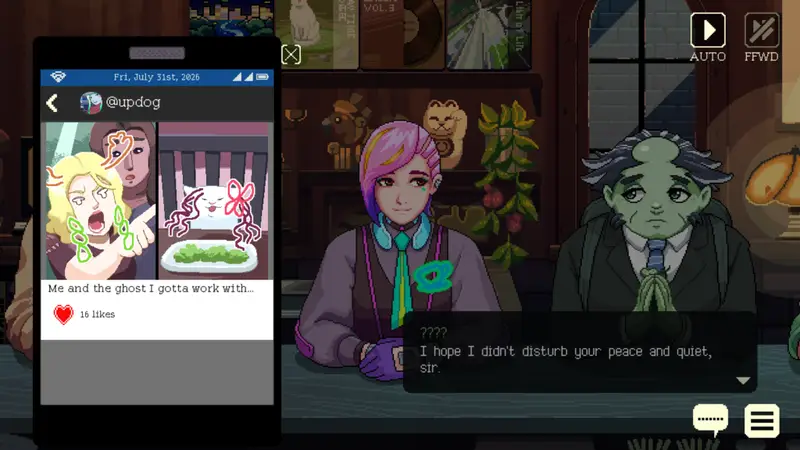
The setting itself will not change, however the vibe definitely will depending on who is there in the cafe. It’s actually quite a feat that the writers have pulled off making it feel as though things have changed based on the conversation. There is no voice acting in the game, so it truly is the words on the screen that evoke the emotions. With well written characters, the scenery does not need to change, but your emotions will. The stage is set and you’ll feel it with each interaction. The writers may have outdone themselves with some of these characters. In balancing the changing landscape of traditional Japan with the modern day, it makes the plight of many of these characters come alive. It’s easy to find bits of ourselves in these characters, something beautiful and bittersweet all at once.
Gameplay
The gameplay mechanics are quite simple and straightforward. You’ll listen to the conversations of your customers and interact with them. There aren’t narrative choices that you’ll make per say, your choices will come more from the drinks that you serve. Each drink will have four choices: hot or iced, a base, a primary ingredient, and a secondary ingredient. It’s important to get the correct mix to provide the customer the drink or type of drink they are looking for. Thankfully, you do not need to memorize all recipes. Your mobile phone in the lower right is also a place to access recipes you have already unlocked. Some of your customers will be much more clear with what they are looking for. Others will ask for something “extremely bitter” or something that feels like a hug.
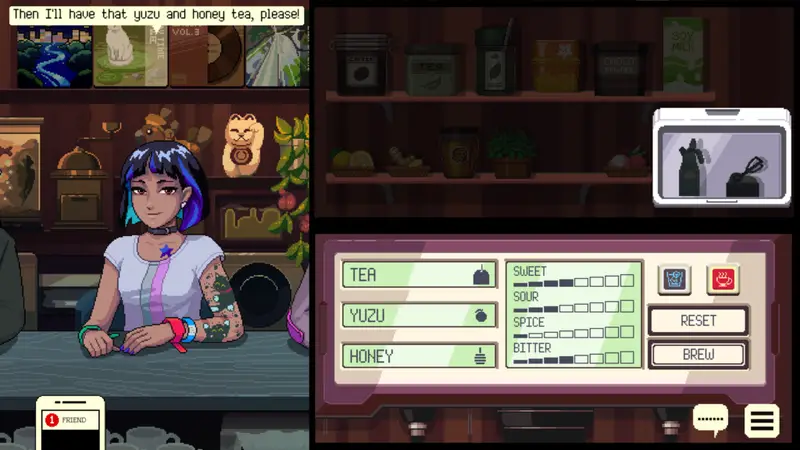
Your drinks are what will help move the story along depending on whether your serve the correct or incorrect drink. You’ll also be able to keep tracking your friendship levels with the characters by looking at the friends tab in tomodachill There are three levels with each character and if you’re looking for the best ending for all characters, you’ll want to do your best to get to that Close Friends level. Serve the perfect drinks and you’ll be close to the customers in no time.
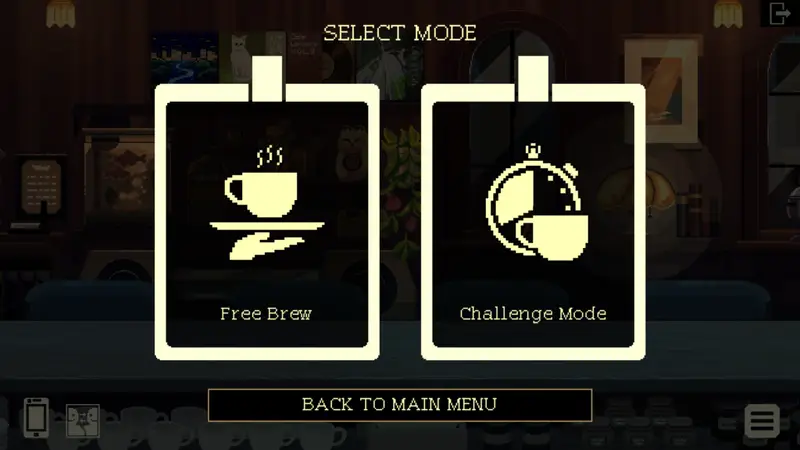
Coffee Talk Tokyo also has two settings outside of the main game. You can play an endless series of drinks serving. For those who just want to see how creative you can get with drinks, or even try to unlock drinks in the challenge mode to see how many you can get in a row correct. In Free Brew you can choose who you want to serve drinks to and there is no penalty. You can just enjoy creating different drinks to see what recipes you may come up with.
However in Challenge mode, you are challenged to see how many correct drinks you can serve. Some of these will again be very straight forward. Others will ask for specific drinks by name and its quite possible you haven’t unlocked the recipe yet. For those who are achievement hunters, there are achievements to be collected in the challenge mode. If you serve the correct drink they’ll smile and laugh with you. An incorrect drink will get you an angry look from your customer. Happy serving!
To experience all the endings of Coffee Talk Tokyo, you will need to play it more than once. The good news is that you can skip dialogue if you’re an achievement hunter. If you also feel you truly messed up a day of service, you can reload the day from the menu. It really allows players flexibility if you’re going for just one run with all the best endings. Personally, at the end of my first play through with almost all of the good endings, I was ready to do another full play right after.
Art & Music
The art is very charming as players familiar with the previous entry will recognize and welcome back. The characters also come alive with their facial expressions and small nuances of motion. For example, you can watch Jun play with the guitar pic in his hand if you look closely. When characters are laughing, you can see it in their faces and motions instead of it written in text. When characters are shocked, it’s quite apparent on their faces. The art is done so well that is actually that it makes me not miss any voice acting. The art and the motions speak for themselves which is quite impressive.
The lo-fi music really stands out and is something that has been sticking with me beyond my time with the game. Andrew “AJ” Jeremy returns. Those who have played the Coffee Talk and Coffee Talk Episode 2 are already familiar with what to expect. The music really sets the scene each time and keeps the flow of the game being very relaxed. The game is not meant to be anything crazy intensive. Thankfully the music ensures the tone matches the conversations occurring as well. You also can change through the songs using the mobile phone if you’re looking for something a bit different. Also feel free to mark some as your favorite! Fortunately, I couldn’t pick a favorite so listening to all 10 tracks was quite the delight.
Final Thoughts
Coffee Talk Tokyo is a wonderful narrative in a short and sweet packaged form. While narrative driven stories are not for everyone, those who enjoy a good glimpse into different characters will enjoy their time with Coffee Talk Tokyo. One full playthrough will only take about 6-7 hours which allows players to squeeze this into their busy schedule. Does Coffee Talk Tokyo do anything overly new and original? No. However what it does, it does exceedingly well. It brings characters to life, it gives a wonderful soundtrack, and it makes characters quite relatable no matter what age or life stage. For those who want excitement, this may not be the game for you. For those who are looking for interactive fiction, an enjoyable visual novel narrative, this is definitely one to take a sip of.

Coffee Talk Tokyo releases May 21, 2026 on Nintendo Switch, PlayStation 5, Steam, and Xbox Series and Xbox One. Coffee Talk Tokyo was reviewed on Steam. We would like to thank Toge Productions for the review key.