Introduction: Lovecraft and Cosmic Horror
Often considered by many to be the father of cosmic horror, H.P. Lovecraft’s legacy has inspired more than enough tales to solidify his weight on the median. Everything from Stephen King’s ‘IT’ to John Carpenter’s ‘The Thing’ have both terrified the public and introduced them to the horrors that await us in the endless reaches of the cosmos. These spiritual successors to Lovecraft’s original novels aren’t just found in books and on the silver screen, no. Lovecraft’s tales of dread in the face of humanities greatest fears have transcended to the next great frontier of consuming media: gaming.
Gaming is no stranger to the things that go bump in the night. Horror has been a constant in the space since pixels could be moved back and forth, and the influence of Lovecraft’s work can be felt in more than a few games that are now considered classics. Everything from Dead Space to SOMA have focused their stories on the fear surrounding the unknown reaches of space, but many choose to go the survival horror route.
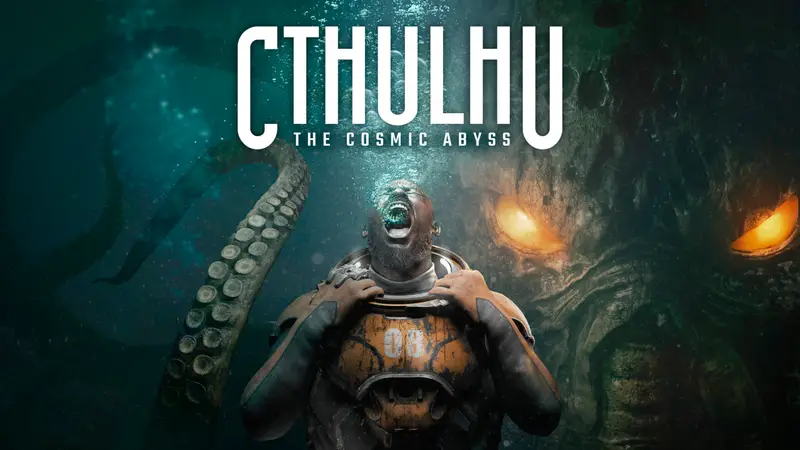
Survival horror is a perfect fit when it’s pitting you against some unnamed cosmic horror, but what about challenging the man himself through the power of deduction? If you’re looking for a game that scratches that itch, you’re in luck. Welcome to Cthulhu: The Cosmic Abyss.
The Premise: The Horrors of the Past
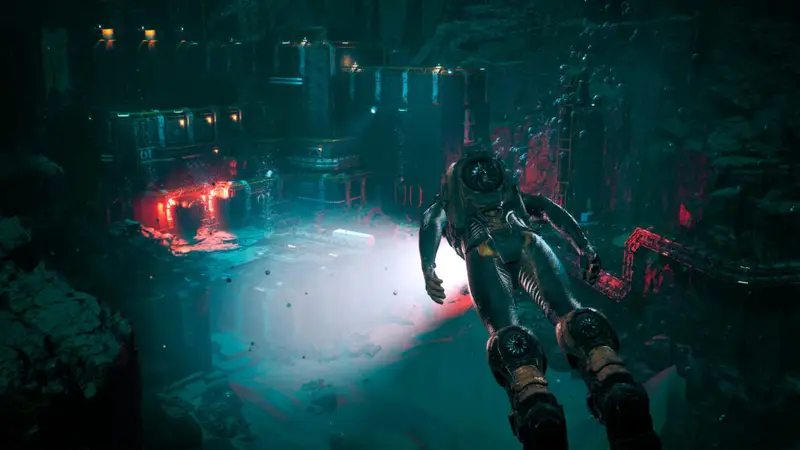
Cthulhu: The Cosmic Abyss is a game whose premise feels as if it was pulled straight from Lovecraft’s extensive mythos. Often feeling like a twisted adaptation of two of his novels, specifically At the Mountains of Madness and The Call of Cthulhu, this game presents itself as a love letter to fans of Lovecraft in nearly aspect of it’s world and it’s story.
You play as Noah, an investigator for the Ancile, an organization specializing in occult affairs, whose new mission is to discover what lies behind the mysterious disappearance of a group of miners at the bottom of the Pacific Ocean. What follows in the hours after you press play is a game very set on making you feel like you are nothing more than another cog in the machine that is the grand cosmos, and you really do get a lay of the land in terms of the locations you get to visit.
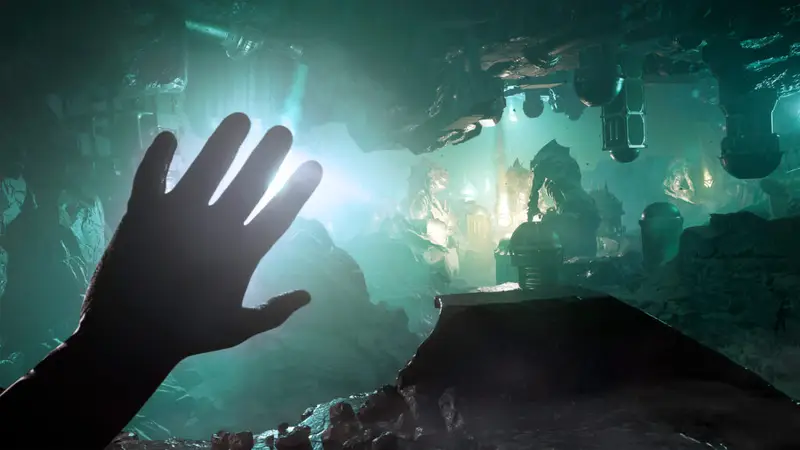
Everything from the flooded remnants of an underwater mining station to the sunken city of Ry’lyeh itself is your playground and the game does an amazing job at not only respecting the source material but creating a world that feels like it was pulled straight from the books.
I’ll be the first to admit that any fan of Lovecraft is going to be hooked from the moment you take control of Noah until the final credits roll. There is so many minute details and aspects of the story’s lore that only a fan of Lovecraft would notice and the emphasis on the tiny nods to push the story forward is what’s going to hook most people in.
It is so clearly inspired and draws from Lovecraft’s works so well that it almost feels as if the team had consulted him themselves from beyond the grave. If there’s anything you take from this review, it’s how much I loved what Big Bad Wolf accomplished here. They have brought Lovecraft’s twisted vision to life and given us a way to dive deeper into a world that has been sorely missed over the past century.
Honestly I have no real gripes about the world or the story that it presents, but not everything we have here is sunshine and rainbows. There were more than a few times throughout my multiple playthroughs where the performance of the game got in the way of my experience.
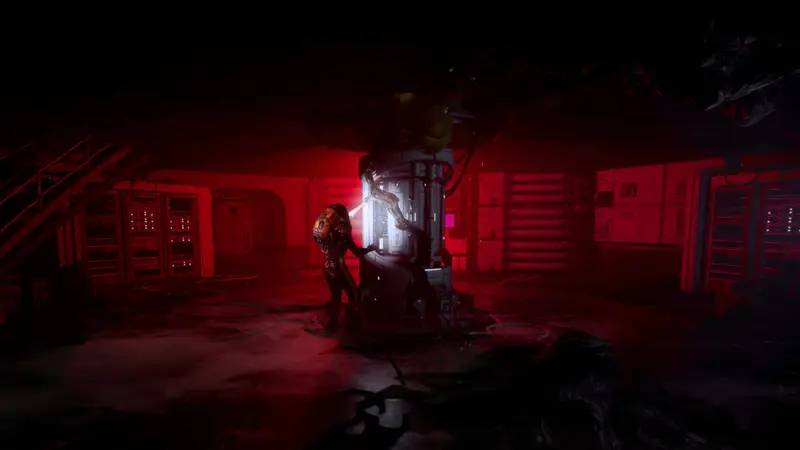
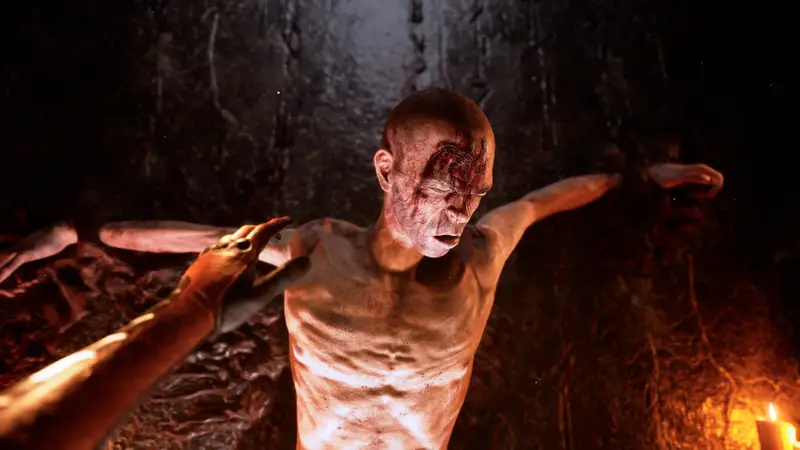
For example, there are a few sections throughout the games story (Even as early as Chapter 1) where you are face to face with a mass made of gross, living tissue that moves and writhes in a disgusting looking rhythm. Though it’s look and presence are nearly perfect for the Lovecraftian tone of the game, my PS5 didn’t agree with any scene where this tissue was present and my frames almost always tanked any time my character was in close proximity to them.
In Chapter 1 in particular, the frame drop is so abrupt and noticeable when you enter the rooms it’s in that I thought my game was about to crash or force me back to the main menu. Perhaps the funniest thing of all is that the rest of the game, even when some of the more intensive cutscenes are playing, runs without any sort of performance issues. Weird? Sure. Did it ruin my experience? Not at all. But you know what did?
A Hasty Warning: The Performance Bug
The biggest complaint I have for the entirety of the game isn’t the story or the minor performance issues, no – it’s the crashes. In total throughout my two playthroughs I crashed on three separate occasions. Usually a crash or two is warranted when playing on an earlier build and honestly, I get it.
My problem with the crashes is that it draws another aspect of the game into focus that feels like a missed opportunity –a good autosave system. Crashes are manageable in the grand scheme of things, but what makes it frustrating is when it happens in the later stages of a chapter and you are forced to replay the whole level again because there is no persistent autosave feature present.
Yes, you read that right. Every time I crashed, I had to restart that entire chapter over again no matter how far I had progressed. What’s weird about it is there seems to be an autosave system in place, but it only seems to activate for certain actions that seemed few and far between.
Even more puzzling is the lack of a manual save system in a game so focused on your choices. Sure, you can select chapters from your save at the main menu, but it always starts you from the beginning of that chapter. In a game that has such great replayability features, it just seems like a weird miss.
The Gameplay Loop: The Power of Deduction
Now that we’ve talked about a fair bit of the positives and a few negatives, I think it’s time to discuss the one aspect that a lot of people are looking forward to –the gameplay. I’ll be the first to admit that I have a bit of a soft spot for games that allow the players to carve out their path as much or as little as they want through in game clues and other pieces of information scattered throughout the world.
With their emphasis on figuring out the mysteries of the story for yourself, titles like Disco Elysium and The Painscreek Killings introduced me to a genre that I never expected to fall in love with. This way of developing games allows the player to make deductions and connect the pieces of the story in a way that isn’t as obvious as ‘go to this location’ or ‘grab this item here’.
Instead, these games ask you to use the power of critical thinking to triumph over the various hurdles the game throws your way. Cthulhu: The Cosmic Abyss takes this idea and runs with it in the most hypnotic way possible.
The gameplay loop of Cthulhu: The Cosmic Abyss is entirely focused around the idea of the player embracing the role of an occult investigator. This has you collecting various clues from documents left by the mining team before they vanished, to the dozens of occult objects that are all somehow connected to Cthulhu and his watery prison.
What comes off as a basic first person narrative adventure set in a Lovecraftian setting is quickly morphed into something that feels new and familiar at the same times when the game introduces an AI companion called KEY.
KEY is the Robin to your Batman. She assists you by providing a sonar ability that can detect nearby objects similar to those you’ve discovered, and the Vault, the most important aspect of the entire game. You see, this game is all about the power of deduction.
Throughout your journey you will find dozens, if not hundreds of pieces of information and clues that all serve their own unique purpose in what they’re trying to tell you. The Vault aspect of our AI KEY companion allows the player to organize their thoughts and evaluate possible leads by linking these clues to each other and to the deductions that the AI has generated.
Once the correct clues are linked to the relevant deductions, the Vault will explicitly state the next step to follow and before you know it, you’ll be on your way again. This entire system is what keeps you moving throughout the various puzzles that lie between you and the sunken city of Ry’lyeh, and it’s what is going to keep you hooked throughout the 10-15 hour campaign.
The game shines on nearly every level as far as making the player feel like the most badass occult investigator the world has ever seen, and the team over at Big Bad Wolf has created a gameplay experience that any mystery fan will be more than happy to challenge.
Ending Thoughts: Lovecraft Would Be Proud
Cthulhu: The Cosmic Abyss presents itself as a homage to one of the greatest horror authors of the 20th century. Even with some minor performance issues, the derelict locations you explore as Noah are some of the most beautifully crafted renditions of Lovecraft’s mythos that have ever been put to a screen.
The gameplay shines in ways I never thought was possible. From the satisfying pings of the sonar system to the amount of raw detail put into the clues and the deduction system, I truly believe that what Big Bad Wolf has accomplished would make even the man himself proud. Just remember – Ph’nglui mglw’nafh Cthulhu R’lyeh wgah’nagl fhtagn.

Cthulhu: The Cosmic Abyss was reviewed on PlayStation 5. The game releases on the 16th of April, 2026 and will be available on PlayStation 5, Xbox Series X/S, and PC.
Gamer Social Club would like to thank the Devs and publisher for the code.