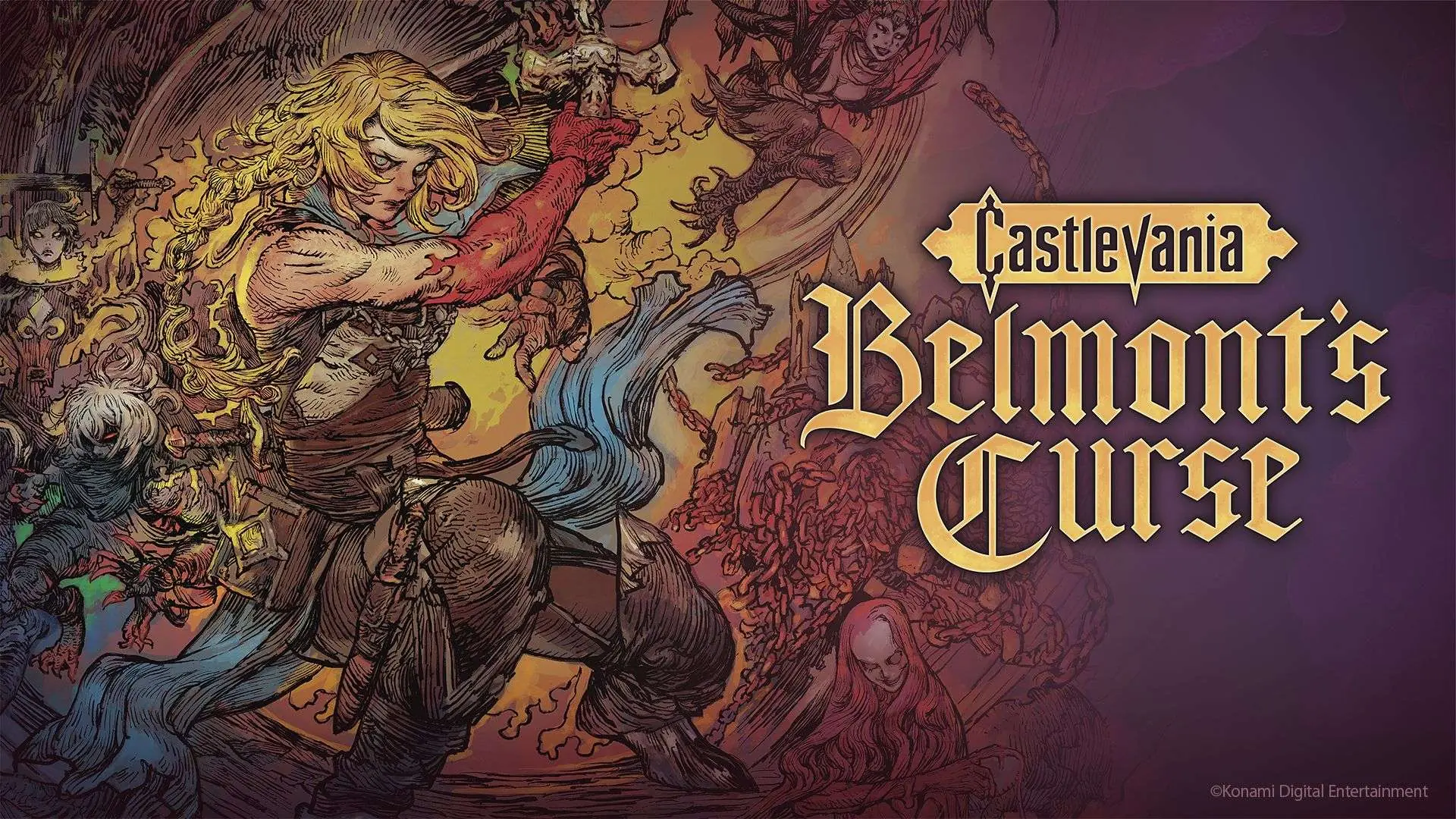
When Konami announced Castlevania: Belmont’s Curse at Sony’s February State of Play this year the internet was very excited. When Evil Empire (with Motion Twin advising), the team responsible for a lot of Dead Cells – including the incredibly fun Return to Castlevania DLC – were announced as developers, I was very excited.
As the eponym of the second half of the Metroidvania genre, the Castlevania franchise has had some ups and downs in its long history. The first game released all the way back in 1986 and was an instant classic, with subsequent titles such as Rondo of Blood and Symphony of the Night being on many people’s top ten games of all time. Other games – such as the series first foray into 3D, Legacy of Darkness and the Lords of Shadow titles – were not so well received. Castlevania: Belmont’s Curse is the first new entry to the series since Lords of Shadow 2 in 2014, and it’s a return to the 2D exploration based gameplay of Symphony of the Night, but is it a return to form for the franchise?
Paris is Burning
Set in the grim twilight of the 15th century (specifically 1499, twenty-three years after the events of Castlevania III: Dracula’s Curse), Belmont’s Curse trades the usual shadowy hills of Transylvania for a city steeped in smoke, terror, and tolling bells: medieval Paris.
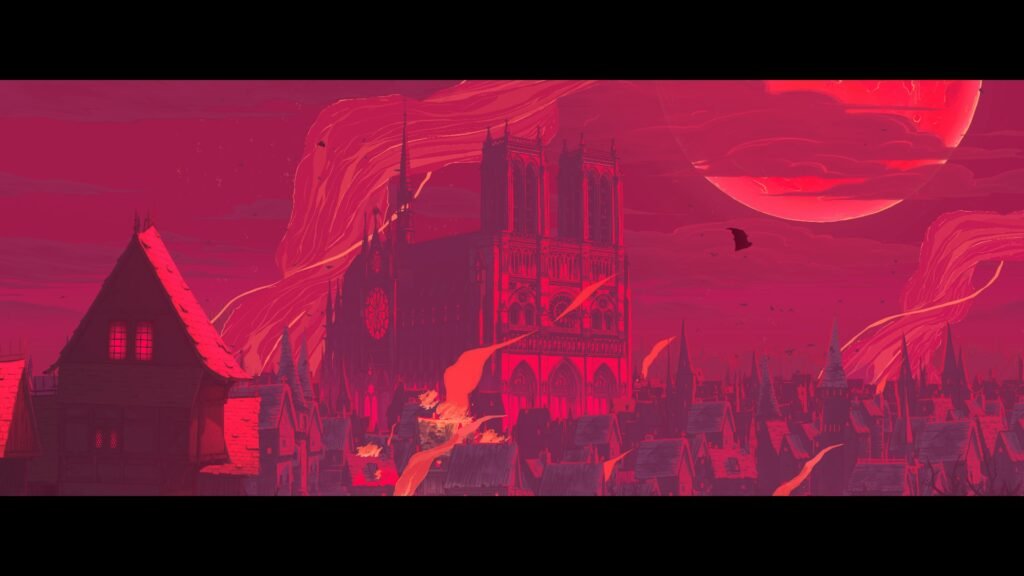
The narrative kicks off when a frantic call for help draws legendary vampire hunter Trevor Belmont and his daughter, Rose, down the River Seine. Paris has been violently plunged into chaos as hordes of demonic creatures flood the burning streets. After her father leaves to seek answers from the bishop that summoned them here, you take control of Rose. Carrying the legacy of Trevor and the late Sypha Belnades – whose life was tragically claimed by a lingering curse shortly after Rose was born – Rose is tasked with solving the mystery of what exactly led to the terror sweeping the streets of Paris.
Swapping the familiar, lonely cliffs of Transylvania for a crumbling French capital fundamentally alters the atmosphere. There is an urban claustrophobia here that the franchise has rarely tapped into. Instead of starting in the courtyard of Dracula’s castle, Rose begins running through the sewers as skeletal archers and bloody abominations drag themselves out of the ground. The city is filled with broken barricades and burning houses, as the demonic slaughter continues around you. As you traverse deeper into to the city, you’ll venture into catacombs, built from the bones of the long dead and slowly filling with the new; scramble up burning towers, as the floor falls out from beneath you and, plunge into watery tunnels, infested with grotesque fishmen and dripping poison. Everywhere looks fantastic, with the backgrounds rendered in a immense amount of detail and light filtering through the collapsing buildings.
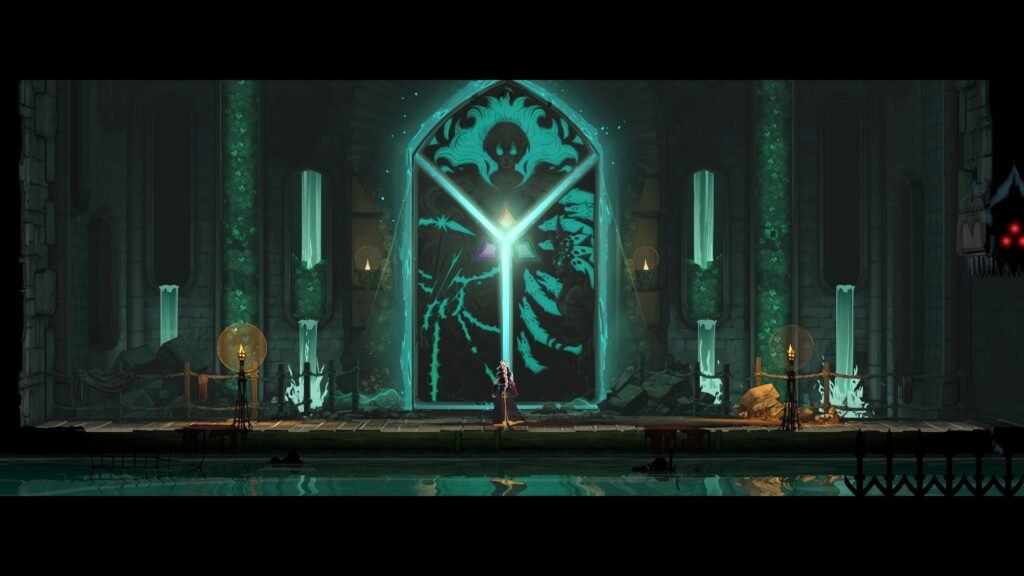
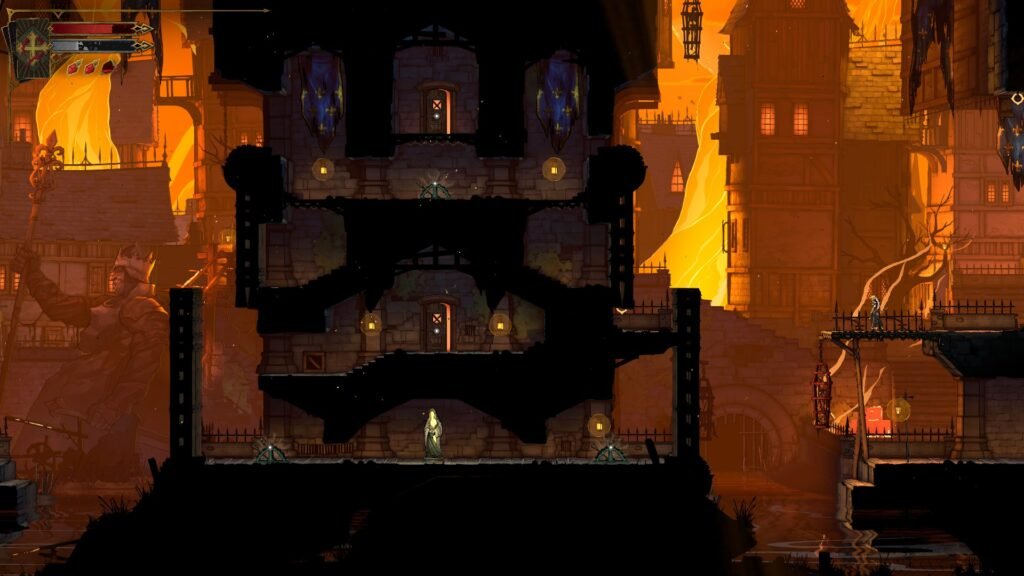
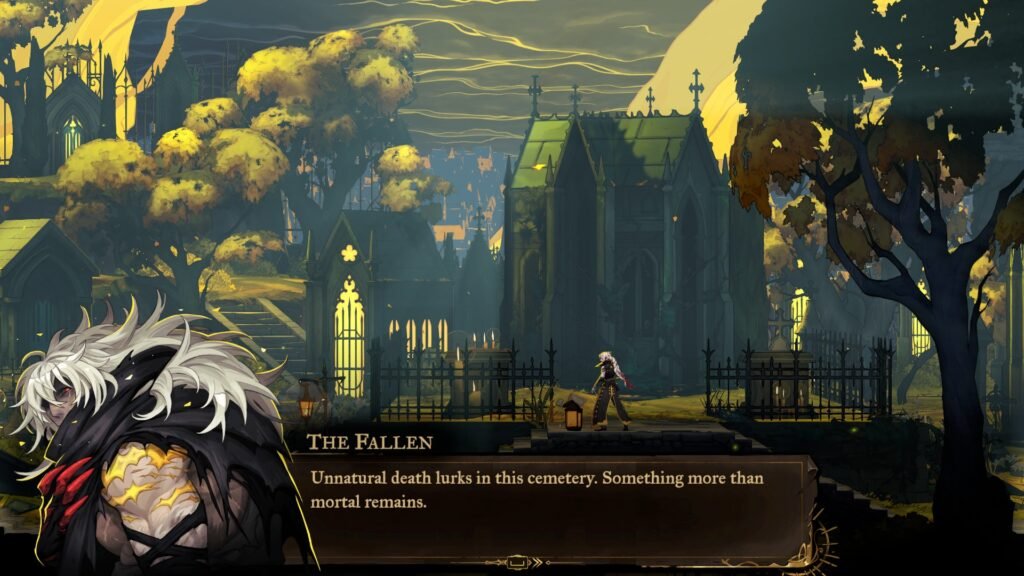
Evil Empire have chosen a painterly style for the game, with the character models and portraits – even the menus bursting with colour and style. The love for vivid color extends directly into the action on screen. The combat explodes with eye-catching saturation. Rose’s attacks and Arcana abilities paint the screen in brilliant golden flashes, radiant magentas, and deep arcane blues, while demonic abominations pop off the background with bold, stylised silhouettes.
Blood, Arcana, and the Crack of Leather
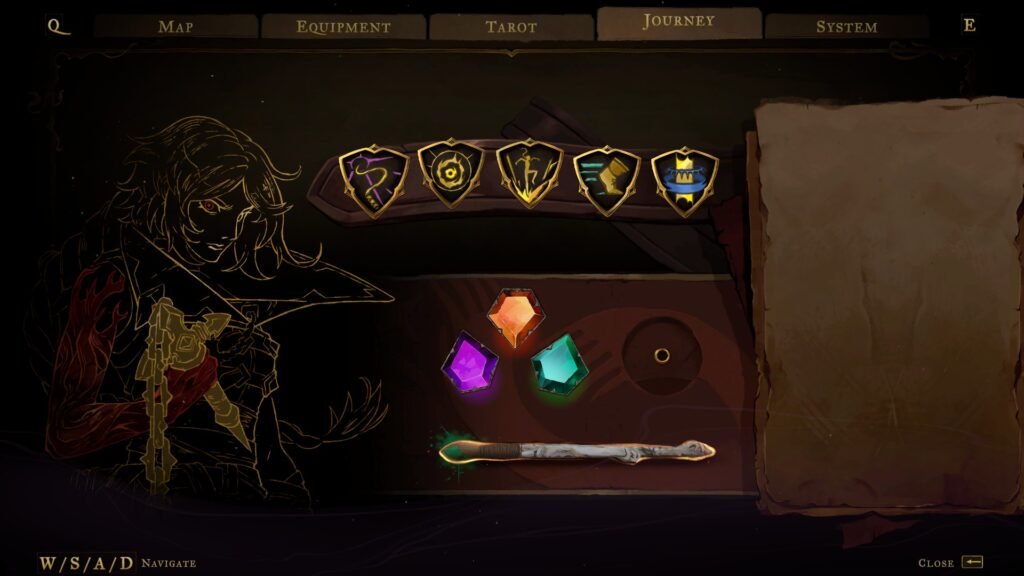
As a last gift from her mother, Rose is gifted a set of Tarot Cards imbued with a linger of magic, but without a clear use at first. They are, however, the key to one of the best features of Belmont’s Curse – the Arcana. Spirits, statues and notes scattered through the map will give Rose clues about each of the cards in her possession, pointing her in the direction of powerful bosses she’ll need to overcome to solve the mystery of what is happening in Paris and give her enough power to put an end to it.
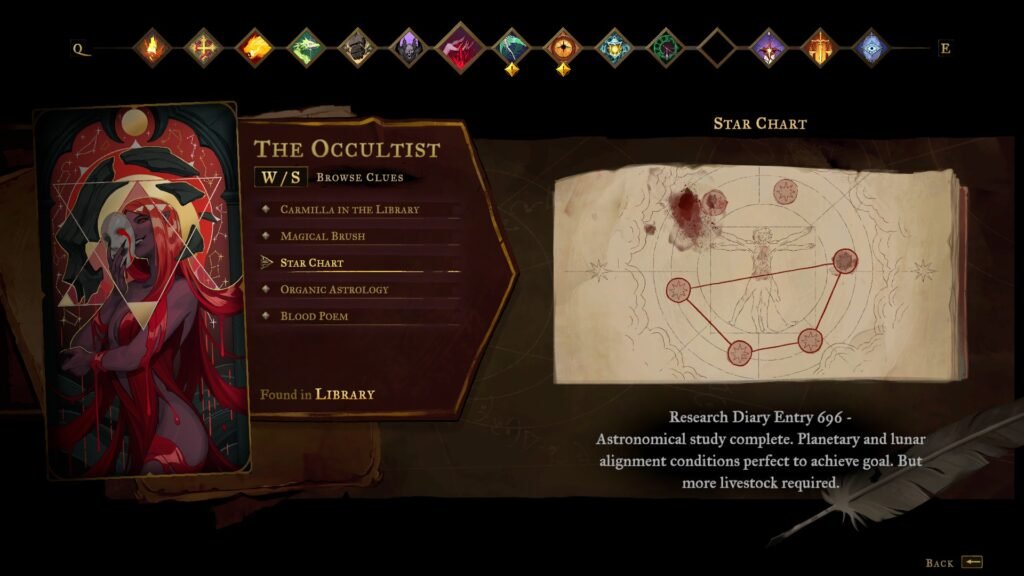
Clues range from where a boss may reside, to instructions on how to solve the environmental puzzles between Rose and them. The one hour demo available prior to release, highlights this with The Fallen – the first boss of the game. Each clue you find on the streets of Paris, either hints to the next clue or to the location of the boss himself. Once you track him down and defeat him – you’ll absorb him into one of your Tarot cards unlocking his Arcana. Each boss indicated by the Tarot cards has their own Arcana – a powerful spell that’s based on their attacks. Having The Fallen equipped allows Rose to throw a spinning cross in front of her, dealing damage to all the enemies in it’s path, before returning to her hand. Medusa, has Rose let out a petrifying screech, that can turn enemies to stone allow you to shatter them (or funnier, let them shatter themselves as the fall from the sky).
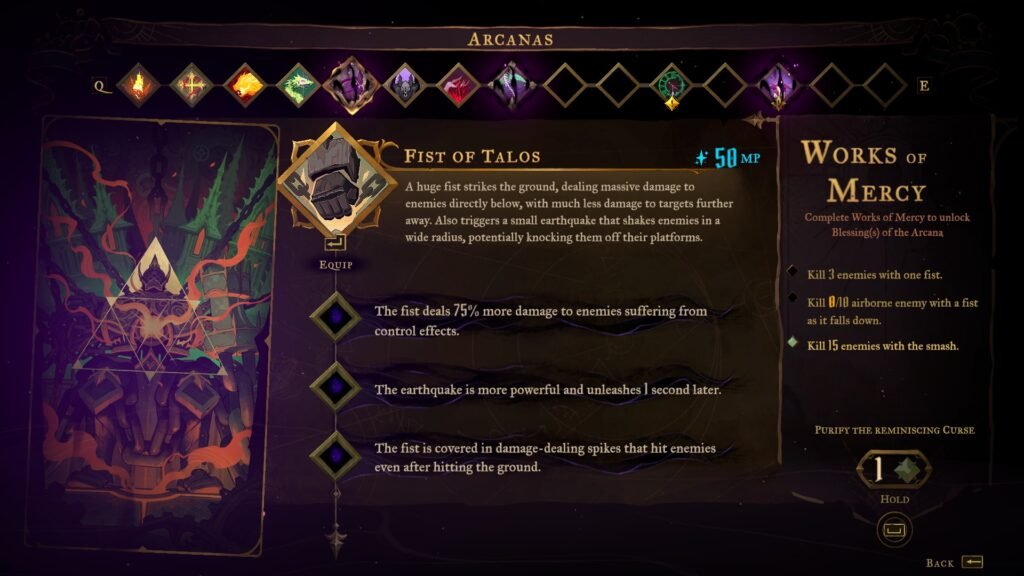
All of the speels associated with each Arcana can also be upgraded by fulfilling specific conditions on the cards. Some are passive, such as The Warrior’s requirement for you to parry enemies with your Shield of Light; others are more active, Carmilla’s blood spell needs you to inflict bleed on a certain amount of enemies at once. Weaving the Boss encounters into the mechanics of the game this way makes it feel incredibly satisfying. Instead of just unlocking new things as you progress naturally, I found myself going out of my way to track down new clues leading towards hidden areas and optional bosses. The game emphasises this to you frequently, with certain Arcana reacting to the environment, with the people and creatures trapped inside talking to Rose – spurring her on or trying to crush her spirit.
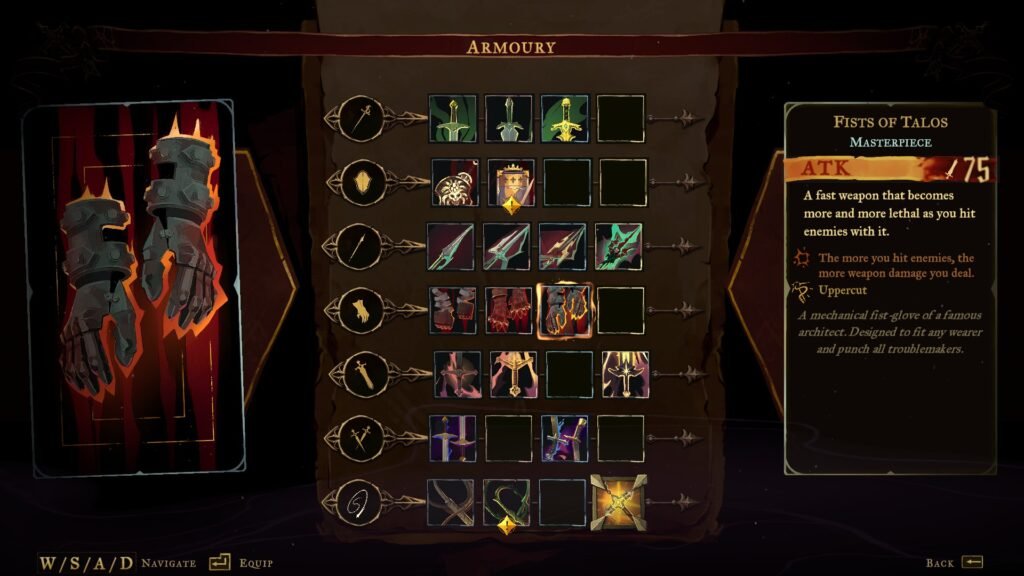
Of course it wouldn’t be a Castlevania game if it was just spells. Rose can unlock a veritable arsenal of weapons in her investigation across Paris. There are 7 different weapon types in the game, from ranged spears to the iconic Belmont whip. Each type has 4 different weapons, each with a different rarity that increases the damage. Most of the weapons feel different – the sword and shield class allows for some blocking, and you can throw the spears at flying enemies, however I didn’t really find myself using much else after I had unlocked the legendary whip. Whereas all the Arcana felt completely unique, and were incentivised to be used through the upgrade system, I think that some of the weapon types were a little redundant.
Jump, Swing and Slide
Another part of absorbing bosses into your Tarot deck is the new movement abilities that they unlock for Rose. The first of which is the Arcane Whip, which you then use to swing and scale your way through the game. I believe some of the traversal unlocks are optional (it’s worth noting there are multiple endings, that I will not be covering in this review to keep things as spoiler free as possible – and yes you can duplicate your save to save multiple runs), but if you want to backtrack and find all of the secrets the game has to offer, you’ll find them all throughout your playthrough. Each new unlock gives Rose more ways to deal with platforming challenges and enemy encounters, and they all weave together seamlessly. Unlike some modern Metroidvanias, Evil Empire haven’t leaned into rock hard platforming – there are challenge rooms with upgrades and unlocks at the end, and they’re unlikely to set you back to the point of frustration. I was a little worried at the start of the game, that my Dead Cells muscle memory was going to make the game feel sluggish, but once I was chaining whips from hooks to enemies and smashing them into the floor all my worries were gone.
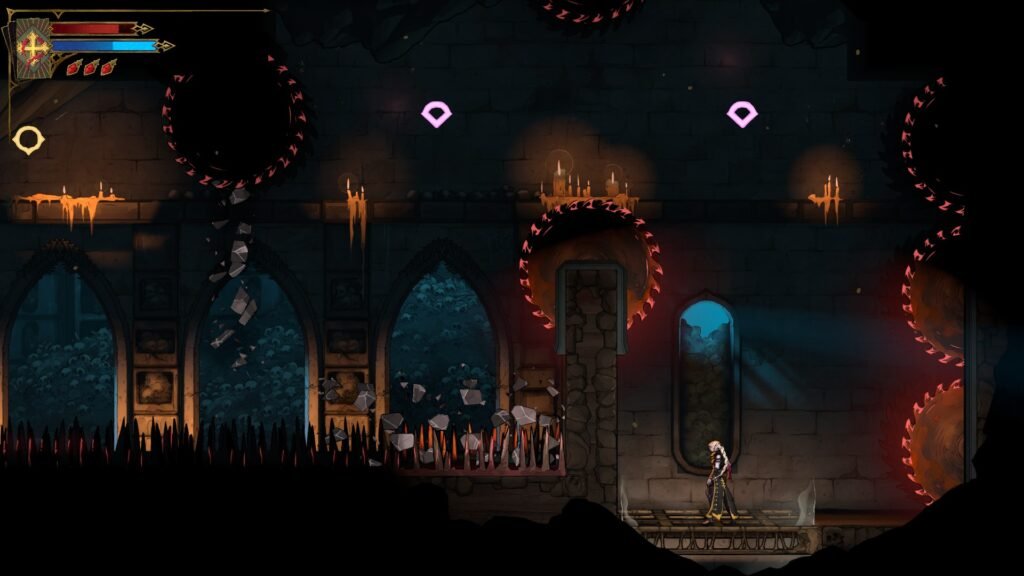
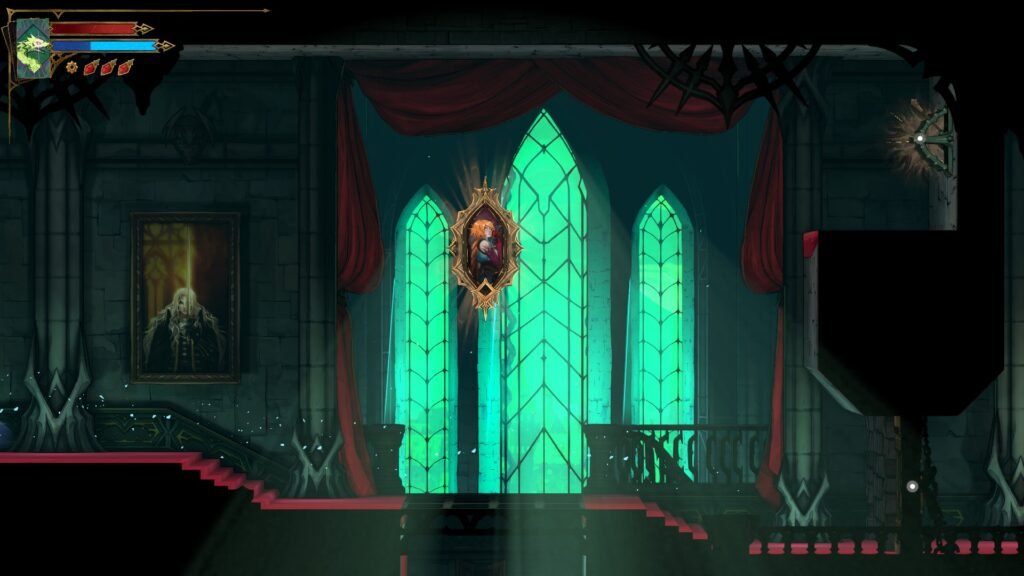
If you do find any aspect of the platforming or combat a bit too challenging though, the game has a suite of difficulty options and sliders, from reducing enemy damage or trap damage, to straight up invincibility. There’s also an option to activate a Stake of Marika type mechanic, where you respawn at boss doors rather than at the last save point, and I’m not to proud to admit that I did enable this towards the second half of the game.
Final Thoughts
Ultimately, Castlevania: Belmont’s Curse doesn’t just mark the end of a twelve year mainline game drought, it answers the question posed at the very beginning of this review with a resounding yes. It is an emphatic, confident return to form. While a few weapon categories fall into redundancy once you have the iconic whip in hand, that minor imbalance is easily eclipsed by how thoughtfully Evil Empire has built the rest of the game.
By building progression around the Tarot deck, Evil Empire has managed to solve one of the biggest pitfalls of some modern Metroidvanias: making the hunt for secrets feel just as rewarding as the destination. Tracking down clues, facing off against grotesque bosses, and turning their souls into upgradable Arcana spells gives the exploration a continual feeling of momentum. Pair that with buttery smooth traversal, an unapologetically vibrant painterly aesthetic that breathes life into medieval Paris, and a generous suite of accessibility options that respect the player’s time, and you have a game that honours its legendary lineage. It’s dark, fluid, and inventive proving there’s still plenty of blood left in the Belmont name.

Castlevania: Belmont’s Curse was reviewed on PC. Gamer Social Club would like to thank Evil Empire, Motion Twin and Konami for the code. The game releases on October 15th, 2026, for PlayStation 5, Xbox Series X/S, Nintendo Switch, and PC.
All screenshots captured from a build still in development.