Last year’s Silent Hill f felt like a bold move for the franchise, one that was desperately needed after the success of Bloober Team’s Silent Hill 2 remake. Lifting the series from its titular American town to instead explore the societal trauma of a young girl in 1960s Japan proved that the series’ spirit could endure even beyond the familiarity of its iconic setting, even when stripped down to its bare essentials.
Fast-forward one year later and Glasgow-based developer Screen Burn once again proves that this is the right track for the series to be on. While Silent Hill: Townfall’s gameplay is marred by clunky stealth sequences and underbaked enemy AI, its coastal Scottish town offers yet another distinct spin on the familiar fog veiled terror.
Welcome to St. Amelia
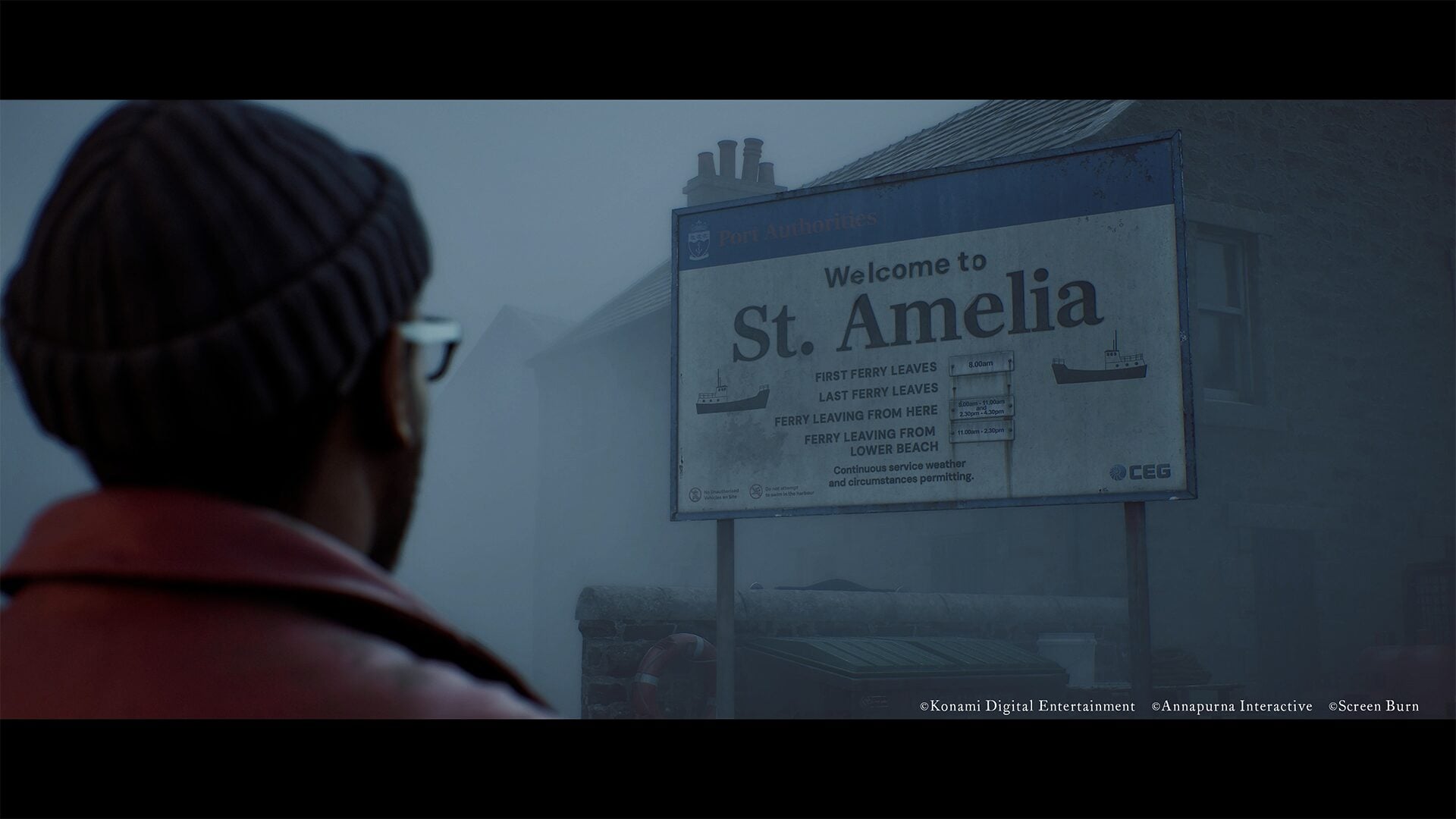
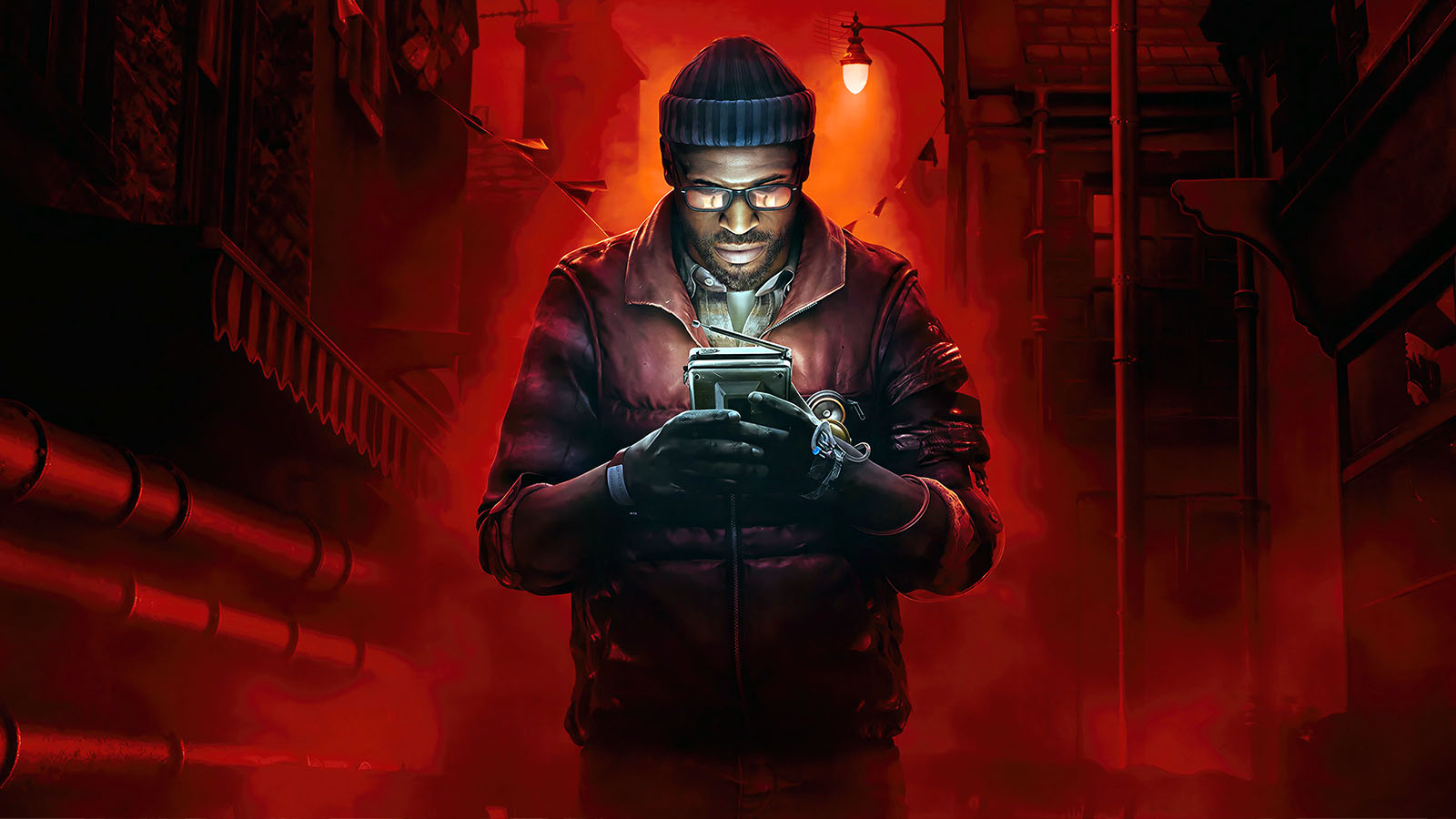
The story begins with protagonist Simon Ordell washing up on the shores of the island town of St. Amelia. Simon has been called back to the town by some unknown force, but quickly finds it to be completely desolate and overrun by terrifying monsters. He soon encounters a nurse named Zoe who, like him, has also been pulled back due to her connection to a local disaster.
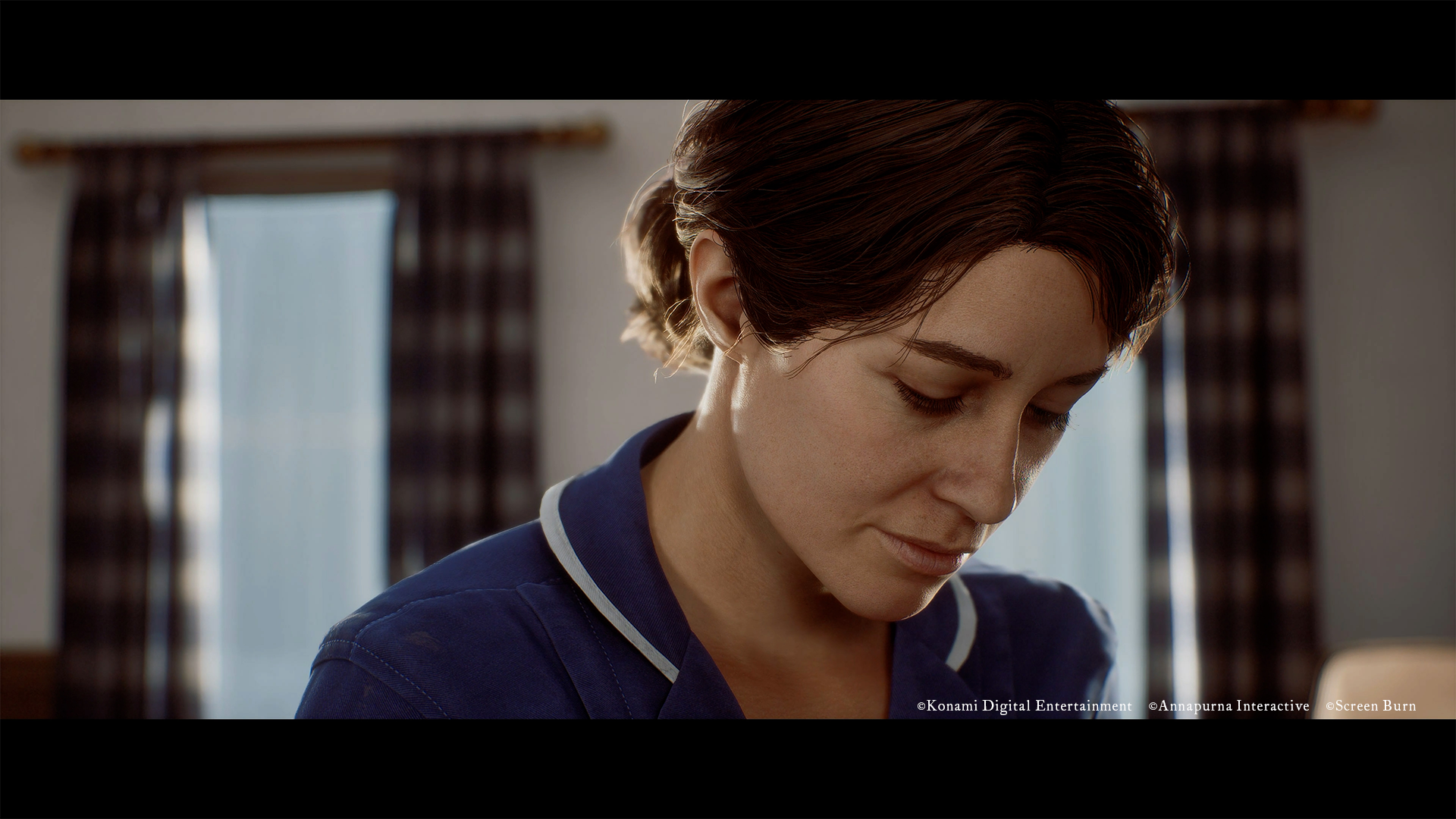
Like much of the series, Townfall’s narrative is a mystery box with many of its clues presented through its setting and puzzles. It’s a slow burn that weaves strong environmental storytelling and excellent performances to craft another grim, mature tale for the series that manages to both forge familiarity and thread new ground as it touches on themes of collective trauma in small communities, and the different ways that survivor’s guilt can manifest in the wake of man-made disaster. Kezia Burrows in particular delivers a stand-out performance as Zoe Ellis, which will likely go down as one of my favourites of the year.
For as well executed as this story is though, it’s one of the more transparent in the series’ recent history. Having taken the time to fully explore St. Amelia during my 15 hours with the game, I felt sufficiently fulfilled with my experience and didn’t find much new to unearth with a New Game Plus run. Despite its multiple endings, each of which do a solid job of recontextualizing the outcome of the preceding events, Silent Hill: Townfall makes for a perhaps disappointingly well rounded single playthrough. While this might sound appealing to those put off by Silent Hill f’s four-ending long structure, it, along with some of the fatal pitfalls of its gameplay, makes it hard for me to anticipate returning to St. Amelia in the same way that I have with Ebisugaoka and Bloober Team’s rendition of the Maine town.
Fog Drenched Frights and Frustration
Despite this, St. Amelia is mostly a joy to explore – mostly. The setting itself is rich in environmental storytelling, with each densely decorated street and interior representing a rich history and the echoes of its now vanished grief-stricken community. The initial moments of first-person exploration are an atmospheric feast, as Simon discovers a handheld television dubbed the ‘CRTV’, which allows him to tune into signals to track monsters during stealth a-la Alien: Isolation’s Amanda Ripley. Unlike Silent Hill f, Townfall encourages the player to stay away from combat more often than not, primarily introducing melee weapons and firearms as a last-ditch solution.
During these open sections while exploring the town, stealth is a fairly straightforward sequence of avoiding the enemies’ repetitive scouting patterns. Interior areas are a different story, often requiring the player to make use of lockers to hide from enemies, which limits the range to which they can be observed on the CRTV.
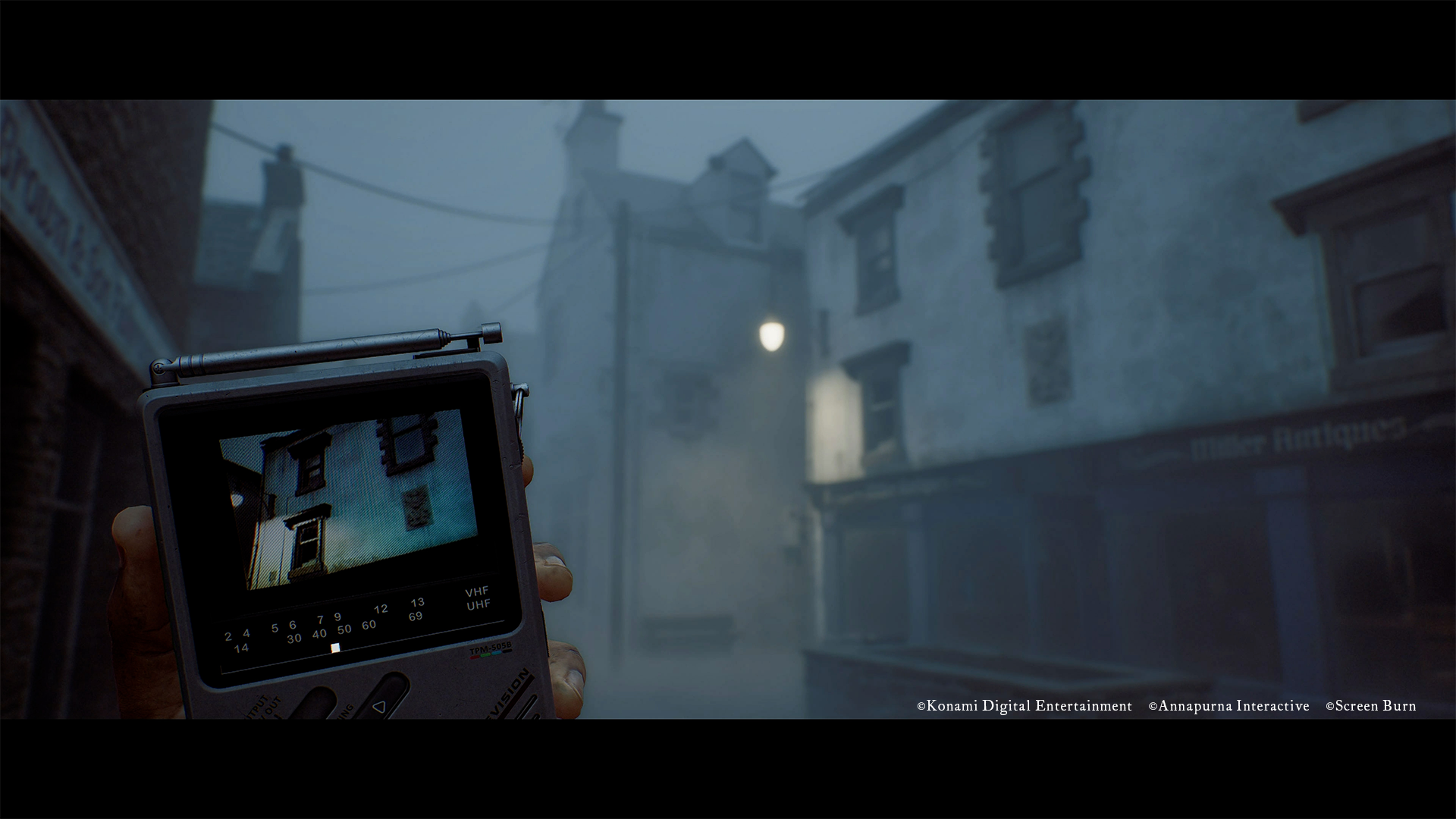
In the opening hours, these sections are tense and require a lot of patience. That patience is soon tested however, as later chapters interspersedly remove defensive options. With many of the game’s more unique enemies spared until the final few hours, the vast majority of Silent Hill: Townfall’s stealth sequences are spent tiptoeing around the same two enemy types, making much of the environment traversal a slog.
The worst of this occurs in the game’s third chapter, as an enemy known as ‘The Weight’ is introduced. This large, hulking enemy is an invincible one-hit kill for Simon, clearly inspired by Alien: Isolation’s groundbreaking Xenomorph monster. Similar to Isolation, Townfall depends heavily on a manual save system, meaning that deaths from The Weight can result in significant losses in progress. Unlike Isolation, the AI of this monster is nowhere near as sophisticated as the Xenomorph, and the game often relies on interspersing other enemies throughout these areas in order to heighten the tension, when in reality each and every one of these sequences is a frustrating wrestle against underbaked stealth mechanics and poorly implemented enemy AI, to the point that developer Screen Burn has already confirmed that it is working on a patch to adjust the difficulty of encounters with this enemy.
Combat also hurts the otherwise solid puzzles. Barring a few exceptions that feel designed specifically as pacing mechanisms, Townfall features some memorable puzzles that serve as excellent storytelling and worldbuilding devices, representing a clear understanding of what makes for strong Silent Hill puzzle design and cleverly mechanizing the CRTV into the narrative and gameplay. Issues arise when, on multiple occasions, the player is tasked with leaving the room or area in which they are solving them to venture out into combat and stealth sequences in order to acquire items necessary for their completion, obstructing both the pacing of the puzzle solving and storytelling.
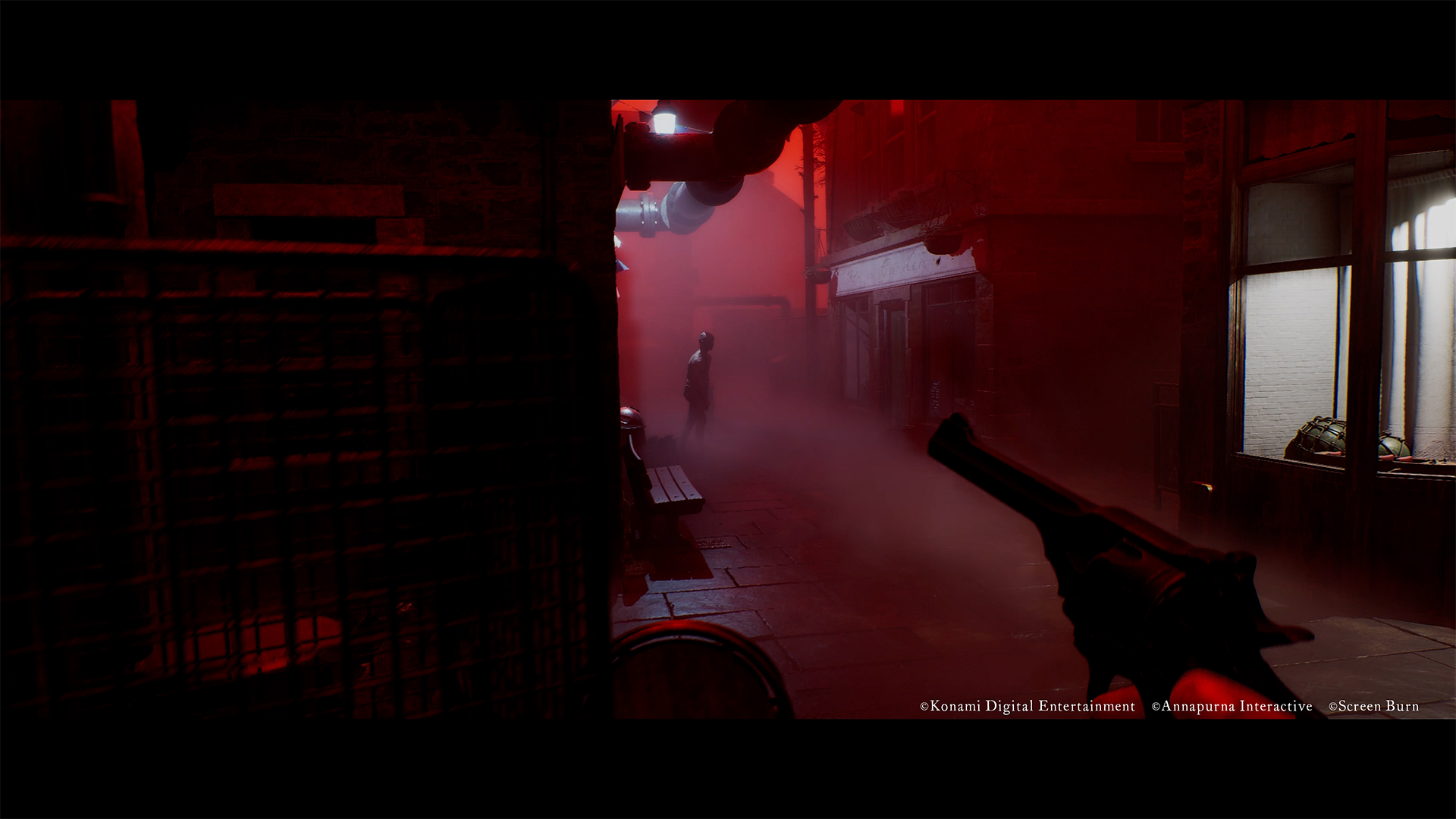
All of these issues coalesce during the game’s final act, which is a drawn out barrage of frustrating stealth sequences against inconsistent enemies that randomly spawn and respawn across multiple floors of an interior setting as the player is forced to solve multiple long-winded puzzles simultaneously. Thankfully the narrative reveals managed to restore my intrigue right before the finale, allowing me to leave St. Amelia fulfilled rather than simply frustrated.
A Stunning, Cinematic Presentation
Notably, Silent Hill: Townfall is the first new entry in the series since its revival to not feature music from composer Akira Yamaoka. Screen Burn has instead entrusted Canadian musician Pilotpriest to define the sound of St. Amelia, and his score contributes massively to the haunting ambience of the town, with uncanny off-tune melodies filling the air of the derelict streets and town square, making for a strong first impression as Simon washes ashore.
Where I’d argue that Pilotpriest is underserved is in how his music is utilized. Whenever Simon is surrounded by enemies the game often repeats the same repetitious droning tracks to indicate danger that quickly outstay their welcome. This is then combined with inconsistent sound design, which randomly intersperses loud banging even while enemies are unalerted, seemingly specifically to jump-scare players. While it certainly helps create tension, this approach to sound design feels like it is in direct conflict with the series’ philosophy of prioritizing psychological horror and use of ambient noise above cheaply relying on horror tropes. Otherwise, Pilotpriest’s score helps give Townfall a distinct atmosphere of its own, and the composer uses his experience in film scoring to beautifully complement each cutscene.
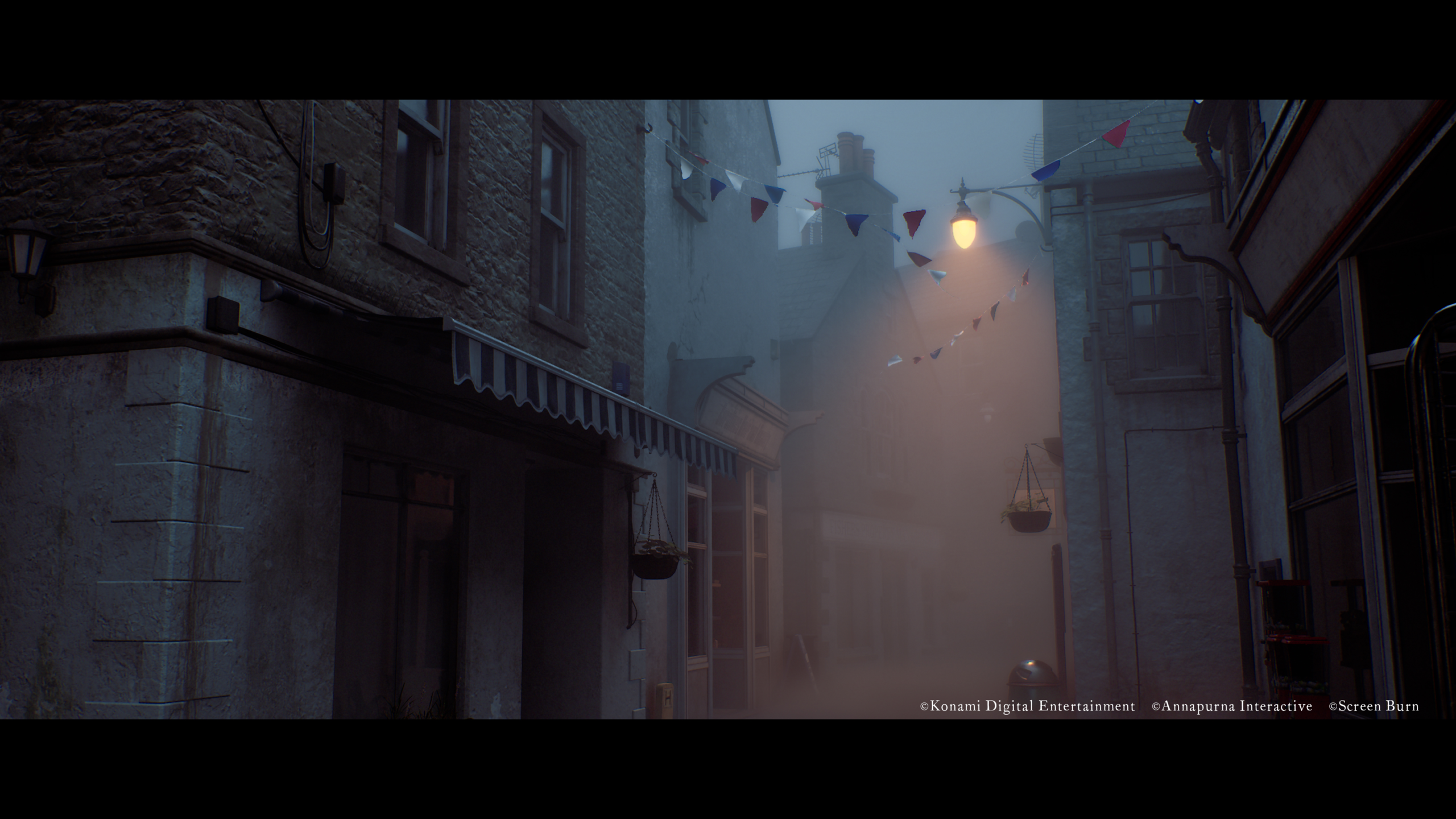
Townfall as a whole features a strong cinematic flair, from the opening featuring a prestige television inspired intro sequence, right down to the use of ultrawide letterboxing and careful colour grading to frame its world. As previously mentioned, St. Amelia is a gorgeously decorated setting with each corner packed with detail, but even just plainly speaking Silent Hill: Townfall is a fantastic looking game overall. Even on the base PS5’s performance mode the world looks stunning and it only loses grip of its 60 frames-per-second target in intense sequences towards the end.
While characters are a little less detailed in animation than the inhabitants of Ebisugaoka and Bloober Team’s rendition of the Silent Hill 2 cast, the performances keep each character engaging to watch. Some of the monster designs also manage to hang with some of the series’ best, with their behaviour during combat fittingly reinforcing their narrative role.
I’m sure every Silent Hill fan is familiar with the phrase “It’s great, but the combat sucks”. It’s a sentiment that’s hung over the series since its inception, given that it was directly influenced by Capcom’s Resident Evil series and, as such, has been understandably compared to it since. Despite this, the series has always been defined by its grim, mature stories, and beautifully repulsive settings and atmosphere. It’s here in which Silent Hill: Townfall manages to maintain what makes the series so special while reflecting the creativity and ambition of its team, delivering an experience that had me simultaneously yelling profanities at the screen and eagerly excited to progress towards the next cutscene.
Verdict
Silent Hill: Townfall continues to prove that taking Konami’s long dormant horror franchise on a world tour was the right choice, as Screen Burn has crafted an excellent narrative that gets the most out of its setting through weaving unique cultural trauma with the series’ distinct exploration of grief, backed by some stellar performances and visuals. Though the gameplay also has some great moments of its own, particularly in its puzzles, combat often stumbles into a mess of frustration and tedium, leaving the experience feeling admirable but uneven.

Silent Hill: Townfall is available now for PC and PlayStation 5. The game was reviewed on PlayStation 5.