The Curse of the Modern RPG: A New Beast
In the modern age of gaming, RPGs are a dying breed. Often synonymous with grand-scale adventures and stories that grip onto your wildest fantasies, many of the most famous names of the genre have all but faded into irrelevance in the 2020s. Titles that used to be household names, such as the Dragon Age series and Mass Effect, have been watered down into versions of themselves that are far from what fans have come to expect. Though some of the most iconic RPGs have fluttered in and out of the limelight in recent years for better or for worse, just as many have stood their ground in this age of dumbed-down stories and stakes that don’t feel worthy of the worlds they’re a part of.
Some of my personal favorites that come to mind when I think of a “larger than life RPG where you can carve your own path” are Kingdom Come: Deliverance II and Baldur’s Gate III, but these are series with studios that have long since ironed out their recipes for success. There are a few others that stand out in the 2020s – how could I forget my beloved Clair Obscur: Expedition 33 – but rarely has there been an RPG from a new studio able to stand amongst the greats. Well, it appears the winds have somehow shifted again to welcome a darker, more blood-filled adventure into the ranks. Welcome to my review of The Blood of Dawnwalker. Let’s get right into it.
The Beauty in Blood: Becoming the Dawnwalker
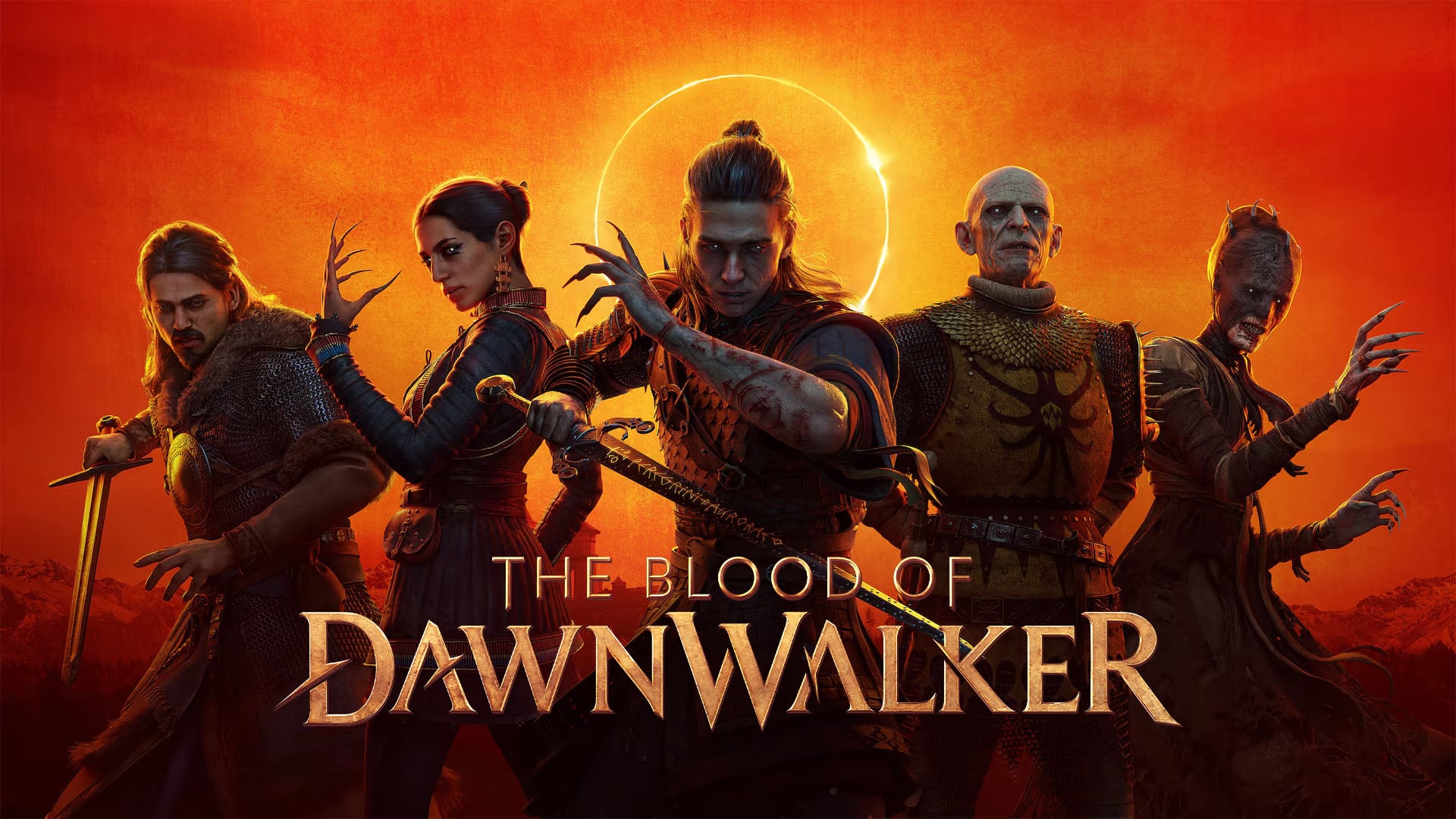
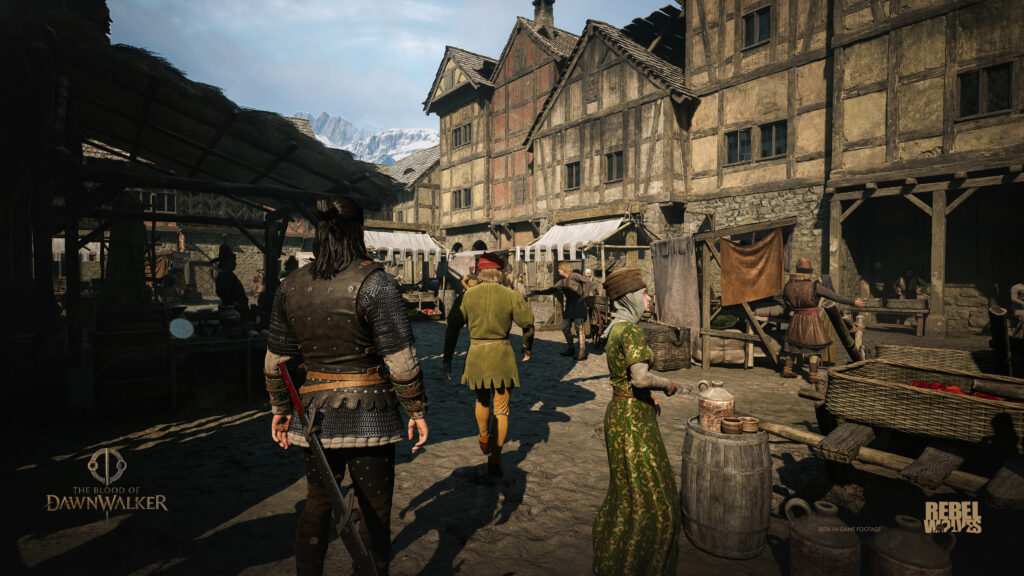
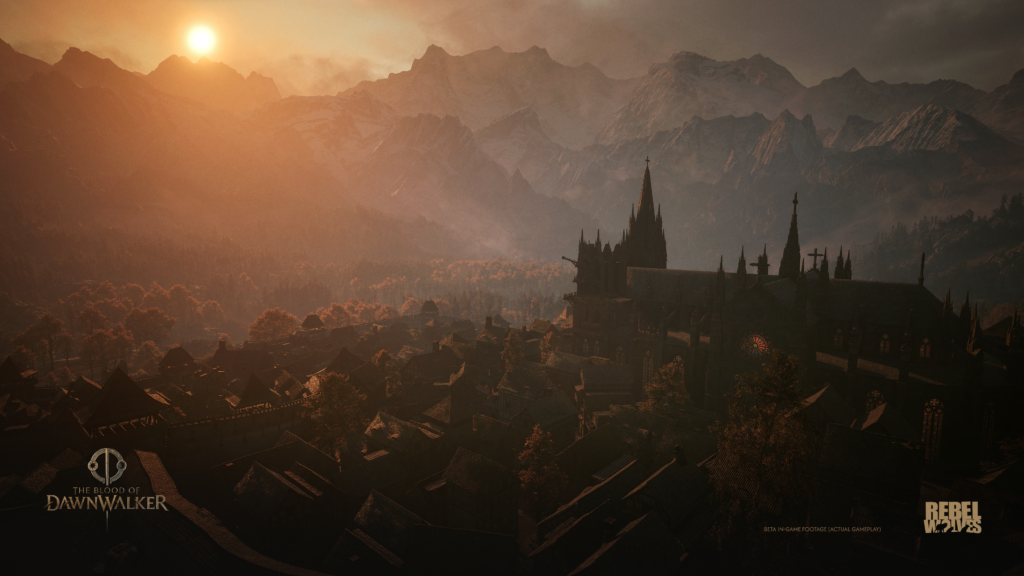
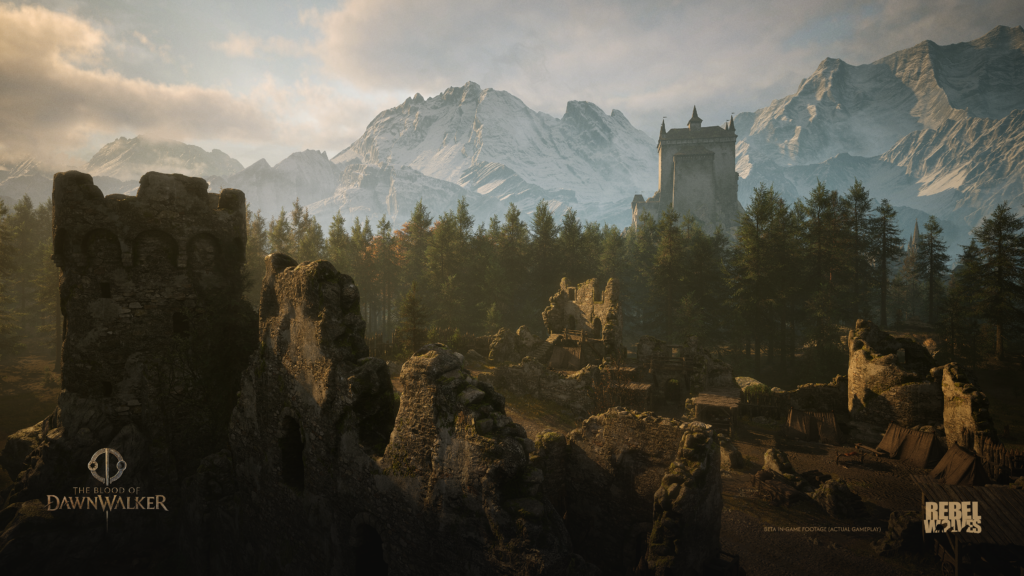
The Blood of Dawnwalker is the first game released by the new kid on the block, Rebel Wolves, a studio established in Poland – where some of the most iconic RPGs of the last decade have hailed from. Does correlation always equal causation? Who knows, but twice is a coincidence and we’re way past that. Anyway, The Blood of Dawnwalker is a new IP from Rebel Wolves that follows protagonist Coen as he tries to save his family from a vampire threat that has taken over his home of Vale Sangora, a valley in the Carpathian Mountains. The overall setting and vibe of The Blood of Dawnwalker is perhaps one of its best selling points. The open-world playground of a 14th-century, post-Black Plague Europe feels perfect for a game centered around giving the player the power fantasy of being a vampire, and from that perspective it more than succeeds.
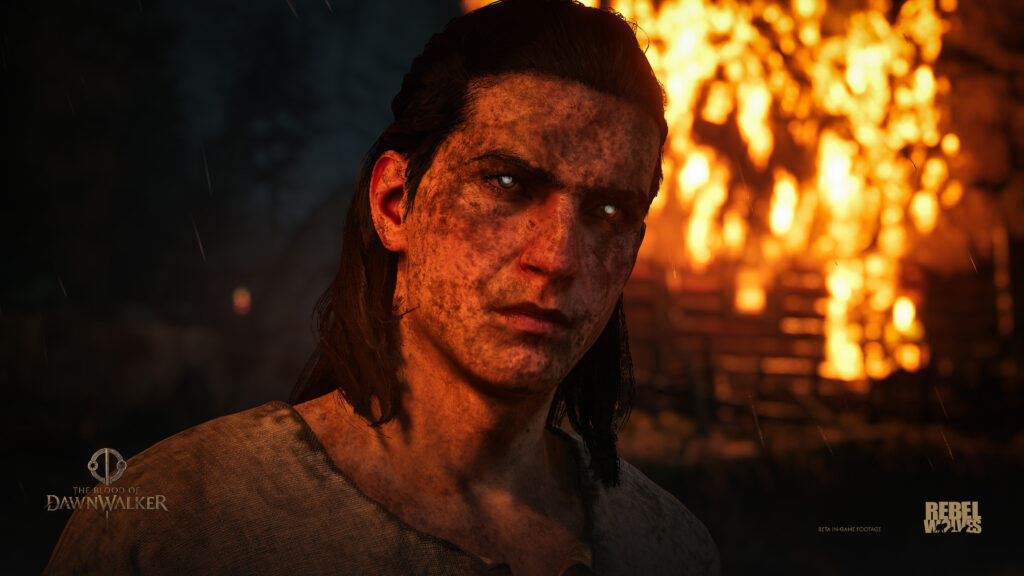
From a story perspective, your tale as Coen starts with a normal man trying to exist in a world under the thumb of the Vampire Court that took over the valley after the plague ravaged Vale Sangora. In those first few hours of the prologue, you learn the horrors the everyday commoner has to endure just to survive. The game excels at selling you the idea that the Vampire Court serving as your main antagonists are nothing more than monsters preying on the weak – but that’s flipped on its head within the first few hours, when you’re given the power of a vampire yourself after Brencis, the leader of the Vampire Court, turns you and leaves you for dead as the sun rises over the horizon. Through a twist of fate or pure dumb luck, you become the titular Dawnwalker, and your journey as a thorn in their side begins with the valley as your hunting grounds.
The game has you trekking through the hardships of not only Coen, as he grapples with the idea of embracing being the same type of monster that ripped his family from him, but also a world teetering on the edge between imploding and consuming itself in a mass of blood and bones. If there’s one thing Dawnwalker does exceptionally well, it’s the stories you get to experience during your time in Vale Sangora. The main and side quests range in complexity from multi-layered questlines hunting down members of the Vampire Court by dismantling their operations in the region, to ones as simple as chasing a local legend to find better equipment. Each one carries its own weight, and Rebel Wolves has created a story worthy of standing amongst titles like The Witcher III – one that even surpasses some of them in certain regards. I found myself not only feeling for Coen in his moments of sadness and defeat but also rooting for him in moments of raw rage, and the performances are beautifully done across the board, from Coen’s love interest to the Vampire Lords themselves. No two main characters felt the same, and each one had their own motives and needs that are discovered as you progress.
Becoming the titular Dawnwalker is a journey Coen never wanted to embrace, and as you enter the final stages of the game you truly begin to realize what he has given up by using the tools of his enemy against them. This is further carried by the decisions you get to make throughout your playthrough. There are more than half a dozen moments that come to mind where your decision directly affects Vale Sangora in a way that’s almost worse than what the vampires are doing to the general populace. It really runs with the idea that maybe what you’re doing isn’t ultimately what’s best for the people of Vale Sangora, and I honestly loved every second of it from a story standpoint. Becoming a villain to chase those who wronged you might be a generic plot twist used in every form of media, but The Blood of Dawnwalker does it in a way that’s perfect for the setting.
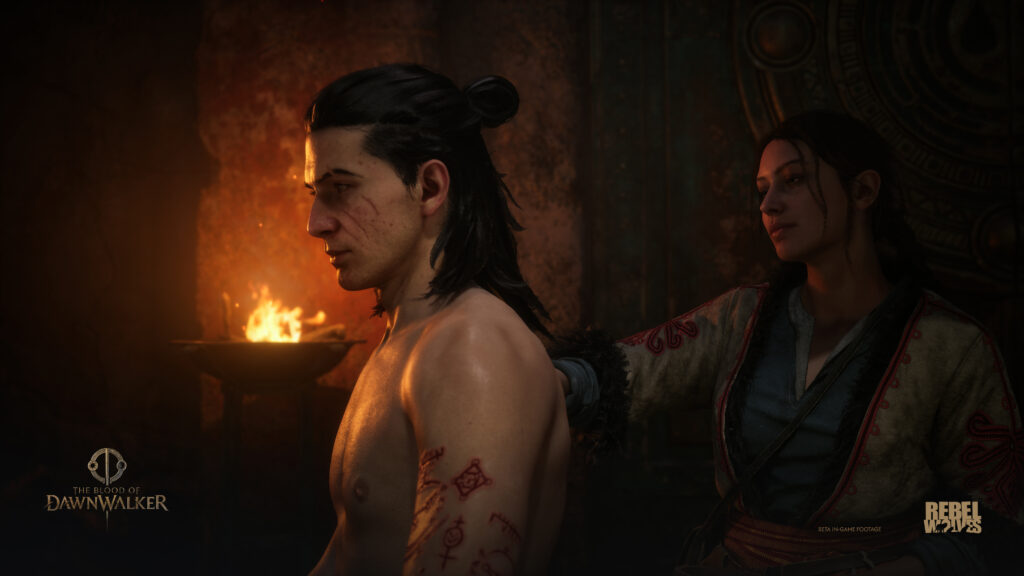
Though I don’t want to spoil the mystery of what being a Dawnwalker entails from a lore perspective, it can be summed up as a very unique presence that feels like a breath of fresh air in the gaming space. Instead of employing a standard day and night cycle that simply changes how the world works, The Blood of Dawnwalker lets you experience completely different playstyles that rely on Coen’s two forms. During the day you play as a normal human with all the drawbacks of a mortal, while the moon allows you to experience everything being a vampire has to offer. Whether that’s sucking the local populace dry or simply feeding on the wildlife is totally up to you. We’ll dive more into that in a second, but for now let’s talk about the world itself and how it changes with the cycle.
Time As A Currency: A New Gameplay System
Within a relatively tame day and night cycle lies the system that is going to make or break this game for a lot of people. What makes The Blood of Dawnwalker one of the most unique RPGs in modern memory is how time is used as a currency rather than a simple game mechanic. One of the most important aspects of the entire game – and really the main questline, no matter how you progress – is that you are trying to save your family before Brencis and his lackeys bleed them dry during a ritual happening thirty days from the moment you awake as a Dawnwalker. What this means from a gameplay perspective is that time isn’t your friend. Just like real life, time is the ultimate enemy, and the game employs this idea to near perfection. Is it a mechanic that melds flawlessly with all of their other design choices? Well, no, but that doesn’t mean it isn’t the perfect addition to the standard open-world RPG formula we’ve been beaten down with for so many years at this point.
Time is the currency that drives the story forward and the devil on your shoulder that keeps you honest. Nearly every questline in the game, no matter how big or how small, costs a certain amount of blocks to complete. With sixteen blocks of time per day – eight for day and night respectively – you have to micromanage in a way that doesn’t waste too many of the precious hours available to you. Now, I’ll be the first to admit I wasn’t sold on the “time as a currency” concept at first. I went into The Blood of Dawnwalker thinking I could play it the same way I’ve been playing open-world RPGs for a decade now. Run around, grab every quest and piece of equipment I can get my hands on, explore to my heart’s content, then finally do the story once I’m bored of the world. To my own dismay, I wasted a ton of in-game time before I realized, “Oh, that’s how it works?” Once it started to click, the time mechanic became just another part of the experience – but that doesn’t mean it’s without its flaws, and I think it’s what’s going to send some RPG fans running for the hills.
The most glaring weakness I found in the time system isn’t that the quests cost time, but rather the skills themselves. I can one hundred percent get behind the idea that every quest in the game costs time. If anything, I think it’s a system that makes sense in any game world with a day and night cycle. It makes it feel like you’re using your time wisely, both figuratively and literally, and it makes the game progress as you do. It’s honestly a system I really loved from that aspect, and one I hope they retain in future sequels. My main complaint with the time system is merely the way it’s applied to the skill system.
From a skills perspective, I hated the way time is used. In the first few hours of the game, up until you defeat your first or even second Vampire Lord, you’re able to buy skills in the three distinct trees the game offers. These trees – Vampirism, Swordmastery, and Witchcraft – offer a huge selection of both active and passive abilities that allow you to carve out your character as you see fit. It allows for a wide range of creativity and honestly doesn’t limit you to one particular playstyle if you feel like being a master of everything. For example, I spent most of my points in the Swordmastery and Vampirism trees to make my character as deadly with sword and claws as possible, without much emphasis on Witchcraft. The problems arise once you get to the more powerful options. Like I mentioned above, I wasted literal days leveling up at every opportunity I could (being a trained RPG slop enjoyer) until it finally clicked that maybe it wasn’t the best way to approach things.
What this realization caused me to do was hoard the ever-living you-know-what out of every skill point I earned, from the halfway point of the main story until the literal end, when I was ready to square up with the man himself. In hindsight, did I have to hoard all those skill points instead of spending them? Honestly, no. I had done most of the major side quests, romanced all three of the potential love interests, and defeated every other Vampire Lord besides Brencis, and still had five in-game days to either save my family or defeat him. That’s why I think the time system is a make-or-break. Some people are going to want to embrace the RPG slop to the fullest with no handrails, but the reality is you have to be at least somewhat cognizant in your actions to make it all mesh together. Again, not a huge gripe for me, but clearly it rubbed some people the wrong way.
The Pinnacle Vampire Experience: Blood, Teeth and Claws
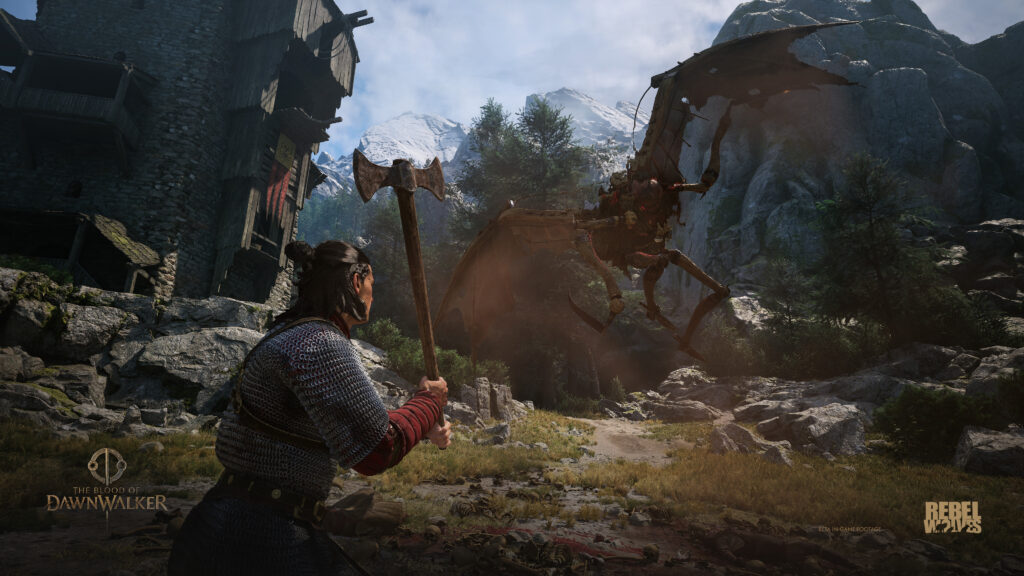
Now, the last thing I want to discuss is the aspect that ties all this Dawnwalker madness together, and that’s the combat loop. Once again, I was not sold on it at first in the slightest. I was absolutely terrible at For Honor and Kingdom Come: Deliverance II when I started them, and this game is the twisted love child of both brought to life in glorious fashion. It employs a system of attacking and defending that relies on omnidirectional movement, and it is going to be absolutely miserable if you go into it thinking you can smash your attack button without rhyme or reason. I’ll be the first to admit it feels amazing once you get some time with the systems, but if you’re unwilling to work with it, I’m pained to say you’re in for a bad time. It’s simple and to the point once it clicks, and though there’s a fair bit of repetition toward the second half of the game, there’s a lot to be enjoyed from a baseline perspective when it comes to swinging your sword and parrying your enemies’ attacks. The problems with the combat system can be summed up as one enemy that simply cannot be defeated; the camera.
Oh my god, the camera in this game is honestly the worst aspect of the entire experience from a combat perspective. For some reason, the developers made it so that not only can you not select who your character is looking at in fights – even when you’re surrounded by sometimes dozens of enemies – but you’re at the mercy of the auto-lock system in every sense of the word. Sure, sometimes it lets you switch to the enemy you want, but then the camera will automatically swing to whoever is going to attack you next. Honestly, I found the most optimal way to fight groups was simply letting the camera do its own thing. As strange as that may sound, it was the only way it felt like I wasn’t fighting the gameplay systems themselves. Unfortunate, yes, but not game-breaking by any means. I should also add that the game has a weird obsession with not letting you run away from fights. It’s puzzling that when you have two separate forms that let you move faster than most standard enemies – and one that lets you instantly teleport – you can still be locked into a fight you had no intention of getting into. Again, the small things are what gnaw at me the most, but they’re worth mentioning.
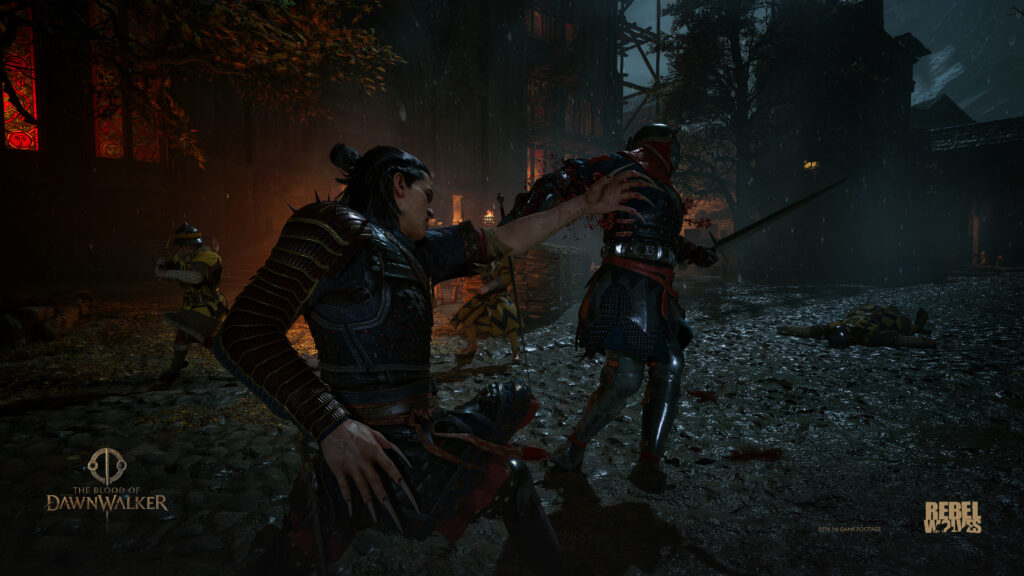
Besides the awful lock-on system, the combat does have a fair bit of variety in how you can approach most situations. The game employs a very fun system that lets you feel like an all-powerful vampire during the night while feeling like a highly skilled swordsman during the day. Like we talked about above, the day and night cycle allows you to play the game in a way that matches your own playstyle. I will admit the daytime mechanics end up feeling mostly standard by RPG means – besides the Witchcraft tree, which lets you delve into blood magic – but the nighttime shenanigans are where the fun gets cranked up to ten in my opinion. Instead of relying on swords and the usual mortal artifacts of war, you’re able to slash your enemies with razor-sharp claws and feed on those who stand in your way. It really does present itself as a power fantasy where you’re the one creeping around in the dark and jumping from rooftop to rooftop, and I think it’s where the game shines most. I’ve wanted a game that lets me live the dark and mysterious life of a vampire ever since the Underworld movies, and The Blood of Dawnwalker mostly lets you experience it in full effect.
Other than the combat system and the different forms you take as Coen, I do think there was a missed opportunity with the enemy variety. You’ll be fighting the same soldier types for pretty much the entire game, and this sense of sameness follows you from the moment you step into the world until you either save the valley or let it consume itself. You’ll see the same packs of wolves and pigs as you roam the wilderness, and most of the more iconic enemy types are limited to the static sections of the game where something grand or horrifying is happening. I didn’t mind fighting the standard soldiers who are meant to be normal citizens like Coen, but I can’t say I’m not disappointed by the lack of variety in a game full of unspeakable horrors. Even fighting the Vampire Court felt tamer than I expected, and they didn’t really make me think outside the box, besides the big man himself, Brencis. There’s also a startling lack of any real stealth gameplay in a game that feels nearly perfect for it, though I found cutting my way through most enemies satisfying even without the sneaky option. Combat was satisfying in most scenarios, even if the camera and the lack of enemy variety dragged it down for me a bit.
Final Thoughts: A Bright Future Ahead
For a debut, The Blood of Dawnwalker is remarkably ambitious. The story rivals the genre’s best, the time mechanic reinvents how an open world can feel, and the vampire power fantasy delivers exactly what it promises. It’s held back by a camera that fights you and an enemy roster that runs out of ideas early, but Rebel Wolves has built something worth paying attention to, and I’ll be first in line for whatever comes next.

The Blood of Dawnwalker was reviewed on PC. The Blood of Dawnwalker was released on September 3, 2026, for PlayStation 5, Xbox Series X/S, and PC.