There was a moment in video games when it seemed like all we had to play were babysitting games. We had The Last of Us, God of War 2018, The Last of Us 2, then God of War Ragnarok…wait, it was just those two IPs, never mind.
Sandwiched between those two huge IPs sat a little story about a sister and her little brother called A Plague Tale: Innocence and Requiem. It was a marvel, in a way, because we often controlled helpless children fighting against what seemed like the whole world. We felt small, the situation was dire, and every move had to be precise because we didn’t stand a chance against the adults and the rat-plague. We had a narrative-driven, linear adventure where we learned to love Amicia and Hugo.
And now comes Resonance: A Plague Tale Legacy and our not-so brand-new character, Sophia (whom Amicia and Hugo actually met in A Plague Tale Requiem). Sophia’s story is set 15 years before Innocence. A story and identity that, at first, seems as if it isn’t at all a part of the Plague Tale family. Gone are the kids who can’t hold a candle against brutal adults. Gone is the necessity to sneak, place bait, and run from rats. In Resonance: A Plague Tale Legacy, Sophia. Kicks. Ass. And not just by herself too, as this is called “Resonance” for a reason. We have someone from the Minoan times we resonate with, Thesus, that guides us and gives us power.
A New Beginning: The Combat
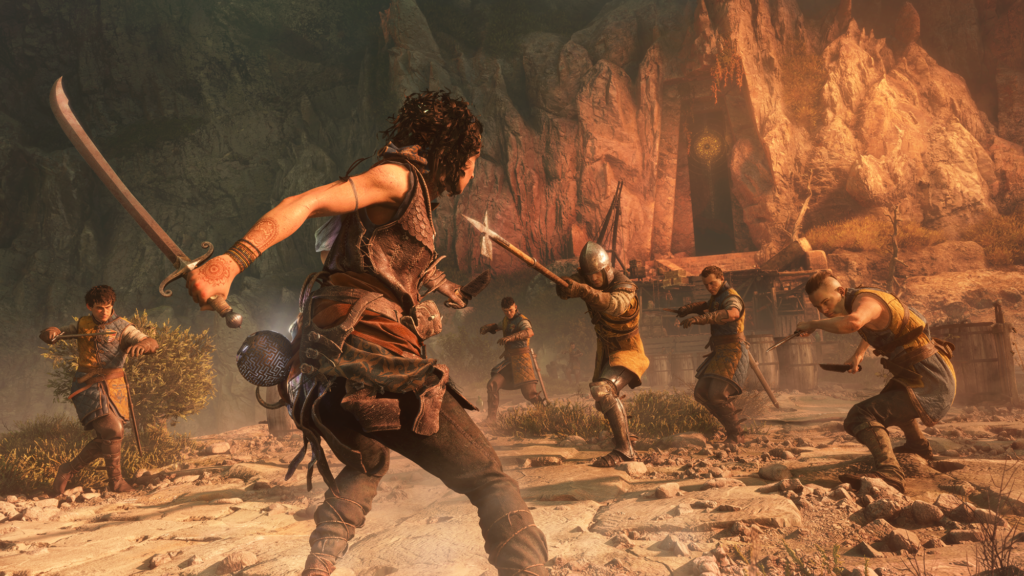
At first glance, it’s difficult to discern that Resonance is a Plague Tale game, apart from its beautiful linear world, music, and narrative style. This is because of the extreme contrast between Amicia’s and Sophia’s gameplay styles. Sophia is strong, fierce, adventurous, with no one to babysit, and is often partnered with an equally capable partner. Sophia wields her sword and dagger with grace and precision, and she isn’t afraid to make it hurt.
Resonance’s general combat gameplay is third-person action. In combat, Sophia uses her weapons aggressively, landing critical strikes with her dagger, blocking or parrying with her sword, dodging, and even using her grappling hook to pull enemies toward her. As for resources, Sophia has a health pool split into three (or four in lower difficulty settings), no stamina bar, and a focus gauge that lets her use a special attack. Meanwhile, her enemies have a typical health pool and a stun meter. The enemies’ attacks, if they connect, will always deplete one bar off of Sophia’s health; no matter the source, they all hurt the same. However, every time she defeats an enemy, one bar will get replenished.
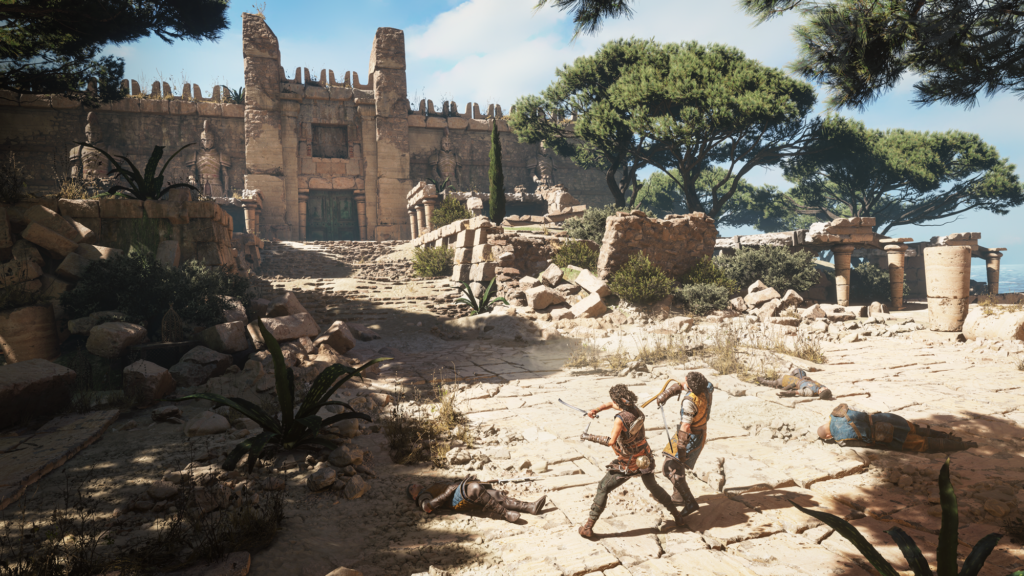
Since there is no other way to replenish your minuscule health bar aside from killing others, this encourages a careful yet aggressive type of combat. Typically, Sophia will be swarmed with enemies, coming at you in melee and ranged, and they are an aggressive bunch. They don’t wait for their turn and won’t hesitate to attack you from multiple angles.
This is what I found most interesting in Resonance’s combat style. For starters, you don’t need to lock onto enemies. At first, this reminded me of Ghost of Tsushima, where you naturally target the enemies you want to attack, and the protagonist does what you want without finicky camera angles or managing lock-ons. This was great and perfectly suits the combat aggressiveness.
Another thing Asobo Studio captured well is the balance of being truly badass while reminding us that Sophia is still human and can get hurt, but the adrenaline and relentlessness of a bull fuel her. As I mentioned, there are LOTS of enemies. However, their health is well-balanced, and they are easily stunned by a well-placed kick or by throwing a bottle in their faces. They are human too! It’s as if you are on equal footing with them. You’re not just a hero they can’t beat, and they aren’t just some enemies that have unusually large health pools. Their only advantage is their armor and weapons. Sophia will kill many enemies, and you have the potential to die just as easily as they will if you aren’t careful (and I died A LOT! Skill issue perhaps).
Gotta Get The Gear
It isn’t just the enemies that have weapons and armor at their disposal; we are the protagonist of a video game character that’s out to save the world after all. As Sophia traverses the perilous Minotaur Island, she will come across several different types of blades, charms for superstitious luck, and resonance points allowing us to make better use of Theseus’ abilities.
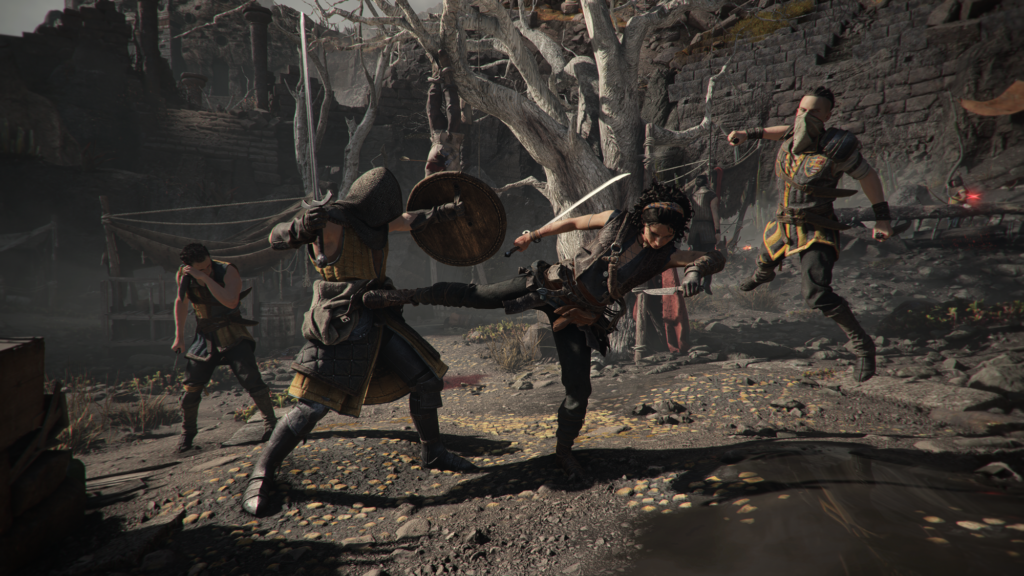
Each blade Sophia picks up comes with a perk that can supplement your combat style. A weapon like the Greek Sword will turn your critical strikes into a sweeping spin, allowing you to hit all nearby enemies. Or the Khopesh, which deals Deep Bleed, adding damage over time on the last hit of your combo. Overall, playing on normal difficulty, I didn’t feel any real need to change the blade I was using as I opted to change my approach instead of changing my weapon. However, in retrospect, there were definitely many encounters where changing my blade would’ve helped, especially since they let us adjust our loadout before reattempting the fight.
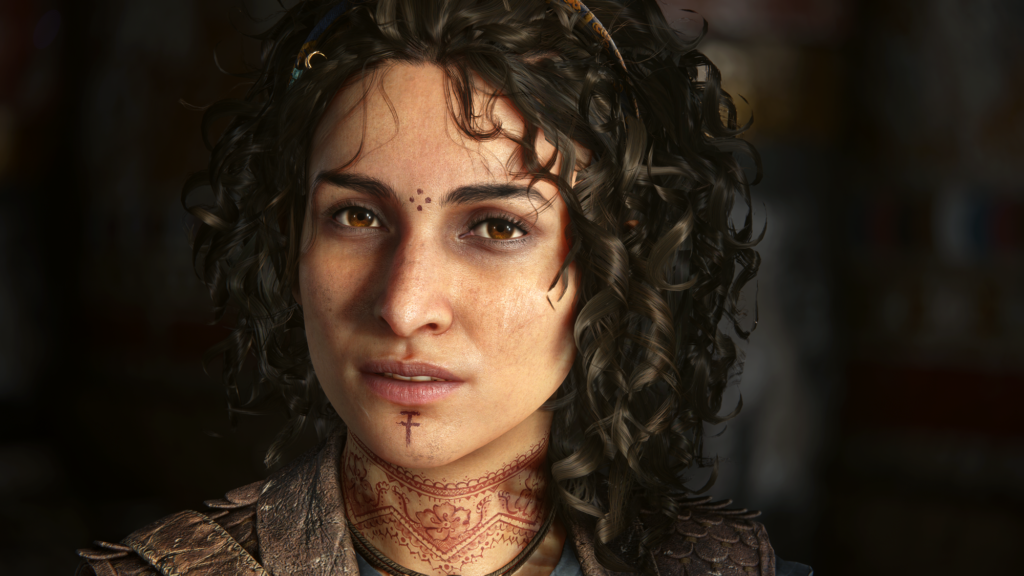
Sophia wouldn’t be much of a plunderer if she didn’t pick up trinkets or jewelry she finds around from people foolish enough or dead enough to leave them behind. Perhaps it’s because she is an ex-convent captive that she’s taken to all manner of superstition, but she wears these things she finds, gives them meaning, and treats them as her armor. At first, these charms may seem insignificant, only giving a very small chance to avoid arrows, increase parry window, or deal more damage with a critical strike. But the more she collects of them, the more significant they become, almost to a point that you now have Lady Luck on your side! Not only that, each bauble you pick up and place on your person is visible on Sophia! I honestly couldn’t ask for more.
Skilled Like A Warrior
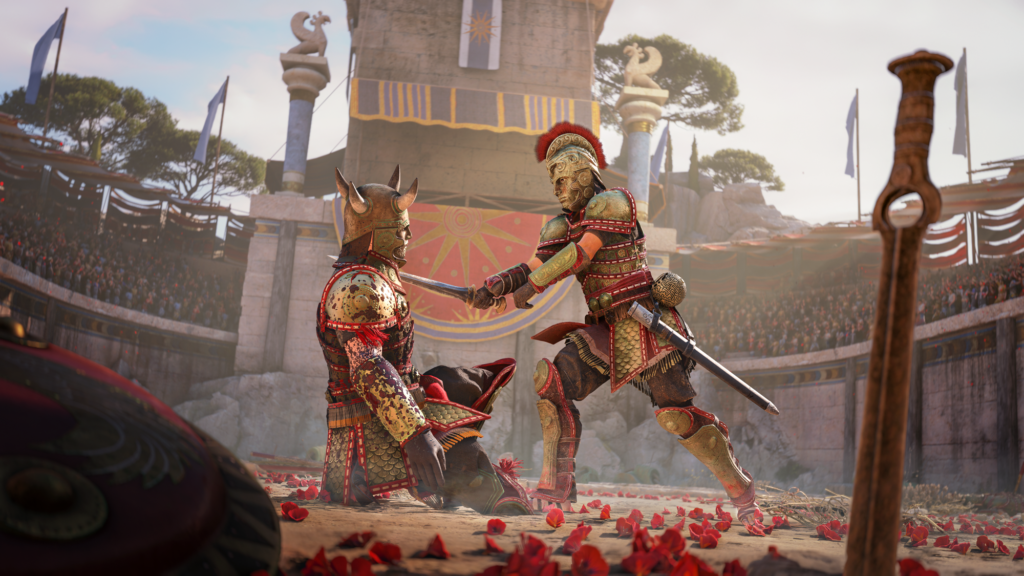
Another way for Sophia to stand against her enemies is by channeling Theseus, someone she resonates with. Through this formidable fighter, Sophia can perform a special attack after she’s filled her Focus gauge. She’s also able to collect Resonance Points and use them towards a skill tree to increase her connection with Theseus further, allowing Sophia to use more of their abilities.
These abilities improve upon Sophia’s current skill sets; things like Hero’s Step that allows her to chain a second dodge and Echo’s Return that allows her to snatch and throw enemies into others, causing stun damage to both. After investing in these skills, they can be further improved by specializing in them. The cool thing is that you can reset it at any time for no extra charge, letting you switch based on the specific encounter you’re struggling with. As with Sophia’s blades, on Normal difficulty, though I found them useful, they weren’t game-changing enough that I ever bothered with creating a build. Not only that, you can easily attain them all near the end of the game.
Overall, I might dare say that I almost wish they skipped this skill tree entirely. Perhaps introduce a new ability every time we resonate with Theseus as the story progresses? In my opinion, this would add more to the narrative while eliminating the need for a skill tree. I did enjoy finding Resonance Points as it’s one of the currencies that rewards you for your curiosity as you wander off the beaten path.
You Don’t Need To Play A Plague Tale Innocence Or Requiem To Play Resonance
While this is the third game in the Plague Tale series, you don’t need to have played the previous entries. But you should anyway. Asobo Studio’s narrative and world-building are one of the main reasons why you would play the A Plague Tale IP, and they’ve definitely stepped it up in Resonance. Luckily, Resonance is a prequel standalone story focused on a character named Sophia that Amicia met in Requiem. However, if you have any worries as to whether or not Resonance is truly a Plague Tale game in terms of story, without any spoilers, yes, yes it is. It isn’t a Plague Tale game without tears shed, and tears were definitely shed.
Traversing Through The Elusive Island
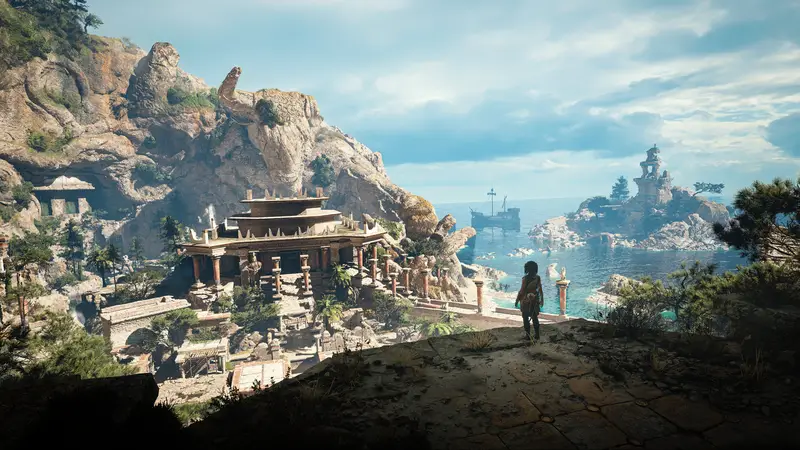
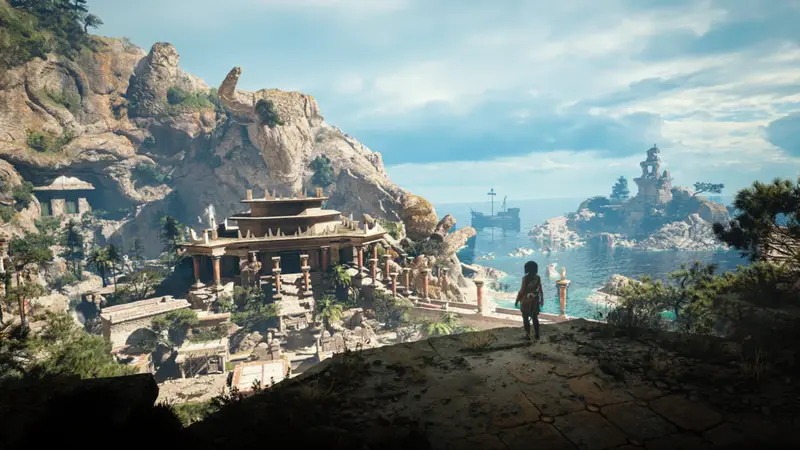
In Resonance, our adventure takes us to a Mediterranean-themed island called the Minotaur Island. Asobo uses Resonance’s linearity to great effect, delivering not only a narrative-focused adventure but also one with strong art direction. Every step I take, every move I make, every camera angle felt as if it was placed there with purpose. The game is very, very pretty. I distinctly remember climbing a random ladder, and I swear they placed a cloud in the beautiful sky, along with some pretty lighting, on purpose (and yes, I took a screenshot of it, duh!).
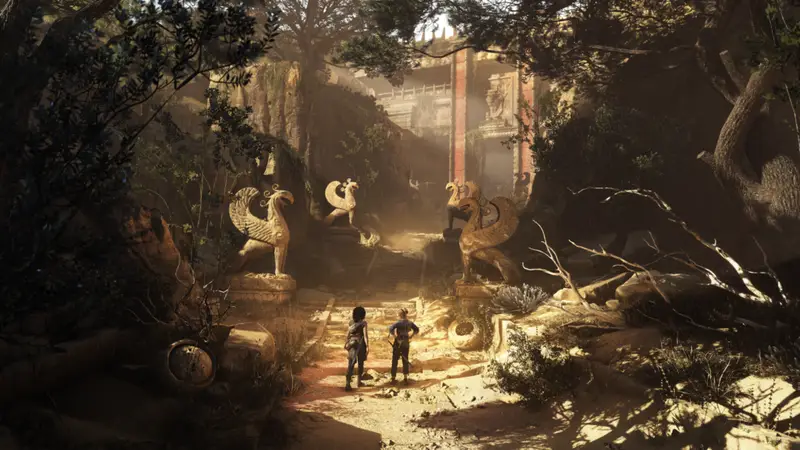
I did have one major gripe that took me a few chapters to finally come to terms with; the game makes too much use of invisible walls. I understand that random barricades in the middle of the desert don’t look pretty. The game also doesn’t want me to wander off in places they didn’t expressly design for you to go, and Sophia will slow down to a crawl, letting me know I’m about to hit an invisible wall. Still, it felt jarring to hit so often throughout the game. This same ick also hit me when I could jump over one wall but couldn’t over another, even though the walls were the same height. Look, I like to wander, see what’s hidden around the corner, and it just upsets me a bit that I can’t reliably use my eyes to navigate the places I can and cannot go.
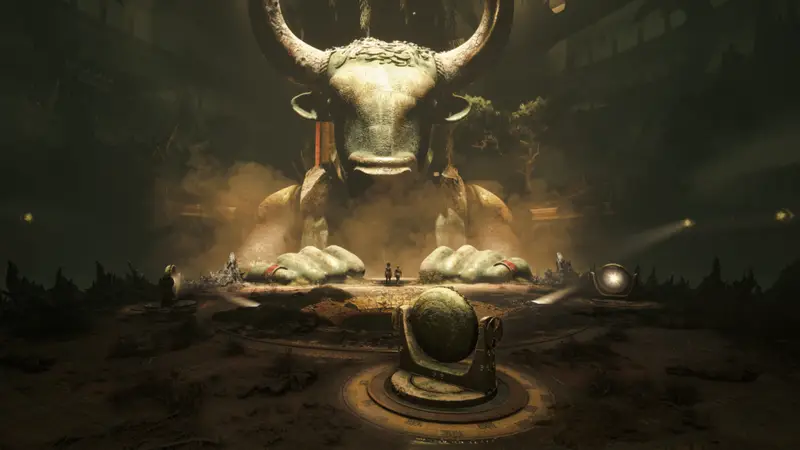
Luckily, getting lost and finding your way, even in a linear game, is part of the fun in Resonance. Much like the previous games, puzzles play a big role in the gameplay loop. However, this time around, instead of figuring out how to get through a group of enemies without getting spotted or avoiding a hoard of rats, we’re trying to complete the trials of the island. As plunderers, we have to discover the secrets within the island, overcome traps and find our way using clues by jotting them down in our notebook.
I am one of those types of gamers that will shamelessly use screenshots as a tool to help me remember clues for a puzzle; however, I am extremely happy and impressed that Asobo built it in as a feature in the game, and Sophia does the “screenshotting” for me as we are learning together. This is low-key a gripe I have in many other games (I’m talking to you, Elden Ring and Blue Prince).
Light and Dark
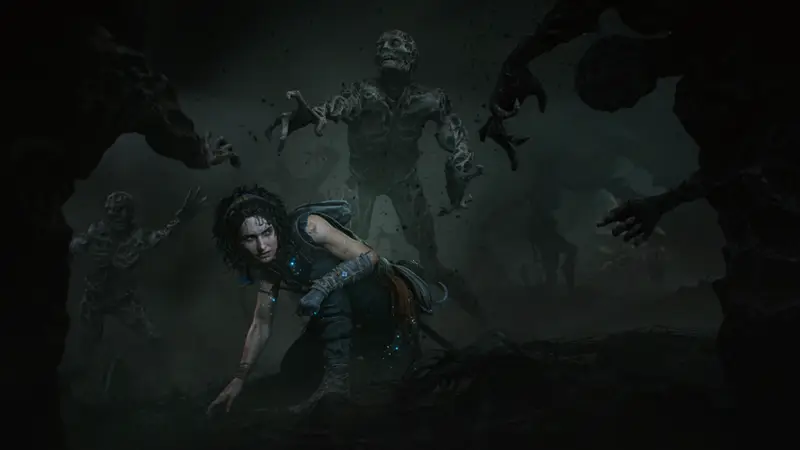
One of the main themes in previous Plague Tale games is playing with light and dark. This still exists in Resonance. I don’t want to talk about it too much to avoid spoilers; however, much like combat, it focuses more on adrenaline experiences than stealthy ones. Also, I feel like I need to point this out because many other games fail at this too; Asobo does a fantastic job maintaining atmosphere and pacing by including little to no collectibles during these moments. These are urgent, gotta get the eff out of here moments, not run around, look for trinkets moments, and I’m glad they didn’t sacrifice the narrative with collectibles.
The Vibe
Not just every scene, but also every musical score felt perfectly choreographed. Olivier Derivière has taken his experience from Innocence and Requiem and has completely given Resonance its distinct identity. The contrast in atmosphere between Chapter 2 and Chapter 3 comes through clearly in the music. The former fills with urgency and despair, while the latter conveys a sense of new adventure and naive optimism; I literally felt the weight lifted from my shoulders.
Lastly, the voice acting, motion capture, and level of detail within main and supporting characters have also greatly improved. Playing through the opening scenes in Chapter 1, seeing the younger versions of many characters, I saw right away that I would be in for a treat. Sophia and Leni’s performance are great, but Faro and Ezra’s (especially Ezra’s character design being one of the best I’ve seen in a single-player narrative game) were my favourite.
Accessibility and Options
Resonance and Asobo Studio have implemented a robust set of settings and accessibility options, ranging from general difficulty to different levels of immersion, such as removing objective markers, highlighting shiny interactions, or providing enemy/traversal warnings or assistance. It also has an optional performance mode to target 60fps at the cost of lower resolution and fidelity. For the previous games, I personally would’ve been fine with lower fps to make the game look prettier; however, in Resonance, especially if you’re playing in Normal difficulty or above, 60 fps is a must. I don’t often feel the need to talk about performance unless it’s extraordinary (good or bad); however, when I first booted the game, I felt a bit of motion sickness creeping in. Luckily, several settings fully alleviated it.
Resonance also has a fantastic save system separated by chapters, one of which even has checkpoints you can choose between. This lets you easily go back to moments in the game to re-experience them. In Resonance, all items, aside from Resonance Points, carry through; this means that the things you picked up in chapter 9 will still be in your inventory even if you go back to replay chapter 2, and the new thing you picked up in chapter 2 will be there as soon as you choose to continue where you left off in chapter 9. It’s a collector’s or trophy hunter’s dream come true!
Resonance
Upon initially seeing the gameplay trailers, I won’t lie, I was skeptical. I didn’t like the change in the combat gameplay. But I get it, we’re Sophia, a badass plunderer, living with ruffians taught to fight at an early age; to survive. The game wouldn’t make much sense if it focused on stealth. Once I got over that change, played the game, and immersed myself in the world, I finally resonated with it. This is A Plague Tale Legacy through and through. Resonance: A Plague Tale Legacy is a fantastic game with top-notch world design, art direction, and narrative; everything that we expect from A Plague Tale. What I didn’t expect was a game that also boasts well-balanced, aggressive combat. Perhaps some systems could be improved upon; Asobo is out here flexing their creative muscles, going outside their comfort zone, while still maintaining their identity- you love to see it!

Resonance: A Plague Tale Legacy was reviewed on PlayStation 5. A review copy was provided by Focus Entertainment for purpose of this review.