Into the Future: The Next Evolution
H.P. Lovecraft’s extensive catalog of stories focused on the horrors living just beyond the veil of stars above our heads has always felt like a perfect fit for the survival horror genre. From the gods battling for dominion over humanity to the monstrous beings that serve them, there is no shortage of terrifying things just waiting to get a piece of you. Yet even in the year 2026, there really haven’t been any games that truly nail the horrors of Lovecraft’s ethos in true survival horror fashion. We’ve had a few titles scratch the itch, such as the Alan Wake and Dead Space series, but those games use Lovecraft as an inspiration as opposed to a backdrop. The problem seems simple in theory — how do you create a game centered around the Lovecraftian mythos while retaining the brutal combat and horror elements that make the survival horror genre so iconic? Apparently the answer I’ve been looking for is as simple as the question — just do it.
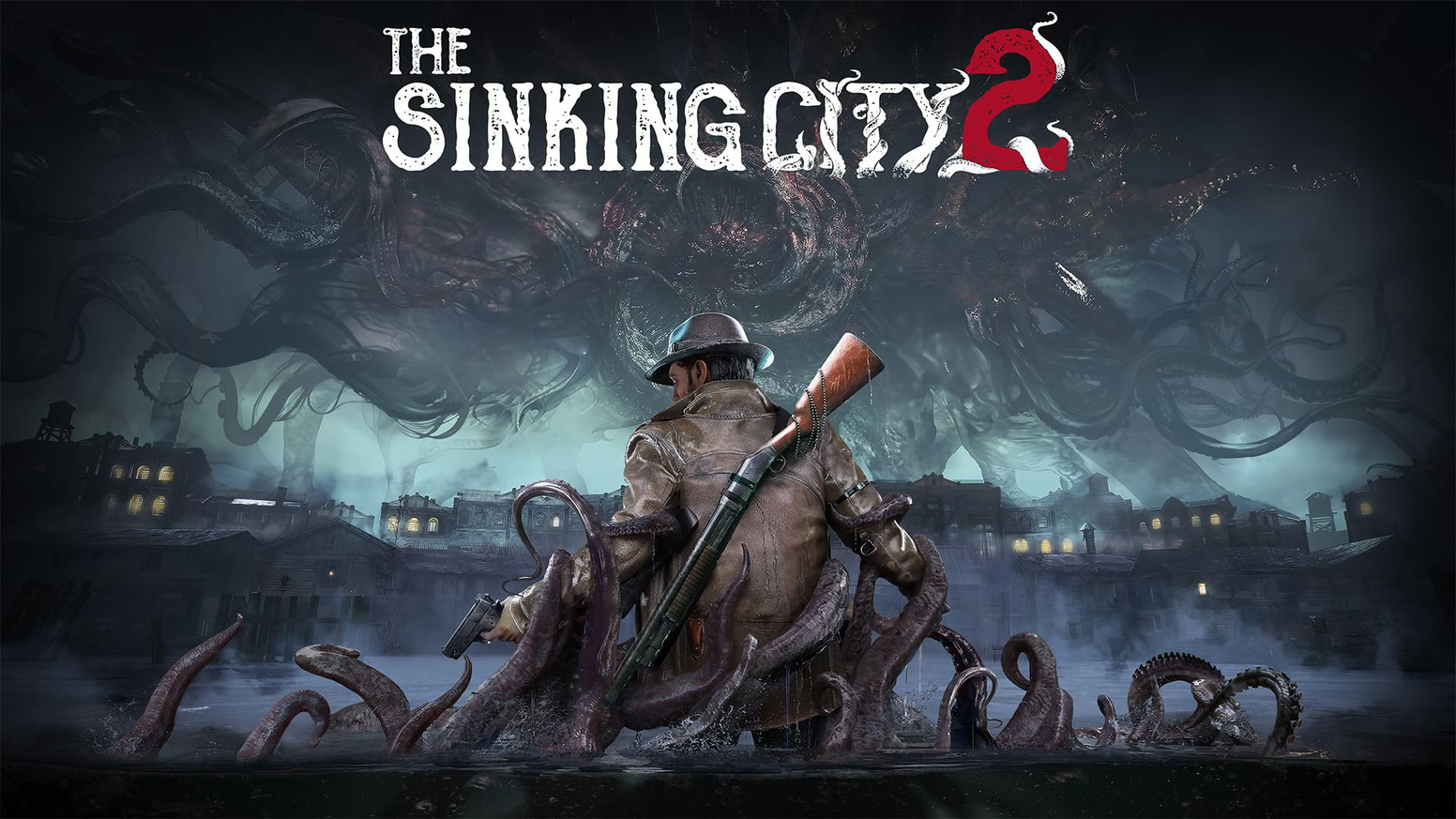
The original Sinking City was in every sense of the word the opposite of what I would consider a true survival horror game. It relied heavily on its investigation mechanics and detective-focused gameplay loop as opposed to the heart-pounding action you would expect. Sure, it had combat to tie the experience together, but many people found it to be the weakest aspect of an otherwise average investigation game. When approaching The Sinking City 2, Frogwares knew they had to think bigger. In an interview with Game Rant, they put it on record that “We want to expand both our abilities and our audience now, ensuring the future of the studio. We want to keep doing this for another 20+ years, and in order to achieve that, we need to take bolder steps.” The million-dollar question is: did they achieve what they set out to do? Let’s get into it.
When Dreamers Dream: A Lovecraftian Love Story
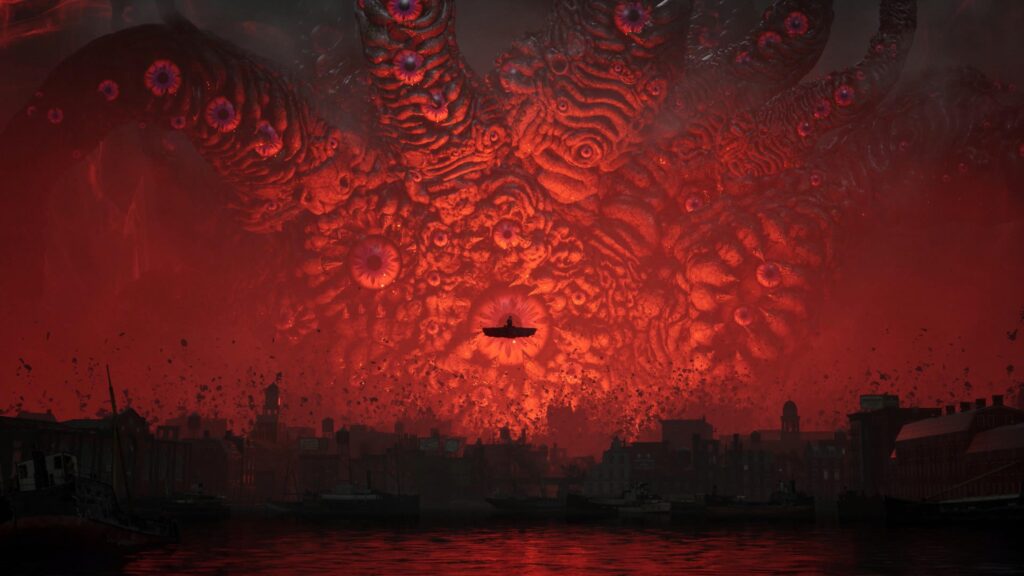
The Sinking City 2 is a brand-new story set in a new city with a new protagonist at the helm. As far as I could tell, there were no references to the previous entry, so if you were coming into this with the idea that you were getting a direct sequel, I’m sorry to say you’re out of luck — but trust me, this new setting is more than worth the price of admission. The story is instead set in the infamous city of Arkham, a fictional New England city created by H.P. Lovecraft himself, in the months following a mysterious flood that has overtaken its streets — a city now inhabited by the monstrous Slither that calls it home.
You play as Calvin Rafferty, a self-proclaimed occult adventurer whose fiancée Faye has fallen under a mysterious spell after a Dreamlands ritual goes horribly wrong. In the months after the ritual, Calvin has no real memory of what happened that day, and Faye is locked in a supernatural slumber that no natural remedy can wake her from. Your goal from the moment the intro cinematic ends is to save her from this fate, no matter what monsters stand between you and your goal.
This leads you through a variety of vistas, from the flooded streets of Arkham itself to some more terrifying locations that I don’t want to spoil — and if I’m being honest, nearly every aspect of this game from a setting perspective is close to perfect. Each level feels like it was crafted to be a horrifying maze of Lovecraftian madness, and it lends itself to the idea that this city has been taken over by something much darker than the leaps and bounds of humanity. Throughout the fourteen hours it took me to finish the campaign, I found myself in awe of the amount of detail that has been put into making this experience feel like it was pulled straight from Lovecraft’s extensive catalog. Every nook and cranny of Arkham feels haunted by the Slither — these disgusting leech-like parasites that have infected the townsfolk and turned them into mindless zombies — and the horror elements you’d come to expect from the genre are present from the moment you step outside the safety of your home.
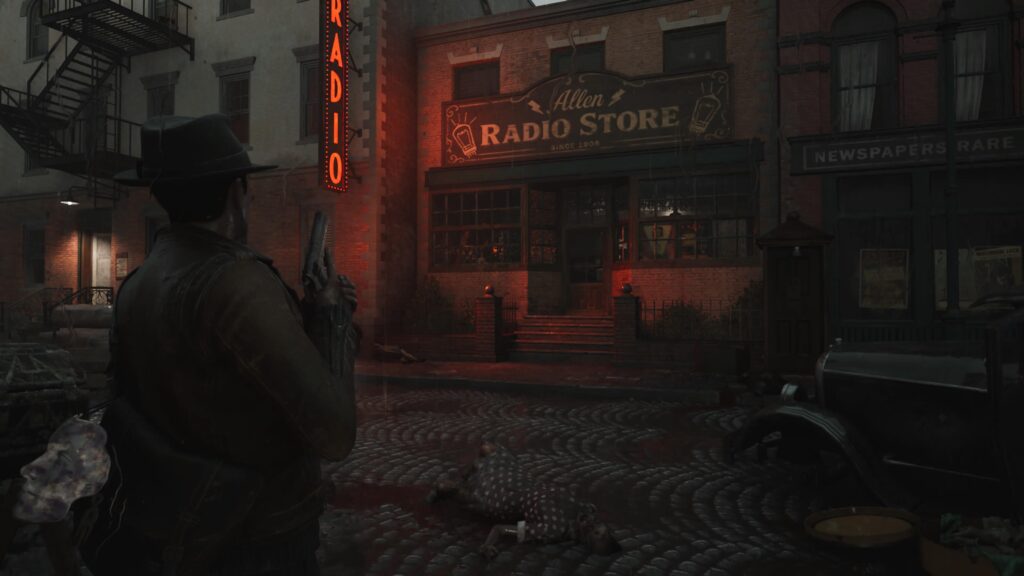
And if I’m being honest? The setting of Arkham and the other areas you visit is in every sense the best part of the entire experience. There is something about a city swallowed by Lovecraftian horrors that has been long absent in the survival horror genre, and I give all my praise to Frogwares for pulling it off in a way that plays on the horrors of the cosmos instead of leaning on them as a crutch. Beyond the setting being a blood-soaked marathon of what lies beyond the veil of our own simple imaginations, the story itself leans into the idea that you are simply a man trying to save someone you love by any means necessary.
The trials and tribulations Calvin must go through to save Faye are eerily similar to the horrors Isaac Clarke had to survive in the Dead Space series. You are almost always fighting your way through mutated humans who have been reduced to nothing more than drones by the Slither, and it truly embraces the idea that humanity has been lost in the city of Arkham. If anything, it leans into vulnerability. Calvin is pushed to his absolute limit, and the game sells the idea that you alone are the only one who can save Faye from her fate. In execution, it’s a wild ride from start to finish that doesn’t let up on the gas until the credits roll. The pacing is nearly perfect, and there’s rarely any time to stop and enjoy the scenery as the Slither surrounds you from every side.
While the story might have you running through the gauntlet of madness trying to save your fiancée, the gameplay systems that tie it all together make for one of the most solid survival horror experiences I have played in recent memory. It might be bold to say I enjoyed it as much as Cronos: The New Dawn and the other standouts of recent years — but I’d be lying if I said anything less. The systems in place, from the sheer number of enemies thrown at you in certain situations to the survival horror mechanics themselves, all feel extremely refined from a gameplay perspective.
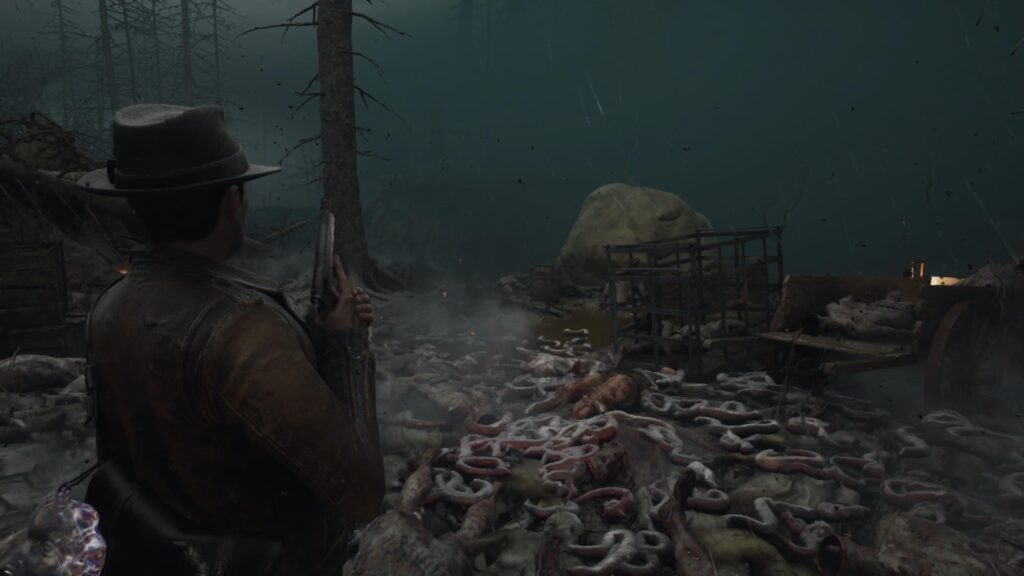
Calvin starts his adventure in the flooded streets of Arkham with nothing more than a pistol and one full magazine in his inventory, and in these first few hours you get to experience what I would consider peak survival horror. Ammo is scarce, and those quiet few seconds between each fight are a mad scramble of patching up your wounds and making sure you’re ready for whatever the next darkened room has in store for you. It can be a daunting task when all that stands between you and death is your flashlight and a few bullets, but I am a firm believer that a true survival horror experience should have you strategizing your next move after every wasted bullet. The Sinking City 2 nails this premise, and the stress of limited ammo and healing items is something you’ll be juggling until the final fight.
A Battle of Resources: Survival Horror Perfected
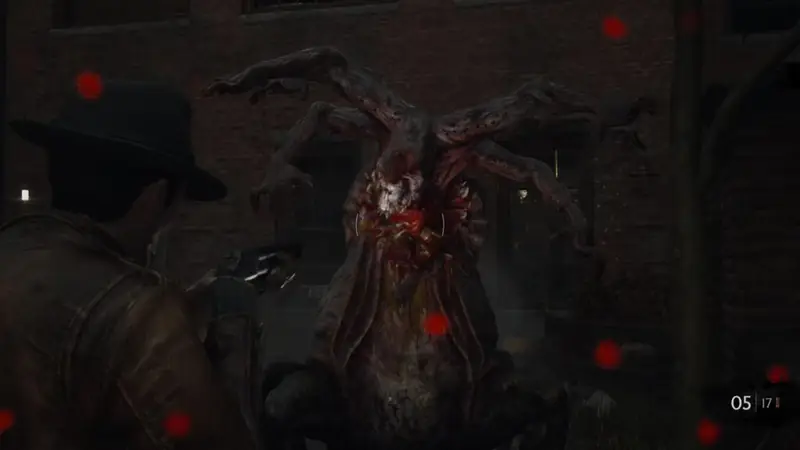
This whole idea is what I believe The Sinking City 2 will be remembered for. Sure, the story is wrapped in a blood-filled package that will have you dreading every corridor, but the survival horror mechanics are the crown jewel in an otherwise beautiful package. Instead of relying on the modern selling points of cheap jump scares and dark hallways that seem eerily peaceful, the game employs a relatively unique system wrapped around the Slither enemies you’ll be fighting throughout your journey. You see, every enemy you face can be categorized into two distinct trains of thought. The first is the enemies pulled straight from Lovecraft’s mythos. Enemies like the Deep Ones are bullet sponges with no qualms about chasing you until you put them down. They’re aggressive in the way they pursue Calvin, and honestly, they provide some of the most hectic moments in the entire experience as you run from room to room, dodging their swings by the skin of your teeth. But the thing that ties it all together into a true horror experience isn’t the same old monsters we’ve seen in Lovecraftian games before — it’s the Slither themselves.
You see, the Slither is, in theory, an extremely basic idea. Enemies infected by a parasite that turns them into mindless slaves of some unseen hive mind is a trope we’ve seen thousands of times throughout gaming’s history. What makes the Slither unique as a gameplay mechanic is that the threat doesn’t end once you slay the pawns they inhabit. In fact, the danger is all but amplified once they leave their host’s body. Once you’ve fought your way through an infected individual and laid them to rest, you’ll more than likely notice that the worms protruding from their body have escaped and are writhing around on the floor beside their corpse. A simple stomp might end their existence in an instant, but once you’re fighting multiple enemies at a time, the true horror of the Slither is revealed. These little monsters aren’t just a visual cue — they’re able to slink over to other bodies you’ve recently put down, reinfect them, and — you guessed it — send them after you all over again.
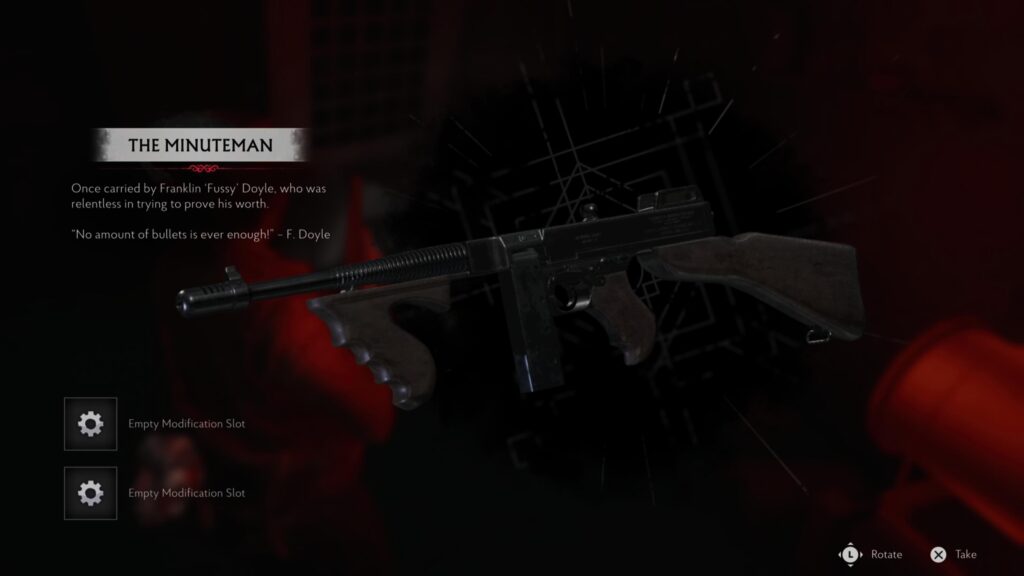
Now, this isn’t to say they’re the most challenging of enemies, but when you tie this added layer of threat in with the dozens of infected and other Lovecraftian monsters you’re facing, you end up with a hectic experience that feels like survival horror done to near perfection. That sinking sense of dread when your inventory is looking barren — knowing the next room could hold either your salvation or your death — is one The Sinking City 2 executes almost perfectly. You also have a wide variety of weapons at your disposal, from your trusty 1911 pistol to a Tommy gun and other tools that feel right at home in 1929 New England. And who can complain? Nothing has ever been better at solving the woes of an eldritch god than a Thompson submachine gun, as far as I’m concerned.
In this last section, I want to once again commend Frogwares for the aspect that ties all survival horror experiences together — the puzzles. I’ll be the first to admit I am the number one hater of forced puzzles that offer nothing to the experience beyond existing as a ‘gotcha’ moment or a way to keep you in an area longer than needed. The Sinking City 2 instead deploys its puzzles in a way that feels unique to the mythos.
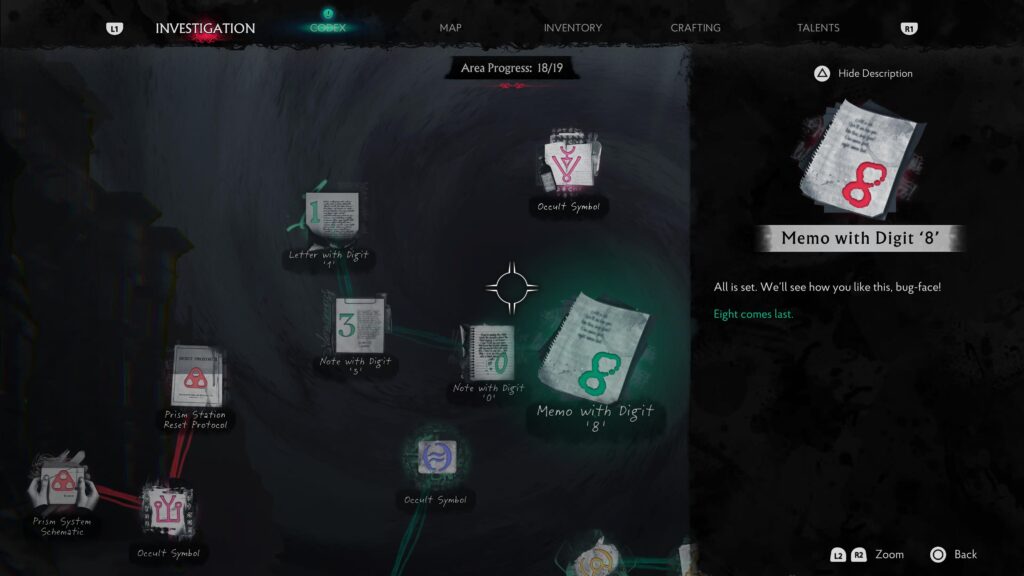
The puzzle system relies heavily on the power of your own intuition, and Frogwares’ past as a developer of detective-centered games is at the forefront of most of the required puzzles. They encourage you not only to think outside the box but to explore each area until no stone is left unturned. It circles back to the first section of this review, where I gushed about the world — each hallway or darkened alleyway that looks like it leads nowhere is sometimes where you’ll find the best tools or hints to assist you on your journey. There’s even an investigation system in place that lets you connect clues, helping you find the answer you seek rather than simply brute-forcing it. Nothing was more fun than my wife and I trying to decipher one of the late-game puzzles, only to find we were simply misreading what was right in front of us. That’s how the puzzles in The Sinking City 2 function. The answer isn’t locked away behind some tedious thought process. It’s right where it needs to be, waiting for you to connect the dots.
Frogwares’ Magnum Opus: Lovecraftian Perfection
The Sinking City 2 is a game meant to be enjoyed by fans of cosmic horror. Its emphasis on those tense moments that make every survival horror game great is enough to make anyone scared of the dark, while its story is one intent on challenging your sanity. As always, H.P. Lovecraft’s mythos is deployed masterfully and shows no signs of its age even a century later. The Sinking City 2 presents itself as Frogwares’ defining moment, and it should ultimately be remembered as their greatest accomplishment yet. So do yourself a favor, survival horror fans —book the trip to Arkham. The water’s freezing, the locals bite, and I can’t recommend it enough.
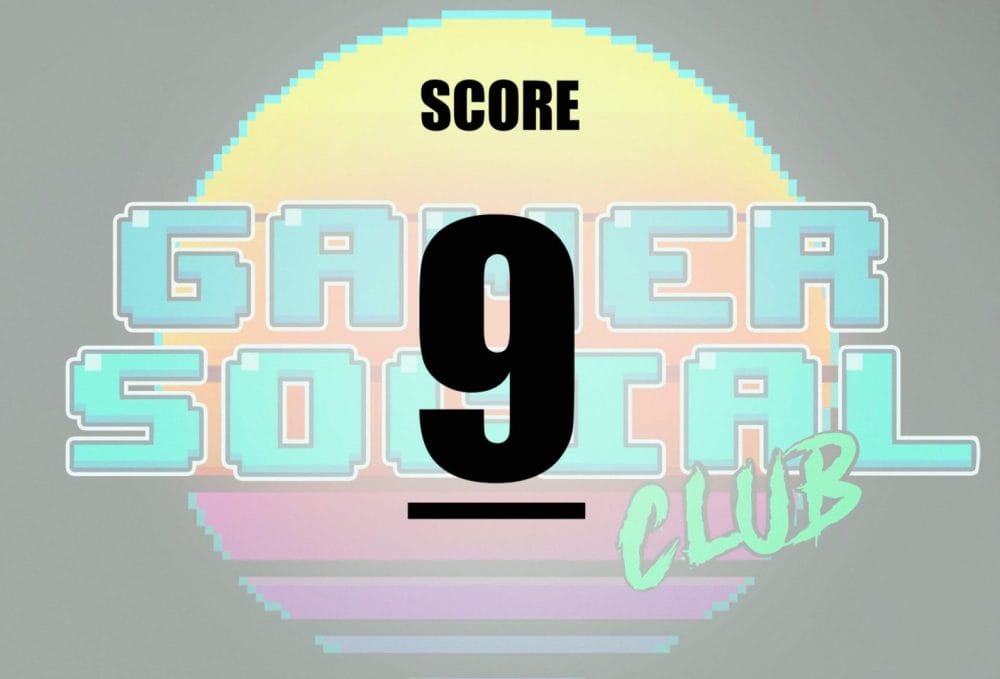
The Sinking City 2 was reviewed on PS5. Gamer Social Club would like to thank the developers and publisher for the code.