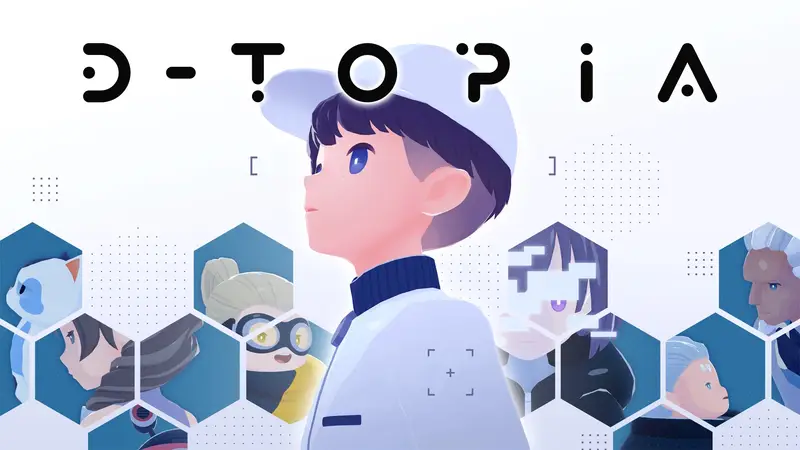
Have you ever wondered what it would feel like to live in a future where everything is meant to be perfect: the weather is curated, there is no sickness, ensuring you have food is not a worry, and life expectancy is at an all-time high? A Utopia, a world meant to cater to the happiness of the majority?
In this gentle-paced puzzle adventure by Marumittu Games and published by Annapurna Interactive, D-topia will challenge your mind with puzzles as well as a thought-provoking narrative to discover what happiness truly means.
A future envisioned by all
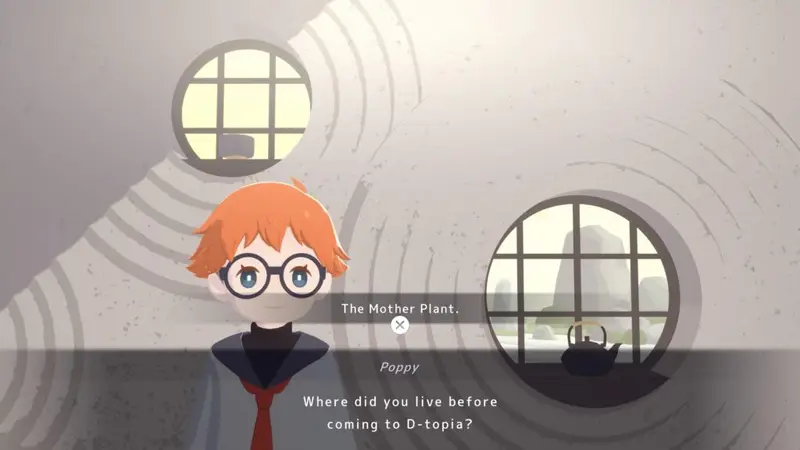
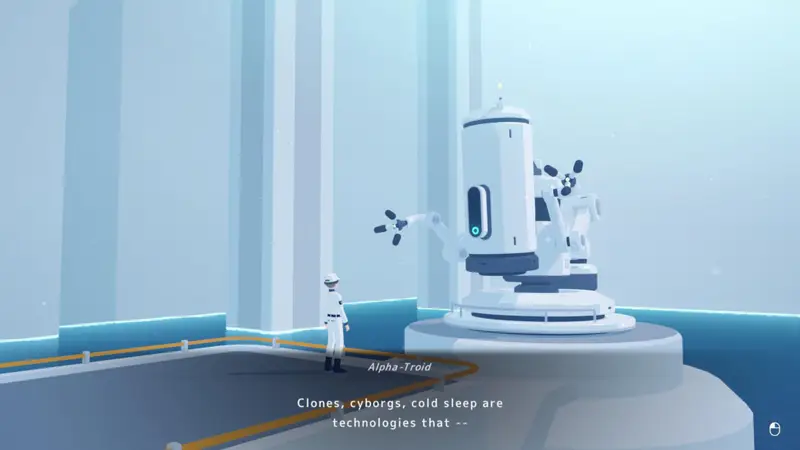
To me, D-topia is a narrative game first, and a puzzle game second, where you, resident No. 46 Shiro, will perform your job in this utopian world as a Facilitator. You wake up, get ready for the day, and head to The Factory to complete some puzzles for the AI; to what end? No one really knows.
Outside of your daily chores, your job as the Facilitator is to assist the residents with day-to-day tasks that the AI can’t complete on its own. What the AI can’t do is the human touch; the quirky little things that make humans unique, our imperfections. Apart from the puzzles, which I’ll get into later, the main characters in D-Topia and the stories and problems they have are what make this game very interesting.
Imperfect in a perfect world
D-topia tackles what it’s like to be the minority in a world that caters to the majority. In a world where happiness is curated, Shiro has a chance to impact the lives of certain individuals. As you gain their trust, Shiro will make choices based on what he’s learned that will inevitably shape their future. This adds a slight replay value to D-topia if you’d like to learn the effects of an alternate choice. Luckily, the game does have a chapter select feature; however, doing so will continue the game from that moment on, forcing you to replay the rest of the game to see how it ends. There is also only one save per playthrough, so you have to commit to your choices!
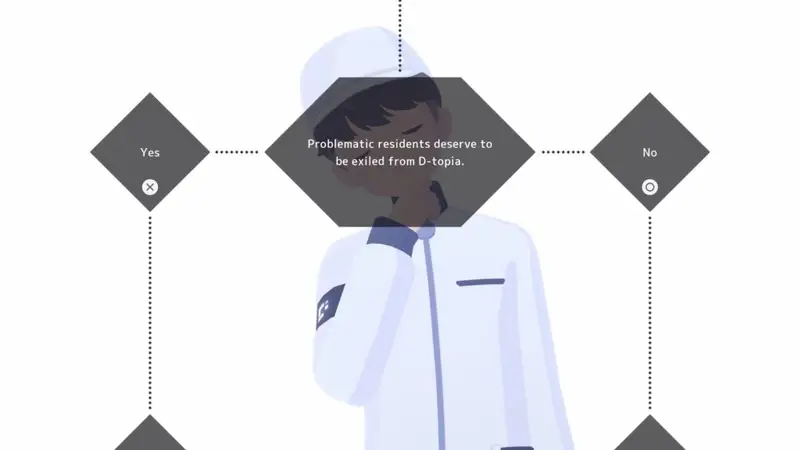
Whenever you come into contact with a future-changing decision, you enter a “Brain Meeting”, a Yes/No decision tree where Shiro weighs the information given to him and the effect it could have. I really enjoyed the way they presented this because, I for one, do not make decisions in this manner. This technical, binary way of thinking is typically reserved for computers or AI, and having us use it to solve human problems is a very interesting contrast.
While I enjoyed the stories of each character and the choices I had to make, I feel it could have used more substance. Apart from the Brain Meetings, everything else felt “linear”. Making this feeling worse is that much of the NPCs’ character is dampened by the lack of voice acting. While I have no issues with reading the story, I feel it would’ve allowed for the “minority”, the oddballs, to stand out. D-topia, I feel, was made to have that sense of cleanliness and uniformity. Having certain individuals look eccentric and voice-acted while everyone else is silent, in my opinion, would’ve given them great contrast and character, as well as the added benefit of the gamers hearing a well-delivered narrative.
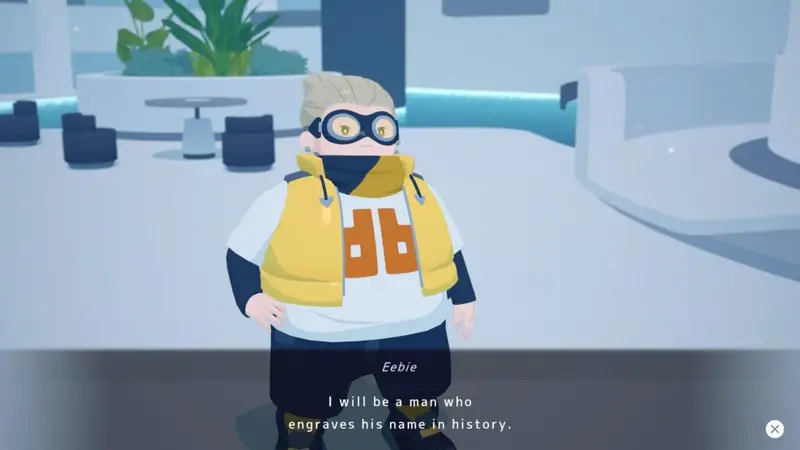
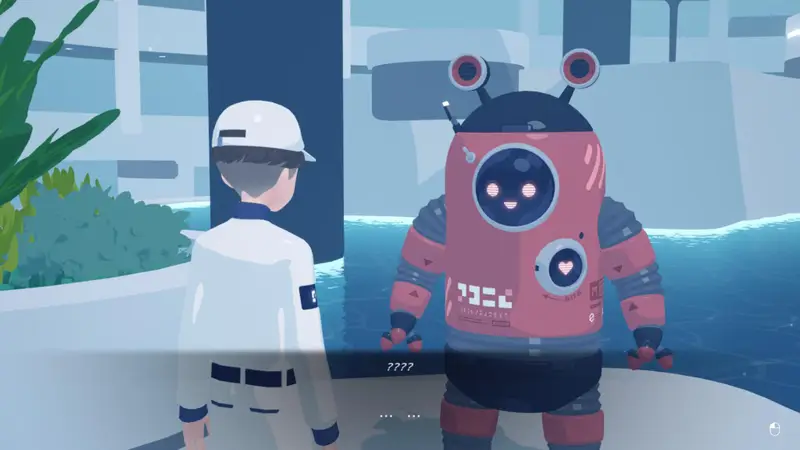
The world of D-topia seems designed with a sense of quiet uniformity in mind, and it succeeds in this regard. Even Shiro, meaning “white” in English, fits in this atmosphere. The only ones that stand out are the named NPCs, which reinforce the idea that these characters are unique and distinct from the majority the Utopia Project caters to. The characters and setting are simple and well-designed, with an art style that suits the game perfectly. I especially love the chonky cat, whom I later named Oshushi.

The Puzzles
The primary genre for D-topia is puzzle. As a Facilitator, you’re tasked to complete your daily shift in the Factory, in the form of completing logic-based puzzles. There are five main types in total, one for each workday. The main goal of each puzzle is to connect a numbered block to its corresponding block.
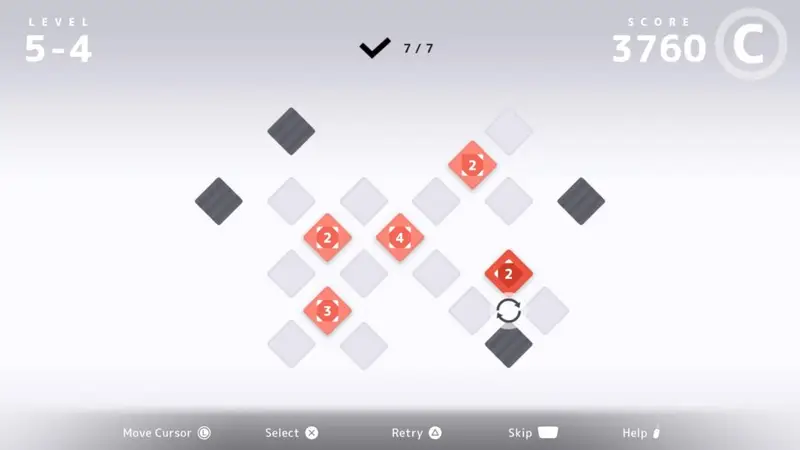
Overall, the puzzles are well designed, allowing you to learn as you go without the need for a tutorial (though pausing the game explains the puzzle to you).
The interesting thing with these puzzles is that they are nearly optional. The puzzles you are tasked with in the Factory are skippable. This will keep you from getting the best rating (A is highest, E is lowest), reduce the currency you gain from it, and give you fewer points towards your Resident Rating. However, the items you can purchase with the currency are entirely for vanity (you use it to purchase decorations for your room). Resident Rating also affects what items you can purchase, as well as keeps you from entering restricted areas in D-topia. As long as you do most of the puzzles, even attaining an E rating will allow you to complete the game with zero issues.
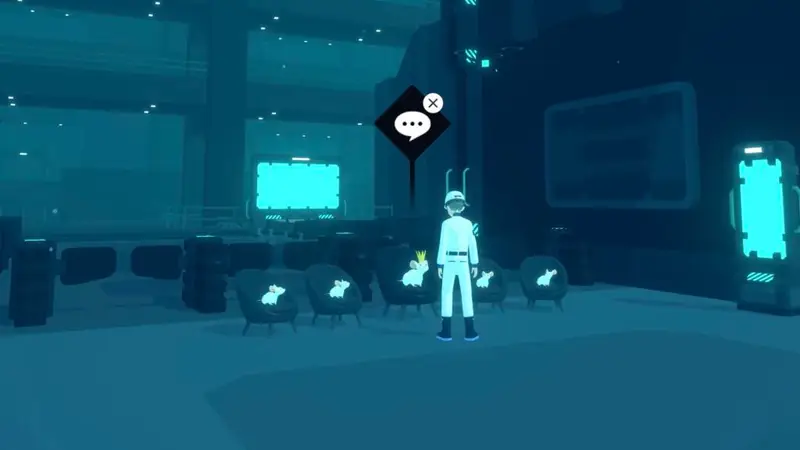
This diminishes the puzzle aspect of the game. Perhaps this was done as part of the narrative to drive the idea that, in this utopian world, work is not necessary to achieve happiness and exists only as a way to spend time. While the puzzles in D-topia were fun to complete, the gentle pace makes it seem as if the puzzle genre is secondary only to its narrative.
Welcome to D-topia
As often seen in games published by Annapurna Interactive, D-topia is a narrative-driven game with optional puzzle gameplay, both of which Marumittu succeeds in. Tackling the idea of humans, imperfect and unpredictable, living in an AI-driven world is one that is incredibly interesting to me. Though the narrative delivery could’ve been more effective with voice acting, the thought-provoking story carries well. Coupled with a well-designed, sufficiently challenging set of logic-based puzzles, though practically optional, D-topia is a game that I can easily recommend, especially if you’re already familiar with Annapurna-type games.

D-topia was reviewed on PlayStation 5. Gamer Social Club would like to thank the devs and publisher for the code.