
An excellent expansion to an already-great package, where exploration takes the place of escape.
11 bit studios’ first DLC for The Alters asks a simple question. What happens to the Jan Dolski who stays behind? Last Variable answers that question emphatically. It builds upon a proven gameplay formula while adding new systems. It doubles-down on what works, and while it sometimes the idea just slightly outperforms the execution, it’s worth the play.
The timing of this DLC is obviously deliberate. Last Variable arrives a month after The Alters‘ one-year anniversary, originally launching June 13, 2025.
Note that this review is as spoiler-free for the DLC as possible. It covers the setup, general narrative, and an overview of the systems/mechanics.
The Setup
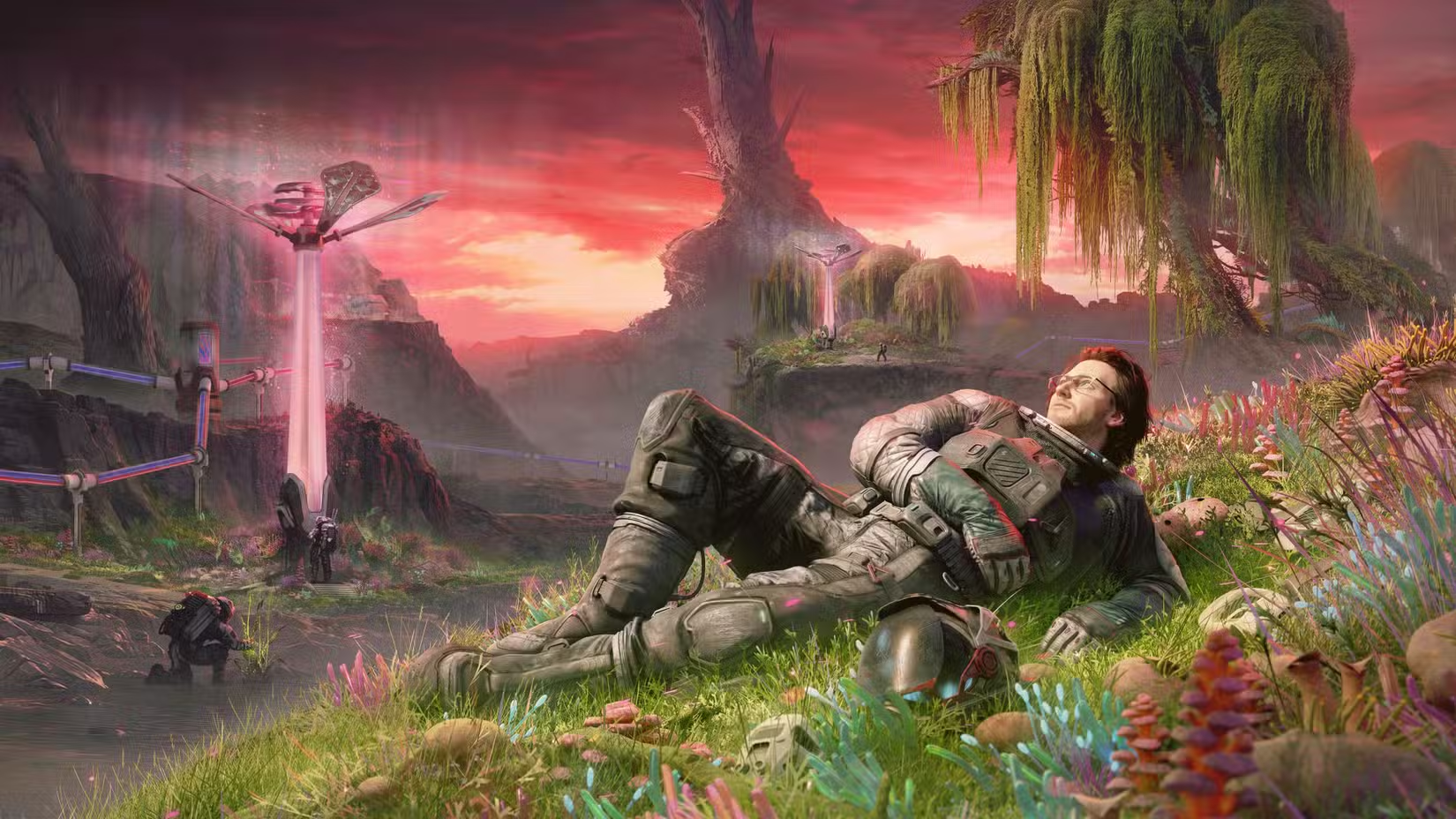
It’s possible to get many variations of an “ending” in an original The Alters play-through. Last Variable is based on an ending where Jan Scientist elects not to leave the planet. Set years after, having made minimal progress, he branches out (pun partially intended). Building a team out of more versions of himself, he plans to solve the mystery of the Oasis. It’s a lush, thriving biome that is a stark contrast to the hostile environment of the original story.
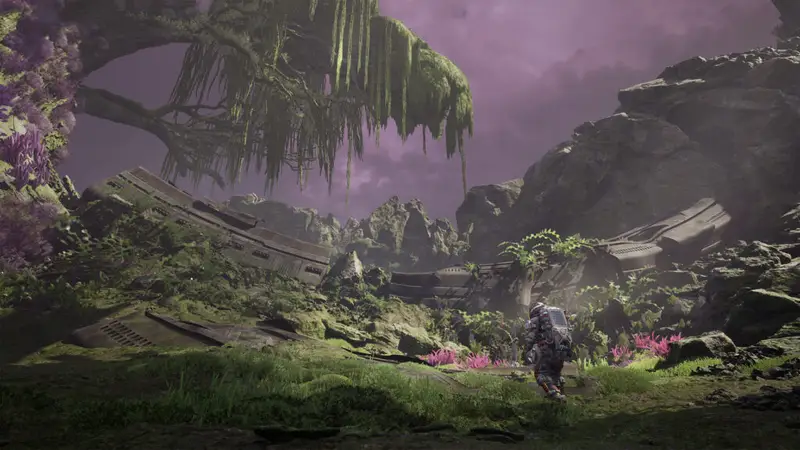
It’s a smart and intentional pivot in the story. The base game always felt like finding the means to escape, so Last Variable comes across as more about obsession, duty, and scientific curiosity. With a new crew including Biologist, Chemist, Geologist, and Physicist, it’s “understand at all costs.”
Setting The Bar High
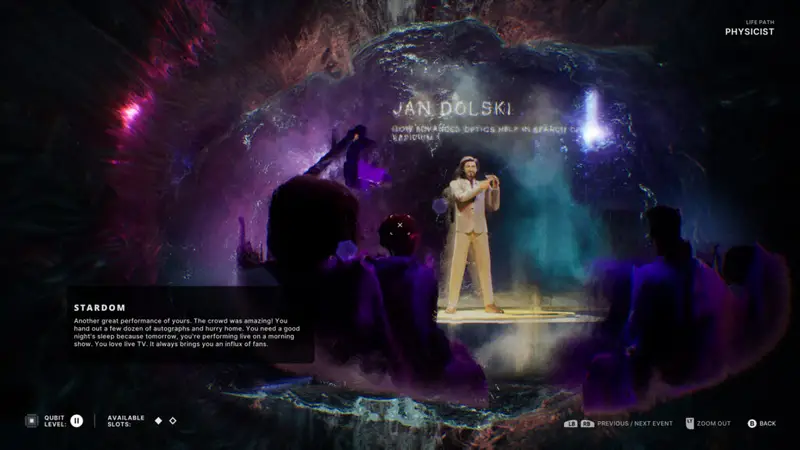
Any review, I feel, of Last Variable has to begin with what makes the base game special. There’s no expansion without it, and the DLC feels like it’s betting on that goodwill. The Alters isn’t just a gimmicky RPG. It’s a polished package, carried by one of the more remarkable voice performances in media. Actor Alex Jordan plays Jan Dolski and all 11 of his Alters. That’s alternative versions (and voices) of the same base character. Achieving this convincingly is something to be mentioned. One actor plays a dozen distinct people, each with their own emotional weight and baggage. Jordan is back for Last Variable, and it’s another excellent performance.
Gamer Social Club‘s Vikki McGowan reviewed the original game in 2025. She found herself genuinely attached to her Alters. The original game handles morality and identity without being too preachy about it. Her critiques include mainly pacing, including some dialogue-heavy stretches. It also includes mentions of design decisions, including whether certain obstacles required upgrades or could simply be traversed. I agree with the original’s issues, and Last Variable does improve on these notes.
The Core Loop
If you haven’t played the base game, you’ll need to do so before the DLC. In the original story, you pilot a movable, massive wheel-shaped base station along the planet’s surface. The goal is to stay out of range of the sun, which means lethal radiation. Time matters, and you’re constantly shuffling between gathering resources, expanding your base, and managing Alters. Think of them as different versions of the protagonist, split apart at various points in time.
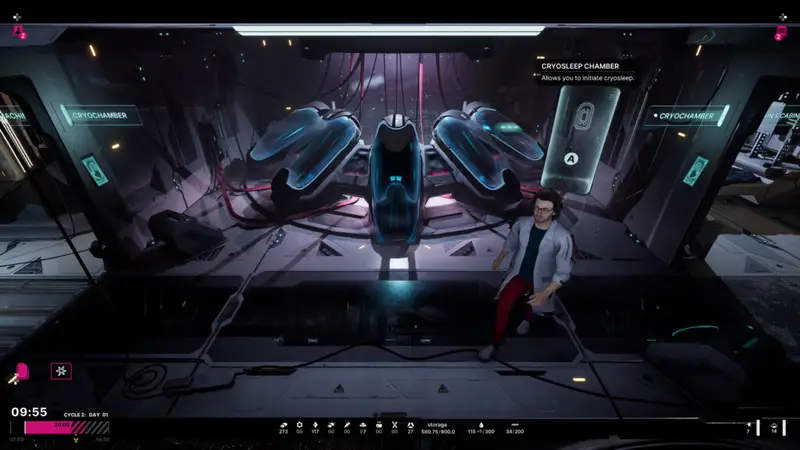
Last Variable restructures that pressure around cycles instead. With every planet cycle, you’re managing research, resource gathering, and exploration. You need to finally start a mandatory hibernation in the Cryosleep Chamber to advance to the next cycle, ensuring you’ve done enough to survive the sleep. If you haven’t, the game makes you feel it in the next cycle.
Some of What’s New
Last Variable isn’t just an addition to the narrative of The Alters. It also expands on the gameplay by adding a few new systems.
Terraforming means you’re now able to actively affect the planet’s surface more drastically than in the base game. Terraformers go on bio-network nodes to unlock sectors, punching through terraformation gates. This expands the playable map. Higher tiers of this feature (which I highly recommend researching early) require more refined Special Resources. It feels like a natural progression and is rewarding.
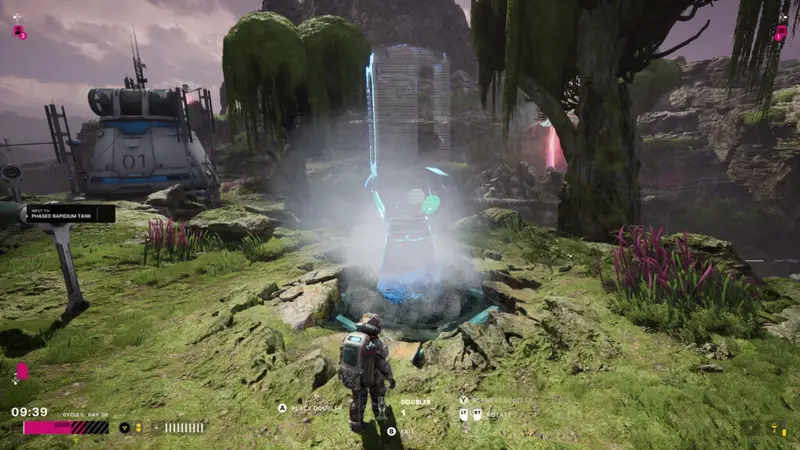
Extraction and Processing return from the original game. This time, though, Connectors replace the base game’s branching pylon system with point-to-point pipes. The catch here is that there is a maximum of two structures per connector. It feels like a deliberate constraint, and I had to think a bit more during connector placement. Extractors pull Red/Blue substances, while Phasers transform them. There are also Doublers, which split outputs, and Mixers that combine them. This feeds into a Special Resource chain that is necessary for more advanced research.
Another large change from the base game is the base building. While you’re building within a rotating wheel in the original, Last Variable changes your main location to an underground base. You’re tasked with building/expanding into different types of soil and unlocking new structures (including the new Cryosleep Chamber) to survive.
The Systems That Carry Over (and What Changed)
Field Labs are used for additional research in Last Variable. Rather than having research done solely within the original base (like the main game), Last Variable spreads it over the surface. Alters sent to work at Field Labs will age 13 years per game cycle. They also don’t come back once assigned to a Field Lab. This means time passing and base assignment are an even higher cost. I found that taking an extra moment to match Alters to areas where their specific research/specialization applied went a long way in making progress in Last Variable.
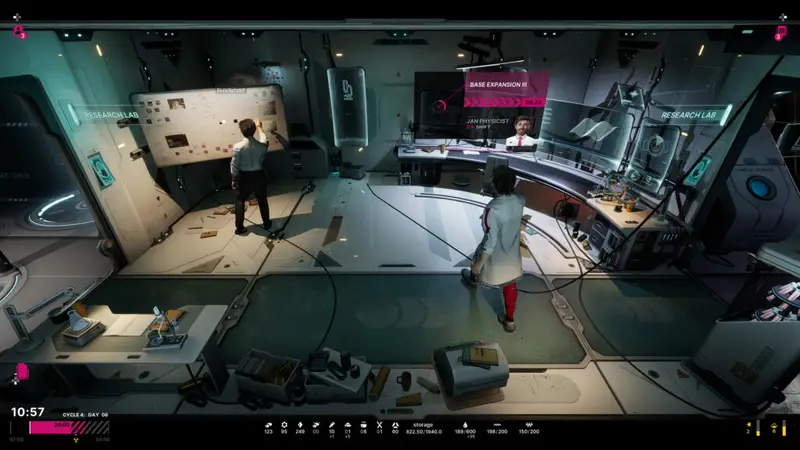
Another returning mechanic is Alter rebellion and mood management. You can still lose by mismanaging them, resulting in mutiny. Last Variable introduces new ways to put a strain on their morale. Planet Activity is one of these new pressures. The more aggressively I terraformed, the shorter the cycles and the stronger the magnetic storms became. This meant damaged modules, worsening conditions, and a greater chance of pushing an Alter too far. Because of this, it meant planning out when I terraformed and ensuring I was ready for the consequences.
The SAM (Sample Analysis Module) also returns in Last Variable. This is where I got permanent stat boosts from Research Pickables, which were collected from terraforming new areas. Feeding them into the SAM unlocked various upgrades to the Alters, such as mining or research efficiency improvement. A quick tip: prioritizing SAM earlier in the game helped me a lot, as the permanent bonuses were invaluable.
The Verdict
Last Variable, as mentioned, is a shift from “get off this planet” to “figure this planet out.” It feels like it gives the narrative a little more time to shine. I felt the original game’s tone didn’t allow this as much, as it felt like more pure panic and survival mode. It was hard to care as much for an individual Alter’s plight, especially when there was an approaching magnetic storm or the sun on the horizon.
This new shift in tone, in my opinion, only works as well as the supporting gameplay allows it. Thankfully, the new mechanics of the game not only play well, but they also support curiosity. There is a fair bit of learning and some friction (including the occasional feeling of the game being repetitive). However, I felt like I wanted to keep playing to keep unlocking new areas, to keep learning more, and to keep experimenting. This feels quite in line with what Jan Scientist hoped to achieve, so it’s a fitting parallel.
Last Variable is a great expansion that improves on the original design. Terraforming and the new processing chain changes will give returning players new systems to play with and master. The cycles, Planetary Activity, and Field Lab research and aging mechanics add additional high-stakes considerations to an already-dynamic system. While some mechanics can feel a bit repetitive or even too complicated at first glance, they don’t feel undercooked. This is not a game or DLC to rush through, so I can understand if it doesn’t appeal to everyone.
Bottom line: Last Variable is an easy recommendation for anyone who loved the original.

Looking Ahead
11 bit studios has suggested that this DLC is the first of more to come. Last Variable isn’t a one-off expansion, but the first new chapter in (hopefully) a long-running series. It is also marked as DLC 1 in the Steam backend, so it’s not a stretch to assume more are coming.
Nothing beyond Last Variable has been explicitly announced by name, but I would argue that this DLC is good enough to demand follow-ups.
Reviewed on PC/Steam. Review copy provided by 11 bit studios. The Alters: Last Variable launches July 13, 2026, on PC, PS5, and Xbox Series X|S
Did you play The Alters? Are you interested in picking up the Last Variable DLC? Let us know in the comments below, and join the Gamer Social Club Discord to chat about your favourite games, play in community game nights, take part in giveaways, and more!