When speaking on fighting games, everyone is aware of how influential Capcom and Bandai-Namco are due to the Street Fighter and Tekken franchises respectively. How Mortal Kombat shocked the world when it came is also well known. In the past I’ve also spoken on the overlooked influence of SNK on the genre. However, there’s one studio that’s only somewhat recently came heavily into gaming on a mainstream level. That would be Arc System Works.
While Dragon Ball Fighterz bought them their first massive AAA success, Arc Sys became one of the most influential fighting game developers long before that. They essentially started a subgenre within fighting games having pioneered the “anime fighters”. On top of this, some of their earliest works saw features that wouldn’t become standard in fighting games until later. Arc Sys always seemed to be ahead of the curve in multiple ways. I’d like to talk about their history and give respect to a developer that has impacted the genre in ways people may not be fully aware of.
Early Beginnings
Arc System Works has been around for some time, founded back in 1988 as Arc Co. Ltd by Minoru Kidooka. They started as a porting studio for companies like Sega before eventually developing their own games in 92 and beyond. Their first foray into fighting games was a well known license, Sailor Moon. They developed a number of games based on Sailor Moon, including Bishojo Senshi Sailor Moon S. This was their first fighting game. While it had modest reviews at the time, it’s now looked back on quite fondly.
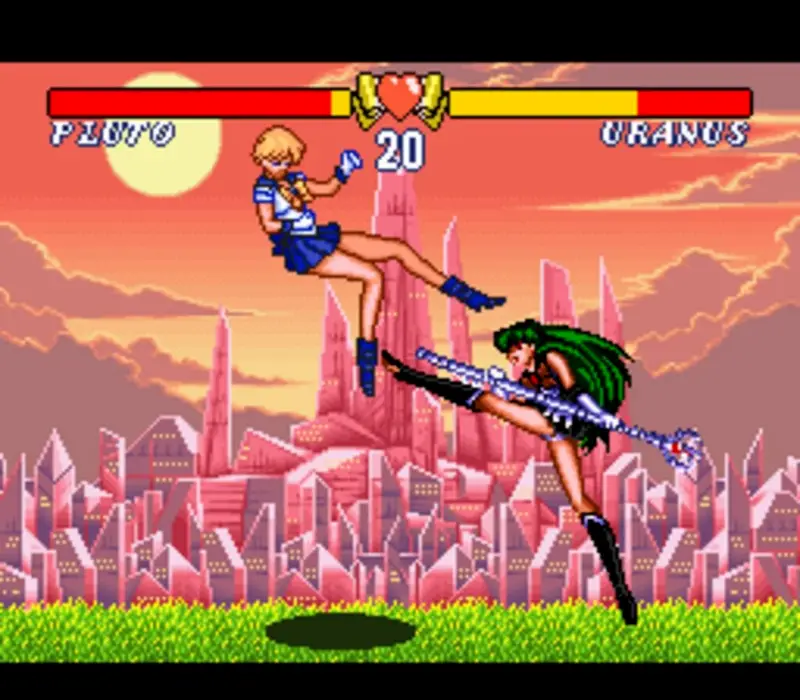
The game was perhaps the first fighter to have dashes as a regular mechanic. During combat characters could cancel block stun into special moves. It also featured desperation moves, powerful attacks that can be performed when a character is low on health. This is one of the earliest instances of a direct comeback mechanic in a fighting game. It was also an early instance of the four button controller scheme that Arc Sys would implement in their other fighters.
Many fans do respect Sailor Moon S now and it’s even got somewhat of a competitive scene as a fun kusoge (broken but fun game) fighter. After an updated version of the game, it would be a few years before Arc Sys began the series that endeared them to fighting game die-hards.
Starting A New Sub Genre
In 1998, a new fighter launched on the PlayStation. Created by Daisuke Ishiwatari, Guilty Gear was quite unlike any other fighter for its time. On top of striking character designs that resembled anime characters, it was even faster and more technical than the popular SNK games such as king of fighters and had an emphasis on unique movement options such as air dashes. The movement in particular is what would help establish the “anime fighter”. Other unique features included the tension gauge, a meter that made characters stronger as they performed more offensive actions and instant kill attacks, which were quite difficult to land but did as they implied.
Guilty Gear was deemed perhaps a bit too hard for casual audiences. Yet it still received positive reviews overall and did find an audience. It spawned a franchise, with 7 main entries and a few sub entries to date. Some of the games such as Guilty Gear X2 being labeled among the greatest fighters of all time. It established Arc System Works as one of the best fighting game developers. The series found lasting power where as other franchises such as Killer Instinct would go on a long hiatus and Mortal Kombat would see a more mixed reaction with some of it’s entries.
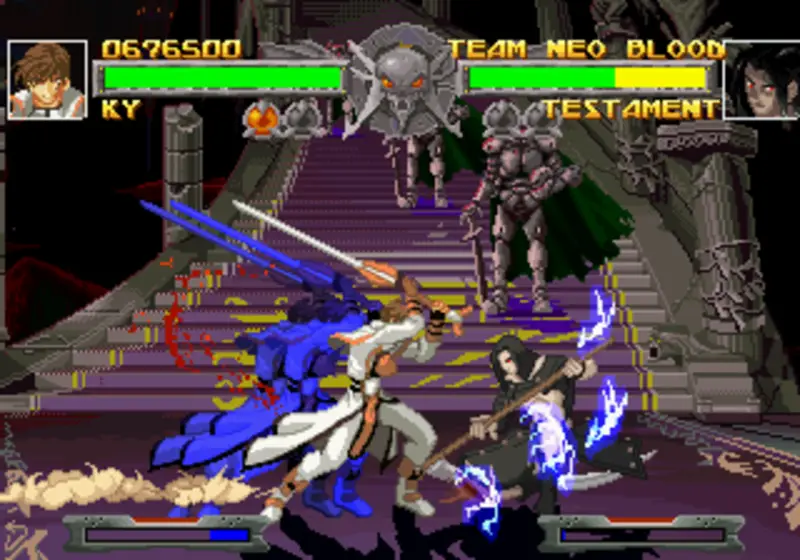
Guilty Gear would go on to inspire other franchises like Melty Blood and Arcana heart. Eventually Arc System Works themselves would refine their formula in other games. They would also innovate again, this time with a unique visual style in Guilty Gear XRD. The game’s cel shaded art style made the game look like an anime come to life. This would influence games such as Granblue, DNF Duel, and also a game that catapulted Arc Sys. More on that one later. Before I get into that, I can’t ignore how Arc Sys refined the work they started in Guilty Gear with their second fighting game franchise.
Refining Their Work
In 2008, Arc Sys would start their next franchise which is quite influential in its own right, BlazBlue. Toshimichi Mori would helm this spiritual successor to Guilty Gear. BlazBlue was noted for a couple of features that would be a staple in Arc Sys games going forward. The main one is perhaps the drive system. BlazBlue did something different, it’s control scheme was simplified, featuring only 3 attack buttons and a special button. Yet this didn’t sacrifice depth. This is largely due to the drive system. The drive system had a distinct ability for each character tied to one button.
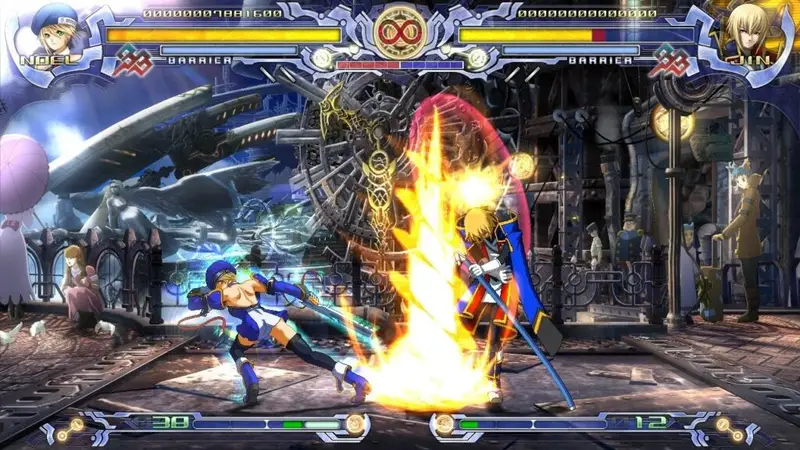
This allowed for a great deal of experimental character variety while keeping the game simple to grasp yet highly technical at the end of the day. This mechanic would influence another fighting game Arc Sys did around this time, the wildly underrated Persona 4 Arena. The drive system was the perfect basis for implementing characters personas into a fighting game. BlazBlue would see a couple of sequels and would eventually also feature Arc Sys’ foray into the tag fighter genre with BlazBlue: Cross tag battle.
BB tag would feature an even more simplified control scheme. This would prove to have a lasting impact as future tag fighters such as Marvel vs Capcom infinite and Invincible Vs would also go this route. BlazBlue as a series never quite became as popular as Guilty Gear but it’s mechanics would directly impact development of Guilty Gear Strive. More importantly, the work on BB tag would influence the game that made Arc Sys into a major player.
Breaking Into The Mainstream
In 2017, an announcement came that sent the fighting game community into a frenzy. Arc System Works was making a Dragon Ball Z fighting game. Dragon Ball Fighterz was a game a lot of people were waiting for for a long time. Most Dragon Ball games were arena brawlers but this time, a competitive fighting game would be coming.
Taking inspiration from the Marvel Vs Capcom series, Dragon Ball Fighterz was a Tag fighter that captured the essence of the anime in a way not quite seen before. The game’s visuals mixed with it’s break neck pace made it feel like an episode of Dragon Ball was being played out by the players themselves. Dragon Ball Fighterz would prove to be a monumental success. It is not only critically acclaimed but also sold a staggering 10 million copies. This success brought Arc System Works from a niche but well respected developer to one that publishers and the larger gaming community now had their eyes on.
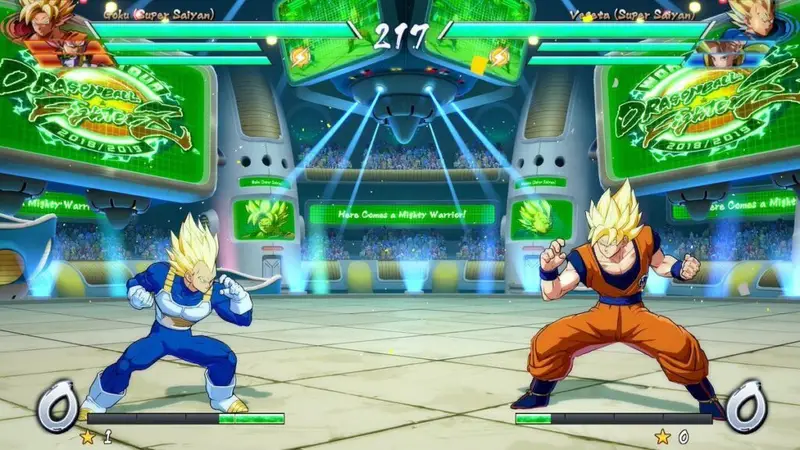
Personally as a competitor I didn’t get into Dragon Ball Fighterz but, I always praised it for a few things. One, it may perhaps be the best entry level fighting game to come out. The game features lenient execution and while auto combos exist, it teaches people how to do inputs by only making the most simple ones necessary. I’ve met people through SF6 and Invincible Vs currently who say they started with DBFZ first.
On top of this, DBFZ brought the FGC together like no other game ever has. Players from Street Fighter, Mortal Kombat, Marvel Vs Capcom, Super Smash Bros. And pretty much anything else were all competing in the game in a large scale. DBFZ would prove to be a tournament staple for many years. It has featured some legendary moments in the community such as the grand finals showdown between GO1 and Sonicfox during the game’s first year at EVO. While Dragon Ball Fighterz was a monumental success for Arc Sys, the show no signs of slowing down. In fact, they may outdo themselves with their next game.
Looking To The Future
Last year it was announced that Arc Sys is releasing what may be the most anticipated fighting game in a long time, Marvel Tokon: Fighting Souls. The Marvel property on fighting games has such a rich history. Marvel Vs Capcom 2, along with Street Fighter III: Third Strike is often credited with bringing competitive fighting games to public eyes due to a series of viral videos when YouTube began to take off.
It was unknown if or when another Marvel fighting game would come after Marvel Vs Capcom Infinite underperformed. Not only is Arc Sys a great developer to carry the mantle, it also looks like they’re innovating once again. Tokon will be the first ever 4v4 tag team fighting game. It also features takes on the sub genre that haven’t quite been explored yet. Tokon looks to be taking inspiration from 1v1 fighters as much as it does tag games. The reception seemingly grows more positive with each beta and character reveal. Our own hands on preview covers areas where Tokon really shines.
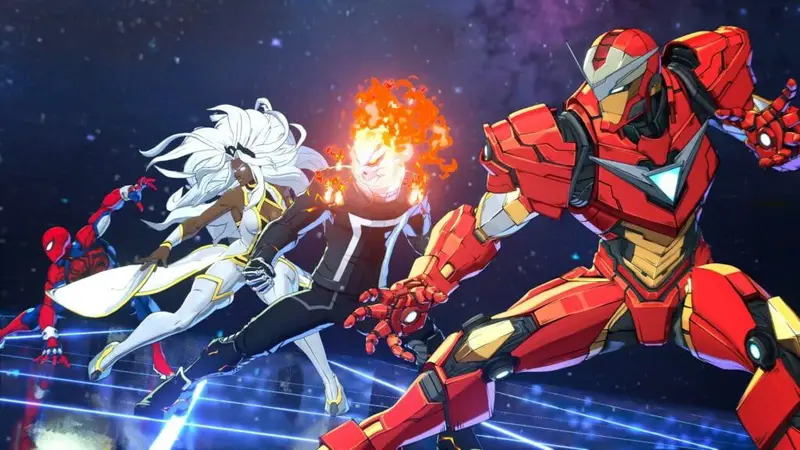
Tokon almost seems like coming full circle for Arc Sys. They broke into fighters due to a popular IP, became a major AAA player due to one and are now carrying an IP with a deep legacy within fighting games. Whether you knew their past, or only came in when DBFZ took off, I think everyone should show a great deal of respect to the legacy of Arc System Works.
What was your introduction to Arc System Works? Or will Marvel Tokon: Fighting Souls be the first time you experience what they’ve built? Let us know in the comments down below. If you’re looking for others to play with when Tokon releases, find fellow fighters over at the Gamer Social Club Discord.