A Scrappy Little Platformer That’s Anything But Junk
Junkster arrives as a charming indie platformer. Stormcloud Games has crafted a cute and colourful adventure that wears its influences proudly. It’s not just another platformer, though, as Junkster does have some uniqueness and flare. For the most part, it delivers.
A Junkyard With Comic Book Soul
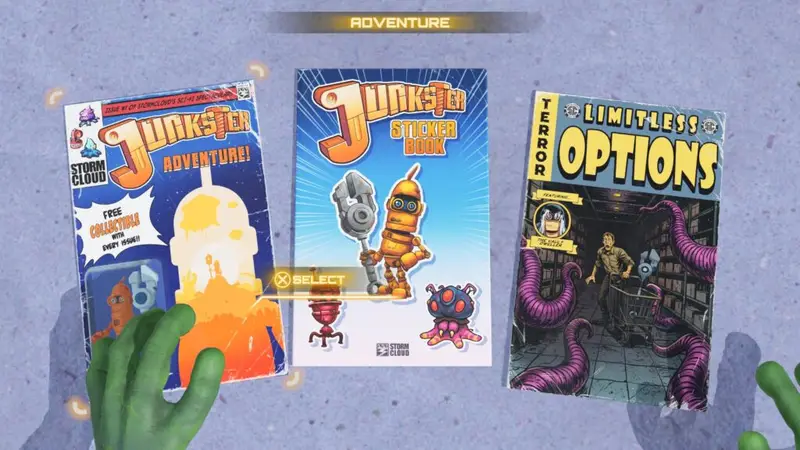
The premise is pretty straightforward. You play as construction bot UM-13, crash-landing on a dangerous junkyard planet. Armed with a robo-wrench, you must scavenge parts to repair Um’s ship. He’s also lost his cargo, which are precious human artefacts. It’s not a needle-moving premise by any means, but it doesn’t take away from the experience. Junkster’s real selling point is the packaging and presentation. The game leans quite hard into a comic book aesthetic, down to the menu screens to level design. For the most part, it works. Levels are neatly framed as individual issues, each worth a couple of reads/play-throughs. The colour palette pops, and the comic-page finishing moves (BOOM!) on enemies are a genuinely fun touch.
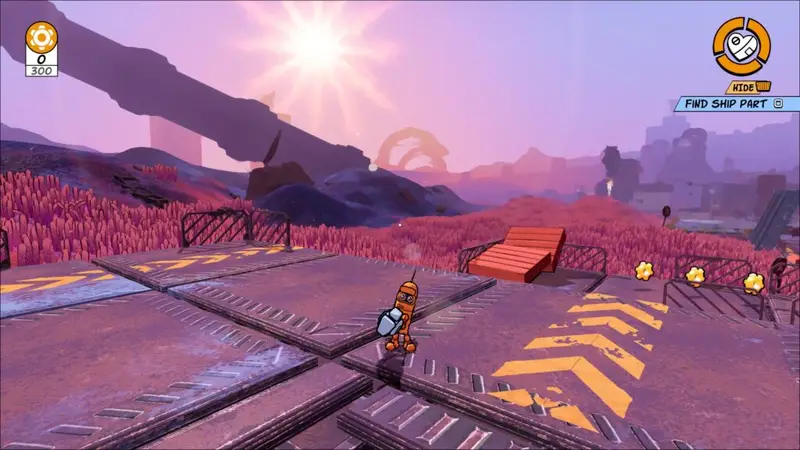
Stormcloud Games has done enough to give this game a polished look and feel. I was initially worried that Junkster would feel more like a game engine demo than a finished product, but my expectations were far exceeded.
The level and enemy variety are worth noting as well. From zip-lines to bounce-pads and a range of robo-vehicle options, the levels gel together well. They also provide enough of both visual and gameplay-oriented changes to keep the game engaging while also feeling cohesive. Enemies, from large mutated creatures to squads of renegade robots, feel well thought-out versus just copy-and-paste speed-bumps.
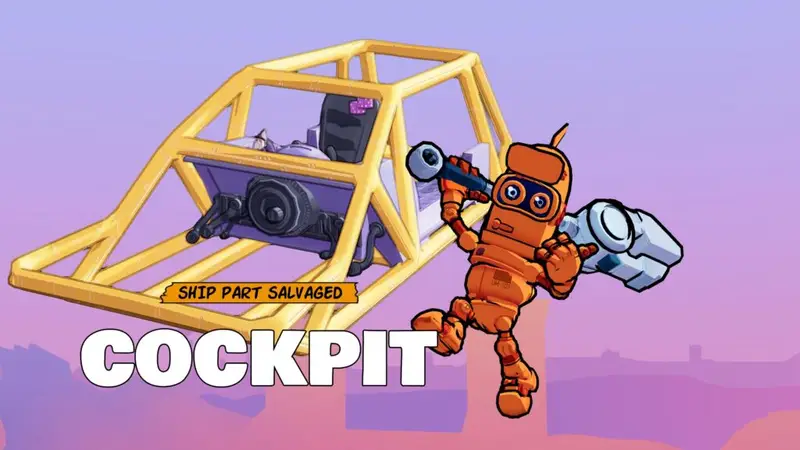
This effort, in my opinion, is a hard requirement in a game wanting to stand out in the indie space. It may not be everyone’s cup of tea, but it’s a cute title that feels like it rewards you for time spent.
Building Up and Out, Piece by Piece
The standout mechanic in Junkster is the building system. Rather than having mostly pre-existing platforms, players are often required to build their own way forward. At one point in the game, Um needs to build a drive-able robot, and then add height to reach new areas of each level. It is a clever and well-implemented idea that also adds a puzzle-platforming challenge to the experience. However, I feel like both the platforming and build implementation aren’t perfect. The former has some interesting design decisions. For example, it’s not immediately explained that you can only collect certain cogs while in a vehicle, but the choice makes sense as there are areas where this also drives level progress.
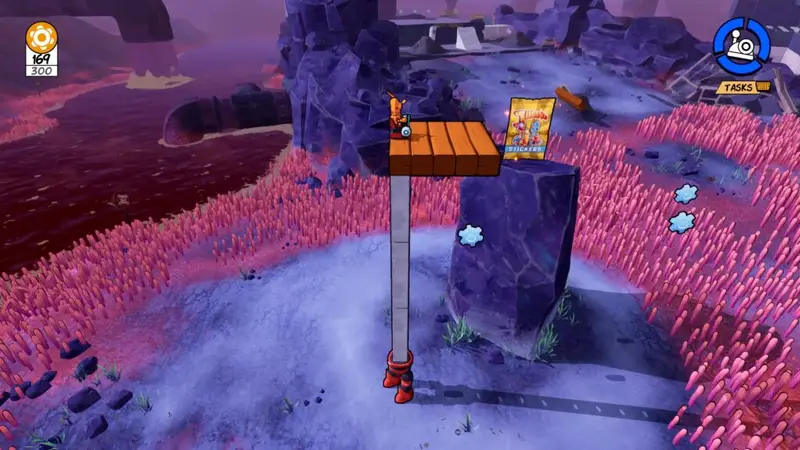
The building, especially in building mode, does carry a small learning curve. Maybe the game needs some additional or clearer tutorials, or maybe the entire mode itself needs minor polish. Regardless, something initially felt a bit off. New players, in my opinion, will likely spend some early time fumbling with it before it clicks. Once it does, though, it becomes a natural part of how you move through and interact with each level. Levels can also be reset, which is a nice accessibility touch and allows you to start fresh versus having to re-collect and re-position scrap.
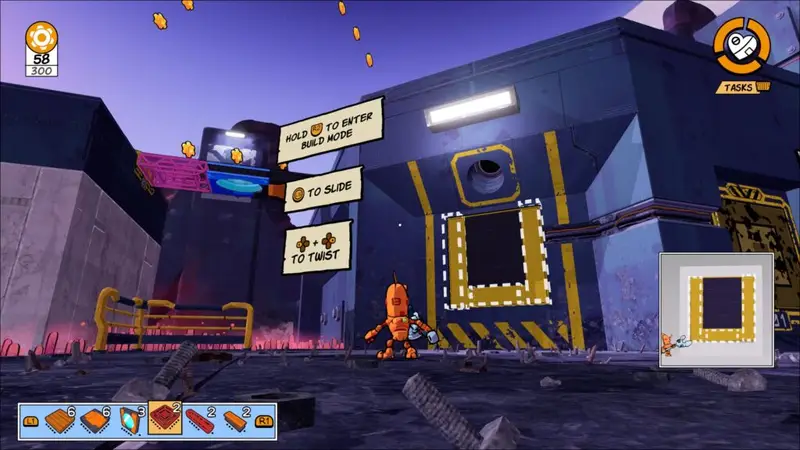
The platforming itself is solidly designed, however. Puzzles are decently constructed without feeling frustrating, and the overall difficulty sits at an approachable level. There are also other challenges such as timed events, which add additional variety. Junkster is not a demanding game by any means, but it is consistently enjoyable. It’s the kind of platformer you can settle into and have a good time with regardless of your skill level.
Sound and Vision
Junkster’s audio deserves a highlight too. The sound design is well-crafted. From capturing the clunky, mechanical personality of its robots to the satisfying beeps, bumps, and thumps. The score keeps things simple. It’s a clean, futuristic feel that complements the comic book aesthetic without overpowering it or feeling out of place. It is the kind of soundtrack that fits its game perfectly without being too demanding or detracting from the overall experience.

Cogs, Stickers, and Collectible Toys
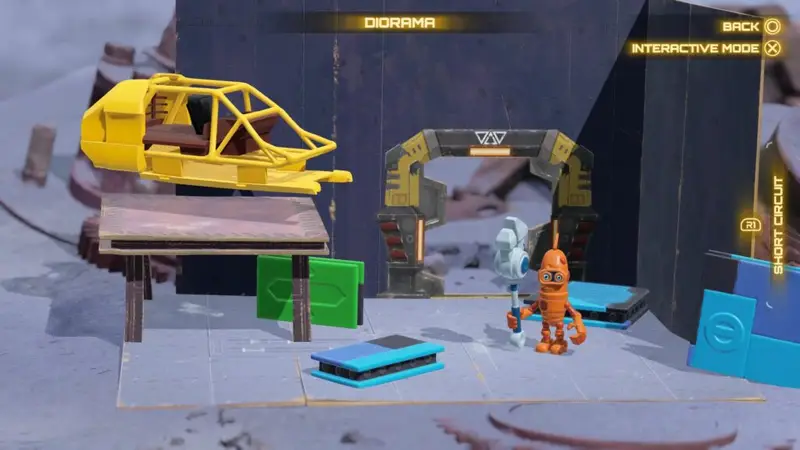
Collectables are a staple for platformers, and Junkster follows the trend. Cogs and stickers (part of a customizable in-game sticker book) are littered throughout the game’s levels. Some are easy to get to, while others are decently hidden. Regardless, they mostly feel rewarding to track down. Hunting them down adds replay value without ever feeling like too much of a grind. Each level (i.e. comic book issue) also comes with a little Junkster toy to add to your in-game diorama. The packaging reminds me of 80’s/90’s action figures and are a small but satisfying bonus. The whole thing fits the comic book framing nicely. You can also play the levels in any order, but going in order was fun for me.
Final Thoughts
Junkster is a well-made, genuinely enjoyable 3D platformer. Its comic book visual style is a great art direction choice, which I feel is a great way to attract players. The building mechanic, while slightly tedious, adds a smart additional layer to familiar platforming foundations. Junkster is not a particularly challenging game, and the build system may need a bit of fine-tuning (or at least some practice), but neither issue detracts from the overall experience. For fans of non-grindy, collectathon platformers, and shorter accessible titles, Junkster is well worth picking up. Just don’t forget to smash the blue crates!

Junkster was reviewed on PlayStation 5. The game releases on the 16th of June for PlayStation 5, Xbox Series X/S, Nintendo Switch 2, and PC
Gamer Social Club would like to thank the devs for the code.