
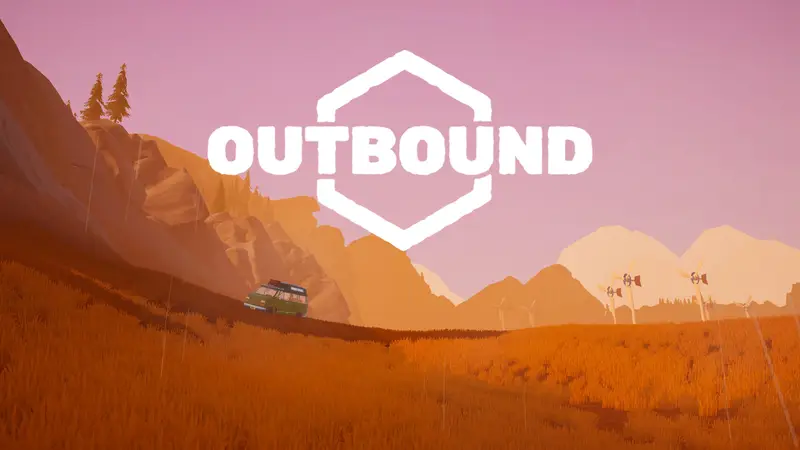
Outbound, by Square Glade Games, is semi-open world exploration game where your main companion is your camper. The best way to describe your initially empty camper is that it’s bigger on the inside (Tardis from Dr. Who).
As you’re exploring a beautiful, colourful and utopian world, you build your own cozy home on wheels. You drive your camper around the various biomes as you manage your character’s vitals, as well as your campers’. The mixture of cozy and survival elements will be the main gameplay loop for Outbound as you turn a simple camping experience, into a mobile home of your dreams.
You & Your Camper
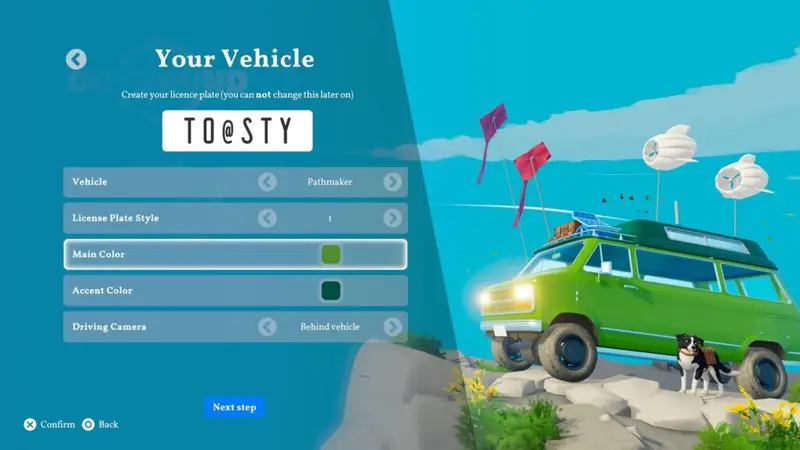
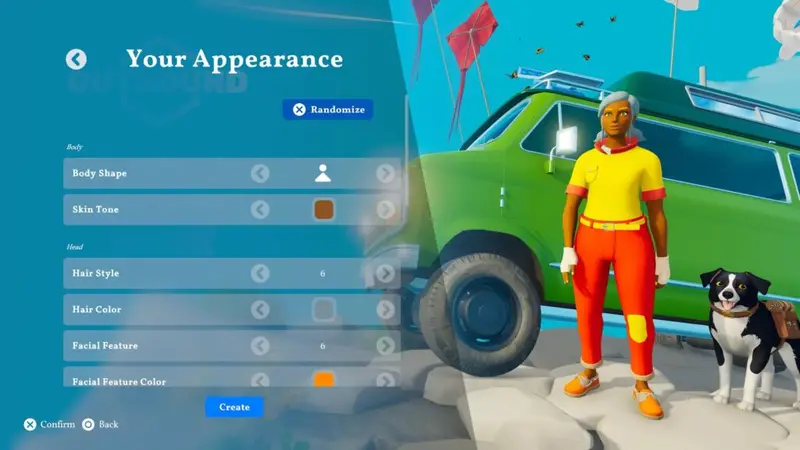
Outbound is a single player game, with the optional co-op, up to 4 players. Even though there’s a character creator, you will never see it, except through the window of your camper as you drive. Which is great, because the initial character creator options are subjectively bad. Next, you’ll be able to choose between three main type of campers that varies between starting building space, carrying weight, and handling. None of these starting options matter too much as all of these can be improved over time.
As I’ve mentioned, the whole point of the game is to turn your simple camper into your mobile dream home. However, you have no tools, and no knowledge of anything, except how to drive. The only way to learn new blueprints is through downloading it from radio towers.
The Thing about these Towers
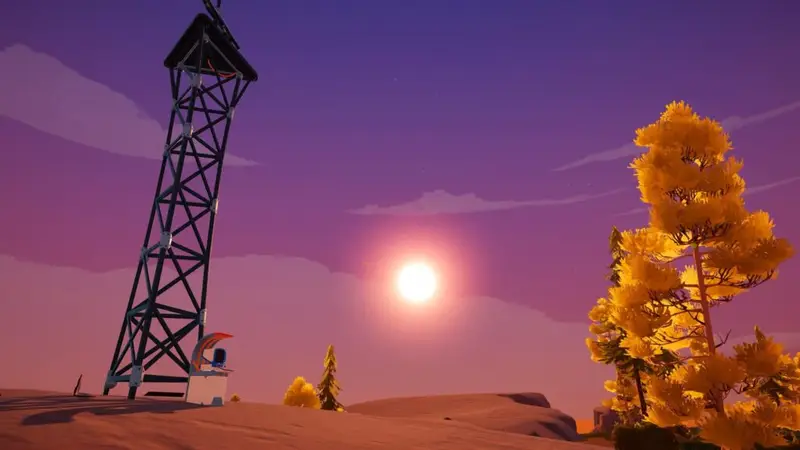
From axes and watering cans, to wind turbines and roofing, everything is learned from downloading signals from radio towers and computers scattered around the world. From the towers, you’ll need a coupon which can be acquired from recycling the litter you find around the world as a thank you for keeping the place clean. The knowledge you gleam from these towers are quite random.
This is my first main gripe with Outbound. Even though it is considered a cozy game, it still has survival aspects, where you need to maintain your hunger, stamina, and health, as well as your camper’s energy. There still needs to be a level of planning in order to have a cozy yet efficient experience. As you roam around the world, you’ll see so many resources that you can’t gather, because the tower decided to give you blueprints to make your camper beautiful with flowers, but not the axe or pickaxe necessary to gather the resources you need to survive.
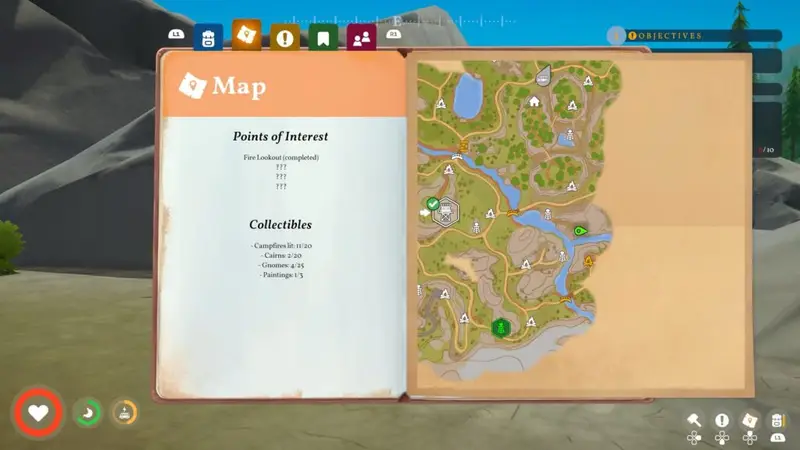
Again, this is meant to be a cozy game. No rush, take your time, drive around, enjoy the beautiful world. However, I would like to do all that while having a sense of progression and accomplishment by letting me have the tools to enjoy my experience. Throughout the game, they’ll give you so many decorative blueprints, but it almost feels like they don’t want me to actually make it.
A very dangerous mistake to make, especially early on is to choose the wrong blueprint because you might not get the one you need until much later on. This, however, could’ve easily been remedied if the blueprint is outlined on a tooltip of what resources are required to make it. For example, the tower gave me an option between Axe 2, Pickaxe 2, or Sickle. I stupidly made the mistake of pickaxe 2, not knowing that I needed level 2 axe in order to gather the resources I needed to make pickaxe 2. It took me several hours, and several trips around the first biome in order to finally get the tower signal that I need to get the chance to learn axe 2. All the while, I was saddened by all the resources I was walking/driving by.
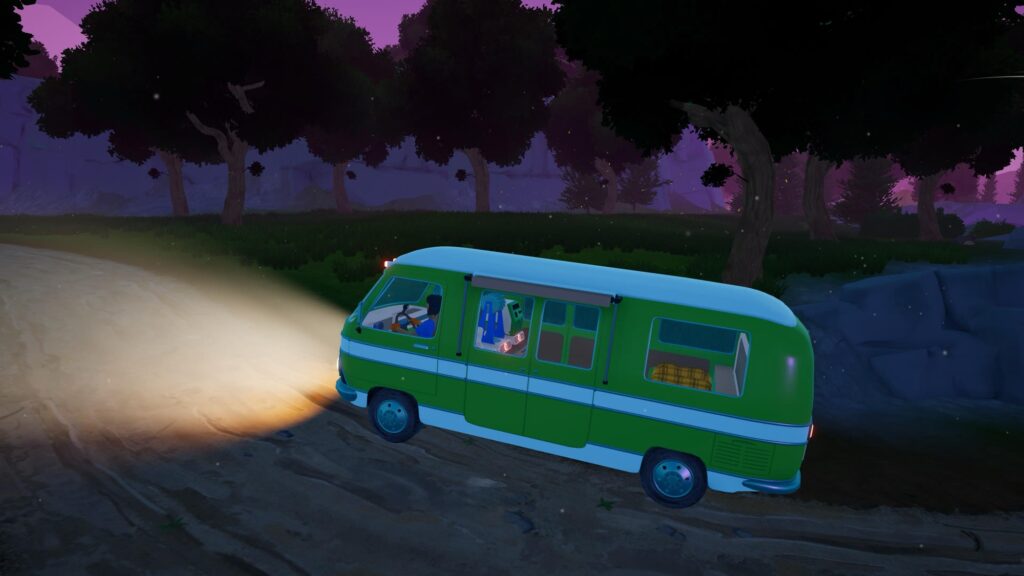
Building
Outbound is a cozy survival game that wants us to turn our camper into a mobile home as we wander around its world. So, how is the crafting system? Initially, the only space you have to build on is inside your camper. You’ll need several machines that will turn your raw materials and process them. Through progression, you’ll learn more blueprints that increases the ability to process and build.
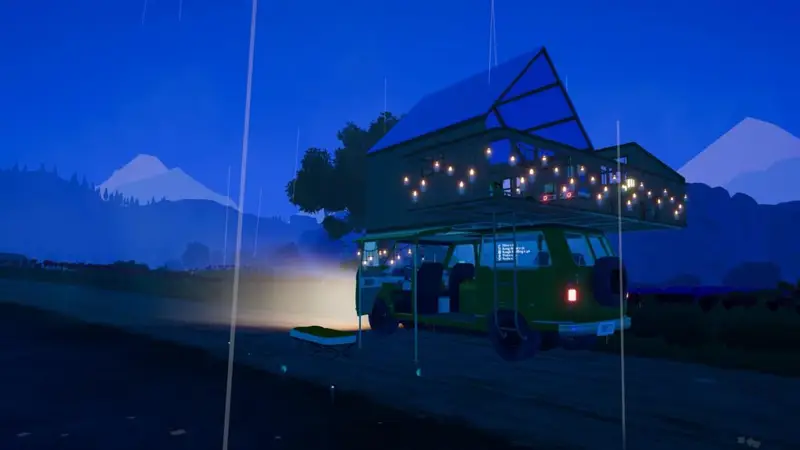
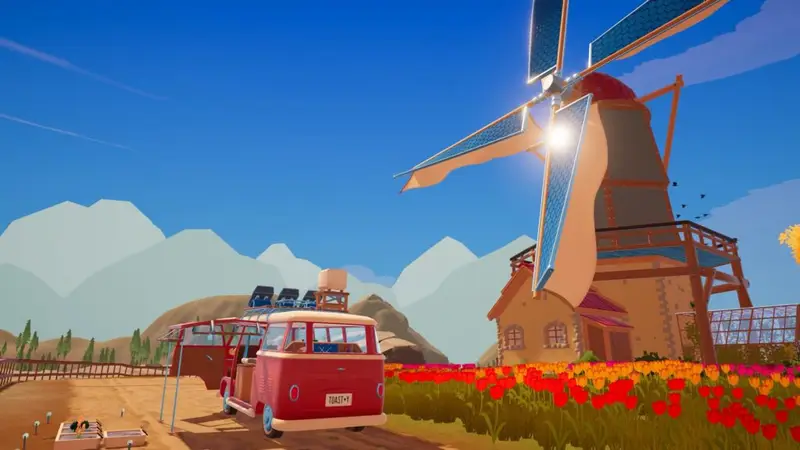
In order to build your camper home, you “set” the camper, allowing you access to the building interface. You’ll need to create a “table” to place your processors on. For all that, you’ll need space! Your camper has a predetermined weight it can carry (which can be improved over time), which means you can build a completely self reliant home, complete with a farm, on top of and around your camper! This idea is really neat and the thing that drew me to Outbound.
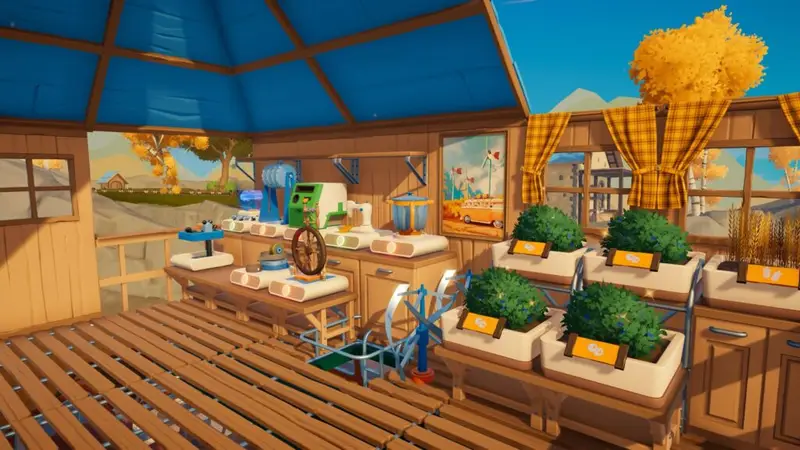
You can even build solar panels, wind turbines, and rain catchers to power your camper depending on the weather. You can have crops, build a library, a bedroom, a nook for all your bobble heads, all within your camper. It’s very much like a house builder in this matter and controlling it is simple. The selections of things you can decorate your camper with will increase as you find more blueprints from radio towers, so early game building is quite limited. However, I can definitely see the creative gamer go crazy on this. There is, however, a huge resource sink as one would expect from games in this genre, and getting these resources are not as simple as it seems.
The Big (beautiful) Empty World
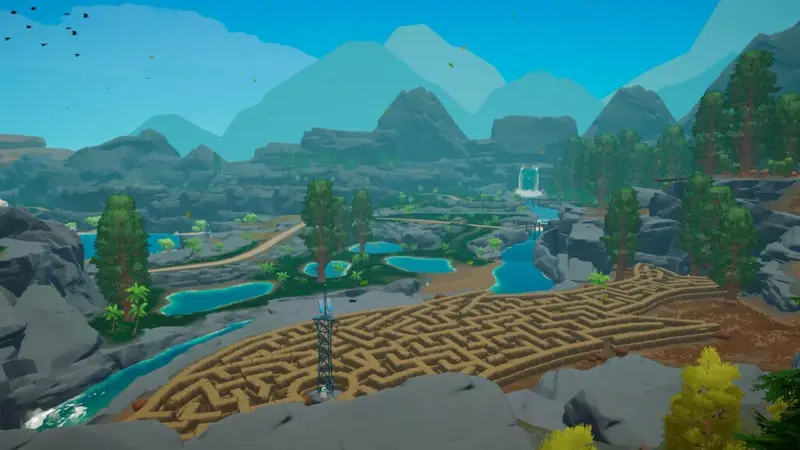
When a game gives you a form of transportation, like Outbound, there needs to be a world to support this. Without a big world filled with twists and turns, the sandbox will feel small. Outbound tries to solve this problem by creating four relatively big biomes, each with its own type of resources, activities, challenges, and things to learn for your camper. It’s a sight to behold. Nearly every moment, even the foggy, rainy, or windy, is a moment that I wanted to take screenshots of. The artstyle really gives off a relaxing, peaceful, and simple vibe, and it works!
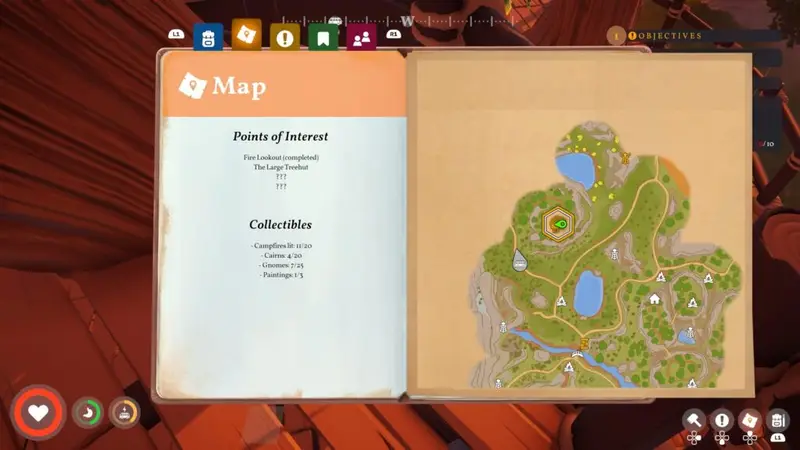
However, there needs to be a balance. Resources are far away from each other. Fine. Huge space to collect them on foot? Not great. Our character moves slowly and stamina runs out quickly. These can be improved by the time you reach the next biome, however many questionable design decisions surface before we get there. The game has a day and night cycle where the game punishes you for playing at night. Regardless of stamina, HP, hunger values, you cannot run at night. So imagine hunting for resources on foot and night sets in. You have these homing boots that activate at night that allows you to move faster as long as you are pointing towards your camper. However, even this is limited.
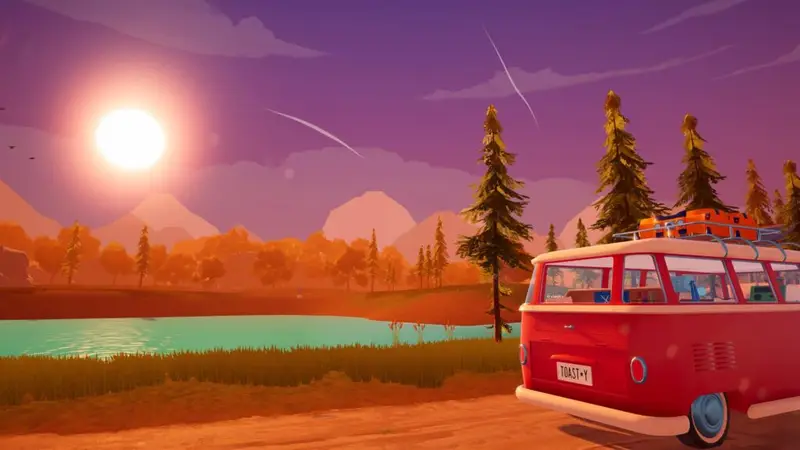
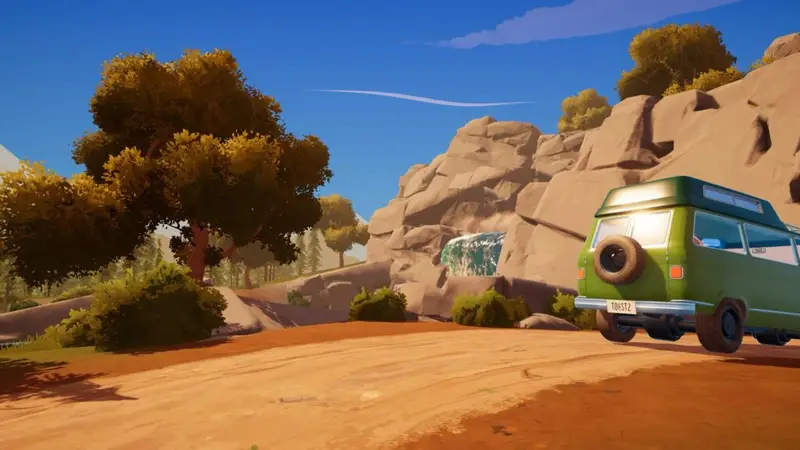
Because the game is so focused on your relationship with the camper, they forgot to allow us to interact with the world without the camper. As you roam around, you’ll see campfires. They act as nothing more than collectibles; you light the campfire, loot whatever is in the nearby chest, nothing else. Many of these campfires are located in areas where your camper would have a difficult time getting there, which means it’s an on foot discovery type thing. Now, wouldn’t it be neat if I can camp there for the night, especially since many of them have pre-set tents!
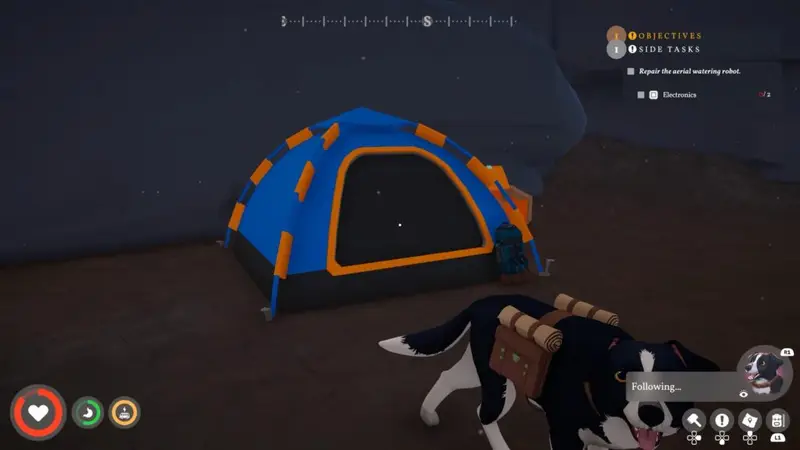
This is a reoccurring issue I have with Outbound’s world. While it’s pretty and big to accommodate the area you can cover with your camper, the game still requires you to go on foot. And once you do, you realize, it’s way too empty and boring. No NPCs, resources way too far from each other, and frustrating random blueprints discovery forcing you to walk away from potential resources because they haven’t given you the tool to gather it.
The Big Beautiful, Yet Silent World
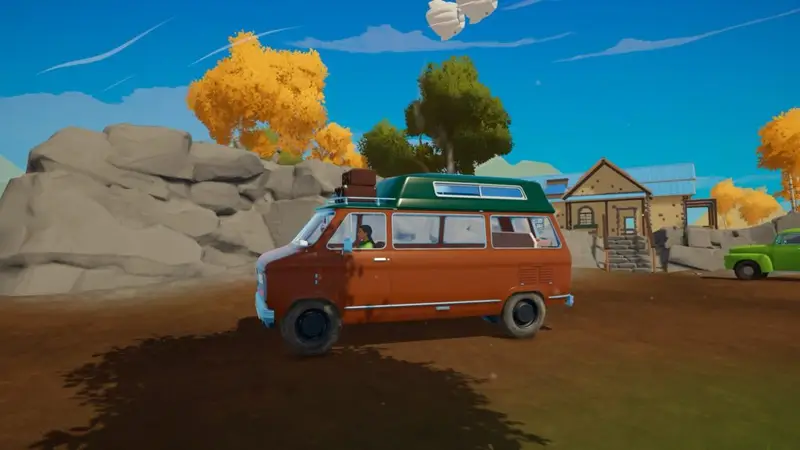
When you think a road trip camping experience, what do you usually think of, especially while driving, with a buddy sitting beside you on the passenger seat? If quiet appreciation of your surroundings is your answer, then Outbound is for you! However, if you thought of making sure you had good music to listen to, maybe one that would match perfectly with your surroundings or a playlist that you and your friend would enjoy, then you’re out of luck.
There is very little back ground music, or sound for that matter in Outbound. Besides the sleepy hum of your camper, the trickling sound of rain or other temperate sounds, and the annoyingly sounding voice of your character randomly narrating what they’re doing, it’s just silence. And silence is definitely not something I’ve ever wanted in a road trip.
Massive Room for Improvement
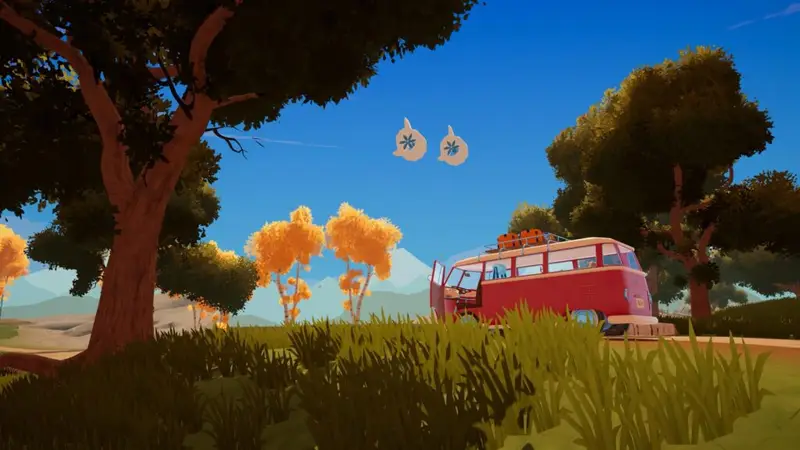
I really wanted to like Outbound. I love a game that allows me to live vicariously through the things I don’t like doing in real life; slowly driving around nature, building my dream home, doing tedious things like ridding the world of all its resources by gathering them all, and camping! These are all things Outbound has but failed to deliver to me due to its weirdly missing elements and design choices.
Outbound is a game that, if given enough time, could be good in the future. It has a wonderful world that can be filled with things and people to interact with. A wonderful building system that can be improved with better delivery of blueprints. And a road-trip experience that can be improved with sound. Unfortunately, much like its world, right now it’s a game with a shallow gameplay loop that is difficult to stay interested in. Maybe it’s more fun with friends?

Outbound was reviewed on PlayStation 5 Pro. We’d like to thank the publisher for the review code for purposes of this review.