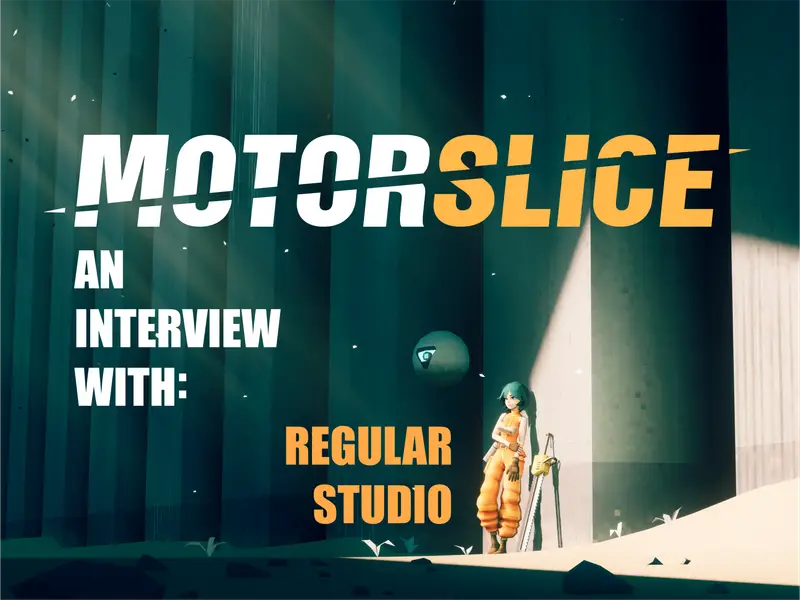
Motorslice isn’t the kind of follow-up you’d expect from the creator of Togges, and that’s exactly the point.
Where their debut was colourful and experimental, Regular Studio’s new project leans into stark atmosphere, fast movement, and a relentless sense of momentum. Built as a direct response to player feedback, Motorslice is all about refining what worked, cutting what didn’t, and committing fully to a bold new direction.
Lucas, who co-founded and makes up half of Regular Studio with his brother Saiki, was kind enough to answer some of my questions on the lead up to the game’s launch, covering the shift between projects, Motorslice’s distinctive feel, and how chainsaw-powered traversal became the obvious next step.
Check out our Motorslice Review to get our full thoughts on the game.
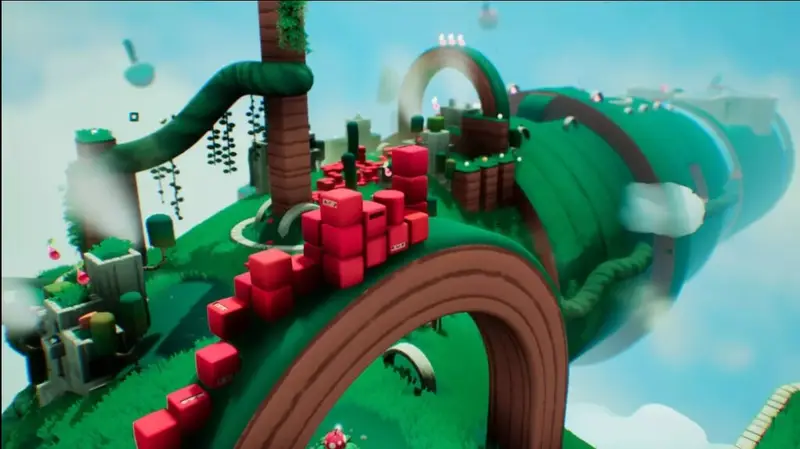
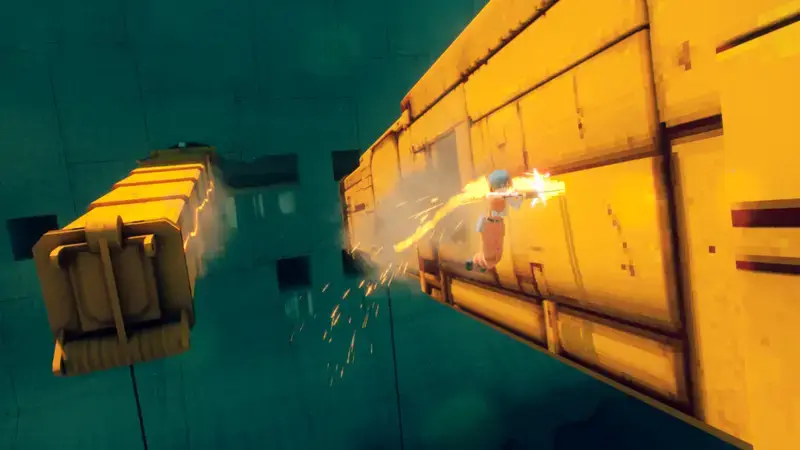
Your first game as a studio, Togges, is remarkably different to your next release, Motorslice. What spurred you to make such drastically diverse projects, and how long after Togges’ release did Motorslice come to you?
Motorslice is a direct response to my previous game, Togges. It was my first game, so naturally, a lot of things didn’t come out as expected, but the goal was to take everything we learned and apply it to the next project.
I took the feedback to heart and used it as a foundation: keep what people liked, improve what they didn’t, and remove what they hated. It’s as simple as that. Players really connected with the authentic atmosphere and art style, so we decided to double down on that.
I prototyped a few ideas after release before landing on the Motorslice concept, which was around three months later.
Motorslice’s gameplay is a mix of platforming/parkour and fast-paced combat, with a focus on the former. Was this always the intended design for the game?
Yes, the game you see now is very close to what I originally envisioned. The idea was to create strong pacing, you’re never doing the same thing for too long. You walk, then climb, then fight, then solve puzzles. It keeps things fresh and helps the world feel grounded while you’re having fun.
I looked at similar games and noticed that in many parkour-focused titles, combat often feels disconnected. That’s where the “one-hit kill” rule came from; you need to find your path and execute your plan while navigating this hostile environment.
Everything in the game is designed to reinforce the idea that you’re climbing a ruined structure and, despite the odds, you’re an unstoppable force.
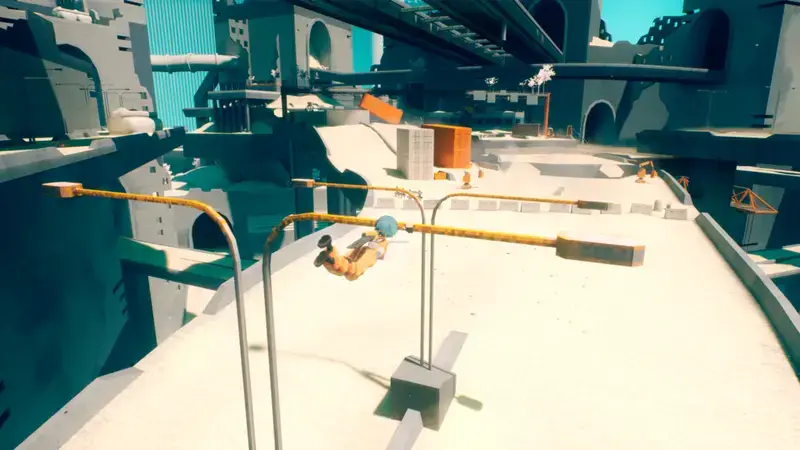
The game is broken up into chapters and is quite linear, with wiggle room for exploration. Did you ever consider trying a more open level design?
The idea was to “fool” the player a bit (sorry, gamers haha). You can see how everything connects, the places you’ve been and the places you’ll go, which creates a strong sense of scale and openness.
Progression itself is still quite linear, though, as you mentioned. That choice was mostly about capturing the feel of the PS2/early PS3 era and delivering what people expect—or maybe what they’ve been missing—from those kinds of games.
Alongside smaller enemies you are meant to dispatch quickly, you have epic boss fights against colossal, yet grounded, construction vehicles. Where did the idea for these adversaries come from?
They were one of the earliest concepts I defined for the project. Once we decided on the setting—a megastructure—we started thinking about what kind of enemies would fit, and construction vehicles just made perfect sense.
After that, everything else fell into place quite naturally, from the smaller enemies to her weapon—a chainsaw.
When did you feel that the pieces of Motorslice were really coming together?
When we were building the first level for a demo, with everything in place, it became a striking experience. Playtesting didn’t feel like a chore; it was genuinely fun, and being reminded of the huge boss waiting at the end really helped everything click.
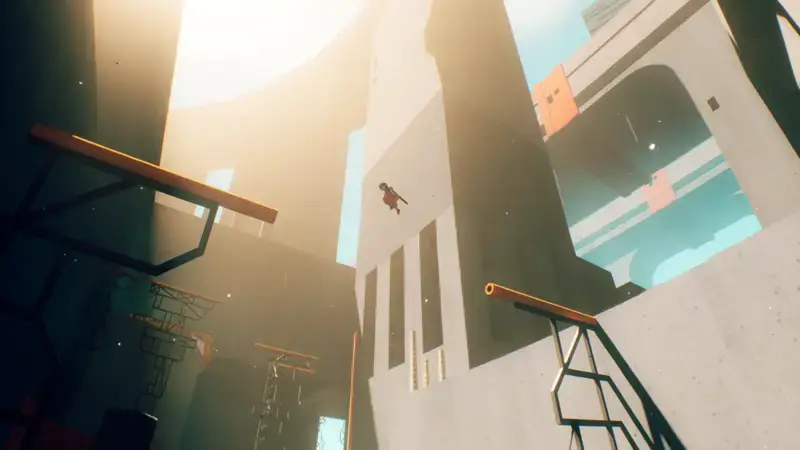
The game’s art direction—with its stark shadows, dusty, arid atmosphere, and flashes of vivid orange—really stands out. Where did you draw inspiration for the world design?
Once we settled on the construction theme, making the world an unfinished construction site and using that iconic yellow in the art direction all came quite naturally.
But the real goal was to create a striking atmosphere, not just something that looks good. We wanted a place that feels oppressive, but still has a kind of beauty to it, almost something contemplative.
Ico, Shadow of the Colossus, and The Last Guardian were huge inspirations in terms of mood and scale.
Sticking with inspirations, P’s tomboyish design and relaxed personality feel quite unique among modern protagonists. Where did the inspiration for her come from?
Making the main character a construction worker just felt right. From there, I played with some familiar tropes: a very tired worker who’s also a skilled fighter, someone who constantly slacks off. It felt like an interesting and unusual premise for a game.
One early decision was to make it more of a slice-of-life story. Part of that was practical. We’re just two developers, so a huge cast and complex narrative weren’t realistic, but it’s also a style of storytelling I really love.
In my mind, combining an over-the-top game with quiet, calm moments would feel unique and striking, just like the art style.
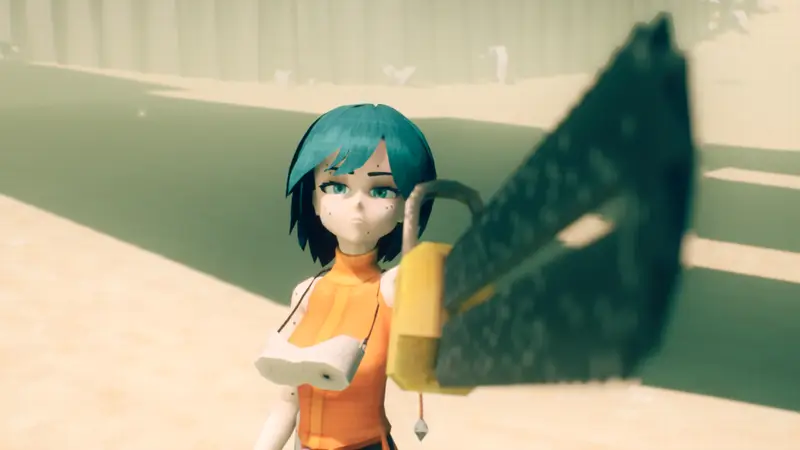
P’s “relationship” with Orbie, the player camera, adds some light-hearted and funny moments. Was that always part of the plan?
I wanted her to talk, but then the question was: how do you do that without other characters? haha. That’s how the idea of a drone camera came about, a kind of companion or even a puppy, someone she can vent to about anything.
A big part of the design was contrast. The world of Motorslice is harsh and dark, so having a companion who goofs around or gets on your nerves creates a nice tonal shift.
Like many things in the project, it just felt right, but I can understand that not everyone will enjoy that contrast.
The lo-fi soundtrack complements both the oppressive atmosphere and the meditative flow of the gameplay. Did you give much direction to the composer, Pizza Hotline?
The direction was pretty straightforward. We wanted the game to evoke strong early-2000s nostalgia, which is a core inspiration for the whole project.
I reached out to one of my favourite atmospheric DnB artists, Pizza Hotline, and they accepted, simple as that.
The goal was a Y2K-inspired sound with a sense of space and something almost ancient in tone. Pizza really nailed it quickly, and it shows in the OST.
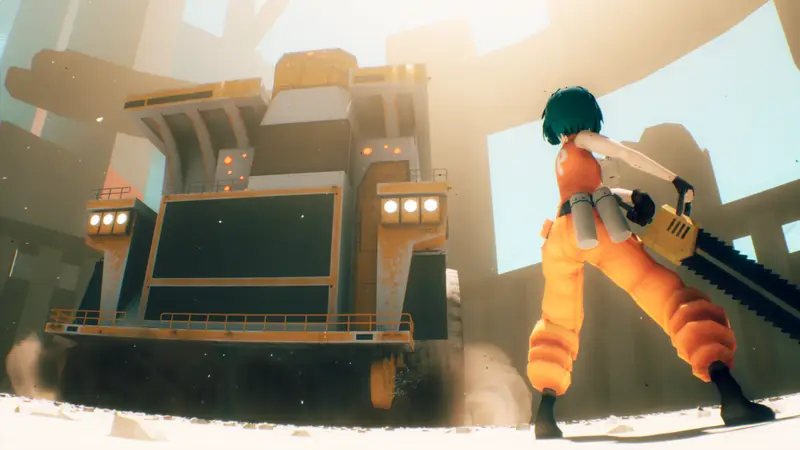
What’s your favourite feature in the game—and why is it travelling by chainsaw?
Chainsaw riding, aka Motorslice, is just cool, isn’t it? haha. Using the chainsaw for movement came naturally once we decided it would also be a weapon; the teeth and the engine just made sense.
That said, I also really love the bosses. They’re incredibly cool, and you feel both amazed and terrified when you see one. They’re also a big technical achievement for such a small team.
I’m also really proud of how the game looks overall. The design, the premise, even the limitations, all comes together to make something truly unique.
Thanks for the interview, and see you at the release!
Motorslice feels like the work of a developer who knows exactly what they want to make, and isn’t afraid to pivot hard to get there. It’s bold, a little unconventional, and full of sharp contrasts, from its harsh world to its quieter, more reflective moments.
I would like to thank Lucas for taking the time to answer my questions and share his experiences with the development of Motorslice, and I look forward to seeing what Regular Studio does next!
Motorslice is out now on PC, PlayStation 5, Xbox Series X/S, and had a last-minute launch on Xbox Game Pass.
Have you tried Motorslice yet? Let us know in the comments below, and join the Gamer Socials Club Discord to chat about your favourite games, play in community game nights, take part in giveaways, and more!