
Management and simulation games are some of my favourite games to play. I can’t tell you how many times I’ve spent hours building a town or theme park or whatever else you can think of only to look up at the clock and realize its 2am and I’ve been lost in micromanaging for hours. So naturally, Planet Zoo 2 was on my radar the moment it was announced. Building zoos and taking care of animals? Sounds like a dream to me!
Despite this being a sequel, this is actually my first time playing a Planet Zoo game. I own the first game; it just came to consoles so much later than when it was released, and I never got around to it. I am, however well versed in Frontier Games and have a ton of hours in Zoo Tycoon, which they developed well over a decade ago now. Because of that experience with Zoo Tycoon, I was going into this expecting more of that. However, after playing through Planet Zoo 2’s campaign and franchise mode, it is very much an apples to oranges comparison.
You build a zoo in both and take care of the animals, yes, but beyond that, the difference to me was night and day. Where Zoo Tycoon was much more of a fun, basic management and simulation game, Planet Zoo 2 is much more in depth and complex. It aims for a much more “expert” approach to the genre.
The Campaign Is A Must To Start With
That isn’t to say Planet Zoo 2 isn’t a fun game; it very much is, it is just far less approachable to most players. That is a testament to how this genre has evolved over the years more than anything, and Frontier is the expert at delivering that experience while still making it fun.
With that said, if you are new to this series, you are going to want to start with the campaign. Heck, even if you are a veteran of the first game you may want to play the campaign. The campaign’s 18 missions serves as the games tutorial as you work through a myriad of different zoo’s and conservation areas learning the basics of the game.
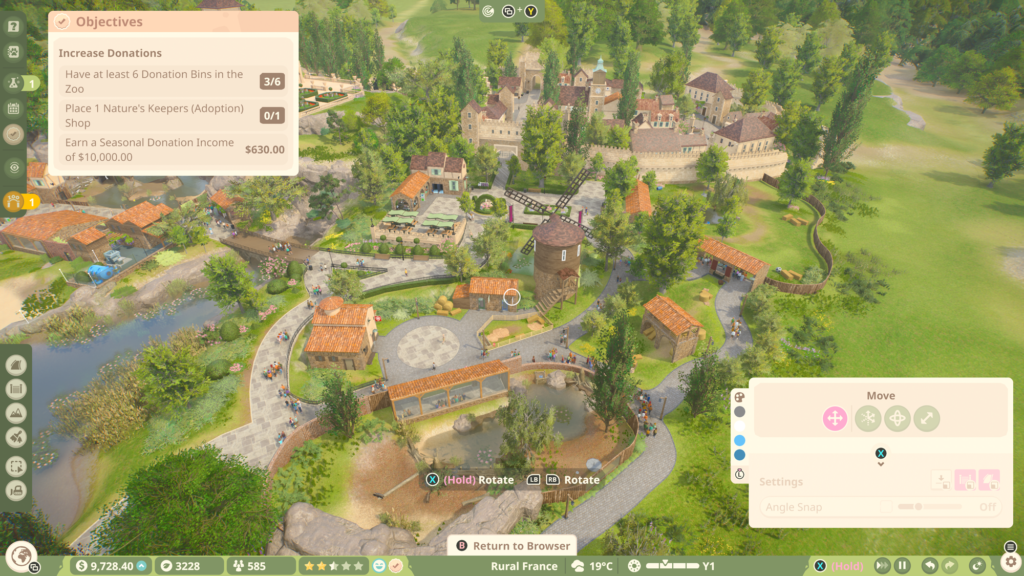
The fact that it takes 18 missions of a campaign should tell you just how complex this game is. 90% of your time will be spent in menus searching for items or managing your staff and animals. And these aren’t short missions either, each taking roughly 30 minutes to complete on average.
Each mission will focus on one aspect of the gameplay that you will need to learn. The first few are the basics: how to build a habitat and place shops to earn some money. As you progress, you get into the weeds of all the game’s mechanics. How to make animals completely happy, the conservation aspect, educating guests, and so on and so forth.
The other thing the campaign does a great job with is the variety of zoos the team has created. Seeing what a developer can come up with as a zoo is pretty cool, and quite frankly makes my zoos look like garbage in comparison. While my zoos might get the job done in a game, the developers’ zoos are ones I wish I could visit in the real world.
Menus, menus, and more menus
As mentioned above, the majority of your time playing this game will be spent in the menus looking for that item you need or setting up something to help your zoo. And to be honest, it is at times very overwhelming and intimidating. Part of this is due to having this many menu’s doesn’t translate very well to console, but trying to navigate your way through hundred of items and animals within multiple different tabs, it is a lot.
And Frontier does their best with it. When you finally figure it out and things click, you get that oh so satisfying feeling when it comes together. But there are also countless frustrating moments. Like backing out of one menu doesn’t always fully work as intended. I can’t tell you how many times I just placed an animal or item and it still showed the same section highlighted on my screen, so I’d click it again to get another, only for nothing to happen or for it to click something else. And the only way to fix it was to move to another tab and then back. A minor issue, but annoying nonetheless.
There are a few other quality of life things they likely could have done as well. For example, if I was working on an animal’s happiness and checking their menu, I could click on that animal, see what they need, and actually click on that need, and it would bring up all the options for me to help fix the issue. That was great, but then in order to get to the next issue the animal had I had to back out of the current menus and re-select the animal again. Just felt like some unnecessary extra steps that are a bigger pain on console than on PC.
The Level Of Detail Is Great, But At Times Impractical
When it comes to building out your zoo, the options, as you can probably guess by now from this review, are almost endless. The sheer number of animals is incredible, as is the number of items. Whatever you can think of for a zoo, Planet Zoo 2 probably has it.
This allows you to build some truly great zoos, full of vibrant guests and animals. And because of how much micromanaging you have to do, it really is your park. Everything from the ambience around the exhibits, coming from the speakers to the education boards. For the hardcore player, this is probably really good. For the more casual fan, however, this will become tedious quite quickly, especially as your zoo grows bigger and bigger.
Another issue I had was just some basic quality of life things that could be better. Placing a new exhibit or path or quite literally anything, wouldn’t automatically delete the trees or bushes in its path. It’s just another thing that adds an unnecessary step. Same with things like the path. You want to build a path around your exhibit but half the time it would clip through the exhibit itself rather than edging up to it.
The same thing would happen when doing ecosystems in the conservation areas. I’d complete one conservation zone and then begin to build the next one, which would then ever so slightly cut into the previous one and make it no longer viable. It is also worth mentioning here how small some of the writing is on the map itself. Trying to see what ecosystem I was building and highlighting was hard, even on a 60+ inch TV.
On the management side of things, there are fewer of these issues, at least that I came across. Running the business side of a zoo had far fewer of these small technical problems and was all around a joy to deal with.
I don’t want that to sound like building the zoos was a bad experience or anything, far from it, but these little technical issues take Planet Zoo 2 from great down to good, at least on console.
Nature In All Its Beauty
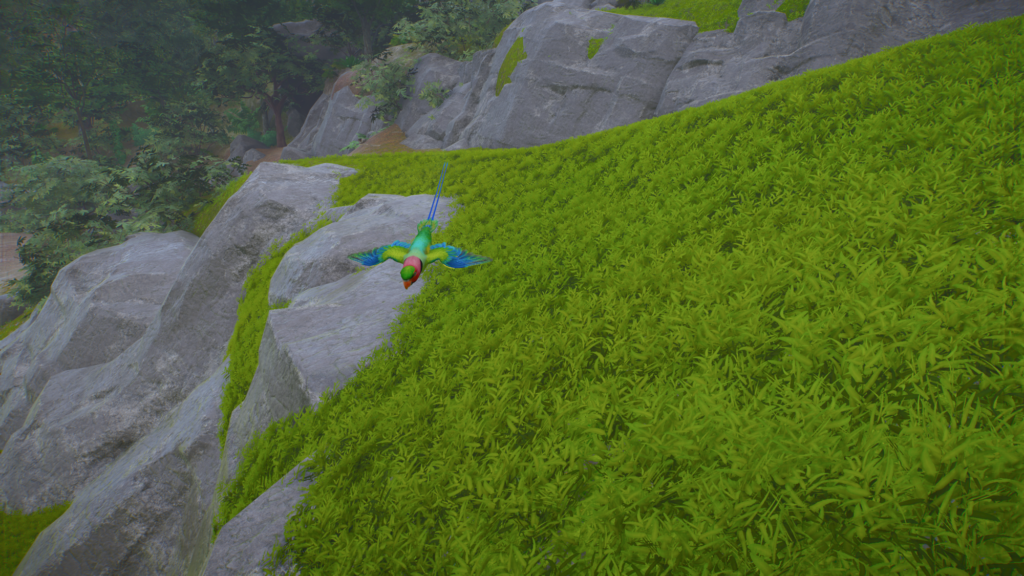
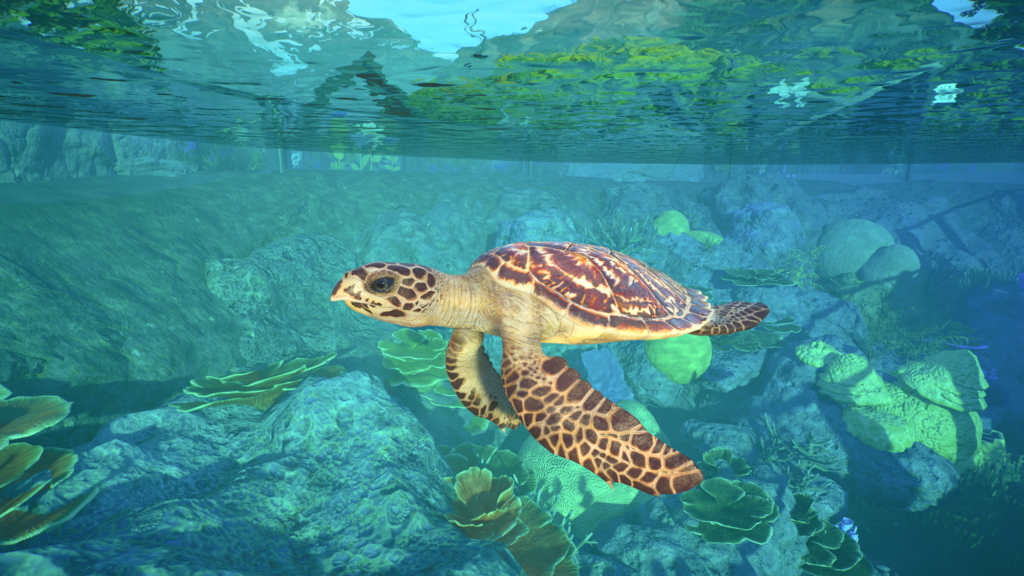
One other thing I have to touch on quickly here is just how beautiful this game is. The level of detail in the animals is honestly impressive. If you get into the cinematic view, they will at times look the real deal and it is cool to just watch them move about and do their thing.
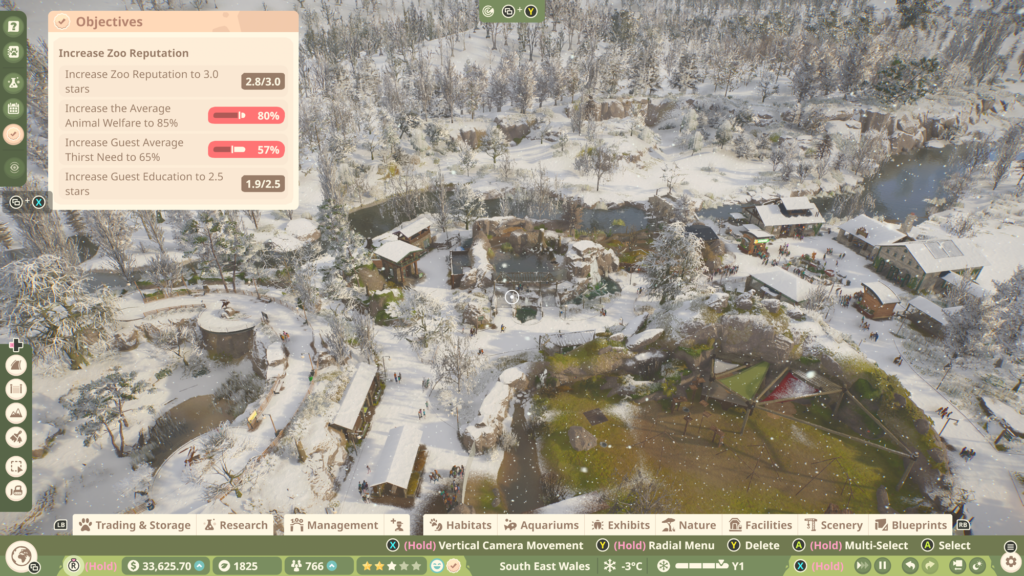
They don’t look quite as good when you are zoomed out dealing with the day to day of the zoo, but that is to be expected, and the zoo itself always looks fantastic too. They also do a great job of transitioning through the seasons and time of day. Seeing a zoo in the snow for the first time was beautiful, especially since I didn’t expect it, and seeing it come to life at night was a fun experience as well. At least until it got so dark that I literally couldn’t see anything. That’s a good time to focus on some management!
Final Thoughts
Planet Zoo 2 is a tale of two video games depending on what you are coming to it for. If you want a casual simulation game where you can build a zoo with ease and enjoy spending time with the animals, you might come away a bit overwhelmed and disappointed.
However, if you are a hardcore simulation and management genre fan who wants every single detail of your zoo managed exactly how you want it, Planet Zoo 2 is a top tier simulation game. I kind of wish there was some middle ground between the two different types of sim games, though. It is likely even better on PC because of all the menus, but as is, this is a solid addition to the simulation genre on console.

Planet Zoo 2 was reviewed on Xbox Series X. A review code was provided by Frontier Games for the purpose of this review.