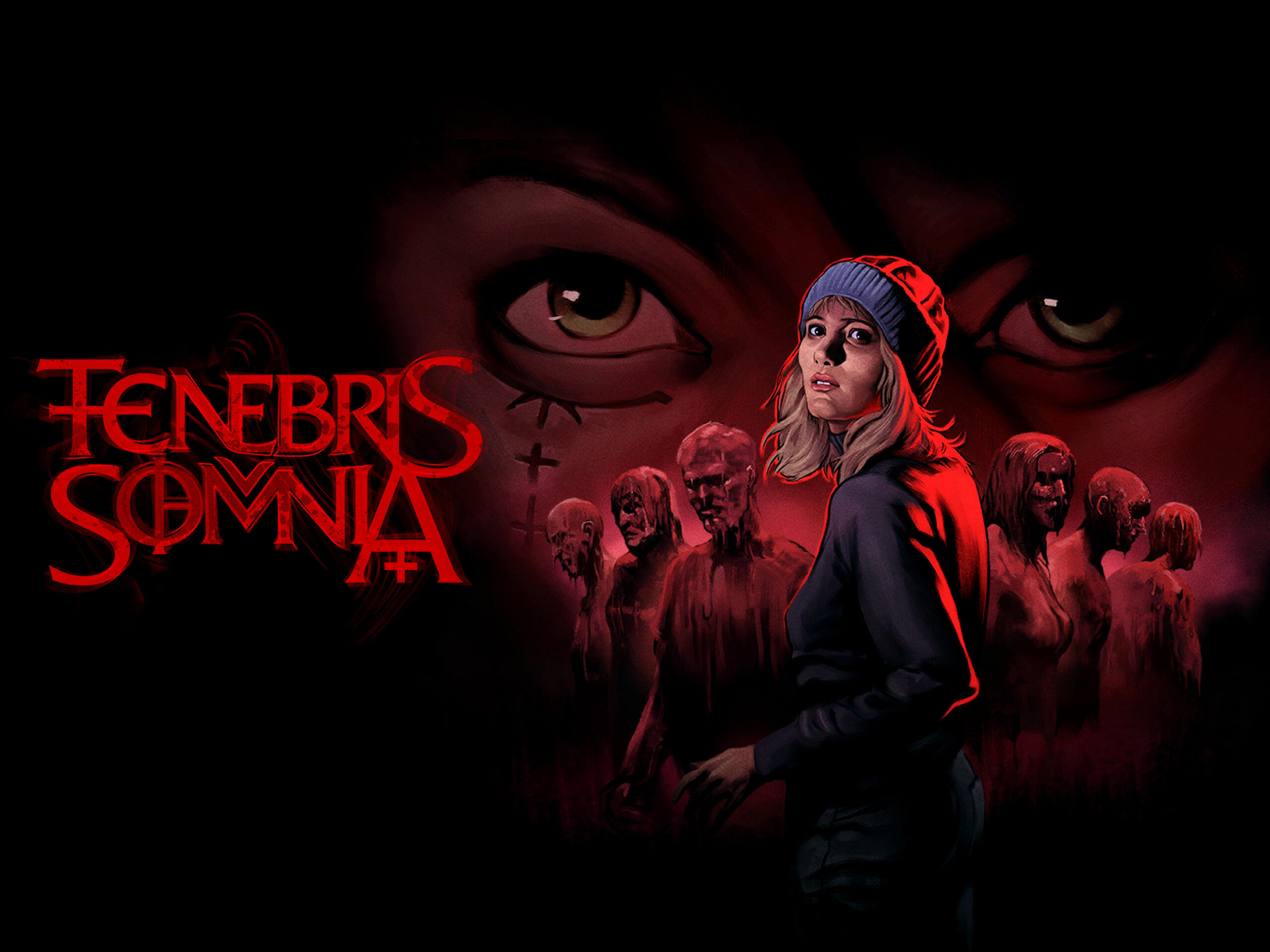
With the exponential growth of the gaming space – in no small part due to the booming horror genre – it’s rare that a game catches your attention for being something new. Tenebris Somnia from Argentinian developer Andrés Borghi and Saibot Studios aims to terrify players with a blend of classic 8-bit survival horror gameplay, combined with original live-action horror sequences developed by an award-winning film crew.
I’ve had my eyes on Tenebris Somnia all year and played the brief XBOX Series demo over the summer and thought the concoction of game and film worked very well. I walked away positive, but slightly apprehensive as to whether the novelty would wear thin in the full release. However, on the back of playing another exceptional retro horror last year, Look Outside, I came into this one highly optimistic.
After playing Tenebris Somnia to completion, I can comfortably say that the studio has created wonderfully horrifying visuals and atmosphere. But how is the experience as a full survival horror experience? Our spoiler-lite review.
Somnia
Told between non-verbal live-action footage and NES-like graphical gameplay, Tenebris Somnia – or in Latin, “dreams of darkness” – has a twisted, sinister, and macabre story. At the very start of the game, lead protagonist, Julia returns to her ex-boyfriend Ivan’s apartment building to return some belongings, only to discover that things are not as they were when she left him.
Approaching the nondescript door of her former home, a knock returns no reply and so with the key she planned to return, we enter inside. Reaching the living room of Ivan’s small flat, things just don’t seem right. Ivan, a film creator, has seemingly destroyed many of his most treasured mementos and has cast one of his most important tapes into the oven for a burning fate. Perplexed, Julia wonders what on earth has happened to him and begins to question whether he, or another, has caused such havoc. As she begins to grow scared for Ivan’s safety, a greater fear emerges within her – is Ivan’s magnum opus, Devora becoming reality?
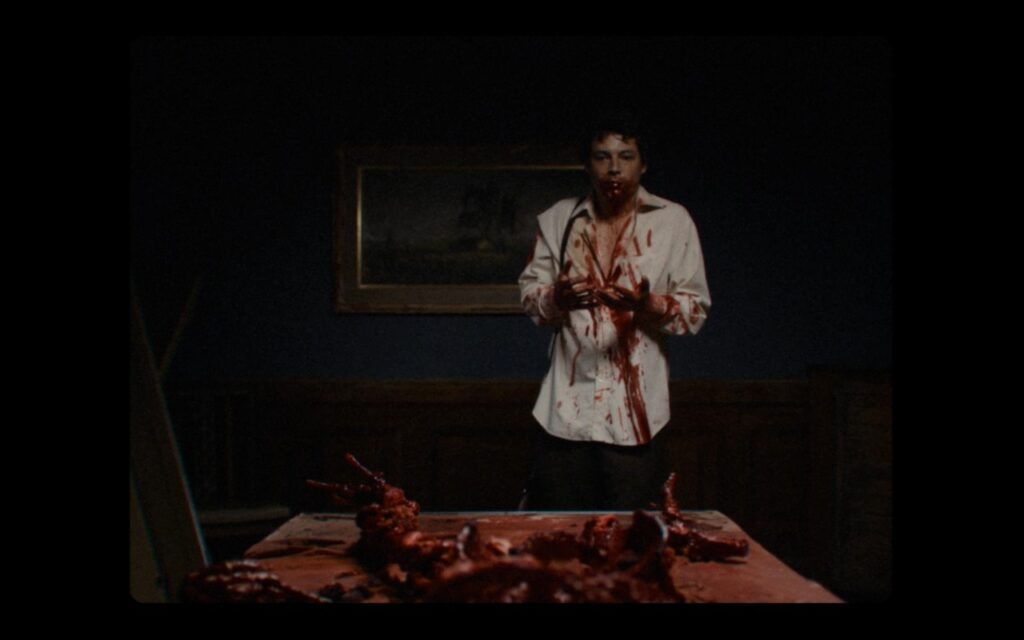
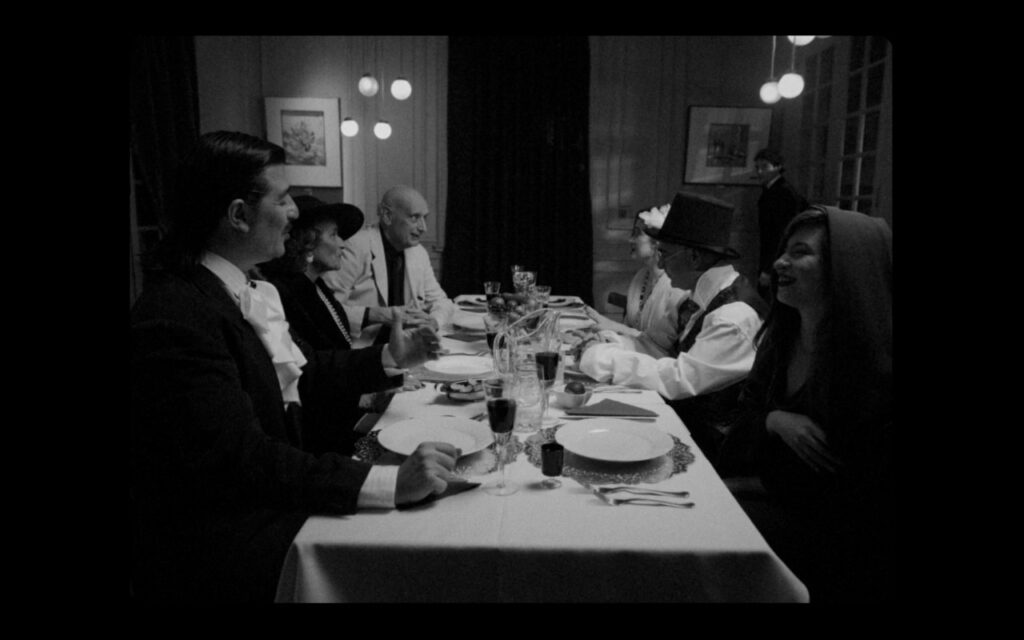
Devora is a twisted horror movie that during the game we see clips of via film reels. Shot in monochrome with otherworldly beasts, demonic humanoid characters and an imposing mansion setting that intimidates Devora’s cast, Ivan’s movie underpins the game’s narrative deeply. Tenebris Somnia’s story is all told in the perspective of Julia, not only with the backdrop of Devora and its production journey, but also her flawed and now broken relationship with its creator. Troubled by the fantastical reality she has unwillingly entered, Tenebris Somnia is Julia’s story of discovering what hellish doors her ex-sweetheart has unlocked.
One would be forgiven to think that Tenebris Somnia’s story is told through the live-action scenes, with the gameplay time spent killing demons and looking for items to unlock the next door. That is absolutely not the case. Whilst controlling Julia you will engage deeply with key plot characters, including the helpful, but obscure Sanguis and the menacing, seductive, Vitria. Julia’s well-scripted narration to the story is sombre and sometimes humorous, although what I believe the developers best portrayed through Julia is how relatable her story is to real life failed love affairs. Most notably, the emotions of still loving and caring for someone despite a bilateral understanding of the need to be separated.
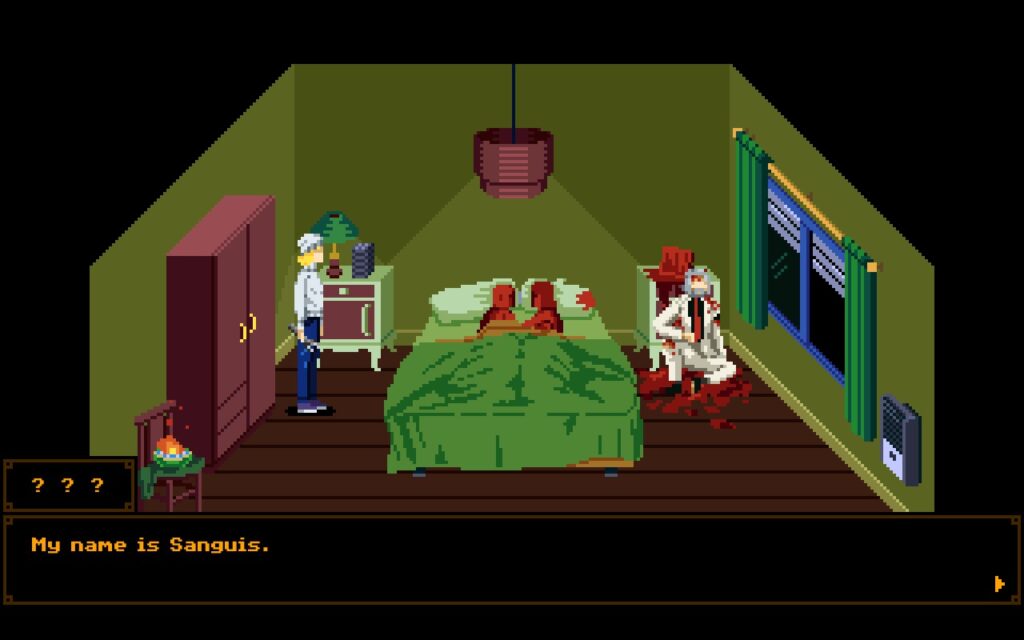
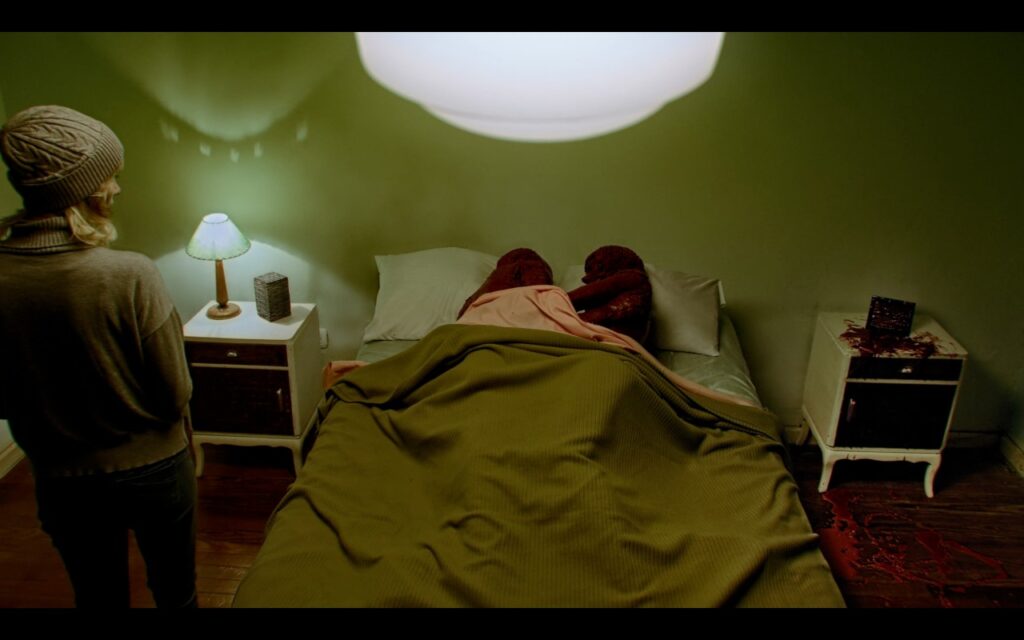
The diverse locations of the game are moments in time from the history of Julia and Ivan’s relationship, such as their bedroom, the studios where they co-developed Devora and their moonlit honeymoon spot. With solid pacing, the game does great work in simultaneously driving the story forward, whilst filling in the broken history of both Julia and Ivan. Tenebris Somnia boasts four endings, one being a New Game+ secret. After reaching two very well-concluded endings which tied the story together in two accomplished ways, I look forward to revisiting Ivan’s apartment block for the other two in the very near future.
Lights, Camera, Tenebris
What really impressed me about Tenebris Somnia is how it manages to seamlessly tell its roughly 8-hour story between both the live-action footage and the in-game locations. Not many video games have tried the movie/game hybrid since Quantum Break – which I hold in very high regard; I’d argue it’s one of Remedy’s finest games – but Tenebris Somnia proves that when done right, it can be very effective. The locations from the live-action scenes are wonderfully recreated in 8-bit pixel style, enabling you, as a petrified Julia, to feel very much part of the movie that is coming to life.
I am indeed no film critic, but I certainly felt the small cast all delivered their performances admirably. Julia is unwillingly drawn into this nightmare and that shows in her completely traumatised lead role. Whereas Ivan plays a very accomplished part, as someone who is beginning to witness their finest work becoming a horrifying reality.
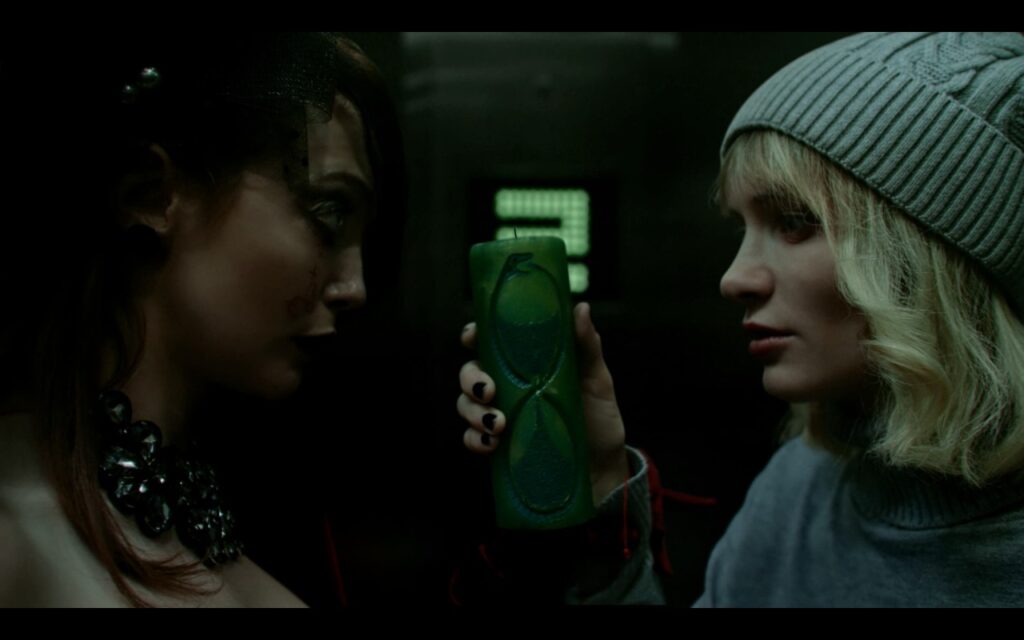
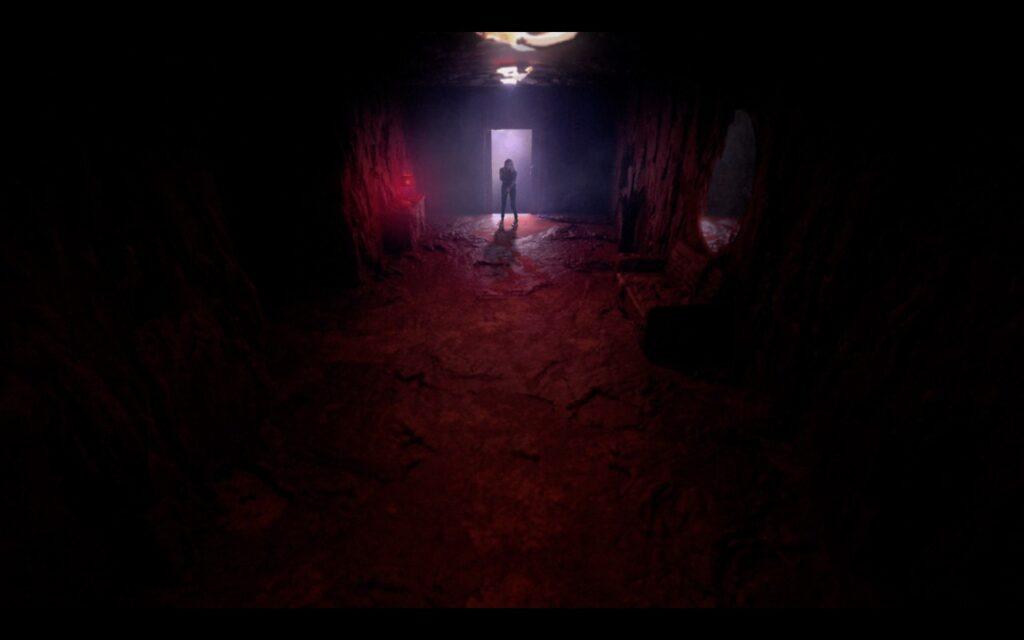
Tenebris Somnia’s live-action segments also contain some well-crafted visual effects including some savage B movie-like baddies. These are all hand-designed by a talented team from Argentina, and as the studio gloriously, bluntly say “absolutely, positively no goddamn gen AI.” In a brilliantly gross late-game cutscene, one of the bosses will morph from their human form into a tentacled monster, who too looks terrific in 8-bit form once you regain control of Julia for the fight. The quality of the visual effects grows as you progress the game, with later animations being more grotesque, more colourful and more alive.
Despite the live-action sequences being rather quiet given their non-verbal nature, the audio design of the gameplay sections perfectly capture the classic horror tone and feel with an 8-bit Chiptune-style soundtrack. From the screams of Julia to the combustion explosions of a chunky Vorax, Saibot Studios have fully realised how to create chilling sounds using basic technologies. What I did appreciate was that when you enter a new area, you can always hear off-screen enemies lurking to pounce as you approach, giving me that useful audio cue to check if my guns were loaded and my health levels were battle ready.
A Struggle to Survive
Heavily inspired by old school Resident Evil and Silent Hill titles, Tenebris Somnia is a challenging survival horror that really does test your ability to manage your stretched resources. Health items and ammunition are in limited supply, particularly the former. During my playthrough I spent a significant amount of time at around mid-health. Fortunately, unlike OG Resident Evil no ink ribbons are needed to save your game here and you can do it an unlimited amount of times. Well, at least until around midway through the game where you have to erase three of your limited save points to complete an objective.
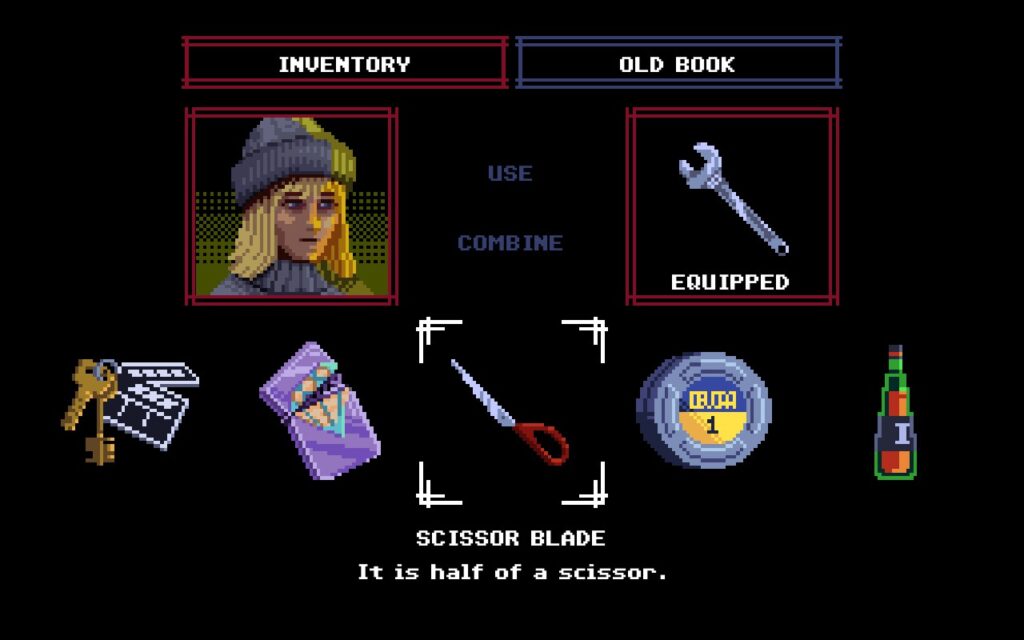
Unlike Leon Kennedy or Claire Redfield, Julia is a civilian who can only wield the most basic of items to defend herself against the horrors she must face. A wrench and pipe as melee weapons alongside a basic revolver and shotgun as the firearms are the most exciting tools you’ll find in the apartment block. On the surface, this doesn’t sound an all too exciting arsenal but it is in keeping with the helpless, vulnerable, everyday being Julia is. In the spirit of RE’s knife only runs, there is an achievement/trophy for completing the game using only the wrench, which I managed till about halfway through until the second boss made me throw in the towel. Good luck with that one, horror sickos.
Tenebris Sombria’s combat is expectedly simplistic given the low-resolution world in which the game is played, with the right volume as to not get in the way of progression. There is just about enough basic enemy variety in a playthrough to keep one entertained, each with their own formulaic attack patterns that you can learn to dance around and sneak in a melee hit or two. Firearms are powerful but so limited are the play spaces; there’s often little time to take aim and fire more than a bullet. I must say that from time to time I did notice that there were some occasional hitbox irregularities, as well as Julia getting caught on environmental objects that it didn’t seem she should.
‘What if They Aren’t Just Nightmares?’
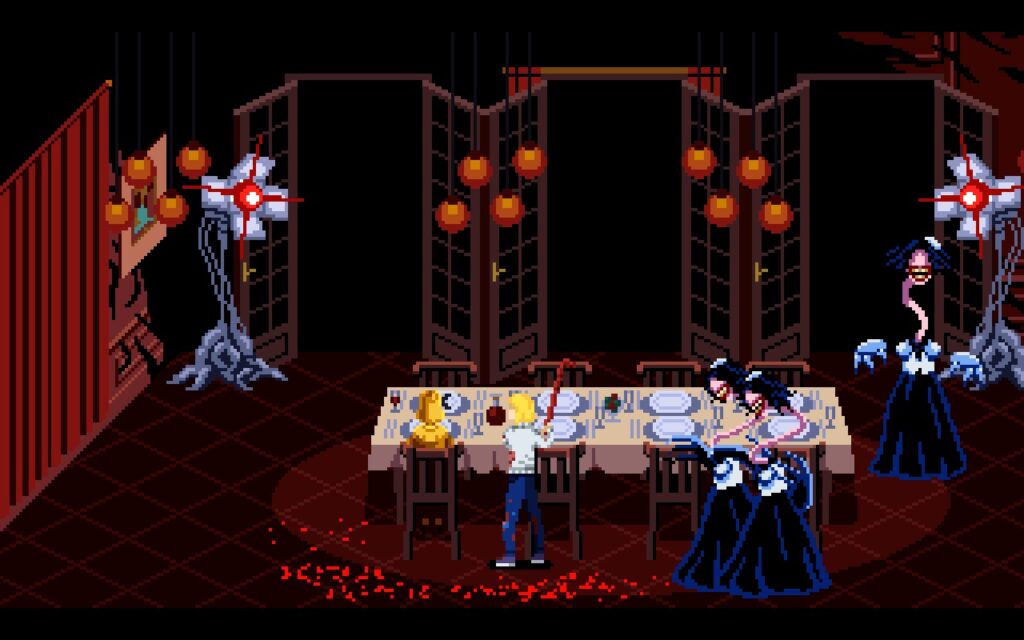
Boss battles stood out to me as a big highlight, being inventive despite the limitations of the 2D, low poly space. Bosses aren’t just bullet sponges waiting to be punished; Julia will need to interact with, or dodge, the environment to ensure that these powerful foes can be damaged. For example, the first boss in the game is invisible and can only be seen/damaged once you have put out all the nearby candles; whereas one of the late and best boss fights is played out in front of a mirror which shows tentacles you can only see in the reflection. The final boss battles for both core endings, ‘Magnum Opus’ and ‘Solve et Coagula’ are spectacles and evidence how successful Tenebris Somnia is at colliding film and game – just make sure you’ve saved plenty of ammo or these could be pretty rough.
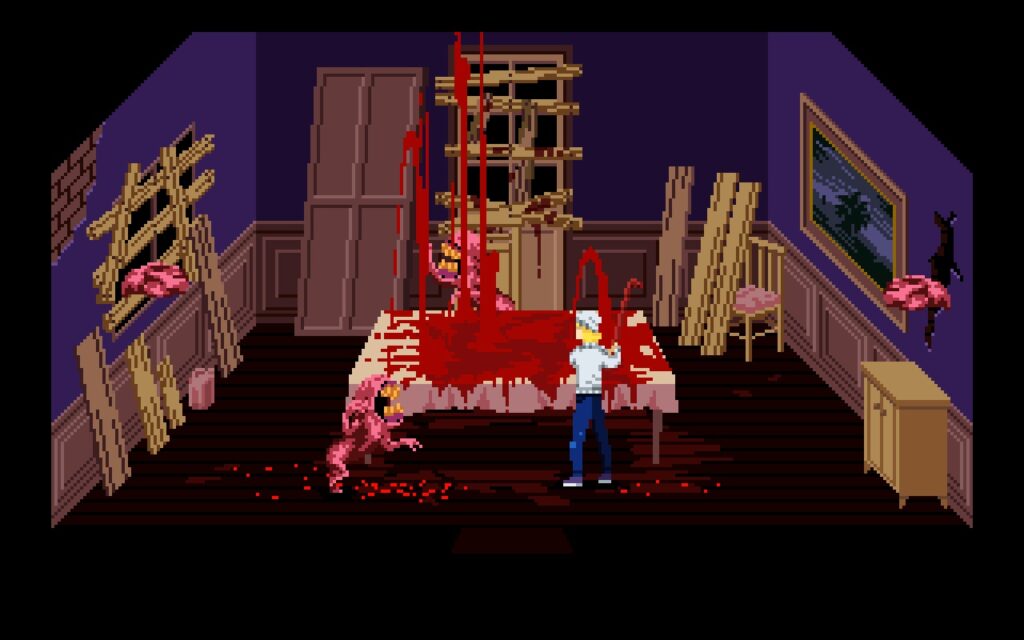
I will say, however, that the second boss of the game isn’t much fun at all. They are encountered in a very small room and consistently cast spells on the floor, which if you walk into will cause them to take control of Julia and turn her weapons on herself. As this boss does take a fair amount of damage to defeat, by the time you’re closing in on the kill the play space will be riddled with these self-destruction points, where a slight overmovement will cause Julia to blow her brains out with her shotgun. There is another encounter not too long after where you are swarmed by monsters named Carnitos that look like worms with legs and they just keep on coming. It would take a lot of skill, mixed with plenty of trial and error of positioning to avoid taking even a couple of hits. These two encounters are comfortably the low points of the game’s combat; if you’re reaching these bosses without any healing items to spare, I worry some may well be restarting the entire game.
Lock and Key
Explorative gameplay is akin to the likes of Monkey Island and The Day of the Tentacle. Use X item at Y location, or combine with Z item style gameplay. Ivan’s apartment block and the rest of Tenebris Somnia’s world is a diverse, ever evolving place to explore. What begins as a trashed flat begins to augment as you progress the story and the real world becomes more confused with Devora’s. As there is plenty of backtracking as you discover new progression-based items, this evolution of space is important and keeps what is a small world engaging through to seeing the credits roll. The environmental storytelling in Tenebris Somnia is also of a very high standard. Nearly everything you engage with triggers thoughts from Julia, filling key narrative gaps.
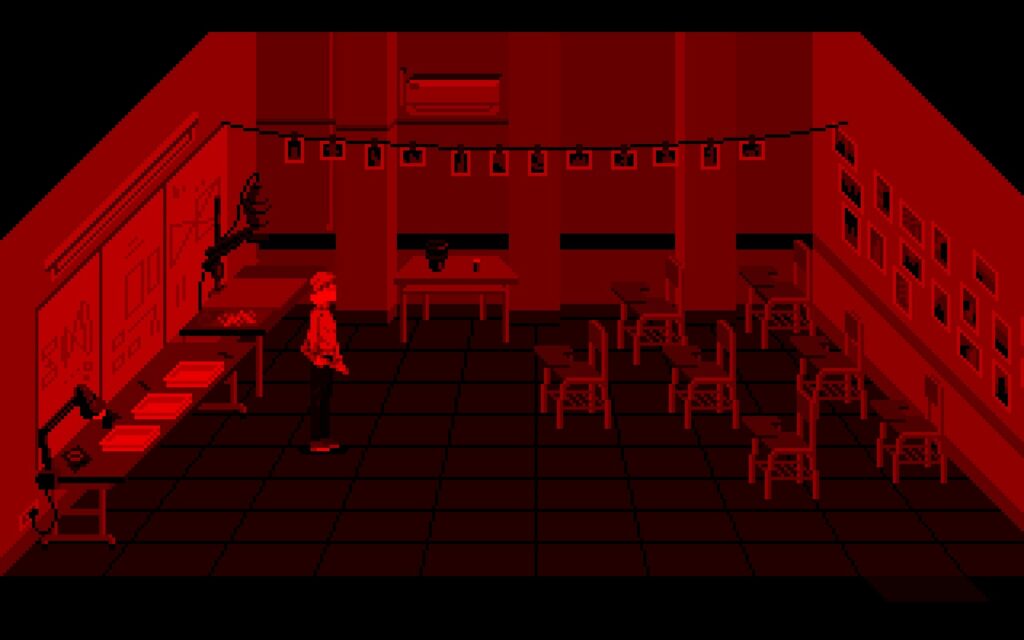
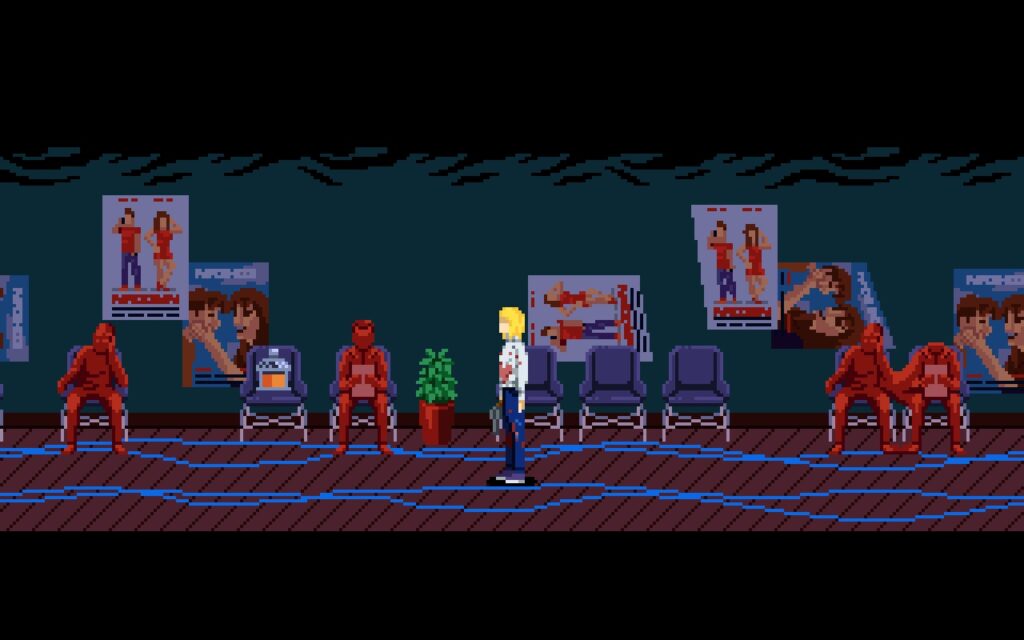
The game’s progression is largely based on solving puzzles. All said, the puzzles are approachable, provided you are thorough in exploring Ivan’s apartment block, opening every cupboard and checking behind every shower curtain. However, there are some which are overly complicated, and I had to seek advice from the creators to progress – something I know I am not alone in having to do. I do not claim to be a puzzle expert but have played my fair share of survival horror games, including guide writing for several; alas, I was completely stumped in a few instances and the use/combination of items was nothing I’d have ever considered.
Final Thoughts
With scarce resources, environmental storytelling and progress gating puzzles, Tenebris Somnia is a love letter to classic survival horror. The live-action sequences aren’t just great original horror scenes; they’re integral and integrated into the full experience in a way that exceeded my expectations. There’s a handful of rough collision-based edges and some puzzle frustration, but fans of the genre’s classic games and B-movie horror will find a well-rounded infusion of both video game and short-form cinema.
Tenebris Somnia recaptures the forgotten classic feel of the survival horror genre and reminded me why it is still foundational to contemporary greats.

Tenebris Somnia releases October 16, 2026 on XBOX Series X|S (including XBOX Play Anywhere), PlayStation 5, Nintendo Switch, Nintendo Switch 2 and PC (Steam and GOG). This review was played on Steam Deck, where the game is Verified. Thank you to the developer and publisher for the code provided for review.
Tenebris Somnia Guide
If you are looking for a full game walkthrough, be sure to see our full Tenebris Somnia Full Puzzles Walkthrough.