The ancient Greeks believed that four humours governed the human body, with an imbalance between them determining everything from health to temperament. Monowave takes a rather more colourful approach to the idea, giving its world and inhabitants four emotions — happiness, sorrow, anger, and anxiety — and turning each into a different way of interacting with the world. Here, your mood isn’t just a feeling; it’s the key to getting where you need to go.
Made by Korean indie developer Studio BBB, Monowave is a 2D puzzle platformer built around understanding and harnessing these emotions. At the heart of its world is the Prism Tree, which has long nurtured the four emotions and kept them in balance. When the Emotion Shards within the Prism go missing, however, the world is thrown into emotional chaos. You play as Mono, a newborn Guardian tasked with returning the shards and restoring that balance. It’s a cute and charming premise that neatly frames the game’s ideas about emotional harmony, and how our feelings can both help and hinder us.
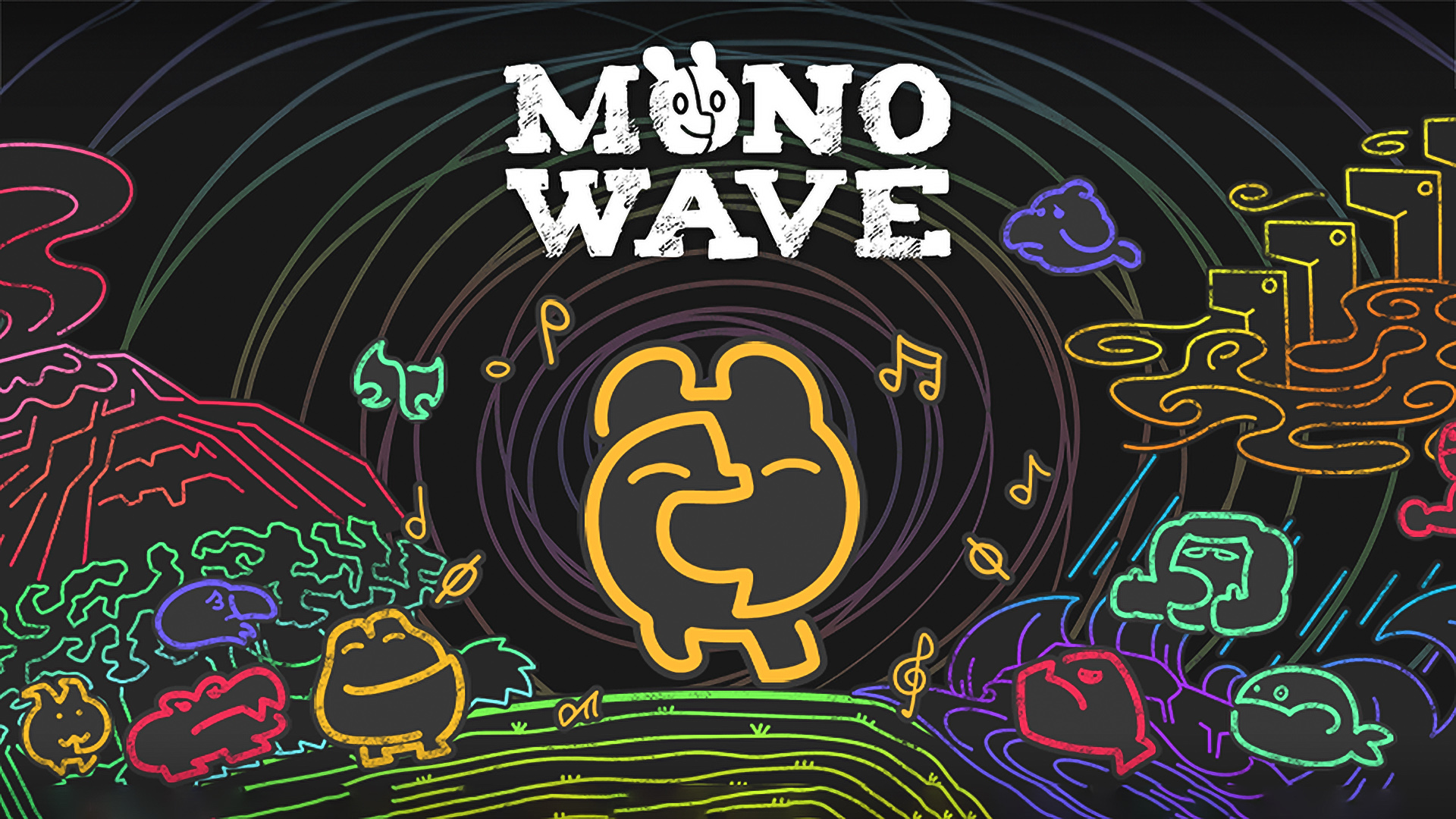
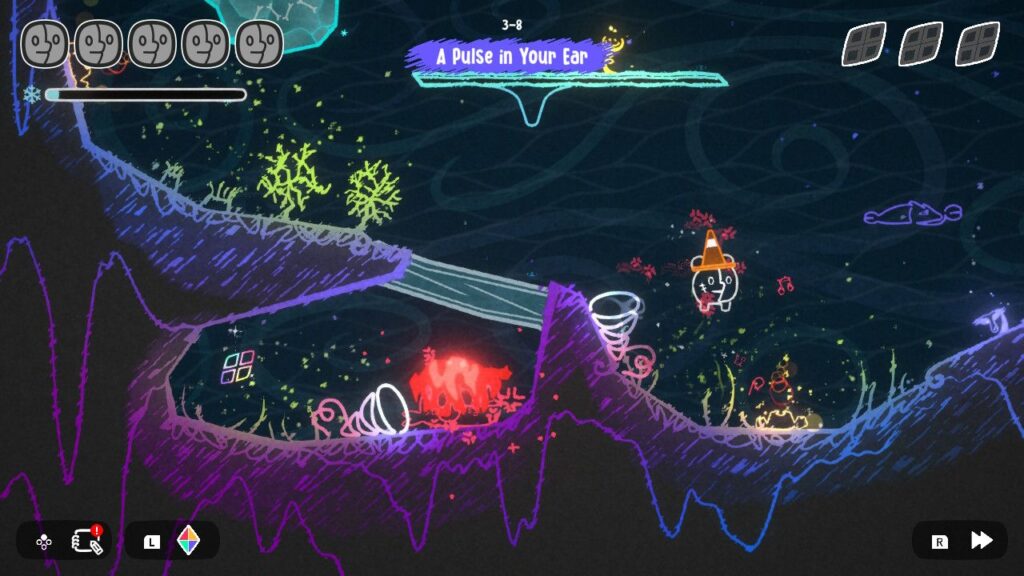
That idea extends into almost every aspect of Monowave, including its distinctive art direction. Inspired by children’s scratch art books and chalk on blackboards, its bright, multicoloured line art stands out against a black background, with Mono and the game’s menagerie of animals brought to life through simple drawings and bouncy animations. More importantly, the art communicates the game’s central mechanic at a glance: each emotion has its own colour, and characters take on that colour when experiencing it.
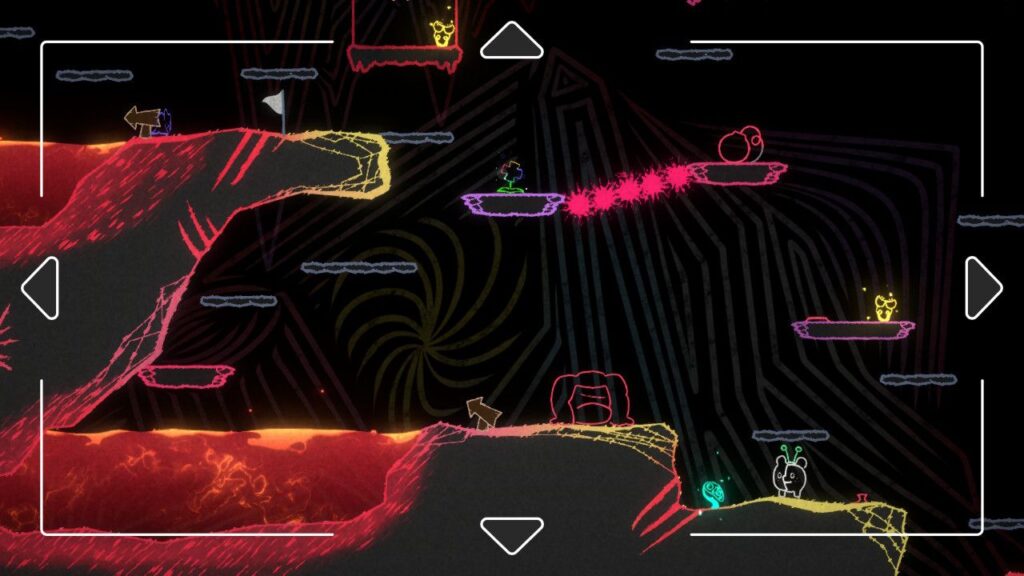
Mono can pick up one of the four emotions from flowers scattered across each level, gaining a different ability with each one; happiness allows for higher jumps, while anger enables wall jumping, for example. Mono can also pass their current emotion to the animals they encounter by singing, changing their behaviour in turn. A red crocodile will try to bite Mono, while an anxious one will throw them into the air; a sorrowful whale sinks to the bottom of the water, whereas a happy one shoots a spout of water into the air. Learning how these abilities and behaviours interact is the crux of Monowave, turning its colourful visual language into the foundation of its puzzles.
Gameplay consists of reaching the end of a level by using your environment, the animals, and your emotions. Often it comes down to getting the right emotion to the right animal, and just navigating to them without losing it is part of the puzzle. Experimenting and learning how each animal behaves depending on their emotion was always interesting, and it was exciting to come across a new one and discover what it could do. As levels steadily get larger and more complex, the blend of using my own traversal abilities and chaining together several animal behaviours to reach the end of the level felt incredibly rewarding, both in working out the solution as well as executing it.
A feature which needs highlighting is the option to look around a level using the camera, which made it easier to study my surroundings and work out how to progress. Movement is a bit floaty, and some of the hazard hit boxes can feel a bit unfair, but there are a good number of checkpoints in each level, including the boss encounters, so it doesn’t feel too punishing.
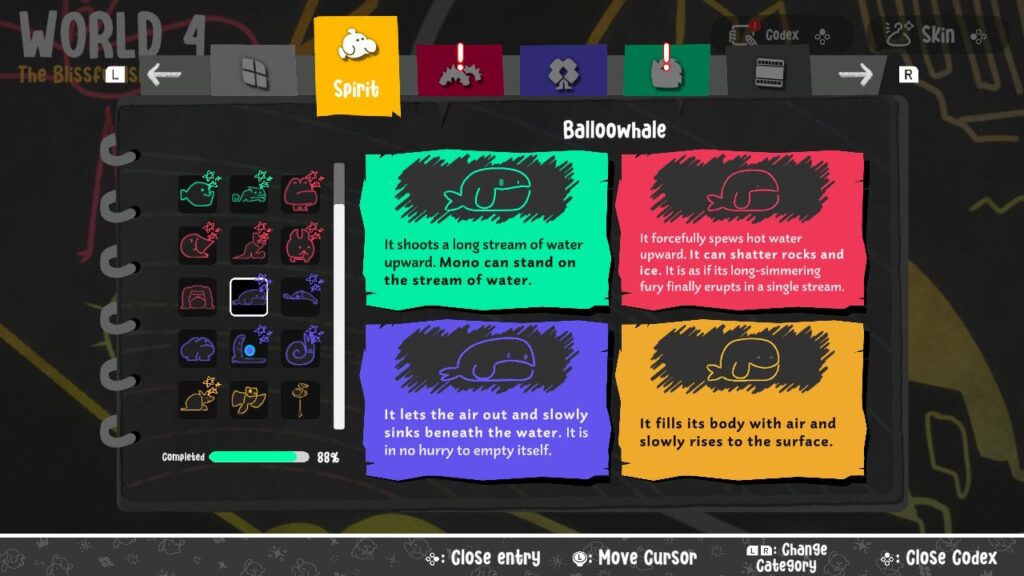
While keeping track of your own abilities is easy enough, doing the same for all of the emotional states of the animals would be too much. This is easily dealt with in the game’s menu screens, with different ones for tracking animal information, environmental objects, and hazards, so with a glance you can find out what you need to know, as long as you have encountered it. It’s a neat way of showing your progression while reinforcing that learning how the world works is itself part of getting this far.
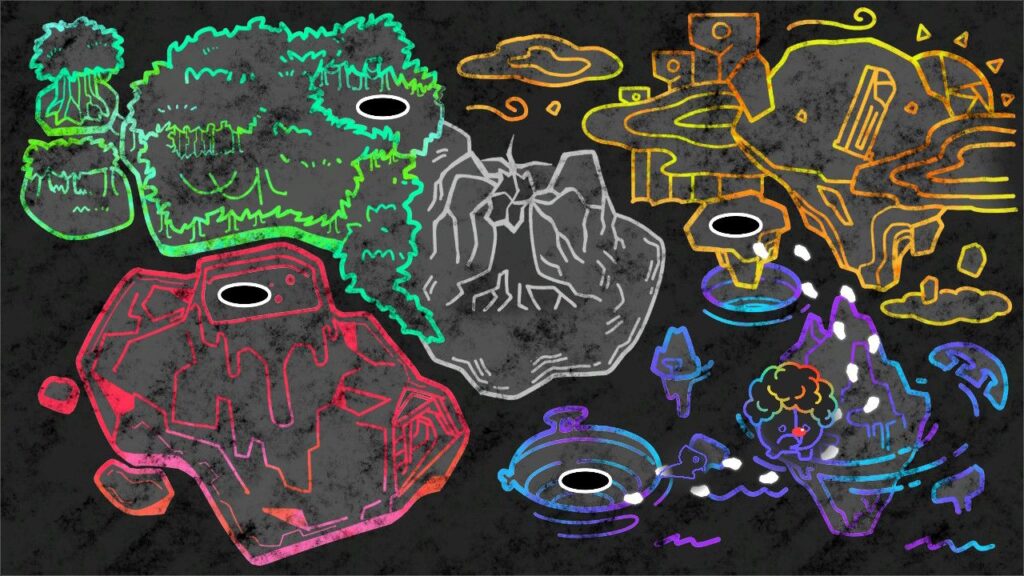
Monowave has a very traditional structure, with a world map broken up into four emotionally themed regions, each containing several levels that you unlock one after the other. There are also several hidden levels, which are accessed via an alternative exit at the end of certain levels, and a boss fight at the end of each region. For players looking for replayability or a greater challenge, there are three smaller shards to find per level, and a hard mode that reduces your health and increases the number of hazards. Those smaller shards also unlock new cosmetic items for Mono, giving completionists another reason to seek them out, and I was tickled by the options available. Monowave’s UI continues to impress here, with clear difficulty and collectible tracking, whether looking at a specific stage, a region, or the full world map.
The game’s soundtrack is lively and varied, and continues to reinforce the emotion-driven atmosphere established by its art direction. Each region has its own musical identity, like the military drumbeat of the volcanic region, which in turn becomes synonymous with the colour red and anger. It’s used very well in the closing moments of the game, but I didn’t notice any change in the music depending on which emotion Mono had “equipped”, which felt like a missed trick. Despite that, it’s an exuberant soundtrack that matches what is happening on screen and symbolises where you are on your journey.
It’s clear from the game’s themes to its visuals that Monowave has been designed with all ages in mind, and while I do think that some younger gamers may struggle with some of the later levels, the devs have included a co-op mode that has the second player control a floating shard to point out puzzle elements and collectibles. It feels like something that was made for parents to play the game with their children, taking a backseat role and assisting when needed, and I believe that both this and the camera movement would be a great addition for many 2D platformers.
Final Thoughts
Not only did I have a fun and engrossing six hours with Monowave, but I was surprised by just how thoughtfully it builds the relationship between colour, emotion, behaviour, art, and gameplay. The development team has succeeded in making its emotions feel like more than a gimmick, with its various elements working together to create a cohesive experience. Despite a few minor frustrations, Monowave is an easy recommendation for anyone looking for a charming and approachable puzzle platformer.
Monowave is out now on PC and Nintendo Switch.
Monowave was reviewed on Nintendo Switch.
We would like to thank BBB Studios for providing a review key.
Are you picking up Monowave? What have been some of your favourite puzzle games of 2026? Let us know in the comments below, and join the Gamer Social Club Discord to chat about your favourite games, play in community game nights, take part in giveaways, and more!