The Soulslike Clause: A Gem in a Sea of Imitators
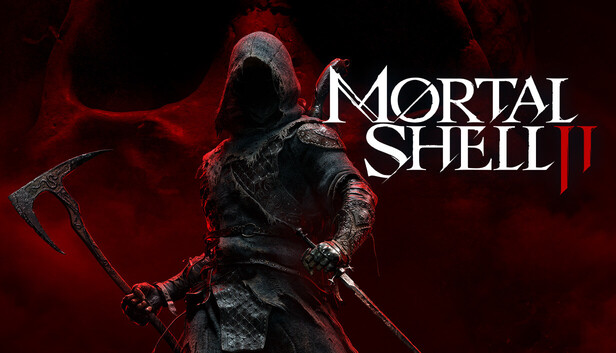
If there is one subgenre that has exploded over the past decade in the gaming industry, it’s the soulslike. Defined by its intricately crafted bosses and its punishing level of difficulty, many have found comfort in the challenge these games provide. Pioneered by FromSoftware more than a decade ago, the genre has boomed in popularity in recent years, and with that popularity has come an influx of titles chasing greatness. But therein lies the problem – sometimes an overabundance of something can leave the best gems buried beneath the rubble. Let’s dive into one of those gems and talk about what’s holding it back. Welcome to my official Mortal Shell II review.
The original Mortal Shell was one of those soulslikes that had been sitting in my backlog since it released back in 2020. Offering an interesting twist on the soulslike formula in the form of interchangeable characters called shells, it found success in a time when the genre was blooming into what it has become today, and many enjoyed it for the world it let you conquer and the characters you could carve your story out with. The only thing holding it back from reaching that next plateau was its limited options. Since you were restricted to a handful of characters and just as many weapons, it felt like you were only getting a taste of the series’ potential. I’m pleased to announce that Mortal Shell II suffers from the opposite problem. Too many characters, too many choices, and best of all, a beautiful world to tie it all together.
The Last Hope of a Species: The Harbinger
The premise of Mortal Shell II, from a story perspective, is that you are in control of the Harbinger, an entity tasked with exploring a haunted, gothic-medieval world and recovering the eggs of a deity known as the Undermether. This deity introduces you to the idea of shells, and through her you are allowed to inhabit the bodies of deceased warriors to assist you on your journey to gather as many of the eggs, called Ova, as possible. By soulslike standards, this premise is interesting enough on paper to keep you moving forward without asking too many questions. Your main quest relies on a simple idea, and it’s the same one that pushes you all the way to the final boss. Find the bosses waiting for you behind the six corrupted gates scattered around the map, defeat them, and claim their Ova for the Undermether. Simple enough, right? Well – yes and no.
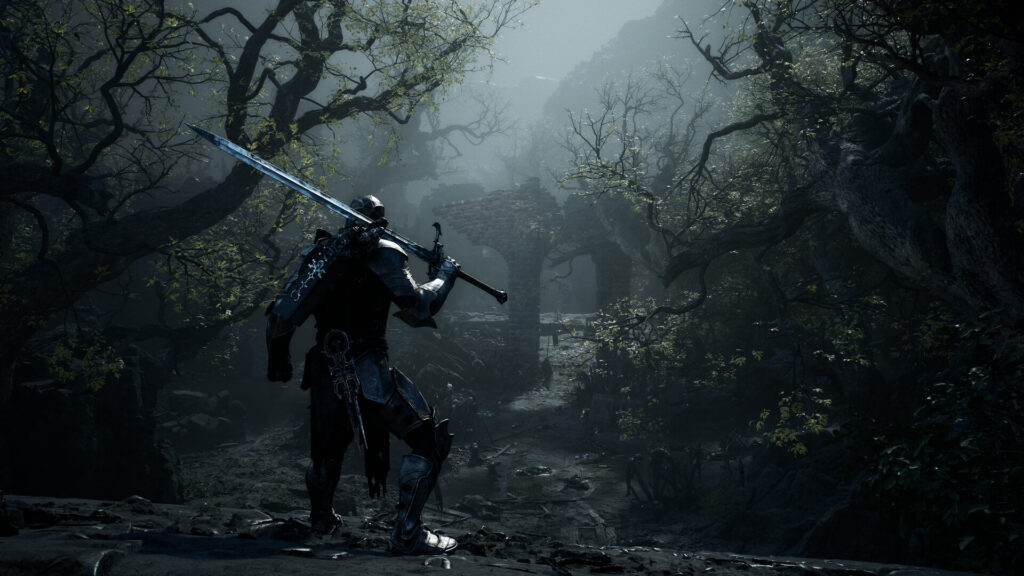
The world plays host to an interesting range of characters, from the crazed acolytes who serve the Undermether to the merchants and other NPCs scattered across the different zones, each with their own wants and needs. If you’ve played a soulslike before, you know exactly what I mean. Does this shady person hidden at the end of an extremely difficult area have my best interests at heart? Of course! Let me do whatever they want. Jokes aside, the mix of a gothic-inspired medieval folktale setting really does end up feeling like the perfect playground to get lost in. You’re just as likely to discover a castle carved into the side of a mountain as a quarry made of bleeding stone, and discovering these new areas was one of the best parts of the entire experience.
In short, the game world is brutal from the moment you leave the tutorial until the final curtain falls. Just like the original Mortal Shell, pain is the name of the game here, and your journey will be filled with more than a few frustrations as you make your way from zone to zone. Each one is beautiful to look at and truly feels like its own artistic marvel, but navigating the map can be tricky if you let yourself get too lost in the sauce of it all. There are map pieces scattered around that dissolve the fog of war, but some of these areas are so dangerous that I almost always tried to reveal the map without necessarily fighting everything between me and my goals. With six gates surrounded by various monstrosities of different shapes and sizes, you’ll be hard-pressed to find a moment of peace – but don’t worry, we’ll talk more about that in the gameplay section.
A Shell For Every Occasion: A Choice for Everyone
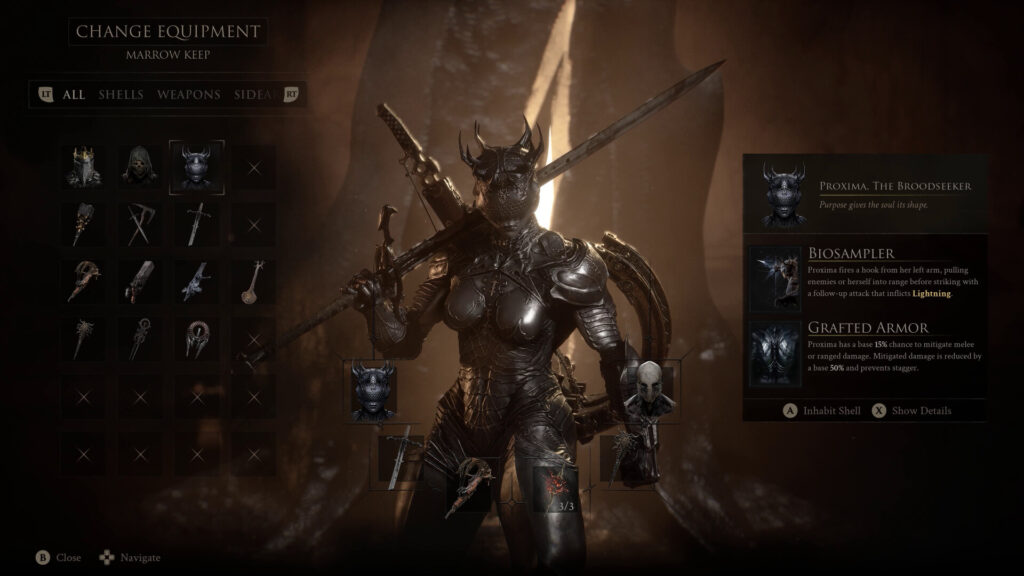
Another welcome addition is the sheer number of shells you have access to in Mortal Shell II. Not only does each one have its own past and its own reasons for ending up as nothing more than a corpse, but each boasts its own roster of moves and abilities that set it apart from the rest. Personal preference is the name of the game in Mortal Shell II, and I found myself experimenting with the eight different shells more than I expected as I discovered them. Each one caters to a different type of player, and though some might scoff at the idea of wandering the world until you find the one you like, I think it added to the experience to uncover the mystery of where each warrior made their final stand and how they got there.
As of the writing of this review, the developers have even introduced an item that refunds all the upgrade materials you’ve invested into any of the eight shells, so experimentation is more than encouraged as you find the later additions to the roster. No one is stopping you from taking one shell from the start of the game to the end or vice versa, so choose whatever path you like – and if you end up disappointed, just start over again. I rotated primarily between two shells based on what I needed for each of the gate bosses, and I never found myself feeling stuck when it came to the mechanics you’re in control of.
How To Defeat a Monster: Freedom of Expression
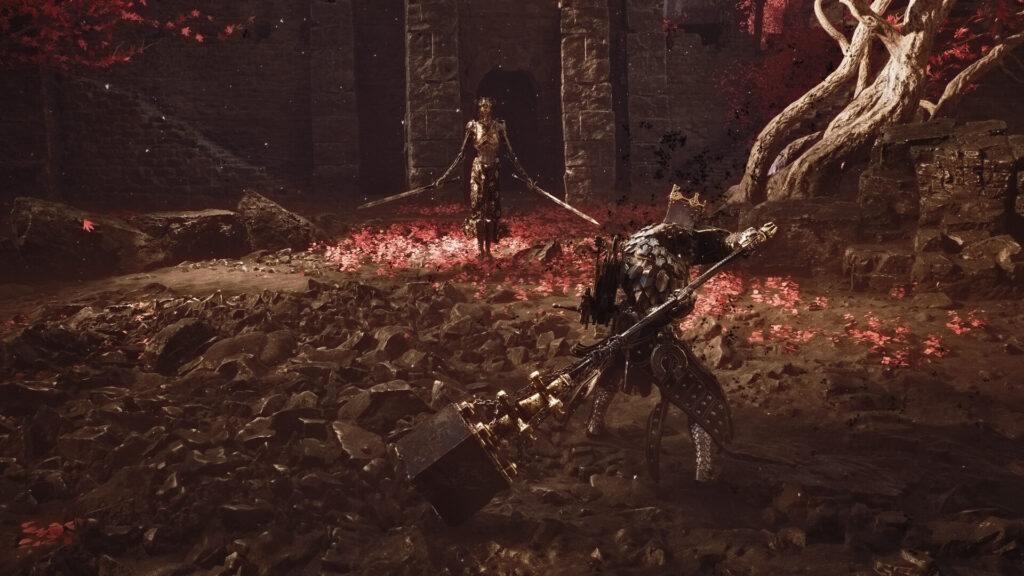
If you were to ask me how the gameplay of Mortal Shell II feels, I would more than likely sum it up with a set of words familiar to the genre. Difficult, painful, agonizing, and frustrating are the first that come to mind, but truthfully, most of my biggest gripes with the gameplay systems are the very things people flock to this genre for. In simplest terms, Mortal Shell II’s overall gameplay loop can be described in one singular word – challenging. Now, I’m not one to toot my own horn, but I’m a sucker for some pain and punishment in my games. Everything from Sekiro to recent soulslikes like Lies of P and The First Berserker: Khazan have been completed without much fuss. Sure, I’ve hit a few walls – bosses that made me want to rip my hair out or load up Animal Crossing – but few games have made me as frustrated as Mortal Shell II. The worst part is that it isn’t necessarily the gameplay itself that’s frustrating, but the artificial difficulty attached to nearly every enemy in the game. But I’m getting ahead of myself; let’s discuss the best pieces of the pie first.
You see, on the surface, Mortal Shell II plays like a run-of-the-mill soulslike. You have your light and heavy attacks, a dodge, and a block button that doubles for parries if you time an enemy’s attack right, plus a host of creatures whose only goal in life is to cut you down and send you back to the lobby. At a baseline level, everything is right where it needs to be if we’re checking boxes for the genre, and honestly? Everything feels amazing in motion once the blood starts flying. Your hits land like they have real weight behind them, and weaving combos together is one of the most satisfying aspects of the entire game. Combat is, in every sense, the centerpiece of the experience here, and most of the reception I’ve seen agrees that it’s both the strongest component of Mortal Shell II and the thing that will keep you coming back for more – no matter how many times you get bullied.
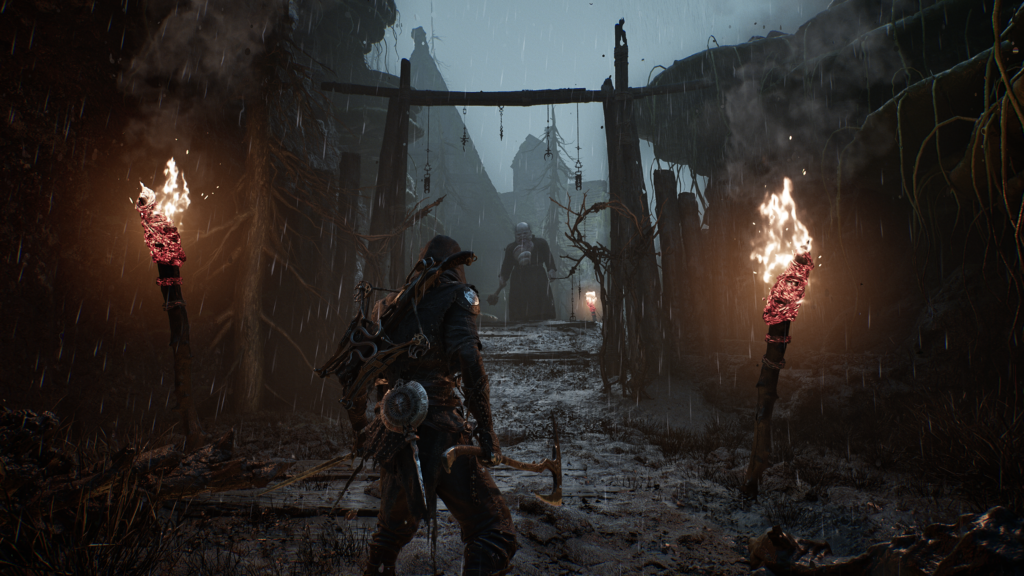
Pair this system of beefy hits and smooth traversal with the fact that the different shells all grant different skill sets and abilities, and you have a nearly endless menu of options for approaching every fight. Mortal Shell II also employs a system called Tarstones – equippable items split into five categories that offer either active or passive effects. Some Tarstones offer bonuses as simple as a guaranteed critical hit every five attacks, while others are entirely new abilities tied to your resolve, a resource that acts like fuel as opposed to the traditional stamina systems soulslikes employ. This means you’re encouraged to be as aggressive as possible to keep your resolve up mid-fight so you can cast your abilities, and it honestly stands as one of the best quality-of-life features the game has in place.
Long gone is the usual song and dance of managing a stamina bar between swings and dodges. Mortal Shell II has removed stamina limitations entirely and instead encourages you to push yourself to the limit in every fight. It might sound like a hectic mess that leaves no room for error, but I’m a firm believer that this is exactly what makes the combat feel so good. You’ll be weaving in hits, dodging, and parrying while facing hordes of gothic terrors, and it’ll feel like another day in the park once you get your feet under you. Well – that is, until you hit the late game. Buckle in, folks. I’m about to go on a tangent.
Fizzing Out: The Late Game Effect
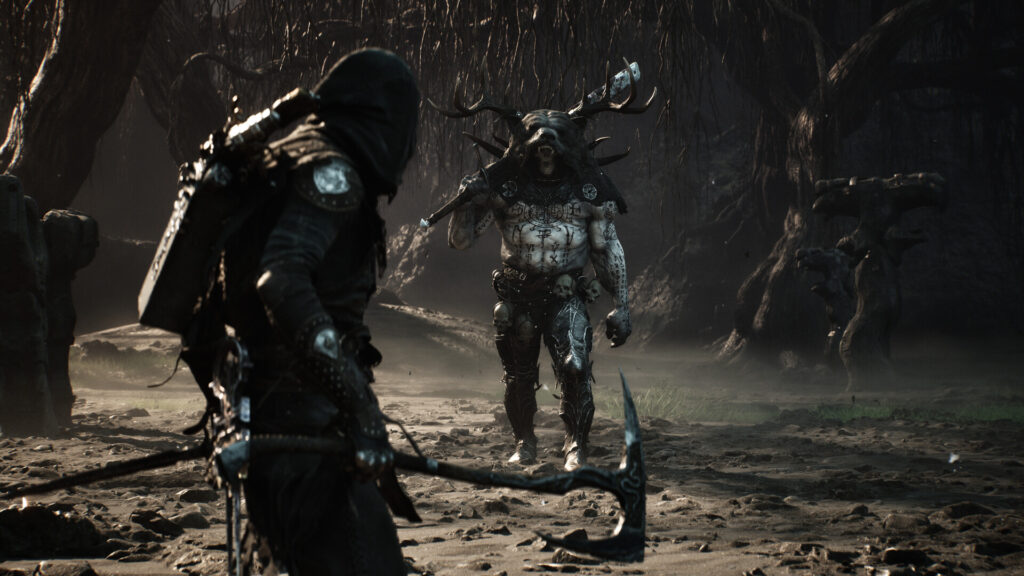
So, if you’re still with me this deep into the review, you’ve probably come to the realization that I don’t have many negatives to level at Mortal Shell II. In fact, the positives more than outweigh the negatives, but what stops this game from being a perfect soulslike is the enemies themselves. Everything from the bosses to the standard grunts has some of the worst magnetism I have ever seen in a video game. And when I say magnetism, I don’t mean the science of two metals attracting or repelling one another. I’m talking about how enemies lock onto the player’s character the moment their attack animation starts. What this means, in simplest terms, is that even if you dodge out of the way of an enemy’s attack the instant he starts winding up, he will still track you until his animation finishes. Normally I wouldn’t take issue with this – the genre is designed to keep you on your toes – but during the last act of the game, it becomes more of a hindrance than a feature.
Most of the late-game bosses have attacks that abuse this magnetism in the worst ways possible, if I’m being honest. Nearly every single one has a grab attack with insane range that leans on the tracking so hard it feels like a tacked-on difficulty curve rather than a natural challenge. What stings the most is that the rest of the boss roster feels nearly perfect for the systems in place. They’re just challenging enough to offer extended, tension-filled fights, while each one feels distinct enough to stand apart from the others. This isn’t to say the late-game bosses are all the same – you really do get great variety in both looks and move sets – but their abilities feel purposely designed to annoy rather than challenge the player. Not a dealbreaker by any means, but well worth mentioning.
That variety translates to the regular enemies as well. You have everything from hulking masses of flesh and iron in plate armor wielding greatswords to skittering kamikaze monsters, and each has its own way of being a thorn in your side. Yet just like the bosses, the enemy variety really does fall off once you reach the second “main” area. A common complaint I’ve seen is how much the game falls off in its second half, and while I don’t think it’s as bad as some have claimed, it does feel like it needed more time to be fully fleshed out. Like I mentioned above, however, the scenery is top of the line throughout – especially in the starting zone, where the landmarks and the enemies that call them home feel unique while telling their own twisted tales in the same breath.
The Beauty in the Horror: A Setting That You Won’t Forget
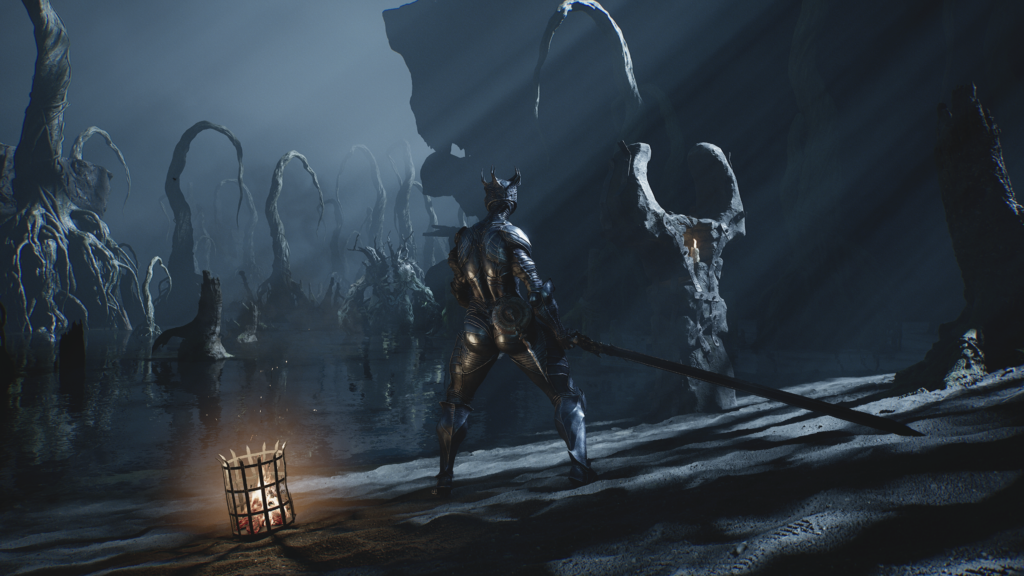
Lastly, on the technical side, the game is all but flawless. During the demo I had zero issues on my PC, and that same level of care was clearly put into the complete product and how it runs. Areas load quickly, enemies have their own nasty details that set them apart from one another, and there are more than a few moments scattered throughout this gothic horror that will have you stopping in your tracks just to take in the scenery around you. Even when you’re surrounded by half a dozen enemies or a boss twice your size, the game held its framerate on high settings, and I never once had a moment where it stuttered or lagged behind the action. Technical performance is a huge part of modern gaming, and Mortal Shell II knocks it out of the park.
Final Thoughts: A Soulslike For Every Fan
Mortal Shell II is everything fans of the soulslike genre should be looking for. Its world is a beautifully depressing homage to a bygone era of fairy tales and medieval fantasies, while its brutal combat will have you scrambling for a moment of peace between fights. I truly believe they have accomplished something great here, and I can’t wait to see what Cold Symmetry has up their sleeve in the next installment of the series.

Mortal Shell II was reviewed on PC. The game released on the 20th of August, 2026 on Xbox Series X/S, PlayStation 5 and PC.