

Farming sims. Some love them, some hate them. Some are looking for the next twist on farming sims. It may be a while before the genre is reinvented. Yet there are games looking to put their own spin on farming sims. For some, such as the team at Wild Forest Studio, that may mean introducing dragons into the mix. As a human, interact with this fantastical creatures, rebuild connections once lost to time, and perhaps help others rediscover happiness. If this sounds like something you’d enjoy, then perhaps Dragon Shelter is a game that should be on your wishlist.
In fact, Dragon Shelter is a game we’ve been following for a bit. In a time where dragons are burning their enemies and families (looking at you House of the Dragon) or trying to bring ruin to world (insert many Dungeons and Dragons campaigns here), this is different. This is much more peaceful, relaxed, and optimistic in many ways. However, don’t let it fool you. While the game is bright, vivid, and playful in many ways, there is a truth lingering just beneath the surface. Even in the fantasy, there are bits of reality to take with you.
If you don’t believe me, that’s quite alright. Perhaps you’ll believe Oleg Babenkov, Game Director on Dragon Shelter who took a few moments to speak with us. It’s not just about the making of the game. It isn’t just about how cute it is. It’s also about the important real life lessons to take with you.
DragonShelter is making its way closer to release with just a few weeks left to go. Before we dive in how are you feeling as it gets closer?
A mix of excitement and that very specific kind of energy you only get at the end of a project. We’ve been living with this farm and these dragons every day for quite some time, and at some point closer to release the to-do list just starts piling up. Then a playtester sends you a short clip of their dragon in a chef’s hat, happily cooking soup, and it all comes back.
The demo we put out during Wholesome Direct helped a lot. Around 95% of the people who filled in our survey said they liked it, and the things they loved were exactly the things we care most about: the cozy atmosphere, cooking together, and the dragon companion. That’s the best possible signal this close to release. Now it’s about polish, the last thousand small edges, and making sure every part of the game feels good.
It’s a very different game from your previous work, Night is Coming. What inspired the lighter visuals and more cozy game feel?
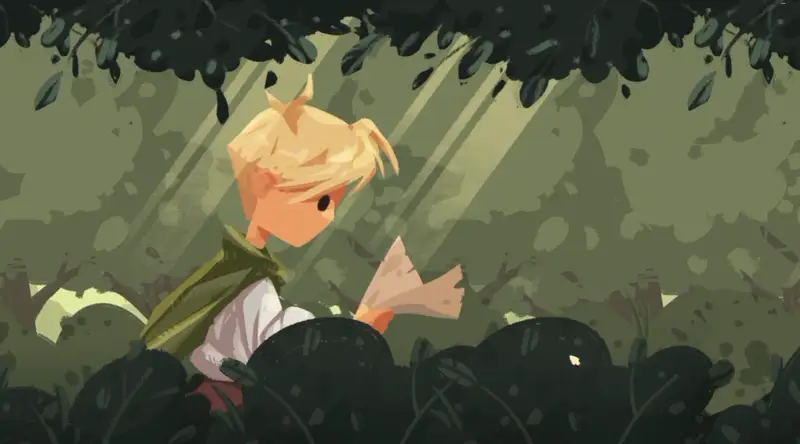
We simply love fantasy, all of it. Night is Coming is dark fantasy, and at some point we found ourselves wanting to explore the light, kind side of that same love, not just the dark one. Ideas started showing up almost immediately, and we got to work.
Really it comes out of ordinary life. Every one of us carries both halves: the hard, dark stretches, and the bright memories that stay with you for decades. For some of us that bright half looks like a grandmother’s garden in childhood, the kind of place you were absolutely certain was full of creatures nobody else could see. Dragon Shelter grew out of that half.
From there the visuals followed naturally. Warm, natural colors, soft golden light, and hand-painted 3D that leans on Studio Ghibli, because Ghibli is our reference point for a world that feels kind without feeling toothless.
But it doesn’t mean we’re done with darker themes. We tend to follow wherever our own lives are flowing at the time, like a river, and right now this is where it has taken us.
Yet, even though the game is cozy, you’ve included Dragons. Dragons are often seen as fierce, strong, and some even a bit evil if you’re a D&D person. What inspired using dragons as your animals/helpers?
We were inspired by a lot of work that already treats dragons this way. Sandara’s Mamie Dragon Series was a big one for us, along with the board game Flamecraft, How to Train Your Dragon, and plenty of others.
What drew us in is that a dragon lets you tell a story about connection in a way an ordinary animal can’t. The bond has to be earned, because a creature that is powerful choosing to trust you actually means something, and that turns every small act of care into something with weight behind it. It’s also the perfect way to carry the two emotions this whole game is built on, which are restoration and healing.
In the trailer and the demo we see a few different dragons, what inspired the art and design of each?
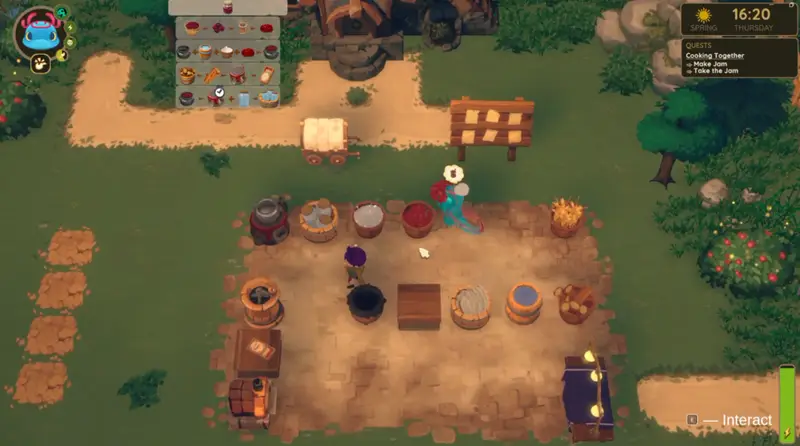
Each dragon starts from its element, and the element drives everything at once: the silhouette, the palette, the way it moves, the personality. Water is the one you meet first and it’s the clown of the group. Fire is the warm, emotional one. Earth is heavy and slow and good-natured. Electricity is shy and will actually try to hide from you early on.
But the honest answer to “what inspired it” is that we spent a very long time on concepts. Far more than you’d expect for four creatures. Each one went through a lot of passes before we were happy, because we weren’t just checking whether the design was cute. We were checking whether it landed the right emotion, whether it read as belonging to this world, and whether it felt atmospheric rather than decorative.
The other thing we learned is that a dragon’s design isn’t finished until it’s animated. A shape can look perfect as a drawing and then feel completely wrong the moment it walks, so a few of ours only really clicked once we added a lot more character to their movement and animations.
We see there are red and blue dragons who get to wear a cute little chef’s hat. Will other dragons be wearing any other fun accessories?
Yes, there’ll be more. Accessories do a lot of work for atmosphere and mood, which is reason enough on its own. The chef’s hat is a good example: it’s a tiny detail, but it instantly tells you this dragon is on duty in the kitchen and taking it very seriously, and that got one of the warmest reactions in the whole demo.
We’re also planning accessories that do more than dress the dragons up. We want some of them to help with the work, so that picking an outfit can be about your farm as much as about how adorable it looks. And sometimes dragons accessorize themselves without asking. If one of them ends up with a cooking pot stuck on its head, that was a personal choice.
Speaking of chef’s, the cooking mechanics in Dragon Shelter are delightful. What inspired the multistep kitchen recipe process? And how did you pick what recipes to include?
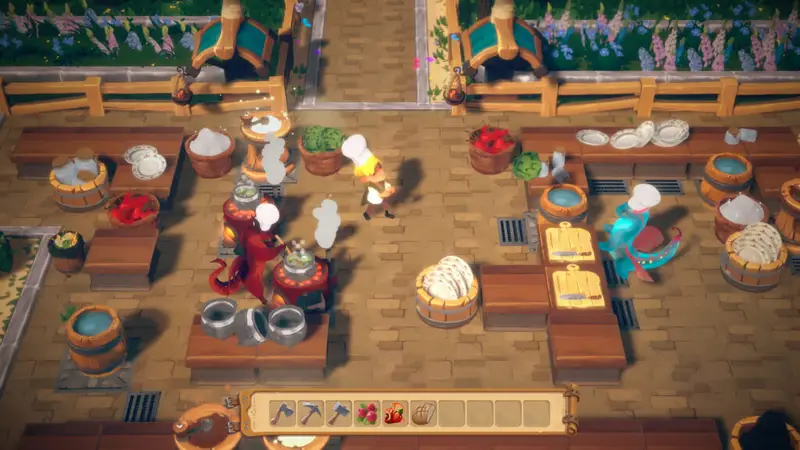
It came out of a question we sat with for a long time: what other interesting activity could we build, and how do we get the player, the dragons, and their elements all working in the same place at the same time? At some point the kitchen idea showed up, we made a few concepts, and we liked the result so much that we just got to work. Elements map onto cooking almost too neatly. Fire heats, water cools and washes, and suddenly your dragons aren’t following you around, they’re doing something with you.
The multi-step recipes exist because those steps are where the dragons fit. Every stage is a job someone can take. And it turned out to be genuinely hard: running a kitchen with multi-stage recipes and several dragons working at once, all making their own decisions and not deadlocking over the same stove, meant reworking a lot of our technical foundations. We’re still refining it.
Picking recipes was more about connections than about cooking. A dish has to grow on your farm, so what you plant matters later. And it usually has to belong to someone in town, because cooking is one of the main ways you help the townsfolk and bring the place back to life.
In Dragon Shelter it’s not just caring for the Dragons but also, helping townsfolk find happiness again. Is there a particular townsfolk that’s a favorite?
That’s a hard one, because we put real work into making every single one of them interesting. They each have their own history, their own memories, and their own wound left over from what happened, and healing that wound over the course of the game is how you uncover what they’re actually good at and what they still want out of life.
If I have to choose, though: Ernest, our 75-year-old fisherman. During the war he saw something in the river that he was sure was a monster, and he never went out on the water again. Years later you find out what he actually saw: a dragon, tangled up in machine debris, trying to get free.
He holds the whole theme of the game in one small story. Nothing here is broken because someone was evil, it’s broken because frightened people drew the wrong conclusion and then lived inside it for decades. And once his memory is healed he doesn’t just go back to fishing, he becomes the one telling the town’s kids stories about magic.
Same goes for the dragons, do you have a favorite dragon?
The water dragon is definitely our signature one. It was the first one we ever got working properly, it’s the one you meet in the demo, and it was the first to get a great reaction from the audience.
Honestly though, we’ve put a lot of work into all of the dragons, and spent a lot of time on their concepts specifically so that each one would turn out cool and have a character of its own rather than just a different color scheme. The water one simply got there first.
It feels like in Dragon Shelter there are these reminders of our place in the world. Especially when we embrace the magic in our world. Magic in our world can be the wonderful creatures or the people around us. But what’s something you really hope players take away from Dragon Shelter?
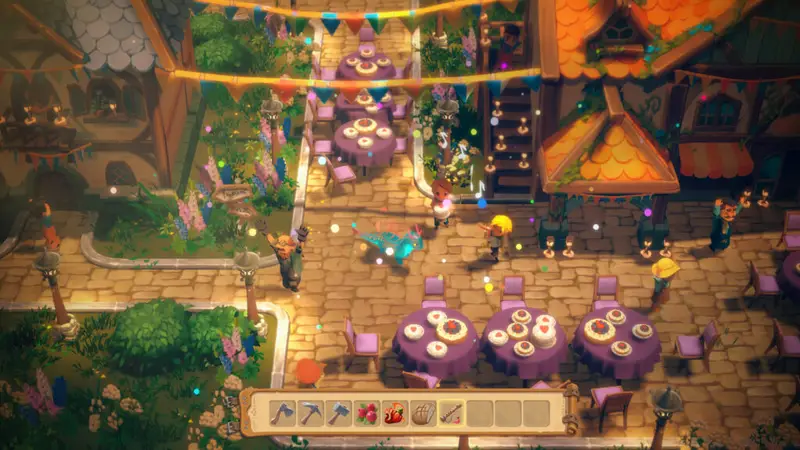
That one person paying attention is enough to start something. Nobody in this town is beyond help, and nothing in it gets fixed by force. It gets fixed because someone showed up, noticed what a person actually needed, and did one small useful thing. A loaf of bread for the baker who’s been mocked for making sweets. Clearing out a garden nobody visits anymore. Sympathize enough with a dragon that it stops hiding. None of those are heroic acts. They just compound, and by the end the town is throwing festivals again and the farm is full of happy dragons, and you can look at it and think: we did that.
And nothing rare brought it back. People worked together, took care of each other, loved each other, actually listened to each other, and stopped treating anyone as an enemy. We didn’t plan that ahead of building a game but it’s simply what the game turned out to be made of, because it’s what we believe.
If someone finishes it and feels a bit more inclined to check in on a friend they’ve lost touch with, or a bit more forgiving of themselves for a bad stretch, that’s a better outcome than any review score. The world is worth tending, and so are the people in it.
And if one thing stays with players after the credits, let it be the simplest part of all of it. Nobody has to be at war with anybody.
Dragon Shelter may be set in a fantasy world, but Oleg said some very powerful things about our world. The world, and the people in it, are worth tending to. Perhaps we can all take that lesson and pay it forward. Thank you to Oleg for answering our questions in what I’m sure is a very busy time for the team.
Dragon Shelter releases on September 24, 2026 on Steam. You can wishlist it now. Feel free to let us know in the comments below if you’ll be jumping into Dragon Shelter. Want to chat with us in real time? Join the friendly and active Gamer Social Club Discord server to chat this and so much more.