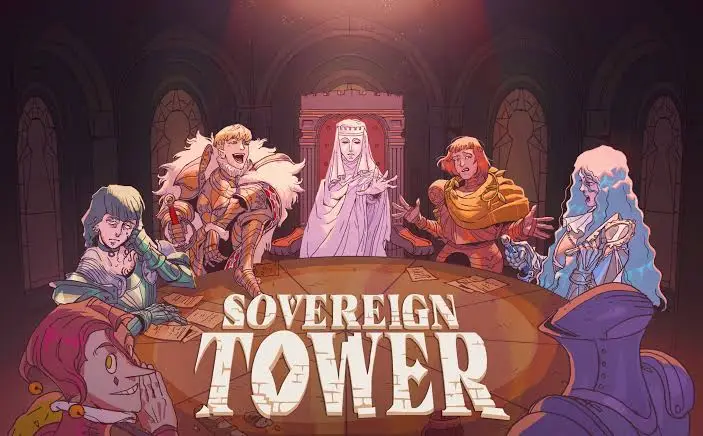
Unfortunately, I will never know what it is like to run my own kingdom. Which actually might be for the best. I like to think I’d be a great ruler but the truth is, perhaps I’d be cruel or lazy and selfish. Of course, if one was coming from hardship, perhaps they’d be more forgiving, careful, helpful to their subjects. So imagine if you will a poor leper granted the key to a kingdom. This is where you find yourself in upcoming Sovereign Tower. This medieval management RPG is a mixture of humor, power, and sometimes even heart if you allow yourself to be open to it. It also allows its ruler to defy destiny where appropriate with time travel, so even if I did become a cruel ruler and it backfired, I suppose there’s time to change it.
The Plot
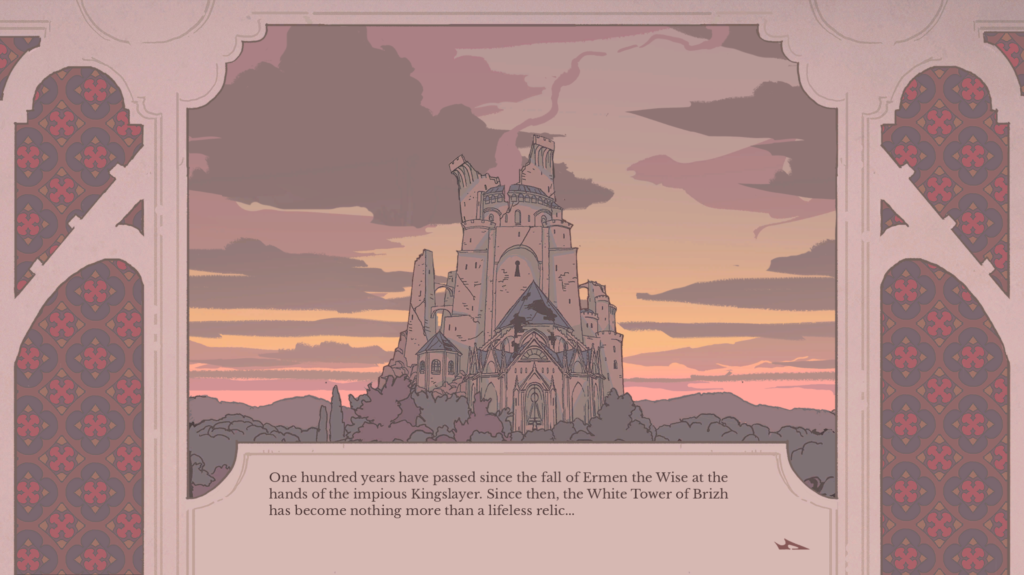
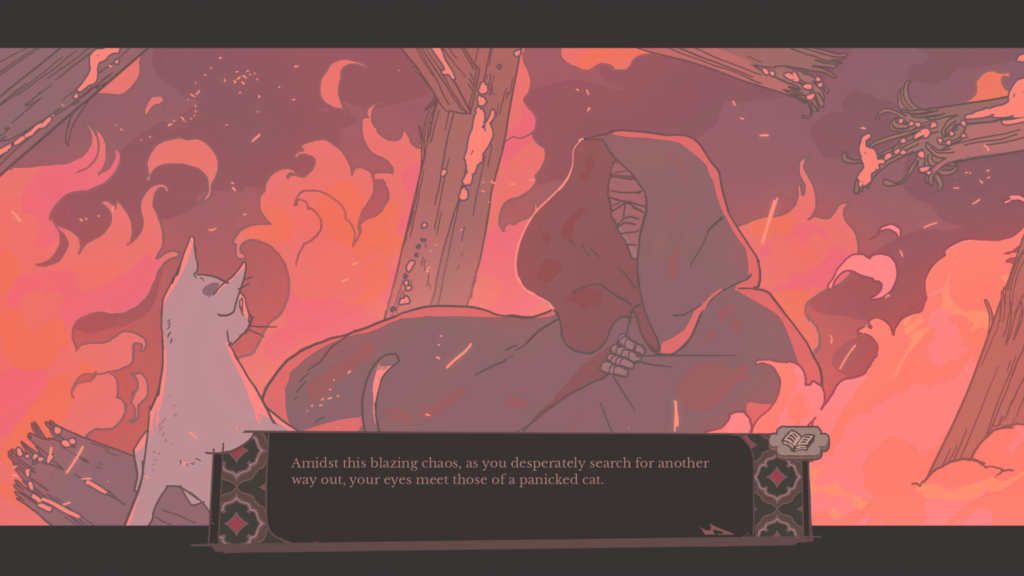
The magical tower has been sealed without a ruler since the Kingslayer arrived 100 years ago and took down Ermen the Wise who had tapped into magic seemingly not meant for him. The tower would only open to its new rightful ruler, a Sovereign who would reawaken the magic of the tower. While running from an attack from the Empire, you find yourself escaping a fiery demise, deciding whether you should save a cat, attack a guard, and finally, finding your solace. That solace also comes with the words of a prophecy. “Only the true Sovereign, chosen by the Gods, shall be allowed to wield the silver key to the doors of the Tower.” Considering you turn the key, I guess that’s you.
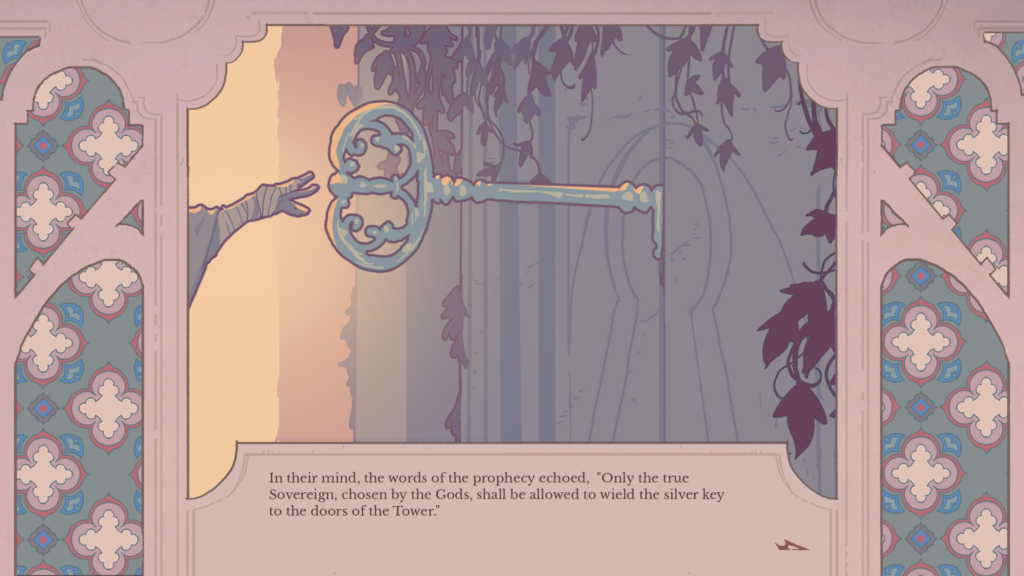
It’s very easy to disregard some of the early choices you make before you enter the tower. However even these will play into who you are seen as as a ruler. Are you kind? Are you brutal? You’ll continue to make these choices as the ruler while you face trials and tribulations from inside the tower and outside the realm. Thankfully, your trusty advisor Arlin is there to help you when holding an Audience with your subjects. You can also talk to him and others employed to your service throughout the day.
The initial plot technically takes place through three acts. You’ll find yourself facing a rather strong foe at the end of each act. Thankfully, about midway through the act, you’ll meet the foe, the first of which is the Dragon Knight. The Dragon Knight arrives, challenges you, and you choose the conditions. Thankfully, each time you have a foe who challenges you, you have some flexibility with the conditions. Will you call upon the backing of the nobles? The people of your kingdom? The scholars or the merchants? You’ll typically also need a sizeable reserve of gold and well trained knights to overcome the challenge.
Of course, it’s not just external forces in your way. You must balance the needs of your subjects, your knights, and explore the tower more. While the silver key opens the tower, there is a magical golden key to find. Your final foe will also be looking for this. Can you keep your kingdom in order, find the key, and overcome each challenge? If not, the demon in the tower will help you run it back.
Gameplay (A Day In The Life)
After the first day and settling into the tower you get to choose how you move throughout the tower. The optimal move always feels like starting your day with Audiences. This will allow you to recruit knights to your round table and possibly even get the opportunity to continue to expand your tower with new rooms. Some of these rooms include a Blacksmith, a Magic Tower, and a Training Room. Each of these rooms will be helpful in your long term goals. While you could start at the Round Table, it doesn’t make much sense as you may get different and better quests to send your knights on. Later in the game, if you have knights waiting to hear back from you, it might be worth summoning them back from the Map Room.
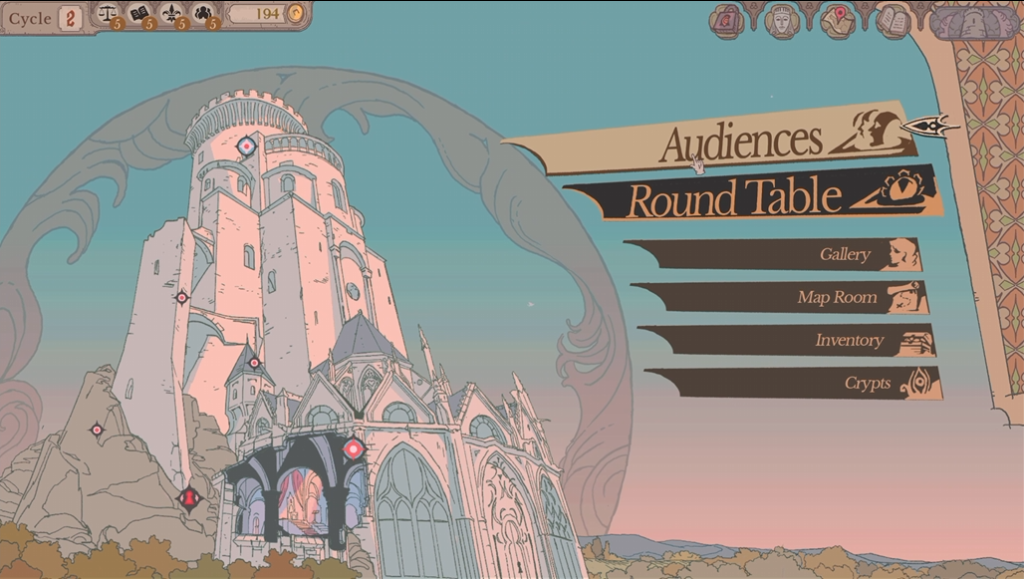
During the Audience phase, you’ll be met by different people ranging from future knights, nobles wanting help in their gardens, royalty from neighboring areas, and every day commoners petitioning for assistance. These audiences will also help open up new quests for your Knights. How you choose to handle the requests will determine not only what sort of Sovereign you are, but your options when handling quests. Will you handle this with charisma and diplomacy or will you go in and strong arm the peasants into submission?
It’s not only about how you respond to the requests of course. It’s also who you send into handle the requests. This is also where you choices matter heavily. While you may have quite a large number of quests, do your knights match the skills required? If not, do you have equipment that would help? Of course even if they have the strength, sending an animal lover to potentially kill a Griffin is not the best idea. This was one of the parts of the game I found myself agonizing over. Did I match them with each other well? Will they succeed? Or will they be angry that I sent them on a hunt? Each knight has their own attributes and preferences so players should spend time reviewing this closely. Otherwise you may end up with an unexpected outcome and these aren’t always positive.
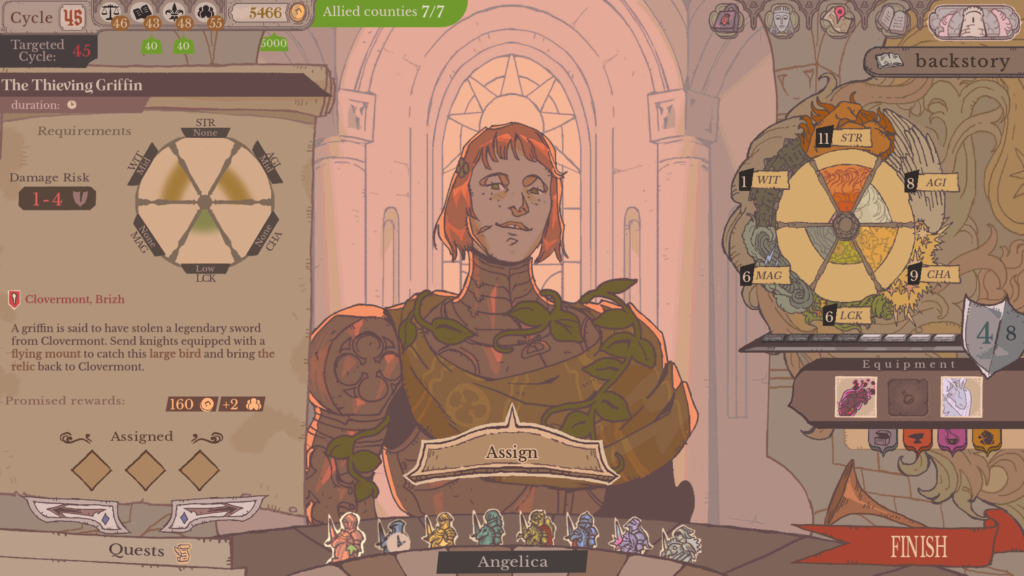
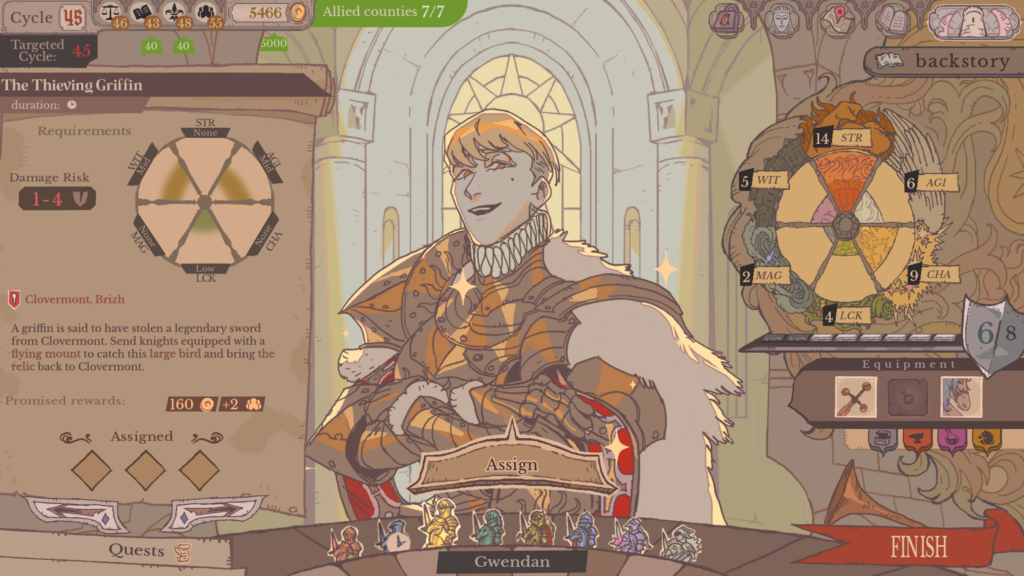
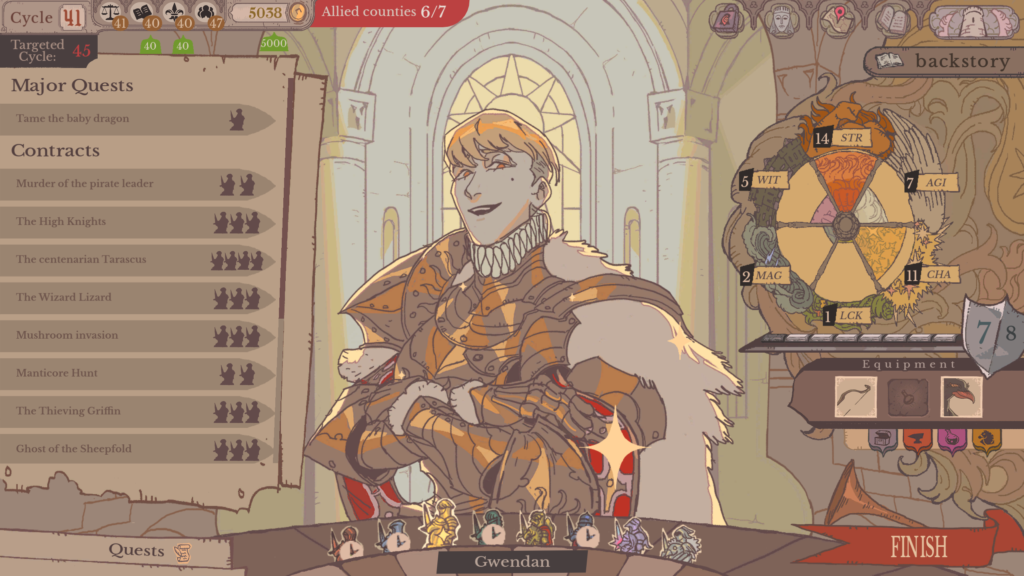
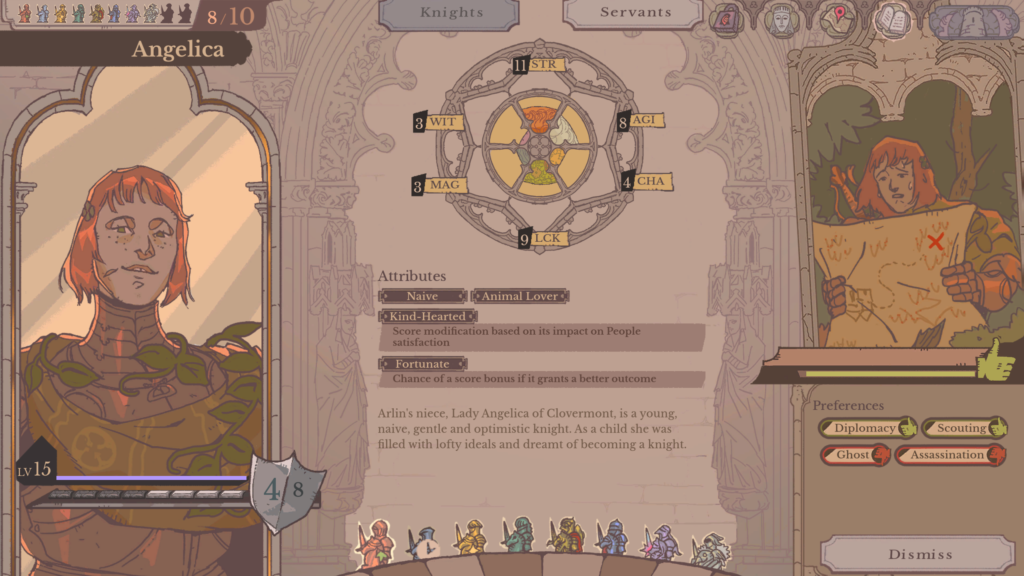
At the end of the day when the players choose to finish the day, any quests that have ended will be reported back on. This was something I also very much enjoyed from the game. I would see how good (or bad) my pairing of knights to quests did. Sometimes I’d also be surprised by an unexpected outcome. I noticed this happened more during certain story cues such as sending a nephew to tend a garden. It added a nice flair to the game allowing for players to be surprised when things didn’t go quite as planned.
Of course, not every quest is a success. If you do not send your characters with enough shielding and the right stats, they may not even return from the quest. Not an ideal situation by any means. In fact, my first time travel occurred when I lost my favorite knight. I could not let the wolf die, I refused.
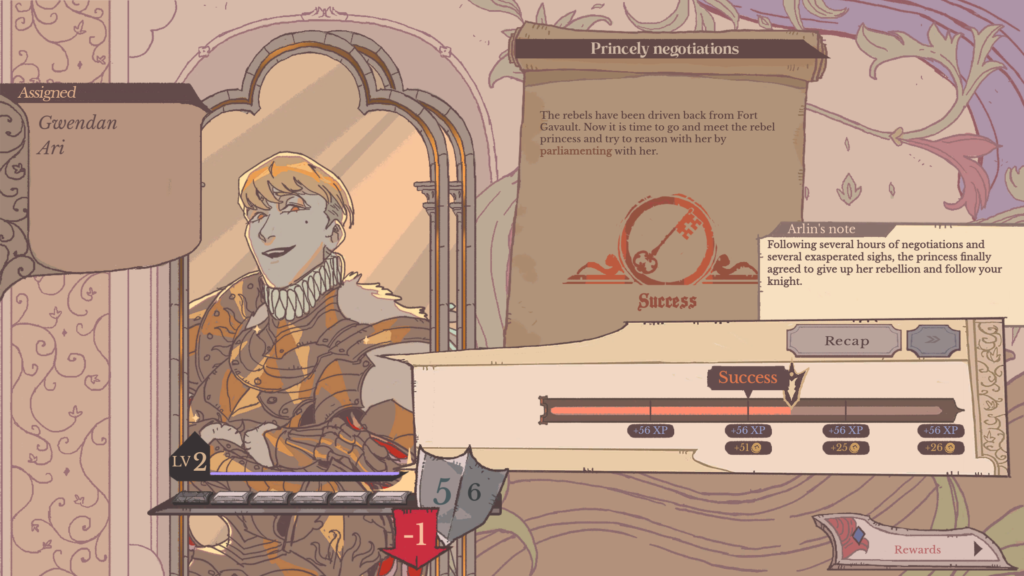
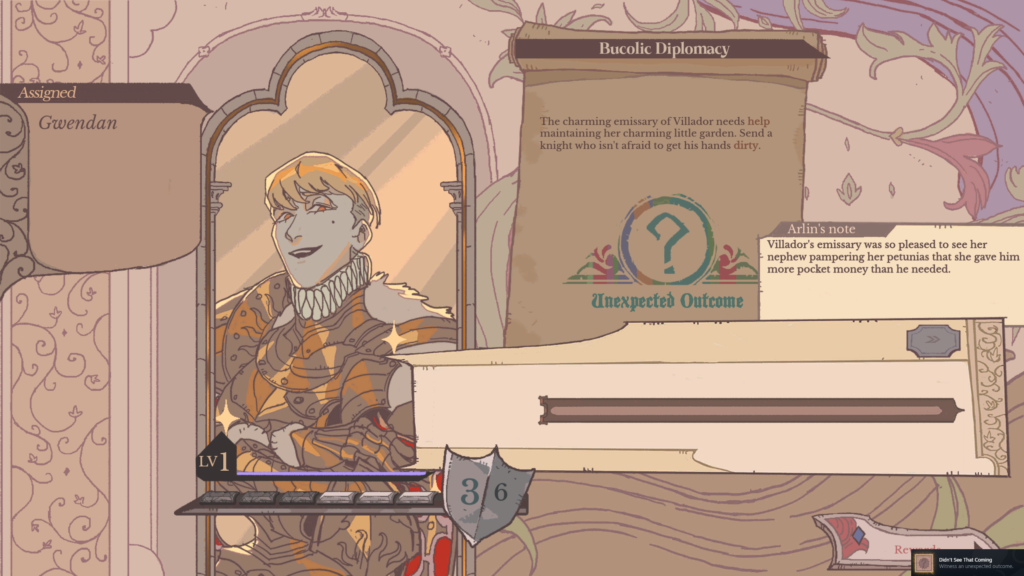
As previously mentioned, a full run of the game takes place in three acts. You’ll continue to listen to petitioners each day, send knights out on quests, and hope you prevail each time. While you do roll credits on a single run, it’s nearly impossible to see the full story. Especially if you try to escape the time travel mechanic. You absolutely can play without using the time travel mechanic. However, you are faced with this choice at the end of each act. I appreciate that it came as a gentle reminder at the end of each act. This could have easily been something that appeared to often but a nice balance exists.
Should you use the time travel, it’s rewarded in some ways by the Sovereign retaining the knowledge of what previously occurred. Of course, that doesn’t mean you should always use these options as characters may be dissatisfied when you just shrug them off as a bit of a know it all. You’re also warned about the use of demonic powers by the magical Lady of the Tower and a special visitor who appears in your audience lineup shortly after it is used.
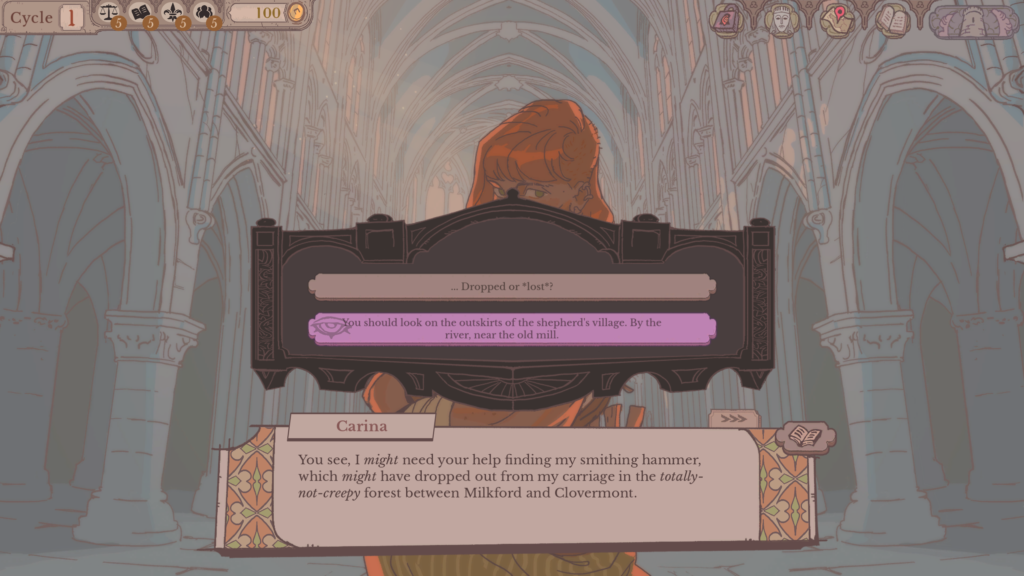
The other great aspect about the gameplay that I enjoyed was the Sovereign Mode. This meant that the game was consistently saving. So while time travel still existed, I didn’t get to save scum in the same way. The auto save feature means living with your choices or raise the time travel counter. Sovereign mode pushed me to use time travel more often than I probably would have, even if it meant that the audience could be different the prior morning. Different audience members also meant the potential for different quests so this is something to keep in mind. However as a fan of roguelites, this was part of the joy. Give me different choices and let’s see how it plays out. Thanks Sovereign mode!
Characters
The characters, especially those recurring characters, are quite fun. It’s not just the artwork but also that their personalities seem to leap off the screen. Despite the fact that there is no voice acting, the art and the accentuation of words with italics, boldness, and sizing, allows players to infer exactly what these characters could sound like. It’s a huge compliment to the artists and writers.
This is also on display when you see the relationships between the characters. Arlin, our trust advisor, is also the uncle to our potential first knight Angelica. She may also be related to our potential Blacksmith and someone who often provides us with quests on a recurring basis. The characters will also interact with the Sovereign and each other in different moments available in the main screen. In those moments you can sometimes eavesdrop on them or interact directly. It’s a fun way of providing the characters depth. In fact, this helps you decide who, if anyone, you’d like to romance. Yes, that’s right, even as a leper and a Sovereign, you too can enjoy a bit of love.
Making the characters feel real made the choices and decisions feel that much more important. I couldn’t lose my wolf, I didn’t want to lose my griffon flier, and I definitely regretted a certain knight eating a dragon heart. Yet my decisions were made and unless I wanted to see a different path, I’d live with them. At least I could see who potential knights would become and how they may turn on me, or stay loyal to the end with the right decisions.
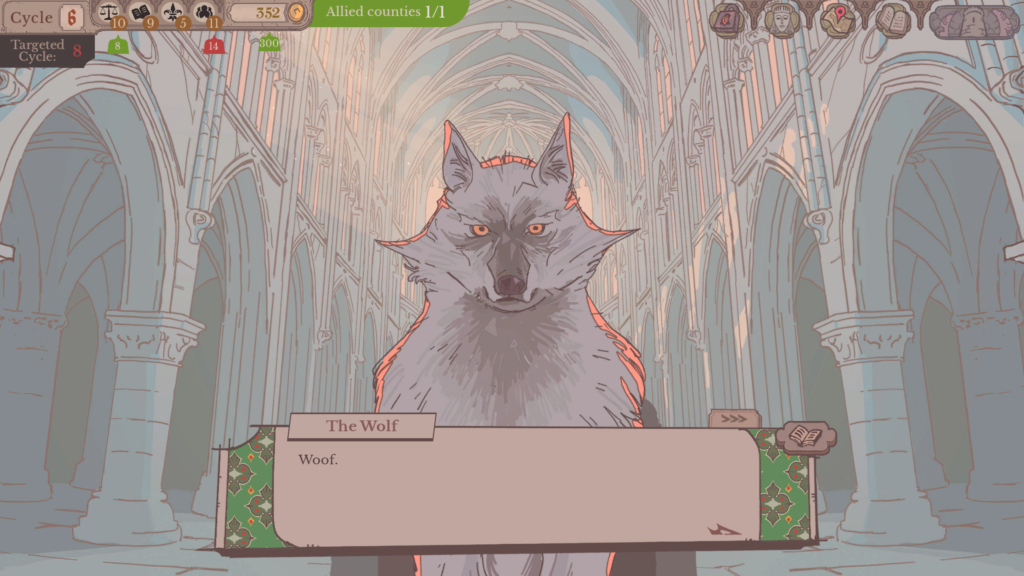
Thankfully, there wasn’t a character I completely hated. At least, not a character that I was meant to love and then hated. While some of them are over the top, it feels fitting for the era the game is set in. Of course the nobility would look down on peasants in such a way. Of course someone born into a noble family would be angry when you let people stay in the Tower for safety. Alternatively, an employee of the tower would find themselves going mad when someone is screaming in the middle of the night. The drama that occurs, while not always a central point, is something that lends to the realism despite the time travel and dragons.
New Game+ (Traveling Through Time)
It’s not enough to just play the game once through. In fact, it would be in players best interest to play through at least a second time. Of course, new game plus doesn’t appear on the start up screen. No, it will happen no matter how your Act 3 ends, with the demon of the tower asking you if you are happy with your outcomes. Even if you are reasonably happy, it’s worth running it through again. This definitely isn’t the temptation from the demon taunting me that makes me say this. Okay, perhaps it is a little, but the demon has a point. I could do better, couldn’t I?
On your second run of all three acts, you’ll see new options and different reactions when you show you are aware of what is already happening. While some information will still need to be unlocked, you as the Sovereign already have quite a few helpful tidbits. For example, you know where to find the Witch to bring to your tower. You also know where to find the trainer for your knights. This can give you an edge and make sure you are able to complete quests you may have previously failed.
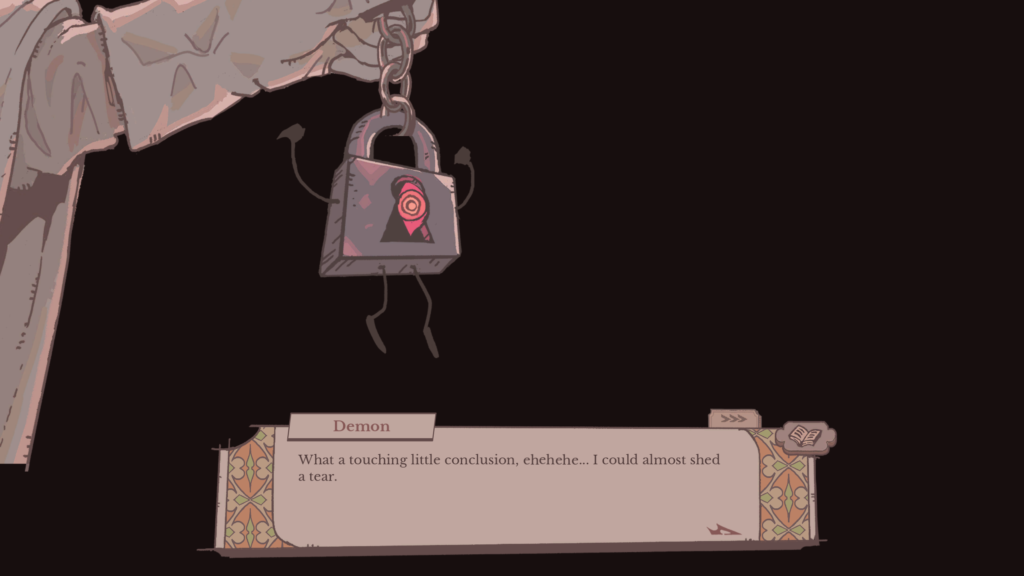
I did notice that if you say you are happy with your ending when presented with the option from the Demon, the game still gives you a chance to run it back. If you tell the Demon you are happy with your ending you will return to the main menu. In there you can choose to load up your game and it will have you just before a decisive battle at the end of Act 3. This was very helpful to try out a New Game+ of sorts and see how keeping all of the information I had previously would help.
Of course, satisfaction of the realm will reset but your knowledge and your attributes will carry over. This was great to keep seeing how far I could push some of the knights and also to see how different choices played out. It also meant I resolved a family secret much sooner than I did in my first run as Sovereign. Of course, that damned serpent man came back letting me know he knew what I did. This surely won’t end bad for you as a player right?
Final Thoughts
Sovereign Tower is actually quite a fun kingdom management game without being overly complex. Sovereign Tower is absolutely a slow burn. Yet it was a game that I couldn’t stop thinking about after my first run. In fact, I find myself wanting to play it more (and have been) instead of writing this review. The choices truly do matter in this game even if you can turn back time. Turning back time being a mechanic that works but with a few changes means that it’s not a simple save scum adding to the complexity of it all.
Of course, visual novels, management games, and choices matter games are not for everyone. However, if you enjoy the idea of ruling your own magical tower, sending knights out on various quests, and turning back time to ensure everything is perfect, I highly recommend this game. With a fun cast of characters, lots to find, and plenty of reason to challenge yourself with turning back time (or not), Sovereign Tower is definitely one to enjoy this year.

Sovereign Tower releases on Steam on August 6, 2026. Sovereign Tower was played on PC. Gamer Social Club would like to thank Curve Games and WILD WITS GAMES for the review code.