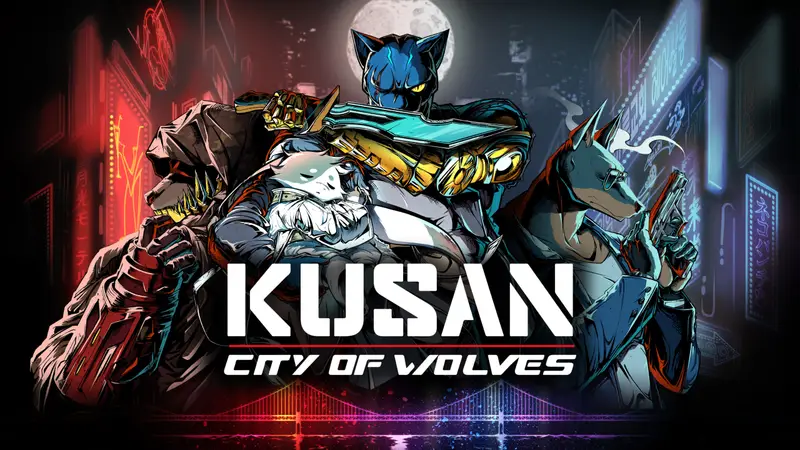
Fans of Hotline Miami should have a new game on their radar for this summer. Developed by CIRCLEfromDOT as their breakout title, Kusan: City of Wolves is a hardcore, top-down action game with stunning pixel graphics and an engaging story that is told by graphic novel cutscenes. Having got my ass kicked by the demo earlier this year, I was hooked on the gameplay loop and the desire it created to get improve.
This is a new neon-drenched entry to the genre that drips in style and substance. This is not a simple clone, it’s a lot more. It is also one of the best indies of the year so far. Our spoiler-lite review.
Not Holding Your War Hand
Kusan is a brutal top-down action game that will challenge your reactions, punish your errors and forces you to be aggressive. Armed with a firearm, a throwing knife and the oh-so-brilliant War Hand mechanical arm, you will create a complete bloodbath on the streets of Kusan.
There are 54 stages in this City of Wolves, with each feeling unique and the gameplay evolving throughout. Early stages allow protagonist, Jin to smash through walls into enemies like the Kool Aid Man before following up with a volley of punches and a throwing knife. But soon, new enemy types including firearm wielding foes and mechanical spinning blades are throwing themselves at you. This game is snappy, precise and importantly has almost frame-perfect accuracy. Only a couple of my (many hundreds of) deaths had me wonder how a hit landed on me.
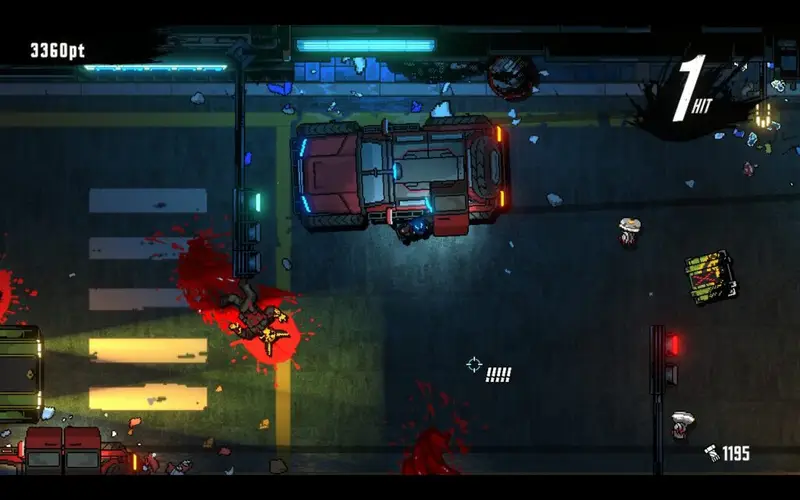
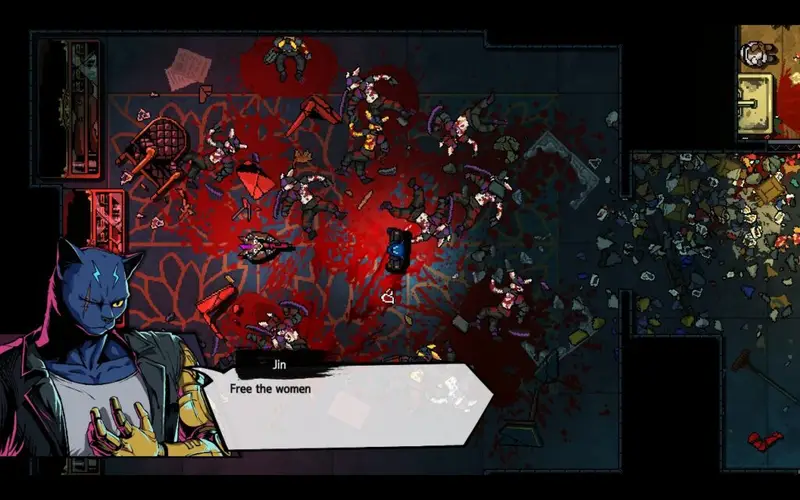
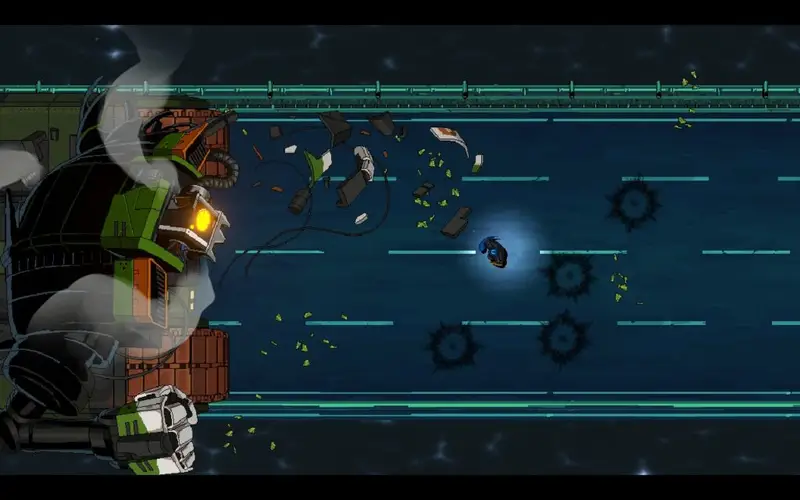
Whilst most early stages are grounded in one space, by the mid-game you’ll be moving between different rooms or floors to get slaughtered on the other side. It’s all about learning enemy locations, patterns and aggression. By no means a one-trick pony of corridor after corridor of annihilation, Jin will move to the streets of Kusan where he can parry full cars driving his way. There’s even a high-speed highway chase on a motorbike which was very enjoyable.
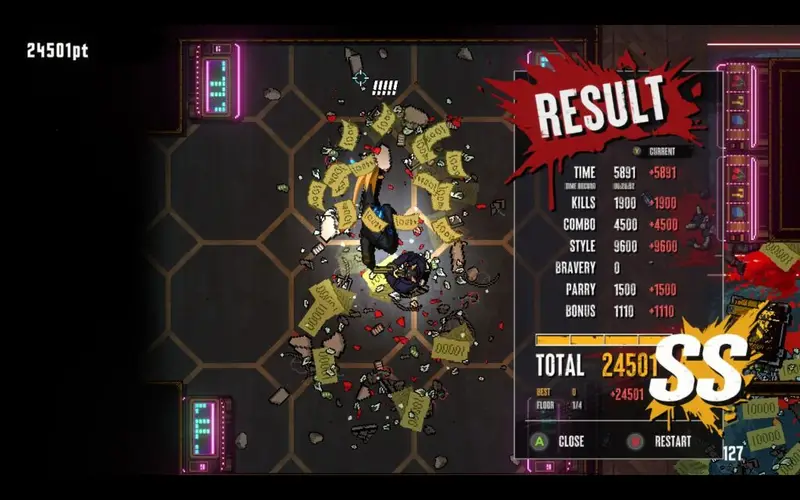
It can be brutal in places, but Kusan’s difficulty is addictive, rather than a barrier. Jin is always one hit from death, but one button from another attempt. I would consider myself an above average skill gamer and was able to complete the game in 5-6 hours, though my scores on many stages were far below the coveted ‘SS’ ranks you can achieve. And I’m incredibly excited to dive back into chapter select to replay some of the best sections to push for higher scores. Achieving higher scores doesn’t just reward you with numbers on a screen either, you will unlock in-game currency that can be spent on upgrades for Jin (more on that shortly). Oh, and the final boss is tough, like real tough. I expect they took me 150 attempts – and I’d have been happy with 150 more.
One of my favourite gameplay elements is the ability to parry with your War Hand. Parrying is exceptionally useful, if not essential in the tough boss fights too. The final bosses in Chapters 2 and 3 need your parrying timing to be impeccable, not just to derail their melee attacks, but also to send back rockets and other projectiles. As someone who regards Lies of P and Sekiro as the two best parry-based games of all time, I found immense satisfaction each time my War Hand clacked with an enemy who thought they were about to end me.
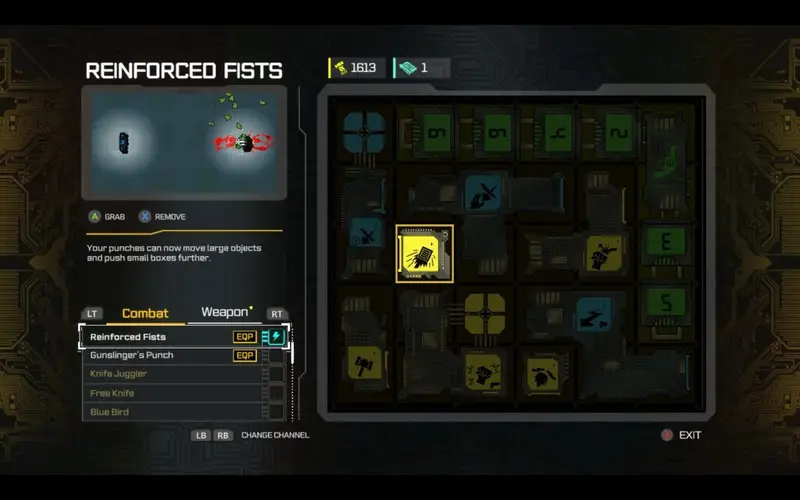
There is no one way to tackle each level in the game, City of Wolves encourages you to play the game your way. Whilst you can ‘corner camp’ in a couple of locations, the AI is intelligent enough to not be a kamikaze who plunges themselves into your destructive hands. To enable player agency, there are a meaty number of upgrades available to players, allowing you to equip a set number of upgrades to suit your style. Each upgrade is a set number of slots that must be Tetris-like slotted together on a grid. I’m happy the developers decided to limit the number of upgrades to ensure the challenge of Kusan remains from start, to finish. You will work out your own style, but I recommend spending some upgrade bolts on your knife, which is very powerful indeed.
Sin (Neon) City
Underneath the savage, barbaric gameplay in Kusan: City of Wolves is an additive story that is told mostly though some wonderfully designed graphic novel / comic book style pieces. The fictional city of Kusan, full of anthropomorphic creatures, looks heavily inspired by East Asian metropolises like Tokyo and the capital of the developer’s homeland, Seoul. During the opening section of the game, Jin finds fallen comrade, Wony on a blood drenched battlefield before the game takes us to the present.
Jin is a hired gun, who works for Ayn of the National Security Bureau (NSB) to hunt down a test subject for Project Origin. The subject is a character capable of triggering a ‘psionic explosion’, an EMP that would fry the nervous systems of anyone in the city. Securing the help of an esteemed doctor, Jin embarks on a quest to save the test subject and the city. The story mostly takes place in the present, but there are engaging episodes which are flashbacks to Jin’s former life as a soldier. The game successfully manoeuvres between the two timelines, benefiting the storytelling as a result.
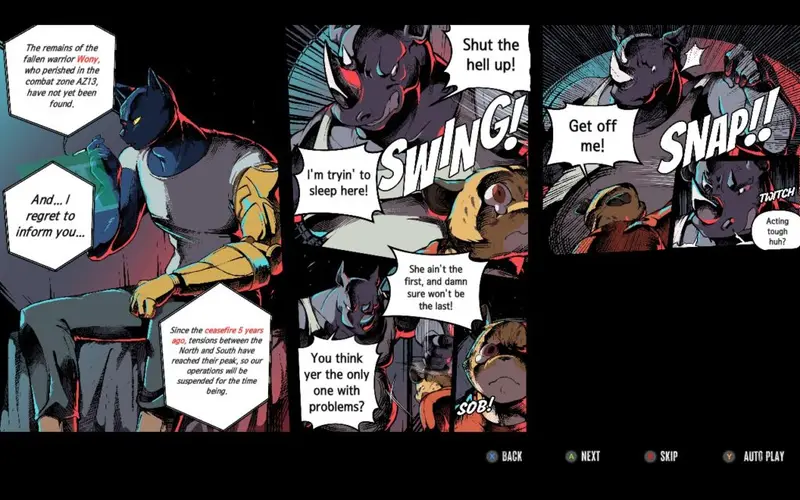
Though Jin is a mercenary, he isn’t entirely soulless and bares his own agendas against the powers of the city, including a deep-rooted hate for a former commander. In this city, no hound trusts no hound. Jin and Ayn’s relationship is entirely professional, with some real grit between the two of them.
The text-only storytelling is largely serious in tone but there are a few witty lines that made me draw a smile. Each character has personality and bounces off Jin’s own downbeat persona to good narrative affect. Despite playing it relatively safe, Kusan tells an entertaining tale with a handful of twists and turns and a memorable lead. I believe there are more stories that can be told from the mean streets of this neon city, with or without Jin.
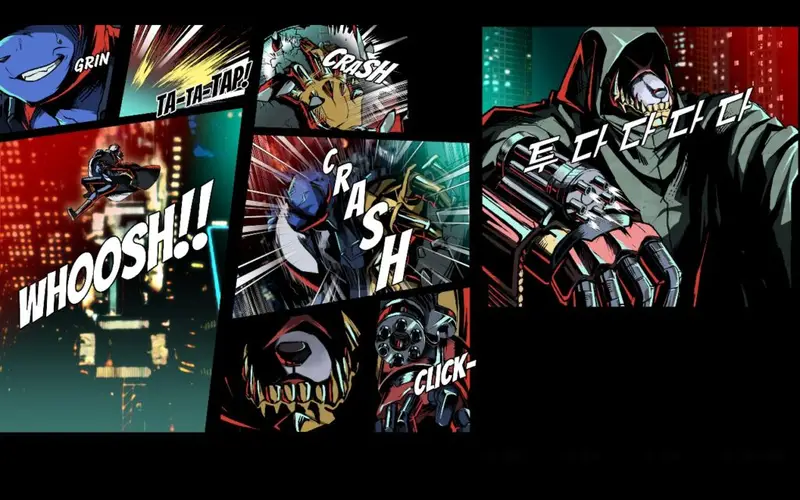
Visuals and audio – Wolf in Neon Clothing
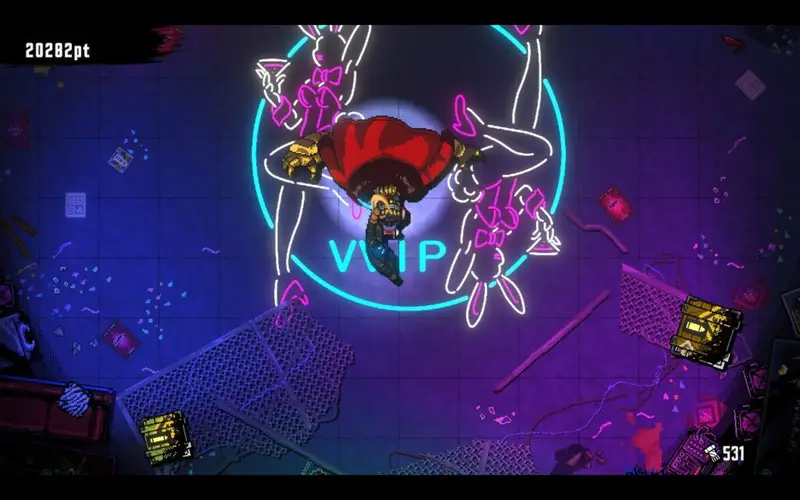
The presentation of Kusan is exceptional. Both it’s in-game pixel art style and the graphic novel, comic panel graphics used to tell the story are gorgeous. Whilst the game borrows heavily from Hotline Miami, Kusan looks slightly more modernised in its graphical design. If Hotline Miami was a NES title, City of Wolves is the SNES successor. And boy, did the neon city lights pop when my Steam Deck OLED brightness was turned up.
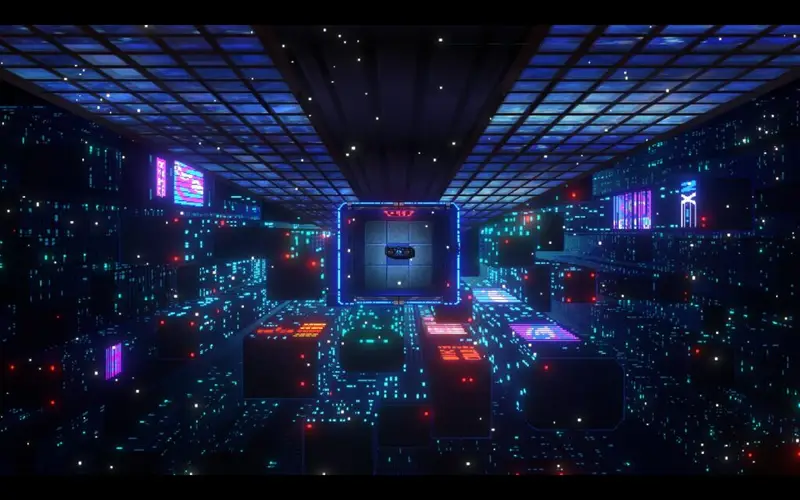
Throughout Kusan’s three chapters, the game is regularly taking you to new visually impressive environments, each distinct from the last. Be it the early episodes in a pumping nightclub, mid-game episodes on a deathly highway or the concluding sections tackling a high-rise tower, locations feel fresh throughout.
Character design is of a very high standard with the stylish core duo, Jin and Ayn, as well as other NPCs dialled in to the broader tone of the city. Meanwhile their animations in, and out, of action sequences such as pulling back a shotgun ahead of a raid have so much 80s cinema swagger.
Whilst the games appearance and gameplay kept me hooked throughout, Kusan’s pumped soundtrack and sound effects made me need to have that ‘just one more attempt’ even more. The games score by a Korean hip-hop artist keeps the adrenaline flowing, whilst the superb audio effects add more hit – offering audio cues to enemy attacks whilst the sheer thump of your War Hand rips through walls and your foes. Even during the graphic novel cutscenes, lighters strike as cigarettes are lit, guns cock and footsteps thud. As a big fan of sound effects, my expectations were heavily exceeded.
Final Thoughts
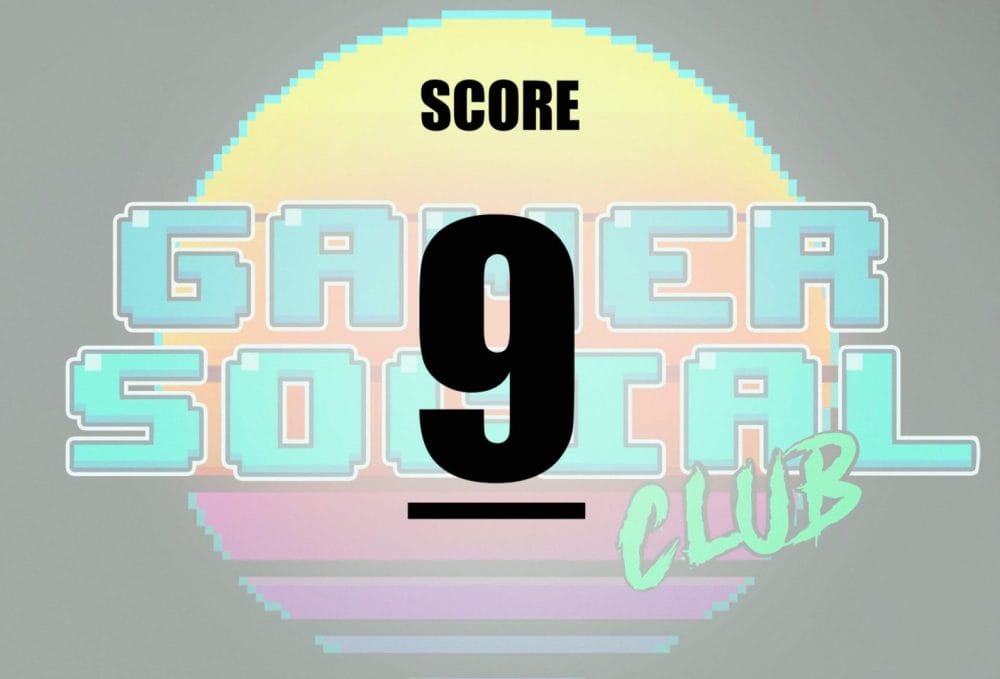
Kusan: City of Wolves has some of the finest indie gameplay of the year so far. It is addictive, it is tough and it is enthralling. This was a rare game that I genuinely struggled to put down, but as I felt myself getting better, the draw to return for more only grew.
Steeped in style, with excellent animations, Kusan is a stunning neon world with its own unique way of telling a gritty story through a graphic novel. This game exceeded every expectation, even having played the demo. I sincerely hope we one day see a successor, even if it’s just to parry the brains out of every wolf once again.
Kusan: City of Wolves releases on July 30, 2026 on Steam, XBOX Series X|S, PlayStation 5 and Nintendo Switch.
This review was played entirely on Steam Deck OLED where the game ran flawlessly with gamepad controls. Thank you to developer and publisher for the code provided for review.
If you’re unconvinced by this review, there’s a demo to try on consoles and Steam. It’s a sizeable demo with around 45-minutes of content that won’t compromise the game.