Overview
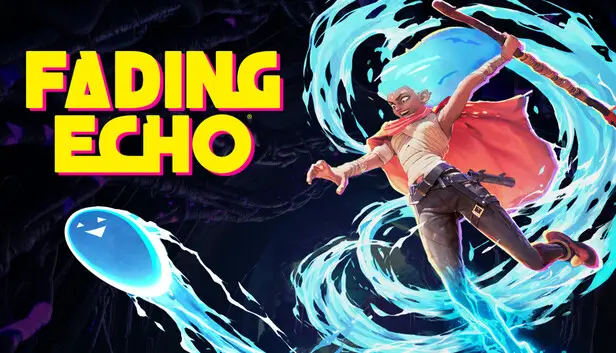
Fading Echo is Emeteria’s debut action-adventure RPG. It gets right down to business, dropping you (literally) into the narrative. You play as One, a young water diviner roaming the wastelands of her dying homeland. One gains the power of Aether and the ability to shapeshift into liquid form. She also discovers her world is part of a much larger, unraveling reality. Joined by her mother Rahne, she must push back against Paradox, the force behind the corruption taking over the world. Also involved is Vellum, a sentient being suffering from diminished powers that must be restored.
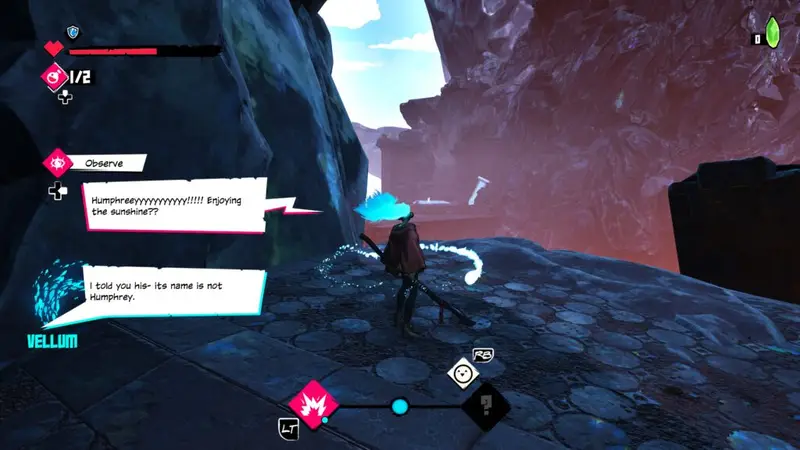
It’s a lot to digest at first glance, but the story is a lot more approachable in-game. There’s no shortage of narrative quips (sometimes to the gameplay’s detriment) and fun dialogue to support it.
A bit of background behind the game’s origin. According to co-director Emmanuel Obert, Fading Echo’s world started over a decade ago as a TTRPG he ran for friends. It was later pitched as New Tales’ debut original IP. The development team also brings experience from larger studios such as Arkane, Ubisoft, and Kylotonn.
Story and Setting
Honestly speaking, for me it’s hard to feel connected to the story and cast as a whole. The mother-daughter dynamic between One and Rahne lands better than the rest. It feels like there’s some substance there emotionally, but other characters feel a bit flat. The quick-cut cutscene editing doesn’t help. While I like the artistic design of the cutscenes themselves, the shifts feel jarring rather than punchy. It almost feels as if it cuts away right as it’s beginning to land, which is unfortunate.
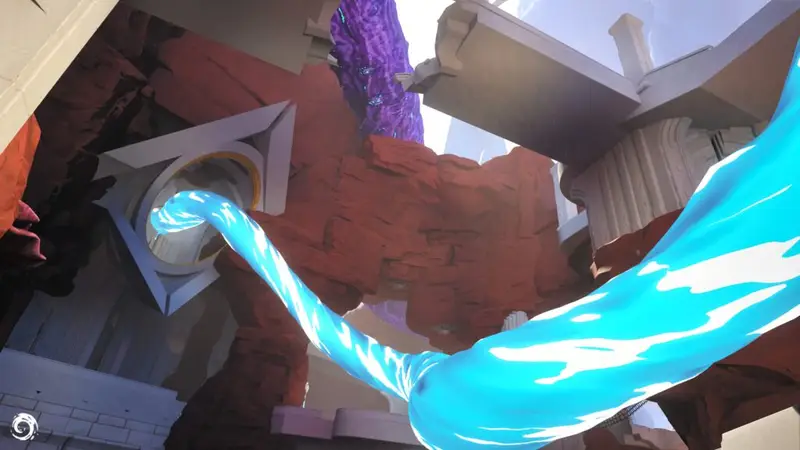
The main world of the game, Corel, has a direct reason for its fractured state. It was originally discovered by House Kelevra, which is the same house One and Rahne belong to. The House aggressively attempted to colonize the world using liquid magic. Their overly-aggressive efforts are what fractured Corel. This means One’s left to fix what her own people have caused.
The world of Corel is also split into Shadows, which essentially alternate realities. One frequently has to jump between these realms during the course of the game, in addition to the various explorable areas in the main world.
Gameplay and Combat
The core mechanic is transformation. One can shift between human and various liquid forms. She has regular strike and kick attacks in human form. The liquid form can be used to progress through the world (e.g. phasing through gates) where the human form cannot. This form can also take on various elemental traits such as toxic and lava, which have different characteristics both during combat and traversal. For example, the toxic form can be used to jump higher and weaken enemies. The lava form can burn enemies and can also be used to float farther across gaps.
There’s a bit of a learning curve to combat. Once you learn which elements affect which enemy types, chaining attacks through changing form feels genuinely satisfying rather than too gimmicky. Lava enemies can be solidified (and made more vulnerable) by normal water, and water-based enemies are weakened by toxic. While her liquid form is immune, One’s human form can also be affected by lava, toxic, and corruption. This makes managing exposure an important factor in combat. It adds another risk-reward layer, and made combat feel like a mini-chess match at times. I can appreciate the trade-off.
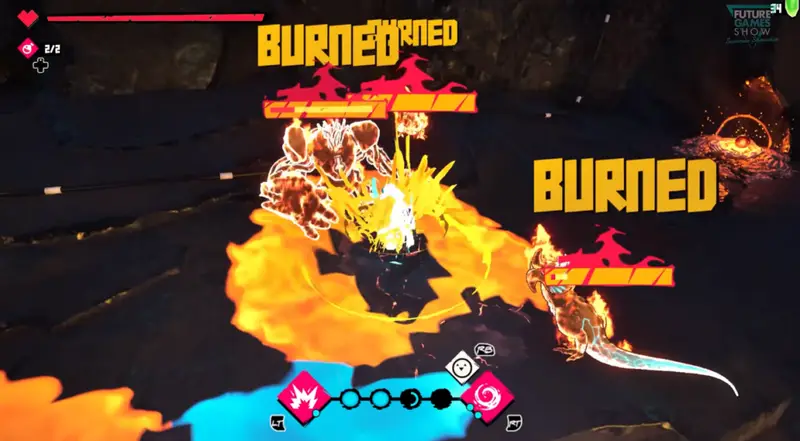
That said, I found myself leaning on (and maybe too much so) the Vault Kick. You learn quite early on that this move can be used to push enemies off the map. Doing this and knocking enemies off a ledge or into a hole ends up being the fastest way to end fights. After a while, it became muscle memory for me rather than using the full combo system.
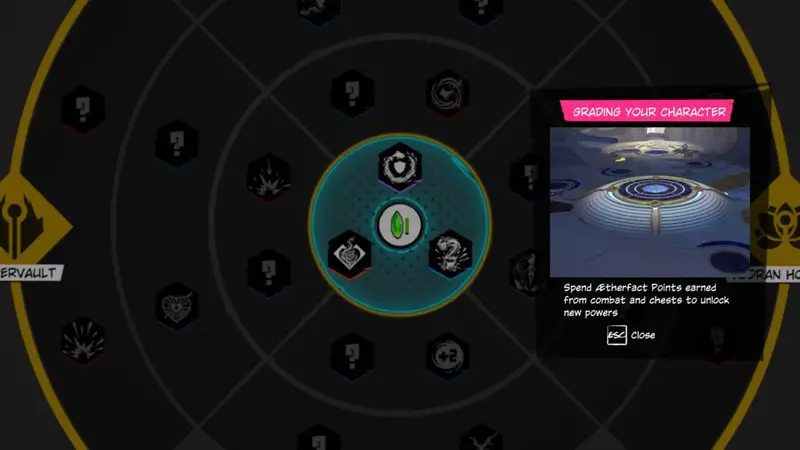
In terms of enemy design and attack patterns, they were varied enough to keep individual encounters interesting. However, there isn’t too much variance in the individual enemy types. Combat can also start to feel repetitive when re-traversing an area, since enemy waves tend to repeat. This repetition is where the combat system starts to feel inefficient. Again, it’s quicker just to knock enemies off and move on. The skill tree isn’t a genre-defining implementation, but it doesn’t need to. New moves or defensive unlocks feel like real upgrades, and I do like that completing areas in the game unlock the skill tree progress and not purchases.
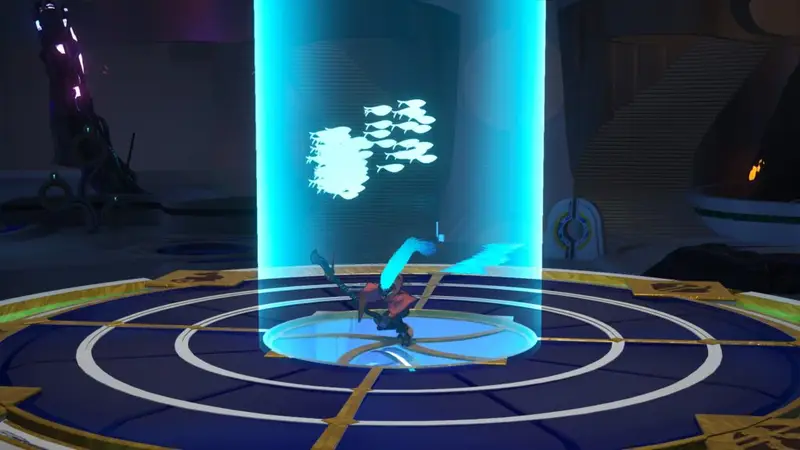
Additionally, level design is generally solid from an environmental perspective. However, navigation can be a pain point. It seems really easy to lose track of where to go next. At one point I spent a long stretch unsure whether I was missing an objective or stuck on a bug. After a few loops of the level, I realized I’d simply ignored an elevator that continued the story. After some time, I realized there’s a visual guide in the form of a school of fish that is supposed to guide you. However, it felt like the guidance was inconsistent and didn’t always show up. Again, this may be a glitch, but I think this is worth flagging for anyone else who hits the same problem.
One of the core gameplay loops centers around puzzles, whereby One has to collect crystals. These crystals need to be deposited into pedestals to unlock progress, sometimes requiring going to a different realm to do so. It’s a cool concept on paper, but can feel a bit repetitive or sloggy especially as there is a chance to drop the crystal depending on the gameplay situation.
Presentation
Visually, the art direction is a plus. One herself is the clear winner here. Her character design is sharp, and I like that her model changes depending on the setting. Other characters don’t feel quite as unique or polished by comparison. However, it’s not enough to undermine the overall visual identity the game is going for. The environment assets also feel like they fit in quite well.
The cinematics have a distinctive stop-start quality, but can be jarring at times. The scenes shift between action-figure-like framing and fluid motion. It’s hard to accurately describe but is an effective idea, with some stumbles during execution. The cel-shaded look draws an easy comparison to the Borderlands series, especially in the main wasteland area. This look holds up quite well when the gameplay shifts into the floating-style island environments, for example.
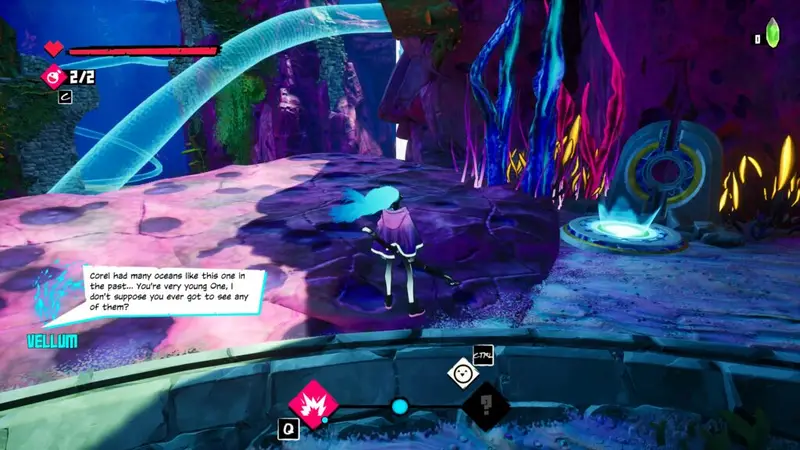
The general gameplay UI elements are intuitive as well. It’s easy to tell the difference between water, toxic, lava, etc. I also like when a game has video tutorials for skills and attacks. It’s an under-appreciated touch, especially if the text may be open to interpretation.
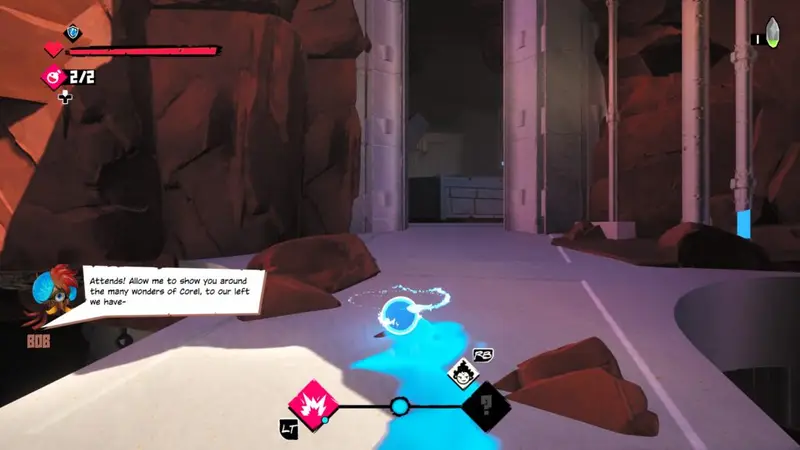
One UI complaint I think is worth flagging is the dialogue captions. The captions during conversations, at least on default settings, can take up nearly the whole of the left half the screen. The longer a conversation runs, the more intrusive it seems to get. At times, the captions actively block visibility of gameplay happening behind them. More than a few conversations already feel like they run long, and the large caption area makes them drag more noticeably.
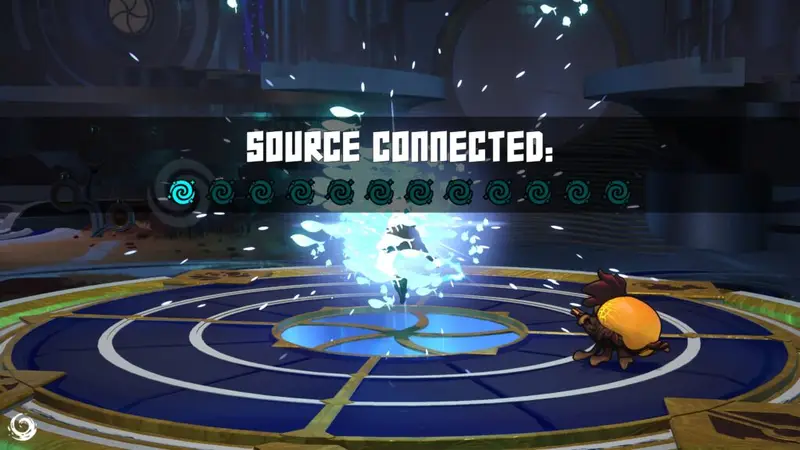
On the audio side, the voice cast is stacked. Samantha Beart (a personal favorite), Laura Bailey, Matt Mercer, and others provide stellar talent. Most performances land fairly well, especially Beart’s and Bailey’s. However, a few performances feel less convincing and mildly immersion-breaking. It’s not enough to completely derail the experience, and it’s less so the actor than the line. I felt a few lines were overly wordy, and some more cringe-worthy and cheesy than effective.
Another related issue I noticed is the tendency for these long voice lines to get cut off at arbitrary points depending on what One is doing. Depending on where you are, or if you run too far outside of their “trigger area”, the line may just stop playing. While some conversations were repeatable by walking up to an NPC, I worry I might have missed some key lore bits because other lines just…stopped.
Maxwell Sterling’s score, combined with the game’s sound effects, is also worth noting. I enjoy when the music and ambient sounds in a game feel well-tuned to the mood and environment the game is going for. Fading Echo achieves this soundly, no pun intended.
Technical Performance
I do want to note in this section that as of the time of this writing, I am playing the game on a press build. Performance is inconsistent overall. It runs mostly stable at 60fps on my 5060, 4K TV setup on medium settings. The same can be said for my other setup, which is a 5080 running on either a 4K or 1440p monitor on high settings. During regular gameplay, however, there’s occasional frame rate dips especially during traversal to new areas or switching realms. Worse drops happen during the transition to and from cutscenes.
As mentioned earlier, I also ran into a few minor glitches. This includes at least a few instances of a voice line getting cut off mid-traversal. Additionally, the camera behavior was inconsistent, leaving me disoriented especially when pressed up against certain geometry like waterfalls. There’s also some animation jank when moving through levels, especially apparent when descending stairs. One’s movement can look like a series of small falls rather than a smooth descent. Movement in general around geometry isn’t always as intuitive or fluid as I expect, especially in liquid form. I frequently got stuck on the side of a platform when I expected to just fall.
With most titles I cover these days, a launch-day patch or two would not come as a surprise to me. I am confident that performance and stability will look different by the time you’re reading this.
Verdict
Fading Echo is a great debut. It’s a stylish game that’s easy to recommend. However, I think it stops just short of being able to be called a must-play. The transformation mechanics and elemental gameplay are genuinely fun for a time but can get repetitive. The art direction is wonderful, and the lead actor’s performance carries the game where the gameplay and choppy cutscenes can’t always support it on their own. Some minor technical hiccups and confusing navigation undercut an otherwise satisfying experience. All in all, none of the negatives are enough to sink the game. I think it’s a game you’ll enjoy for the ride, and it will definitely make a few waves.

Fading Echo is developed by Emeteria and published by New Tales, and was played on PC via Steam. Gamer Social Club would like to thank the publisher for the code.