
Sometimes you just need a little bit of something different. Most of my gaming time is spent playing Soulslikes, Roguelikes or Puzzle titles and, it can get a bit taxing – on the wrists and the brain. Occasionally I indulge in a little RPG, western or Japanese, and I have been partial to the Octopath Traveler games over the years. So lucky for me, Square Enix and Claytechworks we’re also looking for something a bit different with their latest HD-2D title; The Adventures of Elliot: The Millennium Tales a new action adventure game from the some of the folks behind the Octopath and Bravely Default games. Is this departure from the norm a breath of fresh air? Let’s find out!
Adventure Time!
The game follows Elliot, an unrepentantly cheerful adventurer sporting a bright red cap, and his fairy companion Faie. When the magic protecting the Kingdom of Huther starts to fade putting the people at risk from the Beast Tribes, the duo is tasked with lifting a curse on Princess Heuria by traveling into the past eras of Philabieldia, uncovering the history of the land along the way.
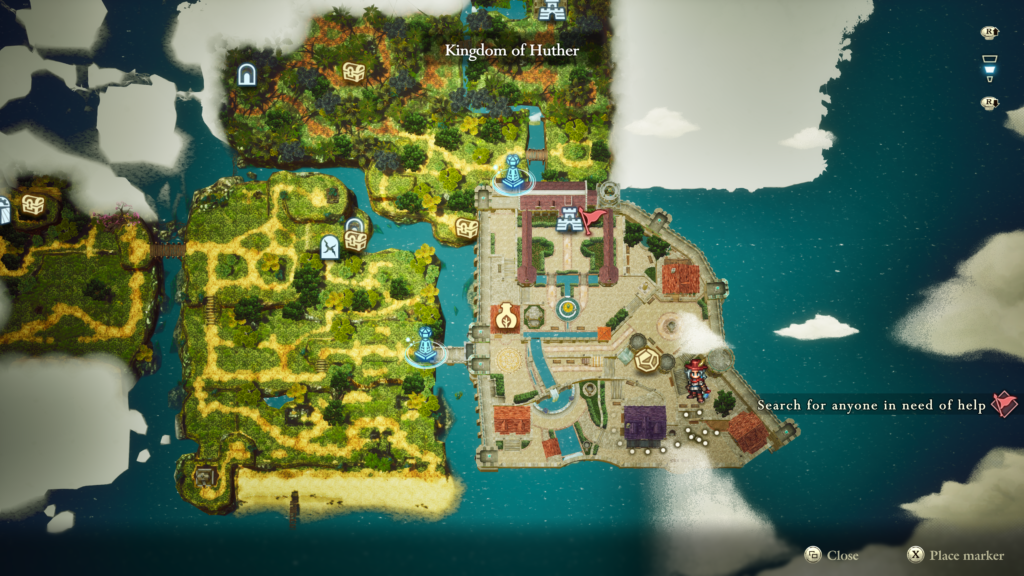
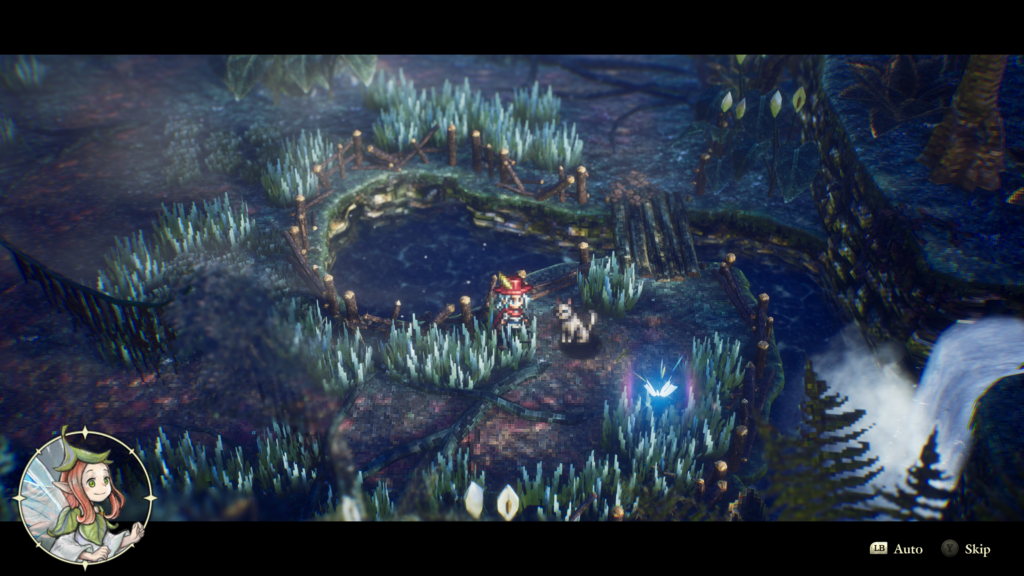
Visually, the game is stunning. Up until this point, the HD-2D engine has been used as a stylistic frame for slower, deliberate turn-based games. Bringing that same visual engine into a real-time, top-down action environment works wonderfully, with the gorgeous lighting, water, and depth effects enhancing movement and combat.
The game’s time-travel narrative takes you across four distinct eras of a single kingdom. You journey from Elliot’s home; the present Age of Safekeeping back into the ruined Age of Reconstruction. From there, you venture further still into the glittering golden era of arcane technology in the Age of Magic, and finally to the tribal civilisation in the Age of Budding. Witnessing this historical continuity is incredibly compelling, as seeing a pristine shrine in the golden age crumble into a dangerous, moss-covered ruin in the dark age provides a brilliant environmental narrative.
Unfortunately this doesn’t necessarily translate so well across the rest of the map. Again, the entire world looks stunning, but the changes to the world across the ages is almost entirely limited to the main human settlement. While there are some dungeons that change from each age to the next, these are almost always optional.
Sword and Shield, and Hammer, and Bombs
Instead of locking you into a single traditional class, The Adventures of Elliot hands you seven distinct weapon types, allowing you to equip two at any given time. Elliot can cycle between these two choices. Elliot can switch between these on the fly, mid-combat using the weapon selection wheel, and certain weapons are also used for environmental puzzles in dungeons and the over world.
Beyond their role in dispatching beast tribes, Elliot’s weapons double as essential tools for environmental puzzle-solving and world traversal, leaning heavily into classic action-adventure design. The most literal utility tool in your kit is the Bomb, which is required to tear down cracked stone walls and blow open hidden cave entrances concealing rare Magicite or Shards of Life.
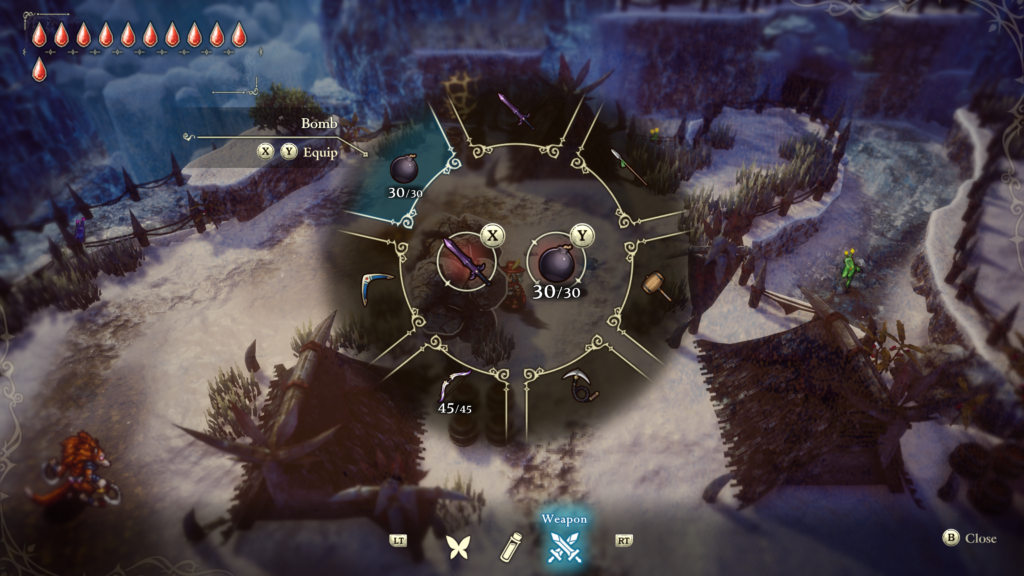
While the fluid weapon-swapping system sounds incredibly versatile on paper, the underlying complexity of the combat rarely demands that you actually use it. The baseline difficulty is relatively forgiving, meaning you can easily brute-force your way through standard encounters by relying entirely on the parry mechanic. Deflecting an incoming attack at the exact right frame feels immensely satisfying, instantly stunning your attacker and reflecting projectiles right back into the crowd to tip the momentum in your favour. Because this parry window is so generous and rewarding, the vast arsenal of seven distinct weapons quickly begins to feel like overkill for the actual depth of the combat. Outside of a handful of specific boss encounters that strictly force you to swap tools to break a specific mechanical gimmick, there is very little strategic incentive to deviate from the standard Sword, leaving the rest of the toolkit feeling a bit redundant in the grand scheme of things.
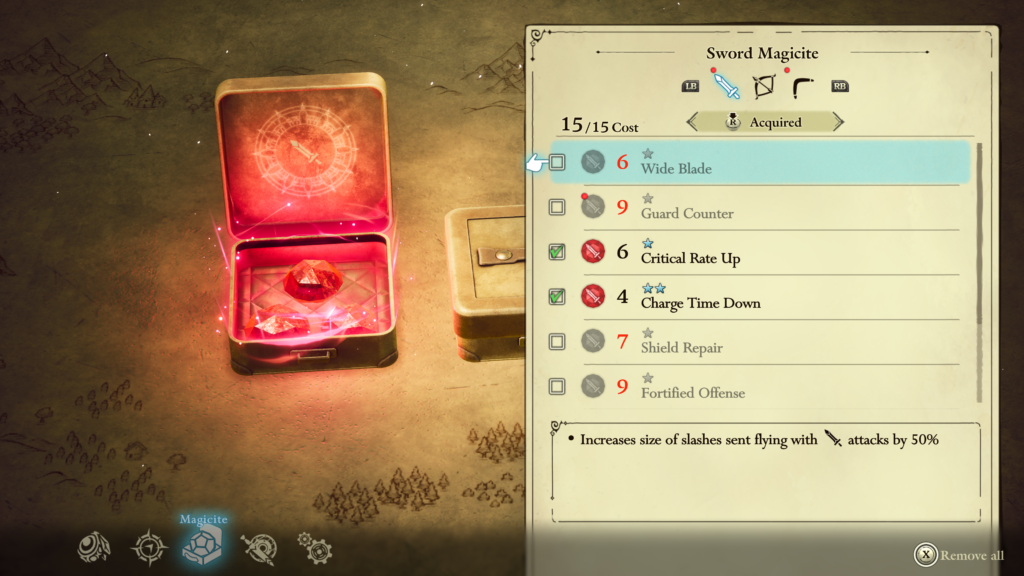
The Magicite customisation system allows you to modify Elliot’s weapons by slotting in collectible shards that add distinct behavioural tweaks, and experimenting with these combinations can be genuinely fun. Upping the sword’s critical hit ratio or adding elemental fire to arrows allows for some fun combos. However, because the core combat is so forgiving and standard encounters can be easily managed with parries and mashing the attack button, the deep customisation does occasionally feel a bit redundant.
Hey, Listen!
Every good adventurer needs a sidekick, and in The Adventures of Elliot you’ve got Faie, your adorable fairy companion. She can be a little chatting – but I’ve got to say I found her pretty charming, especially in line with the very cosy, hopeful vibe of the game overall. Outside of her relentlessly cheery demeanor, Faie serves as a major utility tool for both world traversal and environmental puzzle-solving. Mechanically, you can control her independently from Elliot using the right analog stick, directing her around obstacles to manipulate objects that Elliot cannot physically reach on foot. The game heavily emphasises this mechanic through the local co-op mode, which hands direct control of Faie over to a second player, I, however didn’t get a chance to try this out.
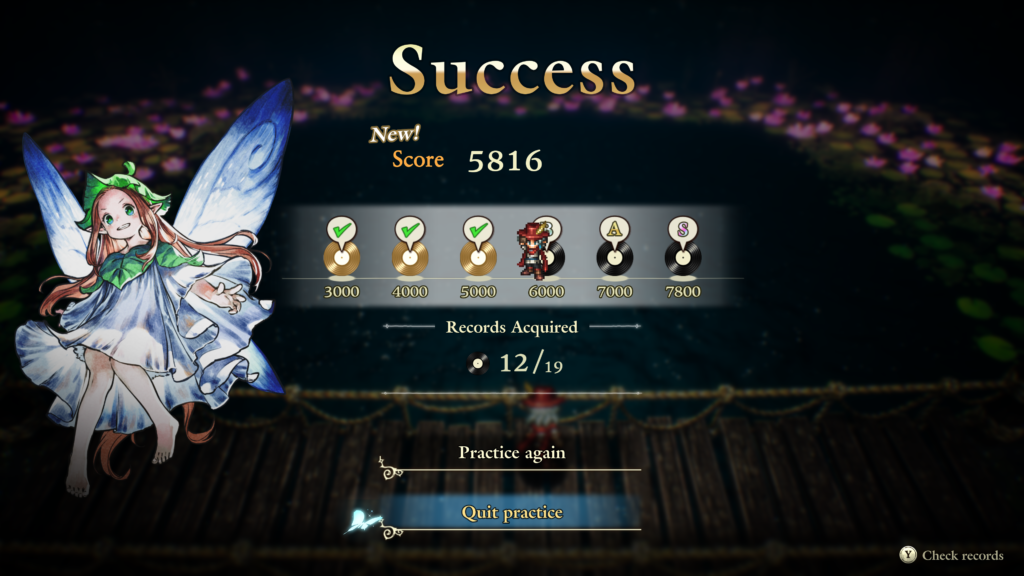
Her utility is driven by five distinct fairy powers that you unlock by discovering Shrines of the Mystic hidden across the four historical eras. In the present day Age of Safekeeping, she unlocks Sprint, a straightforward ability that grants a movement speed boost to accelerate map exploration. The Age of Reconstruction rewards you with two new tools: Ignite, which turns Faie into a ball of fire to light distant torches, and Warp, which allows Elliot to instantly teleport directly to Faie’s position to bypass traps and cross large chasms.
As you venture further into the past, her toolkit becomes even more central to the dungeon layouts. The Age of Magic gives you Vacuum, a localised tornado capable of pulling in loose items and moving puzzle components from afar. Finally, traveling back to the Age of Budding unlocks her Copy ability, which temporarily creates a clone of Elliot that duplicates your inputs. This power serves as the foundation for late-game navigation, forcing you to coordinate simultaneous movements to solve complex double-pressure plate puzzles.
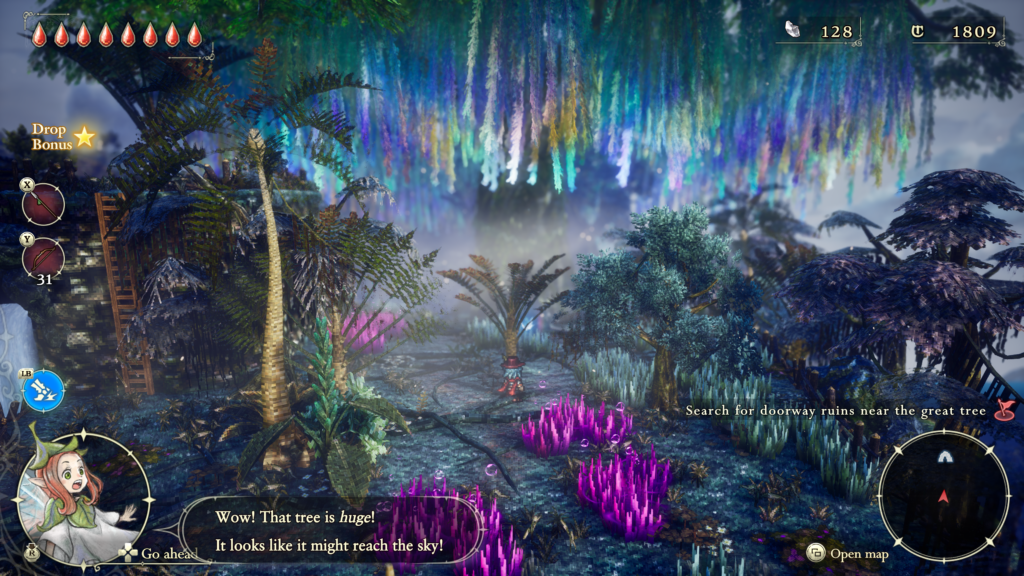
Faie’s puzzle mechanics are very well implemented and stand out as some of the cleverest design in the game. The ability to control her movement and the creative utility of her five powers feel natural enough that they easily could have carried the brunt of the dungeon challenges alone. In fact, leaning completely into her toolkit could have replaced the redundant weapon mechanics used for exploration.
Final Thoughts
The Adventures of Elliot: The Millennium Tales is a thoroughly enjoyable romp that succeeds in bringing a refreshing, real-time pace to the gorgeous world of HD-2D. It is a game packed with earnest charm and visual splendour, though it occasionally trips over its own feet. By throwing an oversized weapon arsenal, deep magicite customisation, and a five-tier fairy puzzle system into a relatively easy action loop, the experience ends up feeling bogged down by one too many mechanics that the core gameplay simply doesn’t require you to master. This mechanical bloat is paired with a slightly repetitive exploration and quest loop, as the promising time-travel concept ultimately limits its most dramatic environmental transformations to the central human settlement.
Yet, despite these structural flaws and the predictable backtracking, the joy of executing a perfect sword parry, experimenting with fun magicite combinations, and navigating the clever dual-character puzzles ensures the journey remains rewarding. It is a cosy, beautiful adventure that represents a highly promising, if slightly cluttered, departure from the norm for its developers.

The Adventures of Eliot: The Millenium Tales was reviewed on Xbox Series X, with a few hours on the ROG Ally X. Gamer Social Club would like to thank the devs and publisher for the code.