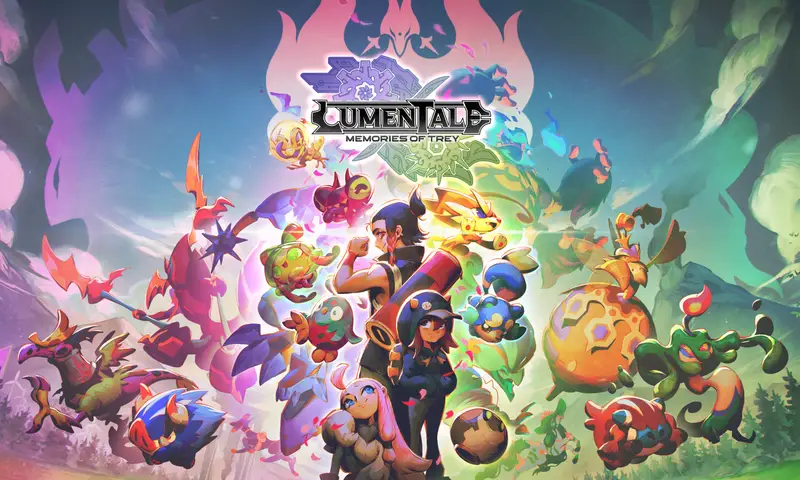
It’s been a while since I played a creature-collector game. Like many people my age, I grew up playing Pokémon, the originator of this particular genre, but drifted away from the series after the first few generations. There have been a few times when I have thought about getting back into the series, but I could never shake the feeling that I would be returning to a world that has continued without me, with a fanbase that has kept up with its growing roster of pocket monsters and mechanics; I feared becoming the old man in a young person’s game. With Lumentale: Memories of Trey, a new creature-collector RPG developed by Beehive Studios, I saw an opportunity to get into a fresh but familiar experience, a chance to recapture those early days of learning the ropes, building my team, and getting lost in a new world. After 45 hours and rolling credits, I am so glad I did, and will be going back for more!
Lumentale: Memories of Trey is set in Talea, a world where humans coexist with creatures known as Animon. Trey, a young man with a cybernetic arm, awakens in a forest with no memory of who he is or how he got there. After being discovered by a boy named Ales, he’s taken to Iris Hamlet and introduced to the inventor Kapan, who explains the basics of Talea, the role of Animon, and the Lumens; humans who bond with and battle alongside these creatures. Equipped with a Holoken, a yo-yo-like device used to catch and summon Animon, and the LMD (Lumen Management Device), which tracks information on Animon you have seen and caught, the various collectibles in the game, and Lumentale’s online elements, Trey begins his first steps as a Lumen while searching for answers about his past.
That search is quickly interrupted when a powerful wild Animon attacks and destroys Iris Hamlet. In the aftermath, Trey meets Blanco, founder of the company behind Holoken technology, who, along with Kapan, encourages him to journey across Talea in pursuit of both his memories and the legendary Wish – a force said to reshape reality itself. Joined by Ales and his robot companion Moka, Trey sets out to rebuild Iris Hamlet’s reputation while uncovering the truth about himself.
Once you have chosen whether to explore Logos to the North or Mythos in the South first, you set off to visit every metropolis across the land, challenging their Lumen squadron and besting their leader, all as you journey to slowly uncover Trey’s memories. The way the overarching plot and the road to the tournament aspect fit together is quite marvellous, with the travelling troupe getting caught up in all sorts of hijinks with each city they visit, be it thwarting a terrorist attack or quelling a devastating storm. Chuck in some delightful character moments and growth, a bombastic ending that caps off the game nicely, and you’re in for a great time from start to finish.
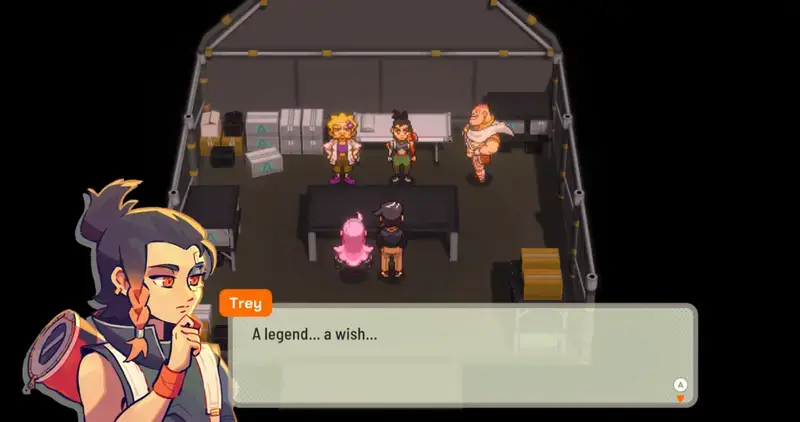
I was immediately enthralled with the world and narrative of Lumentale, intrigued by its blend of the classic creature-collector “becoming the best” throughline with a more dramatic plot involving mystery and shadowy forces at work. There’s a fair amount to take in, but the prologue does a wonderful job of introducing players to the game’s fundamentals smoothly and steadily, from quests to battling, as well as throughout the rest of the game. What also became quickly apparent was how richly detailed and thought-out the world of Talea is, with its 3D modelled environments and 2D pixel art sprites.
But it’s more than just some interesting history and a few sprites milling about that make Lumentale feel fully realized; it’s the attention to detail and subtle worldbuilding that the devs have put time into that make it come to life. Shortly after picking my first Animon, a delightfully familiar moment with the added twist of having five options to pick from, I went out to explore the quaint and charming town of Iris Hamlet and came across a children’s playground near a cafe. What caught my eye was that the slide was modelled to look like one of the starter Animon. With just that bit of art direction, I saw how Animon had been integrated into this world in a way that felt natural and reflected reality. There are plenty of other details like this in Lumentale, like the TV show based on three popular toy-like Animon, or the Gazetta del Lumen, a magazine you can read in the Lumen centre of each city, which recounts Trey’s antics as well as giving hints to all sorts of other things, from recipes and lore to clues on how to evolve certain Animon. Each goes a long way to strengthening the game world’s identity.
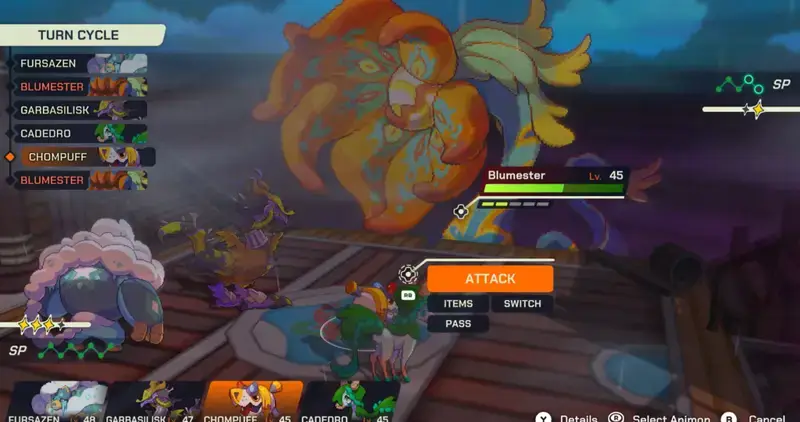
Beehive Studios have gone to great lengths to differentiate Lumentale from other creature collectors on the market, and while there may be a few issues with vague tutorialing and some unnecessary mechanics, it offers a fantastically deep and rewarding array of systems that I was quickly drawn into. You travel around with up to six Animon in your party, and the option to field up to four during battles, with all Animon receiving EXP (experience points). You and your opponents take turns according to a turn list at the top left corner of the screen, with different actions consuming a certain amount of SP for that turn order.
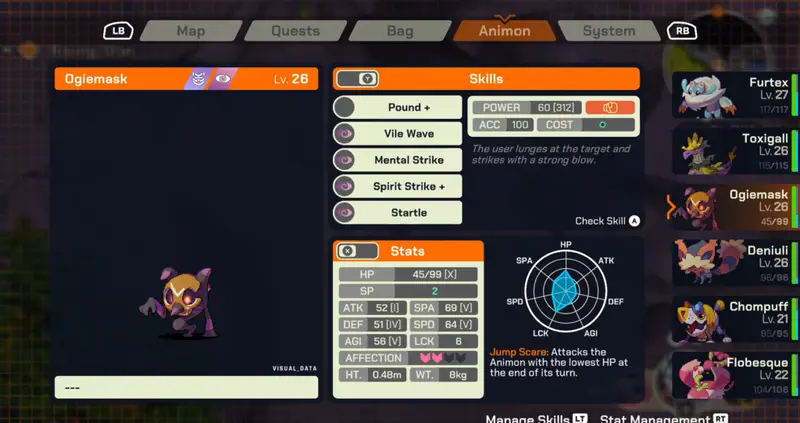
All Animon have at least one Type along with one of five Attributes representing different emotions. Types affect what moves Animon learn as well as what Types they are resistant or weak against, while their Attribute can be applied to an action, adding a specific effect such as healing or raising their critical hit chance at the cost of an extra SP. You learn all of these details about an Animon when you catch them or scan them during battle, helping you know what moves are best to use against newly discovered foes.
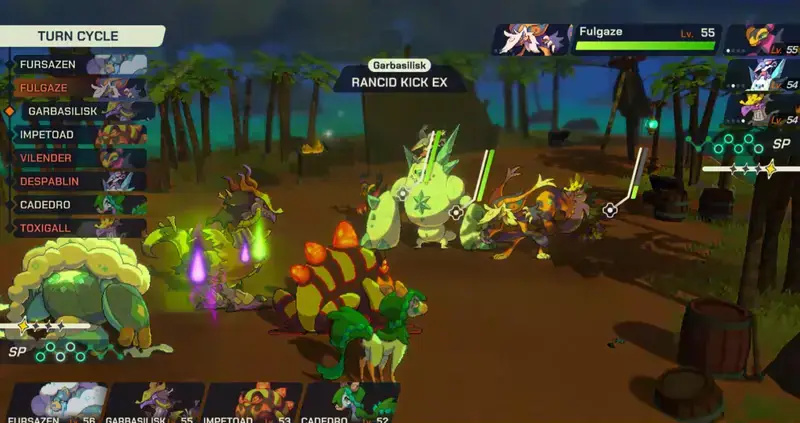
Another interesting mechanic at play during combat is TP, a second point system that you and your opponents earn from exploiting weaknesses and scoring critical hits. Once either team has the max number of TP they need, they get an extra action with no SP cost immediately. I love this system, as it adds another wrinkle that can quickly change the tide of battle. Both the amount of SP a team has and the TP they need are dependent on how many and which Animon you field. More Animon means more SP for actions, but also more TP is required for that extra action, leading to some situations where I found fielding a smaller team paid off. It’s a welcome bit of strategy that is neatly tied into well-established systems.
When an Animon levels up, they unlock new moves that can be selected from their movelist, and stat points that must be manually distributed between an Animon’s six main stats. While I appreciate that this gives players more control over how they want their Animon, it is a bit tedious having to go between each one and distribute them; the option to have them auto-allocated to a default build would have been welcome. Many of the 140 Animon in Lumentale evolve, with most doing this after reaching a certain level. However, I did like the fact that some could only be evolved with the right item or under certain conditions.
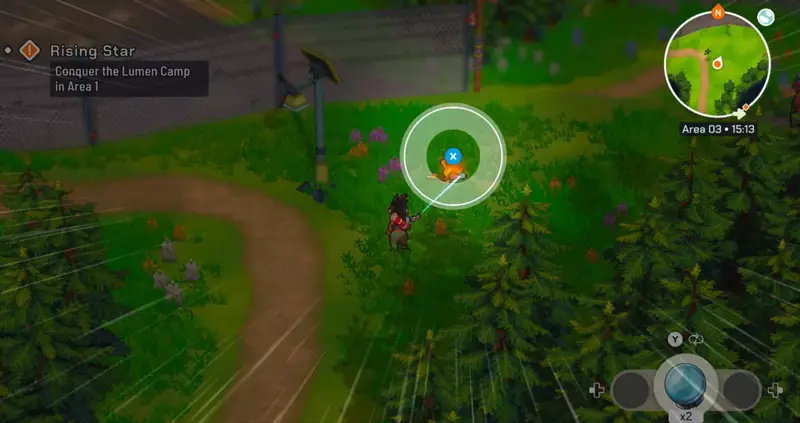
When running around the interconnected zones of Talea, wild Animon are clearly visible roaming around on screen, meaning combat can be avoided when wanted. While just running into an Animon initiates a standard battle, using Trey’s Holoken to hit one while an Animon is equipped will cause your opponents to take damage at the start of a fight. You can also catch wild Animon this way, as well as in battle, as long as you have some Billia, little marbles that store the bond made when an Animon is caught and sent to Anispace. Catching an Animon in the field requires you to succeed at a QTE (quick time event) challenge, so while it is still quicker (and fights with weak Animon will be auto-resolved without entering combat), there is still a bit of a challenge.
As you travel between each zone, you’ll find different coloured shiny objects dotted around. These could be items to use on your Animon, ingredients for cooking stat-boosting meals at fountain checkpoints, decorations for the many Anispace rooms where your other Animon reside when not in your party, or special items that your Animon can hold in battle to give them special buffs. You will also find the occasional Lumen Camp, an outdoor structure that means there are Lumen within the zone you can challenge to battle. Once the roaming Lumen are defeated, a captain will appear at the camp for a showdown, with you capturing the camp and earning some nice rewards when victorious. These aren’t compulsory, but offer a fun side activity alongside the many side quests you can uncover by talking to NPCs and collecting cards for the in-game TCG (trading card game).
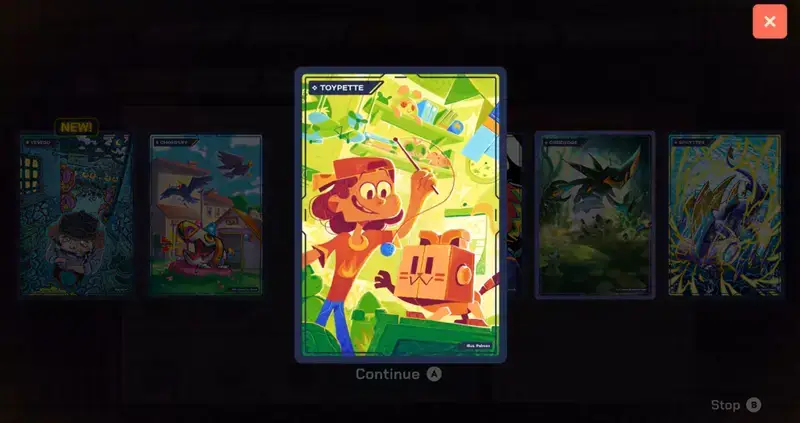
That’s right, there is a TCG in Lumentale: Memories of Trey, and it is one of my favourite things about the game! Not only do you have to buy or find packs, which you then open and flip to reveal what you pulled, but you store them in a binder in the LMD and can trade with other players using the game’s online systems! They also feature fantastic full artwork of all the Animon in the game, including the artist’s name in the corner.
Lumentale isn’t without its flaws, and like manually allocating stat points, they don’t ruin the experience, but they did have me scratching my head at times. Some things are just a bit awkward, like how many menus there are to navigate when dealing with your Animon, or that some tutorials and quests can be a bit unclear. Other elements felt somewhat vestigial, not negatively impacting the game in any way, but not really feeling necessary. The Anispace is one of these for me, which I understand will appeal to others as a place they can decorate for their Animon, but I basically didn’t use it and felt no loss. The other oddity is the addition of Synchronicity, a move you can use once per battle to overcharge one of your Animon for a turn. I feel that this was already handled well by the Attribute-based boosts you could apply, and while I did use it, I could see both of these elements combined to greater effect.
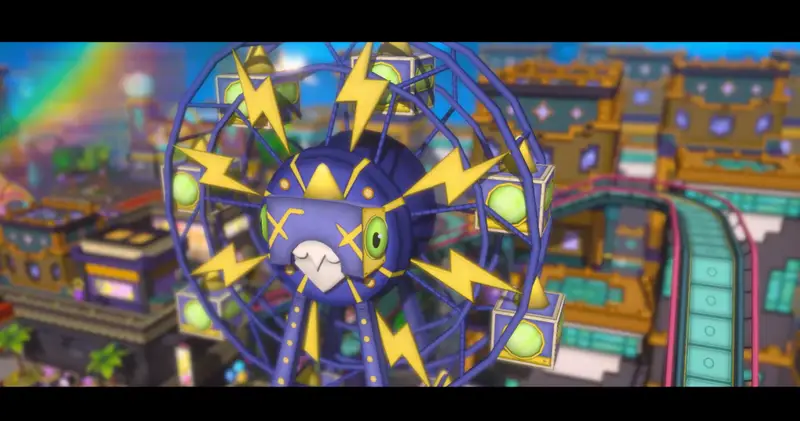
Lumentale’s blend of 3D environments, pixel art sprites, and 2D hand-drawn character art during conversations and cutscenes is absolutely stunning! Each city and zone has been designed by hand, with each location feeling distinct and rewarding to explore. I honestly couldn’t tell which of the game’s locales I liked the most; there are so many fantastic and beautiful places to choose from, whether it’s the glistening futuristic skyscrapers of Speranova or the sunny seaside town of Costa Linda.
I have to hand it to Beehive Studios, they have created some of my favourite monster designs in a long time, with the inclusion of some different Types allowing for some really imaginative creatures. A standout one to me is the full evolution of the Smellwing, a small bird made of banana peels and other trash of the Virus Type, that evolves to incorporate a full trash can into its look. You’ve got a great variety as well, from cute to creepy, and the emotion-based Attributes can be seen in all their designs, which is a lovely touch.
With no voice acting, it falls to the game’s sound design and music to round out the experience. Combat sound effects are clean and diverse, matching the action on screen, and each Animon has a nice, clear call or roar. The soundtrack is what really delivers the audible goods, with a diverse musical score. Each city has a song that perfectly pairs with its visual identity, and even the different biomes you traverse have their own musical accompaniment. Then there are the battle tracks. While most of the soundtrack goes for a classical vibe, the battle tracks hit you with pulsing EDM, guitar-shredding rock, and jazzy funk fusion, with a suitably cathartic victory fanfare.
Final Thoughts
Lumentale: Memories of Trey is a wonderful blend of the fresh and the familiar that offers a fully fleshed-out experience on both the RPG and the creature-collector fronts. I think it is a game that will appeal to and satisfy new, returning, and veteran players of the genre, which is a feat unto itself. With stellar visuals, an excellent soundtrack, loads of content, and a nearly flawless combat system, this is a game you want to have in your collection. With a few tweaks, I firmly believe that Lumentale: Memories of Trey has the potential to become one of the best, like only a few have ever been!

Lumentale: Memories of Trey is available now on PC and Nintendo Switch, with PlayStation 5 and Xbox Series X/S planned for later in 2026.
Lumentale: Memories of Trey was reviewed on PC with a controller.
We would like to thank Beehive Studios for providing the review key.
Will you be picking up Lumentale: Memories of Trey? Let us know in the comments below, and join the Gamer Social Club Discord to chat about your favourite games, play in community game nights, take part in giveaways, and more!