
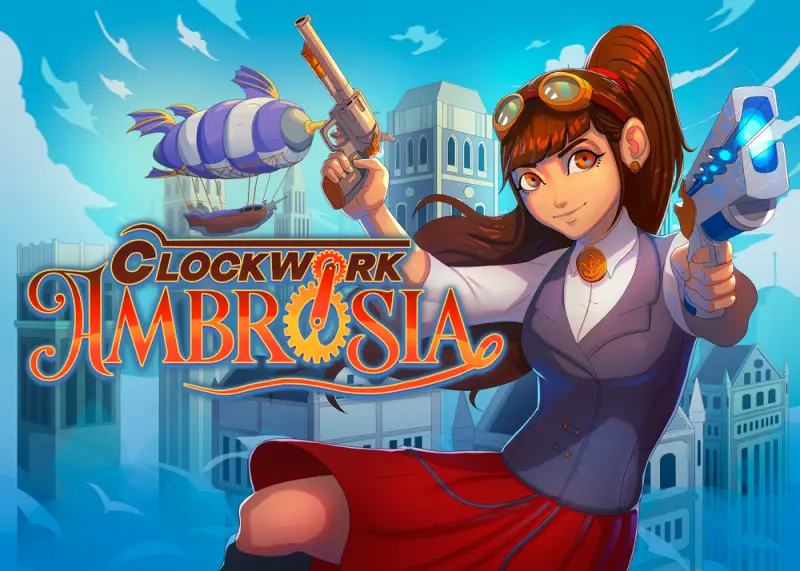
Action, stock, barrel, trigger, sight, ammunition – a firearm requires several pieces that must fit together to work according to their design. The same could be said for Metroidvanias, with their sprawling, multi-biomed worlds, hidden secrets and side bosses, unlockable abilities that open up new parts of the game, and a narrative that drives the player forward. While the devs of Clockwork Ambrosia seem to have had a clear vision for a game with well-measured scope and high-calibre gameplay, it lacks a premise that piqued my interest and several quality-of-life elements, resulting in a fun but aimless-feeling experience.
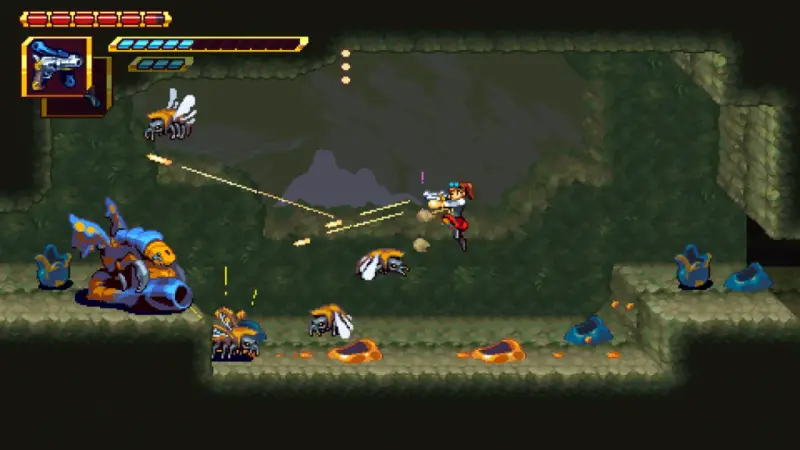
Developed by Realmsoft and published by OI Games, Clockwork Ambrosia is a 2D pixel art Metroidvania set in a Steampunk world, where you play as Iris, an airship pilot with a penchant for guns. After being attacked by a robot dragon and crashing onto the island of Aspida, Iris gets caught up in a robot uprising.
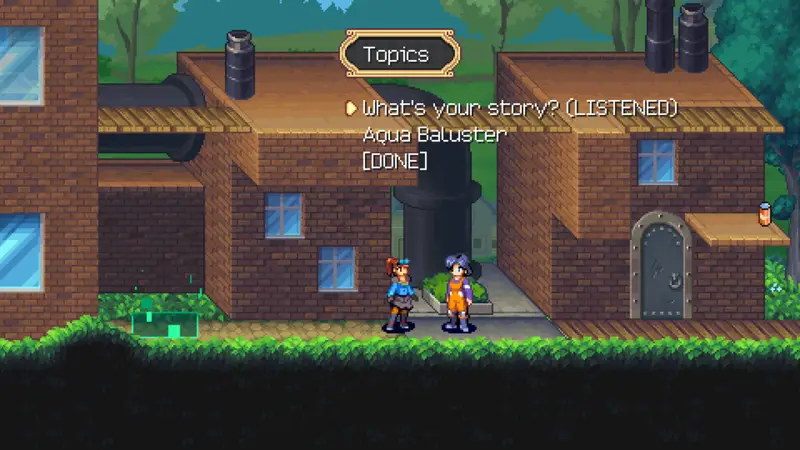
The game’s opening sets things in motion, but if you’re someone who is after a greater sense of purpose in Clockwork Ambrosia, then I fear you’ll be disappointed. Instead of feeling compelled to help the inhabitants of Aspida with their robot problem for personal or mutual gain, I traversed the land from pillar to post, more often than not stumbling into where I needed to be. Iris can talk with many of the NPCs she meets, from humans to the diminutive mushroom folk called the Manitari, each offering several topics that add some extra details and worldbuilding. But none of them ever seemed to ask for her help with the problems they faced; instead, they alluded to where the player needed to go without a call to action.
Coupling the lack of direction with a voiceless protagonist who does not share their feelings about what is going on, and no quest/objective tracking of any sort, meant that I found it very difficult to feel a connection with anything going on. Without a clear sense of purpose, Clockwork Ambrosia struggles to build any sense of momentum, which is in direct contrast with the gameplay.
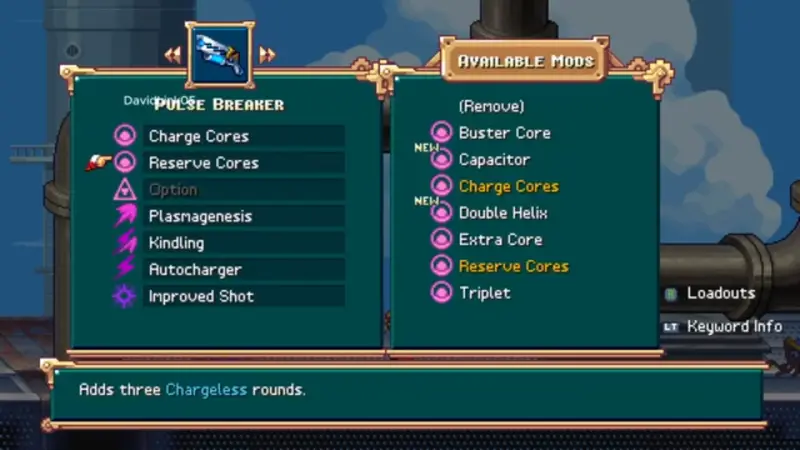
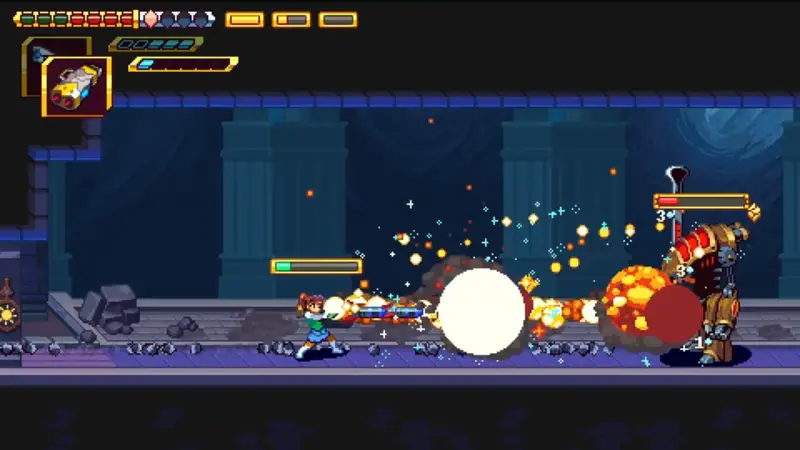
Clockwork Ambrosia’s gameplay is centred around Iris’ arsenal of firearms, starting with the sci-fi pulse rifle and adding a revolver, grenade launcher, and missile launcher into the mix. Two can be equipped at once, and switched between on the fly, but where it really gets interesting is with the gun mods you find throughout the game. Each weapon has several slots in which you can equip mods, altering each weapon’s behaviour in various ways. These aren’t incremental stats boosts, but big changes, like the number of projectiles you fire at once, how they spread, if they ricochet, set enemies on fire, or explode on impact. As your collection of mods grows, so do the combinations you can try, leading to some crazy, and pretty broken, builds. This is where Clockwork Ambrosia really shines, allowing players to experiment and find weapon setups they want to run with as they play, or just see how ridiculous they can get their guns to behave.
As Iris progresses across Aspida, she will collect new pieces of armour that affect her health and Armour Pips, which you lose before your health and can be repaired using an energy gauge you fill during combat. She also gets her hands on certain relics that bestow permanent upgrades to her movement, like a dash and wall-jump, as well as other accessories that boost their effects, like boots that lengthen Iris’ dash or goggles that make enemies drop more resources. With her bolstered arsenal and collection of powerful accoutrements, Iris feels like an unstoppable powerhouse by the end of the game, which feels earned given how much exploring you’ll do to find the mods and equipment you want.
Sadly, I did face some issues with the game’s controls about midway through my playthrough. While trying to remap my controller buttons to have better navigation of the game’s menus, I lost the ability to mend my Armour Pips, and no matter what I did, I was unable to get it back. This put a bit of a dampener on the whole experience, and while I muscled my way through, making use of certain pieces of gear to combat the issue, it certainly would have been better to have that mechanic available towards the end of the game.
The resources you collect from enemies, as well as all the scrap you find, are used to either upgrade your gear to improve its stats or trade with certain NPCs for useful items and mods. With a large menagerie of monsters and machines to fight, as well as several bosses along the main path and hidden across the island, you’re constantly challenged with new attacks and behaviours to deal with, making good use of the game’s wealth of character build options.
There isn’t any side content to speak of in Clockwork Ambrosia, and the game uses a classic grid-based map with coloured regions like many a Metroidvania that has come before. Icons for fast travel spots, shops, boss fights, and other locations fill certain squares, but there are no names for anything, and the camera is very close to the map with no option to zoom out and see it all. Hopefully, these sorts of minor issues can be dealt with post-launch.
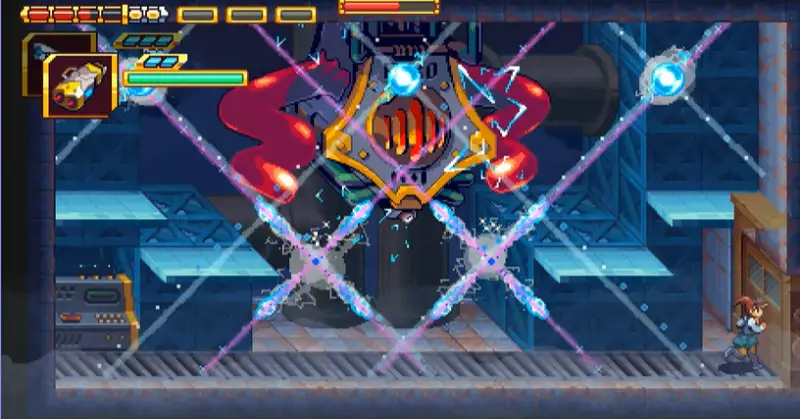
Clockwork Ambrosia’s beautifully detailed pixel art and fluid animations are the other standout elements of the game, bringing it all to life with a thoroughly polished and satisfying appearance. Each region of Aspida feels distinct, from dank abandoned mines and the moss-coated cosiness of the Manitari’s hidden village, to the mixture of red brick masonry and metallic towers of the island’s capital, a veritable Steampunk destination. It’s rich in colour and depth, and while I may not have known where I was going when using the fast travel system (every location is available once you unlock fast travel, which I found a bit overwhelming), I knew exactly where I was when I got there.
Clearly, a lot of work has gone into Clockwork Ambrosia’s visuals, and it pays off in spades. Iris’ movement feels responsive, with great visual and auditory feedback for every action she takes. The guns and enemies’ attacks are particularly well done, with different coloured rounds and projectiles whizzing across the screen, bordering on becoming a bullet heaven game. With a tidy UI in the top left corner that clearly shows Iris’ health, armour, energy, which gun is currently equipped, and how many rounds are in each one, and health bars above enemies’ heads, it’s easy to keep track of what is happening while a hail of bullets bounces all around the arena.
Rounded off with a diverse and enjoyable chiptune soundtrack, with each area having its own theme, and punchy sound design that brilliantly communicates every shot fired or grenade detonated, Clockwork Ambrosia is as much a pleasure to listen to as to look at.
Final Thoughts
Overall, I had a fun time with Clockwork Ambrosia and its heavily moddifiable gun-based combat, stunning pixel art visuals, and vibrant soundscape. However, a lacklustre narrative and signposting, unsolvable tech issues, as well as missing quality-of-life and fundamental design elements, led to frustration, confusion, and left me feeling somewhat deflated by the end of my 16-hour playthrough.
Clockwork Ambrosia is a solid Metroidvania with some interesting and well-executed ideas, and while it hits its target with a satisfying bang, it lands wide of the bullseye.

Clockwork Ambrosia is available now on PC, with a demo available via Steam.
Clockwork Orange was reviewed on PC using a controller.
We would like to thank Realmsoft for the review key.
Will you be checking out Clockwork Ambrosia? Let us know in the comments below, and join the Gamer Social Club Discord to chat about your favourite games, play in community game nights, take part in giveaways, and more!