The original Tomodachi Life was a very surprising and special game when it was released in the summer of 2014. It was clear that Nintendo’s American and European branches had a steep uphill battle when it came to marketing the title, but the release of its Welcome Version demo made it immediately apparent that this was the kind of risky, strange title that we often don’t have the pleasure of seeing released outside of Japan. It quickly amassed a huge cult following, becoming one of the best-selling titles on the Nintendo 3DS.
Since then, through nostalgia and a shared cultural memory, the Nintendo 3DS’s Tomodachi Life seemed to take on a life of its own as an endless meme generator, being immortalized by hastily phone camera recorded 3DS screens.
It seemed like a no-brainier that at some point in the hugely successful Nintendo Switch generation we would see Tomodachi Life again, but fans have held a lot of reservations as to how Nintendo would approach it, especially as the wider AAA video game industry has more or less abandoned the traditional concept of “handheld games”, titles intended to be played in short game sessions, often times with less lofty ambitions than their console counterparts.
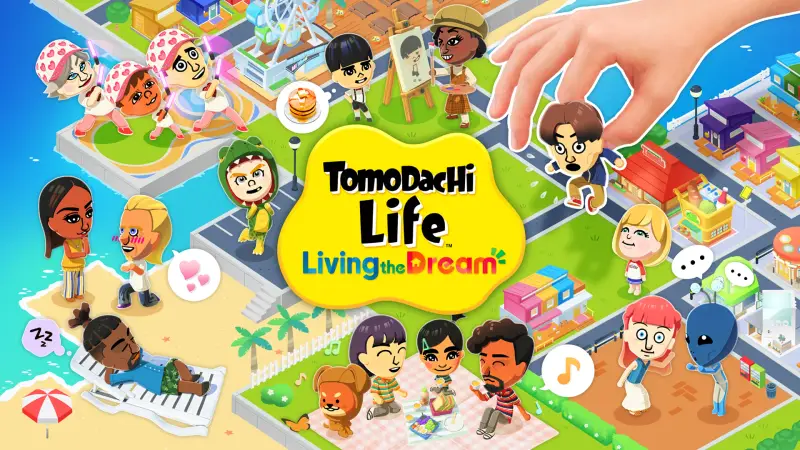
Despite its long development cycle, Tomodachi Life: Living the Dream has a clear focus that it achieves with narrow precision – this is Tomodachi Life, bigger, better, more refined, and somehow even more hilarious than before. Nintendo has cleverly iterated on the best ideas from its DS and 3DS predecessors to make a game that comes close to feeling like the fully realized logical endpoint for the series.
Mii, Mii, Mii
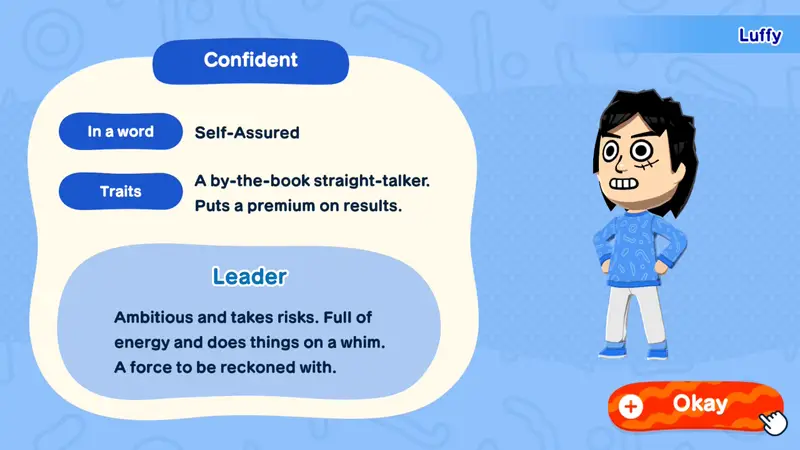
While I won’t go into as much detail with Mii customization here, as I discussed it at length in my preview for the Welcome Version, but it is absolutely clear that this is the best iteration of the Mii Maker tools that Nintendo has ever made. The level of depth between hair customization, facial features, and the newly introduced makeup feature, allowing players to draw directly onto their touchscreen with an impressive suite of tools, is the best the series has seen yet and has opened the door to creating more unconventional characters.
Responding to feedback from the original game, Nintendo has also opened up gender and romance options entirely, allowing players to create non-binary characters for the first time and full customization for their dating preferences. This open approach to creation applies to all elements of the game including marriage and children, and is the most necessary easing of a restriction that hurt the original game.
The God of Miis
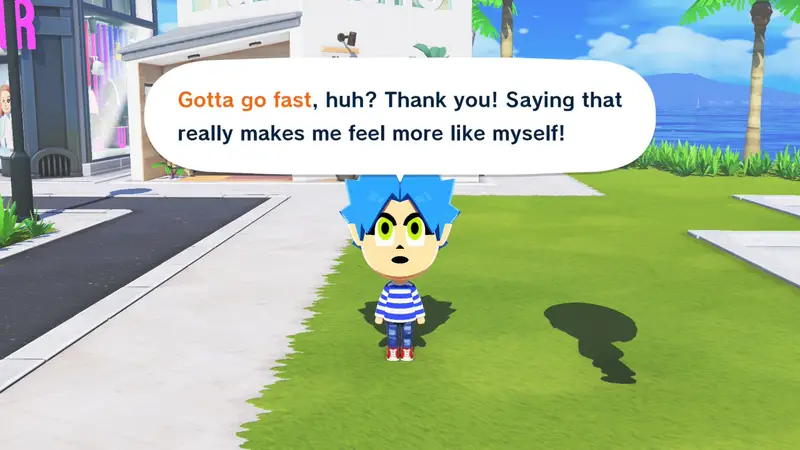
Discussing the gameplay of Tomodachi Life requires a different approach than most games, even within the life sim genre. In essence, players create a collection of Mii characters that react to things based on their personality traits. These Miis can be leveled up by giving them food, clothes, and treasures that they like, decorating their rooms, and through interacting with others as they inhabit the island together. As the player creates more Miis, new facilities open up that allow them to socialize such as a restaurant and Ferris wheel, and new methods of personalization are implemented like the ability to give them custom designed pets and assign unique greetings.
From there, the goal of the game is to just enjoy the insanity that arises from the conflicting personalities. Some Miis will fall in love, they might get into arguments over topics of discussion the player has brought up with them, and they’ll naturally go about interacting with the world around them, all while the player observes. Eventually characters can even marry and have children. The goal isn’t as much to manage these relationships or personalities as it is to enjoy the ride and embrace the chaos that ensues based on who you’ve made and what tools you’ve given them.
The original 3DS game hinged on short play sessions linked together by the random events that would occur as relationships grew. Given the expanded nature of this Switch entry, my play sessions have lasted longer owing to the sheer amount of interactions that happen concurrently now that Miis can freely leave their houses and explore the island. Even when none of my islanders were looking for my attention, I was never bored even when I was just watching random characters go about their business before stumbling into an odd scenario.
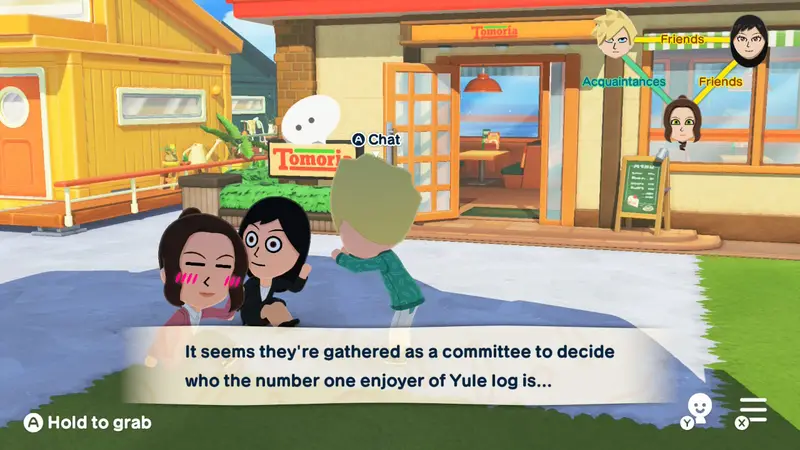
While there is a huge variety of randomized scenarios, more of which unlock as new locations and attractions are added to the island, there are a few elements from the previous game that are unfortunately absent that I can’t escape feeling are being kept for further content updates. Namely, the Concert Hall, which allowed players to write songs for their Miis to perform alongside designated backing tracks, is completely absent from the game. The singing function itself seems to be completely gone too, replaced with a generic harmonization during events like weddings with pre-written lyrics.
This was one of the most iconic elements of the series that has been included since the DS iteration, and it feels unlikely that Nintendo has made a creative choice not to incorporate it given the lack of restrictions around greetings or catchphrases that can be given to Miis, so it feels somewhat inevitable that this will be released as part of an update or DLC as has been the case with series staple features in games like Animal Crossing: New Horizons.
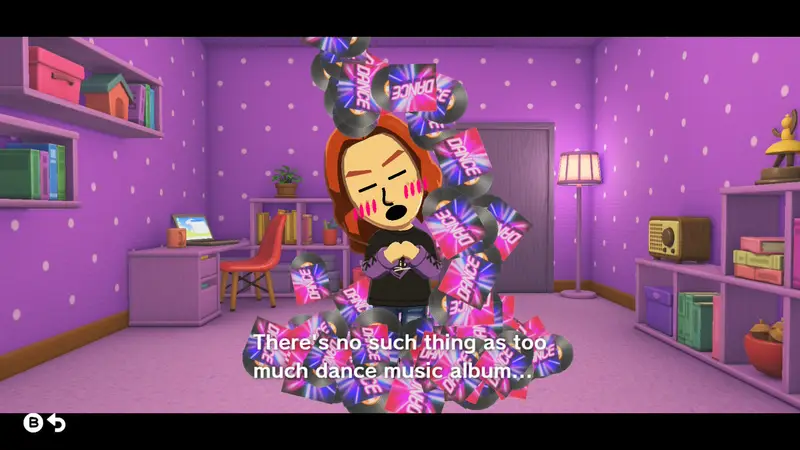
With these and a few other cases, it feels like the launch version of Living the Dream is being left deliberately open for some quality of life support down the line. While this is welcome, as I’m hopeful that Nintendo will support the game for years to come, it leaves some areas feeling a little hollow at the current moment.
That said, there is still plenty to enjoy on the island as the game is right now. I’ve spent hours micromanaging my Miis personalities, entrusting them with items that open up more interactions with others, and indulging in childlike amusement as I play with characters from games and anime I like in what is essentially a randomized digital dollhouse.
I imagine it might be hard for some to conceptualize what about this is fun, especially compared to contemporary life sim games like The Sims, but there’s a certain unique brand of strangeness to Tomodachi Life that has justified the outcry for a new entry for all these years that does need to be seen to be appreciated.
Island Isolation
There has been a lot of criticism directed towards Nintendo’s choice to disable sharing features directly from the Nintendo Switch console to its smartphone app, which allows for quick and convenient screen captures and recordings in most Switch software. The reasoning for this seems to be to remove the company’s direct involvement in the sharing of screenshots that could be used to insult or harass people, while still allowing players complete freedom for expression on their island without the need for policing or filtering (it’s worth mentioning that there is no profanity filter in the game whatsoever).
To me, it seems that Nintendo has made the clearly correct choice for the quality and longevity of the game, giving players complete freedom over what topics their Miis obsess over and injecting as much personality into their worlds as technically possible. If the concern is over how players will share their content, all I need to do is consult my Instagram Reels timeline or Bluesky feeds to disprove them, as both of them have been flooded in screen recordings and clips from live streams for the last week. The Tomodachi Life community is alive and creating content like never before, and any system limited features have not done much to prevent that.
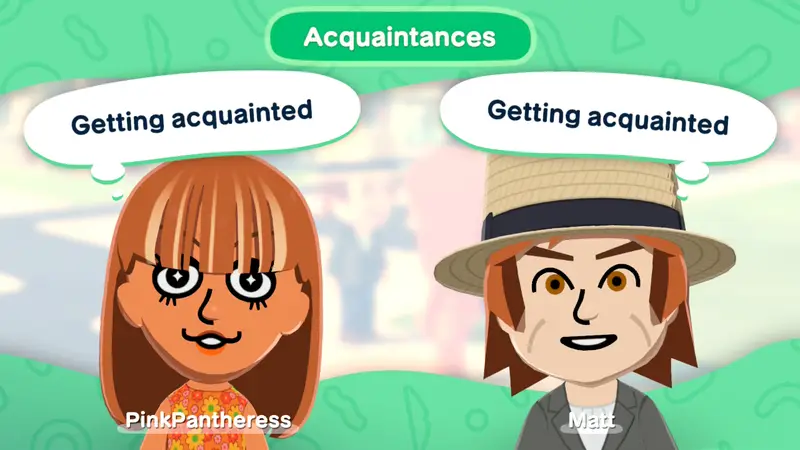
Another byproduct of this is that the sharing of creative works has also been disabled, essentially ending the Mii QR code trading of the original and the incredible community creations found in Miitopia. This is absolutely a harsher downside of more open design, but it’s one that hasn’t hurt my experience too much over the week that I’ve had with the game. While it would be far more convenient to download Miis based on celebrities like PinkPantheress and Matt Johnson than have to create them myself, I’ve also found myself engaging with Nintendo’s creation tools now more than I have since I was a kid playing around in the Wii’s Mii Channel or when Super Smash Bros. for Wii U added custom characters.

I’ve also been encouraged more to engage artistically with my island in order to inject my own tastes or elements I am attracted to. When I unlocked the ability to draw onto screens, I wanted to give my characters a dating sim to play on their in-game Switch consoles. Knowing my limitations as an artist, I grabbed a stylus I had lying around and threw together a cheap rendition of Hatoful Boyfriend, since I trust my ability in drawing birds more than humans.
It won’t be the same for everyone, but not being able to depend on the artistic capabilities of folks far more gifted and talented than myself led to me thinking outside the box for more entertaining and personal ways to make my island my own, and ultimately led to a more rewarding experience as I found myself awkwardly hunched over my Nintendo Switch 2 drawing for hours just see my work become an obsession of my Mii residents.
Verdict
Tomodachi Life: Living the Dream offers an almost limitless toybox of creativity and player expression, held together by a distinct and wonderful sense of humour that still manages to delight me just as much as it did 12 years ago. With the exception of some restrictions and cut features that feel like they are yet to be added, this feels like the ambitious game that the series has been building towards since its inception.

Tomodachi Life: Living the Dream is available now, exclusively for Nintendo Switch.