Hype: The Most Important Aspect of Modern Marketing
In just the past decade alone, we have seen more than enough titles to solidify the idea that sometimes there is such a thing as ‘too much hype’. It’s no secret that some have risen from the ashes like Cyberpunk 2077 and No Man’s Sky to deliver on their original promises, but many have simply faded away into irrelevance, sometimes closing entire studios in the wake of their fractured releases. As cut throat as it may appear to us peering in from the outside, it’s simply a product of the modern age. Not even a hobby as casual as gaming can escape the corporate lingo and fiscal spreadsheets that have invaded every aspect of our lives. Whether the community likes it or not, gaming has quickly become a billion dollar industry with one singular goal – selling as many copies as possible.
With the ability to connect to the entire modern world at the touch of a button, creating hype is all but another piece in the grand scheme that is game development. The trick has always been showing just enough of your game to attract the masses, while also keeping just enough under wraps to instill some sense of mystery. This premise isn’t unique to just the gaming industry. If anything, it is present in every aspect of your life. Time is the most valuable element in the world and everyone is duking it out for the minutes in your precious free time. Hype is there to not only convince you to spend your money on a product, but your time.
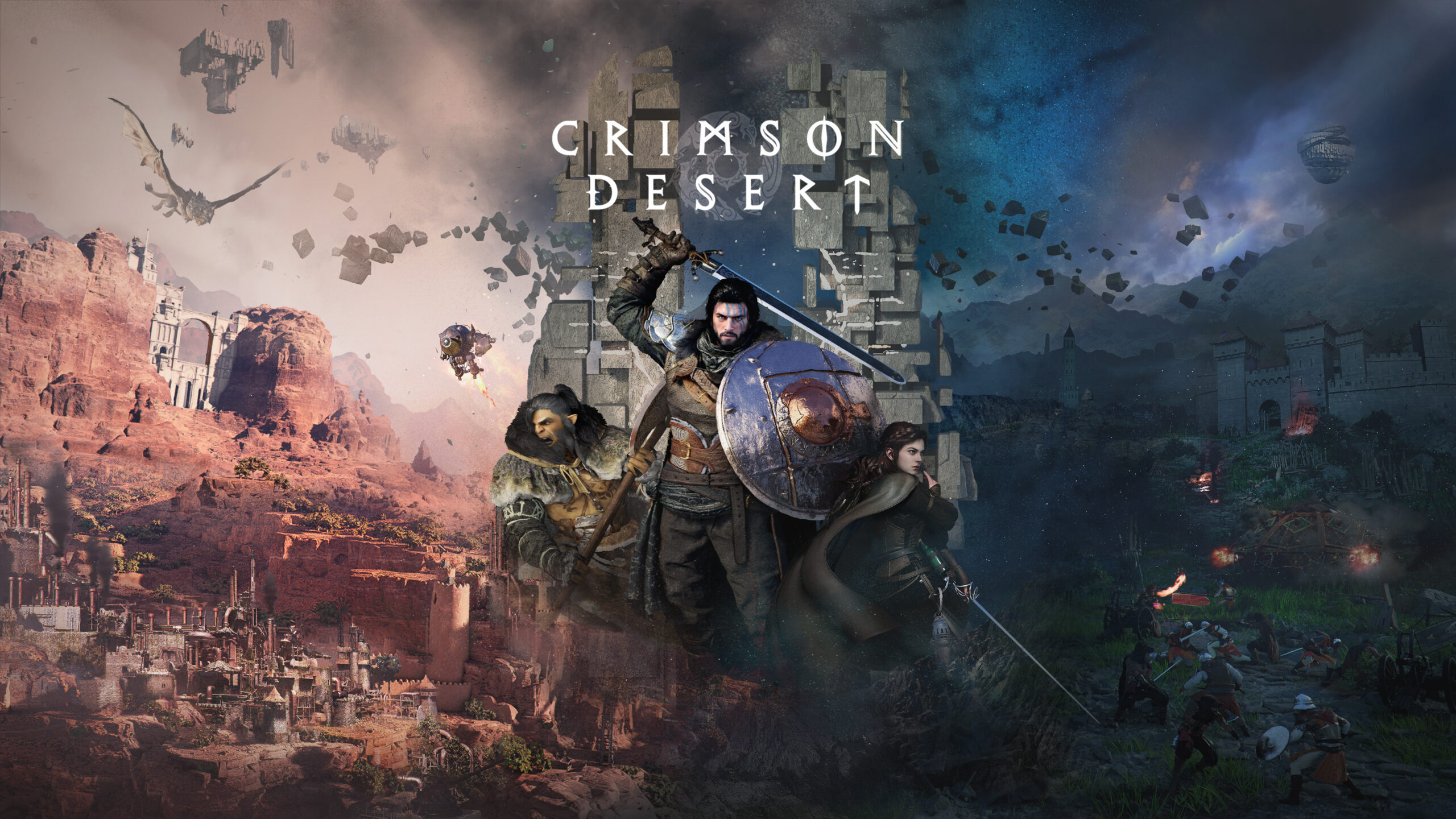
Crimson Desert is a game that was shrouded in a veil of mystery in the months leading up to its release. Originally penned as a sequel to Black Desert Online, the MMORPG released in 2016, Pearl Abyss instead chose to chase the single player route, citing that their goal was to create a MMO-lite experience with a greater emphasis on creating a limitless playground for the players to carve their own legend into. Through the various trailers released since its announcement back in 2019, from the combat to showcasing the open world, Crimson Desert looked like it was set on delivering on that promise. But just like every relationship you have in your 20s, things are never that simple.
In the months leading up to its release, there seemed to be some things missing from the usual promotional material developers put out when a game is trying to sell itself. Among them was a lack of baseline console footage that showed it was able to run on a standard PS5 or Xbox Series S/X where most of its target audience plays. Tie this in with the fact that there were no console codes sent out to reviewers before release, and you have what amounts to a PR nightmare created days before Crimson Desert’s release date. The hype and sense of awe that had permeated through the community turned into a feeling we all know so well in the gaming space – it’s complicated. Let’s get into it.
Story: In The Shadow Of Those That Came Before
Crimson Desert is a game that very much feels like it was created in the image of those that came before it. Often presenting itself as a twisted tale of revenge that spans a continent engulfed by war, it falls into the same tropes and pitfalls that have plagued the genre since its inception. You play as Kliff, a member of the Greymanes, who is thrust into rebuilding his faction after they are ambushed by their sworn enemies the Black Bears in the first few minutes of the game. During this ambush, the leader of the Greymanes is killed and Kliff and his band of mercenaries are scattered in the wind as the Black Bears wage open warfare against the dozens of factions that inhabit the continent of Pywel.
This quest of revenge has Kliff and his companions rebuilding the Greymanes while simultaneously hunting the leader of the Black Bears and all of those that have wronged him. Throughout your journey you’ll interact with a wide variety of interesting, and equally obnoxious, characters that all seem to have their own motives to either keep the war going or end it before it spirals out of control. Beyond just a somewhat basic tale of revenge is a world spanning game of politics and backstabbing that feels akin to Game of Thrones mixed with a standard fantasy setting. But the funny thing is that this system somehow works? Well, at least most of the time.

I’d be lying if I said I didn’t really enjoy the story once it gets past the first 8 or so hours, but that statement in itself is a problem that some people might not be able to get over. As much as I loved my time in Crimson Desert, it does take a bit of time for certain aspects of the world to ramp up. Once people realized this, many people took this as a chance to immediately discount the game as nothing more than a cheap imitator chasing a prize it didn’t deserve to be competing for in the first place. While I think this limited way of thinking is just an extension of the echo chamber the internet has become, I have to admit that it does present a valid argument.
Like we talked about in the beginning of this review, time is the most valuable aspect of our lives. It doesn’t matter how much money you have, or how far along you are in life. Everyone has the same twenty four hours in their day and spending 8 hours of in-game time just to reach a point in a video game where you feel like you accomplished something is a huge ask. But do not fret my friends. I am not one of those people. If there’s one thing I’ve come to love, it’s a game that employs a slow burn, and Crimson Desert does that in a way that feels appropriate for what is asked of you. The story has you jumping all over the continent of Pywel, a land area that dwarfs every open world map I’ve ever played, and though it does take a while to get out of the starting city, what awaits you in the hours after that are well worth the price of admission if you’re looking for a world to get lost in.
The premise behind the story is interesting enough on paper to the point where I was intrigued throughout the first few hours and beyond, but the problem is that Kliff is about as charismatic as a wet paper towel in pretty much every scene where he’s required to do anything but swing his sword. Often coming off as a grizzled mix of Jon Snow and John Wick, Kliff is in simplest terms a man of few words. In most conversations you have with the dozens of important NPCs you interact with throughout your journey, he mostly employs one-liners and his dialogue is written as if he is the biggest ‘yes man’ ever created. Do I mind this system? No, but anyone that is looking for writing along the same level as The Witcher or any other single player RPG will be sorely disappointed when they hear some of the things that come out of his mouth.
Whether this was by design or not could be argued as you are meant to carve out his legend yourself, but it presented more than enough moments where I couldn’t help but laugh at his reaction to some of the more delicate moments throughout the story. It really does lend to the idea that this was originally meant to be a MMO with a silent protagonist who doesn’t do anything but nod his head and give these NPCs a thumbs up.
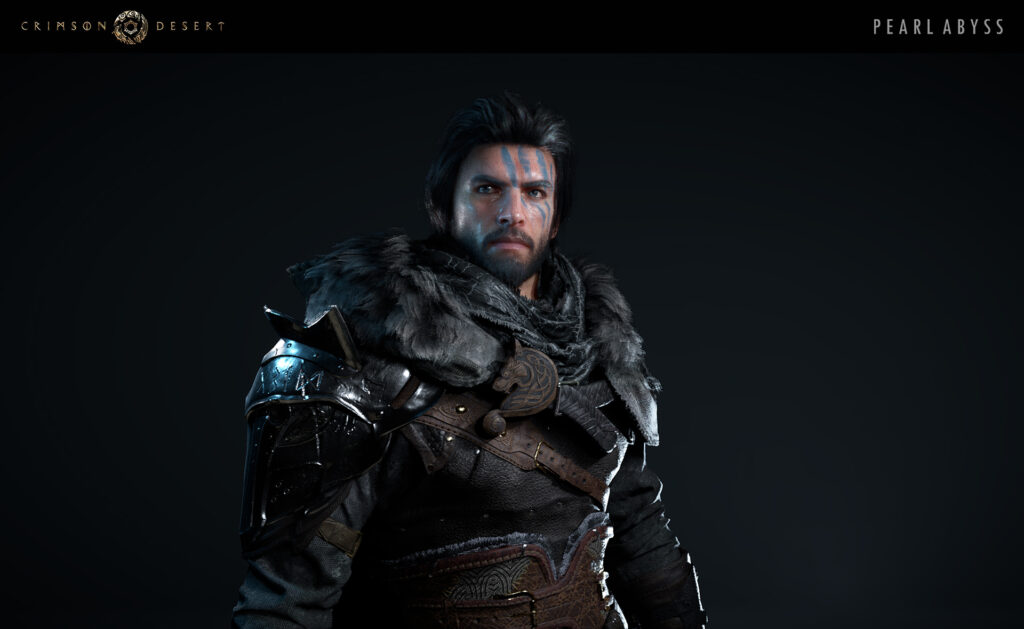
Just like the story, it gets better as it progresses but again some might be thrown off by his general tone and his lack of any sort of emotion towards some of the bigger moments in the story. And the most painful part of all? Most of your Greymane companions are just as dry as Kliff is. The only somewhat interesting one with a personality, Yann, is already unanimously the most hated of all Kliff’s companions for playing the ‘whiny baby, but a badass’ trope far too well for his own good. The others are mostly forgettable. Even the two other playable characters Oongka and Damiane, who offer their own respective skill trees and playstyles, fall short of feeling like anything more than a change of pace during some of the more intense moments in the story.
Even worse is that as of the writing of this review you have to earn your skill points for each character separately. What that means in simplest terms is even if I have a couple hundred skill points with Kliff, I will still have to manually level up the other two characters to reach his level. Not only does this feel like a deterrent to playing as the other characters, but it honestly removes any motivation to play as these secondary characters or even attempt to learn what makes them different than Kliff. Will they patch this as soon as this review is released? One can hope but for now, you’re stuck as Kliff unless you feel like grinding.
The World: As Gorgeous As They Come
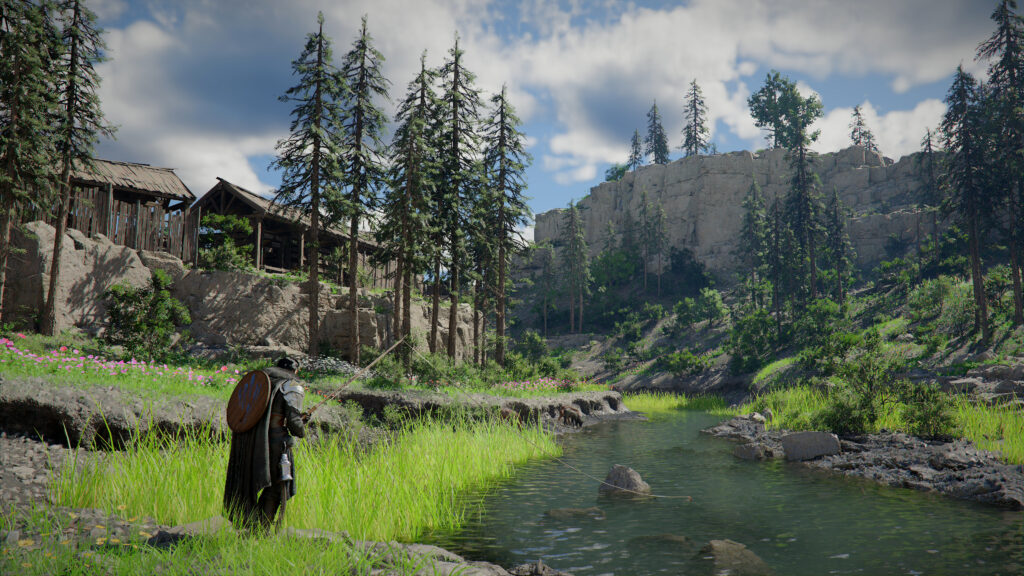
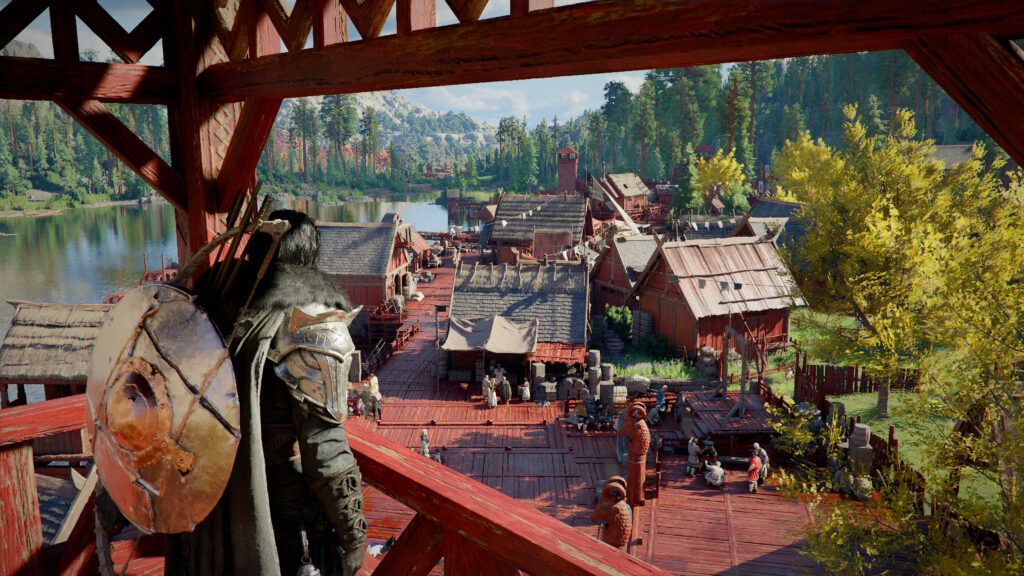
Once we get past the story and the characters that you’re interacting with, we can finally talk about the centerpiece of the entire experience besides the gameplay – the world. The continent of Pywel is simply one of the most diverse and fun to experience playgrounds I have ever had the pleasure of exploring. You have everything from massive sprawling cities filled with merchants and other NPCs, to ancient settlements hiding mysteries that are just beyond the veil of an intricate puzzle or some other mystery. The comparison that makes the most sense on paper is the sprawling wilderness of a game like Red Dead Redemption II with the quest diversity of something like World of Warcraft.
There is genuinely a quest for every type of adventurer. Does a simple fetch quest tickle your fancy? There’s an NPC somewhere just waiting for you to accept their daily chores. Does something more violent call to you from the wilds? Well, I’m pained to say there is a roster of interesting and equally annoying bosses scattered around the world just waiting for you to challenge them. ‘A quest for every adventurer’ feels like the cheesiest sales pitch to the most bloated game possible, but again it somehow works?
By the end of the main quest line, which took me about 65 hours in its own right, your quest log and by proxy your map is going to be so full of landmarks and points of interest that it can feel a bit overwhelming. To some this might feel like bloated content, but I think they do it well once the game lets you explore past the first chunk of the campaign. It does often teeter the line between ‘ubislop’ and the greats of the open world genre such as Elden Ring, but there is plenty to do that is well worth your time if you just explore off the beaten path. But again, just because a map is filled doesn’t mean that everything feels purposeful.
A lot of the community, myself included, are thrown off by the rules some developers follow. That is why Crimson Desert is the most complicated beast when it comes to its world – it’s both fun and painfully boring at the same time, sometimes in the same fifteen minute span. One minute you might be clearing your way through a bandit camp, but once you’ve done it a hundred times is it still fun? I digress. I had fun with the exploration and the host of things available at your fingertips, but those that are tired of the modern ‘open world’ game development cycle might be less inclined to dive deeper into some of the minor quests and the tedious chores that will ultimately follow.
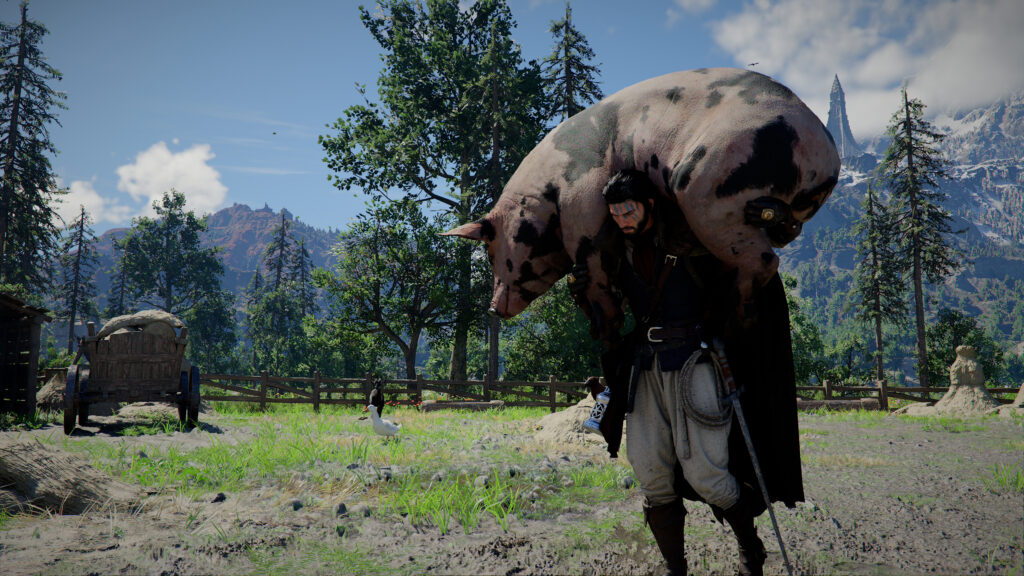
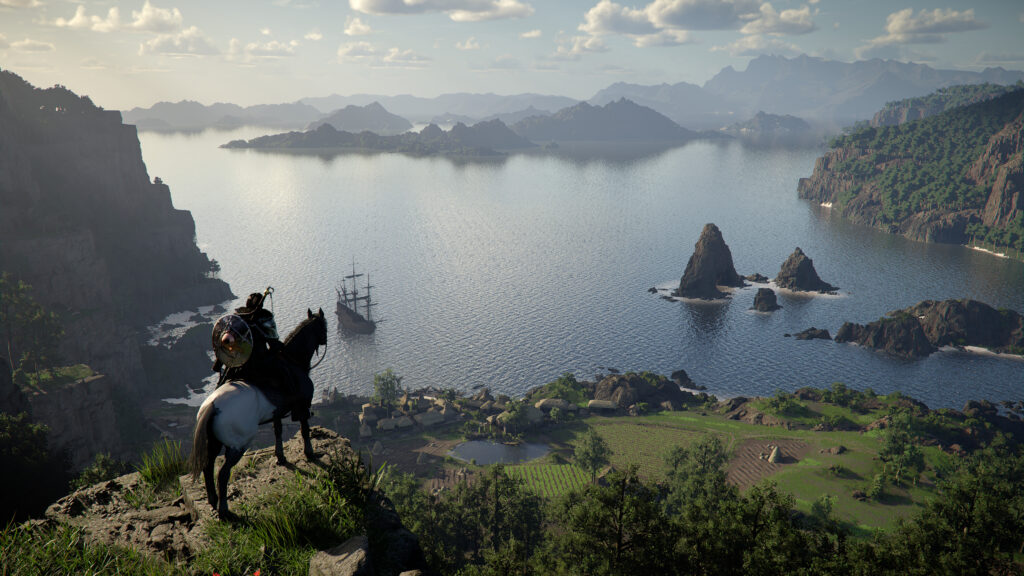
And the best part of all? In motion, Crimson Desert is one of the prettiest games that has been released in the past decade. Everything from the trees swaying in the wind, to the snow capped peaks looks as if it was created with the utmost care. This feeling is compounded by the sheer scale of the world and the game really does encourage you to reach out and visit the places you see in the distance. Even with four different biomes and twice as many sprawling cities, somehow the game maintains its performance while rendering these untouched landmarks in the distance. On PC I never had my frames drop below the low 50s no matter what I was doing. Even when there were hundreds of NPCs on screen at the same time fighting amongst themselves while bullets and arrows flew across the battlefield, I was able to maintain the same experience no matter what was going on.
My system is in every sense of phrase ‘above average’ with the 16GB version of a 5060ti as my GPU, but I have to admit it was a great experience on PC. Like I mentioned in the beginning of this review, console review codes weren’t sent out and much of the community found out why in the days after Crimson Desert released. I read everything from ‘unplayable trash’ to ‘the best looking game ever’ and to this day the community seems to be pretty split on how console performance is measuring up to the videos shown to us before release.
The base PS5 and Xbox Series X seem to hold up in their respective Performance modes, and PS5 Pro users are getting the best experience outside of PC as usual. But don’t worry – Pearl Abyss has been hard at work sending out patches and seems intent on making sure that people are able to experience the game in the way it’s supposed to be, so there is hope on the horizon for those that are still struggling. Like I said I had no problems, but I’m running newer hardware. Honestly it’s one of the best looking games of this decade, and if you get one thing from this review, I want it to be how fun the world is to navigate and how gorgeous it looks.
Gameplay: Unlimited Options + Huge Playground = Success
Now for perhaps the most important section of all for a game like this – the gameplay loop. Now this seems to be the one aspect of the game that everyone (mostly) agrees on. Sure the story is as mediocre as possible, and Kliff is just a medieval John Wick with magic powers, but how does that translate in the sense of mashing buttons? Well Pearl Abyss, you win this time. In short the gameplay in Crimson Desert is a wild ride from the start to finish. As Kliff you are perhaps the most deadly man on the continent of Pywel, and truthfully the game does make you feel like you are an unstoppable killing force for pretty much the entire playthrough. The game has a way of giving you a metric ton of ways you can approach every fight you face and it really does add to the idea that ‘freedom of expression’ is encouraged in Crimson Desert.
You got everything in your arsenal from a standard sword and shield that Kliff starts with, to heavier hitting great swords and halberds that excel at knocking groups of enemies on their backs in hilarious fashion. What makes the standard weapons in Crimson Desert pop more than other games is the Abyss Gears that can be found scattered around the world and notched into some of the more unique weapon types. The best part about this system is that these Runes can be removed and slotted into whatever weapon tickles your fancy. Some of these runes have bonuses as simple as giving you more attack speed or damage, while others give Kliff access to some more exotic moves that make combat more flashy and further reinforce the idea that you are the harbinger of death.
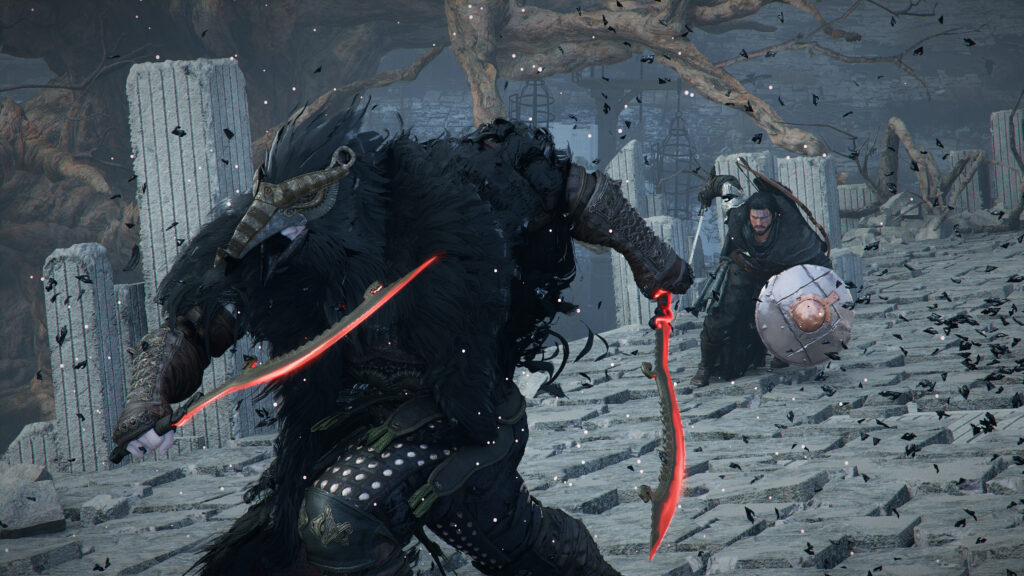
But these are standard by every stretch of the word. A sword and shield? That’s so 2010. Everyone has some form of the standard run of the mill medieval weapons nowadays. Crimson Desert spices it up by adding the concept of Axiom Force. This gameplay feature is the ‘magic’ side of the equation. You have an array of Axiom abilities at your disposal from a ‘force punch’ that can be used to break enemies stagger bar more effectively than a standard sword, and a claw-like ‘grappling hook’ that can be used for both combat and traversal. The beauty of this system is that it all works as intended when combined together. As Kliff, you are able to weave in your Axiom abilities into your standard sword combos as if it was part of the combo to begin with.
Even without the Axiom abilities the standard sword combat feels and plays like the enemies standing between you and your goals are nothing more than generic henchmen waiting to be slaughtered. There are about half a dozen major campaign missions where your entire goal is to kill hundreds of soldiers to clear out an area and the way that Kliff wields his sword is honestly only comparable to characters like John Wick. In a sense it made me think about games like the Dynasty Warriors series, but it feels closest to the more recent Assassin’s Creed series. Again does that mean it’s bad? Not at all – but it’s very obvious when you step into a region that you’re not leveled up for as the enemies will take no damage, while you crumble after being touched once.
Once you get your footing under you, Crimson Desert has a way of throwing the real challenges your way. In perhaps the biggest surprise for me, this game employs a huge roster of bosses that feel both unique and terrifyingly challenging in the same breath. It feels like the bosses were mostly created to present varying levels of challenge in your journey and they did it in a way that feels eerily similar to some of the best bosses from Fromsoft’s huge roster. The varied number of bosses and the challenges they present felt like the perfect mix up to an otherwise tame open world action experience. With a total of over seventy bosses in total scattered across the map, with about 25 being campaign related, you have a huge amount of variety in what you’re going to be put against. The bosses you face aren’t just there to act as meat sponges either.
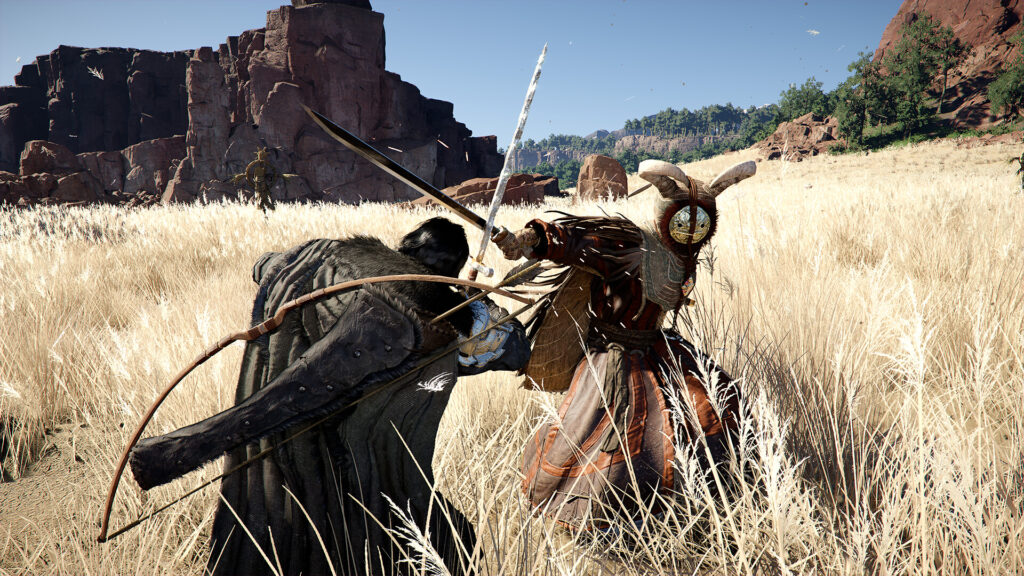
Each one has their own move sets and weaknesses for you to abuse and the combat system makes it so you’re never unprepared for a fight from an arsenal perspective. In the seventy hour campaign you’ll fight everything from crazed cult leaders wielding dark magic to steampunk robots with rocket salvos, and again it somehow all works in motion. For the most part no two fights feel the same, and I looked forward to the bosses as opposed to dreading them. I’ll even go out and say that there is a good few of them that pose a ton of challenge and will undoubtedly push you towards your limit if you’re not used to the game systems that are offered to you.
What works for some of the bosses may be completely useless against others and it encourages you as the player to adapt to every encounter with the idea that no two fights are the same. The idea of ‘freedom of choice’ is prevalent in every fight, and no two players will approach the fights the same. The best part is that if you are an enjoyer of a varied number of bosses that each pose their own levels of danger and what’s required to defeat them, you’ll love the way Crimson Desert treats boss fights. They aren’t just placeholders waiting to be killed, but rather pieces of the story just like Kliff fighting for their own thoughts and ideals.
The last thing I want to mention in my review is sheer number of puzzles Crimson Desert employs throughout both it’s campaign and the overall world. It was a hot topic in the days after the review embargo released that many of those that got early access were stumped or unable to solve the varied number of puzzles thrown at you throughout the world. Do I agree with them? Of course I do. Some of these puzzles are so painfully obscure that I couldn’t have imagined doing some of them without at least some form of a hint. I’m not even kidding when I say that there is dozens, if not hundreds of puzzles scattered around the continent of Pywel that each offer a different level of challenge and means to complete them.

Some are extensive and expect you to traverse around the map to find clues, while others are as simple as making sure that the runes match up. Just like the boss fights, there is a puzzle for every type of person. Sure they present a certain level of annoyance like most puzzles do, but I’ll admit that the way the game pushes you to use your abilities to solves them feels makes the game systems feel as if everything has a use. Need to push a block into place so the ancient machine can start? Use your Axiom Force Ability. Are one of the gears rotated out of place with no clear way to turn them? Using your Axiom Claw will fix that without a hitch. This system of checks and balances has allowed Pearl Abyss to show their creativity while giving players another avenue to experience the game to the fullest. I loved the puzzles and I hated them in the same breath, which means they accomplished exactly what they set out to do.
Ending Thoughts: A Complicated Win
Often feeling like a game chasing greatness, Crimson Desert is in every sense of the word ambitious. Sure, Kliff’s story of revenge is one that been told a thousand times, but it’s seemingly endless open world begs you to chase the adventures beyond the horizon. When you tie this beautifully crafted playground together with a combat system that encourages the player to experiment and think outside the box, you get a game that feels impossibly complex while feeling eerily familiar in the same breath. Crimson Desert is many things – dangerously ambitious, clunky, beautiful, messy, and most importantly: mind-numbingly addictive.
Crimson Desert was reviewed on PC. Crimson Desert released on 19 March 2026 across PC, PlayStation 5, and Xbox Series X/S.