
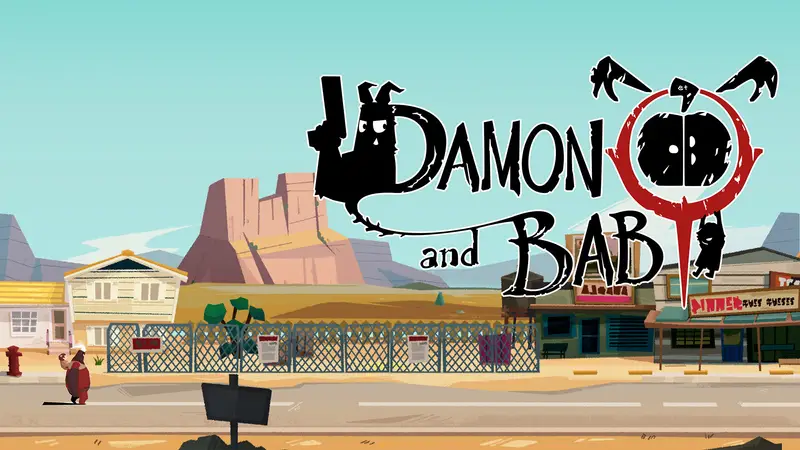
For decades, Arc System Works has produced beloved, high quality anime fighting games that have gone on to become major mainstream successes following the release of 2018’s Dragon Ball FighterZ. Since then, the studio has become an industry titan, which made last year’s announcement of DAMON and BABY all the more intriguing.
Despite its fighting game success stories, Arc System Works has a history of developing and publishing a diverse range of titles. DAMON and BABY however, represents Guilty Gear creator Daisuke Ishiwatari’s first new IP in years, an attempt to create a smaller action title with younger staff members within the team.
While it is a commendable effort – one that I have a lot of respect for, the final product is an obtusely designed mess.
Story
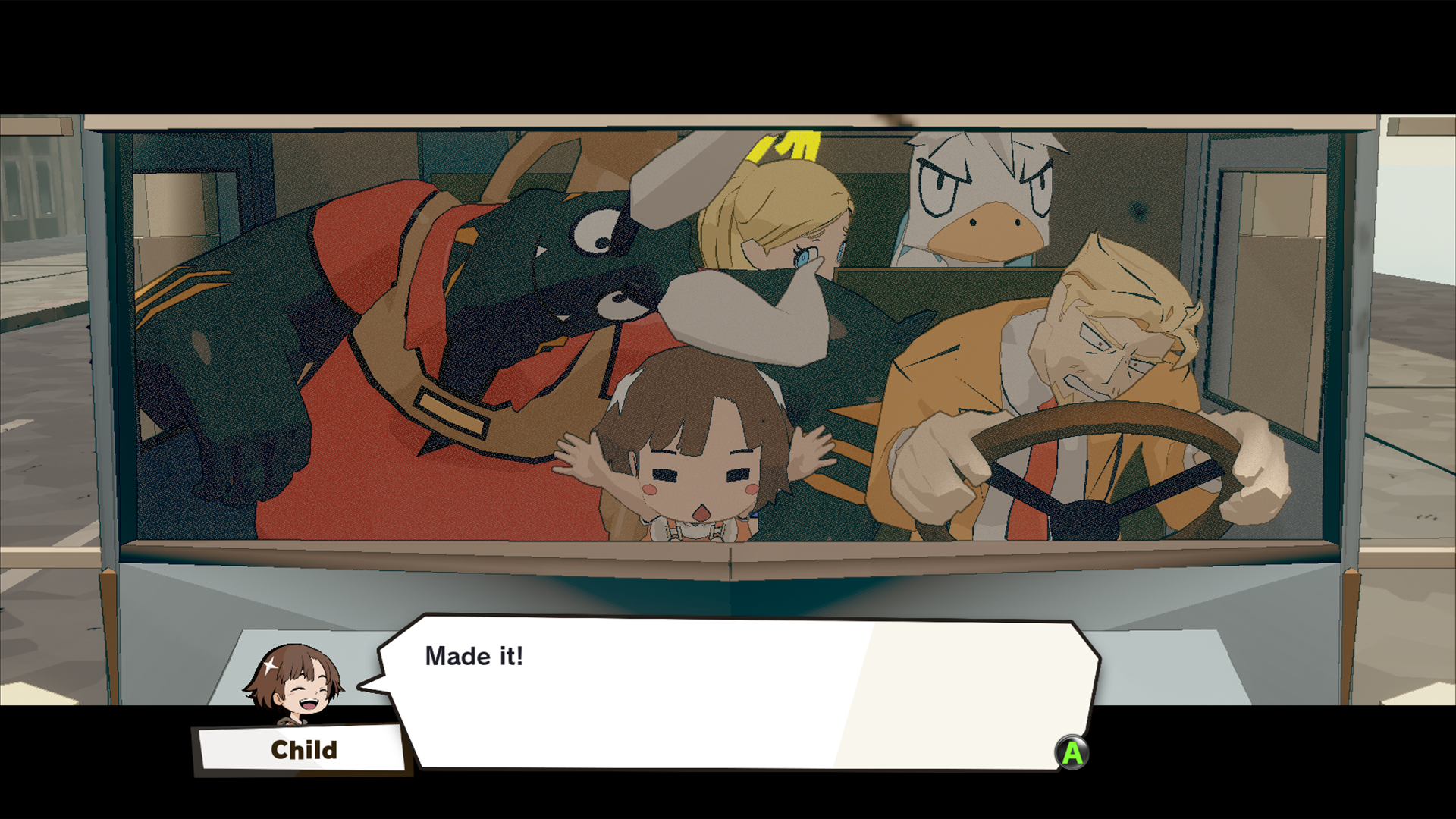
The story follows Damon, a demon who dreams of becoming the ‘Great Demon Lord’, as he is entrusted to protect a very important child when attempting to reap the soul of its apparent father. Bound to the baby, Damon is tasked with taking her to the Celestial Realm while protecting her from other demons in order to sever their spiritual connection.
While there are a number of charming moments to be seen between Damon, the child, and the eventual party that they amass, I was ultimately left disappointed that the titular relationship between Damon and the young girl was not a focal point of the game’s narrative. Despite this, I managed to enjoy the characters and their individual personalities throughout my roughly 20 hour journey, but I can’t imagine much of the experience sticking with me well beyond the credits.
As has been revealed in promotional material, there are a few cameos from characters from Arc System Works’ other franchises sprinkled throughout DAMON and BABY’s story. While I won’t reveal too much about the who or why regarding them, their inclusion both somewhat distracts from the game’s positioning as a new Arc System Works IP, while also fleshing out an otherwise unnoteworthy setting.
Gameplay
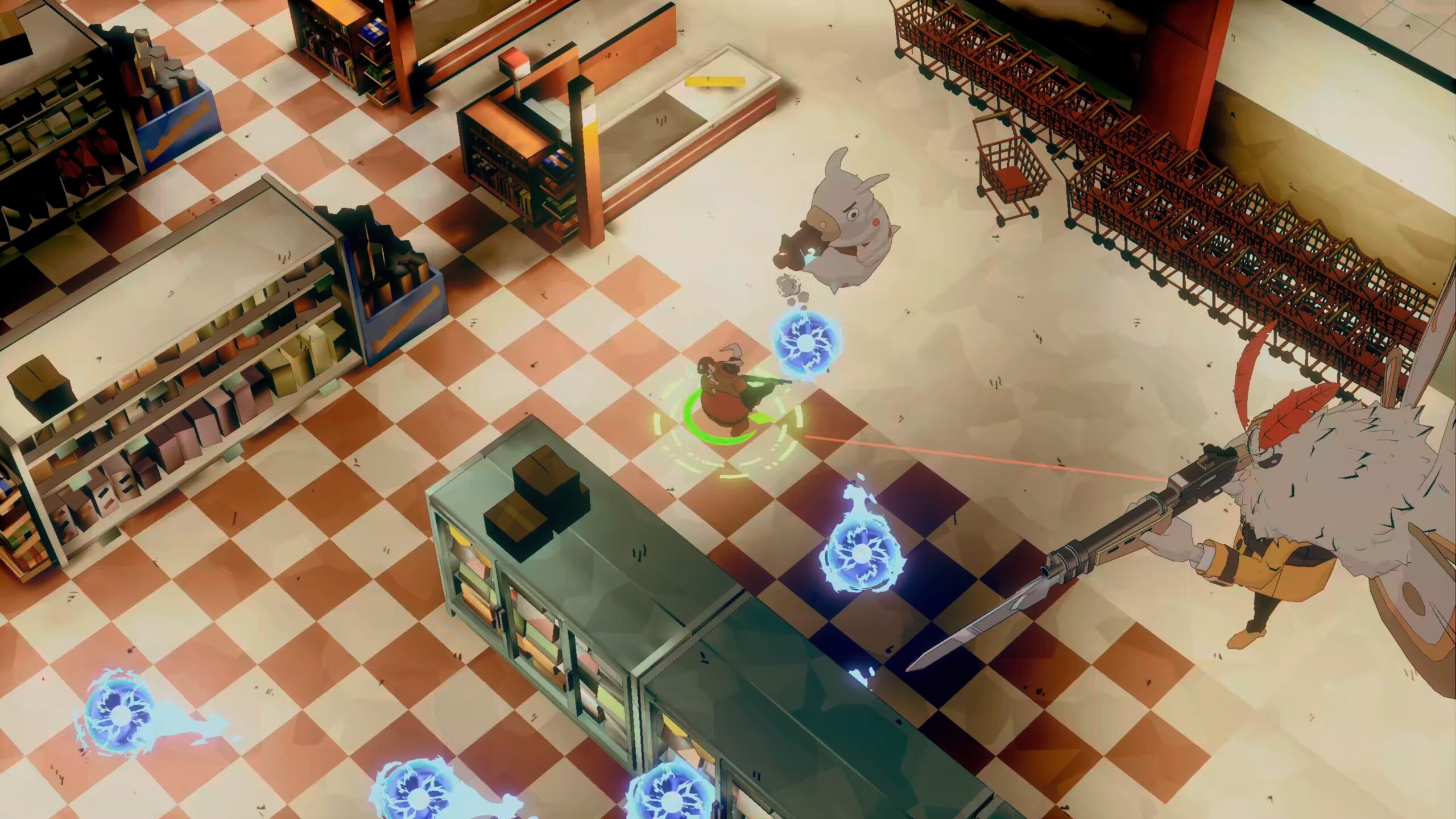
The game is primarily a twin-stick shooter played from an isometric perspective. As the game progresses, players can find and unlock new abilities for Damon and the child to possess to assist in both exploration and combat, such as the “Baby Jump”, which allows for quick teleportation, assisting in both platforming and for maneuvering around enemy attacks in the heat of combat.
While there are brief moments of satisfaction to be found, the combat of DAMON and BABY is consistently unsatisfying and lacking in impact. The weight of Damon’s controls shift dramatically upon entering combat, immediately causing disorientation. This is compounded by awkward aiming and slow weapon switching, hampering reaction times in fights that demand quick evasion, making it easy to become overwhelmed by enemies in large areas.
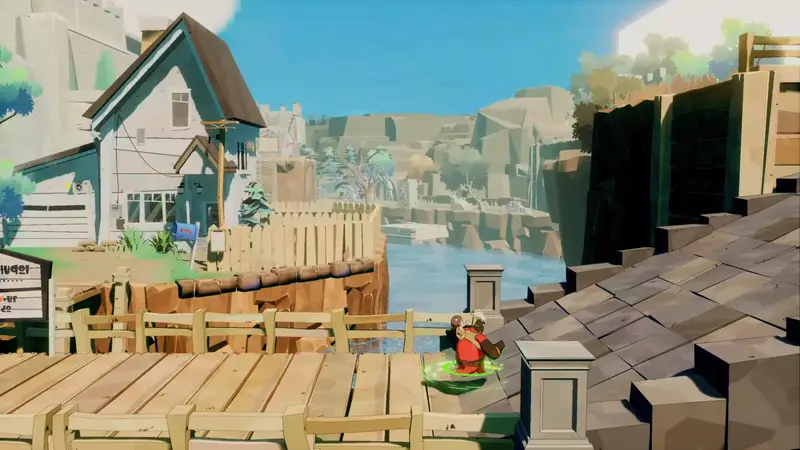
Exploration initially shows a lot of promise, especially in the opening area’s Zelda-like approach to discovery and puzzle solving, featuring a large explorable ruin area and atmospheric music not dissimilar to recent genre favourites like Tunic. This quickly evaporated once I reached the second area, where the game establishes a pattern for unnecessarily large yet claustrophobic indoor environments that feel labyrinthian in their repetition.
This is made worse by the poorly implemented map, which fails to properly denote areas outside of previously discovered resting places, leading to a sequence in the second level where I found myself unable to progress for hours due to a lack of signposting for areas that I had not previously discovered in a level that had no reason for being as open and unfocused in its structure as it is.
The isometric camera also feels largely unaccounted for given many of the tight environments found beyond the first level. In many of these areas, when there is a wall obstructing the view, the player can only see what is briefly ahead of them through a small peephole perspective, once again causing frustration during combat encounters.
The game employs RPG mechanics in the form of stats that players can upgrade after Damon has leveled up in combat. Similar to games like Dark Souls or Clair Obscur: Expedition 33, when resting at a bed, players can allot points to various stats such as health, defense, and each weapon type to improve their usefulness in combat. During exploration, players will also come across a plethora of loot drops in the form of new weapons, charms to further improve their handling, and ingredients used to cook health items in kitchens.
While there are secrets to be found that can be brought to special vendors for more unique rewards in the form of cosmetics or rings that can further enhance Damon’s stats or allow for companion characters to fight alongside the player, the rewards for exploration fail to account as a justification for just how unnecessarily open and aimless the levels are. The frequency of loot also creates a frustrating loop of inventory management and having to spend time traveling to previous levels to sell unwanted items once the fast travel system has been unlocked.
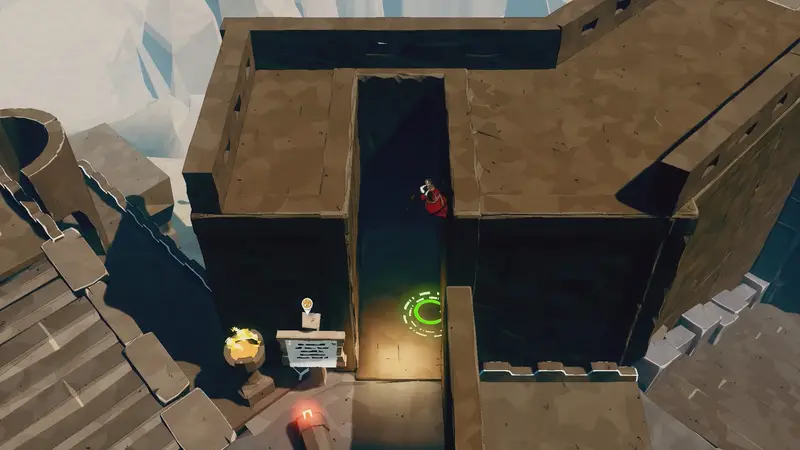
The overcrowding of RPG mechanics and emphasis on stat micromanaging contributes greatly to combat just never coming together in any satisfying way. Upon getting lost in the second level, I managed to significantly over-level my character at an early point in the game. Despite this, there were still sharp difficulty spikes in which I was overwhelmed and sent back to the title screen before I could process where I was being attacked from. Given the game’s lack of frequent autosaves, these instances resulted in the loss of progress too many times to count.
Visuals & Audio
Thankfully, DAMON and BABY’s art direction is one of its highlights. The game features a very simplistic cel shaded anime style that echoes memorable iconography and motifs from the more detailed art from games like Guilty Gear and BlazBlue. It manages to be both identifiable as an Arc System Works game while also standing alone enough to feel fresh, with some impressive and memorable character designs to boot.
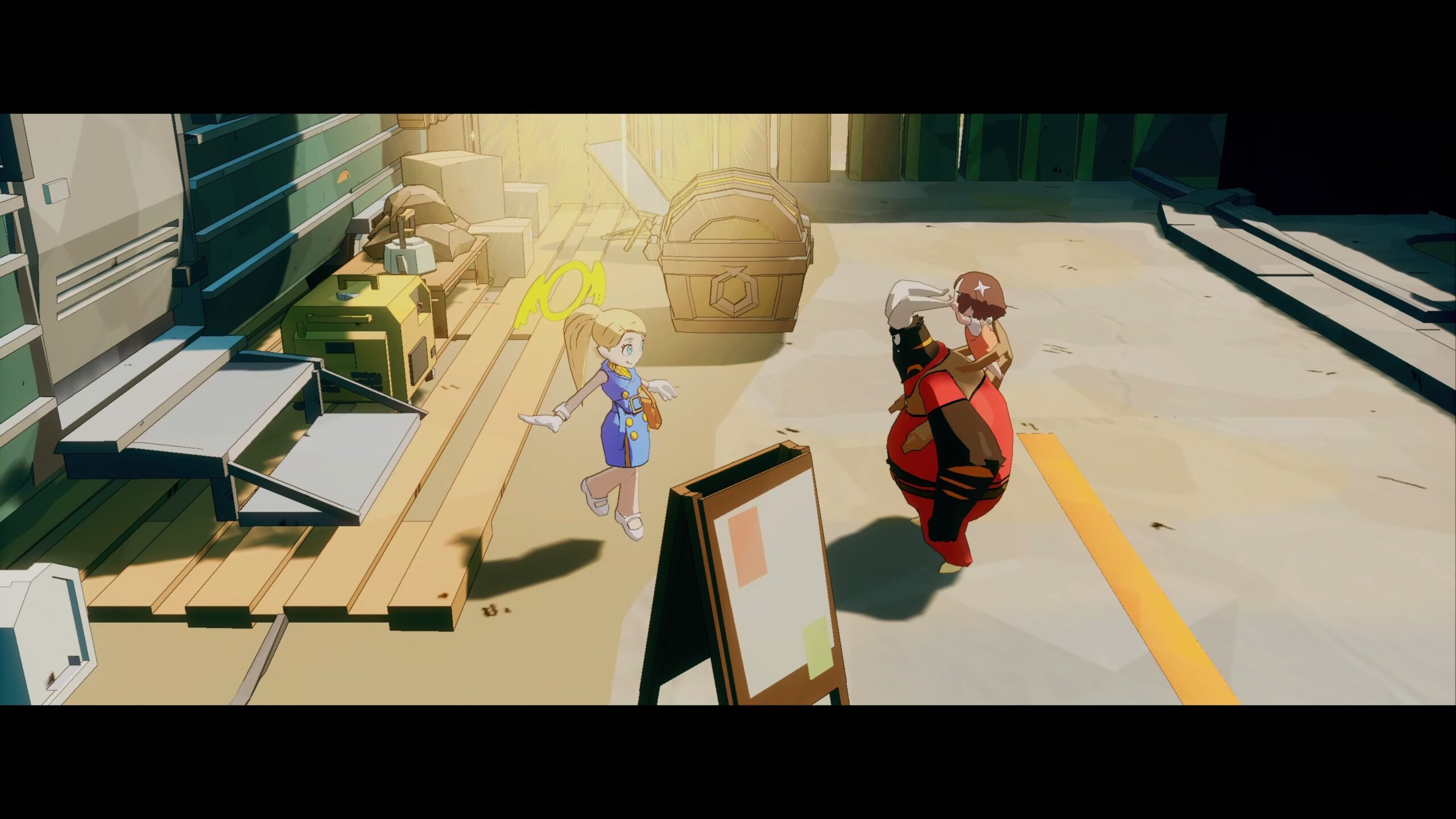
Strangely, the PC port is very barebones, with little in the way of graphic options outside of a simple graphics preset option. At least in my pre-release build, there were no options to push the frame-rate above 60 frames-per-second, and even at 1080p the image still looked somewhat low quality and lacking in anti-aliasing. The lack of settings seem to indicate that the Nintendo Switch is the target platform, which isn’t that much of a surprise given the stated scope and the scalability of its technical specifications, but some more robust graphics options would have been appreciated. For what it’s worth, the game also runs at a locked 60fps on ‘Ultra’ settings on Valve’s Steam Deck too.
The music during exploration does a great job creating atmosphere, especially in the first major area, as previously mentioned. It is undercut slightly by some repetitive combat music, especially when Damon’s health reaches the lower levels. The constant music changing becomes somewhat exhausting when constantly transitioning from exploration to combat, making it a little hard to appreciate the soundtrack as a whole, but there are still some noteworthy highs.
Verdict
While I admire what Daisuke Ishiwatari and his team set out to achieve with DAMON and BABY, the resulting work is weighed down heavily by poorly designed levels and unsatisfying combat. There are fleeting moments of charm to be found within its story and cute art style, but they are just as quickly diminished by a myriad of mechanics that fail to cohesively coalesce.

DAMON and BABY releases for PC, PS4, PS5, and Nintendo Switch on March 26. The game was reviewed on PC.
Gamer Social Club would like to thank Arc System Works for the review code.


