
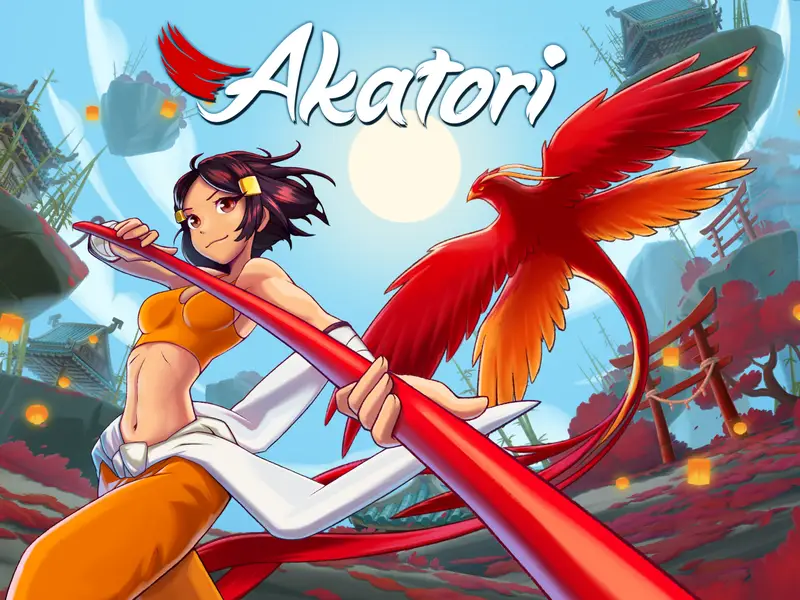
The demo for Akatori is one of the best “vertical slices” of a game I have played in a long time, and I’ve been playing demos since they came bundled with CDs stuck to the front of gaming magazines. With its measured helpings of platforming, combat, and set pieces, I found it not too dissimilar to one of those rainbow cakes with the layered, multicoloured sponge. It wasn’t just the demo’s structure that surprised me, but also its level of confidence and polish that is rare in early slices like this. In essence, I got to enjoy the variety of flavours that the game promises, and was left wanting more.
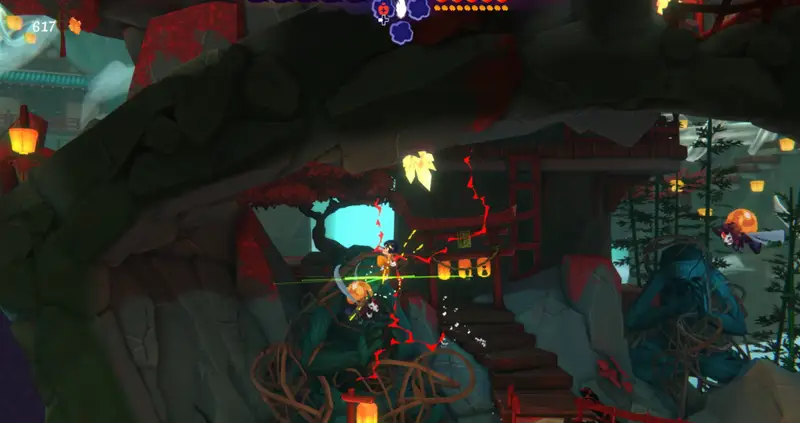
Akatori is a 2D fantasy metroidvania, developed and published by indie studio Contrast Games, where you play as Mako, a teenage girl who was raised in the Firebird Temple. Wielding a staff containing a mysterious red bird sealed within it, she sets off on a quest across the vast lands of Akatori to put a stop to the Amber Storms corrupting and distorting all living things.
The demo is split into four segments: a tutorial section, part of a dungeon, a chase sequence, and finally a boss fight. At the end of each segment was a large mirror-like object that Mako could interact with to move onto the next part of the demo. It’s a clever way to let players experience Akatori’s different gameplay elements at their own pace, as well as avoid pacing drag, creating a smoother experience.
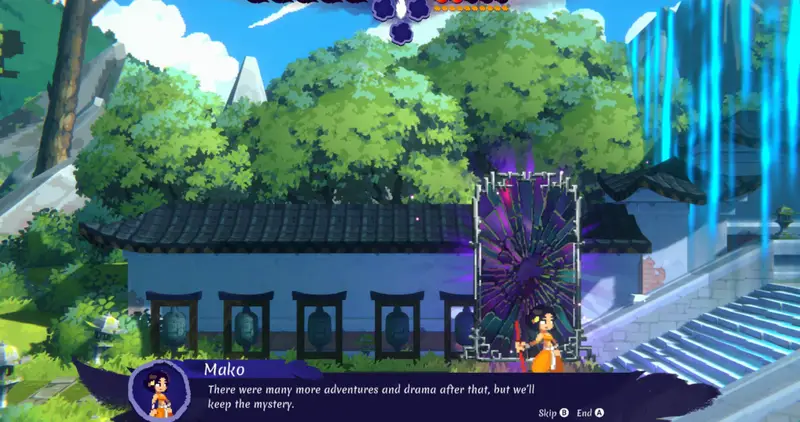
In fact, each time I used one of these portals, Mako would say something about “showing me something else” or “jumping ahead”, keeping with the game’s framing of Mako telling us, the player, the events of the game. Akatori’s Game Over screen even states “That’s not how it went”, which also explains why the player comes back to life; it’s not how the story goes. It’s that attention to detail and the time spent designing the demo that has stuck with me since playing it, and it shows that Contrast Games understands the importance of a good first impression.
The opening sequence appears to be the opening moments of the game, a familiar sidescrolling segment that helps teach Akatori’s basic controls. Mako feels responsive, with clear animations for attacks and abilities coupled with eye-catching particle effects. This tutorial region also does an excellent job of showing off the game’s mix of pixel art and 3D modeling for its level design, with beautiful prallalaxing backgrounds giving outdoor areas a sense of scale, while interiors feel more enclosed.
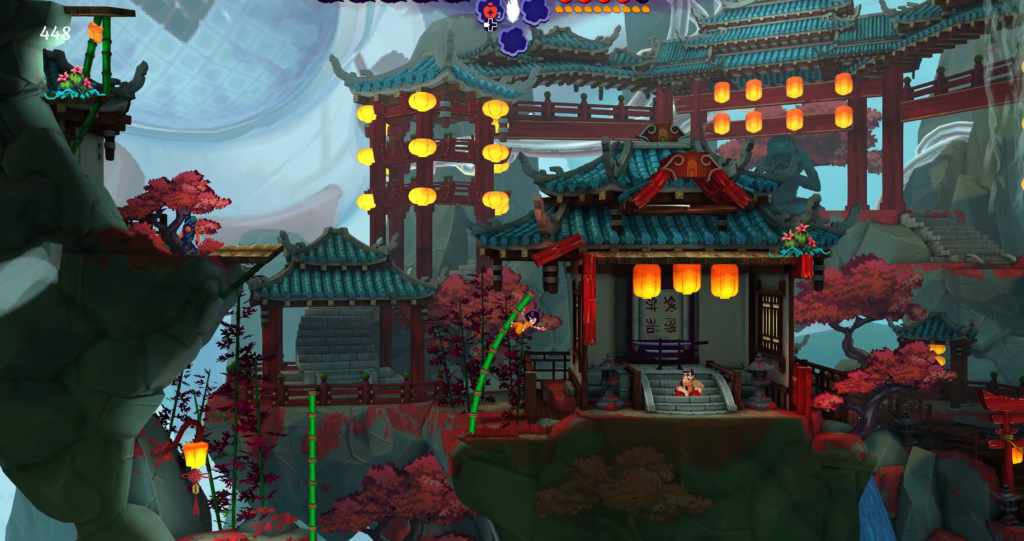
The second section expands on what was introduced in the first part, dropping me into a sprawling dungeon environment, thick with traps, monsters, and a lot more platforming. As I progress, I come across shimmering pearlescent orbs that unlock more of Mako’s abilities, from an air dash and dodge roll to an uppercut attack to launch enemies, which makes them prone to juggling, and the ability to throw Mako’s stick to hit switches and foes alike. These come thick and fast, quickly fleshing out Mako’s moveset and versatility, but likely not as they would be obtained in the full release. I had a great time getting to grips with Mako’s 3-hit combo and uppercut, sticking to walls using her staff, and launching myself from bendy bamboo poles.
More of Akatori’s action elements show themselves here, like using the Amber Shards you get for defeating enemies or shattering glowing crystal clumps to purchase items like healing potions from a froggy merchant. Mako also has a stamina bar to manage, as some of her skills use stamina that will refill over time, so stamina management is important, especially in combat.
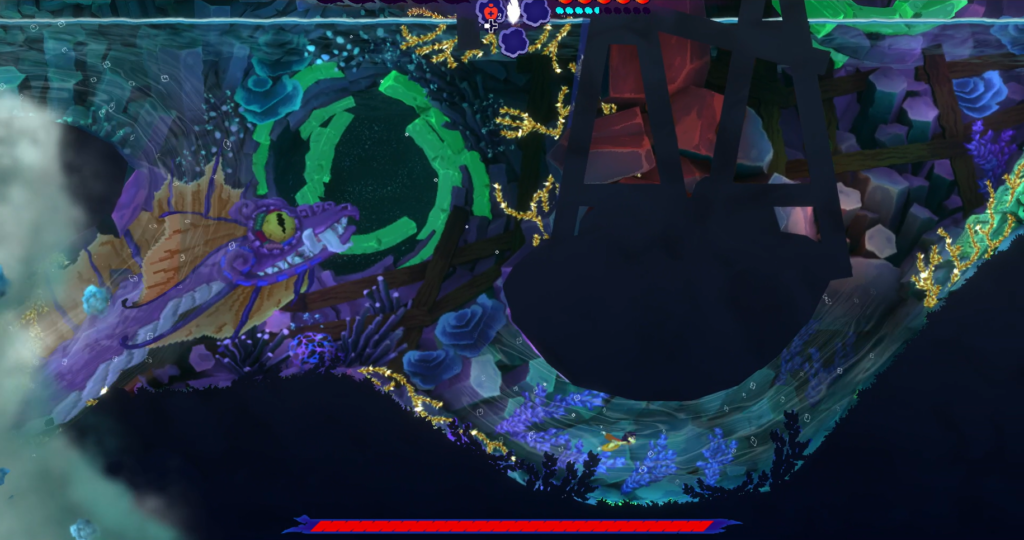
The chase sequence comes next, with Mako having to run, climb, and swim away from a giant sea monster. I ended up spending the most time on the segment, due to having to retry it from the beginning if I failed at any point during it. I found the swimming to be quite tricky, as your movement is bound to the eight cardinal directions, and I would occasionally get caught on bits of the environment during the chase. It’s the only segment that felt slightly at odds with the otherwise smooth control. It wasn’t a particularly long section, and the actual platforming felt tight and controlled, but I was also happy to be past it when it was done.
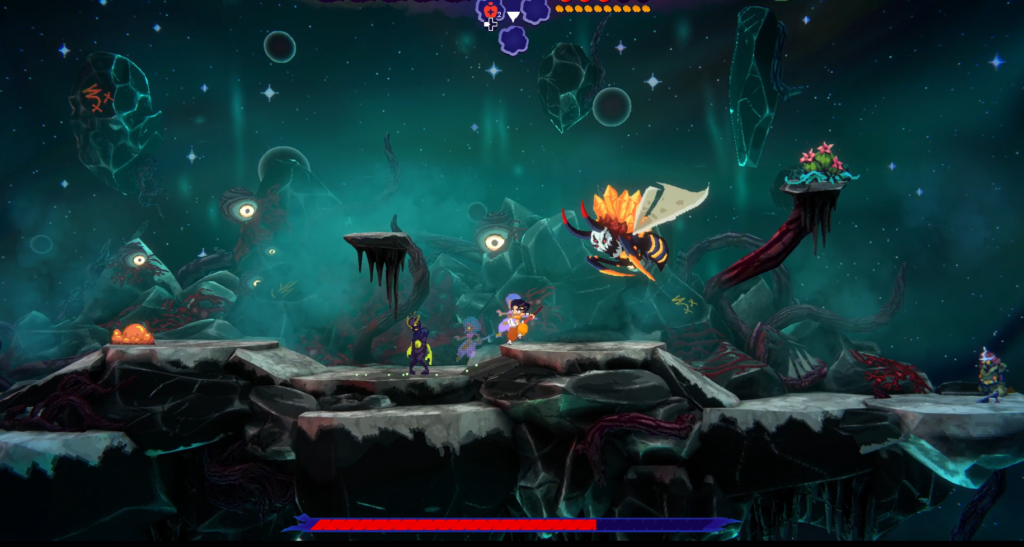
Lastly, the demo for Akatori has a boss fight, the proverbial cherry on top. It’s a challenging, but well-balanced encounter with a large, demonic-looking wasp supported by some regular mobs in a nightmarish location. I have to make full use of the limited arena space and platforms, dodging projectiles and clearing out extra enemies when I can, all while trying to lay a smackdown on the boss. By the end of the fight, I was getting brave with my playstyle, even throwing my staff out when the boss flew away from me to land a couple extra hits.
With a demo that goes the extra mile to give prospective players the chance to see what the game has to offer, Akatori doesn’t just feel promising, but purposeful. Contrast Games clearly understands pacing and presentation, delivering a vertical slice with a clarity of vision that few early builds manage to convey. If one slice of Akatori is this satisfying, the full cake may well be something special.
The demo for Akatori is available on PC via Steam until the end of Steam Next Fest on March 2nd.
Those were our Akatori Demo Impressions, but that’s just one of many demos available over Steam Next Fest. Check out the 30 demos we think you should check out over the event, as well as An EXCLUSIVE Early Look At Muri: Wildwoods
Have you tried out the demo for Akatori yet? Let us know in the comments below, and join the Gamer Social Club Discord to talk about your favourite games, play in community game nights, take part in giveaways, and more!