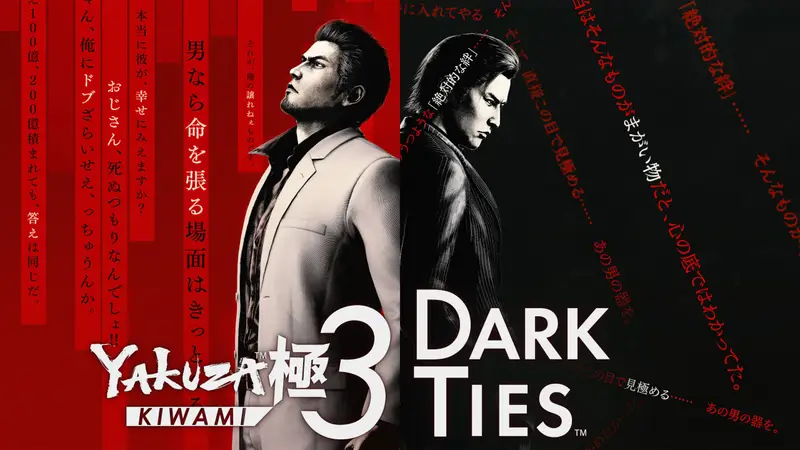
For over a decade, Ryu Ga Gotoku Studio has been releasing Yakuza/Like a Dragon titles on a yearly cadence, in some cases delivering more than one entry in the open-world brawler (sometimes RPG) series a year. Given the generally high quality of each title, it’s been fairly easy to bet on the studio’ s consistency, even when it’s mainly reusing assets or remaking past entries. That is, until Yakuza Kiwami 3 & Dark Ties.
This combined remake of the series’ mainline PS3 debut and new prequel spin-off represents RGG Studio at its most complacent, trading polish and iteration for a lazy asset flip that bloats its runtime with unnecessary recycled mechanics, one of the weakest combat systems of the Dragon Engine entries, and a complete creative disregard for the game it’s adapting.
Yakuza Kiwami 3 Narrative
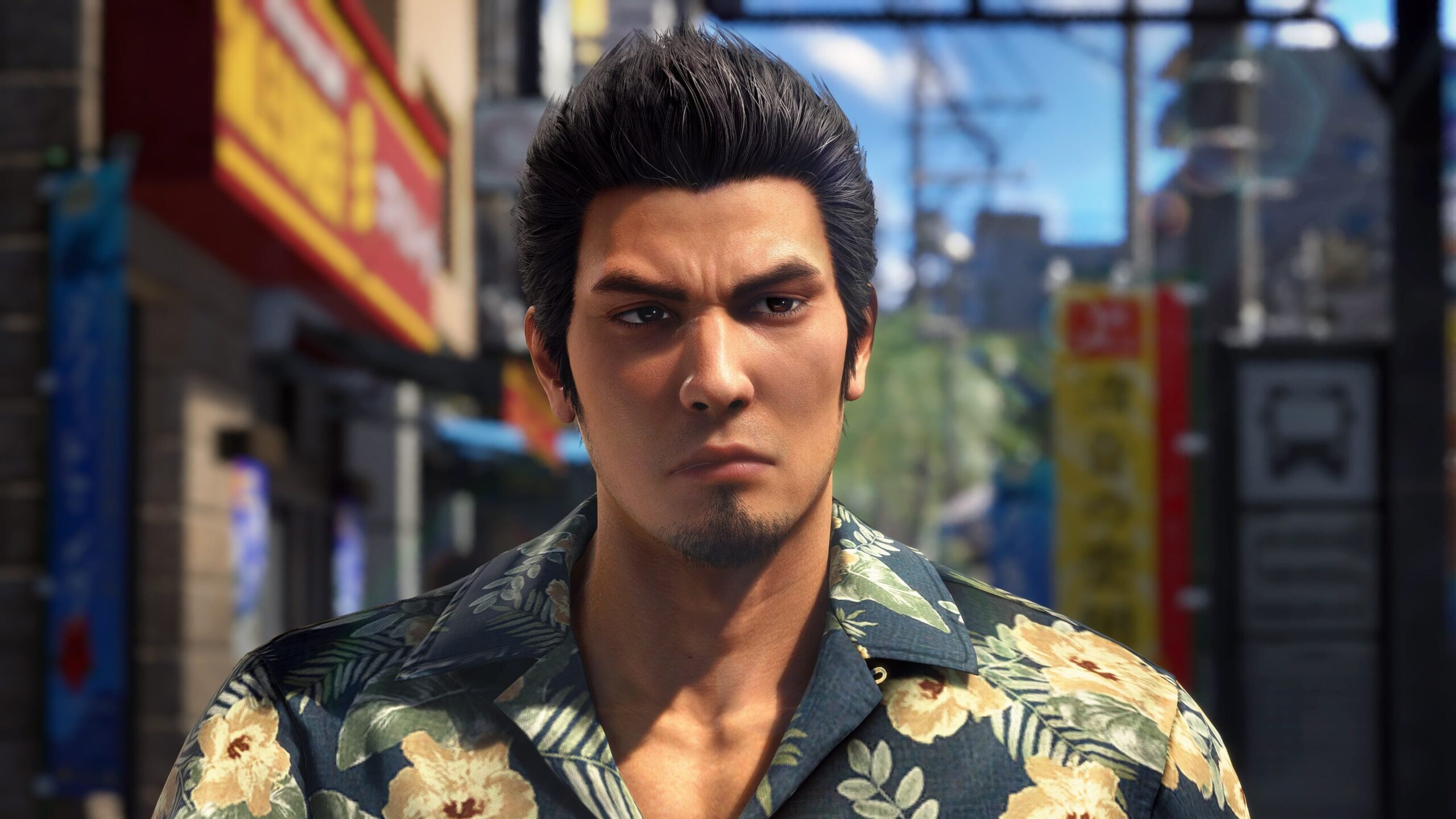
Much like the original Yakuza 3, Kiwami 3 follows Kazuma Kiryu having prevented an all-out war between the Omi Alliance and the Tojo Clan, retiring to run an orphanage on Okinawa with his adopted daughter, Haruka Sawamura. A year into this laid back lifestyle, trouble comes knocking on Kiryu’s door once again as a local yakuza clan, the Ryudo Family, begins serving the orphanage eviction notices, pulling Kiryu into a larger land dispute between his former clan, Japanese government politicians, the CIA, and more.
Being one of the weaker stories in the series with a heft of pacing issues, there’s a lot of potential in retelling Kiryu’s third major outing with tighter writing and more cohesive storytelling. Unfortunately, Kiwami 3 not only retains almost all of the narrative shortcomings of the original, but inexplicably contributes its own bloat to one of the most convoluted and exposition heavy stories in the series.
One of the most memorable parts of Yakuza 3 is its extended opening focusing on Kiryu’s experience raising the children of the Morning Glory Orphanage. For many, this is one of the defining elements of the original game, as it establishes Kiryu’s growth as a father having taken in Haruka during the first game and realizing his dream of filling the role of his own adoptive father, Shuntaro Kazama. It is the core of Yakuza 3’s story that entries such as Yakuza 6 and Like a Dragon Gaiden: The Man Who Erased His Name rely on heavily as an emotional grounding for Kiryu’s character.
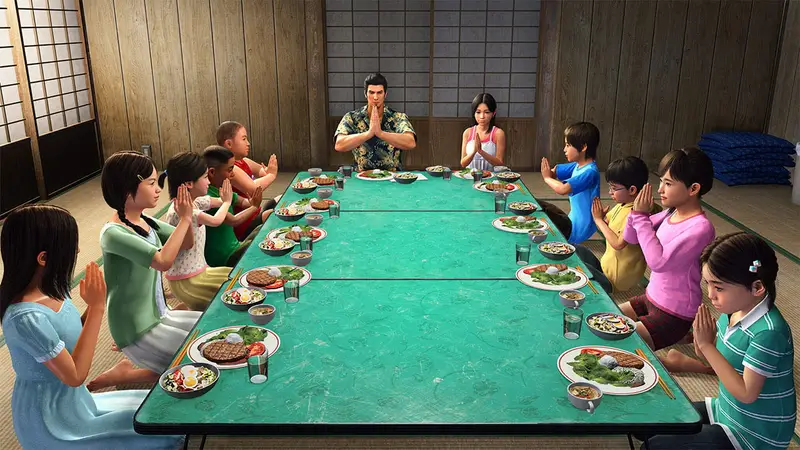
Kiwami 3 cuts this sequence severely short, instead turning the Morning Glory segment into a side activity in which players can grow Kiryu’s relationship with the children over time. There are positives to this decision, which I’ll get to later, but ultimately this element that was integral to the original game and many of the entries that follow it has been stripped back, and in its place an irrelevant storyline focusing on a group of biker girls has filled its role as a progression gating detour in the game’s opening hours.
This new storyline sees Kiryu teaming up with a group of all-female bikers who are being harassed by other local biker gangs and feel unable to defend themselves. Kiryu joins the crew in order to assist them in raising their reputation While this plotline is mostly harmless in isolation, its presence in the main narrative is the first instance of a lack of focus on what Yakuza 3’s role in the overall series is and what Kiwami 3’s purpose should be in retaining its experience.
Even scenes that should be instantly recognized as weaknesses in the original game’s pacing have been left untouched or somehow made worse, such as with an infamous cutscene in the game’s ninth chapter focused on a group characters in a meeting room that is over twenty minutes long. This scene is iconic for being a grueling exposition dump in which much of the game’s broader narrative elements are communicated entirely through endless dialogue.
Figuring out a way to better represent this scene should have been at the top of Ryu ga Gotoku Studio’s agenda when remaking Yakuza 3, but instead they have somehow made it worse. In Kiwami 3, instead of receiving all of the information at once, the characters decide at multiple points to take breaks from discussing the events to return control to the player for no apparent reason, other than potentially to save the game. No effort was made to make this a functionally neater or more involved experience for the player, instead it has somehow been dragged out even further with more dialogue added to repeat information just in case the player wasn’t paying attention or took a break themselves.
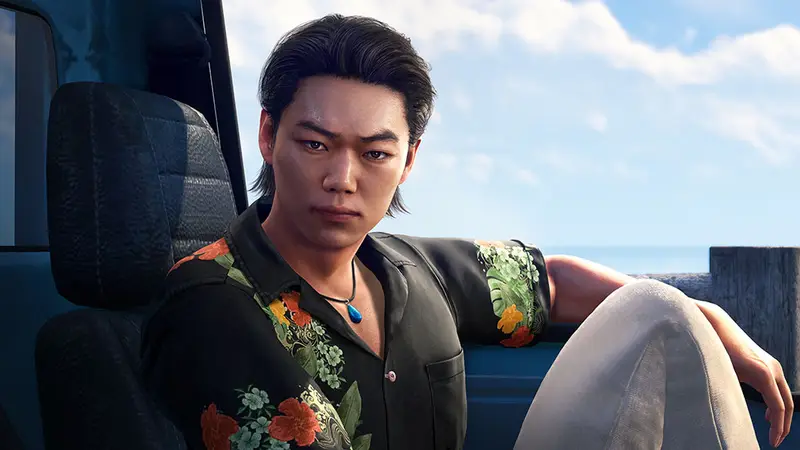
Another weakness when compared to the PS3 game is in the recasting of some of the game’s central characters, namely Tokyo Vice’s Shô Kasamatsu as Rikiya Shimabukuro.
In the original game, it’s almost impossible not to be immediately endeared to Rikiya from the moment he is introduced. From his makeshift punch perm to Tatsuya Fujiwara’s wonderful over-the-top performance, his relationship with Kiryu as an in over his head aspiring yakuza with a heart of gold is yet another defining element of Yakuza 3.
Despite his effort, Shô Kasamatsu’s Rikiya never manages to reach the heights of Fujiwara’s performance. This is partially down to technical shortcomings, but also because Kasamatsu’s inclusion ultimately feels forced and misguided. Even in the most lighthearted moments it’s difficult for Kasamatsu to stand out and ultimately his performance feels like it will reduce the staying power of the character for those unfamiliar with Fujiwara’s portrayal.
A lot has already been made of the recasting of one of the game’s central villains, Goh Hamazaki, now played by the justly controversial Teruyuki Kagawa. This is another performance that is made demonstrably worse by the forced inclusion of a recognizable name.
Dark Ties Narrative
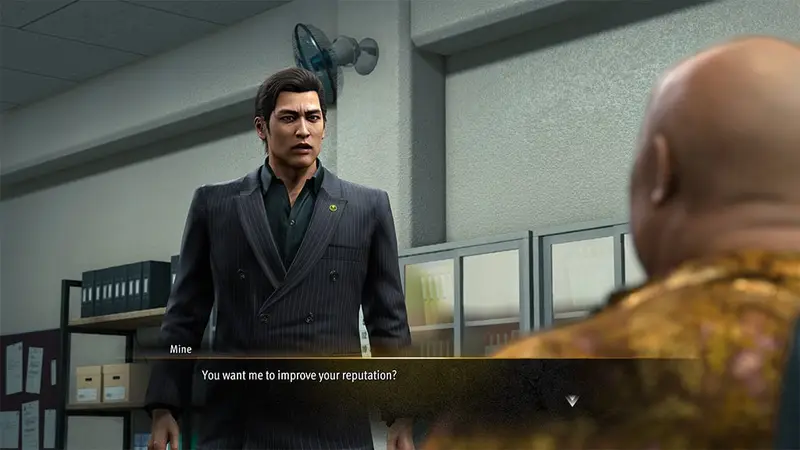
Dark Ties, the separately included ‘spin-off’ prequel game following another of Yakuza 3’s antagonists, Yoshitaka Mine, does not improve things. Intended to be played after Kiwami 3, Dark Ties chronicles Mine’s journey from rising Tokyo businessman to head of the Hakuho Clan following his forced removal from his father’s company and subsequent meeting of Daigo Dojima, head of the Tojo Clan.
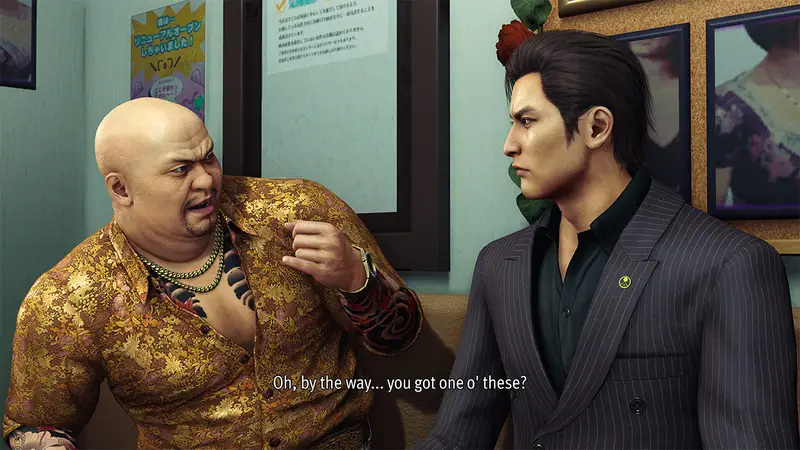
This narrative mainly centers around Mine’s rehabilitation of disgraced yakuza Tsuyoshi Kanda’s image following his release from prison on a sexual assault charge. Kanda is one of the most depraved characters RGG Studio has ever written, keeping in line with the character’s portrayal in all versions of Yakuza 3. While Dark Ties never tries to redeem Kanda in any meaningful way, it bares mentioning that there is something inherently uncomfortable with a major part of this game’s story focusing on cleaning up the image of a serial sexual assault offender given the studio’s unwillingness to confront the large campaign to remove Hamazaki’s actor from this release.
While I did enjoy Dark Ties more than Kiwami 3, largely owing to it being new content and focusing on an underutilized character, it is largely filler that feels like a heavy handed attempt to justify the controversial, series shaking changes introduced in its ending.
Without delving into spoilers, Kiwami 3 & Dark Ties makes some very significant changes to Yakuza 3 that not only impact the resolution of the story, but also the trajectory of the entire Yakuza/Like a Dragon series going forward. While there has been a lot of ink spilled over this change going back even before the game release, it bears emphasizing how frustrating the changes made here are given recent trends in RGG Studio’s storytelling and narrative changes introduced in Yakuza 0: Director’s Cut.
Worst of all perhaps, the changes to the ending rob Yakuza 3 of yet another impactful moment, muddying a character’s motivations throughout the narrative just to set up a string of events that contradict multiple others in the canonical follow-up, Yakuza 4, and making Kiwami 3 an even more difficult recommendation as a substitute for Yakuza 3.
Given the delisting of Yakuza 3 Remastered from digital storefronts the day before this title’s release, there’s good reason to assume that Yakuza Kiwami 3 is being positioned by RGG Studio as a replacement for the original game, meant to fulfill its role in the overall canon. In this regard, Kiwami 3 is a failure. It substitutes the emotional core of Kiryu’s journey for a forced, unrelated, ultimately meaningless new side story, and its new ending makes it narratively incompatible with its canonical sequels.
Gameplay
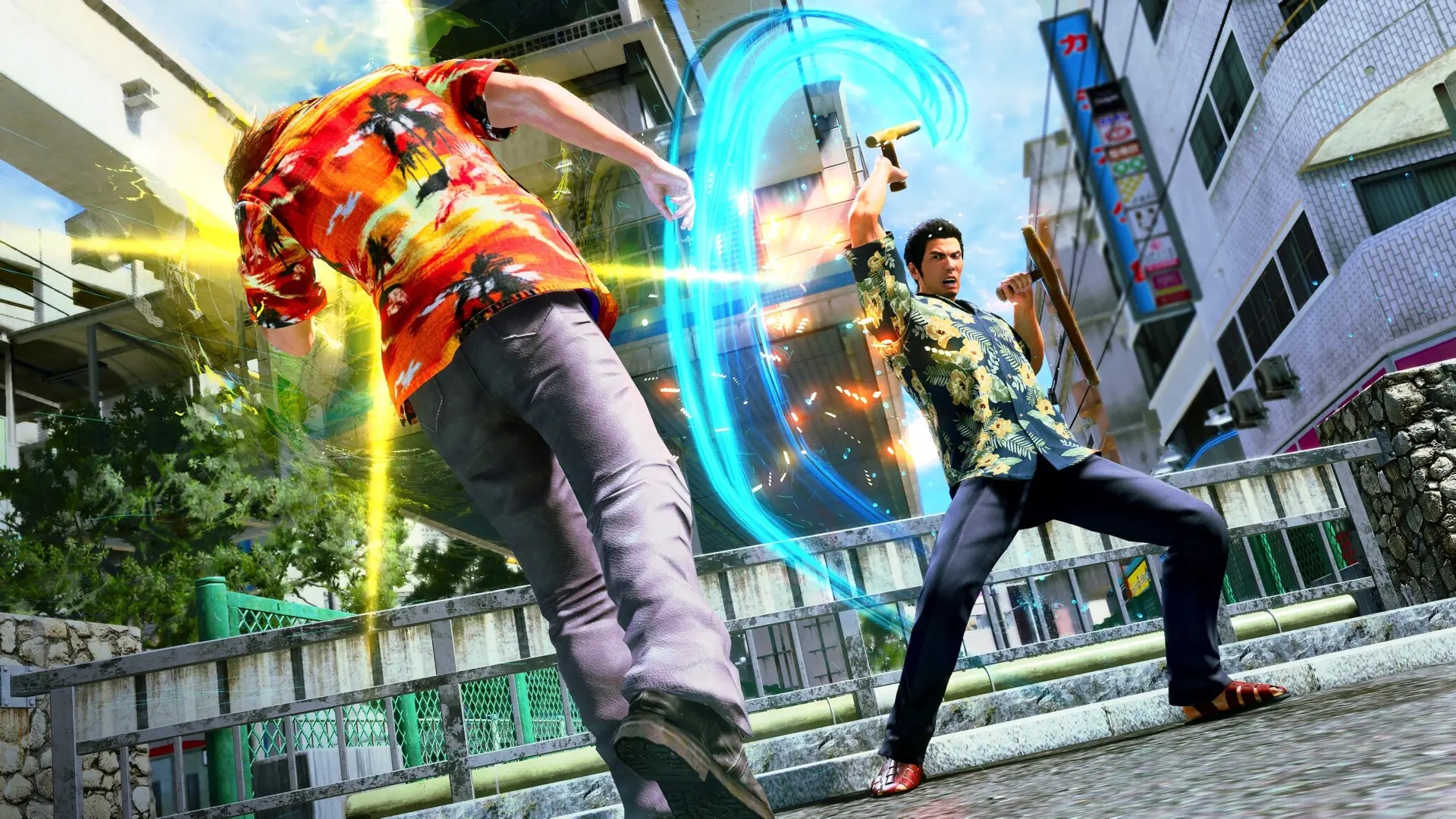
Yakuza Kiwami 3 features two combat styles for Kazuma Kiryu, the classic Dragon of Dojima style focusing on bare knuckle brawling and slamming dudes’ heads in with bicycles, and a newly introduced Ryuyku Style based on real-life Okinawan martial arts, utilizing a vast array of weapons such as nunchucks, sai, tonfa, and many others. This style also equips Kiryu with a shield that can parry enemy attacks.
Both of Kiwami 3’s combat styles feel lacking in polish in different, verging ways. Dragon of Dojima feels perhaps the slowest it has yet in a Dragon Engine title and is made worse by enemies’ constant blocking, an issue that persists from the original title.
Ryukyu Style is easily the more satisfying of the two with its quick weapon swapping and broad range of status effects that bypass the otherwise frustrating enemy blocking. Primarily using this style over its alternative only highlights how easy Kiwami 3 is for a Like a Dragon title, as I only managed to see the game over screen once during my playthrough, which was during the final boss.
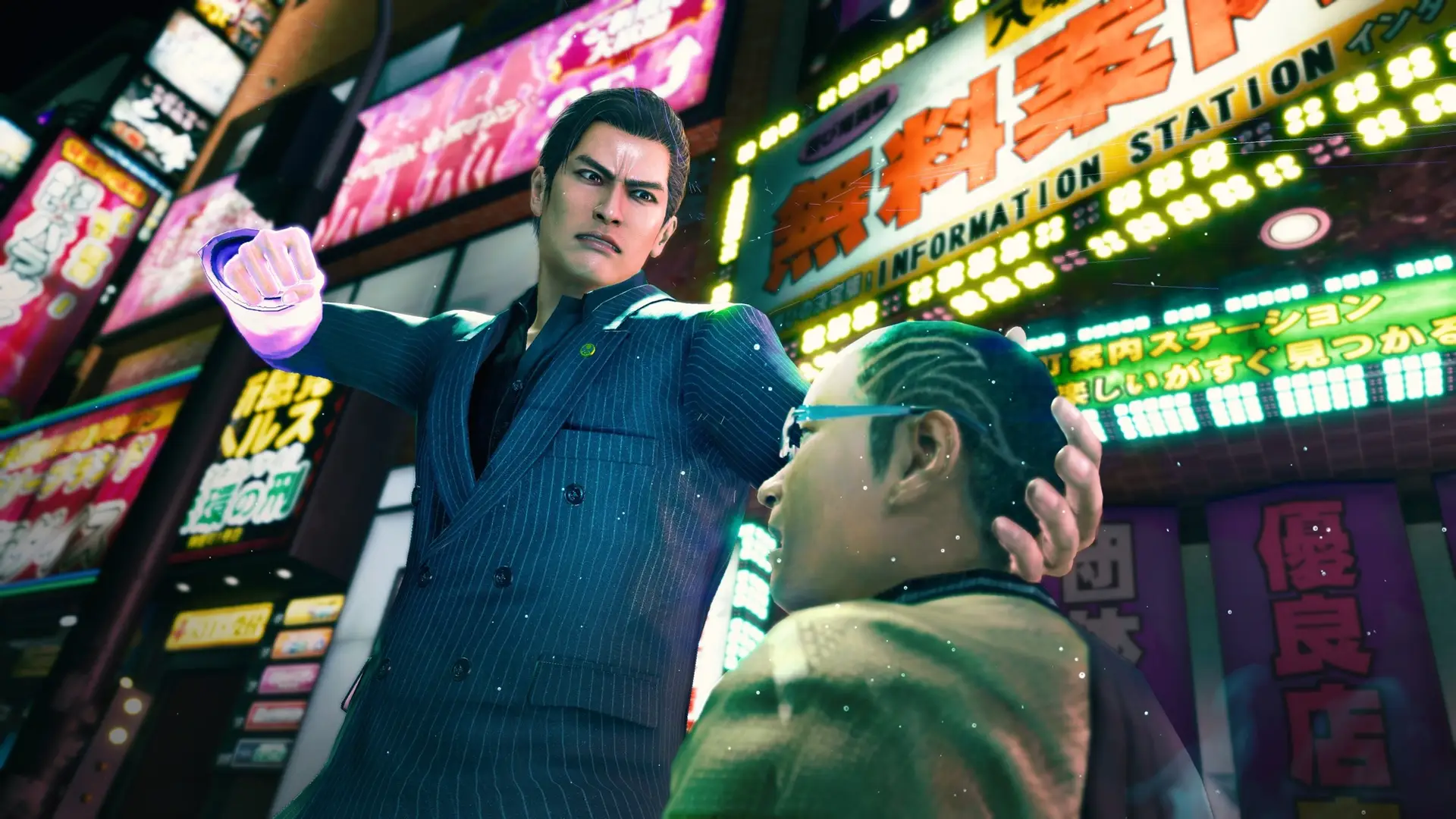
In Dark Ties, Mine utilizes his own combat style based on “shoot-boxing” that cleverly feels like a mix of both of Kiryu’s stances. Overall, I had a far better time with Mine’s combat as it plays into Gaiden or Lost Judgment’s strengths of stringing powerful moves together, emphasizing range and juggling. Still, this system at times feels incredibly overpowered, especially since Dark Ties’ skill tree is quite small, owing to its roughly four-hour length, and it can be maxed out very quickly.
As alluded to earlier, Morning Glory has been fleshed out into a fully featured side activity, and while this has a detrimental effect on its role in the narrative, I’m ultimately left conflicted on it, as its gameplay implementation is a clever reuse of elements introduced in Infinite Wealth’s Dondoko Island.
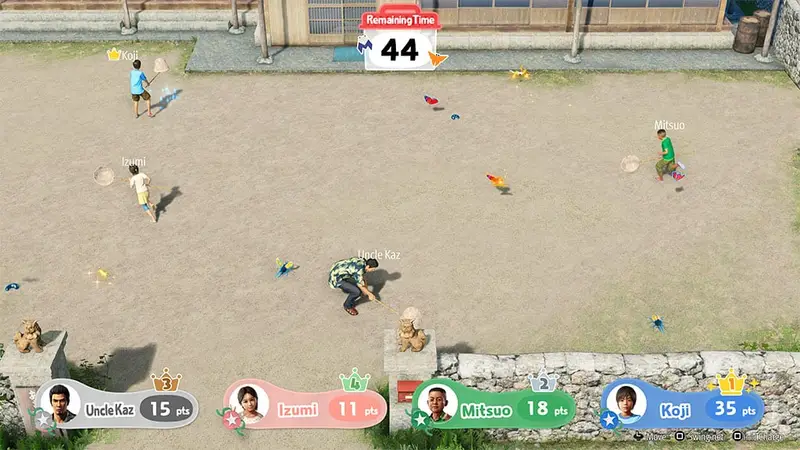
Kiwami 3 turns Morning Glory into a life-sim/management sim mashup, as Kiryu can partake in a number of activities with the kids such as a helping them with their homework, fishing, and Mario Party-esque bug catching mini-game, all of which contribute to a bond status with each individual character, culminating in an individual storyline centered on Kiryu’s relationship with the orphans. This is all alongside managing the orphanage’s livestock and selling resources to build partnerships with the fellow Okinawan local businesses.
In many ways, this is perhaps Kiwami 3’s one unarguable improvement on the original Yakuza 3 or its 2019 remaster, however it comes at the cost of the orphanage’s integral part to the story which has, as previously stated, been replaced with a meaningless filler biker gang plot that has nothing to do with Kiryu’s journey.
One of the most frustrating elements of Kiwami 3 as a remake is the blatant and often nonsensical reuse of other systems from Like a Dragon: Infinite Wealth and Pirate Yakuza in Hawaii for no discernible reason. Perhaps most guilty of this is the repurposing of both games’ “Aloha Links” system of befriending random NPCs through Kiryu’s phone for rewards. Here, this takes the form of LaLaLa Lovelies and its inclusion adds functionally nothing to the experience and feels like little more than an excuse to bloat the completionist time.
Similarly, the Ryukyu Gals biker gang is a forced flip on Pirate Yakuza’s pirate crew system, which much of that game was deliberately structured around. This content sees Kiryu recruiting members of a women-led biker gang that the player leads into Dynasty Warrior-like large scale battles where they can briefly control Kiryu on a motorcycle. As previously mentioned, this is a more egregious use of meaningless recycled content as it is forced into the main narrative for no good reason and is never referenced by the main story past the game’s opening.
Dark Ties also features its own progression gating side-content in the form of Kanda Damage Control, which follows Yoshitaka Mine completing a series of trivial chores around Kamurocho to clean up Kanda’s public image. These take the form of very basic checklists like fighting a group of enemies, scoring a strike at a game of bowling, and performing well at karaoke, all contributing towards raising Kanda’s social status. While accessing Dark Ties’ finale being tied to this activity is frustrating, it is at least tied narratively to Mine’s overall goal, which can’t be said for the Ryukyu Gals story.
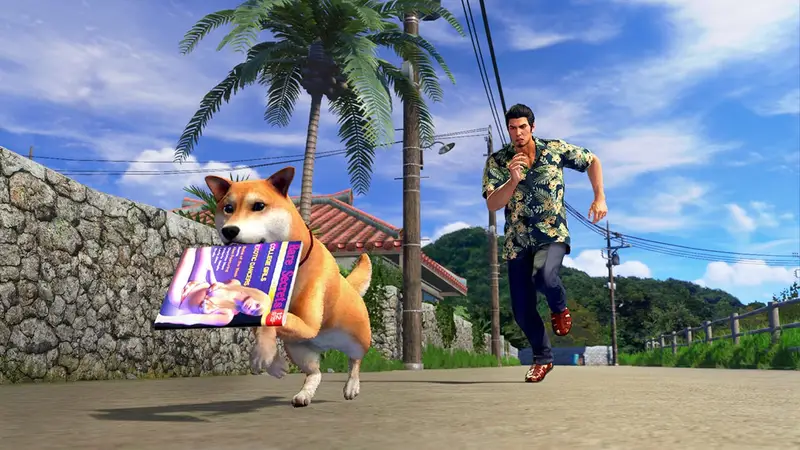
For both games, the substories have also come at a major cost. Yakuza 3 featured 119 of the series’ iconic substories that, while not all masterpieces, included some of the most beloved side quests such as the trans character Ayaka’s self acceptance plotline, and Murder at Café Alps, a mystery story that many consider to be the conceptual basis for 2019’s Judgment.
Kiwami 3 cuts this number severely down to just 31 substories, many of which are entirely new. The vast majority of these substories are unremarkable and recycle concepts from others in completely different entries in the series. Worse, a lot of the included substories are episodic, bloating the overall count as single stories are cut into three separate substories.
Dark Ties does not fare much better but at least benefits from a change in perspective to Yoshitaka Mine, a more self-centered character who seems to be curling his fist during each interaction. None of Mine’s substories are particularly memorable outside of their basis, and all of them focus on the singular effort to rehabilitate Kanda’s image, but not the person.
Visuals

On almost all fronts, Kiwami 3 & Dark Ties is the ugliest game RGG Studio has released using its now decade old Dragon Engine. Much like how the gameplay haphazardly repurposes mechanics and systems from Infinite Wealth and Pirate Yakuza in Hawaii, Kiwami 3’s visual make-up is composed almost entirely of reused assets from entries dating as far back as 2018’s Yakuza Kiwami 2.
What results is a visually incoherent mess with no distinct aesthetic of its own. This permeates throughout the game, from a distracting blue filter that’s especially noticeable in Kamurocho, an over-reliance of contrast and bloom making the colours look overbearing, and horrible lighting making certain areas look more flat and lifeless than their PS3 counterparts.
Speaking of the PS3 game, RGG Studio still manages to lift assets directly from that game too in its “ground-up” remake. From the opening moments it’s immediately apparent that some of Kiwami 3’s cutscenes are using the animation data from the original Yakuza 3, making for some distractingly unflattering animation as the lifelike Dragon Engine models are carelessly rigged into animations grounded in 2009 technical limitations. Some of these cutscenes include dramatic story moments and only highlight the contrast between the more exaggerated, sometimes cartoonish expressions of the original games and the hyper-realistic Dragon Engine art direction.
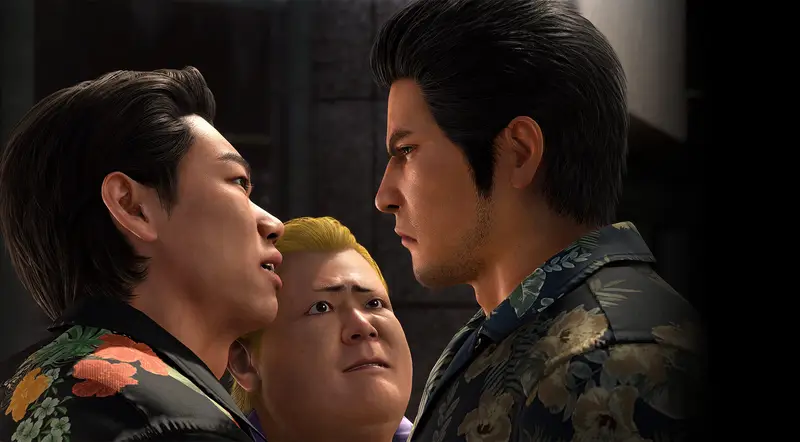
This is once again evident in Shô Kasamatsu’s Rikiya, a character whose original design was heavily integrated in the aesthetic of the early PS3 entries. While most of this character’s animations are new, taking advantage of the actor’s inclusion with new motion capture, a lot of Rikiya’s facial animation is retained from the original version, making Kasamatsu’s incarnation of the character feel stiff and expressionless when compared to Tatsuya Fujiwara’s more memorable performance.
These issues are compounded by the fact that Dark Ties is a completely new story featuring animation far more in line with RGG Studio’s recent output. While the presentation is not on par with mainline entries like Infinite Wealth, this section features far higher quality production values with more visually impressive cutscenes.
Verdict
Yakuza Kiwami 3 & Dark Ties is a distinctly unambitious game. It is utterly uninterested in functioning as a faithful remake of Yakuza 3 or pushing the series forward in any meaningful way. RGG Studio has created a Frankenstein’s monster of thrown together mechanics from past entries that wears the skin of a flawed, but significant and in many ways beloved legacy title, and bundled it with an ultimately meaningless spin-off that only escalates growing concerns with the franchise’s future.

Yakuza Kiwami 3 & Dark Ties is available now for PC, PS4, PS5, Switch 2, and Xbox Series X/S. The game was reviewed on PlayStation 5.
Gamer Social Club would like to thank Sega for the review code.