For nearly 30 years, Grasshopper Manufacture has been one of the boldest studios in the entire video games industry. Led by auteur director Goichi “Suda51” Suda, the Tokyo outfit has continued to push the limits of its “punk” game design philosophy, even after being pulled through the western publishing machine during the early 2010s.
In many ways, Romeo is a Dead Man represents a new beginning for the studio. It is not only the team’s first title under NetEase Games, but it’s also their first self-published work following years of budgetary constraints and limitations put in place outside of their control. With this in mind, Romeo is a Dead Man is Grasshopper Manufacture at the top of its game, delivering a visceral audiovisual feast of art, writing, music, and over the top bloody action.
Narrative
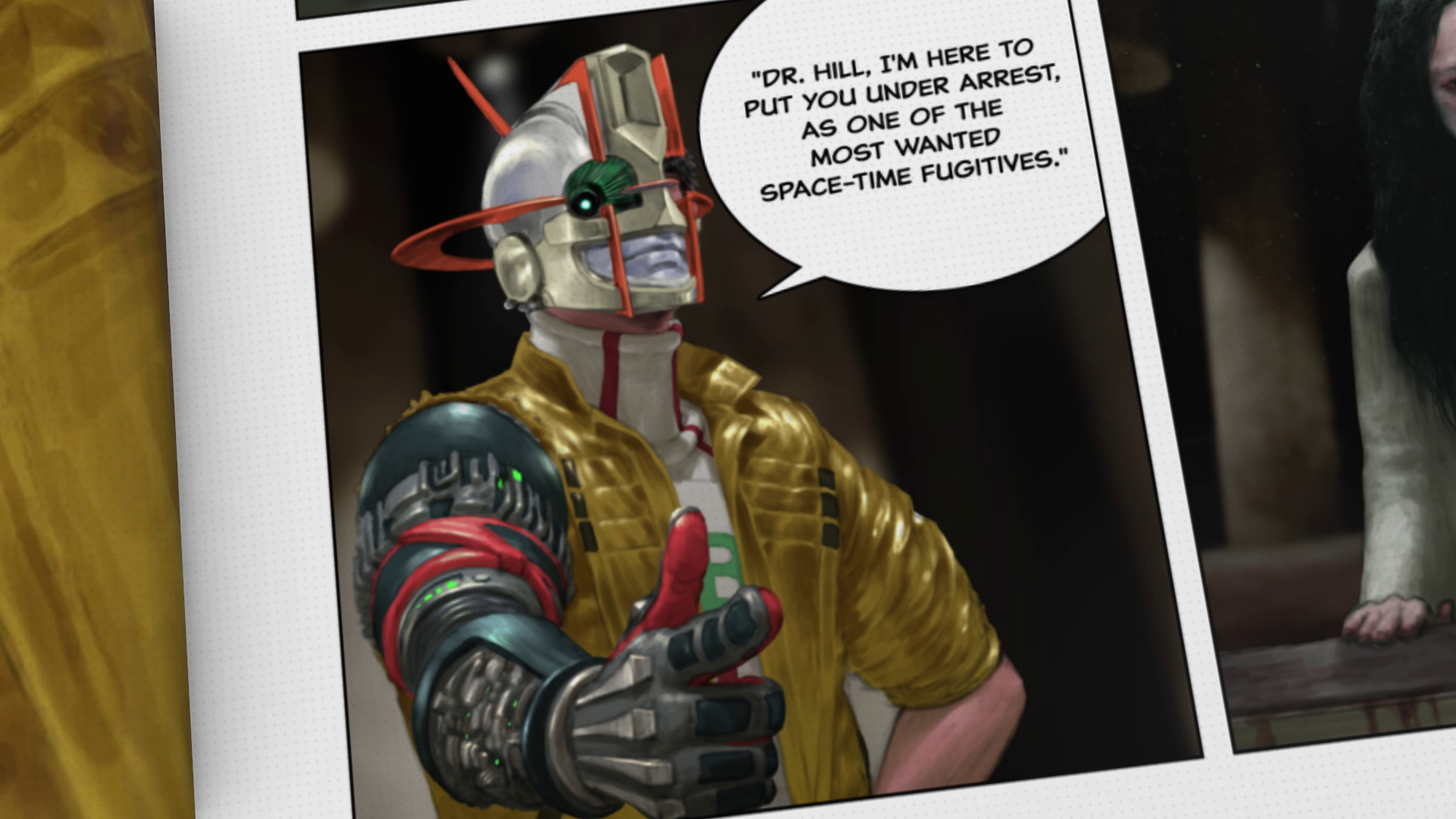
Romeo is a Dead Man follows Romeo Stargazer, a rookie deputy sheriff of Deadford, Caliban County, America. While patrolling one night, he is attacked and killed by an alien creature only to be resurrected by his mad scientist grandfather and recruited as a member of the FBI’s Space-Time Police. Here, he is tasked with tracking down a group of intergalactic criminals including a girl who he once fell in love with on earth named Juliet, who has been mysteriously been appearing and disappearing throughout time.
If this sounds like a lot up front it’s because it is, even in the way it’s presented in the game’s opening. The main meat of Romeo is a Dead Man’s storytelling is filling in the blanks of this cold open through untangling the mysteries of Romeo and Juliet’s relationship as, much like Travis in No More Heroes confronting the United Assassins Association, Romeo travels the stars in search of her and taking down her confidants one by one on.
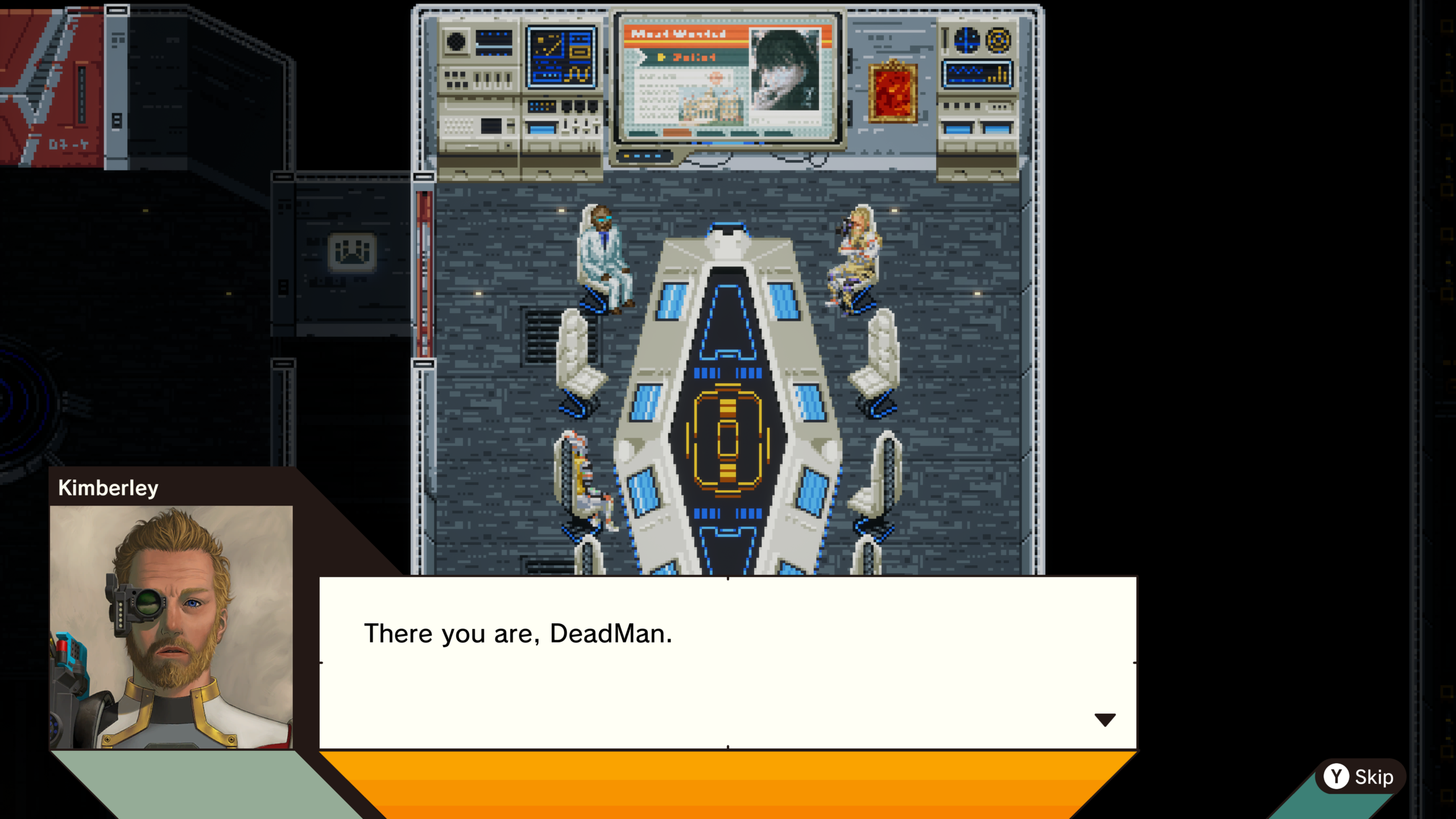
Narratively, Romeo is a Dead Man cleverly bridges the gap between Grasshopper’s strange, esoteric adventure games of the past (namely The Silver Case and Flower, Sun, and Rain) with the bombastic, often ridiculous characters and worlds of the No More Heroes series or Lollipop Chainsaw, while never slipping too far into either camp. It feels like the work of a group of creatives that truly understand their strengths and the expectations of the many branches of their audience.
That is to say that there are all of the classic Suda51 hallmarks here. Random tangents about sports and politics, an obsession with 70s/80s sci-fi and anime references, and plenty of callbacks to previous Grasshopper Manufacture titles and characters yelling “Kill the Past”. For those new or otherwise unfamiliar with Suda’s writing it might be a little too much to take in all at once – the game seems to be at least somewhat reliant on a familiarity with its creative’s legacy, but long-time fans will almost certainly get a lot of mileage out of the rambly dialogue and, personally speaking, I wouldn’t have it any other way.
Gameplay
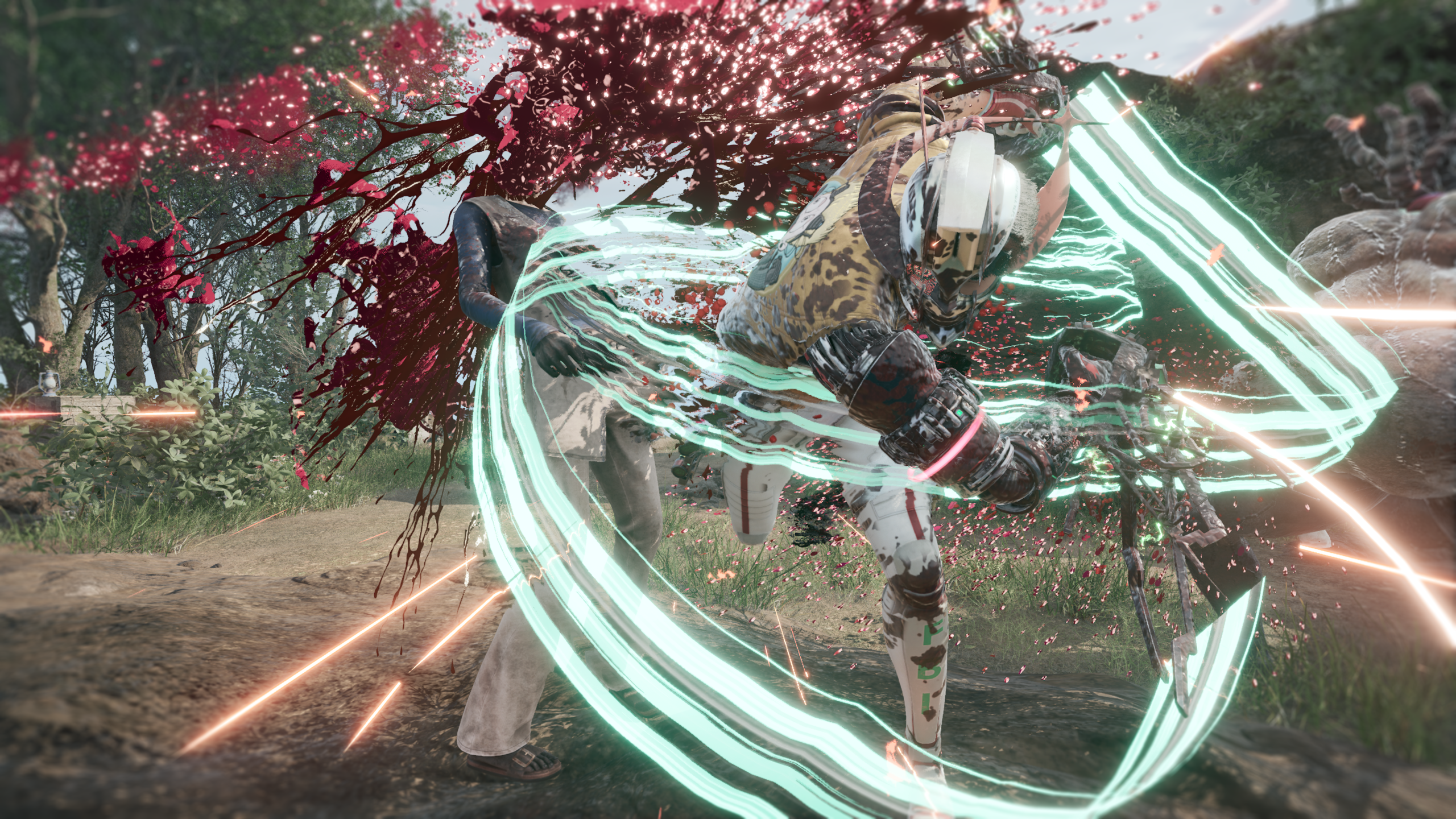
The game is once again an action game, much like most of the studio’s most recent work, with Romeo wielding both a transforming sword and a collection of intergalactic firearms. Each weapon has four forms, all with their own combos and supercharged abilities. While these weapons can be upgraded to improve their damage output or lengthen combos, the game never drifts too far into feeling like an all-out character action game. It is instead grounded distinctly in its own lane by the Bastard mechanic.
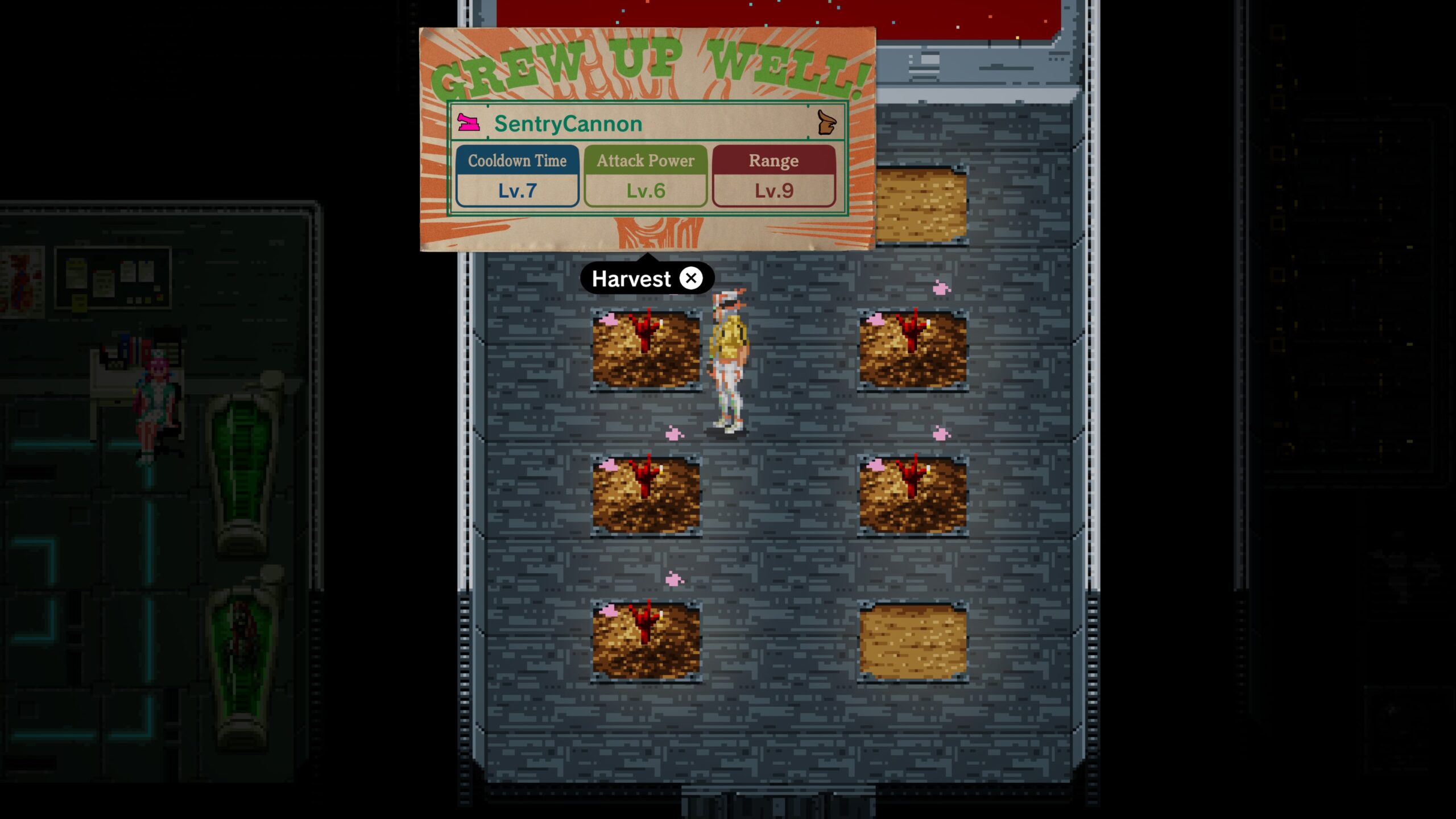
Enemies frequently drop seeds that can be brought to Romeo’s sister, Luna, aboard the The Last Night (the Space-Time Ship) and planted in a garden to grow “Bastards”. Bastards are summonable enemies that Romeo can wield in battle with unique abilities. These abilities include creating an area of effect that slows down enemies, suicide launching towards foes to stagger them and deal massive damage, inflicting status effects such as poison, and more.
After growing Bastards, the player can also fuse them to level up their traits. I quickly found myself caught in a satisfying loop of obtaining new seeds and strengthening my collection that quickly became addicting. This mechanic opens up the combat for a huge amount of experimentation, especially since certain enemies require targeting weak points or watching out for AoEs before they can be properly dealt with.
In the early stages, it is also very easy to get swarmed by a huge number of enemies, which admittedly frustrated me as I traversed early levels and found myself bombarded by a variety of hostiles, many of which required very specific skills to do meaningful damage. Soon after, I found myself spending a ton of time aboard The Last Night min-maxing my arsenal to find the best set of Bastards to take into combat the next go around.
Measuring with the studio’s unwillingness to play into conventional wisdom, levelling up Romeo’s stats is also not your traditional action game fare. Instead of improving your character through a menu or simply purchasing upgrades, players raise Romeo’s stats by playing an arcade game called DeadGear Cannon.
Here the player must use an in-game resource called Emerald Flowsion to guide a character through a Pac-Man-like maze where each pick-up contributes to a stat upgrade such as increasing HP or Romeo’s blood absorption. The best part, and what makes this such a unique method of progression, is that at any point the player can reverse their navigation in the maze, allowing for convenient instant respeccing while also refunding used Emerald Flowsion, opening up huge potential for dealing with difficult bosses or combat scenarios.
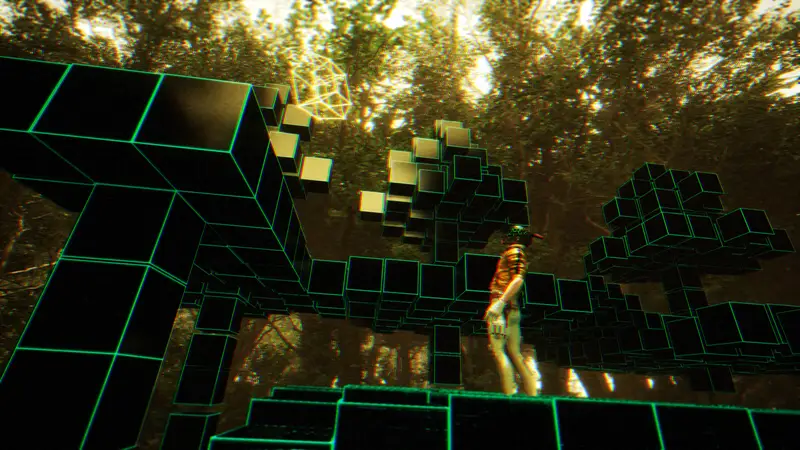
Much like the developer’s previous action games, Romeo is a Dead Man is a relatively short adventure that took me just over 12 hours. Almost every level has a self-contained story that sees the player navigating between the real world and “sub-space”, an intersection of time and space with no enemies. In these sections players are required to do some light puzzle solving as they create paths to progress forward in the real world.
While I didn’t grow tired of Romeo’s combat or any of its core mechanics, the loop of traversing between the real-world levels and sub-space became somewhat frustrating, largely due to the fact that the sub-space areas don’t deviate in aesthetic at all. It’s not always immediately obvious if you’ve solved a puzzle in sub-space, creating periods in which the area’s repetitive aesthetic causes them to become labyrinths that I had difficulty navigating. Thankfully not every chapter follows this structure, with some even incorporating clever genre blends that also feel like nods to some of the studio’s past work.
Upgrading Romeo’s weapons requires a rare material known as “Spitzers” which, apart from appearing in some levels and sub-space sequences, are mainly obtained by completing “Palace Athene” areas. These are optional combat dungeons that feature randomized level designs that can be found both in the main galaxy map during space travel or during main levels. These offer a nice distraction from the main story with some pretty significant rewards that became integral to building my combat tool set as I progressed toward the end of the game.
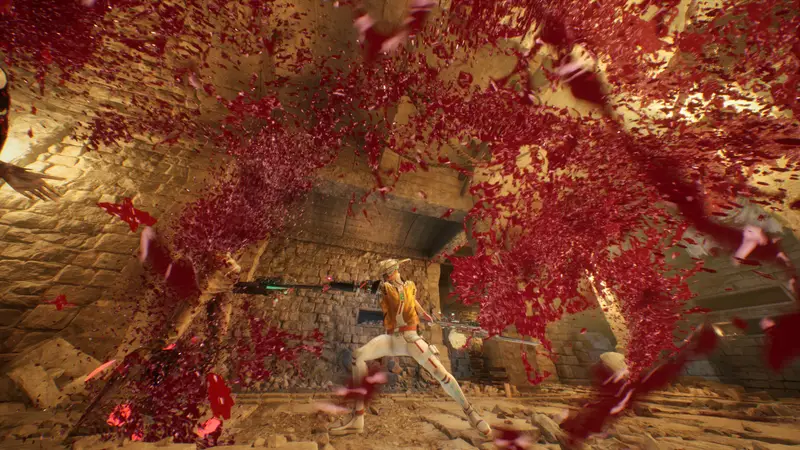
The progression of traversing the game’s main levels while taking detours to Palace Athene dungeons or other optional combat scenarios help the game maintain a constant sense of momentum that feels more thoughtfully tied together than the likes of No More Heroes’ Santa Destroy open-world maps. Here, these areas are connected by a more limited space-travel system in which the player must navigate the The Last Night to its next destination (very linearly) while scanning for space debris and other resources, offering another break from the main combat sequences that keeps the other elements from becoming stale or outstaying their welcome.
Ultimately, while it isn’t perfect and the on-boarding can be quite intense once things open up, Romeo is a Dead Man features some of the strongest third-person combat that Grasshopper Manufacture has designed to date. The Bastard system in particular adds a surprising amount of depth to the combat sandbox and keeps things feeling fresh and rewards experimentation.
More importantly perhaps, it maintains the studio’s bold sense of style and unconventional approach to action game design that doesn’t always align conceptually and has the potential to cause frustration, yet is still distinctly admirable given how long this team has been working in this genre while never sticking to the same script.
Visuals and Performance
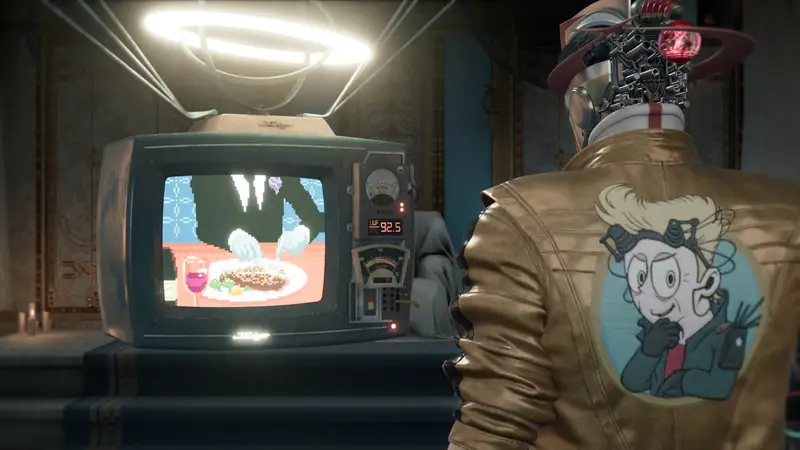
From the jump Romeo is a Dead Man is an audiovisual delight. As the game flips from a hand-drawn comic-book cutscene to a diorama animated with miniatures, it’s immediately apparent that Suda51 and the team are holding nothing back. This is handily Grasshopper’s most visually ambitious project to date, blending all forms of 2D animation, 3D animation, sprite work, practical effects, and more into something that feels like a testament to the creativity that the studio has fostered since its inception.
Given the strength of the artwork, I can imagine some being somewhat disappointed by Romeo is a Dead Man’s actual in-engine look. While the character designs are certainly great, the game is pretty apparently an Unreal Engine 5 title with a look that’s become somewhat synonymous with Epic’s engine. To this, I’d argue that Romeo is a Dead Man overcomes some of the shortcomings of other UE 5 titles by having a very focused art style that feels designed around the engine’s trademark smearing.
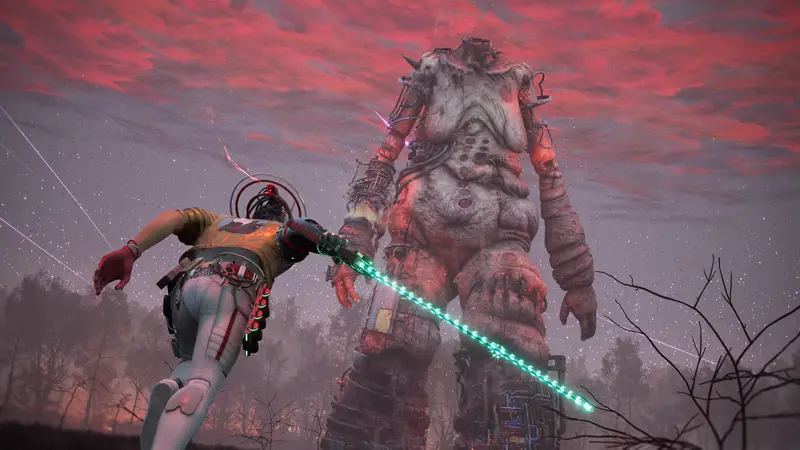
Even considering this, the game’s performance is still lacking. On a base PS5 in Performance Mode the frame-rate fluctuates below 60 frames-per-second a lot of the time and at worst some of the Palace Athene stages run at below 30. As somebody who is admittedly pretty used to frame-rate fluctuations this didn’t bother me too much but there are some instances where I could feel the performance contributing to unnecessary friction in combat.
Verdict
Though its level design and technical performance can be frustrating, I can’t help but love Romeo is a Dead Man. While it may not be their best, it is in many ways the ultimate Grasshopper Manufacture game, paying homage to the studio’s legacy with an unbridled level of creativity and style, and incorporating everything great from its past work into something fresh.

Romeo is a Dead Man will release on PC, PS5, and Xbox Series X/S on February 11. The game was reviewed on PlayStation 5.
Gamer Social Club was supplied a code for this review.