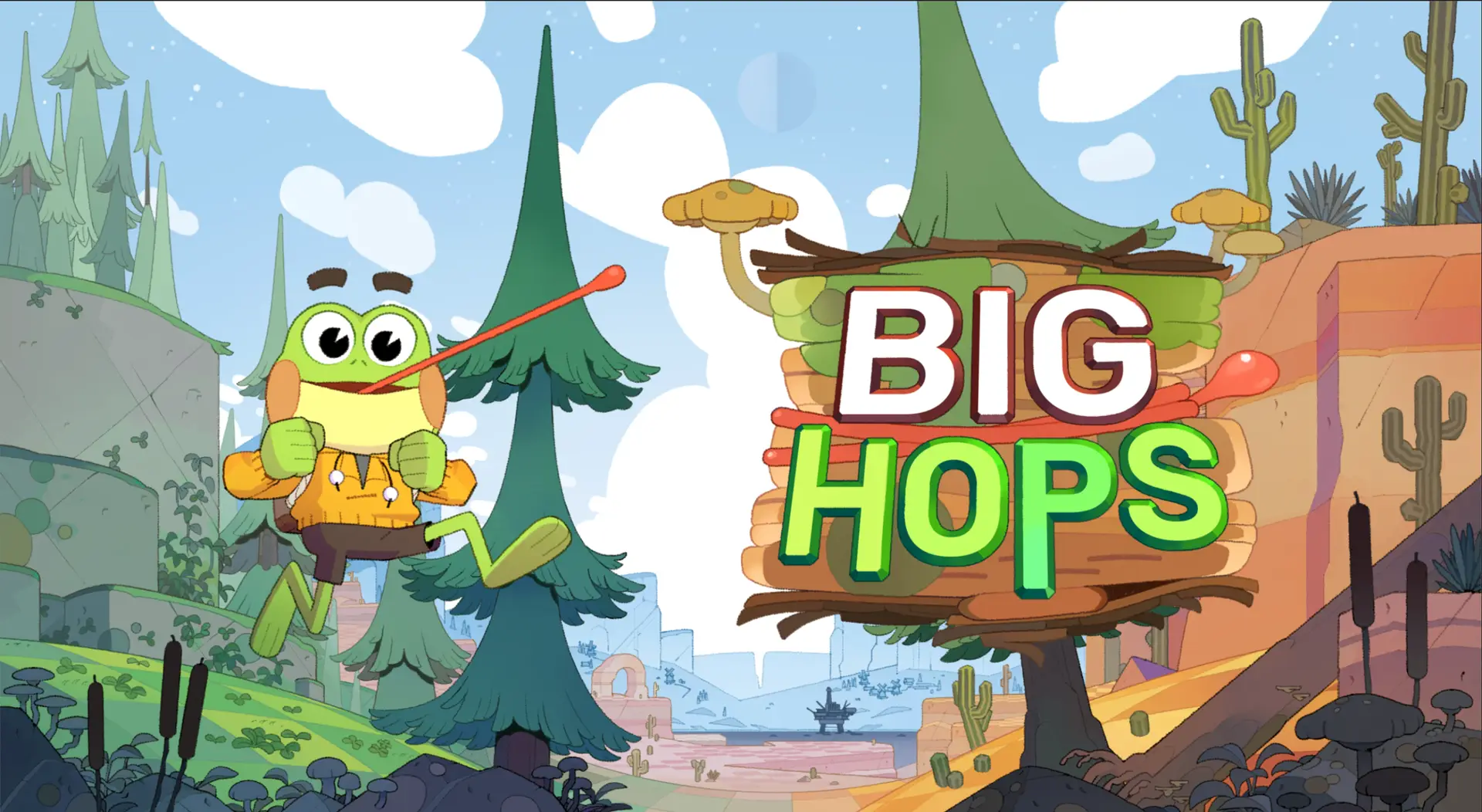
With the revival of 3D platformers well and truly in full swing, thanks to recent breakout successes in both the AAA and indie scenes, fans have had a lot to enjoy from both the traditional and experimental approaches to the genre in the last decade. It’s admirable then that Luckshot Games, having only previously developed a small physics-based game called Sausage Sports Club, brought it upon themselves to try to blend the recently renewed genre with the emergent game design philosophy of games like The Legend of Zelda: Breath of the Wild and its sequel for its latest game, Big Hops. What results is a very charming 3D platformer with lots of ambition that unfortunately feels torn between its two conflicting design principals.
In Big Hops, players take control of Hop, a young frog who is separated from his little sister while they are out exploring a forest. Hop is later kidnapped by a mysterious being named Diss, who claims Hop is the only person (or frog) who can save the world from impending destruction. Distrusting Diss, Hop sets out on a mission to travel across various worlds to find parts for an airship to bring him back home.
Gameplay
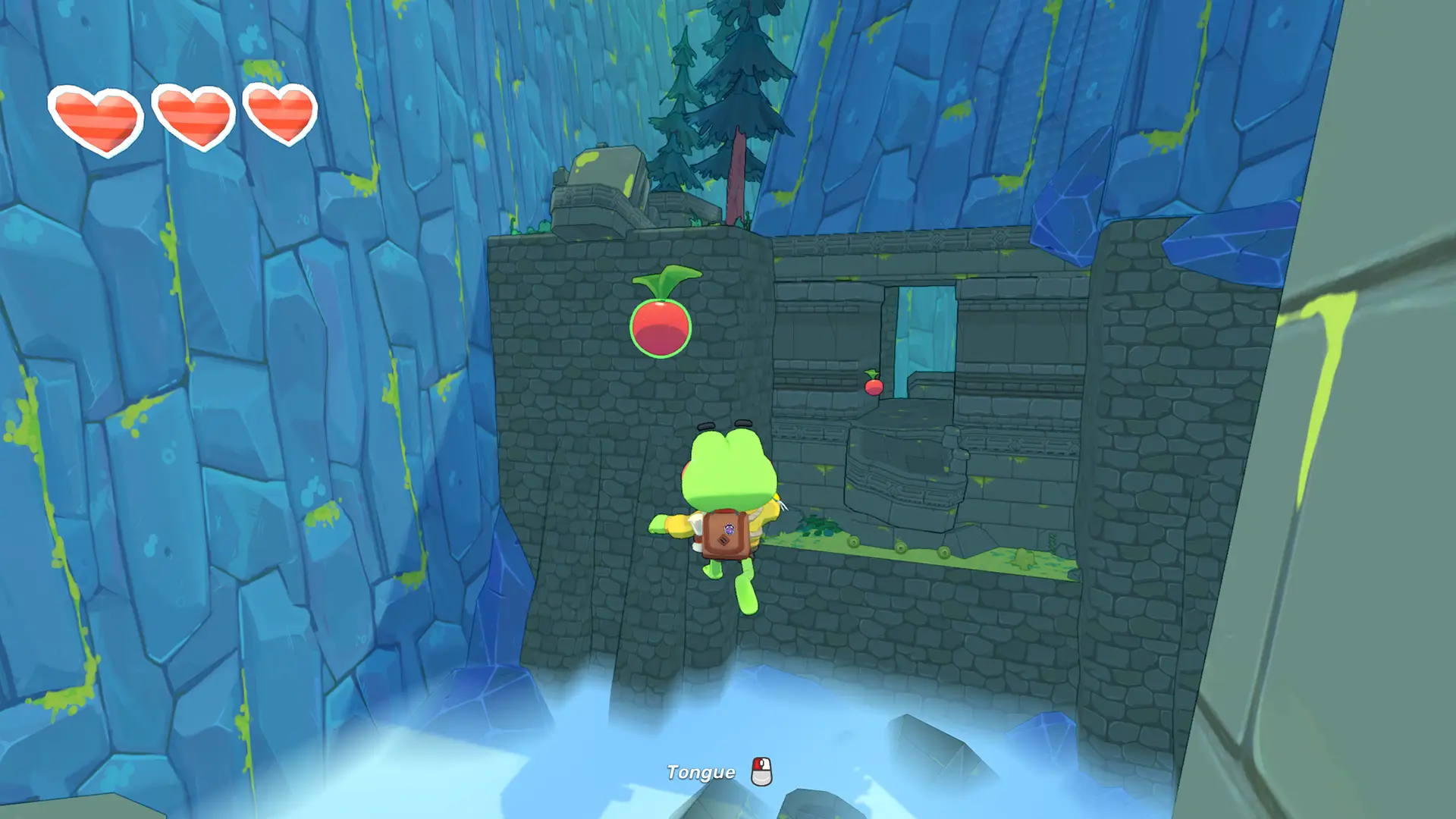
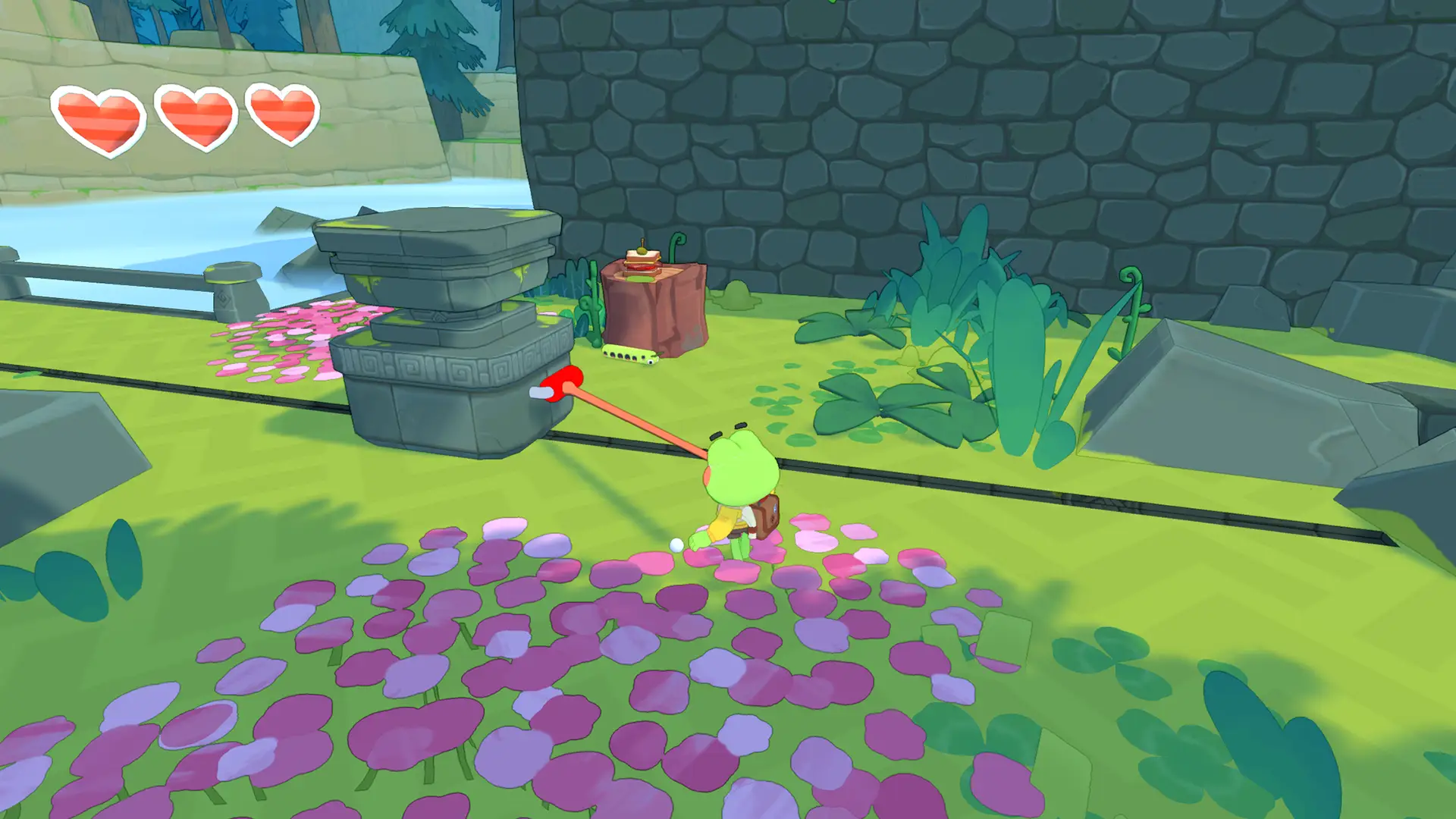
The first thing I noticed about Big Hops from the second I picked up the controller was how spectacularly its semi-titular character controls. It’s clear that a lot of effort went into perfecting the fluidity of Hops’ traversal tools and mechanics. From the beginning, he can dive, wall-run, long jump, and use his tongue to grapple and swing from certain points. I found myself immediately experimenting with the character’s abilities and trying my best to build and keep momentum between platforming challenges.
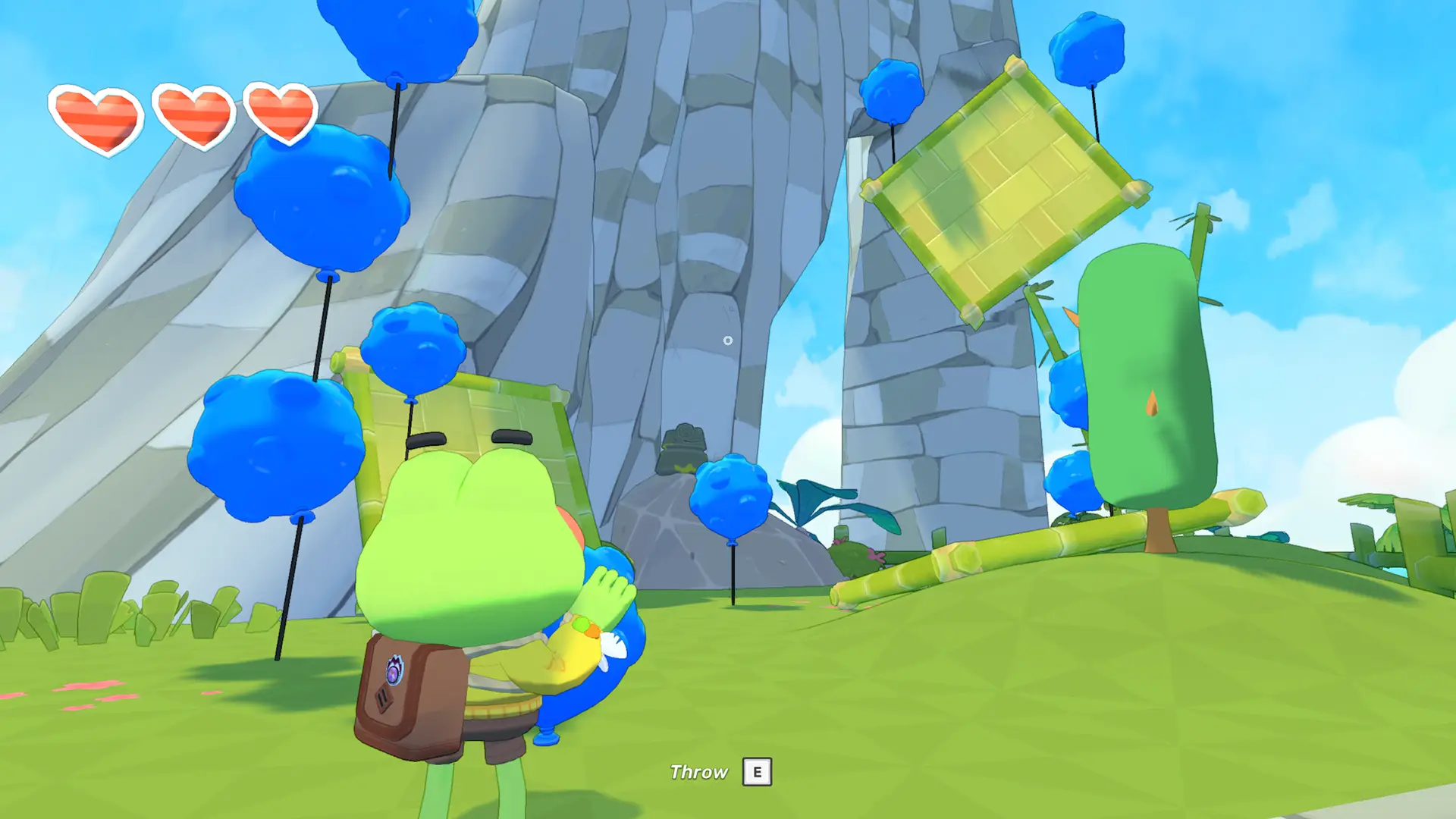
Shortly after, Big Hops introduces its next big mechanic, the ability to use tools and items in each environment to solve platforming challenges and experiment with new techniques. These range from apples that allow Hop to grapple to walls, acorns that sprout vines that can be climbed to gain verticality, cacti that create tightropes, and more, all of which blend with the already excellent movement mechanics to make for fun and rewarding platforming puzzles.
The strength of these mechanics and how well they mesh together brings attention to Big Hops’ biggest shortcoming, however. Given the possibility for a deep and rich sandbox with a huge potential for experimentation, Big Hops is frustratingly and seemingly begrudgingly linear. While it’s clear that the game was never meant to be open-world due to the segmented nature of each world, it follows a corridored and narrative-driven progression that feels at odds with certain elements of its design. For the majority of Big Hops, the player is unable to return to previous areas, even within the same world. Due to this structure, which not only limits the potential for its sandbox, the player is unable to engage with a surprising amount of content until the very end of the game. For instance, coins can be collected throughout the story with a wallet cap of 200 (which can be expanded), but many of the shops cannot be returned to due to the railroaded nature of the narrative.
This expands to other aspects, as I found myself unable to solve side-quests until I had unlocked abilities later in a world, only to find that they were unlocked at a point in the narrative in which it was impossible to return to the previous area. These conflicting design principals greatly limit the scope for Big Hops’ level design and their effects are felt throughout its run-time.
These issues also extend to Big Hops’ collectables, namely the Dark Drips that Diss tasks Hop with collecting in order to avoid the oncoming calamity. Collecting one of these allows the player to unlock a trinket that can be equipped to Hop’s backpack, enabling gameplay modifiers and unique elements, such as adding a speedometer to the UI to track Hop’s movement speed. These can be collected either as a reward for certain mini levels in a separate location known as “The Void”, through side-quests, or through obtaining smaller pieces scattered around each environment, which eventually combine into a full Drip.
The utilization of Dark Drips as a reward feels conflicted and indicative of something of an identity crisis within Big Hops’ broader design scope. They are exclusively tied to narrative progression and unlocking trinkets, but their inclusion in the game speaks the language of them as a collect-a-thon reward, right down to the cute little animation Hop performs upon collecting a full one. Initially, there are very few ways to even track how many have been collected, which, given the aforementioned linear progression, means many players will likely miss a good few before gaining the ability to track them. This also applies to bugs and flower petals that can also be collected, each of which has rewards tied to vendors that, if missed, cannot be used until the end of the game.
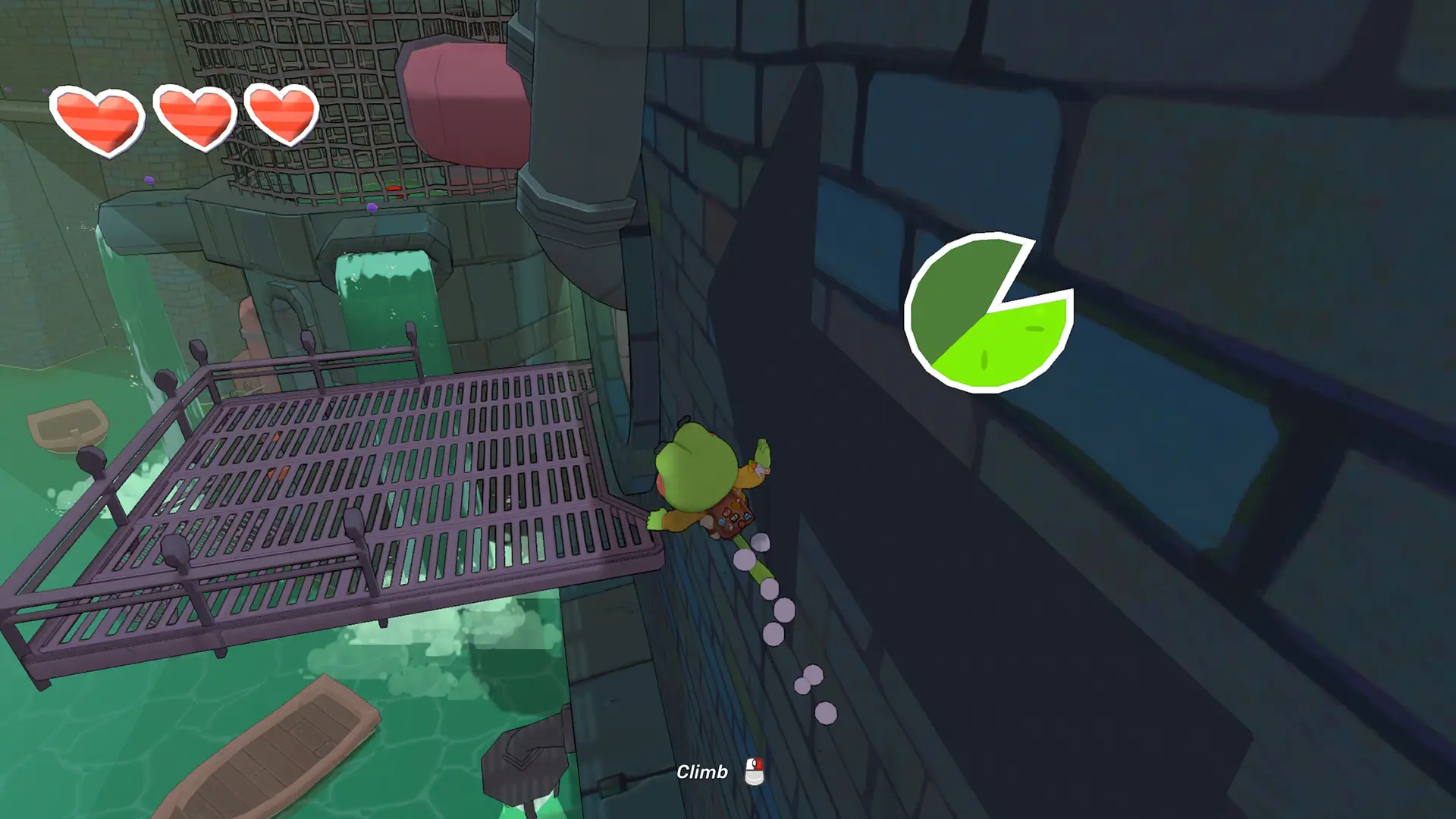
Despite these issues, traversing Big Hops’ world is constantly rewarding and exciting. While it is not as expansive as it could be, making use of the game’s platforming sandbox is constantly rewarding and very rarely had me overthinking my options or stuck for a way to progress. The narrative is also very charming, featuring a cute cast of characters brought to life by character designer Steven Sugar and an excellent voice cast including the likes of Ben Diskin (JoJo’s Bizarre Adventure) and Steve Blum (Cowboy Bebop).
Narrative
Each world contains a standalone storyline following its own cast of characters, with antagonist Diss mainly taking a backseat until towards the end of the game. While each of these kept things progressing at a consistent pace, there are a few too many sequences in which Hop is forced to complete a three-step objective in order to push things forward that it becomes a noticeable pattern towards the end. Furthermore, the middle chapter feels like it ends somewhat abruptly within its own storyline, leaving a few of the character arcs feeling unresolved. The ending itself is also somewhat abrupt, but still charming, however there is a lingering question regarding the antagonist’s motivations that feels strangely unresolved.
Visuals & Music
Technically, Big Hops is a mixed bag. While the game looks great with strong art direction and character designs, and mostly runs at a solid 60 frames-per-second on PlayStation 5, there is a distracting stutter that persists throughout the game. It seems to suffer worse in the more open areas, at its worst constantly interrupting the flow of platforming challenges and breaking the sense of momentum.
I also encountered a few bugs and random tech quirks during my 12 hour playthrough. The game soft crashed on me multiple times, once when I was swapping Hop’s outfits and another during a cutscene towards the end of the game, both of which required restarts. There are a few narrative moments that feel lacking in sound design or where audio queues are missed, and even the first major boss of the game feels distractingly quiet for the intensity of the scenario.
The sound design does have its highlights however, specifically in the music which is very charming and matches the game’s cute, cartoony energy with lots of spirit. As previously mentioned, the game features a strong voice cast and, perhaps most surprisingly, a large amount of voice acting. The story features full voice acting and almost every NPC that can be interacted with has its own voice, even if a small pool of actors are reused frequently.
Verdict
While its tight controls and emergent mechanics create a strong and satisfying blend of 3D platforming and involved, reactive game design, Big Hops’ structure feels at odds with itself. Its narrative focus limits the scope of its open-ended ambitions, resulting in an experience that makes some hops that are certainly big, but don’t always stick the landing.

Big Hops is available now for PC, PS5, and Nintendo Switch. The game was reviewed on PS5.
Thank you to Luckshot Games for providing a game code for this review.