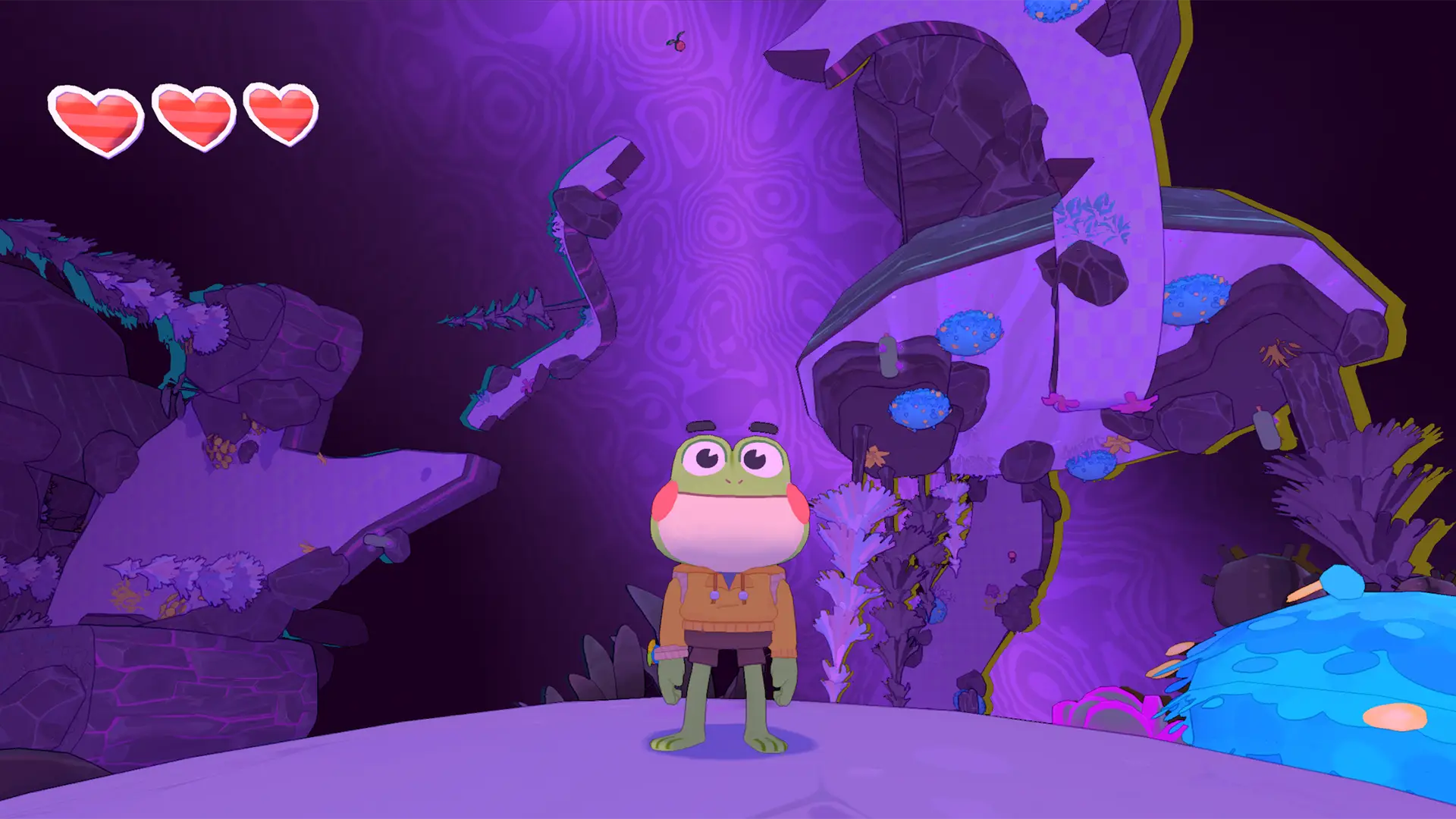
Big Hops is a 3D platformer creative director and Luckshot Games founder Chris Wade has been cooking away at for over six years. Before opening the studio in 2015 and developing its first title, Sausage Sports Club, in 2018, Chris worked at Owlchemy Labs, the VR studio behind games such as Job Simulator and Cosmonious High. Here he began to experiment with physics-based systems and reactive game design which would ultimately go on to inspire some of the core ideas behind his own studio’s sophomore title.
In the run-up to launch I had the pleasure of tossing some questions to Chris regarding the unique development of Big Hops, how the game was designed, and his small studio’s experience both with Kickstarter, working with the SAG voice actor’s union, and more.
Be sure to also check out our full Big Hops review to hear our thoughts on the game.
Big Hops Developer Interview
Can you briefly describe Big Hops for those who might be unfamiliar with it?
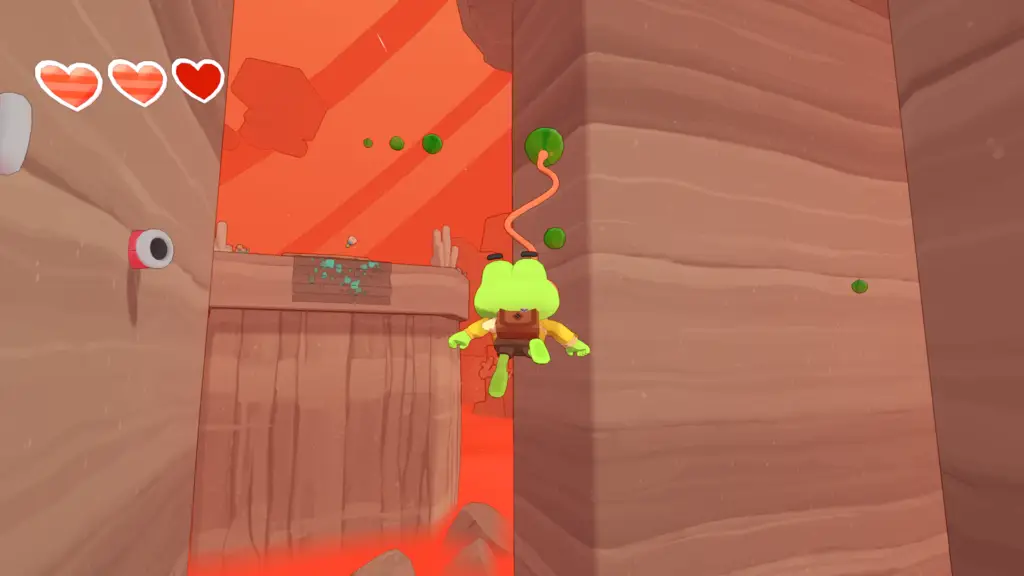
“Big Hops” is a new kind of 3D platformer where you use your frog tongue to grab things, swing around, and solve puzzles. You have a deep parkour-like moveset and can plant veggies to build your own path through worlds. You play as Hop, a young frog who’s been kidnapped from home by a trickster spirit called Diss. He has a mysterious, important mission and needs your help, but you just want to get back to your family. “
In one of the game’s trailers you discussed how when development began there were a lot of games focused on emergent design but not a lot of 3D platformers. In the past few years there has been somewhat of a resurgence of the genre. As an indie dev who’s been working on a game for years is that daunting or does it feel like an opportunity?
“I don’t feel that much in competition with other 3D platformers coming out, honestly. So many of these games are focusing on nostalgia and have relatively simple movesets, a short playtime, or don’t have much new to say. If that sounds like a dig, I don’t mean it that way. I just think we’re doing our own thing and trying to innovate and I’m hopeful players will see and appreciate that. There are some really great upcoming projects doing interesting things and I want to recommend everyone check out Demon Tides, The Big Catch, and Rollin’ Rascal.”
How did you go about structuring the game with the emergent design in mind?
“For the first year I was working on the game there was literally no structure. I put everything I made into one playground scene and all the gameplay paradigms we’re shipping with were there then- tongue interactions, most of the parkour moveset, the backpack, and about 70% of the veggies we shipped with were there in some form, and it was total blue sky prototyping with blind faith that I’d figure out the structure later. While it was fruitful and an interesting process to keep making stuff until there was so much potential we were able to sign a publisher, it was pretty risky and set us up for a long hard road of trying out several structures until we found one that worked.”
How did you prioritize collectables and balance them as rewards for exploration and challenges? Would you consider the game a collect-a-thon?
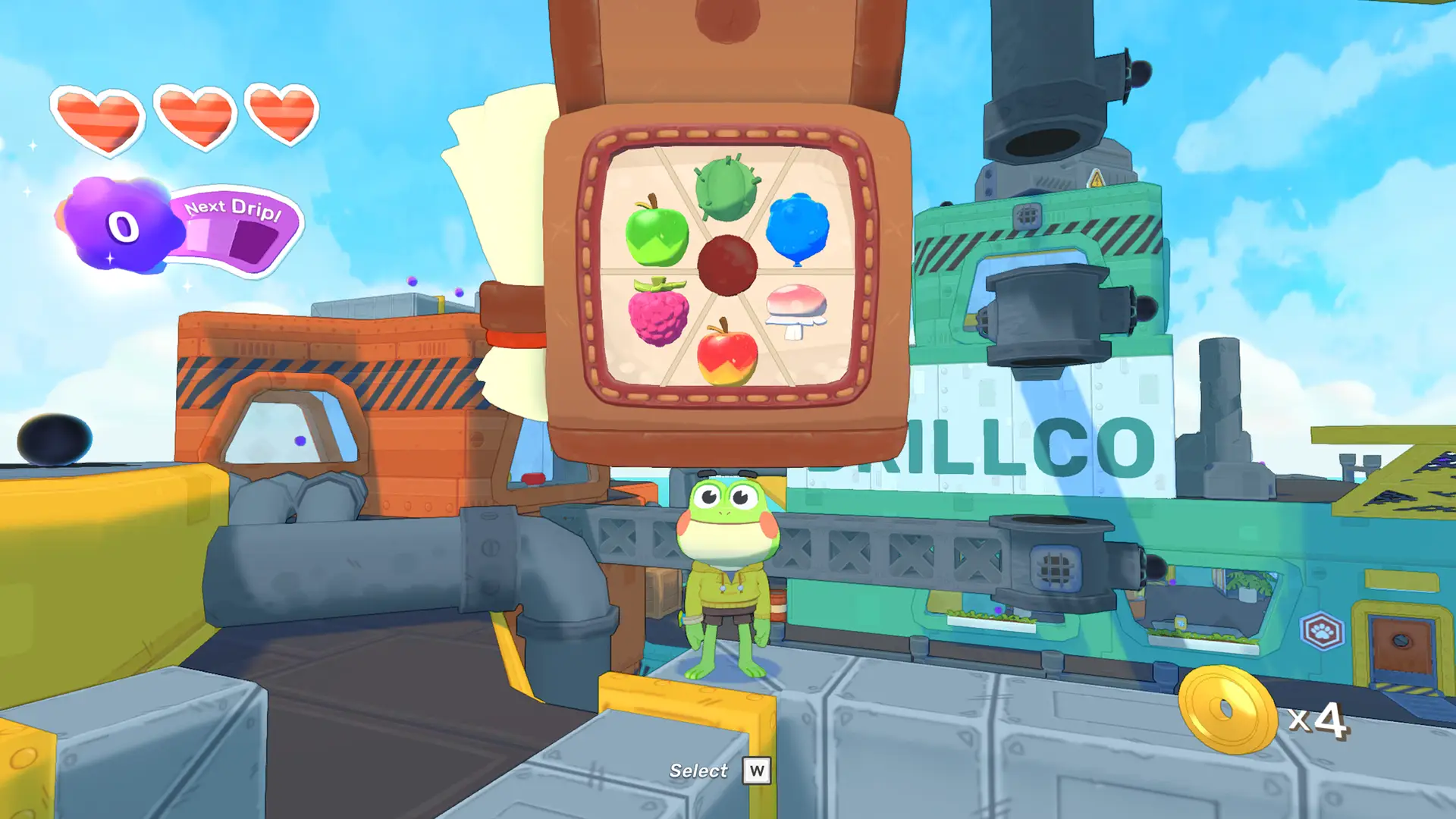
“I think of the game as more an immersive sim / action game than a collect-a-thon, but we’re seeing players really resonating with it as a collect-a-thon and we did make a lot of stuff for those people. The biggest thing for me was to make sure every collectible had some gameplay purpose or meaningful reward behind it beyond a number going up. There’s quite a few things to collect: Dark Bits, Dark Drips, Trinkets, Bugs, Flowers, Outfits, Hats, Mixtapes, Health / Backpack / Wallet upgrades, all the Veggies, Gadgets (these are secret, shhh) and they are all worth your time.”
One of the first things I noticed from the demo was that Hop’s moveset is quite intricate. How did you go about honing the feel for the character?
“The whole 6.5 years of making the game we made meaningful changes and kept iterating to make the game feel better. I’ve played every platformer out there and took copious notes about the game feel, metrics, animations, particles, audio, and everything really and understanding all these games really informed my decisions on the Hops’ character controller. It’s a really unusual kit comparing with other games because of the sheer number of things you can do and the sense of grounded real-ishness there is to it. I think the combo of wall running and climbing will feel pretty fresh to the platformer sickos out there.”
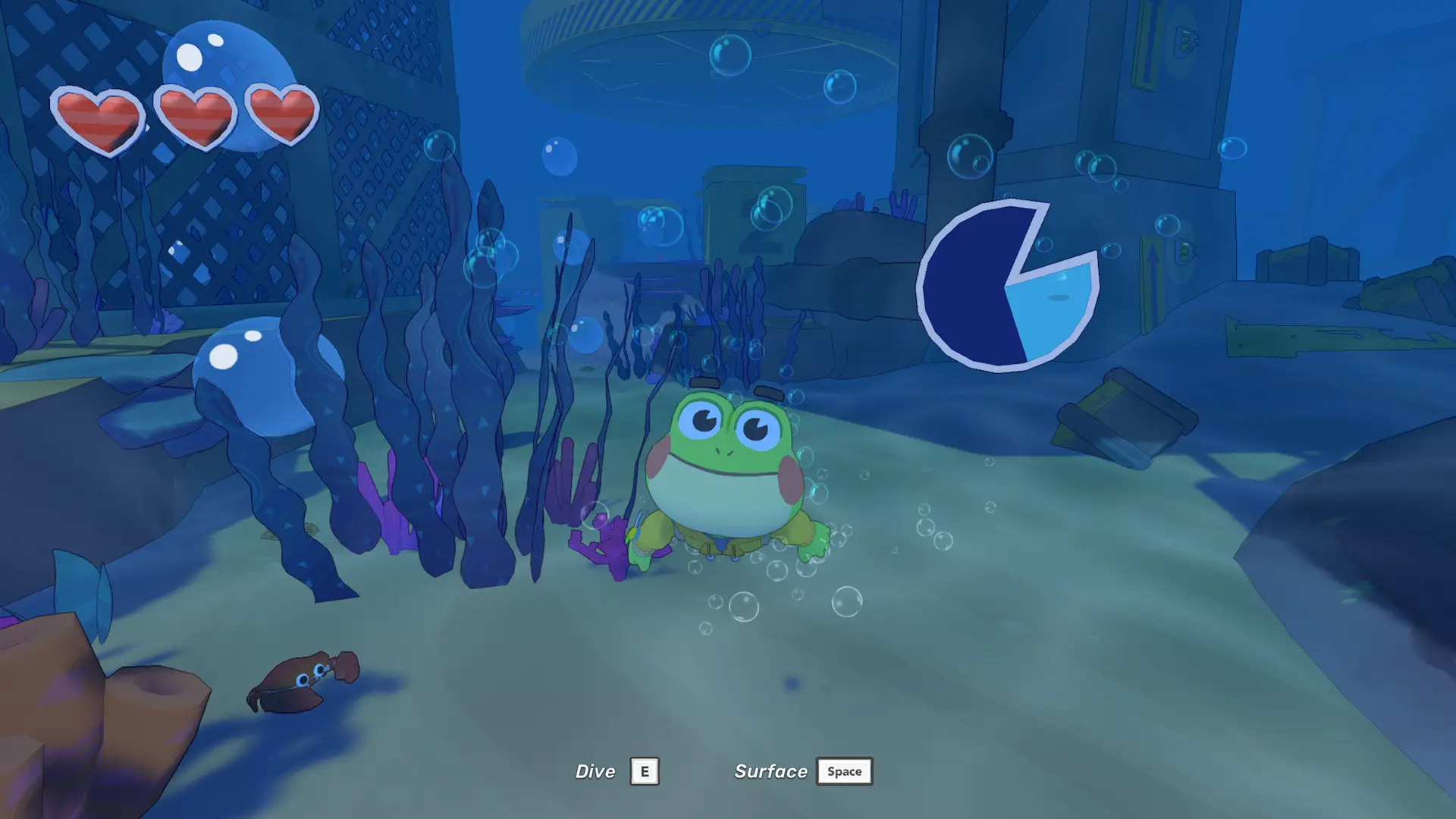
How did you go about designing the veggies and other platforming tools? Did they originate conceptually or mainly through playtesting and experimentation?
“Back in 2019 I made about 20 Veggies and Gadgets to explore the possibility space of building your own paths through levels and changing how you traverse. Mapping that design space really informed designing the rest of the game and about 70% of those Veggies are what shipped. Then there was also a bunch of stuff we discovered much later after we had levels more representative of where the game is now. Cactus Fruit, Goo Balls, Oil Balls, were all new discoveries where the credit is sort of split between level designer Robert Yang and I. We also reworked Bubble Fruit in the last year to be more similar to shooting billiard balls from their previous iteration where you just bounced of bubbles by touching them, which was too similar to the balloons in the game and also too straightforward of a way to go up.”
As an indie developer, how was the process of voice acting and working with the SAG union?
“We had great partners in Ashley Lambert and Sara Holms who walked us through the whole process and managed all the casting process for us. I told them we wanted Steve Blum and they made it happen for us. All the actors were super nice, helpful, and added more to the characters and world than we could’ve imagined- a lot of them improved in the sessions to make us laugh and we added a lot of their jokes to the game where we could.”
You used Kickstarter during the final stages of development. How was this experience and would you recommend it to other developers?
“I love Kickstarter as I think it’s one of the best ways to build a community of fans who have a sense of deep connection and almost ownership of the game. I’ve [backed] about 30 Kickstarters myself and I love to see the journey and have that extra context when I play the game. It’s part of the experience of those games for me and I think it’s a special way to make art. It is a very scary and raw feeling to put yourself out there and ask for a substantial amount of money – you have to be a bit delusional to make games and think you can convince many thousands of people to give you money and Kickstarter is a very honest test of whether your game has the juice. I had a lot of stress and embarrassment dreams about potentially not hitting our goal as a lot of people do during the middle low period of Kickstarters even though we were always very on track to pass our goal.
I do recommend it to other developers because it does force you to do a dry run of your launch by preparing marketing materials, copy, iterating your messaging, building an audience, and all the other stuff that launching a game is. Plus, of course, you get this team of fans behind you that want to see your game be good and succeed. The only warning is to be ready to work hard for those people and over deliver for them because they are taking a chance on you and your game. We’ve done two games on Kickstarter now and it’s important to me to blow their expectations out of the water with the final project and make them proud to have backed our games.”
Huge thank you to Chris for responding to our questions. Special thanks also to Harry Glynn Jones for assisting with the interview process.
Big Hops is available now for PC, PS5, and Nintendo Switch. If you’re picking up the game for launch, be sure to check out our trophy guides below.


