
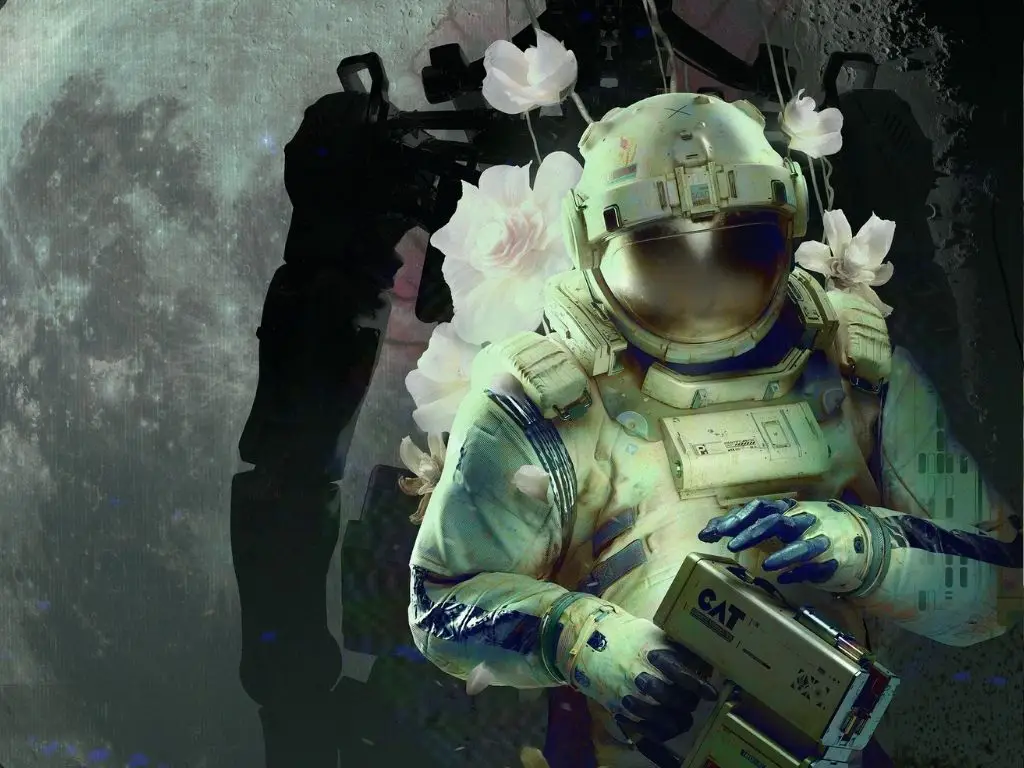
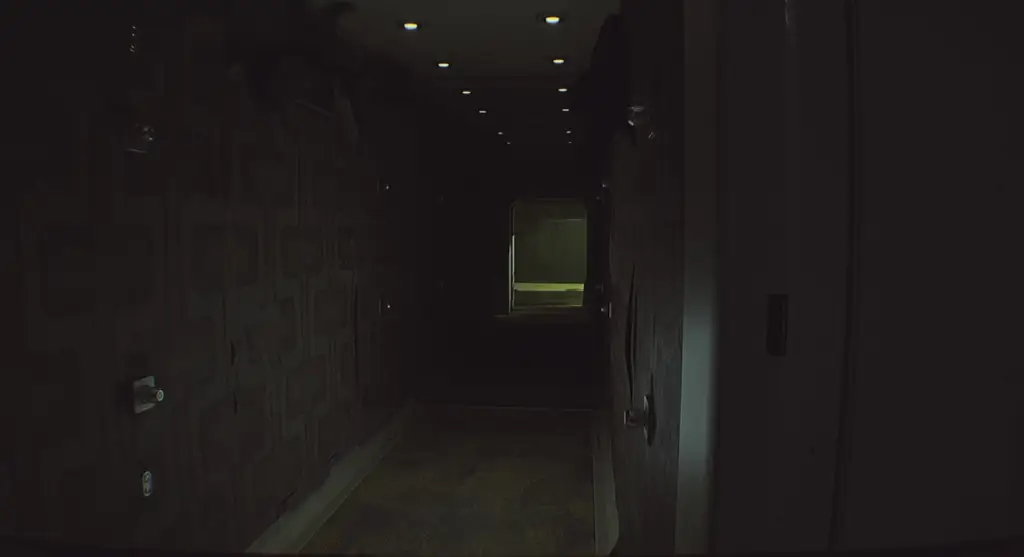
There is something at the end of a dark corridor. I can’t see it clearly, only the suggestion of a shape, a deeper darkness within the shadows. It doesn’t move, but it feels as though it’s watching me, waiting. I still need what’s in the room behind it, and whatever that thing is, it’s standing between me and the only way forward. That feeling is what ROUTINE captures so well, creating constant pressure through the very friction of its design: a sci-fi horror game that leaves you feeling helpless and alone, with no option but to move forward and face whatever hides in the dark.
That same sense of unease pervades ROUTINE’s lunar base setting. As a software engineer sent to investigate multiple system failures, you arrive to find it void of life and in complete disarray. Much of the station is in lockdown, and its robotic security system is already acting… strangely, leaving you with few options but to move cautiously through the facility’s dark corridors.
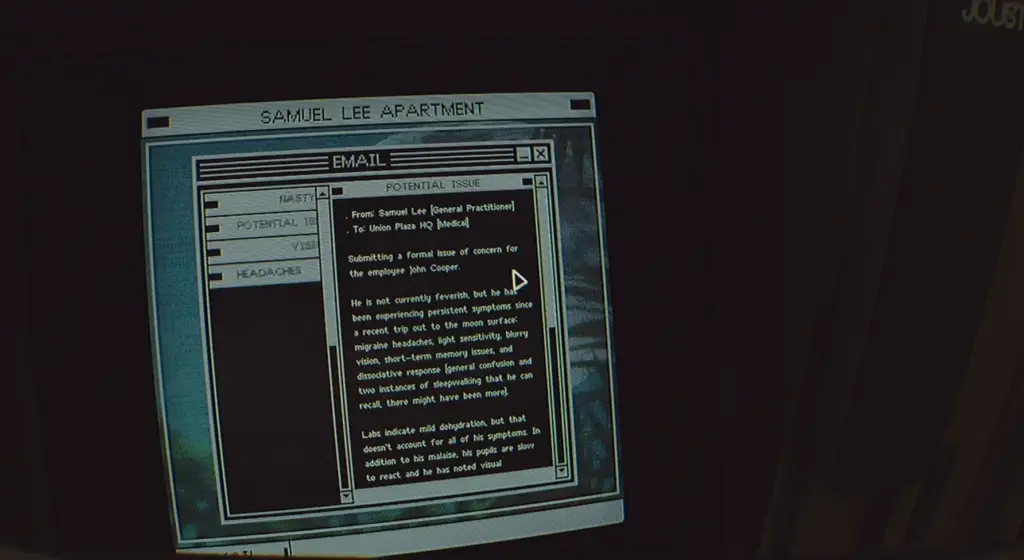
Everything in ROUTINE is designed to slow you down, and that deliberate pace extends to the game’s grounded approach to problem-solving. Unlike many classic horror games, progression doesn’t rely on abstract puzzles or sliding-block challenges; instead, you investigate the environment and interact with it in realistic ways. Checking security camera footage, looking through emails, reading handwritten notes, and listening to audio recordings left behind by the team that once manned this space station hold clues on how to progress, as well as slowly reveal the events that led to this situation. Early on, for example, you need to input your own ID number into a terminal; the game doesn’t tell you where to look. You discover it by glancing down at your chest, reading the number upside-down and back-to-front through your first-person viewpoint. No holograms are springing from your forearm, no floating markers on your HUD; everything is practical, tactile, and integrated into the world itself.
That same grounded design extends to movement itself. You can lean to peer around corners, crouch to slip beneath obstacles or hide, lower yourself to check under objects, or rise onto your toes for a better view. Even running feels constrained, with heavy turns and limited agility that reinforce your vulnerability and make escape feel uncertain rather than empowering.
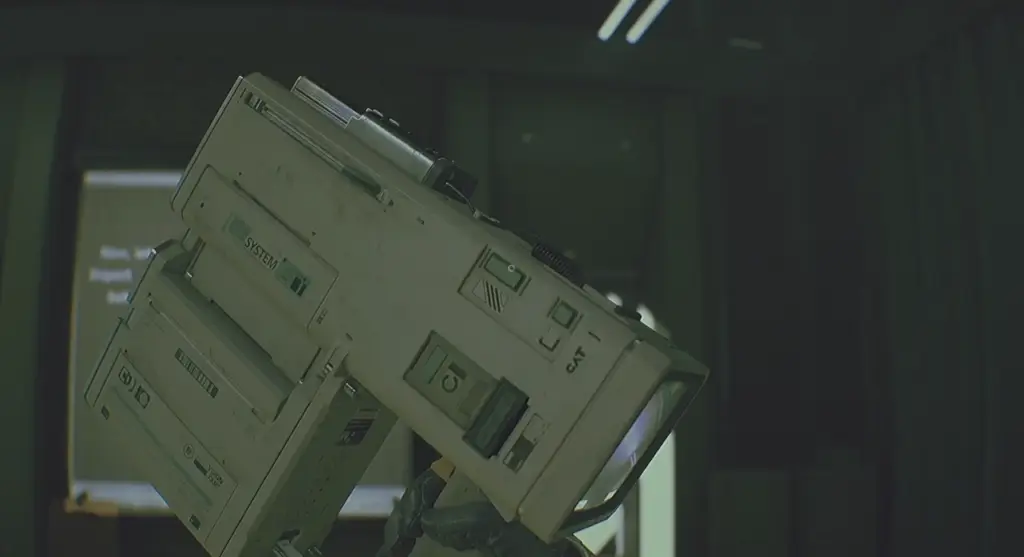
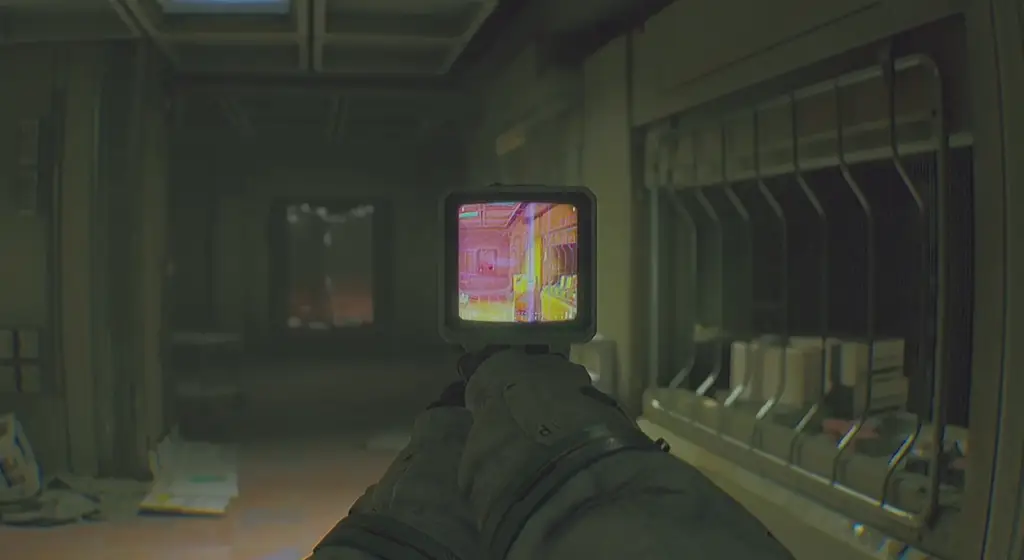
This design ethos is personified by the Cosmonaut Assistance Tool (C.A.T.), a handheld device you will soon find after arriving at the station, and your only aid in your search for what happened at the lunar base. The C.A.T. is chunky, camcorder-like, and intentionally cumbersome, a tool that demands attention and care. You must manually select and activate each module to bypass locked doors, view objects and your environment through a UV lens, or illuminate dark corridors, all while keeping an eye or ear on your surroundings.
Save points, your current objectives, and any passcodes you may have learned are accessed by the device as well, needing a manual button press on your C.A.T. to connect to the projector-style checkpoints every time. You’ll often find yourself activating them in exposed locations, adding real risk to what would otherwise be a mundane task. It’s also worth mentioning that there is no quick save system in ROUTINE, so the added pressure of losing progress is ever-present.
Handling the C.A.T. takes time, and that slowness amplifies the tension; every action is deliberate, and every mistake carries potential consequences. Its retro-futuristic design isn’t just aesthetic flair; it embodies the station itself, a piece of technology that feels both practical and dated, a reminder that survival on this moon base requires patience under pressure. That friction would be merely inconvenient if ROUTINE ever let you feel safe. It doesn’t.
The lunar base’s security system, a retinue of looming, autonomous robots, is also on the blink, and they see you as a security threat, one they will remove if they catch you in their vice-like grip. One encounter with one of these eerily-humanoid 05s played out just as described in the opening paragraph of this review; an ominous presence waiting in the dark. What makes these robots so interesting is that only one can be operating at any given time, a symptom of the base’s failing systems, adding an extra layer to the deadly game of “cat and mouse” you are caught up in. On several occasions, I was spotted by a patrolling 05, who would then slowly chase me as I spun on my heel and ran away, only to be startled by another security droid activating in a dark recess as I turned to hide behind a corner. The flow-chart for survival ends the same way regardless of the situation: run and hide.
My one gripe with these otherwise chilling adversaries is their design: who designs security robots with jaws full of sharp metal teeth? I understand the need to make the 05s intimidating, but it’s a minor incongruency that jolts you out of the otherwise believable retro-futuristic world, though it doesn’t detract significantly from the tension. Later in the game, the 05s are replaced with the introduction of a more alien threat, a creature that moves beyond the predictable patrol patterns of the 05s, forcing you to adapt and rethink your strategies in the second half of the lunar base.
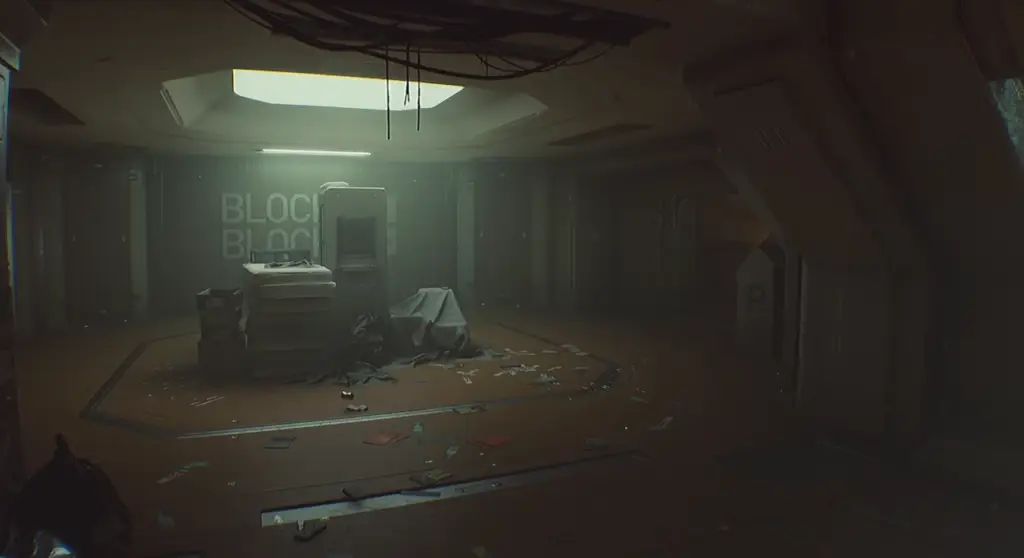
While the threats keep you on edge, it’s the station itself that constantly reminds you of how precarious your situation is. ROUTINE’s retro-futuristic 80s aesthetic is present in every detail: chunky consoles with flickering monitors, analog indicators, and industrial textures covering walls, floors, and ceilings. Exposed cables snake along panels, ventilation ducts hum with unseen machinery, and corridors are punctuated by stark lighting that casts deep shadows, making every corner feel like it could hide something waiting to strike. These visual choices aren’t just stylish; they reinforce the game’s deliberate pacing and tactile interactions. There is no HUD or overlayed UI to get in the way of what’s on screen, and coupling this with the game’s high fidelity visuals has created one of the most photorealistic and immersive games I have ever played.
Sound design plays an equally vital role in maintaining ROUTINE’s suffocating atmosphere. Machinery hums, discordant jingles play on newly booted-up monitors, and the heavy footsteps of security robots carry far enough to make you question whether it’s safe to move at all. Audio cues often serve as your only warning, forcing you to listen carefully and make decisions based on sound rather than sight. Even the music of the legendary Mick Gordon is used sparingly, adding to the haunted ambience of ROUTINE. I highly recommend playing the game with headphones for both maximum immersion and increasing your chances of survival.
ROUTINE is an excellent, immersive horror experience that revels in building and maintaining tension, forcing the player to rely on their own wits to progress and survive. While some may be put off by the game’s slower, more methodical pace or its lack of handholding, those willing to meet it on its own terms will find a deeply unsettling and meticulously crafted experience. By embracing friction rather than smoothing it away, ROUTINE turns routine actions into sources of anxiety, making every decision feel consequential. It’s a game that demands patience, attention, and a willingness to sit with discomfort; one that often leaves you staring down a dark corridor, knowing something is waiting, and choosing to move forward anyway.

ROUTINE is out now on PC, PS5, and Xbox Series, and launched day one on Xbox Game Pass.
ROUTINE was played for review on Xbox Series X with a controller.


