
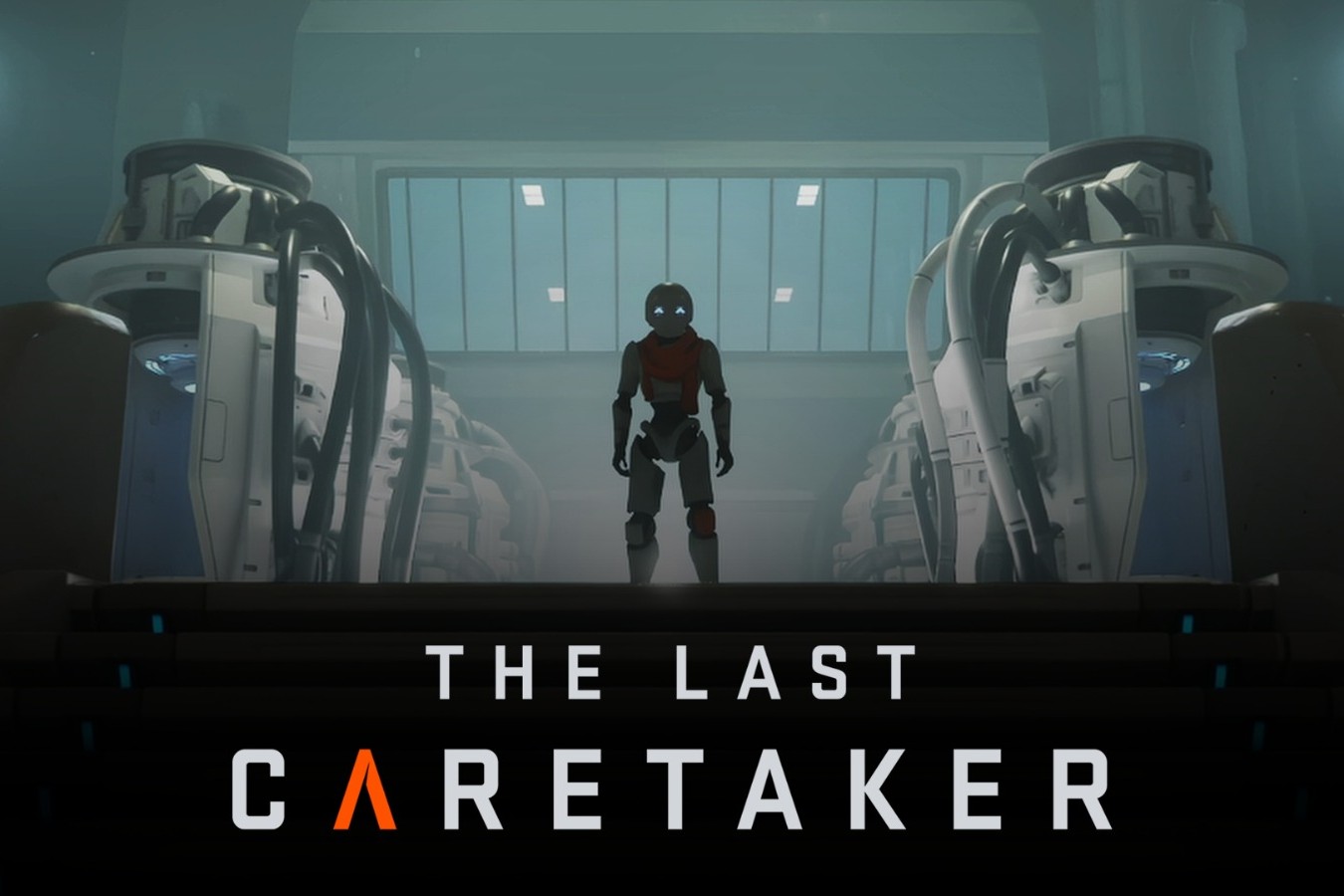
Intro: Another Survival Game or Something More?
In the modern age, the survival genre is perhaps the most broad and welcoming of all of those that fall under the umbrella of gaming. Players have a medley of choices at their disposal. It doesn’t matter if you want to survive in a zombie apocalypse and fight for limited resources or live in a world of peace and tranquility. No matter what the player is looking for, there is a game for every imagination and every adventure you could ever want. Therein lies the best selling point of the survival genre –if you can imagine it, it exists. Yet gaming has a way of pushing the envelope. What looks like a simple premise that has been done a hundred times before on the surface can sometimes be the biggest surprise of all. Welcome to my Early Access Review of The Last Caretaker.
World and Story: Humanity Swallowed by the Sea
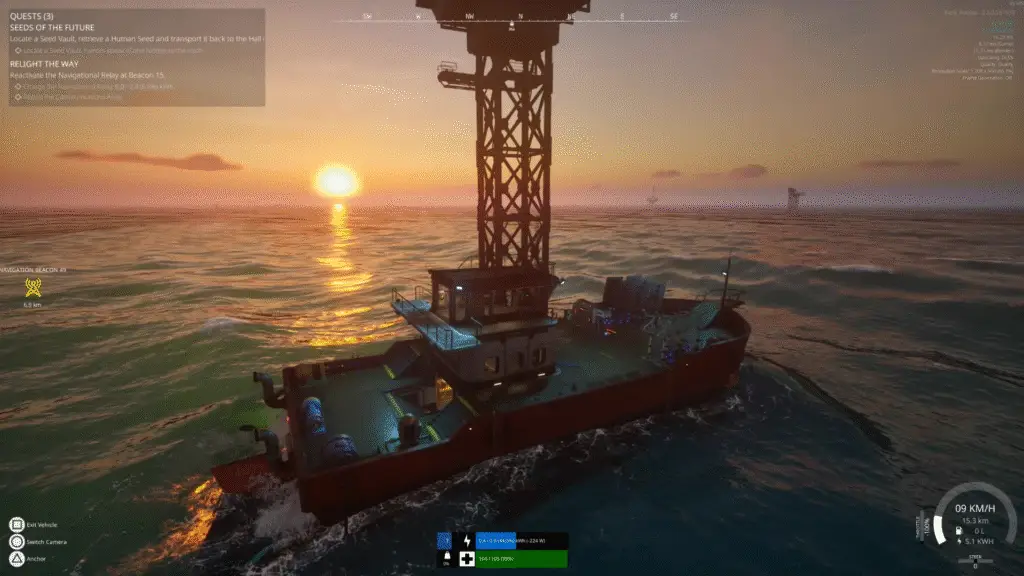
The world of The Last Caretaker is one that we all know so well. The game is set in a distant future where the Earth has finally succumbed to the centuries of abuse from humanity. The droughts came, then the floods, and before they knew it the world was gone. Humanity had no choice but to retreat into the last great wilderness – the endless reaches of space. Yet the basis of The Last Caretaker isn’t in fostering humanities resurgence as they travel the stars. Instead, you play as the titular Last Caretaker after you awake in the remnants of the world humanity left. In those first few hours you learn what has happened to the world and are given the simple goal of making sure humanity has a future. This has you repairing your mobile base, a huge freighter, and learning the basics of what your true mission is in the hours that follow. Once those gates open and you’re released into the world, the player truly gets a glimpse of how dire the situation truly is.
The setting of The Last Caretaker is one that begs to be explored. I’ll be the first to admit that on my first playthrough, I neglected the story entirely and simply sailed off into the distance with no real goal but chasing the horizon. Foregoing the usual survival setting of different biomes and a dozen different vistas, The Last Caretaker’s world is entirely built on exploring a seemingly endless ocean and piecing together the secrets of the past. It really is a sight to see when your cruising from location to location, and it really does feel and look like a world that has been abandoned for decades. There a dozens of different points of interest scattered around the world, and it is almost always worth it to at least check them out for the dozens of resources you need to fulfill your goal. And the best part is, the traversal feels natural in its execution. I was not looking forward to being tied down with a slow moving freighter as my base, but shoot. They did it, and they did it well. Honestly, some of the best memories I had with this game in my 30 hours playing it was simply traveling from point A to point B, crafting and building my ship up as I went.
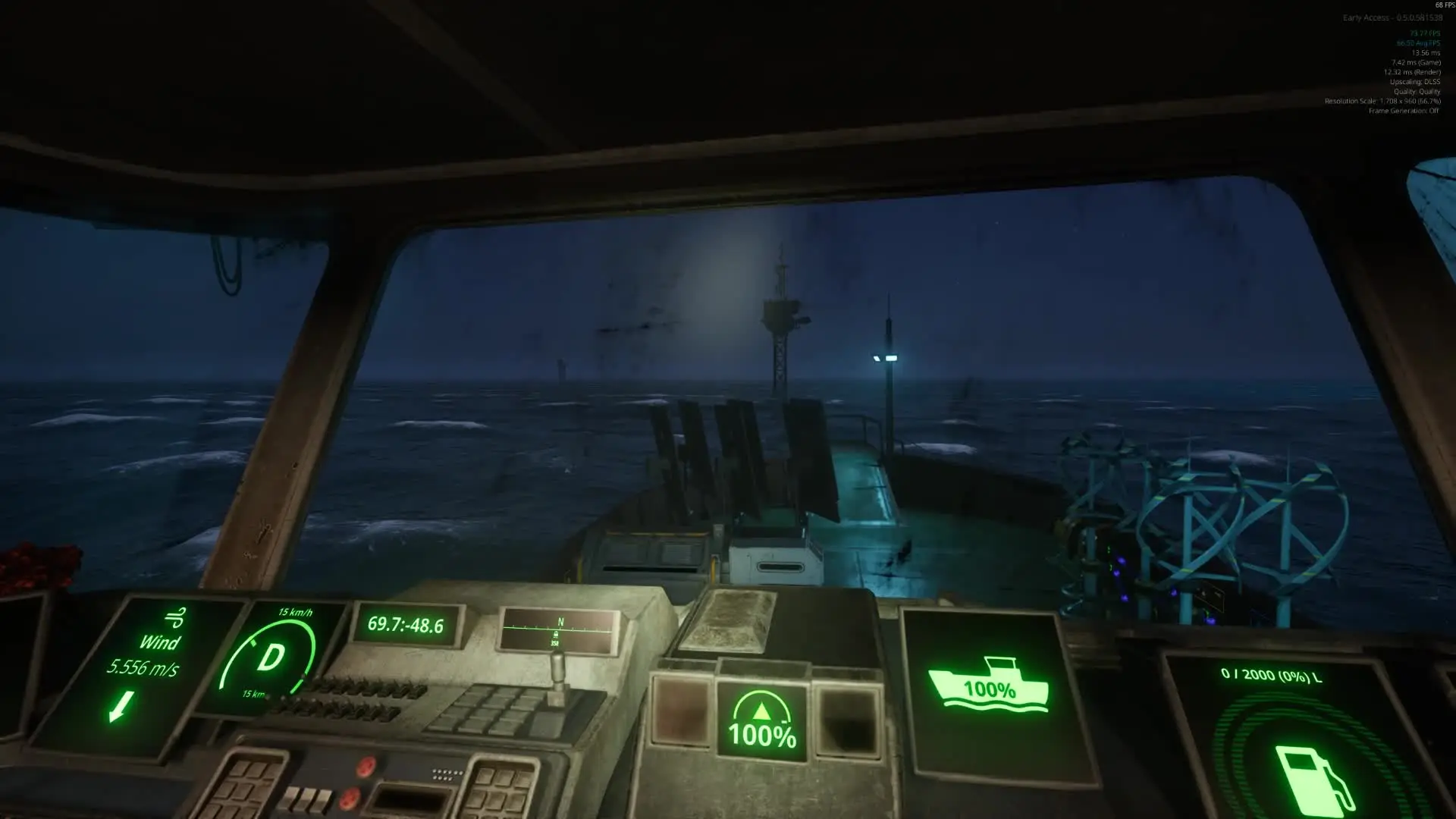
This is further reiterated by the scenery. I know the idea of a world that’s simply an ocean sounds simple, but when it’s in motion it is a sight to see. The game employs a dynamic day and night cycle, and random weather events that change the motion of the sea around you. It makes it so no two voyages are the same and really presses the idea that this world is one in constant turmoil. Raging thunderstorms and choppy seas are just as common as the peaceful calm and smooth rides of a sunny day, and it feels like an experience that is meant to be taken in, not rushed. As the days cycled and the map filled up as I sailed from location to location, it made me feel a certain sense of happiness every time the sun rose the next day. From the blood red sunrises to the stars glistening in the nights sky, everything feels as if it’s crafted to keep you moving forward.
Gameplay: Recycle, Reuse, Rebuild
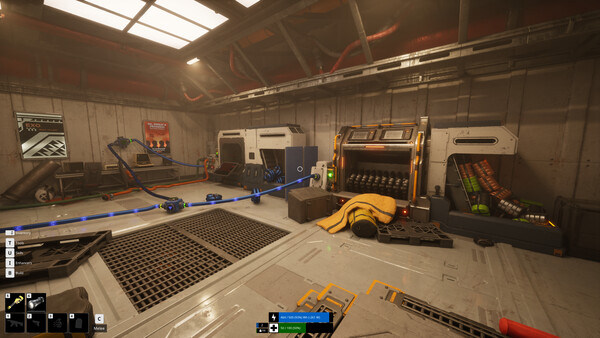
Now when we finally get past the world, I have to admit that this game is fundamentally a very relaxing survival game with some really satisfying elements at it’s center. The survival aspects of the game make themselves known from the tutorial all the way towards the end game. At its core, this gameplay loop can be simplified as a base building survival game with in-depth crafting and resource management mechanics. As I mentioned in the story section, the centerpiece of this is your freighter. It is your job to not only keep the lights on through providing fuel and power but also turn it into a mobile base that you can run your whole production line through. Throughout your journey, you are going to be running into hundreds, if not thousands of pieces of junk and other remnants of humanity that can all be turned into valuable resources using the machines on your ship. The best part of the whole experience is the fact that literally every piece of metal, plastic, rubber, or junk is salvageable. If the Caretaker can pick it up or put it in his inventory, it can be turned into resources to use.
Once you’ve scooped up every morsel at one of the dozens of locations scattered around the world and turned them into scrap, the question becomes what do I do with all of it. The crafting aspects of The Last Caretaker are some of the most simplistic and refined that I have used in a survival game in a long time. Crafting the various pieces of tech and resource types is as simple as pressing the build button in your fabricator, clicking build missing pieces, and that’s it. Before you know it, the fabricator will be spitting out whatever you requested without another hitch. It feels extremely simple to use and with the sheer amount of resources you’ll be pillaging throughout your journey, it really does make the whole system work in a way that feels amazing to use. As with most base building aspects in survival games, the whole process almost becomes automated after a few hours of playing around with it and The Last Caretaker excels at this very idea. Every machine feels important, and there is rarely any wasted cogs in the machine your ship becomes.
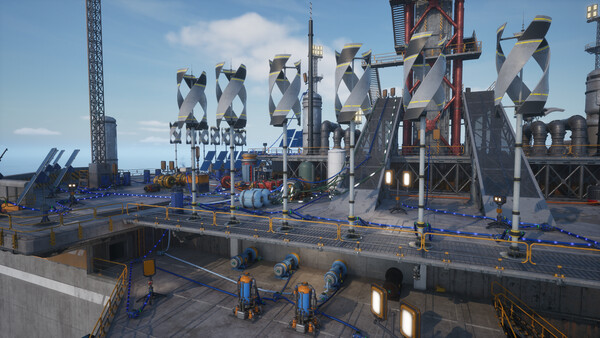
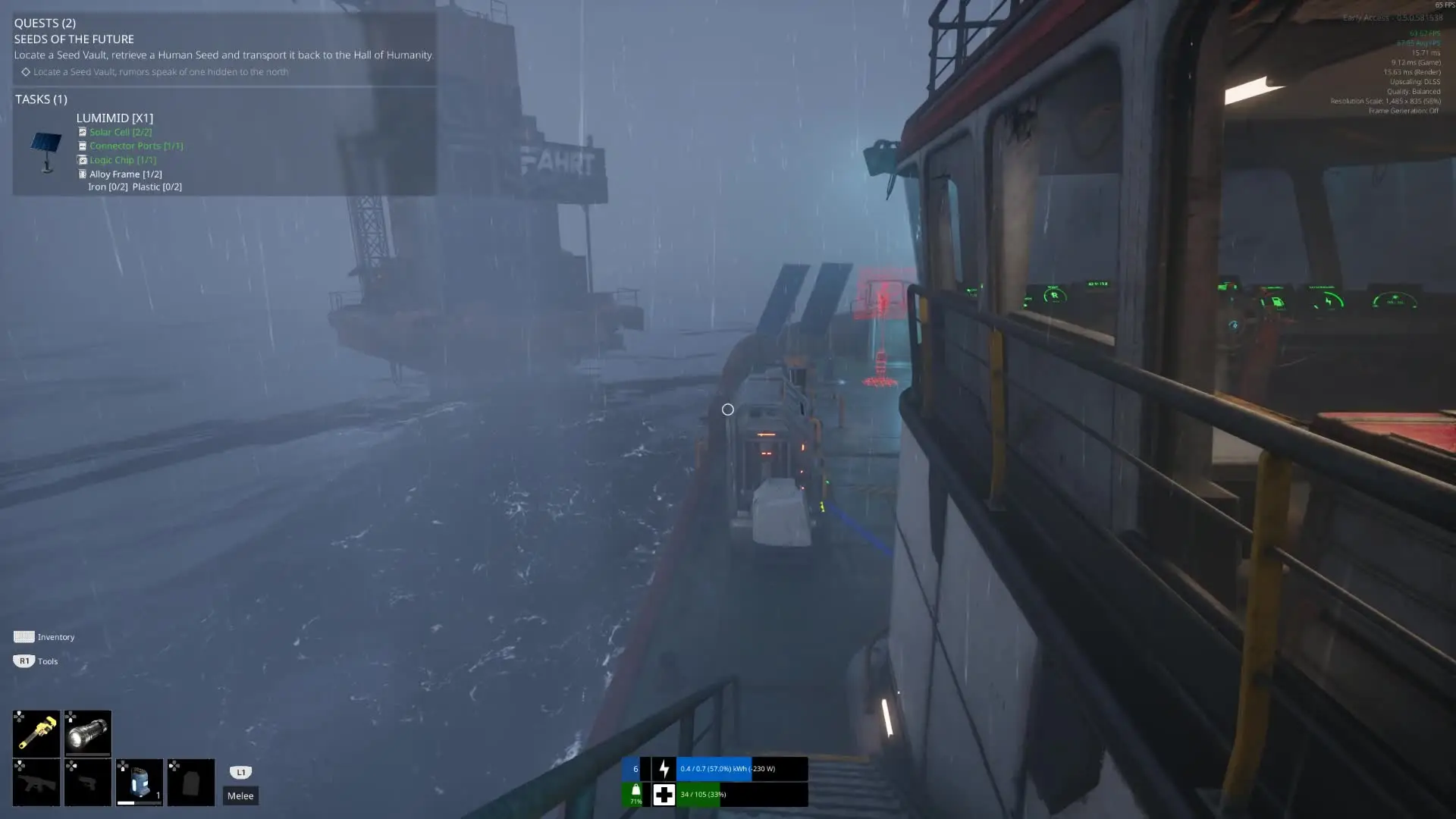
Placing the various different machines from solar panels to wind turbines and other resource producing tools feels natural when you’re actually building your base. You can make it as neat or messy as you want and the pipe system that connects the ship to the resource creating machines makes it so you can get really intricate with your designs. My own ship for example had all its electricity producing machines at the front end (My solar panels and wind turbines), while my more specific production lines were placed at rear of the ship such as diesel and freshwater production. Like I said, the ship really is the focal point of the whole experience and I really loved it once I spent a few hours with it. The best part about the whole system they have in place is that every resource you can make, from the most simple to generate to the most complex, has a use. It really does add to this glaring idea that the world has ended and you are meant to do whatever it takes to allow the human race to survive – pillage, reuse and rebuild. The crafting loop is simplistic and easy to learn, the resource management is a wild ride, and the joy attached with getting your ship up and running is a trip I’d be willing to take over and over again.
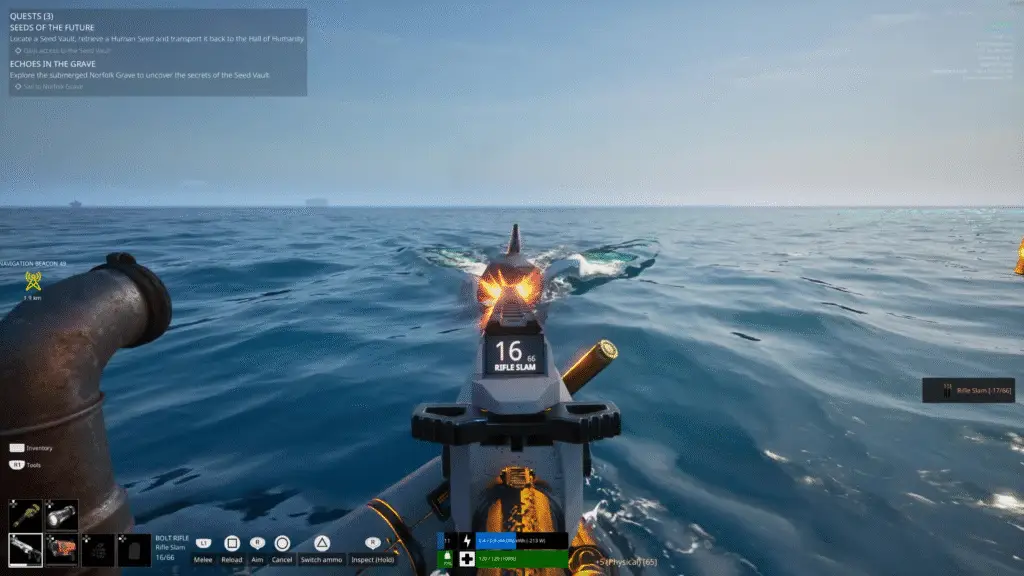
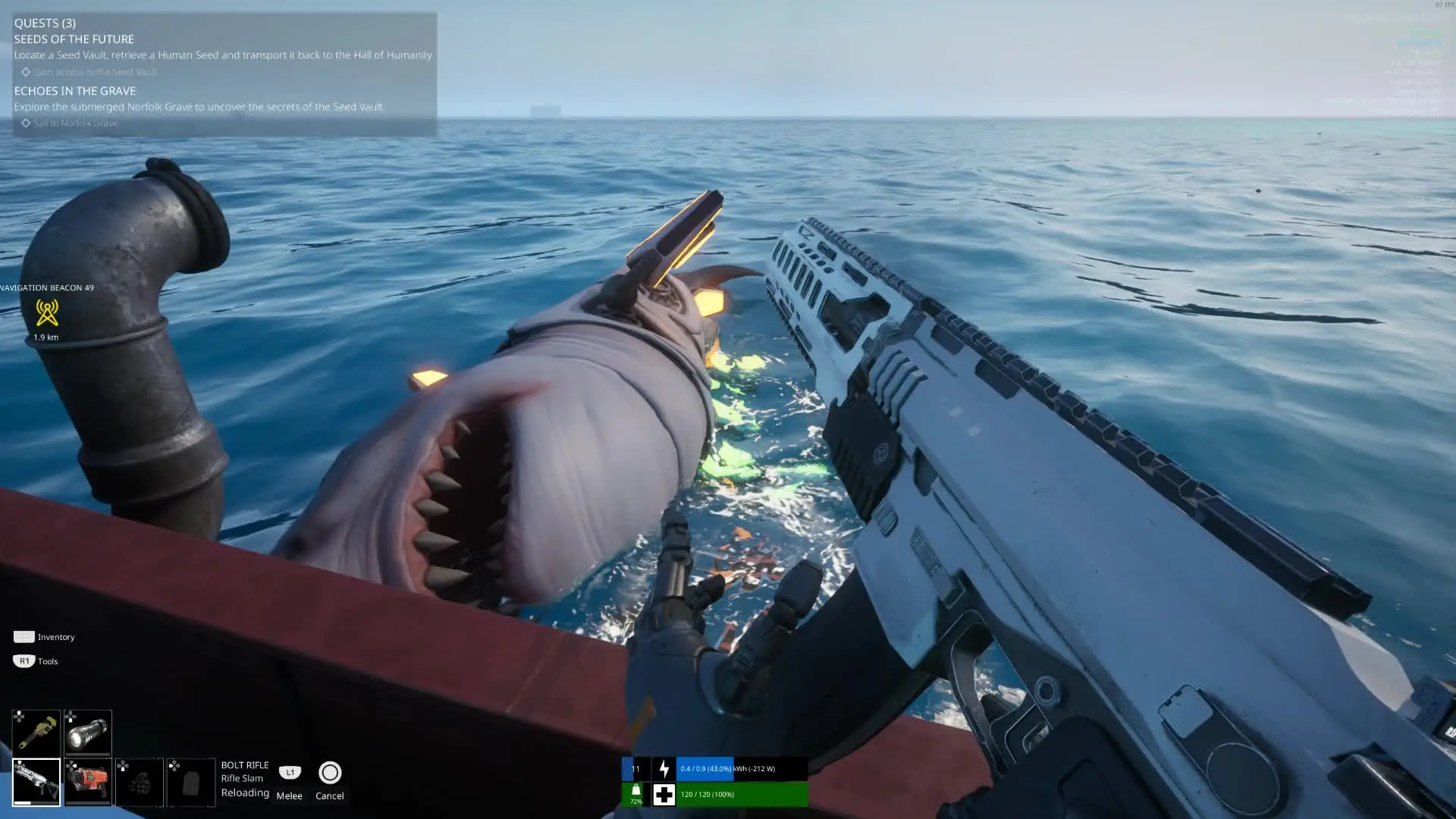
Lastly, The Last Caretaker does have a good bit of combat interweaved in with the intricate crafting and resource systems. While you might start off with only a crowbar as your only weapon, you quickly level up and are able to unlock a good variety of weapons from pistols, to flamethrowers and assault rifles each of which feels like a step up from the previous unlock. The varied amount of enemies you will be fighting range from harmless looking organic globs and smaller robots, to huge rolling sentries equipped with machines guns and relentless aggression. I’ll be blunt and say that the enemies do not play and getting chased down by any type of enemy will get your heart rate up in the most terrifying way possible. Oh, and I hope you don’t have a phobia of sharks because, well. Bruce from Jaws makes more than a few appearances throughout your journey and he is not a happy man. Overall, the combat is basic but more than enough to make most survival fans happy.
Ending Thoughts: An Impressive Start
The Last Caretaker is a game that seeks to pull you into it’s world and never let go. The tale of saving humanity has been done a hundred times, but The Last Caretaker tells it in a way that feels fresh without bending the rules too much. With an emphasis on crafting and resource management, the survival aspects shine in this barren world and are nearly perfect to use once the game gets moving. The Last Caretaker is a gem in a treasure chest of cheap imitators, and should be enjoyed by any and all who love a good survival game.