

In the modern age of gaming, the looter-shooter category is often seen as one of the most broad and varied genres that exist today. Under this umbrella, you have the futuristic, galaxy-spanning games such as the Destiny series and others that rely on a more modern approach such as Escape from Tarkov. The aspects that define the genre is the idea that you can have an experience in any setting you choose. From goofy and fun to serious and tactical, everyone has an experience waiting for them.
Yet, for many of us, the game series that introduced us to the idea of endless mounds of loot and a grind-based gameplay loop wasn’t any of these series above, it was something else entirely: Borderlands. Originally released in 2009, Borderlands seemed intent on refining the looting formula Diablo had perfected years before, with the endless possibilities of an FPS. Now almost 16 years later, we have an entry that not only improves on the formula but also seems intent on bringing us back to how the original games felt. Does it succeed in it’s endeavors, or evolve where it should have stayed on course? Welcome to my review of Borderlands 4.
Story and World: A Vault Hunter’s Paradise
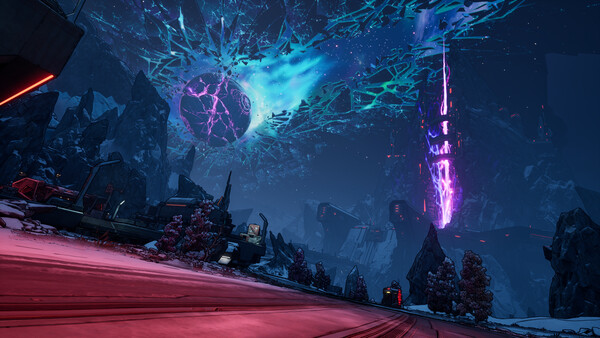
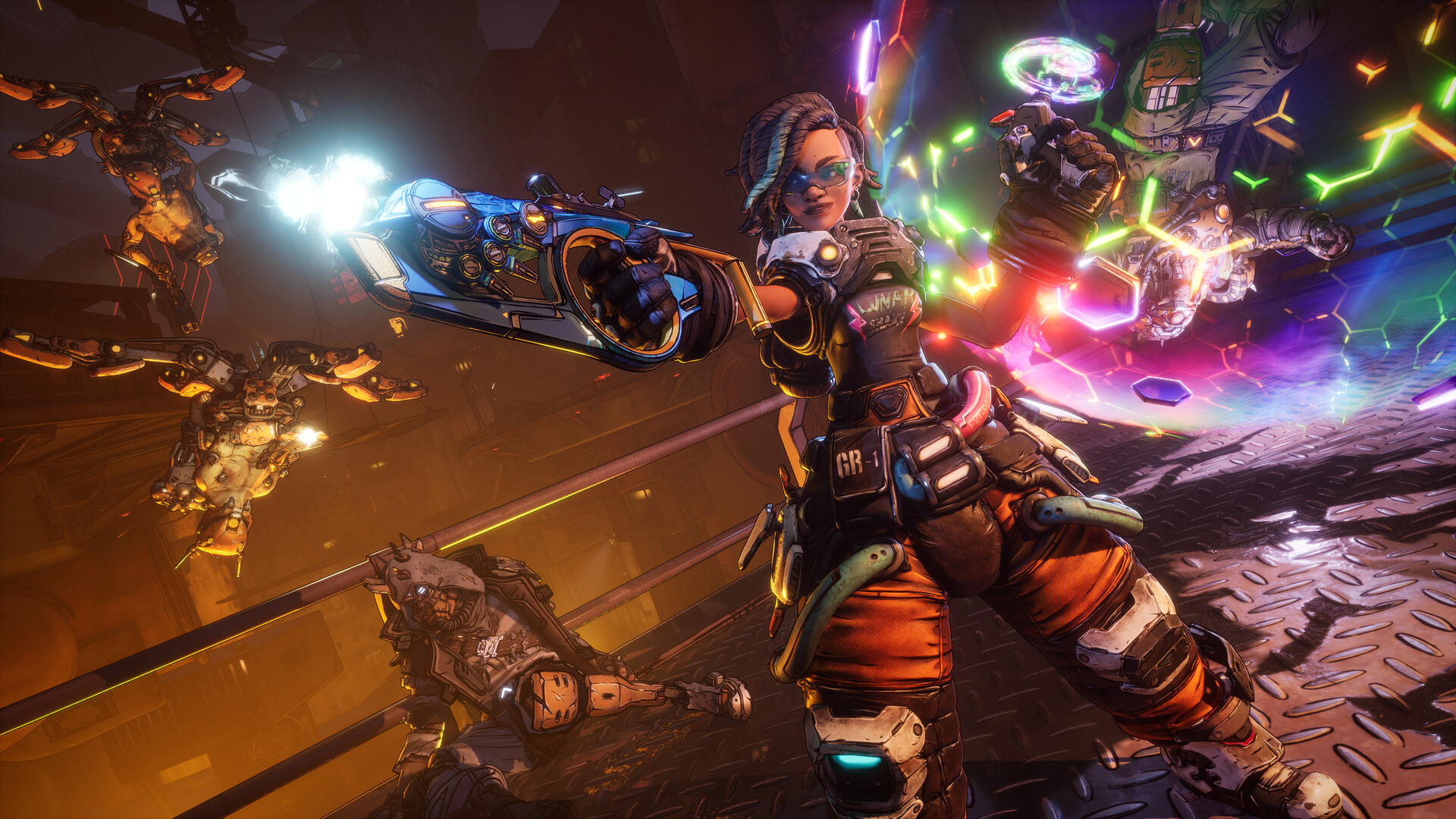
The premise of Borderlands 4 falls into the same realm as most of the other titles that have been released in the series’ lifetime. The story centers around you playing as one of the four distinct characters that all fall within the classes we’ve come to love like the Siren, with some newcomers making an appearance such as the Forgeknight and Gravatar classes. Each one is unique in their own way from a gameplay perspective, and each character feels like their own persona with the usual playful quips and groans about the mess you’ve find yourself in. I played as Amon, and while I have always been a Siren fan like most of the community, he felt like a playful teddy bear with the power of a tank behind every hit.
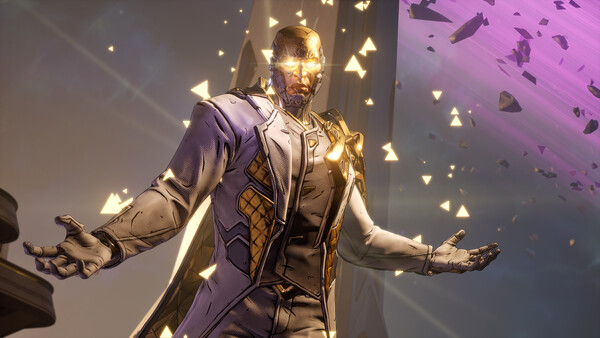
If there’s anything the developers succeeded at, it’s the idea that each character is unique and feels like their own person, as opposed to another copy-and-paste of a previous character from past entries. The story starts off as most of the Borderlands do, and once you actually pick your character, you are thrown into a mess with only the wind at your back to push you forward toward your goal of eliminating the Timekeeper, the new larger then life villain introduced in the first cutscene.
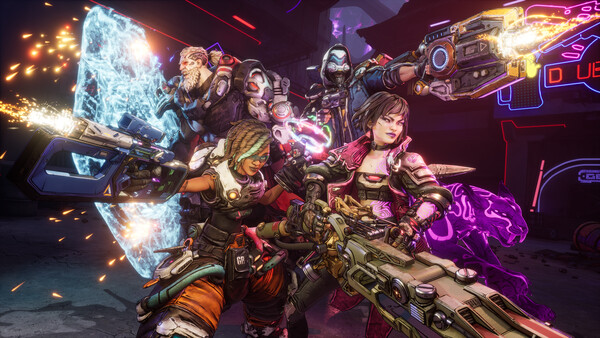
From that initial meeting, you are thrown into an adventure that has you visiting a variety of biomes, each with their own enemies to slay and friends to make, while pushing your way toward the Timekeeper. The story isn’t anything to call home about, and while I enjoyed it for what it was, it is more or less what most fans will expect. It does feel solid in its execution, as the five different zones you can travel to each have their own enemies and points of interest that make it worth exploring beyond what the story has to offer.
The range of activities that dot your map can be as simple as one-step side quests with little effort required to the complex and terrifying Vaults that offer their own challenge and unique rewards. The world is, in every sense of the word, your oyster, and I can wholeheartedly say that the far reaches of the map are worth exploring to the fullest extent. As with every other Borderlands, you never know what surprises await you at the end of the rainbow, be it loot or something more sinister.
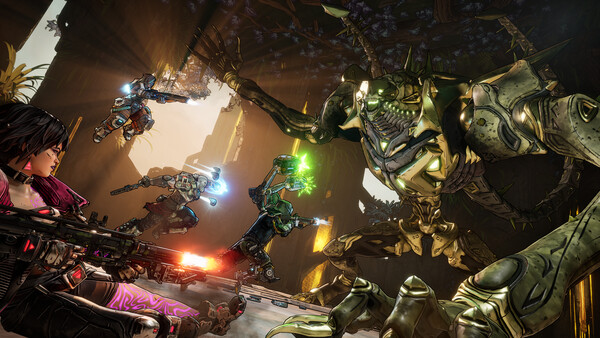
My group and I were pleasantly surprised at how natural the story progression felt, and by the end credits all of us wanted to jump deeper into the world to see whatever mysteries awaited us in the late game. Ultimate Vault Hunter, the pinnacle late-game experience from the previous entries, makes a triumphant return as soon as you finish the campaign. It allows you to further build your legend through weekly challenges such as replaying story missions with new modifiers and beefed-up bosses that offer increased loot for you to pillage as you see fit.
This further adds to the experience as the world really does open up once you finish the campaign and hit max level. There is even an option to start your next character at level 30 after you beat the game, so the developers have more than encouraged people to experiment and play the different classes at your disposal. All in all, it took us about 30 hours to beat the campaign, but you can realistically finish it within 15 hours or so if you rush through it. We took our time and cleared a good majority of the side quests in each zone and their respective Vaults before rolling the credits, and while you can play it as you like, I think the story and world are best enjoyed with a healthy mix of both story missions and side quests. Each zone was built to be explored, and you should embrace it to its fullest extent.
To say that the stories you find in the Borderlands series are basic would be a disservice to the larger-than-life personas of some of the big bads we’ve battled with over the past decade. I’ll be blunt here in saying that some of the best memories I had when I was younger were being taunted by Handsome Jack as he caused chaos all over my screen.
But in the years since Borderlands 2, no one has lived up to the swagger and charm that Jack sold so well. I’m here to say that while the Timekeeper isn’t as memorable as Handsome Jack, he more than feels like a villain that’s nefarious and sinister enough to keep you interested. His motives and reasoning behind what he does feel appropriate for the story, and by the end you’ll want to take him out for the things he’s done to you and those your character holds dear. The Timekeeper isn’t some nameless pushover waiting to be taken down, but rather a force to be reckoned with that is more than worthy of his namesake title.
Gameplay: A Looter’s Paradise
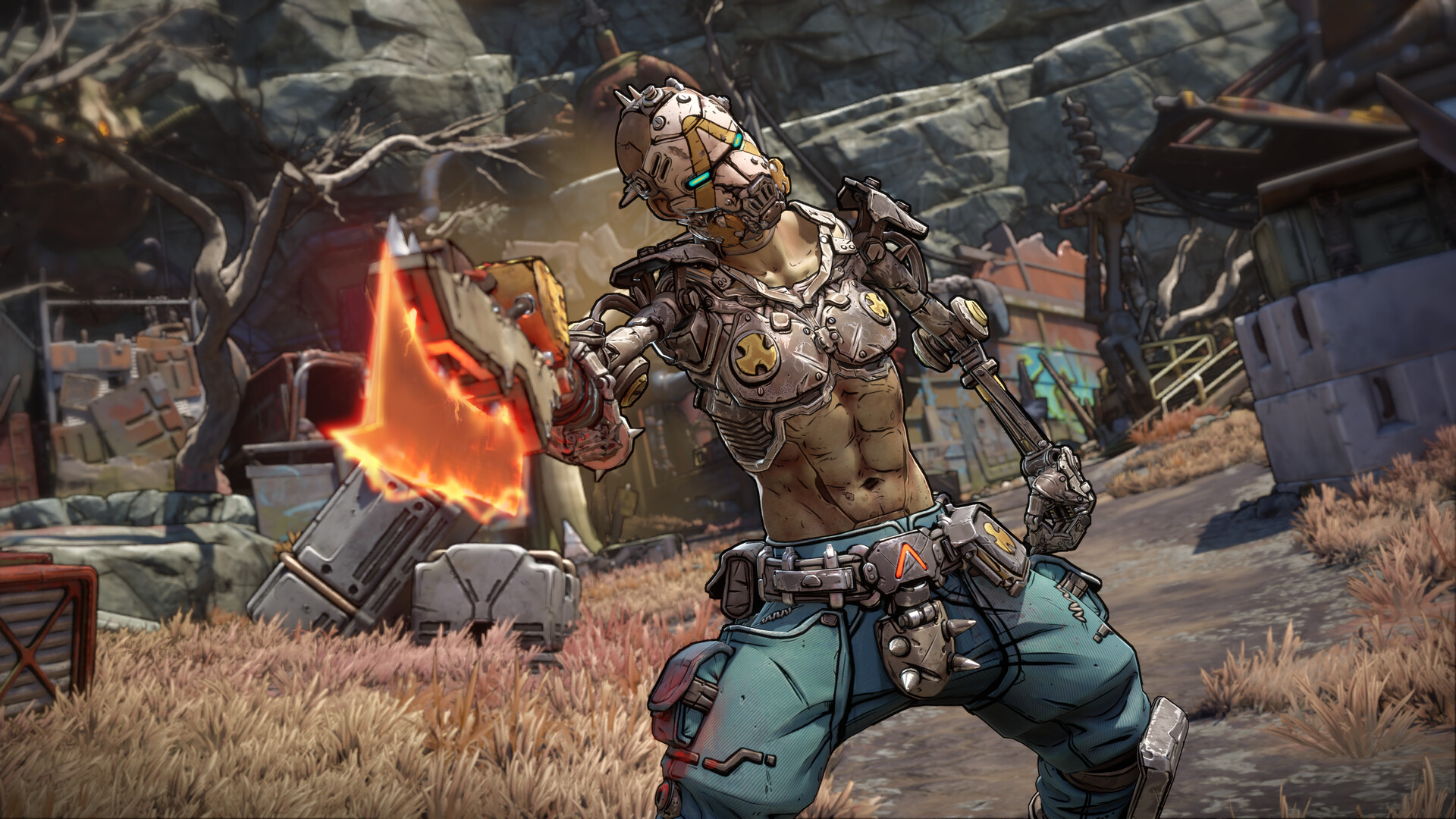
Enough blabbing about the story and the world. They’re great in their own right, but most of us remember Borderlands for one singular thing; mountains of loot. I’ll be the first to admit that they did a pretty decent job at making Borderlands 4 feel like it was built in the image of the original games. Loot is as plentiful as ever, and with the supposed 30 billion weapon combinations, dare I say there is a gun for every occasion. Gunplay feels smooth and buttery, with every weapon type imaginable available for you to use from pretty much the first boss fight.
To list every type of weapon would be redundant, but you quite literally have access to thousands of assault rifles, shotguns, rocket launchers, and everything in between to equip and use as you see fit. There are even a ton of different grenade types, from throwing knives to literal black holes that ragdoll and pull enemies toward them in the usual comical fashion before flinging them off in different directions. Gunplay is, at its core, the centerpiece of the entire experience, and anyone that enjoyed the simple nature of Borderlands 1 and 2 – which are my favorites in the series – will feel right at home here with the sheer amount of random loot thrown at you after every encounter and how fun it is to put them into action.
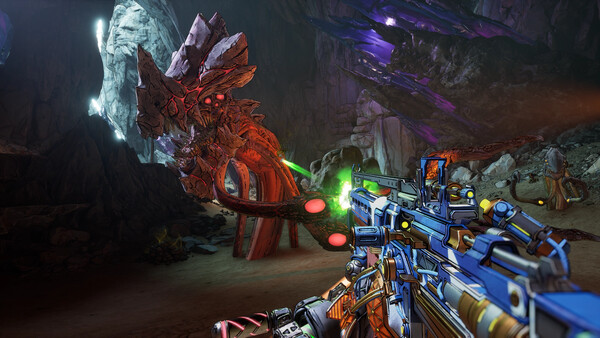
Throughout your journey, you’ll constantly be switching out your weapons as you level up, and the experience gets even better once you hit level 50. At that point, uniques become more than golden paperweights, and you can build your character however you want. Honestly, the options are endless for what kind of Vault Hunter you want to be. Every weapon feels mostly balanced, and I rarely found myself sticking to just one. This is further reinforced by the usual Borderlands system where corrosion melts through armor, electric damage burns through shields, and radiation and fire sear flesh to the bone. It makes it so every weapon has a purpose, and as the player you can build your legend however you see fit.
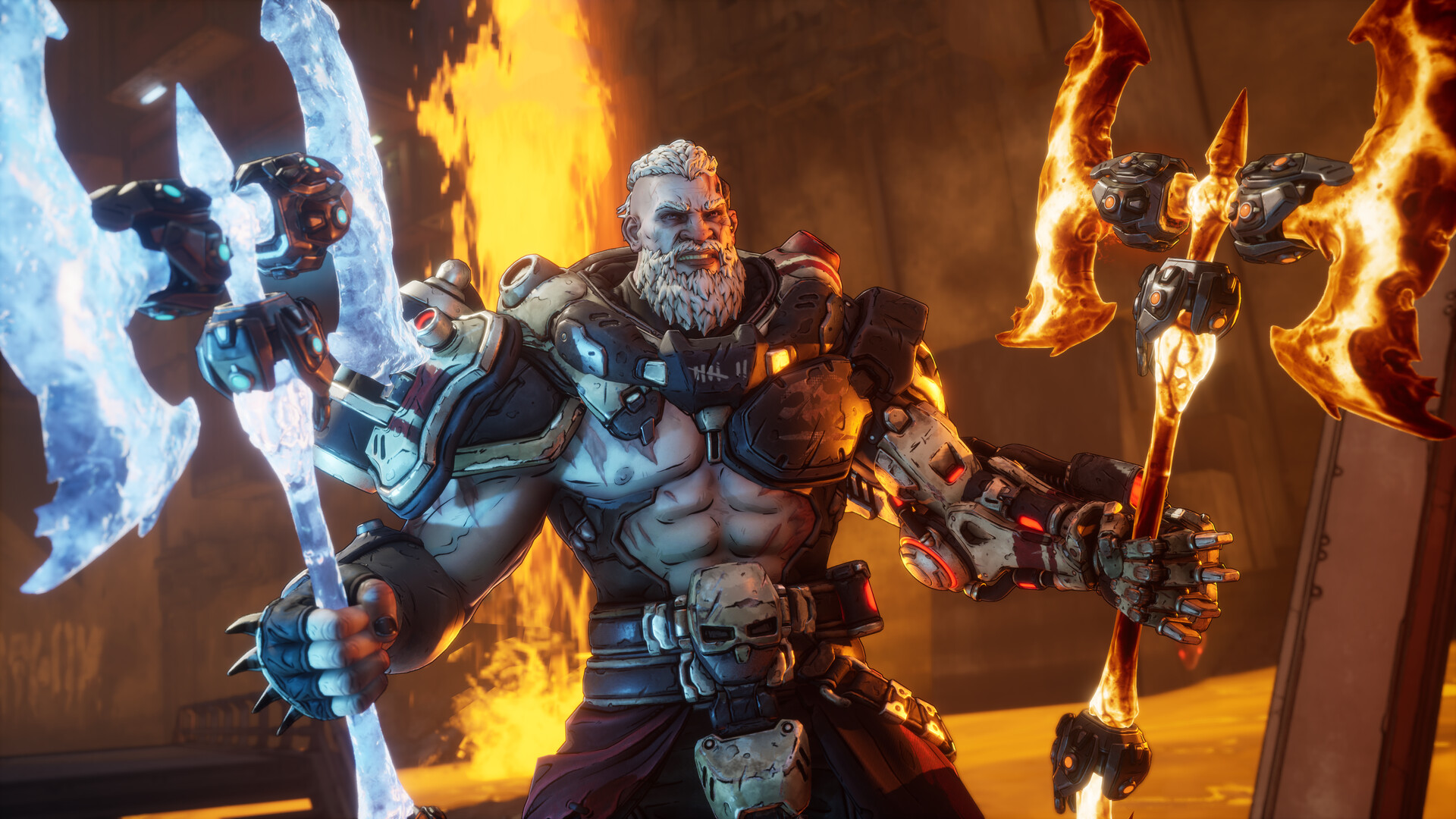
On the topic of building your character, I have to say that each of the Vault Hunters feels overpowered in what they specialize in. Every Vault Hunter has three skill trees, each stemming from an Action Skill. You’ll need to invest five of the Skill Points you get from leveling up into a given row to unlock access to the next one. You can use Action Skills from other trees even if you haven’t invested any points into them, but you won’t be able to equip the powerful Augments or Capstones from one tree onto the Action Skill of a different tree. Committing Skill Points to the tree that properly synergizes with your favorite Action Skill is what makes each class fun, and I would highly recommend mixing and matching as you see fit.
In my case playing as Amon, I had access to three distinct trees that each offered their own strengths and weaknesses. Onslaught allowed me to have better melee damage, Scourge allowed me to buff my teammates with a bullet-buffing shield, and my personal favorite Crucible turned Amon into an axe-throwing murderer. And the best part is, that’s only one class. You as the player have the option to build as offensively or defensively as you want, and the gameplay shines because of it.
Closing Thoughts: A Return To Roots
In the end, Borderlands 4 excels at the aspects that made it a success in the first place. The story isn’t going to blow your socks off, but it’s more than capable of keeping you interested throughout its entire run. The Timekeeper ends up being a more than capable villain with just the right amount of quirky one-liners and despicable acts of violence that feel right at home in the Borderlands universe. Each Vault Hunter feels unique in their own right and is a blast to play, and the gunplay is as smooth as ever with thousands of combinations at your fingertips to experiment with as you see fit. Overall, Borderlands 4 ends up being a solid entry in the mythos, and fans of the originals will no doubt feel at home in its endless mounds of loot and over-the-top violence.

Borderlands 4 was reviewed on PC. We’d like to thank 2K for providing us a review code.
Borderlands 4 launched on 12 September 2025 for PlayStation 5, Xbox Series X/S, and PC via Steam and Epic Games Store. A version for Nintendo Switch 2 will follow on 3 October 2025.


