
Ninja Gaiden is a series dating back to the NES era of gaming. Although it started as a beat em up on arcades, the series became known for a series of well received, yet brutally hard platformers then later one of the defining games in the action game genre, with the brutal difficulty still in tow.
Ninja Gaiden: Ragebound is a revival of the classic platforming style from The Game Kitchen, who became known for the Blasphemous games. Honestly between them and publisher Dotemu, who’s been spearheading a lot of retro revivals lately, there wasn’t anyone better to bring back and old school NES style platformer and they have more than delivered.
Story
Running parallel to the events of the very first game, Ragebound sees you playing as Kenji, a ninja under the training of series protagonist Ryu Hayabusa. After Ryu is called to action elsewhere, Kenji is left to protect his village as demons begin attacking. A twist of fate leads Kenji to meet Kumori, a kunoichi from the rival Black Spider Ninja Clan. In order to defeat the demons the two end up having to fuse souls and they set off begrudgingly to stop the demon invasion together.
Ragebound has all the hallmarks of what made so many of the Ninja Gaiden games so memorable while polishing things for the modern era. With tight gameplay, a well designed challenge, great sound and visuals, and a fun dynamic between the two protagonists, the game sits among the best released all year in my opinion.
Pros
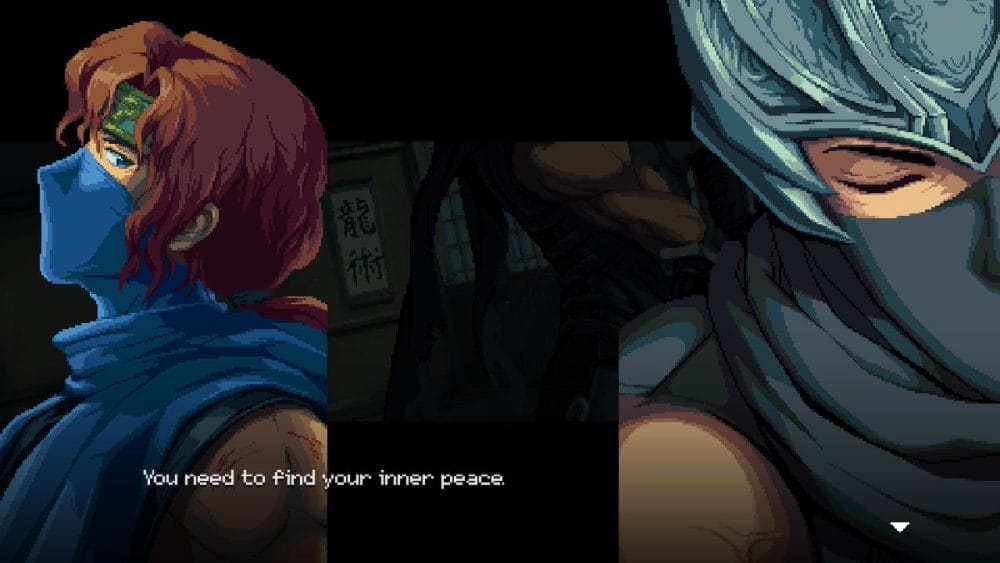
Immediately noticable is the games great pixel art style. Character models, backgrounds and even cutscenes all look great in the 2D-HD style that captures the feel of the old Ninja Gaiden games, even recreating the iconic opening of the first game. From Kenji and Kumori’s designs, the designs of the various demons and bosses, and the levels themselves, Ragebound clears it in the visual style department.
Matching the visuals is a great soundtrack that mixes retro beats with more modern sounds as well. Largely composed by Sergio de Prado along with work from the original Ninja Gaiden producers as well, the games ost is among the best I’ve heard this year.
While it’s sound design and visuals are top notch, Ninja Gaiden: Ragebound’s gameplay is its strongest point by far. The game features the tight controls the series is known for with a simple yet effective combat system that takes advantage of the different skill sets both Kenji and Kumori possess. There’s no switching between the two as you use both of their abilities whenever you please. Kenji fights with a katana while Kumori throws kunai that can be thrown in Different directions to attack, allowing them to have all spaces covered. Super moves called Rage Arts exist and these range from attacks that freeze enemies in place or heals your health fully.
One of the games most fun mechanics is the hyper charge mechanic. It’s an attack that allows Kenji to charge up and allows either him or Kumori to take down more powerful enemies in a single shot. While you can always charge manually, certain enemies will have an aura around them, either blue or purple that will give you an instant hyper charge if you kill them with the corresponding weapon.
Often times, there will be multiple large enemies with multiple chances to get hyper charge attacks in and it’s very satisfying when you wipe them all out one shot back to back. You also do have to pay attention however. If you kill a blue aura enemy with Kumori’s kunai or vice versa with a purple enemy you won’t get the charge and can make things harder on yourself.
Trust me when I say you don’t want to make things harder on yourself as just like every other game in the franchise, Ragebound is a pretty challenging game. The challenge is well designed however and never felt unfair, even addressing some of the issues in the original NES games. Enemies are relentless and can come onto the screen quickly but, unlike the NES games you’re given a good amount of time to react and enemies never felt poorly placed which lead to a lot of cheap deaths in the older games. I definitely died a lot during my time with Ragebound but I never found myself getting frustrated by its difficulty whether it was during combat or platforming.
The games platforming is as well designed as it’s combat and features many of the series staples such as clinging to walls and ceilings. While a traditional double jump isn’t present in the game, there is an attack that Kenji can perform an attack called the Guillotine Boost that allows him to bounce off of enemies or projectiles they throw. The game makes use of this along with other mechanics such as zip lines and other of the series’ well known mechanics to create some very fun level design. Some of the most enjoyable parts of the game were the sections where you’re being chased by something as it can combine everything for a quicker paced platforming challenge.

Ragebound isn’t a metroidvania but there is still a decent amount of exploration within the game. There are secret areas within levels, various collectables to find as well as sections where Kumori’s soul will take over and enter the demon world. These sections are on a timer and can take a few tries to get through as you figure the route out.
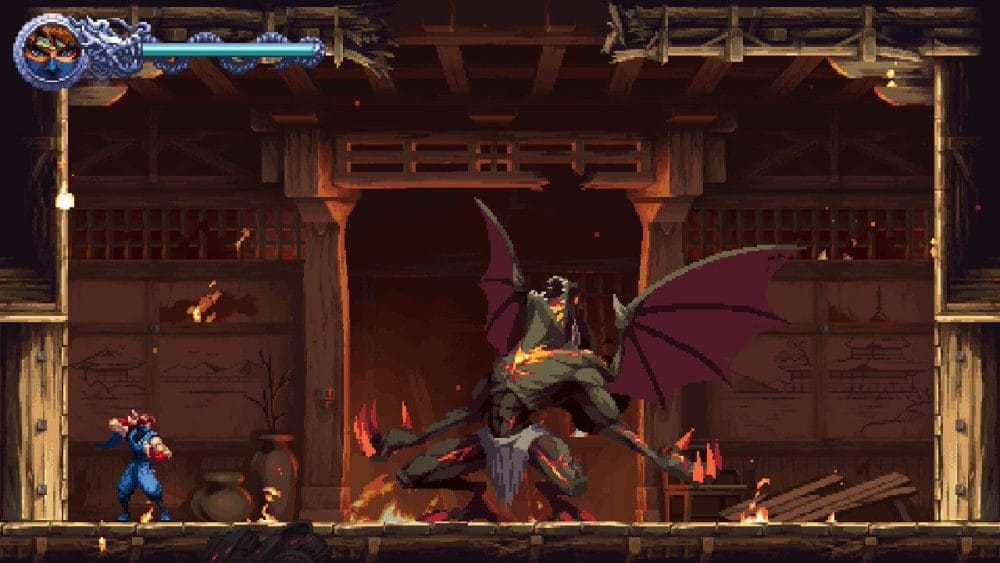
Also made well are the game’s boss fights. The bosses all have excellent designs and are pretty tough. Their patterns aren’t too complicated to figure out but they change up as the battles go on and you’ll still get hit by them until you figure the patterns out. It also helps that the bosses themselves often have arrogant personalities making you not want to keep losing to them.

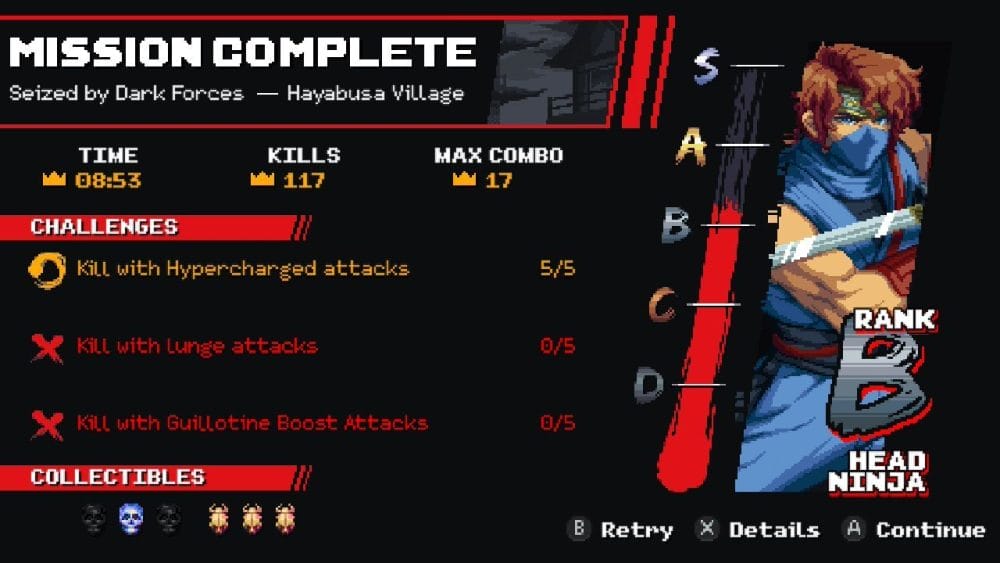
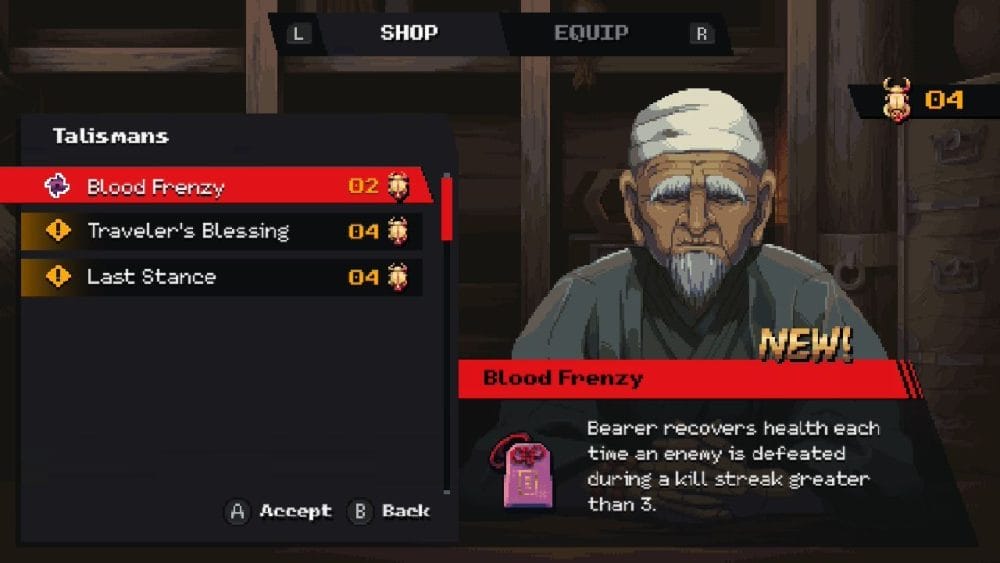
The game features a bit of customization as well. You get graded each time you do a level and sometimes this will unlock different weapons and abilities that both Kenji and Kumori can use. These can make the game easier by granting abilities such as giving you health back as you go on a kill streak or even making the game harder by making you take more damage. These abilities are bought and equipped through muramasa’s shop, something gamers will recognize from the 3d ninja gaiden games.
While Ragebound isn’t out to create a masterpiece in story telling, it’s not bad. Largely due to the dynamic between both Kenji and Kumori. The two are from completely different worlds being from enemy clans and they often clash due to the honor bound nature of the Hayabusa Clan and the win at all costs nature of the Black Spider Clan. As things go on however, respect and even a genuine if begrudging friendship between the two starts to form. I enjoyed watching the dynamic between the characters grow as things went on.

Cons
Truthfully the only issue Ragebound has is that it’s perhaps a little too short. The main story is only about 6-7 hours or so and even doing the optional side missions don’t add that much time. The game doesn’t lack replay value per say as each level has its own challenges and collectables but I doubt someone going for a full completion run will take more than 9-10 hours.
Final Verdict
Short length aside, Ninja Gaiden: Ragebound is one of the most enjoyable games of the year. It’s a great retro revival with two protagonists I hope return and if Ninja Gaiden 4 is anywhere near this good, the franchise may be firing on all cylinders again.
Ninja Gaiden: Ragebound was reviewed on Nintendo Switch 2. The game released on the 31st of July on Nintendo Switch, Switch 2, PlayStation 4 and 5, Xbox One, Xbox Series X/S, and PC via Steam.