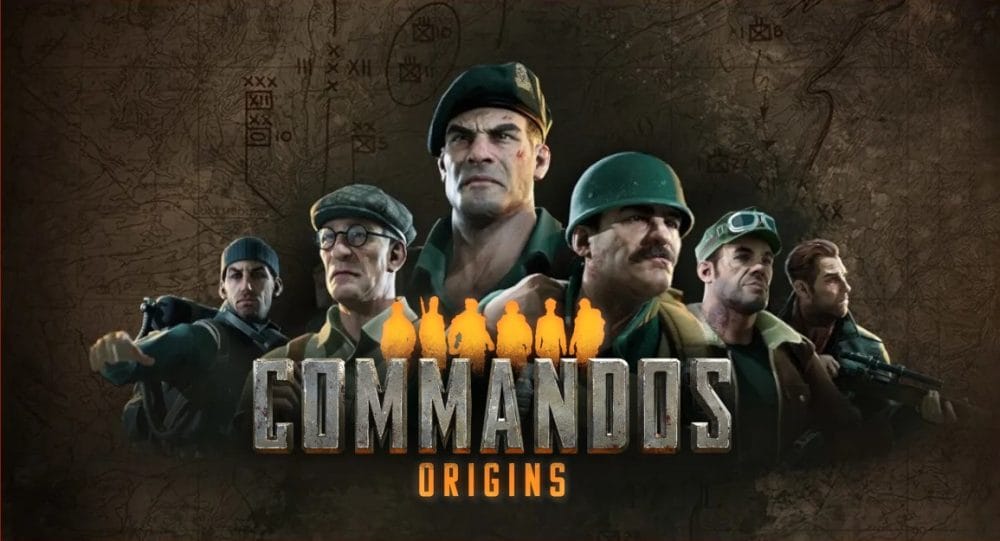
After nearly two decades hiding in the undergrowth, Commandos is back. Once a leader of the real-time tactics genre in the late ’90s, the series has been biding its time, waiting for the right moment to strike. Commandos: Origins plans to revive the tactical tension and tight-knit squad play that defined the classics, and I’m happy to report the mission was a success.
The original Commandos series was one of the premier real-time tactics experiences of its time, putting players in control of a six-man team of specialists, each with unique skills and roles, as they completed missions across WWII-era scenarios. They were, and still are, a gruff bunch – not the type to grab a shawarma after a job well done – but they’re undoubtedly the best at what they do. And that’s good news, because the kinds of missions they’re sent on often look more like suicide runs than standard operations.
Commandos: Origins is a prequel to the original game, Commandos: Behind Enemy Lines, released in 1998. Claymore Games – a studio founded specifically to revitalize the Commandos IP – takes this opportunity to go right back to the beginning, showing how this grizzled team was originally formed. It’s a fun concept, but ultimately more of a thin red thread linking the missions together. The narrative mostly serves as a backdrop, allowing the developers to globe-trot through a variety of WWII settings and mix up the playable squad from mission to mission.
Fans were drawn to the challenging but rewarding gameplay of the original Commandos games, which demanded patience, precision, and careful planning. Each level played out like a complex scenario of interconnected puzzles: how to infiltrate enemy lines, which guards to eliminate quietly, and what sequence of actions would avoid detection. Success and failure were often separated by the thinnest margin – players quickly learned to cherish the quick save option, and grew intimately familiar with quick loading. I’m pleased to say that’s still true in this new entry, though now with modern touches that make the whole experience far more user-friendly.
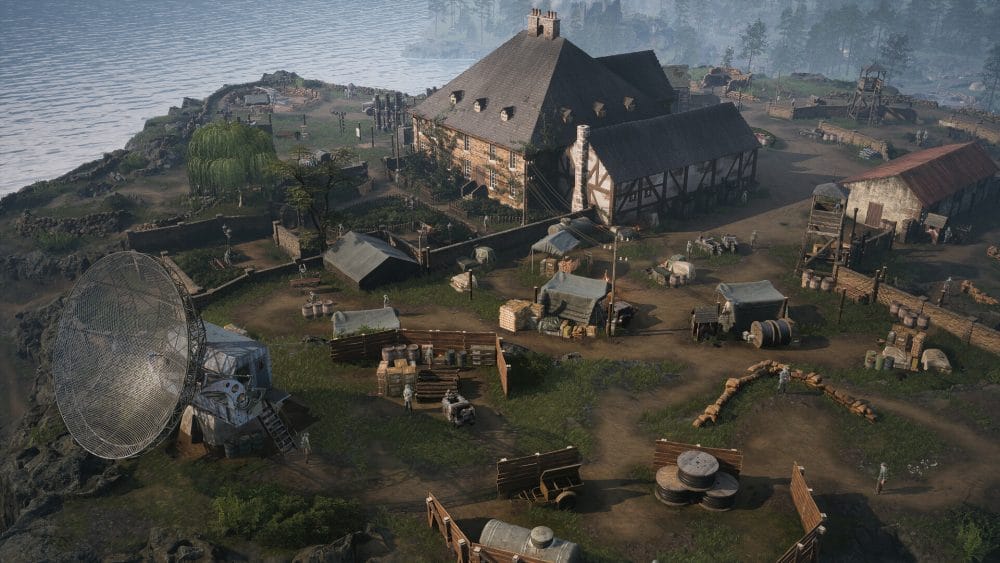
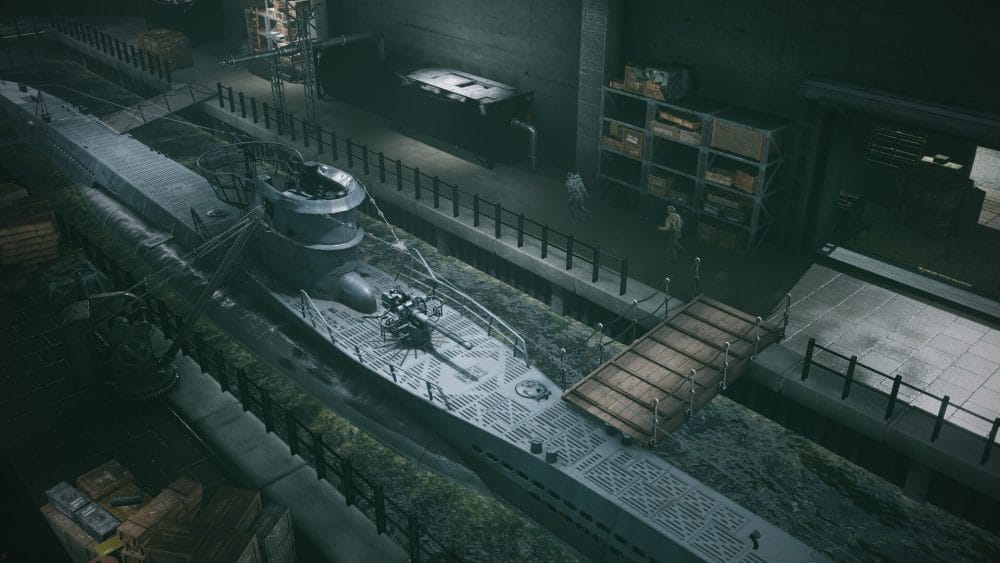
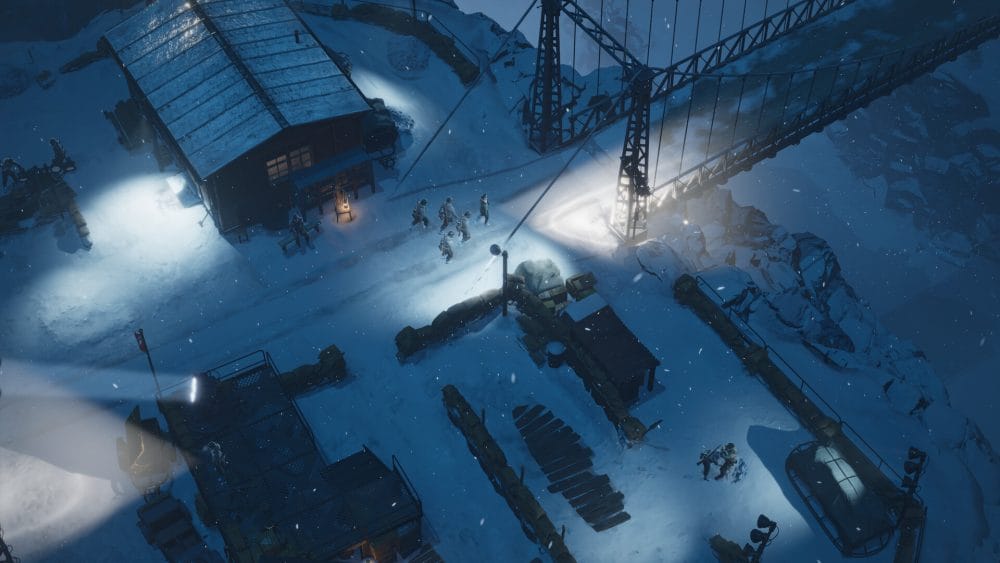
Originally, the games unfolded on 2D pre-rendered environments viewed from an isometric perspective, with interiors and exteriors existing as separate areas. Commandos: Origins, by contrast, has full 3D locations with a freely rotating camera, like you’re observing a living wartime diorama. Transitions between indoor and outdoor areas are now seamless, creating a more cohesive and immersive battlefield. While that might not seem groundbreaking, fully 3D real-time tactics games have become more common over the past decade; the shift is a major leap for the Commandos series.
As mentioned earlier, each commando has their distinct toolkit. The sapper carries wirecutters, remote explosives, and a bear trap; the marine wields throwing knives, a harpoon gun, and can swim through water unseen. The sniper can clear out key enemies from a distance, while the driver can lure nazis with cigarette packs and, well, drive vehicles. These abilities aren’t just flavor; they’re essential to how you approach each mission. After playing through several missions and getting to know each commando, there were plenty of times I found myself wishing I had someone else in the squad to tackle a tricky situation. But that is the crux of Commandos: Origins: solving the problem with who you have. You’re constantly asking: who’s best suited for this obstacle? How can I use their skills, possibly in tandem, to achieve my goal?
The level design leans into this dynamic, offering semi-open maps filled with enemy patrols, stationed guards, and opportunities for creative problem-solving. There’s often more than one solution to an objective, and experimenting with different tactics, then reloading to try something slicker, is half the fun. It’s the kind of gameplay that rewards careful observation and punishes carelessness, though it rarely feels unfair.
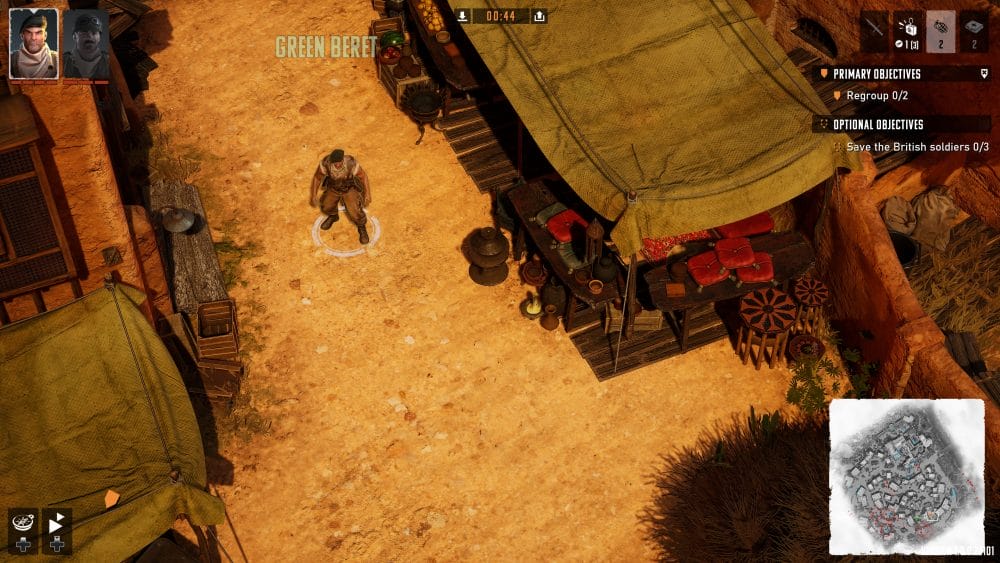
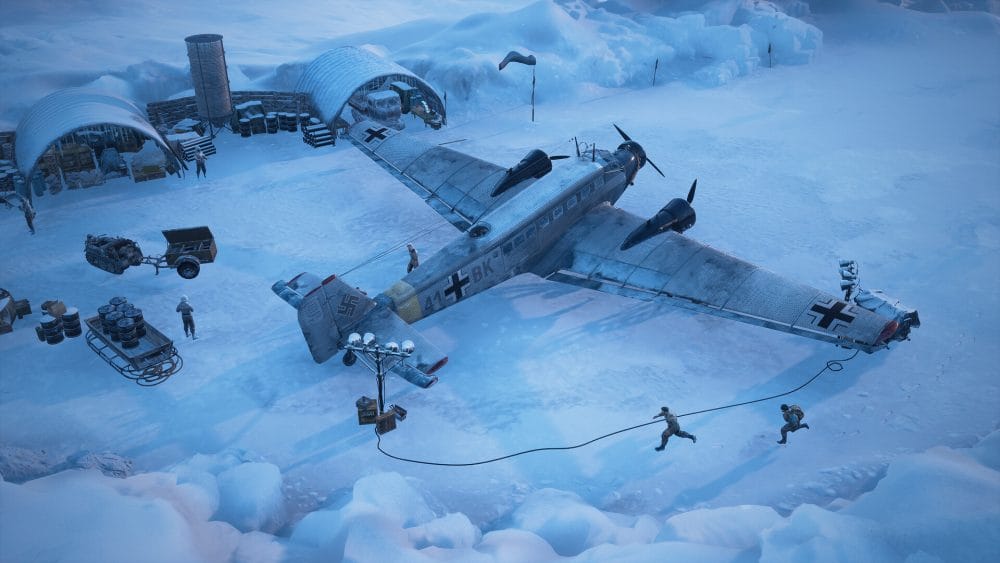
Speaking of level design, Commandos: Origins is also one of the best-looking games in the genre to date. Each level is rich in environmental detail, from muddy trenches and snowy outposts to bustling enemy camps full of intersecting paths and layered terrain. The 3D diorama presentation pays off – not just in aesthetics, but in tactical clarity. You can tell a lot of care went into making each map both immersive and readable.
This level of detail is also found in the game’s systems. Additions like chit-chat between Nazi soldiers disrupting patrols, adjusted view cones dependant on the weather, and enemies able to spot tracks you’ve left in sand and snow, all bring more depth and complexity to every encounter.
An excellent addition to Commandos: Origins is Command Mode. Pressing a button freezes time, allowing players to plan moves for more than one commando, allowing them to act simultaneously. It feels so rewarding to watch your team perform their roles, like a well-oiled machine, and I took every opportunity to use the Command Mode. It’s one of those mechanics that makes you feel like a genius when it works, turning a potential mess into a synchronized takedown.
Patience is key, and success is often incremental. If you’re anything like me, you’ll spend several minutes surveying each encounter. Learning each enemy’s patrol pattern, watching where there might be safe spots in their view cone, and trying not to leave a trace you were ever there. It’s like finding the safest block to pull from the Jenga tower, gently pushing and prodding, figuring out the best course of action. The game offers three difficulty modes, and the first mission doubles as a tutorial, easing players into the mechanics without holding their hand. Having tried all three difficulties, I can happily say that the game retains its tough-as-nails reputation, but new players will find Commandos: Origins far more approachable than its forbears.
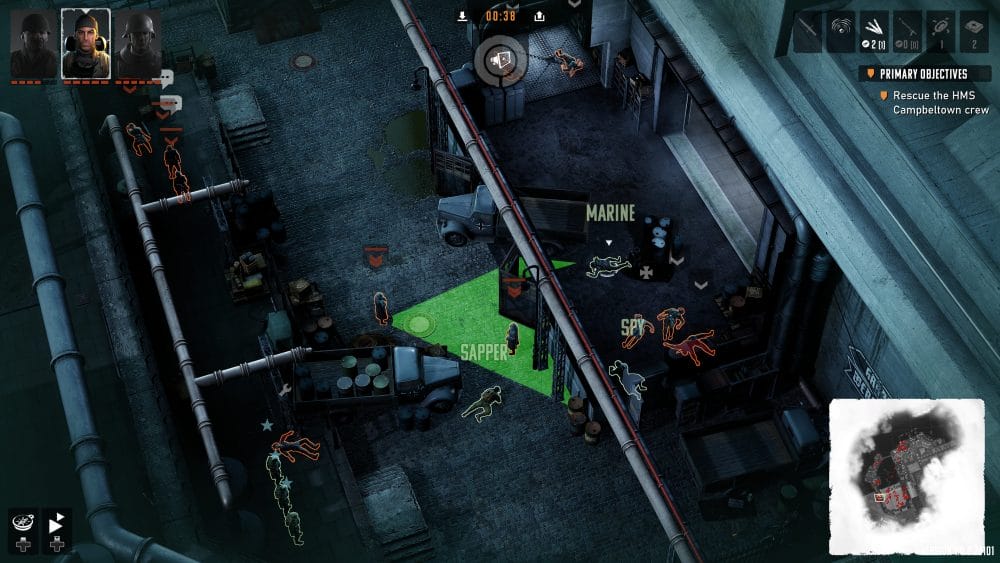
The developers haven’t reinvented the tactical wheel, but they’ve polished it. Compared to the older games, pathfinding is vastly improved, animations are smoother, and interacting with the environment feels more reliable. Camera control is another welcome upgrade; being able to freely rotate and zoom makes planning feel more natural, especially in tight indoor spaces.
One small gripe: playing with a controller isn’t quite as fluid as mouse and keyboard. Selection, item use, and camera movement can get fiddly under pressure, especially when precise timing is needed. It’s playable, but this is still very much a game designed with PC in mind.
While the core mechanics are solid and satisfying, not every new feature hits the mark. Each mission includes optional side objectives and collectible intel documents scattered throughout the map. On paper, these are nice incentives for completionists – and they do add an extra layer of challenge – but in practice, they feel a bit vestigial. Collecting intel doesn’t offer much beyond ticking a box, and the side objectives rarely change your approach in meaningful ways. There’s a missed opportunity here: these extras could have been used to unlock alternate mission paths, new tools, or at least some form of tactical flexibility.
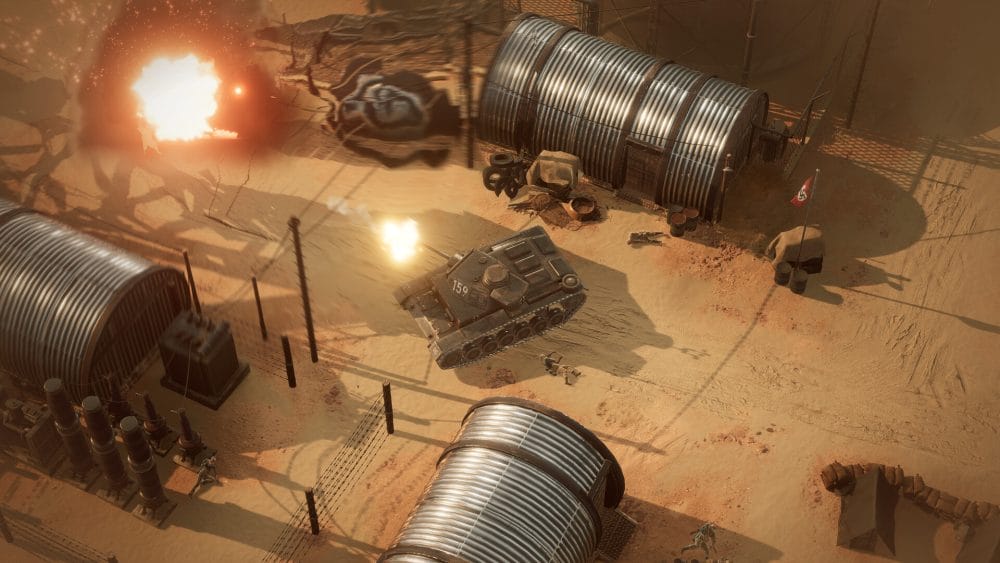
Another notable change is the removal of the inventory system that featured in earlier entries. Some veterans might miss it, but I didn’t. There’s already enough going on in each mission, and the streamlining helps maintain focus on the tactical moment-to-moment without bogging things down. Thankfully, the UI is clean and intuitive, making it easy to read the battlefield and issue commands efficiently, even in the middle of a complex operation.
Performance-wise, I had a mostly smooth experience across my 50+ hours with the game. That said, there was a particular mission involving a large amount of firepower that I experienced repeated crashes on. Nothing game-breaking, but worth noting – hopefully future patches will iron that out.
Commandos: Origins doesn’t blaze a new trail for the genre, but it’s an expertly executed operation, one that brings a legendary series back into the fight with confidence and style. It captures the spirit of the originals while shedding some of their more dated baggage, resulting in a game that feels both familiar and fresh.
It may not be the next evolution of real-time tactics, but it’s absolutely earned its stripes. This was a high-risk mission, and Claymore Games pulled it off with precision.
Mission Accomplished.

Commandos: Origins was reviewed on Xbox Series X and is available on PC, Xbox Series, and PlayStation 5.
We would like to thank Claymore Games for providing a game code for this review.
Check out our Commandos: Origins Beginner’s Guide for some helpful tips.