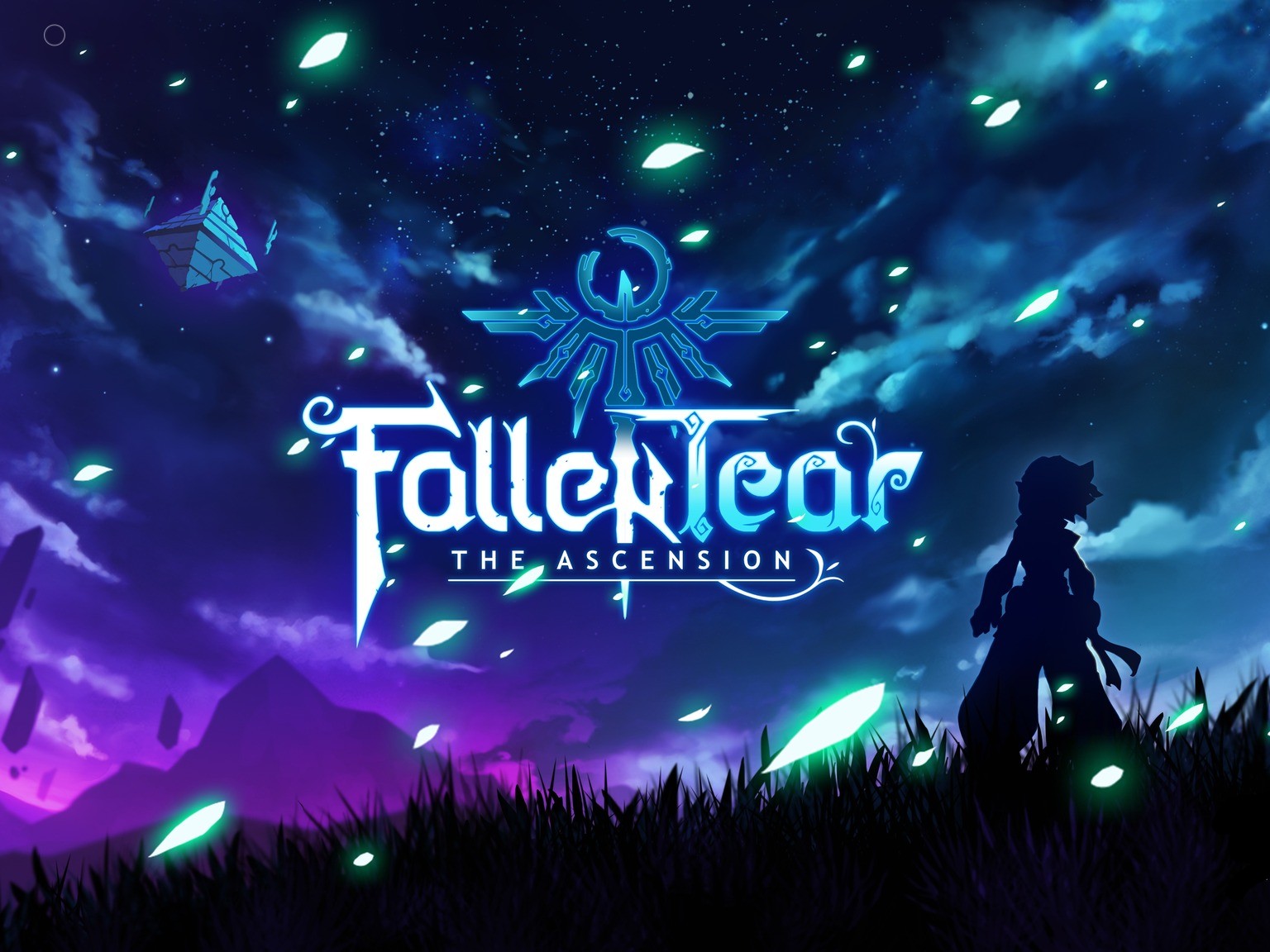
I don’t typically get into games whilst they are in Early Access; I am much happier letting others spend time playing the game, giving feedback to the devs, and then enjoying the game myself at full release. However, there was something in the trailers and screenshots on Fallen Tear: The Ascension’s Steam page that convinced me to make an exception, and I am so glad that I did!
Fallen Tear: The Ascension is a 2D story-driven Metroidvania developed by Winter Crew Studios that incorporates certain JRPG elements into its design. You play as Hira, a young boy with a murky past, who discovers that he is fated to confront the gods who once watched over the fantastical world of Raoah. When his hometown is attacked, and his adoptive mother and brother disappear, Hira sets off to find them as well as answers to his mysterious origin and why their world is on the brink of collapse.
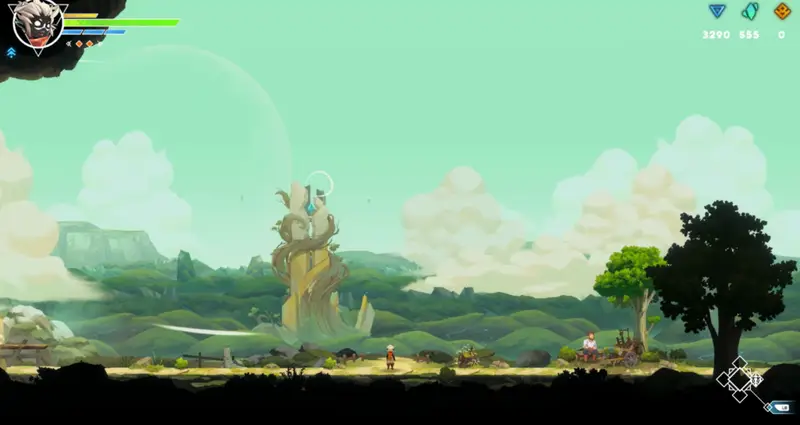
After a brief but foreshadowing tutorial that covers the basics of movement and combat, I set off to explore the beautiful, richly detailed world of Raoah, traversing lush forests, windswept deserts, and overgrown ruins left behind by forgotten civilizations. Using a device his mother was working on called a Limiter, Hira can activate many of the ancient constructs that cover the world, from elevators to the game’s fast travel system. Using the village’s teleport, I wind up at the Temple of Oras, a giant castle at the centre of the map which also acts as a hub. Runa, a servant to the temple, tasks Hira with activating the Godspire shrines dotted across the world to revive Hedwynn, a tree spirit who helps the gods’ magic flow throughout Raoah.
Upon finding the first Godspire shrine and awakening Hedwynn, Runa reveals to Hira what his part is in all this. When his mother, Miah, found him as a baby, she also found the Limiter, attuned only to Hira. Runa believes that with the full potential of the artifact, Hira has the power to take on the gods, who have been corrupted and threaten to bring Raoah to ruin. With divine threats, missing family members, and questions still to be answered, Fallen Tear: The Ascension’s stakes are set, and Hira’s epic journey can truly begin.
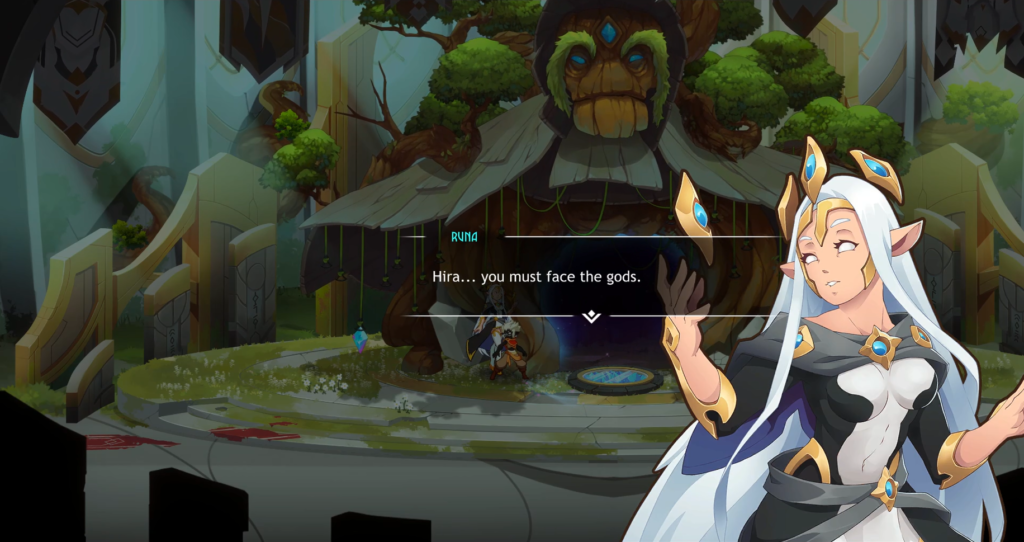
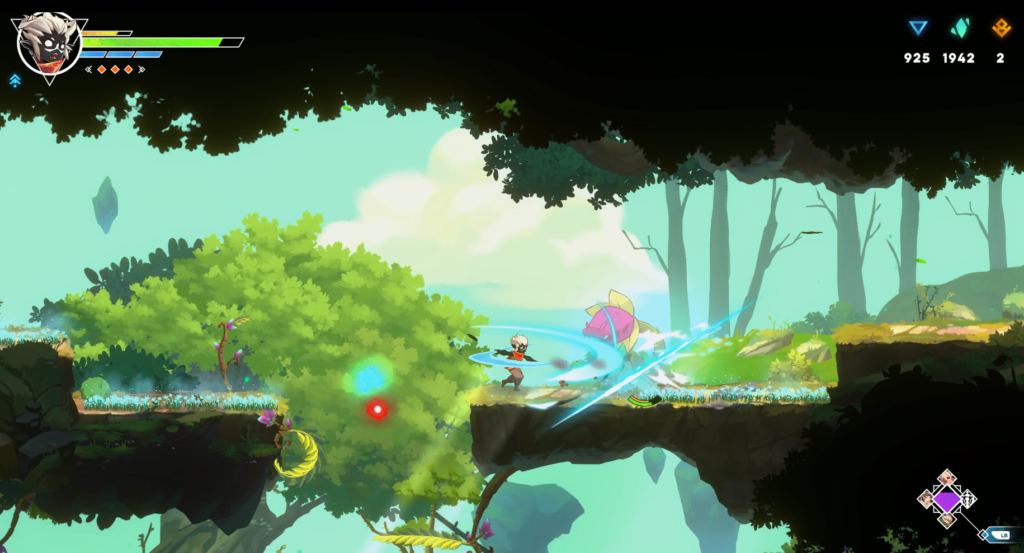
I was immediately enthralled with Fallen Tear’s world and narrative, and I give a lot of credit to the game’s art direction, sound design, and their execution for this. Raoah and its inhabitants are brought to life with stunning hand-drawn artwork and animations, with subtle touches sprinkled throughout the world, and character designs that bring it all together. Cleverly delineated foregrounds and backgrounds give every environment its own sense of depth and scale, with the game’s camera gently zooming in and out to match the scene.
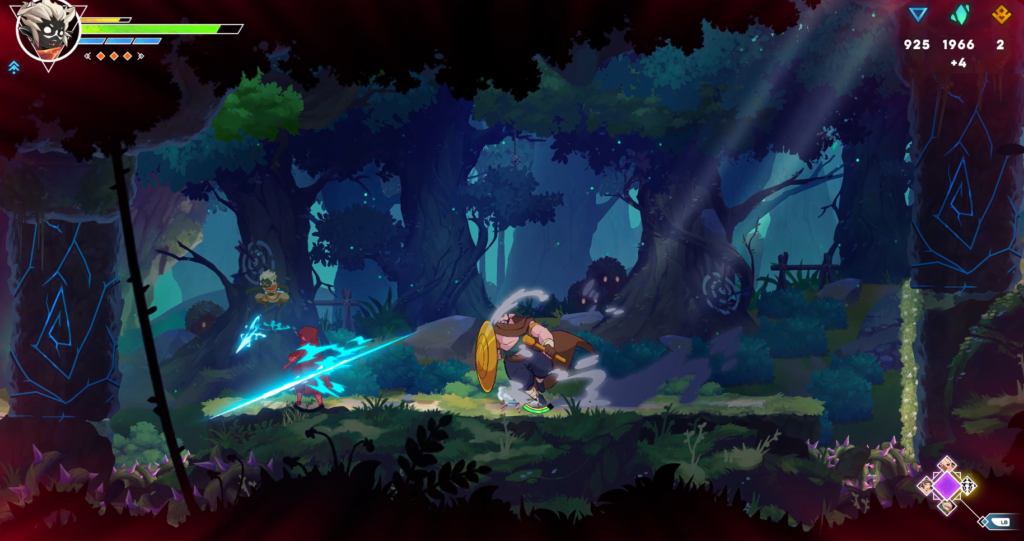
But even within each region, there is a great deal of diversity, with each one containing at least a couple of distinct areas. For example, the Hushing Woods start as airy, lush glades with sunlight pouring through the trees, but as I descend, I notice it gets darker, more claustrophobic, and I start to catch glimpses of shadowy figures watching me from the foreground and background. It feels like I am moving through a world that is cohesive and thought out, constantly offering new things to find, each adding to Raoah’s ambience and history.
Fallen Tear: The Ascension’s sound design is impressive in how immersive it is, and again, it’s the attention to detail that does it. When the game’s rich and varied soundtrack isn’t playing, the air is filled with the sound of nature. The faint buzz of insects, leaves rustling in the breeze, a howl or yip echoes out, and even the mutterings or cries for help from NPCs can be heard as Hira draws near. This neatly seques to the proverbial cherry on top of this sound design sundae: the voice acting.
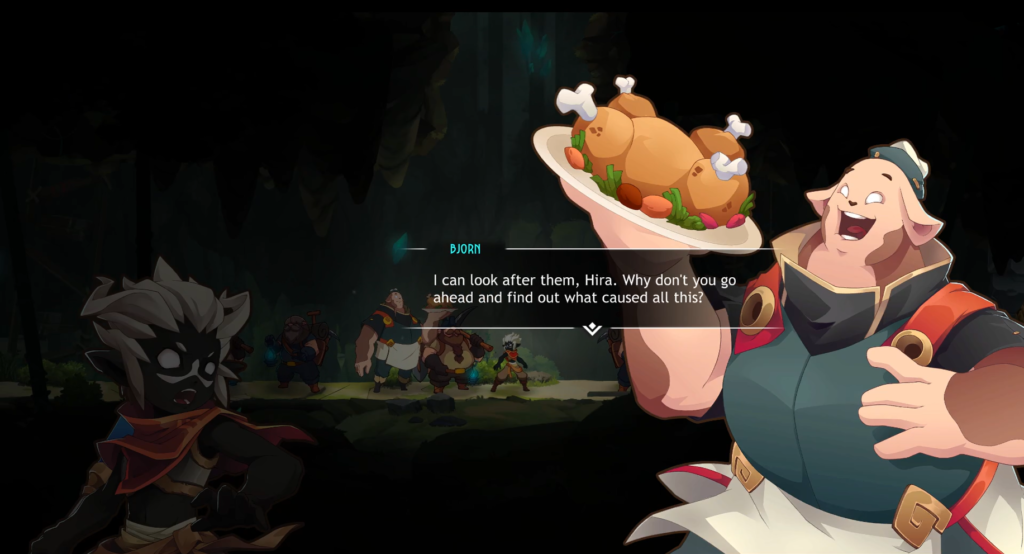
Much of Fallen Tear’s cast of characters is fully voiced, and from the opening moments of the game, the level of quality is clear. Every voice actor understood their character assignment, and the proof is in the pudding. Hira is an endearing balance of anxious over the events taking place, but still wide-eyed and somewhat impressionable, completely understandable given his approximate age. Contrast this with just a few of the other characters I have met on my travels, like the overexuberant and friendly chef Bjorn, or the feisty and single-minded warrior Aria, and it becomes easy to remember every character and their stories. I think it is a boon in most cases when games have voice acting, and with a 2D Metroidvania, a genre where you are somewhat removed by virtue of its design, it goes a long way to drawing players into a game’s world and keeping them invested.
But Fallen Tear: The Ascension is anything but a run-of-the-mill 2D Metroidvania, and while it packs a bunch of interesting systems and gameplay elements, it all quickly fell into place for me. Let’s start with Ascensions, the special abilities Hira earns from activating the Godspire shrines across Raoah and within Hedwynn. Four of these are available in the game’s current state, with Hira able to unlock a double jump, dash (both ground and air), wall run, and a powerful strike to go through certain walls. Except for the wall run, which was awarded after beating a boss, I had to unlock the other three using Trust Points, which are earned when you make a Bond with an NPC.
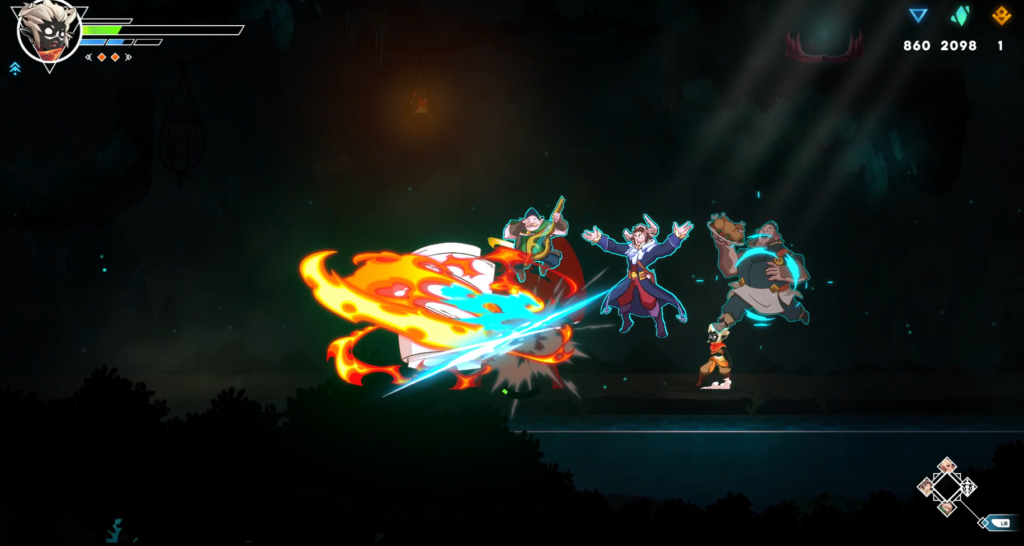
Part of Fallen Tear’s gameplay makeup is from party-based RPGs, allowing Hira to make Bonds with a large number of allies who then live in the hub, as well as accompany Hira on his adventure. Three characters can be equipped, and come with their own passive buffs for Hira, as well as a special move that can be activated using one bar of mana. You can also charge up Hira’s Rush Gauge to perform a Fated Rush, calling all three party members out in a flurry of attacks. Both mana and the Rush Gauge are refilled by attacking enemies, so you can’t spam your way out of a problem.
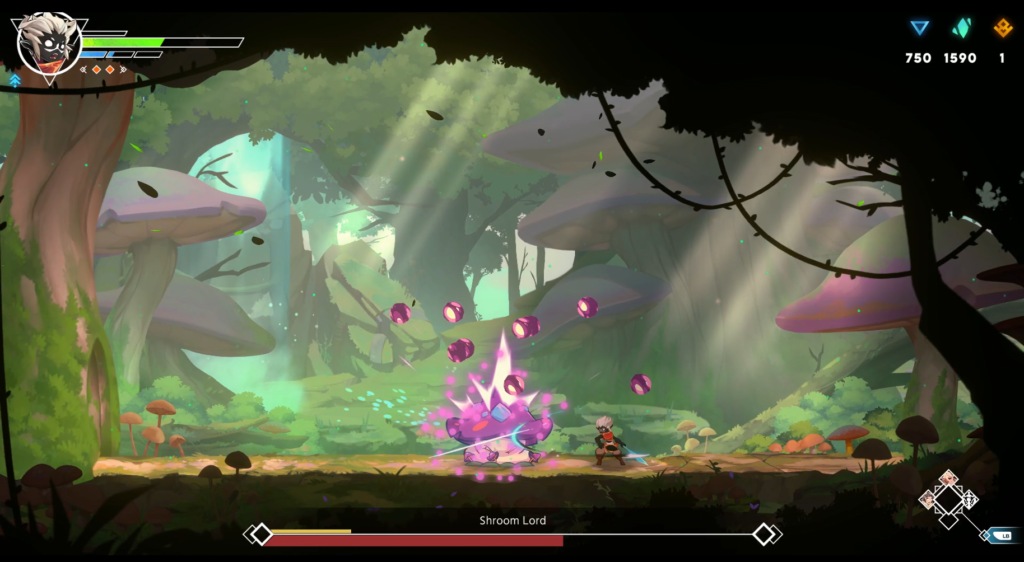
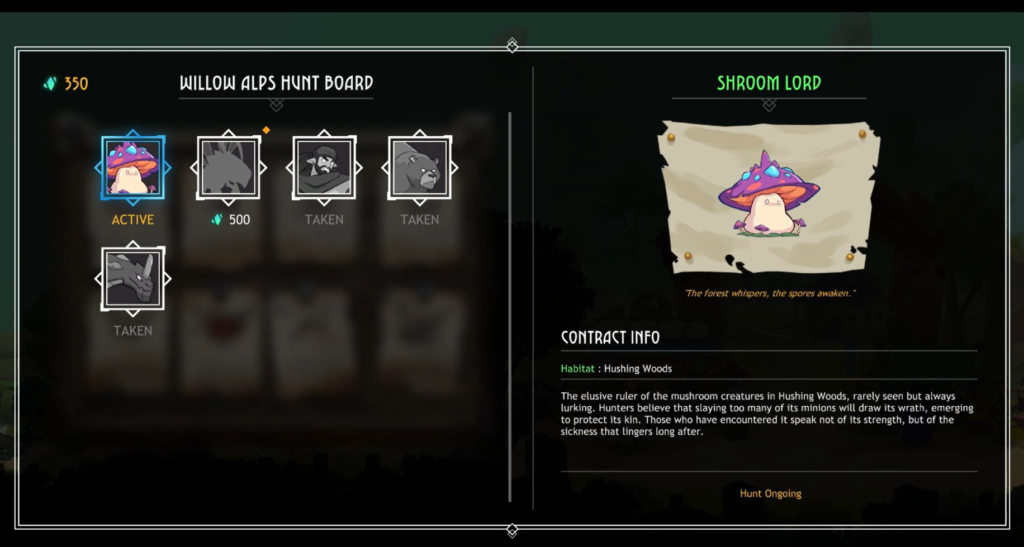
While pursuing main story goals and side quests for Bonds, Hira can also take on Rare Hunts, tougher enemies that will reward you with Fated Points, which are then used to unlock Masteries. These improve Hira’s stats and provide permanent buffs, like healing out of combat. Rare Hunts can be picked up from noticeboards at certain locations, requiring Korr Shards, the game’s main currency, to purchase them. These encounters are like mini-bosses, pitting you against tougher versions of regular enemies, with varied movesets within enclosed arenas. They add a nice amount of variety, with a couple of these sneaking up on me as I explored new areas, having forgotten I had accepted them earlier on.
The last of Fallen Tear: The Ascension’s progression systems are the Fated Goals, a plethora of activities covering exploration, hunts, and improving the castle hub. Along with the game’s quests, Hira’s Fated Goals are all brilliantly tracked, making it easy to see what you have left to find in a certain region, which enemies you still need to defeat more of, and which Fated Bonds you have created or improved. As someone who likes to uncover maps and complete activity checklists fully, this is my favourite part of Fallen Tear’s design. Completing any of these mini objectives awards Hira with more Fated Points, so you are constantly being rewarded for any number of actions, incentivizing the player to seek things out based on tangible rewards. Along with easy-to-digest tutorial windows that you can revisit from the pause menu for a quick reminder, the progression tracking in Fallen Tear: The Ascension makes what could otherwise be an overwhelming number of new systems very approachable.

The moment-to-moment gameplay of Fallen Tear: The Ascension feels fantastic, with Ascension moves making traversal fun and expansive, while combat is fluid and varied, mixing in regular combos with a flashy dodge counter, your equipped Fated Bonds, and any Hunter Skills you unlock through completing multiple Rare Hunts. There are even occasions where I could use the environment to my advantage, whether for repositioning or to deal damage, like cutting a rope so that a large chunk of stone would fall on an armoured enemy, stunning them and allowing me to damage them with normal attacks.
How Hira heals himself also has a fun twist; he can use one bar of mana to heal a small amount of health, or wait to see if any enemies drop Red Korr, which are absorbed and boost the amount healed. It’s an interesting wrinkle that invites players to stave off reactionary healing and opt to play smart, fighting with increased risk at the chance of greater reward. In fact, that really sums up my Early Access experience with Fallen Tear: The Ascension; it has been incredibly rewarding.
There are still so many other details to mention, from map pins that capture screenshots for better recall of areas you’ve visited, to the fact that the fast travel system charges small amounts of Korr Crystals each time. I almost forgot to mention that there are towers to activate that reveal the remaining map of their specific region, and that NPCs who join you at your hub can increase your stats from special items found around Raoah. There’s even the Blood Moon event, where the screen takes on a menacing red filter, enemies become tougher, and demonic forces invade, attacking anything on sight! While I still find it strange to play a game that is not yet finished, what makes Fallen Tear: The Ascension both enjoyable and stranger still is that there is so much of it, and it feels so well-crafted and polished.
While we do not score games that we have not finished here at the GSC, I feel confident telling Metroidvania fans to check out Fallen Tear. So far, the team at Winter Crew Studios have done an excellent job of making their first game a constantly fun and rewarding Metroidvania. If the rest of the game is up to the standards set by what is available now, it would not surprise me to see Fallen Tear: The Ascension in the Indie GOTY or Debut Indie discussions when fully released.
Fall Tear: The Ascension releases into Early Access on March 17th on PC via Steam.
We would like to thank Winter Crew Studios and CMD Studios for the Early Access review key.
Will you be jumping into Fallen Tear: The Ascension while it is in Early Access? Let us know in the comments below, and join the Gamer Social Club Discord to chat about your favourite games, play in community game nights, take part in giveaways, and more!