It’s been 30 years since the original Pokémon Red and Green games debuted in Japan, and the series has become a cultural icon since then, spanning across video games, anime, movies, toys, and even trading cards. With many fans of the main series games feeling the fatigue and a certain lack of polish, many thought it was time for the Pokémon Company to put the brakes on the main series, and focus on making them the best games that they could be. With GameFreak announcing that the next generation of mainline games, Winds and Waves, will not be released until next year, many were left wondering where to turn to get the pokémania feeling. Enter Pokémon Pokopia, a spinoff life-sim game where you play as a lone Ditto.
When Pokémon Pokopia was announced during the Nintendo Switch 2 reveal, my first thought was that it really took them 30 years to finally jump into this? The initial trailer gave off heavy Minecraft vibes, another very popular game. Does the game live up to the lofty expectations of the Pokémon brand, and is it good enough to stand up there with other games in the genre, notably Stardew Valley and Animal Crossing: New Horizons? After spending 36 hours in the game so far, I am happy to say that the answer is an absolute yes.
Game Premise
The game starts out simple; you wake up in a cave as Ditto, the shape-shifting pokémon. Right away, you meet Professor Tangrowth, who tells you that all the humans and Pokémon have disappeared from the land long ago. You find out that you have the unique ability to copy other Pokémon’s moves, and the Professor tasks you with finding more Pokémon and reviving the town to its former glory in the hopes that the humans will come back. Throughout the town, you’ll discover new habitats that the other Pokémon reside in, as well as journal logs from the people who used to call this place home. The great thing about Pokopia is that you don’t need to be a fan of the series at all; there’s no need to learn about type matchups, movesets, or what the best stats are. You can go into this with no Poké knowledge at all, and you can still have an excellent time.
During the 30 to 40-hour campaign, you’ll travel across 4 different zones, each featuring a city and the remnants of the people who used to live there. I won’t go into the story details to avoid spoilers for anyone looking to jump into the game in the future, but I was honestly shocked at how much the story tugged on the heartstrings. There’s a lot more heart here than I was expecting, and from the first hour in I was already invested in these characters, much more than I have been for almost any of the mainline characters the past few games.
Gameplay
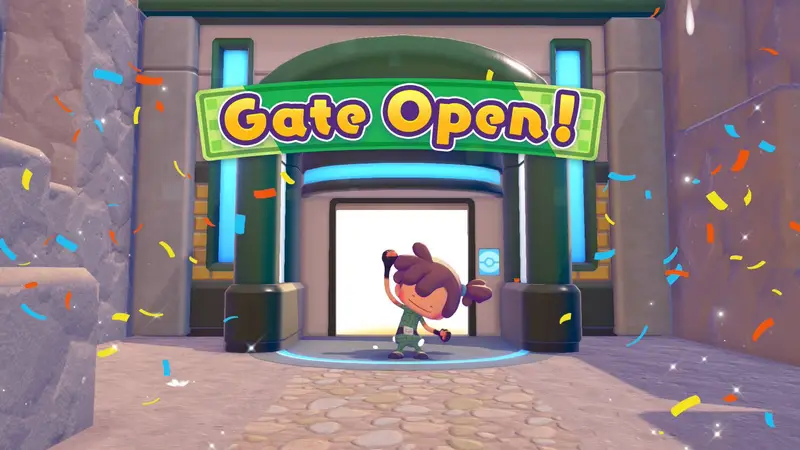
The gameplay in Pokopia is phenomenal in how simple it is and how it improves on other games like Animal Crossing: New Horizons. You’ll craft, mine, plant, and interact with all your villagers in the hopes of improving your environment level, which will give you access to new challenges and items in the shop. There is no combat in the game at all, so you don’t need to have to worry about carrying around precious loot and running into an enemy and wondering if you’re going to make it out of this situation.
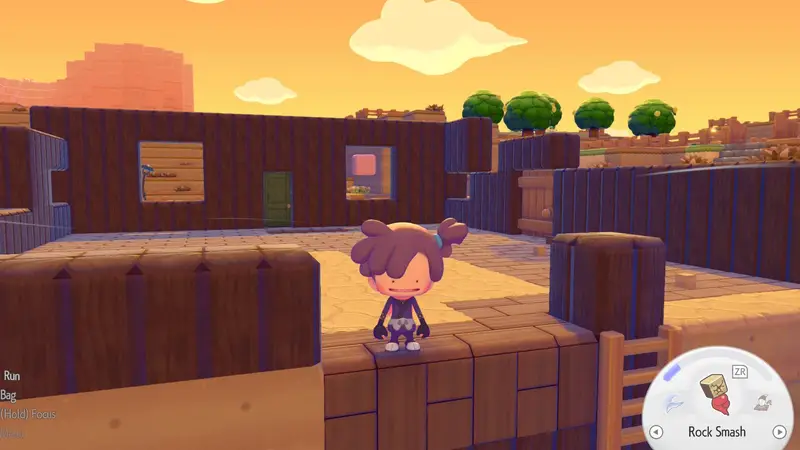
Developer OmegaForce, the studio behind other Nintendo spinoffs such as the Hyrule Warriors games, Fire Emblem Warriors games, and other games like Dragon Quest Builders 2, was cleverly able to take features from games like Stardew Valley and Animal Crossing: New Horizons and improve on them. Instead of having the different farming equipment taking up inventory slots, like an axe, shovel, and watering can, Omegaforce was able to put a Pokémon spin on it, making them tied to moves that Ditto learns, such as learning cut from Scyther to take down trees. Setting the system up like this not only frees up an inventory slot, but also ties it into the game and making you interact with the characters around you. This goes for all the tools you’ll be using throughout the game, whether that’s learning water gun to water the ground and plants around you, or learning rock smash from Hitmonchan to get yourself through the terrain you’ll be surrounded by.
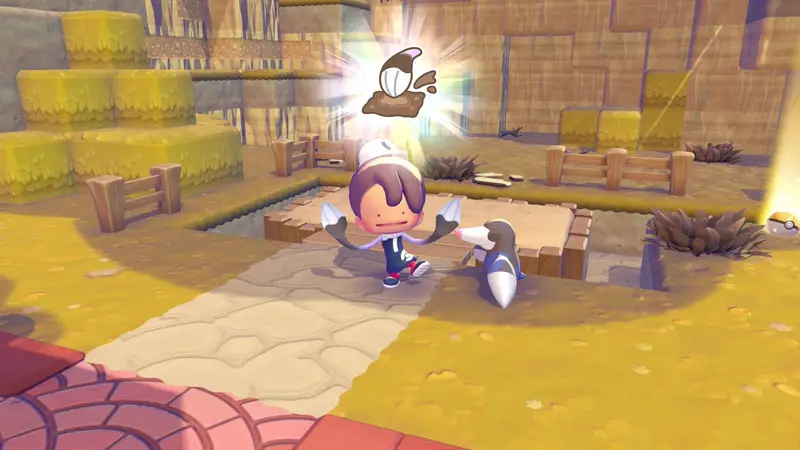
You have a stamina meter that will deplete each time you use a move, and once it’s empty you will not be able to use any moves until you eat. Thankfully, berries are plentiful in the game, and later on you get introduced to cooking food that gives your moves buffs. It’s a great system that improves on other life sim games without putting a complicated spin on it.
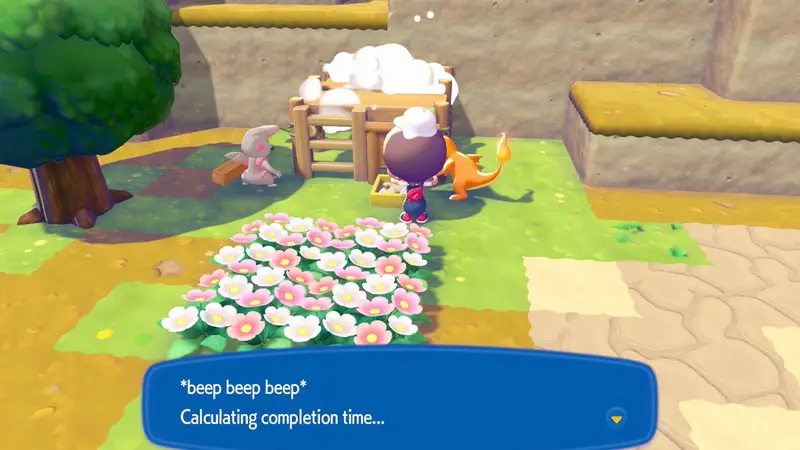
Crafting in the game is also great. When you go up to a crafting table, you’re able to craft an unlimited amount of the item, provided you have the ingredients needed. This was one of my main issues with New Horizons, having to watch an animation every time you needed to craft, and only being able to craft one item at a time meant I was seeing a lot of the same animations all the time (Editor’s Note: Bulk crafting has been added to AC:NH in the January 2026 update). Another great quality of life feature here is that you can use any ingredients that are in your chests, provided they are next to the crafting table. Not having to carry everything around is wonderful in these types of games, as exploring new areas will have you willing up your bag rather quickly.
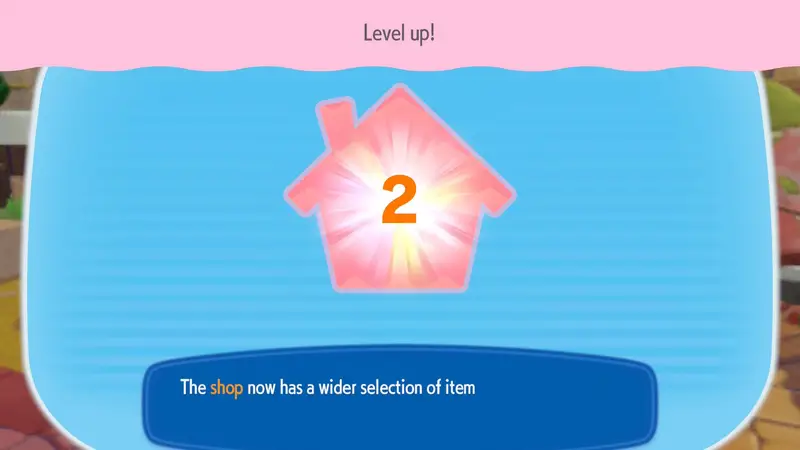
Speaking of bags, once you hit a certain environment level in each zone, you have the option to purchase a bag upgrade. These upgrades vastly increase the amount of items you can carry, and were greatly appreciated by the end of my playthrough. My one issue with the recipe and crafting part of the game is with the furniture sets. I know decorating homes isn’t the main aspect of the game, but I wish there were more options for set-themed furniture. Pokopia has some good sets, but there is a lot less variety in what is available in those sets, especially compared to Animal Crossing. This is something that can easily be worked on in future updates, as I’m sure we’ll get holiday-themed items when the time comes.
Another small, but annoying feature is the storage system. In this game, storage isn’t shared across chests, meaning if you put something in one chest in one area, you need to head back to that same storage unit to retrieve it. This might not be terrible for some, but when you’re a hoarder like I am, having to remember which chest I dropped my iron ore in is not how I want to spend my time in the game. Again, not a huge issue, and I know this is common in most of these games, but with Pokopia greatly improving on a lot of quality of life stuff, I’m stumped that this is one they didn’t address.
Another huge part of Pokopia is going to be raising your environment level. The two biggest ways of doing this are recruiting Pokémon, and making sure they are happy. You recruit Pokémon by making habitats that they like to live in. Some of them, like Timburr, just need some grass placed next to a big boulder. Others, like Trubbish, require you to place some items like a trash bin, trash bags, and a sign down. You will be tasked with increasing each Pokémon’s comfort level, with higher levels of comfort being based on doing quests for them, such as giving them food to eat, or putting a bed or toy in their environment.
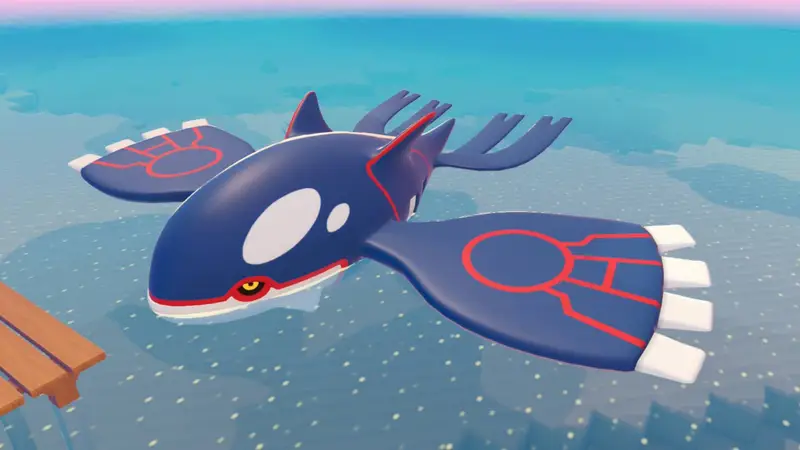
This game does a great job of making you feel like you’re living in a world where other Pokémon are also living. They’ll walk around and work on stuff, interact with objects you’ve placed around, and even talk with others. Early on I recruited Pinsir, and one of the first comments he made was that he had heard Heracross’s horn has been dull lately. I could tell there was a story behind that, and when I finally got Heracross in my town, what did I do? I built a 2-person house and I had them move in together. There are small aspects of history and story here between all these different characters that you just don’t get in a lot of other games of this genre.
Visuals and Audio
Looking at the visuals for Pokopia, the first thoughts are this looks like Minecraft and Animal Crossing. Neither are bad comparisons, but Pokopia does shine in its own right. While graphically it’s not the most gorgeous game on the switch, or the most aesthetically pleasing, it shines in other areas. The models used for the pokémon themselves are wonderful; each have been touched up for the game and given a bunch of unique animations. There are a few Pokémon in the game that have been given new and unique sprites that I won’t spoil, but these are really nice touches and I hope they aren’t going to be stuck to just this game. Likewise, all the models on things in the game world look good too, whether it’s the water, the trees growing, or the furniture you can craft and place around the world.
In terms of audio, I’m not sure if there’s a better Pokémon game that matches it in the last 15 years. The soundtrack is a clever mix of new, ambient scores that are soft on the ear that are perfect for this style of game, and nice remixes of classic Pokémon themes. You can also collect CDs, and later hand them to DJ Rotom to play. These CDs contain wonderful compositions from the original Red and Blue games, as well as versions from FireRed/Leafgreen, and Let’s Go Pikachu, so whichever version of the original you fell in love with, you have options. Each Pokémon also makes sounds whenever it is happy or sad. The sounds are very similar to the reactions that the villagers in Animal Crossing have, so if you played that series, you’ll be right at home in recognizing those sounds.
Multiplayer
The game features online co-op multiplayer for up to 4 players. This is a separate mode, where you and 3 other players are given a blank map to build on and form however you want. This new area, aptly named Palette Town, which gives you a giant sandbox to play around in, and even has it’s own unique Pokémon to be found here. It is disappointing that you can’t have your friends come to your other zones to see which Pokémon you have in your world and see what you have built. However one wonderful aspect of Palette Town is that this can be accessed by any of the players at anytime; so even if the host is not around, someone else is able to keep making progress.
Verdict
Pokémon Pokopia is a smashing homerun. Whether you’re looking for a game with an emotional mystery story of what happened, a game to build your wildest creations, or even just a game to get to spend time with some of your favorite pocket monsters, there is a game here for everyone. The game just oozes sweetness, and I already know that this is one that I am going to drop over 100 hours into this year alone. Simply put, whether you’re already a fan of Pokémon, a newcomer to the series or just a fan of cozy games, Pokémon Pokopia is absolutely a worthwhile buy, and is everything that I wanted Animal Crossing New Horizons to be and more. It is an early game of the year contender for me and a reason to pick up a Nintendo Switch 2.

Gamer Social Club Review Score Policy
Pokémon Pokopia was reviewed on Nintendo Switch 2. The game released on the 5th of March, 2026 and is a Nintendo Switch 2 exclusive.