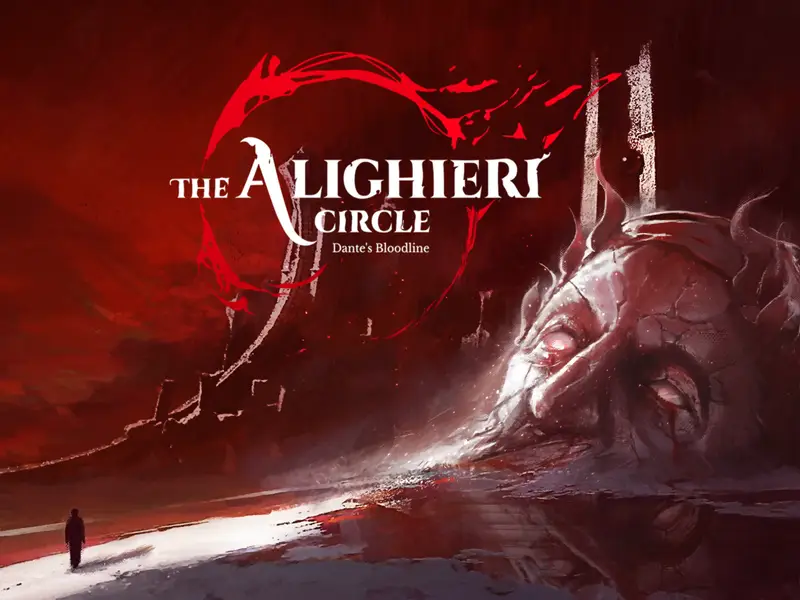
Like a seductive whisper, the demo for The Alighieri Circle: Dante’s Bloodline is over almost as quickly as it begins. It’s a brief encounter—equal parts alluring and unsettling in the way it draws you deeper into its world, only to vanish just before it reveals its true self. My immediate reaction when the demo ended was frustration, which only meant one thing: the devious tease had worked, and I wanted more.
The Alighieri Circle: Dante’s Bloodline is a first-person psychological horror walking sim, developed by ONE-O-ONE GAMES and published by Entalto Publishing. You play as Gabriele Alighieri, a descendant of the great Italian poet Dante Alighieri, and inheritor of a cursed legacy. Every 33 years, the barriers between our world and Hell fade, and a member of your bloodline must return to the ancestral home and undergo The Ritual. Gabriele must collect the scattered pages of The Divine Comedy and cross the threshold into Hell itself to reseal its infernal gates, or doom the world to eternal damnation.
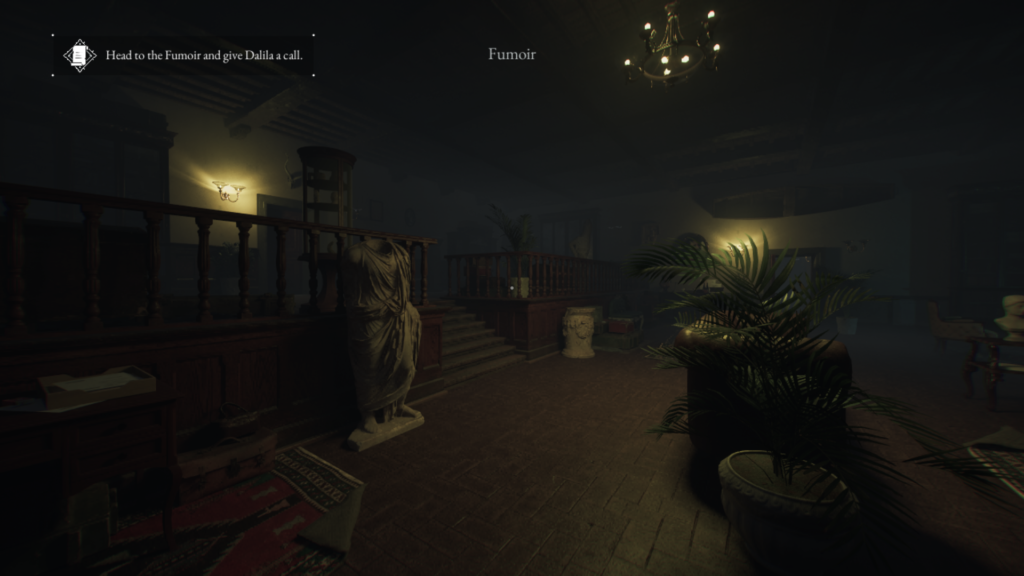
The demo opens at the start of the game, with Gabriele’s arrival at the family villa and his first steps into Hell. The Alighieri Circle is a walking sim at its core. Gameplay centers on slowly exploring environments, reading notes, and interacting with objects, with some light puzzling thrown in for good measure. Scattered throughout the villa are pages from a relative’s old journal, which slowly reveal fragments of the Alighieri family’s troubled history and the grim ritual that has bound them to Hell for generations. I appreciated the lack of hand-holding, as it allowed me to immerse myself immediately in the world without being pulled out of the experience by pop-up text boxes or forced tutorials. Controls are simple, and with no combat or stealth mechanics to worry about, this leads to a frictionless introduction.
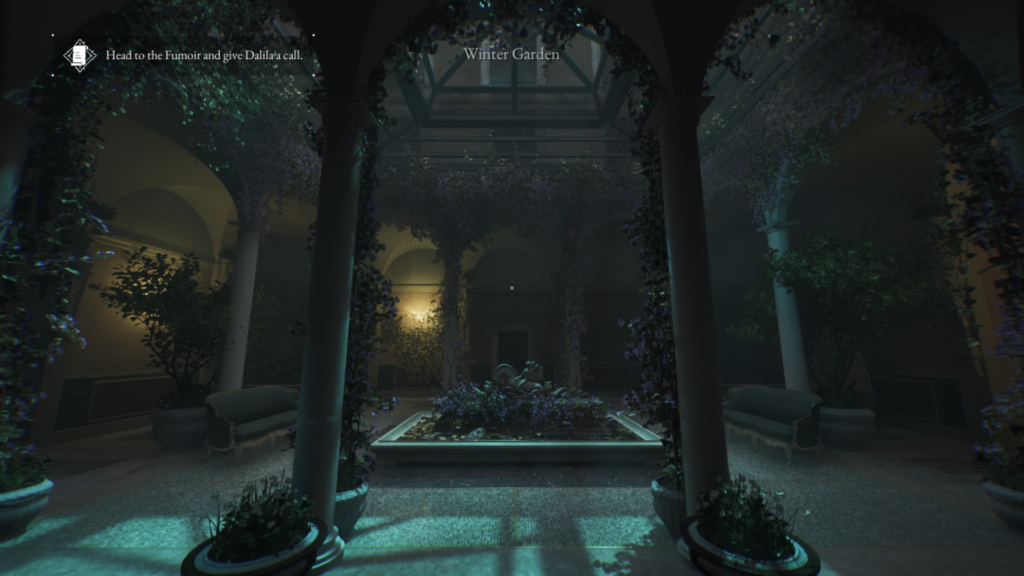
Coupling that with the game’s slow pacing, and it gives The Alighieri Circle’s excellent visuals and sound design plenty of time to shine. The villa’s many rooms and hallways are all beautifully detailed, from its musty book-strewn library to the eerily lit courtyard garden. Dozens of paintings and hunting trophies adorn the walls, while various sculptures and potted plants fill every corner. Not only does Gabriele’s fate weigh down on me, but also the centuries over which this family has been cursed, and it is suffocating. Wall sconces, ornate table lamps, and chandeliers try their best to illuminate each room with great effect, pushing back against the encroaching darkness and flickering as the storm persists.
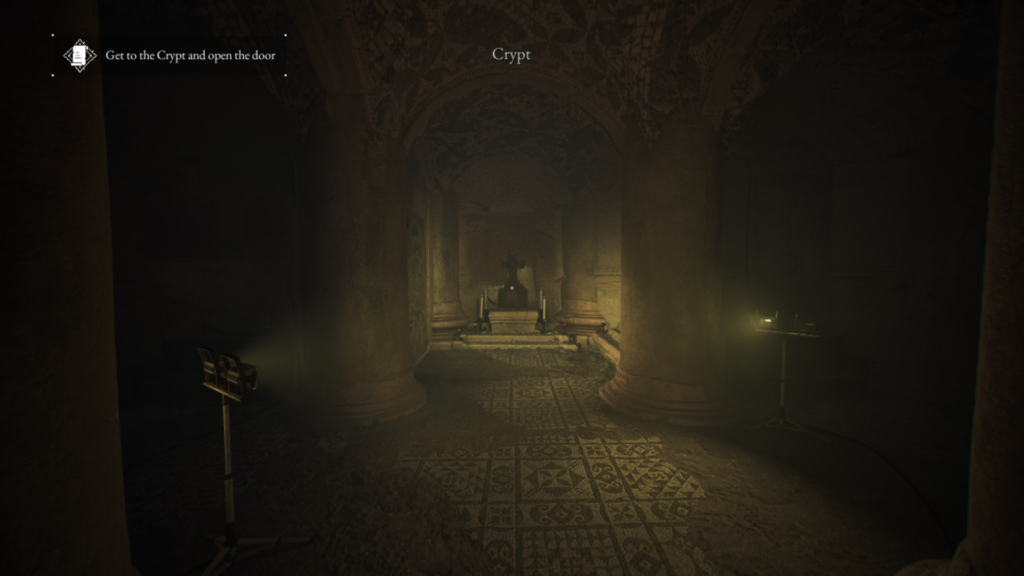
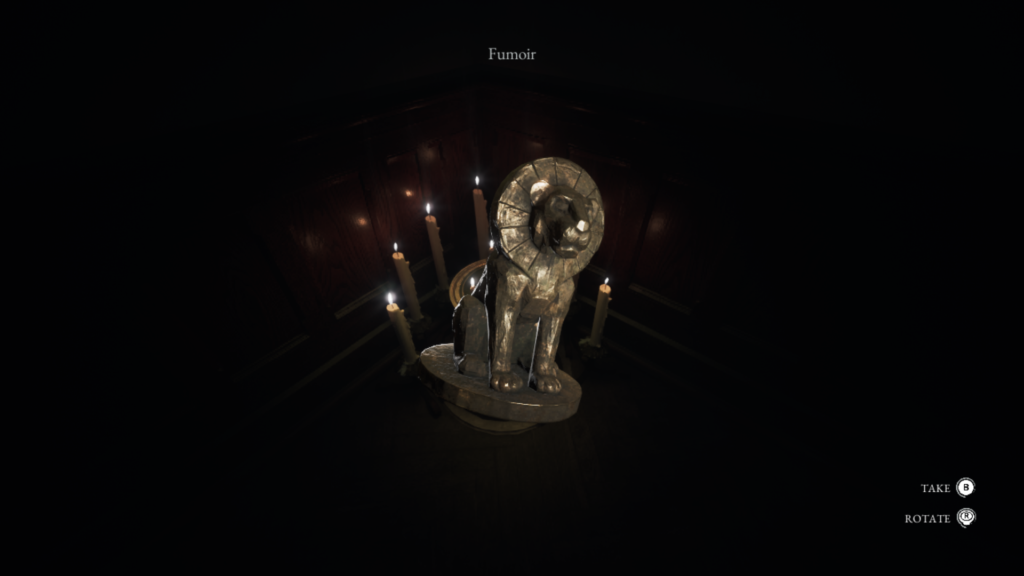
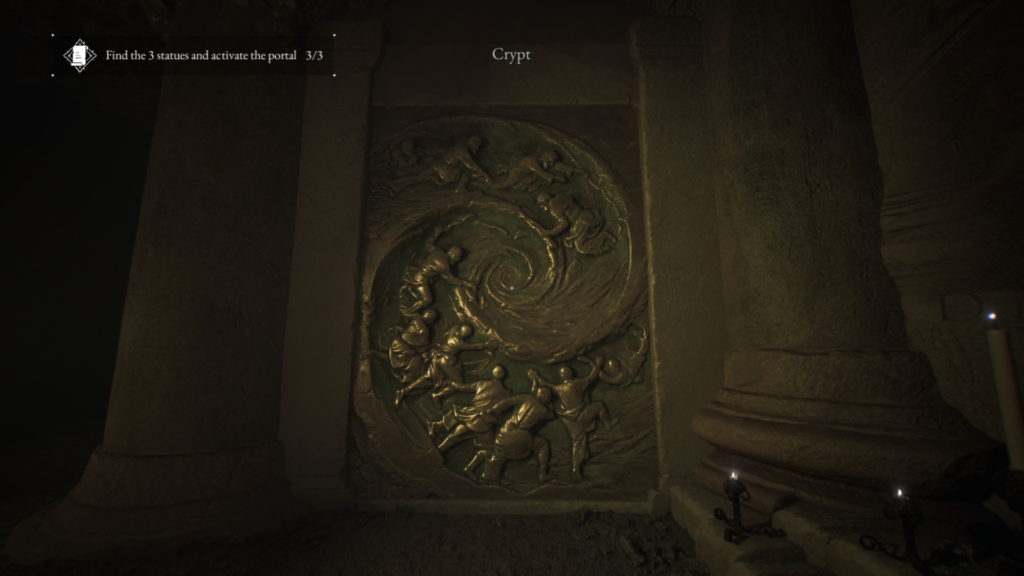
Within a few seconds, I notice that there is no music, with just the bluster of the thunderstorm outside and the house itself making up the soundscape. The empty silence is palpable, with each roll of thunder or distant creak from somewhere in the villa stopping me in my tracks as I strain my ears to listen. Gabriele is alone here, and completely safe, and yet I feel the complete opposite as I move through the villa, the tension mounting with each step. Finally, I descend into the villa’s crypt, where the site of the entrance to Hell resides, the villa built atop it decades ago. Placing three animal statuettes I found around the property into their respective recesses opens the fiery portal, and I step through.
To no surprise, this is in stark contrast to what Gabriele finds when we cross the threshold into Hell. Instead of moody, cluttered interiors that border on claustrophobic, our protagonist finds himself in a surreal, ash-coloured environment surrounded by blood red mists and water that stretch endlessly in all directions. Vast organic-looking spires, like dead tree trunks, populate this calcified island, and as I walk deeper into this unsettling place, fragments of Gabriele’s memories start to appear. The sight of a crashed plane feels strangely comforting, something familiar in an otherwise inhospitable place. While the villa is cramped and filled with shadows, Hell itself is open and bleak, creating a constant sense of vulnerability. The one constant between the villa and Hell is the lack of music, Gabriele’s footsteps echoing out into the void.
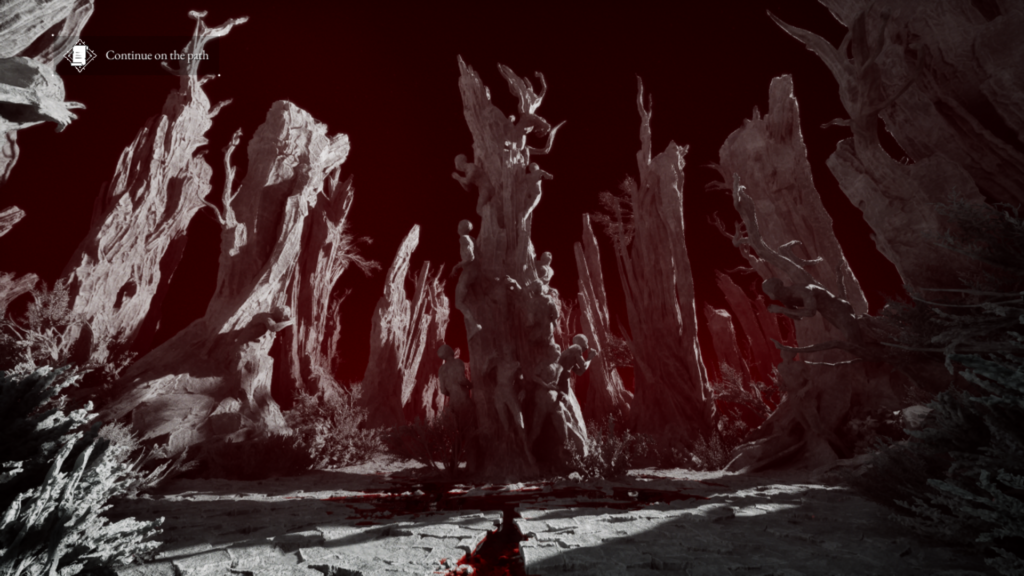
As Gabriele ventures deeper into this strange, desolate version of Hell, the silence is finally broken by a voice that does not belong to him. A mysterious presence begins speaking directly to Gabriele, guiding him forward through the wasteland with an unsettling calmness. The back and forth between Gabriele and the mysterious voice was quite compelling, while back in the villa, I found the writing and delivery of Gabriele’s mutterings and brief phone call quite clunky. As appropriate as it was frustrating, the demo ends just as we are about to learn who the mysterious voice belongs to.
It may only be a short glimpse, but The Alighieri Circle: Dante’s Bloodline leaves a strong impression thanks to its oppressive atmosphere, striking visual design, and the lingering mystery at its core. If the full game can build on these alluring foundations, this cursed descent into Hell may be well worth following.
The Alighieri Circle: Dante’s Bloodline is slated to release this year on PC. A demo is available on PC via Steam.
Have you tried the demo for The Alighieri Circle: Dante’s Bloodline? Let us know in the comments below, and join the Gamer Social Club Discord to talk about your favourite games, play in community game nights, take part in giveaways, and more!