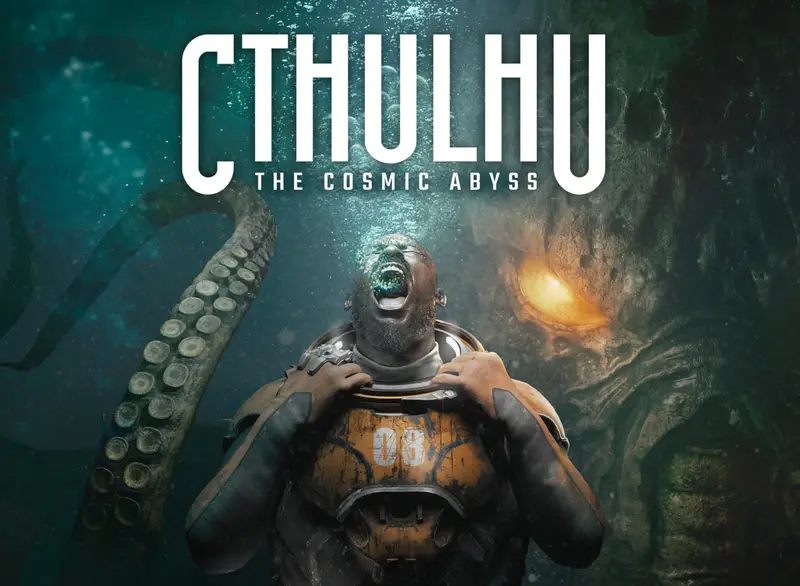
With Cthulhu: The Cosmic Abyss, developer Big Bad Wolf is taking cosmic horror to the depths of the ocean in the near future. Set in 2053, the investigative thriller follows Noah as he searches for answers in the aftermath of a deep-sea mining operation, uncovering ancient horrors lurking within the submerged city of R’lyeh. Blending detective work, environmental exploration, and the creeping influence of corruption, the game places players in a world where knowledge itself can be dangerous.
After spending time with the demo, which was released as part of Steam Next Fest, I reached out to Tommaso Nuti, Game Director at Big Bad Wolf, to ask some questions about balancing scripted and emergent horror, designing investigation-focused gameplay without combat, and how the mythos of Cthulhu intersects with modern anxieties about technology, power, and human ambition.
Cthulhu: The Cosmic Abyss introduces overt cosmic horror almost immediately. Were you concerned that showing the supernatural so early might reduce the slow-burn tension typically associated with Lovecraftian horror?
Although we decided to show the cosmic horror head-on, especially during the prologue, these elements remain shrouded in mystery and serve to set the tone for the adventure.
However, it was important for us to preserve the sense of building up that you mentioned in your question. Thus, the entire prologue is paced to gradually bring players to this tipping point, preparing them for the scale of what awaits. We preserve the Lovecraftian tension and cosmic horror by returning to its purest premise: dread is born from the contemplation of a universe that is utterly beyond human comprehension.
By maintaining a constant crescendo in the revelations, we ensure that even if the dial starts high, the intensity never drops, right up to the final outcomes.
Many of the strongest horror beats in the demo are delivered through scripted sequences. How do you balance authored horror moments with player-driven tension, and did you experiment with more systemic or emergent horror design?
Absolutely, and a large part of that balancing comes from using the sonar and free exploration within the different levels. Imagine you’ve been exploring an environment for twenty minutes when, suddenly, you find a frequency. Once combined with the sonar, it reveals tracks left by a creature all around you. Instantly, the place you thought you knew changes its nature and becomes hostile and the theater of greater horror. If you connect that with the strange audio log you listened to earlier, or the severed limb you’ll discover in the control room a few moments later, the tension is born from your own deduction.
This is just one of the possible scenarios: you could have discovered these elements in a different order, or missed some to follow other leads that will have their own breakthrough and tension beats.
It is crucial for us to give players control and allow tension and twists to emerge from a personalized progression linked to their investigation.
Tying deduction outcomes to Corruption feels like an inversion of traditional detective design. Was the intention to make knowledge itself dangerous, and how do you prevent players from approaching the system as something to optimize rather than something to fear?
In our game, corruption progresses in three distinct ways:
- Scripted moments: Powerful, unavoidable narrative events that mark every player’s evolution.
- Investigation resolutions: Your choices in solving cases directly influence your corruption level. Some paths preserve the character’s integrity, while others push them irremediably toward the abyss.
- The cost of knowledge: If they have exhausted all consumables in a level, or for other reasons, the player can choose to accept a dose of corruption in exchange for energy points, which are needed to deepen the analysis of certain clues.
The corruption level primarily influences the game’s endings and the resolution of your avatar’s narrative arc. Throughout the game, its impact is felt on your character’s upgrades and build. Some abilities can transform, improve, or, on the contrary, break as your corruption level rises or falls. It’s a dynamic system where your corruption gauge becomes a resource that actively shapes how you manage your resources and skills.
Play hastily or recklessly, and you risk running out of energy, missing out on upgrades or consumables, or worse, concluding an investigation phase by taking an action that brings you closer to the edge. It is precisely there, in the shadow of your blind spots, that the Great Old One awaits. Our gauge reflects the player’s actions without displaying a precise score. This helps preserve a sense of mystery regarding the sword of Damocles hanging over the character.
During IGN’s gameplay deep-dive, Tomasso Sergi mentioned that player choices and Corruption levels will influence the outcome. Are these consequences primarily narrative, mechanical, or psychological in nature?
Throughout the adventure, it’s rather the opposite: it’s not corruption that opens possibilities, but the choice of possibilities that raises (or lowers) the level of corruption. Those choices will make you see a different “closure” for each chapter you just solved.
However, the character’s arc and their ending will be directly linked to their level of corruption, yes. Also, during the game, corruption has a direct impact on upgrades. Some perks only trigger at high corruption levels to offer unique effects, while other skills allow you to “buffer” or stabilize this progression.
The game places strong emphasis on physically handling and examining objects. How important was tactile interaction in grounding such an abstract and cosmic narrative?
It was very important for us to insert this physicality into the game, just as it was to adopt the first-person perspective. Observing, moving, turning, inserting, analyzing… These are all action verbs that define how to interact with the world and give it substance. We want you to feel this world exists and to approach it as a real detective or scientist would.
In addition to this intention, going in this direction opened possibilities for crafting puzzles that aligned perfectly, intending to have choices emerge from the players’ actions. Placing and moving a certain object to try a certain solution, without the game presenting you with an explicit choice, remains at the heart of our experience. We needed that freedom of action.
The underwater sections create a palpable sense of vulnerability. How did you approach movement and traversal design to reinforce helplessness without frustrating players?
First of all, thank you for confirming that feeling! Knowing that you felt this vulnerability proves that our design intentions are materializing for you.
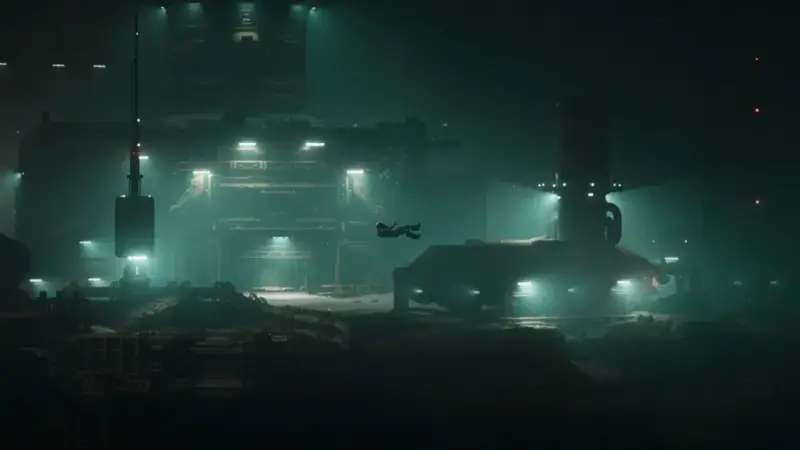
The underwater phases have been part of the project’s DNA from the very beginning. In the Lovecraftian imagination, water is the preferred terrain of some of the mythos’ most iconic creatures. It’s a naturally hostile environment for newcomers, but one rich with imagination for those more familiar with his universe. We wanted players to navigate depths with currents and low visibility, most often lit by a flashlight or with sonar, where you never know if you’re going to make it out.
Our traversal is the balance of these intentions: having fluid and cool movement with the controller in hand, with a boost gauge that depletes and recharges to pace progression and slightly emphasize the feeling of powerlessness and slowness, an inertia that makes us feel the resistance of the water—all within an environment that is as hostile as it is fascinating to explore.
In a medium that often defaults to combat as escalation, you’ve chosen a purely investigative approach. Was removing combat an early creative decision, or something refined over time?
We excluded combat from the very beginning. However, the absence of combat does not mean the lack of threats.
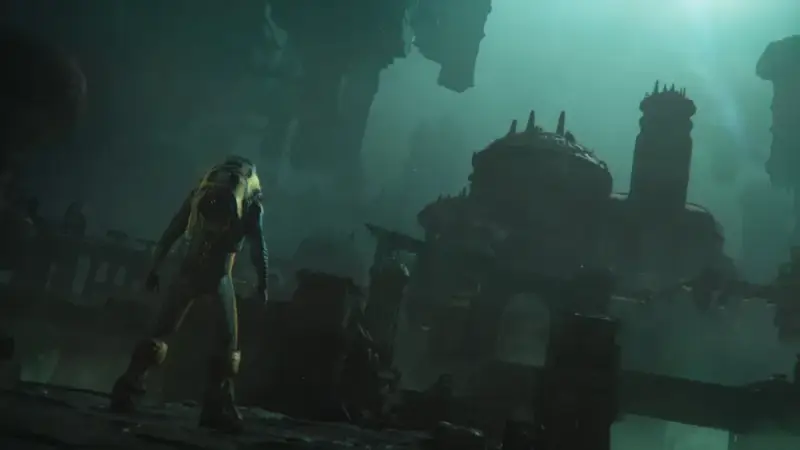
Many things can kill you in R’lyeh, from the ruins in themselves to the cosmic monsters that inhabit them. No conventional weapons will be of any help here; only your investigation tools and your wits will allow you to complete your adventure. To survive, you will need to understand this unfathomable world’s rules: either by accepting them or by bypassing them thanks to your ingenuity. This brings us to the essence of the detective, overwhelmed by what they experience and see, unable to fight danger head-on but forced to rely on their wits to move forward.
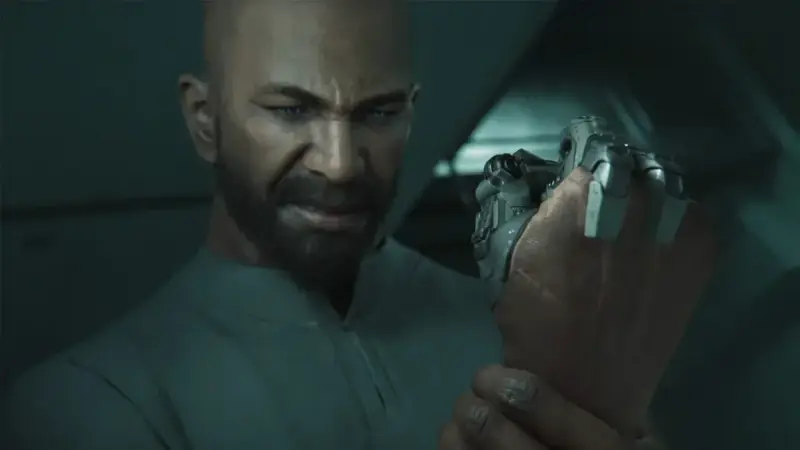
Noah is accompanied by the AI, KEY, throughout his investigation, and she feels less like a mechanical assistant and more like a human presence. Was that portrayal intended to comfort the player, or to subtly blur the line between artificial and authentic companionship?
KEY is a fundamental component of our adventure. First and foremost, they are the diegetic explanation for Noah’s tools: it is through her interface that players interact with the universe. Narratively, KEY is our companion. If Noah is Sherlock, KEY is Doctor Watson… except they evolve.
As you rightly noted, they are more human than mechanical. This is an aspect we worked on extensively. Between the prologue and the second chapter, KEY is updated: their tone of voice and their lines become more human-like, marking the beginning of their narrative arc.
Again, they are Noah’s partner and much more than that; the two are literally one physically. So even though Noah is accompanied by KEY’s voice throughout his adventure, they cannot intervene directly. He remains alone against the dangers he will encounter. For us, your two definitions of KEY are not opposed; they are complementary and emerge throughout the game. By creating them, we wanted players to ask themselves: how would a character not subject to corruption or loss of sanity react to the horrors of the adventure?
The events of Cthulhu: The Cosmic Abyss are set in motion after an incident at the Ocean-I deep-sea mining operation. Is the cosmic horror in your story a metaphor for human overreach?
For our part, the decision to set our game in 2053 stems from several reflections on the themes we wanted to explore.
First, we wanted to echo very current issues: resource depletion, climate change, the influence of large private fortunes, the rise of AI… Placing antediluvian creatures and vestiges in this futuristic world allowed us to create a striking contrast between our civilization and theirs. A near-future setting also offers players more familiar reference points than a “20s or 30s” setting, which reinforces the element of surprise upon arriving in R’lyeh: you leave a known world to discover another, radically different one.
Personally, I hope that those seeking entertainment will have a great time and that those looking to reflect more deeply on the game and its themes will also find what they’re looking for… but that remains entirely in the hands of the players who wish to make it their own.
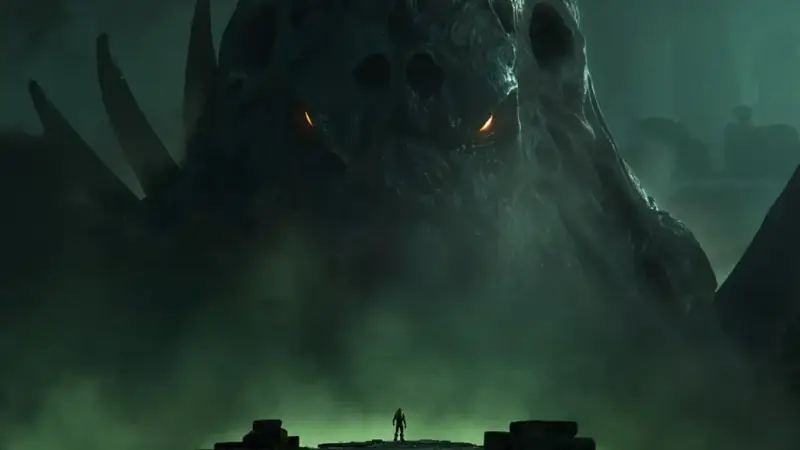
From its investigative gameplay to its corruption-driven choices, Cthulhu: The Cosmic Abyss aims to capture the unsettling idea that understanding the truth can come at a terrible cost. Couple that with placing players in a fragile, combat-free experience and surrounding them with both ancient horrors and the consequences of humanity’s own ambition, Big Bad Wolf hopes to deliver a story that resonates on multiple levels. Whether players come for the Lovecraftian mystery or stay for the deeper themes woven throughout the narrative, the descent into R’lyeh promises to be as thought-provoking as it is terrifying.
I want to thank Tommaso Nuti for taking the time to answer my questions.
Cthulhu: The Cosmic Abyss releases on April 16th across PC, PS5, and Xbox Series X/S.
Are you looking forward to Cthulhu: The Cosmic Abyss? Let us know in the comments below, and join the Gamer Social Club Discord to chat about your favourite games, play in community game nights, take part in giveaways, and more!